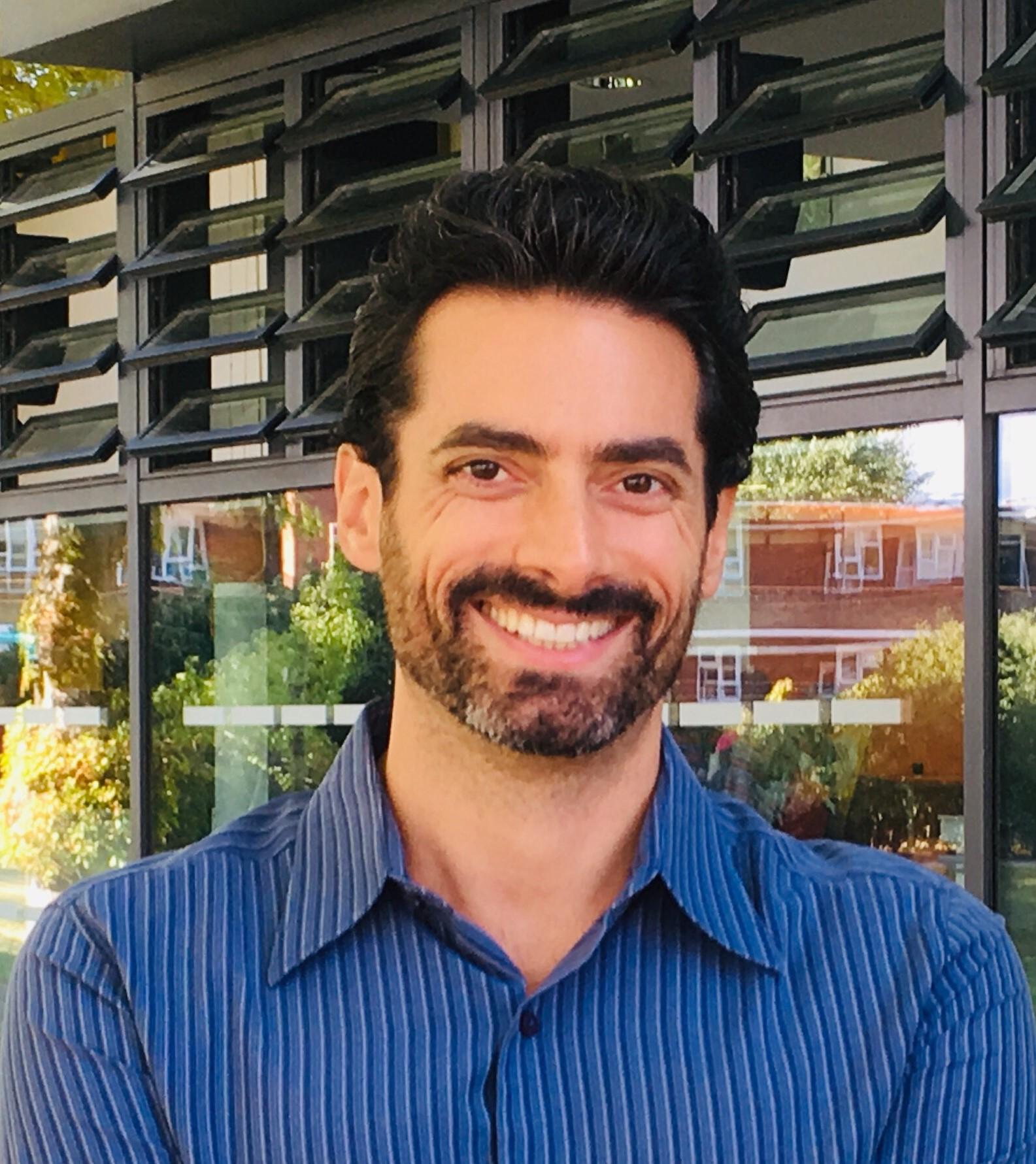
Giovanni Dosi is a Professor of Economics at the Institute of Economics, Scuola Superiore Sant'Anna, Pisa, Italy . He co-directs the Intellectual Property Task Force at Columbia University's Initiative for Policy Dialogue and serves as a Continental Europe Editor for Industrial and Corporate Change . Recognized as an ISI Highly Cited Researcher and a Corresponding Member of Accademia Nazionale dei Lincei , his work spans evolutionary economics and innovation studies. Education: Laurea in Philosophy (1976, University of Milan), PhD in Economics (1983, University of Sussex) Dosi’s research focuses on Economics of Innovation , Industrial Dynamics , and Agent-Based Macroeconomics , analyzing how technological and organizational innovations drive capitalist systems. His work examines global value chains, productivity slowdowns, and the role of policy in innovation ecosystems. Scientific Awards: 2022 Penrose Award (EURAM) for evolutionary economics 2016 Wiley TIM Distinguished Scholar Award ISI Highly Cited Researcher (since 2010) Honorary Professor, Manchester Business School (since 2009) Commendatore al merito della Repubblica Italiana (since 2014)
Masuma Shahid is an Assistant Professor and Lecturer at the Erasmus School of Law, specializing in International and European Union Law, with a dedicated research focus on LGBTQ+ rights, AI and human rights, and privacy law. She is affiliated with the International and European Union Law (IEUR) department and actively contributes to academic and public discourse on equality and digital governance. Assistant Professor, Erasmus School of Law Lecturer, International and European Union Law (IEUR) Co-Coordinator, LGBTQI+ Working Group, Berkeley Center on Comparative Equality and Anti-Discrimination Law Member, Diversity Platform, Erasmus School of Law Her research centers on the intersection of LGBTQ+ rights and artificial intelligence, queer data, equal marriage rights, European internal market law, competition law, and international human rights law. She employs critical legal theory to examine how legal systems address marginalization and digital discrimination. Her recent scholarly work includes a doctoral thesis on equal marriage rights litigation in major courts, publications on AI’s impact on LGBTQ+ communities, and authoritative textbooks on EU law. The articles reflect a strong trend in using comparative legal analysis to advocate for inclusive legal frameworks, particularly in digital and human rights contexts. She has been recognized through invitations to speak at academic forums and contribute to public debates on LGBTQ+ rights and AI ethics. Her media contributions highlight her role as a public intellectual in advancing legal inclusivity. Invited speaker on Queer Legal Theory and AI governance Expert commentator on LGBTQ+ rights in Dutch media Contributor to discussions on constitutional reforms for LGBTQIA+ and disabled persons Masuma Shahid advises on legal research and contributes to collaborative academic initiatives, particularly through her role at the Berkeley Center. While no formal grants are listed, her extensive publication and speaking record indicate active research funding and institutional support. She is involved in shaping policy discourse through academic and public engagement. She is a key figure in the LGBTQI+ Working Group at the Berkeley Center on Comparative Equality and Anti-Discrimination Law, contributing to an international network focused on anti-discrimination law and equality. Her work bridges academia, policy, and social justice advocacy.
Thomas Jaeger is a Professor of European Law at the University of Vienna’s Faculty of Law, specializing in the Internal Market and Competition within European Commercial Law. He leads the Institute for European, International and Comparative Law and serves as President of the Austrian Society for European Law (ÖGER), a member of FIDE, advocating for Austrian perspectives in EU legal developments. His research spans European Commercial Law, State Aid Law, Media Regulation , and Intellectual Property , with notable publications addressing EU legal frameworks for transport, digital markets, and gambling concessions. Recent lectures focus on state aid challenges, constitutional identity conflicts , and merger control . Jaeger supervises dissertations requiring significant scientific contribution and has organized events like the European Law Roundtable with CJEU and State Aid Law Day . He has held visiting roles at Hannover and Munich universities and previously worked at the Max Planck Institute and UNHCHR .
Ariel Katz is an Associate Professor at the Faculty of Law, University of Toronto, where he teaches intellectual property, constitutional law, cyberlaw, and the intersection of competition law and intellectual property. He holds an SJD from the University of Toronto and prior degrees from the Hebrew University of Jerusalem. His research focuses on the economic analysis of competition law and intellectual property, with additional interests in digital trade, pharmaceutical regulation, and constitutional issues. LL.B., Hebrew University (1997) LL.M., Hebrew University (2001) S.J.D., University of Toronto (2005) Professor Katz’s research interests lie at the intersection of law, economics, and innovation policy. He explores how intellectual property and competition laws shape markets, innovation, and access to knowledge. His work critically examines doctrines such as fair dealing, copyright exhaustion, and collective administration of rights, often from a comparative and transatlantic perspective. He investigates the economic rationales behind legal rules and their implications for digital platforms, libraries, and global research. His recent publications demonstrate a sustained engagement with copyright and antitrust policy, particularly in digital environments. Themes include text and data mining, fair use evolution, data governance, and the impact of trade agreements on domestic law. His scholarship frequently bridges legal theory and practical policy, influencing academic and public discourse. Notable recognition includes: The Canadian Association of Research Libraries (CARL) Award of Merit (2022) Professor Katz has advised on policy matters, including submissions on copyright term extension under CUSMA. He was Director of the Centre for Innovation Law and Policy (2009–2012) and has collaborated with scholars across North America. He maintains an active blog and has written op-eds in major Canadian newspapers. His work appears in leading journals such as the University of Chicago Law Review , Antitrust Law Journal , and BYU Law Review . He is affiliated with the University of Toronto’s Faculty of Law and contributes to SSRN and public intellectual forums. Professor Katz has been involved in digital scholarship initiatives and has written on the role of libraries in knowledge ecosystems. His work connects legal doctrine with broader societal challenges, including access to medicines, digital rights, and constitutional integrity, particularly in the context of Canada and Israel.
Rahul Varman is a Professor in the Department of Management Sciences at the Indian Institute of Technology Kanpur. He holds a Fellow in Management from IIM Ahmedabad (1994), an M.Tech from IIT Kharagpur (1987), and a B.Tech from Pantnagar (1985). His research focuses on the political economy of corporations, globalization and working classes, and governance of global value chains. His work critically examines corporate power, market structures, and the impact of globalization on labor and society. Professor Varman's approach integrates political economy perspectives with organizational analysis to reveal the underlying power dynamics in contemporary capitalism. Professor Varman's recent publications (2023-2024) analyze the digitalization of education, the political economy of India's telecom industry, corporate governance issues, and the impact of global value chains on labor conditions. His work demonstrates consistent critical engagement with mainstream economic theories, particularly challenging neoliberal assumptions about market efficiency and corporate responsibility. His scholarly contributions appear in journals such as Monthly Review, Economic & Political Weekly, and Aspects of India's Economy, reflecting both academic rigor and engagement with policy-relevant issues. Professor Varman frequently collaborates with researchers like Manali Chakrabarti on studies examining industrial clusters and labor conditions in India. He teaches courses including MBA 611: Organisation Structure & Behaviour, MBA 617: Socio-political & Ethical Environment of Business, MBA 716: Introduction to Corporations, and MBA 717: Governance of Global Value Chains, emphasizing critical perspectives on business and society. Professor Varman is actively involved in social initiatives including Hamara Manch and the IIT Kanpur Citizen's Forum, demonstrating his commitment to connecting academic work with social concerns and public discourse on economic policy and corporate governance.
Gabor Virag is an Associate Professor of Economic Policy Analysis at the University of Toronto, Mississauga , with a cross-appointment to the Rotman School of Management . He serves as the PhD Coordinator for the Economic Analysis and Policy area. His research focuses on market dynamics, auction theory, and search theory, with a particular interest in decentralized market interactions and information policy. Education : PhD in Economics from Princeton University, MA from Central European University, BA from Budapest University of Technology and Economics. Research Interests : Economic Theory, Industrial Organization, Game Theory, and their applications to dynamic contests, patent markets, and labor economics. Publications : His work appears in top-tier journals such as the American Economic Journal, Games and Economic Behavior, and Review of Economic Studies, emphasizing auctions with resale, innovation prizes, and wage inequality. Collaborations : Co-author of studies with scholars from Bocconi University, Claremont McKenna College, and the Hungarian Academy of Sciences.
David Chappell is a Professor in the Department of History at the University of Oklahoma. His research focuses on human rights, African-American history, economic history, and intellectual history, with a particular emphasis on the intersection of social movements and institutional change. He teaches courses in economic history, intellectual history, and constitutional history, including the US Presidency. Ph.D., American History, University of Rochester M.S., Degree, University of Rochester B.A., Modern European History, Yale Chappell’s work examines how public discourse and legislative action reshape societal norms, notably through his analysis of Congressional investigations into monopoly power. His scholarship bridges historical narratives with contemporary debates on capitalism and civil rights. His most recent article, Martin Luther King: Strategist of Force (2022), contributes to the understanding of African American political thought by analyzing King’s strategic leadership in the civil rights movement. This aligns with his broader research on social activism and institutional reform. Gustavus Myers Award for Outstanding Book on Human Rights in North America (for Inside Agitators ) Chappell has received grants and fellowships from the National Endowment for the Humanities and the Harry Frank Guggenheim Foundation. He served as a Fulbright Lecturer at Moscow State University (1993) and was a Pre-Doctoral Fellow at the Frederick Douglass Institute of African and African-American Studies. Raised by a single mother in Chicago, his personal background informs his scholarly focus on equity and justice.
Tomás Rotta is a Senior Lecturer and Programme Director of Economics in the Institute of Management Studies at Goldsmiths, University of London. He is a member of the Structural Economic Analysis Research Unit and serves on the management committee of the Association for Heterodox Economics. Education: Post-graduate certificate in higher education (HEA fellow), 2015 PhD in Economics, University of Massachusetts Amherst, USA, 2014 MA in Economics, University of Massachusetts Amherst, USA, 2010 MSc in Economic Development, University of São Paulo, Brazil, 2008 BSc in Business Management, University of São Paulo, Brazil, 2004 Tomás’ research focuses on Political Economy, value theory, and input-output analysis. He investigates economic growth and distribution, the impact of intellectual monopoly on digital assets and the knowledge economy, and computational/quantitative methods in contemporary issues. His work often integrates Marxian theory with empirical modeling using R and Python. Recent publications analyze global value chains, income inequality in the United States, and comparative economic exploitation across 43 countries. These studies employ quantitative frameworks to explore how information rents and intellectual monopoly affect value creation, distribution, and productivity. Tomás’ affiliations include the Structural Economic Analysis Research Unit and the Association for Heterodox Economics. He teaches Advanced Econometrics, Econometrics, and Applied Quantitative Economics at postgraduate and undergraduate levels.
Prof. Dr. Dr. Mark-Oliver Mackenrodt, LL.M. (NYU), is a Professor at the TUM School of Management, Technical University of Munich, focusing on digital economy law, competition law, and legal economics. He holds dual doctorates in law (Dr. iur.) and economics (Dr. rer. pol.), with additional qualifications from NYU Law School and Stern Business School. His professional experience includes roles at the Max Planck Institute for Innovation and Competition, Harvard University, the German Embassy in London, and the United Nations (UNCTAD). He is also an Affiliated Research Fellow at the Max Planck Institute. Education: Ludwig Maximilian University of Munich (Dr. iur.) NYU Law School (LL.M.) University of Würzburg University of Geneva Karlsruhe Institute of Technology (Dr. rer. pol.) His research explores digital markets, antitrust practices, platform regulation, and the intersection of law, economics, and innovation. Key themes include data-driven economies, transparency in commercial practices, and the legal frameworks governing digital goods. Key Awards: German National Academic Foundation Scholarship ERP Scholarship from the Federal Ministry of Economics Faculty Prize, Ludwig Maximilian University of Munich GRUR Research Funding (Society for the Protection of Industrial Property) Labs/Teams: Affiliated with the Max Planck Institute for Innovation and Competition, contributing to interdisciplinary research on innovation, competition, and intellectual property.
Dr. David Mills is an Associate Professor in Pedagogy and the Social Sciences within the Department of Education. His work focuses on postcolonial African higher education systems, doctoral training methodologies, and the ethical dimensions of academic publishing in global contexts. Trained in anthropology, his research interrogates colonial legacies in academia, publishing inequities, and the socio-political dimensions of knowledge production. David holds a PhD from the University of London, an MA from Oxford University, and another MA from the University of Florida. His interdisciplinary approach bridges anthropology, education studies, and publishing economics. Research interests include decolonial methodologies, the political economy of scholarly communication, and the intersection of education policy with global development agendas. Recent work critiques 'predatory publishing' discourses and examines how African scholars navigate bibliometric pressures in global research ecosystems. Key themes across his publications include: challenges facing African universities, reforming doctoral pedagogies, and reimagining publishing practices through decolonial frameworks. His work often highlights systemic inequities perpetuated by citation indices and commercial publishing giants. No scientific awards are explicitly listed in the provided materials. His academic contributions focus on critical analysis of educational and publishing systems rather than individual accolades. While no formal advising relationships are listed, his research engages deeply with doctoral student experiences and pedagogical strategies in global contexts. No specific grants or funding sources are mentioned in the text.
Herbert Hovenkamp is the James G. Dinan University Professor at the University of Pennsylvania Carey Law School. A leading scholar in antitrust law and competition policy, he holds the prestigious title of Fellow of the American Academy of Arts and Sciences and received the 2008 John Sherman Award from the U.S. Justice Department. His work spans antitrust theory, intellectual property, and legal history, with notable contributions to the Antitrust Law treatise and foundational texts like The Opening of American Law . Research focuses on digital platform regulation, monopolization, and the intersection of antitrust with innovation policy. He has advised on major antitrust cases involving Google, Meta, and other tech giants, emphasizing structural remedies and the consumer welfare standard. Recent publications address merger guidelines, labor market competition, and interoperability remedies. Key contributions include critiques of platform monopolies, analysis of the Sherman Act’s Section 2, and advocacy for evidence-based antitrust enforcement. His writings often bridge legal doctrine with economic principles, shaping debates on modern competition policy. Notable Awards: American Academy of Arts and Sciences Fellow (2008 John Sherman Award). Recent Cases: Advised on Google’s antitrust trials, FTC v. Meta, and Supreme Court cases like Apple v. Pepper . Grants & Funding: Extensive support for antitrust policy research from federal agencies and think tanks. Labs/Teams: Active in the Penn Program on Regulation and collaborates with the International Center for Law and Economics. His scholarship informs global antitrust reforms and U.S. policy debates on digital markets.
Giuseppe Colangelo is an Associate Professor of Law and Economics at the University of Basilicata and holds adjunct roles at LUISS Guido Carli (Rome, Italy) and the Transatlantic Technology Law Forum (TTLF). He specializes in innovation policy, competition law, and economic analysis of legal frameworks. His research bridges EU and U.S. antitrust approaches, focusing on digital markets, data governance, and transnational litigation. Education includes a Law degree from LUISS Guido Carli, an LL.M. in Competition Law from Erasmus University Rotterdam, and a Ph.D. in Law and Economics from LUISS. He has been a TTLF Affiliate since 2017. Key research interests include AI-driven collusion, antitrust implications of data accumulation, and interoperability policies. Over 15 publications analyze topics like anti-suit injunctions in SEP litigation, EU-US regulatory divergence in digital platforms, and privacy-antitrust intersections. His work emphasizes transatlantic comparative law and policy recommendations for addressing market power in tech sectors.
Joseph Gabriel is an Associate Professor of History with joint appointments in the Department of History and the Department of Behavioral Sciences and Social Medicine at the Florida State University College of Medicine. His work spans the history of medicine, pharmaceuticals, and intellectual property in the United States, with a focus on 19th-20th century developments. Dr. Gabriel's research centers on the history of drugs and pharmaceuticals, intellectual property, medical ethics, and the cultural dimensions of healing. He explores the early modern circulation of medicinal goods, aesthetics of medical practice, and the dual experiences of pleasure and suffering. Current projects include two books examining drug addiction in early America and intellectual property's role in shaping the pharmaceutical industry between World Wars I and II. His recent scholarship reveals consistent thematic threads: the evolution of clinical trial ethics, pharmaceutical regulation history, cultural narratives of intoxication, and intellectual property's impact on medical innovation. Publications demonstrate interdisciplinary rigor, merging historical analysis with bioethics, legal studies, and cultural theory to address contemporary pharmaceutical policy debates.
Adrian Kuenzler is an Assistant Professor at the Faculty of Law, University of Zurich, and an Affiliate Fellow at Yale Law School's Information Society Project. His research focuses on antitrust, intellectual property, and consumer law from economic and comparative perspectives, integrating behavioral science insights to address digital economy challenges. He holds advanced degrees from Yale Law School (J.S.D., LL.M.) and the University of Zurich (Ph.D., M.A.). **Education**: J.S.D., Yale Law School, 2015 LL.M., Yale Law School, 2011 Ph.D., University of Zurich (Law), 2009 M.A., University of Zurich (Law), 2004 **Research Interests**: His work examines the legal implications of digitalization on consumer decision-making, with a focus on restoring consumer sovereignty through antitrust and privacy frameworks. Recent projects include analyzing third-generation competition law, digital antitrust dynamics, and the intersection of intellectual property with emerging technologies. Key themes: behavioral legal analysis, EU competition law evolution, and policy responses to market manipulation in digital spaces. **Selected Activities**: Visiting Professorships at University of Münster (2019), Universidad de San Andrés (2018–2019) Robert S. Campbell Visiting Fellow, University of Oxford (2023) Pro-bono advocate for the Value of Competition Programme Member of the World Economic Forum's Global Future Council on the Metaverse **Teaching**: Courses include Competition Law in the Digital Economy , Intellectual Property in the Digital Age , and Law and Economics .
Patrick Leblond is an Associate Professor at the Graduate School of Public and International Affairs, University of Ottawa, and holds the CN-Paul M. Tellier Chair on Business & Public Policy. He specializes in global economic governance, international political economy, and digital trade policy. His research examines Canada’s trade relations with Europe, North America, and the Indo-Pacific, focusing on financial integration, banking regulation, and the political economy of trade agreements. Educations: Ph.D. in Political Science, Columbia University (2006) M.Phil. in Political Science, Columbia University (2002) M.Phil. in Sociology and Politics, Cambridge University (1996) M.B.A. in European Business Administration and Business Law, Lund University (1995) B.A.A. in Accounting, HEC Montréal (1992) Research Interests: Global Economic Governance, International Political Economy, International Finance, Digital Trade Policy, Business-Government Relations, and EU-Canada Trade Dynamics. Affiliations: Senior Fellow, Asia Pacific Foundation of Canada (2024–present) Senior Fellow, Centre for International Governance Innovation (CIGI) (2015–present) Visiting Professor, University of Barcelona Law Faculty (2009–2017) Research Fellow, CIRANO (2008–present) Visiting Professor, World Trade Institute (2008–2014) Affiliated Professor of International Business, HEC Montréal (2008–present) Key Research Trends: Leblond’s work emphasizes the evolving role of trade agreements in digital governance, challenges to multilateral frameworks like the WTO, and Canada’s strategic positioning in global trade negotiations. His recent articles analyze CETA implementation, Brexit’s economic consequences, and RCEP’s implications for digital trade. Awards: Not explicitly listed in the text. Teaching & Grants: Teaches courses on international finance, trade policy, and business-government relations. Active in interdisciplinary research on federalism and digital trade challenges. Labs/Teams: Collaborates with CIGI’s Trade and Economy Program and CIRANO’s international trade research initiatives. Engages with policy think tanks to inform Canadian trade strategy.