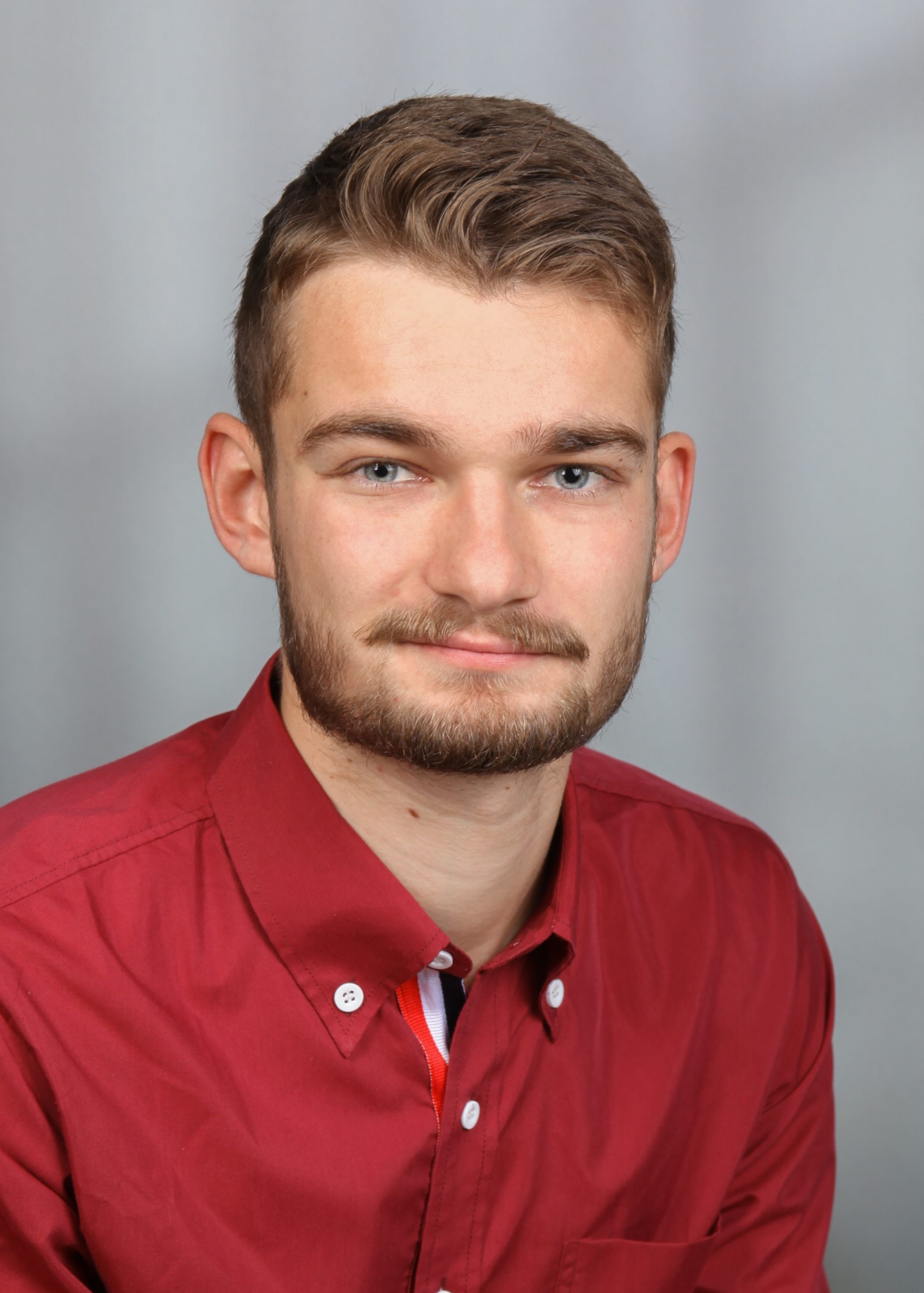
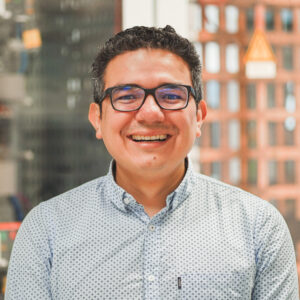
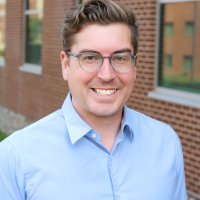
Tobias Kögel is a doctoral candidate and researcher at the Institute of Microwaves and Photonics (LHFT) within the Department of Electrical-Electronic-Communication Engineering at Friedrich-Alexander-Universität Erlangen-Nürnberg (FAU). His work focuses on advanced radar systems, signal processing, and RF technologies. Kögel holds an M.Sc. in Electrical Engineering and Information Technology (EEI) and has been actively engaged in research since 2020. His research interests span radar localization, radar signal processing in FPGAs, software-defined radio, switched injection-locked oscillators (SILOs), and UHF-RFID systems. He seeks students for projects involving hardware development, FPGA programming (VHDL/Verilog), and Python-based simulation of radar algorithms using Kalman filters. Kögel has contributed to over a dozen peer-reviewed publications since 2019, addressing topics like bistatic radar networks, time-frequency synchronization, and hybrid RFID-odometry localization. His work frequently appears in IEEE journals and conferences such as IEEE Radar Conference and International Microwave Symposium. He advises students on hardware design, FPGA implementation, and algorithm development. His lab (LHFT) focuses on microwave photonics, radar systems, and RFIC design.
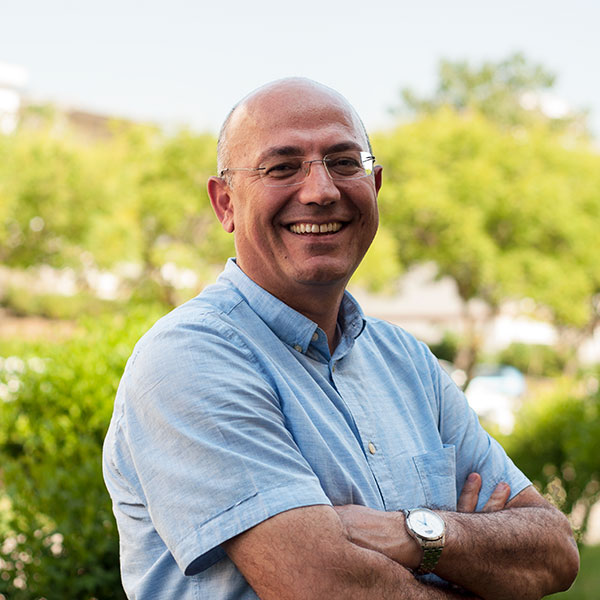
Jérôme HÄRRI is a Professor at EURECOM, specializing in Communication Systems within the Faculty of Communication Systems. He leads research in vehicular wireless communication, traffic modeling, and localization technologies. His work focuses on cooperative intelligent transport systems (C-ITS), autonomous driving, and standards like 5G/6G for mobility. He coordinates the Post-Master program on Connected Vehicles and C-ITS and teaches courses on C-ITS standards, mobility modeling, and smart transportation systems. Education & Qualifications: Holds a Habilitation à diriger des recherches (HDR) in Mobile Cyber-Physical Systems (2013). Research Interests: Vehicular networks, traffic flow modeling, cooperative localization, control systems, and ADAS technologies. His research emphasizes practical applications, such as precise positioning for autonomous vehicles and safety-critical V2X communications. He has developed simulation frameworks like iTETRIS and ms-van3t-CARLA for evaluating vehicular systems. His work bridges theoretical advancements with real-world deployment, including contributions to 5G NR and cooperative perception for platooning vehicles. Awards: Best Short Paper Award (2018) for work on V2X service integration. Best Poster Award (2018) for localization in mixed-vehicle control systems. Best Student Paper Award (2016) for cooperative localization research. ACM MSWIM Best Demo/Poster Award (2011) for ITS simulation tools. Best Technical Paper Award (2005) for vehicular trajectory analysis. Grants & Projects: Leads initiatives like Safe4Rail-3 (railway safety architecture) and collaborates on 5G cross-border V2X trials (5GCroCo). His work includes open-source contributions like OpenAirInterface for 6G smart networks. Labs & Teams: Active in EURECOM's Communication Systems research group, focusing on vehicular knowledge networking and 5G/6G testbeds. His team explores AI-driven roundabout control and cooperative perception frameworks.
Andres Barrado Bautista is a Full Professor in the Department of Electronic Technology at the School of Engineering, Carlos III University of Madrid (UC3M). He leads research within the Electronic Power Systems Group (GSEP), focusing on power electronics, energy conversion, and their applications in aerospace, electric vehicles, and renewable energy systems. His work bridges theoretical modeling and practical implementation, with a strong emphasis on high-efficiency DC-DC converters, fuel cell integration, and smart energy management. PhD in Electrical Engineering (specific date not provided) His research interests center on power electronics for energy systems, including modeling and control of DC-DC converters, fuel cells, batteries, and supercapacitors. He has made significant contributions to the development of advanced converter topologies for photovoltaic systems, electric propulsion in aerospace, and hybrid electric vehicles. His work integrates system-level black-box modeling, small-signal analysis, and real-time digital control, often applied to complex embedded and distributed power architectures. The recent publications (2020–2025) highlight a strong trend in high-performance power converters for space applications (e.g., electrospray thrusters), biomedical devices (e.g., wireless pacemaker charging), and renewable integration. The articles reflect expertise in magnetic component modeling, converter stability, and advanced control techniques, with frequent publication in IEEE Transactions journals. He has supervised numerous theses and leads a wide portfolio of research projects funded by national agencies (AEI, CAM), EU programs, and industry partners such as Airbus, Siemens, CIEMAT, and SENER. Convertidor CC-CC reductor y elevador, método de conversión CC-CC, y planta fotovoltaica que incorpora dicho convertidor (2019) Convertidor y método de conversión bidireccional de corriente continua a corriente continua sin aislamiento galvánico (2019) Active control procedures for the connection of very capacitive loads using SSPCs (2017) Active control procedures for the connection of very capacitive loads using SSPCs (2014) Método y dispositivo de transformación de corriente continua en corriente alterna (2014) Método y sistema de alimentación de una carga constituida por una pluralidad de cargas elementales, en particular de LED (2013) He has secured substantial research funding as principal investigator on projects such as SMARTGREENERGY, ECOSIVE, and several initiatives related to hydrogen-powered drones and space propulsion. He also actively collaborates on projects involving intelligent modular converters, energy storage, and electromagnetic compatibility. His lab, the Electronic Power Systems Group, works on both simulation and experimental validation of power electronics systems, with applications ranging from microsatellites to electric transportation.
Samuel Atcherson, Ph.D., is a Professor at the University of Arkansas for Medical Sciences (UAMS) in both the College of Health Professions Department of Audiology and Speech Pathology and the College of Medicine Department of Otolaryngology—Head and Neck Surgery. His research spans audiologic rehabilitation, auditory electrophysiology, and health literacy, with a focus on addressing challenges faced by individuals with hearing loss, particularly in healthcare communication during mask use and accessibility for people with disabilities. Research Interests: Atcherson's work integrates audiologic rehabilitation through innovations like transparent face masks and amplified stethoscopes, auditory electrophysiology using evoked potential systems, and health literacy research examining readability of medical materials, especially for those with disabilities. Publications: With over 60 peer-reviewed articles, his recent publications explore AI integration in audiology, masked speech challenges, and health disparities. A recurring theme is the intersection of technology, accessibility, and multidisciplinary collaboration. Grants & Awards: He has secured over $477,000 in grants, including NIH funding, and holds the Distinguished Scholar Fellow title from the National Academies of Practice. Leadership: Atcherson serves on the Editorial Board of the Journal of the American Academy of Audiology and has contributed to textbooks like Auditory Electrophysiology: A Clinical Guide .
Yong-Kyu Yoon is a Professor in the Department of Electrical & Computer Engineering at the University of Florida. His expertise spans MEMS technology, metamaterials, and millimeter-wave antennas. He earned his PhD from the Georgia Institute of Technology in 2004. His research focuses on advanced RF device design, wireless power transfer, and biomedical sensor systems, with notable contributions to antenna miniaturization and 6G communication architectures. He received the HWCOE Doctoral Dissertation Advisor/Mentor Award in 2025. His work integrates metamaterials for high-efficiency antennas and wireless systems, including innovations in metaconductors for low-loss interconnects and compact AiP solutions. Recent projects include smart biomedical devices like diagnostic mouthguards and implantable medical sensors. His publications emphasize antenna design, electromagnetic shielding, and machine learning applications in material characterization. Yong-Kyu Yoon’s research bridges theoretical electromagnetics with practical applications in healthcare, communications, and environmental monitoring. His team develops technologies for 5G/6G systems, energy-efficient RF components, and wearable biomedical sensors, leveraging advanced materials and fabrication techniques.
Prof. Yasar Gurbuz is a Professor of Electrical Engineering at Sabanci University's Faculty of Engineering and Natural Sciences, where he has been a faculty member since 2000. He holds a B.Sc. (1990), M.S. (1993), and Ph.D. (1997) in Electrical Engineering. Prior to Sabanci, he worked as a senior research associate at Vanderbilt University (1997-1999) and at Aselsan Inc. (1999-2000). His research focuses on microelectronic systems, RF/microwave integrated circuits, MEMS, and semiconductor-based sensors/actuators. He is a member of IEEE and SPIE and leads a research group at Sabanci University. His research interests emphasize high-performance analog/mixed-signal ICs, phased array systems for 5G applications, low-noise amplifier design, and infrared photodetectors. Recent work includes advancements in SiGe BiCMOS technology for RF front-ends, plasmon-enhanced infrared sensors, and adaptive phased array architectures. His publications span topics like low-phase-noise oscillators, wideband power amplifiers, and smart pixel readout integrated circuits (DROICs). Prof. Gurbuz’s contributions extend to microbolometer thermal modeling, biomedical sensors for point-of-care diagnostics, and nanorectenna-based energy harvesting. His designs often integrate novel fabrication techniques with advanced signal processing algorithms to address challenges in high-frequency electronics and biomedical sensing.
Dr. Bayaner Arigong is an Assistant Professor in the Department of Electrical & Computer Engineering at Florida A&M University - Florida State University. He holds a Ph.D. in Computer Science and Engineering from the University of North Texas (2015), and M.Sc. and B.Sc. degrees in Electrical Engineering from China University of Geosciences, Wuhan (2008 and 2005). Prior to academia, he worked as an RF System Design Engineer at Infineon Technologies (2014–2017). Education: Ph.D., Computer Science and Engineering, University of North Texas, 2015 M.Sc., Electrical Engineering, China University of Geosciences, Wuhan, China, 2008 B.Sc., Electrical Engineering, China University of Geosciences, Wuhan, China, 2005 Research Interests: Beamforming Phased Array Antenna Integrated Passive Device Design Electromagnetic Cloaking & Metamaterials His recent work focuses on frequency-agile RF analog co-processors , 3D-printed reconfigurable components , and deep learning-enhanced monopulse receivers . Over 60 publications span topics like tunable Nolen matrices, VO₂-based smart materials, and IoT spectrum coexistence frameworks. He leads a research group actively recruiting students in RF systems, high-frequency circuits, and electromagnetic theory. Lab/Team: Active research group focused on RF circuit innovation and applied electromagnetic systems.
Dr. John G. Hayes is a Senior Lecturer in Electrical & Electronic Engineering at University College Cork (UCC), Ireland. He specializes in electric vehicles, energy systems, and power electronics. With a PhD from UCC (1998), he has over two decades of academic and industry experience, including roles at General Motors and Power One Inc. His current research focuses on power electronics, magnetics, and renewable energy applications, particularly in automotive and industrial contexts. Hayes directs UCC's Power Electronics Research Laboratory (PERL), collaborating with global firms like Analog Devices and General Motors. He authored a leading textbook on electric powertrains, published by Wiley & Sons and translated into Chinese. Hayes' work has been recognized with the William M. Portnoy Award for Best Paper (2011) at IEEE ECCE. Education: B.E., University College Cork (1986) M.S.E.E., University of Minnesota (1989) M.B.A., California Lutheran University (1993) Ph.D., University College Cork (1998) Research Interests: Power electronics for electric vehicles, energy storage systems, high-power converters, magnetics design, smart grid technologies, and renewable energy integration. Hayes emphasizes industrial collaborations, particularly in advancing EV charging infrastructure and magnetic component optimization. Publications: Over 50 peer-reviewed articles and conference papers, focusing on magnetic materials, power converter control strategies, and EV energy management. Recent work explores high-frequency magnetics for EMI filters and modular e-axle design for heavy-duty applications. Awards & Recognition: William M. Portnoy Award (2011) 6 patents, including inductive charging and power converter designs Grants & Labs: PERL's projects include EU-funded collaborations on wave energy storage and high-power DC-DC converters. Hayes advises PhD students in power electronics and drives, with notable alumni contributing to industry and academia.
James C. Sturm is the Stephen R. Forrest Professor of Electrical Engineering and Associated Faculty at the Princeton Materials Institute. He leads the Sturm Lab, focusing on materials, processing, and devices for microelectronics and macroelectronics. His work spans silicon-based heterojunctions, three-dimensional integration, and large-area electronics for flexible displays and biomedical applications. He holds a B.S.E. from Princeton University and a Ph.D. from Stanford University. His research bridges nanoscale device scaling and low-cost, large-area manufacturing technologies for organic semiconductors and TFTs. Key research areas include VLSI scaling, optoelectronics, and applications of zinc-oxide thin-film transistors (ZnO TFTs) for GHz circuits. He has pioneered methods for microfluidic cell processing and structural health monitoring using sensing sheets. His lab develops soft robotics and hybrid LAE-CMOS systems for tactile sensing skins. Education: Ph.D., Stanford University, 1985 M.S.E.E., Stanford University, 1981 B.S.E., Electrical Engineering (Engineering Physics), Princeton University, 1979 His publications highlight breakthroughs in GHz-frequency electronics, piezoelectric robotics, and large-area RFID systems. Awards include the IEEE Fellowship and Princeton’s President’s Distinguished Teaching Award. He advises students in microelectronics, macroelectronics, and biomedical engineering. Recent work integrates AI with large-area electronics for smart spaces and explores drug gradient effects on cancer cell evolution. The Sturm Lab collaborates on projects like the 'evolution accelerator' for real-time cancer cell observation and 3D semiconductor integration with industrial FDSOI platforms.
Peter Neumeister is a Professor at Hochschule für nachhaltige Entwicklung Eberswalde (HNEE), specializing in the fundamentals of engineering sciences. His work focuses on advanced materials characterization and modeling, particularly in piezoelectric, ferroelectric, and magnetic shape memory systems. Teaching areas: Physics, Mechatronics Email: Peter.Neumeister@hnee.de Research trends from his publications span: Magnetic Shape Memory Alloys : Modeling, characterization, and self-sensing actuator development Piezoelectric Materials : Composite integration, poling optimization, and ultrasonic transducer design Electrocaloric Effect : Cooling applications and thermal measurement methodologies Computational Methods : Finite element simulations, hysteresis modeling, and fracture mechanics analysis
Dr. Nutapong Somjit is an Associate Professor in RF and Wireless Engineering at the School of Electronic and Electrical Engineering, University of Leeds . His expertise lies in integrated high-frequency components, low-cost microfabrication, and bioelectromagnetics. He has held academic roles at TU Dresden and the University of Leeds since 2013, with adjunct faculty appointments at KTH Royal Institute of Technology since 2022. Education : Dipl.-Ing. (MSc) from Dresden University of Technology (2005) PhD from KTH Royal Institute of Technology (2012) Research Interests : Integrated smart high-frequency components Sustainable micro and nanosystems Low-cost microfabrication processes Applications in wireless communications and agriculture Scientific Awards : Best Paper Award (EuMIC prize), 2009 IEEE MTT-S Graduate Fellowship, 2010–2011 IEEE Doctoral Research Award (Antennas and Propagation Society), 2012 Mentoring : Dr. Somjit actively mentors postgraduate researchers, including Kamol Boonlom , and supports PhD opportunities at the University of Leeds. Labs & Teams : Affiliated with the Pollard Institute and the Microwave and Millimetre-Wave Engineering research group.
Deniz Yildirim is an Associate Professor in the Department of Electrical Engineering at Istanbul Technical University. He received his BS from Istanbul Technical University (1989), MS (1993), and PhD (1999) from the University of Colorado at Boulder. Current role: Associate Professor (since 2025) Past roles: Assistant Professor (1999-2018), Doctor Lecturer (2018-2025), Deputy Head of Department (2015-2018) His research focuses include: Power electronics and converter systems Renewable energy integration (solar/wind) Electric machines and energy conversion Grid-connected inverter technology Recent research trends involve: Advanced gate driver designs for high-power IGBTs Flicker reduction in LED drivers Split-source converter optimization for photovoltaics Ripple control in inverter systems Active projects include: High-efficiency DC-DC converters Industrial automation power supplies Grid-tie inverter development for solar Wind energy system optimization
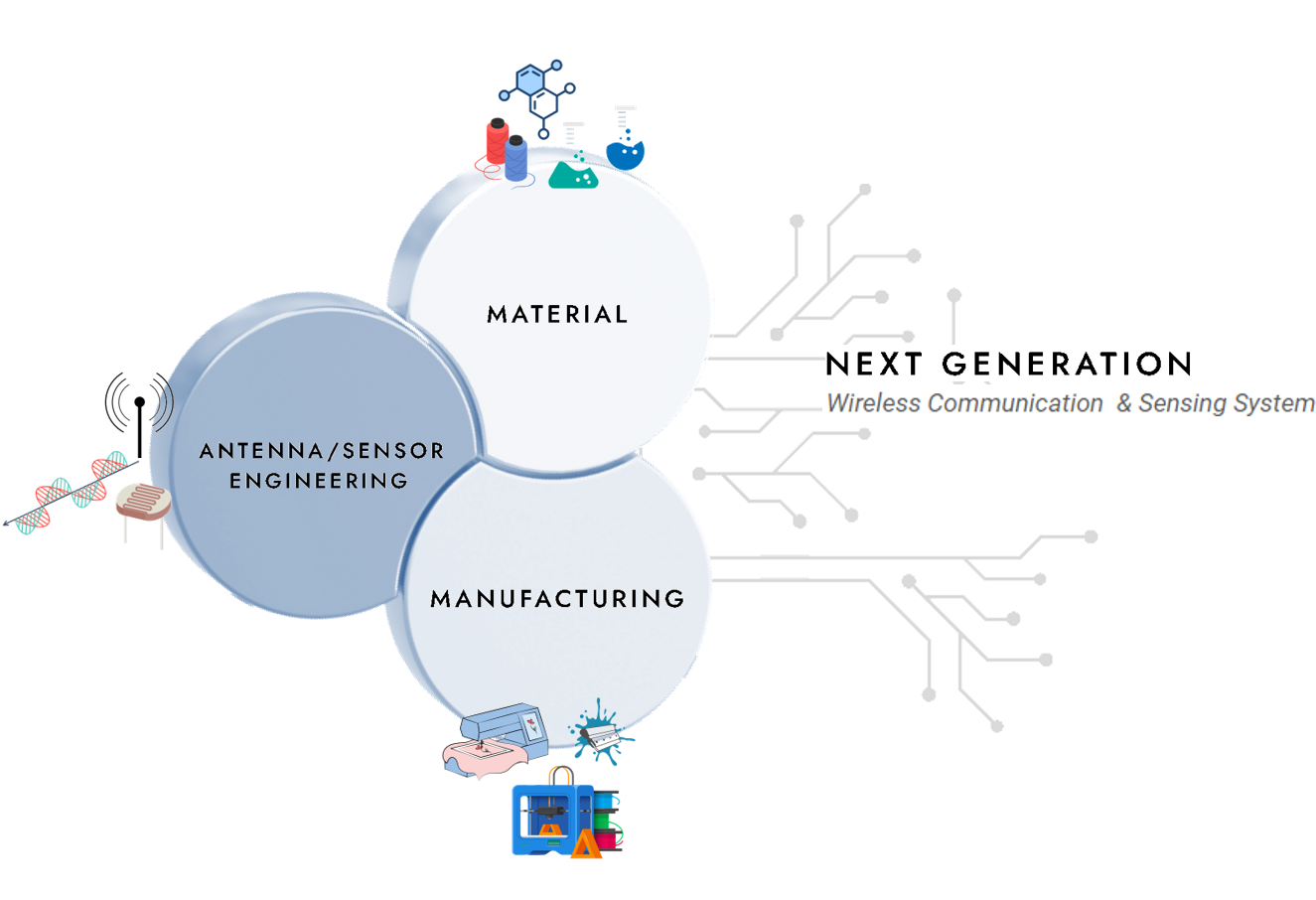
Dr. Roy Simorangkir is an Assistant Professor in the Department of Engineering at Durham University, specializing in innovative antenna and sensor design for next-generation wireless systems. His work bridges electromagnetics, materials science, and biomedical applications. B.S. in Telecommunication Engineering, Institut Teknologi Bandung (2010) M.S. in Electrical and Electronic Engineering, Yonsei University (2014) Ph.D. in Electronic Engineering, Macquarie University (2018) His research focuses on unconventional antennas and sensors for wireless communication, emphasizing cutting-edge methodologies and materials. Key areas include: Biomedical implantable devices Flexible and transparent antenna design RF energy harvesting Chipless RFID systems Millimeter-wave radar integration Wearable IoT sensors Recent publications highlight advancements in implantable antennas for cardiac applications, triband wearable antennas for GNSS tracking, and ML-enhanced RFID systems. His group collaborates with institutions like Tyndall National Institute and P&G on sustainable IoT projects. Scientific recognition includes the 2025 IEEE Sensors Journal Best Paper Runner-Up Award. His lab at Durham welcomes students and researchers working on wireless technology and biomedical innovations.
Wilmar Martinez Martinez is an Associate Professor at the Department of Electrical Engineering (ESAT) , KU Leuven , and Research Line Coordinator at EnergyVille. His work bridges power electronics, renewable energy systems, and electromobility technologies. Education: PhD in Power Electronics (Shimane University, Japan), MSc in Electrical Engineering (Universidad Nacional de Colombia) Research Interests: Power conversion optimization for energy systems, magnetic components design, SiC/GaN semiconductor applications, and machine learning in power electronics Projects: Leads research on high-frequency magnetic components, wireless charging topologies, and sustainable energy storage solutions with ongoing projects until 2028 Publications: 15 most recent works focus on converter architectures, thermal modeling, and AI-driven magnetic loss predictions Affiliations: Member of EnergyVille, Leuven Centre for Affordable Sustainable Technology, and KIES - KU Leuven Institute for Energy and Society
Tim Hansen is the Harold C. Hohbach Endowed Associate Professor at the Department of Electrical Engineering and Computer Science at South Dakota State University. He holds a B.S. in Computer Engineering from Milwaukee School of Engineering (2011) and a Ph.D. in Electrical Engineering from Colorado State University (2015). B.S. in Computer Engineering, Milwaukee School of Engineering, 2011 Ph.D. in Electrical Engineering, Colorado State University, 2015 Dr. Hansen's research focuses on electric power systems and markets , with a specialization in optimization, high-performance computing, and machine learning applied to cyber-physical-social systems. His work addresses critical challenges in grid stability, including virtual inertia implementation , multi-area inertia estimation , and low-inertia microgrid control , leveraging advanced computational techniques for energy management systems. He also investigates data-driven approaches for secure electric grids in communities impacted by climate change. Recent research trends include federated learning for grid analysis, model predictive control for voltage and frequency regulation, and computationally efficient inverter modeling. His publications emphasize converter-dominated power systems , energy storage applications , and smart grid technologies across multiple spatiotemporal scales. Scientific awards include: 2024 Outstanding Researcher Award, South Dakota State University Jerome J. Lohr College of Engineering 2022 Best Paper Award for AC Optimal Power Flow research 2020 Milwaukee School of Engineering Graduate of the Last Decade 2019 IEEE-HKN Teaching Award Multiple IEEE best paper awards (2017, 2016) Dr. Hansen directs grants totaling over $2 million, including: $357,467 (DOE SETO, 2024): Transmission/Distribution Systems with Flexible Coordination $750,000 (NSF, 2023): Secure Grids for Climate-Impacted Communities $978,708 (NSF, 2022): Heterogeneous HPC Cluster Development $630,897 (DOE, 2019-2021): Dynamic Response Modeling of Converter-Dominated Systems He chairs IEEE committees including Region 4 Siouxland Section Executive Committee and co-chairs the IEEE PES Research Committee, while advising the IEEE-HKN Honor Society.