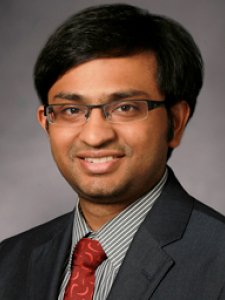
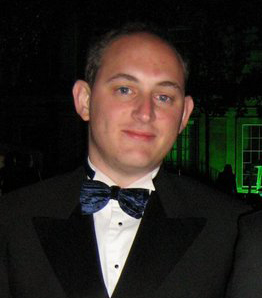
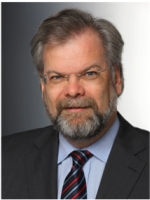
Kristian Gjøsteen is a Professor at the Department of Mathematical Sciences within the Norwegian University of Science and Technology (NTNU) . He actively contributes to the Algebra Group and specializes in cryptographic systems with a focus on electronic voting , security proofs , and privacy-enhancing technologies . Educational Background: MSc and PhD from NTNU Research Interests: His work spans cryptography , key exchange protocols , cloud security , and formal verification of security mechanisms. Particular emphasis is placed on coercion-resistant voting systems , lattice-based encryption , and blockchain privacy models . Article Trends: Recent publications demonstrate expertise in post-quantum cryptography , machine-checked security , and privacy-preserving voting architectures . Collaborative efforts explore hybrid cryptographic schemes , verifiable decryption , and mix-net implementations for secure elections.
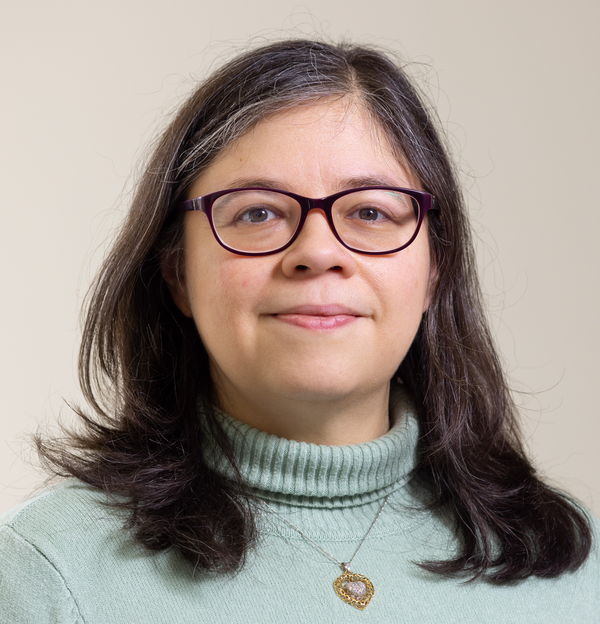
Paul Evans is a Professor in the Department of Materials Science & Engineering at the University of Wisconsin-Madison, College of Engineering. His research focuses on nanoscale materials synthesis, ultrafast dynamics, and advanced X-ray characterization techniques. PhD, Harvard University (2000) MS, Harvard University (1996) BS, Cornell University (1994) Evans investigates solid-phase epitaxy of complex oxides, strain imaging in acoustic devices, and optically driven phase transitions. His work combines experimental and computational approaches, including deep learning for diffraction data analysis. His recent publications highlight breakthroughs in nanoscale crystallization, ultrafast magnetization dynamics, and hybrid magnon-phonon systems. Awards include the Bascom Professorship and Vilas Mid-Career Award. Surface Science and Technology Bascom Professorship (2022) Vilas Associate Award (2019) Polygon Engineering Outstanding Instructor Award (2006) Evans teaches courses in materials structure, advanced X-ray methods, and thesis research. His lab enables scalable synthesis of perovskites and defect-minimized oxide heterostructures.
Heike Riel serves as IBM Fellow, Head of Science of Quantum and Information Technology, and Lead of IBM Research Quantum Europe at IBM Research. Her work focuses on quantum computing, nanoscale electronics, and optoelectronic device innovation. PhD in Physics (University of Bayreuth, 2003) MBA (Henley Business School, 2010) Research interests center on quantum computing hardware, nanoscale device engineering, and neuromorphic computing technologies. Her publications demonstrate expertise in semiconductor-metal interfaces, superconducting quantum devices, and nanowire-based systems. Article keywords include Quantum Physics , Nanotechnology , and Materials Science with sub-fields spanning spin qubit control , Josephson junction dynamics , and hybrid quantum systems . TR100 (2003) IEEE Andrew S. Grove Award (2022) National Academy of Engineering (2022) Riel advises academic institutions as member of review committees and serves on Germany's Forschungszentrum Jülich Scientific Advisory Council. She has filed over 50 patents in semiconductor technologies and led the development of 20" full-color OLED displays.
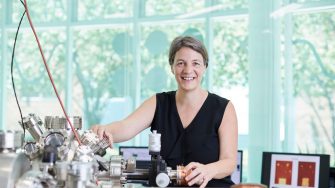
Katia Gallo is a Professor at the Department of Applied Physics, KTH Royal Institute of Technology, where she leads the Nonlinear and Quantum Photonics Group. She is actively involved in national and European quantum initiatives, including directing the Quantum Communication program in the Swedish Quantum Flagship (WACQT) and the National Quantum Communication Infrastructure (NQCIS) under EuroQCI. Her academic affiliations are centered at KTH, with prior research experience at the Optoelectronics Research Centre in Southampton, UK. Education: MSc in Electronic Engineering, University ‘La Sapienza’, Rome, Italy (1997) PhD in Electronic Engineering (joint with Stanford University, USA) PhD in Physics, University of Nice-Sophia Antipolis, France (2001) Her research focuses on nonlinear and quantum photonics , with core interests in integrated optics, ferroelectric materials, quantum optics, and biophotonics. She investigates the fundamental physics and applications of nonlinear wave interactions in photonic circuits, particularly using lithium niobate platforms. Her work spans from theoretical modeling to experimental realization of devices for all-optical signal processing, quantum communication, and sensing. She has made significant contributions to the development of thin-film lithium niobate photonic devices, including grating filters, superconducting detectors, and wavelength-sensitive systems. Her recent publications (2017–2024) reflect a strong trend toward integrated quantum photonics , nanophotonic devices on lithium niobate , and biophotonic applications . Key themes include electro-optic tuning, superconducting single-photon detection, nonlinear frequency conversion, and surface-enhanced Raman scattering for sensing. The interdisciplinary nature of her work bridges physics, engineering, and materials science. Scientific Awards and Recognitions: Swedish Research Council Senior Fellowship EU Marie Curie Fellowships (TMR and Intra-European) Leverhulme Trust Early Career Fellowship London Technology Network Business Fellowship Centre and South Italy IEEE Student Award KTH Rektor Prize for Equality and Diversity Katia Gallo is deeply involved in academic service, serving as course responsible and examiner for key courses such as Applied Modern Physics , Fundamentals of Photonics , and Quantum Technology . She mentors students and leads a research group focused on advancing photonic technologies. Her leadership extends to major national and European quantum infrastructure projects, positioning her at the forefront of quantum communication development in Sweden and Europe. She leads the Nonlinear and Quantum Photonics Group at KTH, which conducts cutting-edge research in nonlinear optical phenomena, quantum photonics, and integrated photonic devices. The group works on both theoretical and experimental aspects, utilizing advanced fabrication and characterization techniques to develop next-generation photonic technologies.
Saptarshi Das is an Associate Professor in the Department of Engineering Science and Mechanics within the College of Engineering at Pennsylvania State University. His research focuses on cutting-edge semiconductor technology, particularly in the realm of two-dimensional materials for next-generation electronic devices. Das maintains an active research program with numerous publications in high-impact journals including Nature, Nature Electronics, and Nature Communications. Dr. Das's research interests center around two-dimensional materials, semiconductor devices, and nanoelectronics with applications in AI hardware and computing systems. His work explores the fundamental properties and applications of materials like transition metal dichalcogenides (MoS 2 , WSe 2 ), graphene, and other 2D materials for creating novel electronic devices that can overcome limitations of traditional silicon-based technology. His research spans from fundamental material science to practical device implementation, with particular emphasis on developing energy-efficient computing solutions. Analysis of Dr. Das's recent publications reveals a strong focus on 2D material-based transistors, 3D integration techniques, and novel computing architectures. His work demonstrates significant advancements in p-type 2D transistors, monolithic 3D integration, and biomimetic sensor systems. The research shows a clear trajectory toward developing non-silicon computing platforms that could revolutionize AI hardware and low-power electronics. Dr. Das leads an active research group with multiple PhD students and collaborators working on semiconductor device fabrication, characterization, and integration. His laboratory likely has strong connections with Penn State's Materials Research Institute and other interdisciplinary research centers focused on advanced materials and semiconductor technology. His research has attracted significant attention, with multiple mentions in university news and science media outlets highlighting breakthroughs in 2D computing and electronic tongue technology.
Dr Dong Jun (DJ) Kim is a Senior Lecturer in the School of Chemistry at UNSW Sydney since 2023, focusing on the design and synthesis of supramolecular compounds for energy storage applications. Previously, he served as a Lecturer at the same institution from 2018 to 2023. Ph.D. in Materials Science and Engineering, KAIST (2015) B.Sc. in Materials Science and Engineering, Yonsei University (2010) His research bridges supramolecular chemistry and energy storage materials, particularly in developing organic rechargeable batteries, solid-state electrolytes, and graphene-based composites. He explores molecular pump systems, redox-active macrocycles, and sustainable synthesis methods. Recent publications highlight trends in solid-state battery technology, molecular self-assembly, and chiral material engineering. His work spans from fundamental molecular design to scalable manufacturing processes for practical energy applications. Scientific recognition includes the prestigious ARC Discovery Early Career Researcher Award (DECRA) 2021–2024. He has secured research grants from Australia's Economic Accelerator and UNSW Faculty of Science – Industry Network Seed Funding. Collaborations with global institutions and co-publications with researchers like Prof. J. Fraser Stoddart (Nobel Laureate) underscore his contributions to advancing battery technologies via supramolecular and nanoscale innovations.
Professor Yong Kang Chen is a Professor of Applied Mechanics at the University of Hertfordshire, where he leads the Energy and Sustainable Design research group and serves as Head of the Automotive, Mechanical and Mechatronic Division in the School of Physics, Engineering & Computer Science. He holds a PhD, MSc, and BEng, and is a Chartered Engineer (CEng) with fellowships from the Institution of Mechanical Engineers (FIMechE) and Higher Education Academy (FHEA). His research focuses on applied mechanics with specialized interests in renewable energy systems, computational fluid dynamics, nanomaterials, and structural integrity. Key research themes include: Energy storage systems and flywheel technology optimization Phase change materials for building efficiency Wind turbine design for urban environments Surface engineering of polymer nano-composites Nano-fluid applications in thermal systems His publication portfolio demonstrates strong emphasis on sustainable energy solutions, with recent work exploring wind turbine shroud systems, PCM-enhanced building materials, and flywheel energy storage optimization. Nanomaterial research constitutes a significant secondary focus, particularly carbon quantum dots for optoelectronic applications. Honors include: Fellow of The Institution of Mechanical Engineers (FIMechE) Fellow of the Higher Education Academy (FHEA) He has secured over £1.3 million in research funding from EPSRC, Innovate UK, EU FP7 programs, and industrial partnerships. Notable projects include leadership roles in EU MAAT and SHELL consortiums, thermal analysis for Global Invacom Ltd, and development of structural health monitoring for wind turbine blades. He leads multiple active laboratories focusing on energy systems and advanced materials characterization.
Dr. Sandra Diaz Pier is a Scientific Lead at the Jülich Supercomputing Centre (JSC) within the Jülich Research Centre , Germany. Specializing in computational neuroscience , high performance computing (HPC) , and machine learning , she bridges neuroscience and advanced computational methods through her research. Education: B.Sc. in Electronic Systems Engineering, Mexico M.Sc. in Computer Science (focus: machine learning, quantum computing), Mexico Second M.Sc. in Electrical Engineering, Ontario, Canada Ph.D. in Computer Science, Germany (2021) Her research focuses on modeling and simulating brain dynamics and plasticity at multiple scales, leveraging HPC to accelerate large-scale neural network simulations. She actively contributes to EU projects like the Human Brain Project (HBP) , Virtual Brain Cloud , and EBRAINS 2.0 , emphasizing infrastructure development and educational training. Her work includes open-source tools such as the NEST simulator , The Virtual Brain , and L2L , enabling efficient parameter exploration and multiscale co-simulation frameworks. The 15 most recent publications highlight her interdisciplinary approach, spanning topics from quantum computing in biomolecular simulations to neural plasticity algorithms and cloud-based brain modeling . These articles reflect her expertise in integrating machine learning , multi-scale simulation , and HPC infrastructure for neuroscience challenges, including seizure propagation, Parkinson’s disease progression, and swarm intelligence in spiking networks. She leads technical coordination in projects like EBRAINS and serves as a task leader in the HBP infrastructure work package , while also organizing workshops and hackathons for open-source tools. Her role involves supporting domain scientists through methodological research and workflow optimization for brain simulations.
Hideyuki Suzuki is a Professor at the Department of Information and Physical Sciences , Graduate School of Information Science and Technology , Osaka University , where he has been employed since April 2016. His research spans nonlinear dynamics , hybrid systems , and many-body dynamics , with applications to power systems , brain modeling , and epidemic networks . 2001 : Ph.D. in Mathematical Engineering and Information Physics, University of Tokyo 1998 : M.Eng. in Mathematical Engineering and Information Physics, University of Tokyo 1996 : B.Sc. in Mathematics, University of Tokyo His research interests focus on nonlinear dynamical systems , particularly those with discontinuities or large-scale interactions , such as chaotic billiards , hybrid systems , and spatio-temporal chaos . He explores computational applications in machine learning (e.g., chaotic Boltzmann machines ), epidemiology (e.g., vaccine allocation models ), and power grid stability . The 15 most recent articles highlight his work in photonic computing , nonlinear sampling algorithms , and chaotic dynamics in engineering and biology . Key trends include interdisciplinary applications of nonlinear mathematics to renewable energy , neuroscience , and epidemic spread . Scientific awards include: 2022 Osaka University Prize 2018 JSIAM Best Paper Award for Hamiltonian Monte Carlo (2017) He leads the Nonlinear Mathematics Course laboratory, which accepts graduate and undergraduate students. His team investigates hybrid dynamical systems , chaotic computation , and real-world modeling in fields like traffic dynamics and epidemic networks . Research is supported by grants from JST CREST and ALCA-Next programs.
Manuel Wimmer is a Full Professor and Head of the Department of Business Informatics – Software Engineering at Johannes Kepler University Linz, Austria. He also serves as the Program Director for the Business Informatics master's program since 2019. His academic leadership extends to representing JKU Linz in the AutomationML society and leading significant research initiatives. Dr. Wimmer received his Ph.D. and Habilitation from TU Wien. His academic journey includes: Research associate at the University of Malaga, Spain Visiting professor at the University of Marburg, Germany Visiting professor at TU Munich, Germany Assistant professor at the Business Informatics Group (BIG), TU Wien, Austria Professor Wimmer's research focuses on Model-Driven Software Engineering and its applications, particularly in the emerging field of Digital Twins . His work bridges theoretical foundations with practical industrial applications, with special emphasis on model transformations, runtime modeling, and the integration of artificial intelligence techniques into model-driven approaches. More recently, he has been exploring the intersection of model-driven engineering with quantum computing, investigating how modeling principles can be applied to quantum software development. His recent publications reveal a strong trend toward Digital Twin engineering, with approximately 40% of his 2023-2025 publications focusing on various aspects of Digital Twin technology. Another significant strand of his work involves the application of AI and machine learning techniques to enhance model-driven engineering processes. The emergence of quantum software engineering as a research direction is also notable in his most recent publications, demonstrating his ability to identify and explore cutting-edge research frontiers. From 2017-2023, Professor Wimmer led the Christian Doppler Laboratory on Model-Integrated Smart Production (CDL-MINT), where he developed engineering approaches for digital twins. He is also the co-author of the influential book "Model-driven Software Engineering in Practice" (2nd edition, 2017). Professor Wimmer is actively involved in the organization of major scientific events including the IEEE International Conference on Quantum Software (QSW) and the International Conference on Engineering Digital Twins (EDTconf), demonstrating his leadership in these emerging research communities. His research has practical applications across various domains including smart cities, industrial automation, tunneling/construction, and quantum computing. The MATISSE project represents a significant multi-partner effort to develop a framework for federated digital twins of industrial systems.
Ko, Jonghyeon is a researcher affiliated with the Ulsan National Institute of Science and Technology (UNIST) , specifically the Department of Materials Science and Engineering within the College of Natural Science and Engineering. His work spans multiple disciplines including process mining, anomaly detection, blockchain technology, AI computing, and environmental engineering. His research interests include: Anomaly detection in business process event logs Blockchain-based systems for nuclear/radioactive waste management AI computing using neuromorphic devices Statistical leverage and information-theoretic approaches to process mining Optimization of autonomous vehicle safety systems Recent publications demonstrate expertise in developing formal languages for data quality simulation, probabilistic trace alignment methods, and practical tools for anomaly detection like AIR-BAGEL. While no explicit scientific awards are mentioned in the text, his work has been published in venues such as Information Systems , npj Unconventional Computing , and Expert Systems with Applications .
Professor Michelle Simmons is the Director of the ARC Centre of Excellence in Quantum Computation and Communication Technology at the University of New South Wales (UNSW Sydney). Her work focuses on advancing silicon-based quantum computing through atomic precision engineering, including projects on 2-qubit gates and logical qubit architectures. Involves cryogenic measurement and microwave spin control Collaborates with Silicon Quantum Computing Pty. Ltd. Her research spans fundamental quantum mechanics, device fabrication in CMOS cleanrooms, and error correction for scalable quantum systems. Recent publications highlight trends in quantum dot arrays, spin readout sensitivity, and interdisciplinary applications of quantum technologies. Professor Simmons received the Esther Hoffman Beller Lectureship (2022) for her contributions to qubit manufacturing. She leads a dedicated team at UNSW, working toward the development of high-fidelity quantum processors and exploring the intersection of quantum materials and computational innovation.
Dr. Alastair Kay is a Lecturer in the Department of Mathematics at Royal Holloway, University of London. His research focuses on theoretical quantum computation, quantum information theory, and quantum cryptography, particularly addressing challenges in quantum state transfer, error correction, and networked quantum systems. He holds a PhD from the University of Cambridge under Prof. Artur Ekert and a physics degree from Keble College, University of Oxford. His research spans topics such as Quantum state transfer protocols using engineered Hamiltonians Quantum error correction mechanisms for experimental systems Entanglement properties in graph states and spin networks Applications of quantum computing in cryptography and information theory The articles listed reflect his work in quantum information science, computational physics, and theoretical cryptography. Key trends include advancements in fault-tolerant quantum communication, optimization of spin chain dynamics, and foundational studies in quantum correlations and nonlocality. Alastair actively develops software tools like quantikz for quantum circuit diagrams and ConTeXi for LaTeX equation integration in Microsoft Office. He also emphasizes open science principles and reproducibility in quantum research through personal commentary and collaboration with his fiancée, a Panton Fellow in open research practices.
Claus M. Schneider is a Professor at the Faculty of Physics, University of Duisburg-Essen, and director of the Peter Grünberg Institute (PGI-6) at Forschungszentrum Jülich. His research focuses on the electronic structure of quantum materials, particularly correlated electron systems, using advanced photoelectron spectroscopy techniques. Current affiliations: University of Duisburg-Essen, Forschungszentrum Jülich Key experimental facilities: Synchrotron radiation sources DELTA (Dortmund), BESSY (Berlin), ELETTRA (Trieste) His work investigates the fundamental connections between electronic structure and physical properties like superconductivity, magnetism, and giant magnetoresistance. Techniques include high-resolution photoelectron spectroscopy with laboratory sources and synchrotron-based nanospectroscopy, enabling energy, spatial, and temporal resolution at atomic scales. Recent research highlights include the discovery of tunable orbital angular momentum in crystals and the production of the first 2D semimetal with spin-selective conductivity. His group operates specialized equipment such as a microwave-excited rare gas lamp system for photoemission and a hemispherical analyzer with spin-polarization analysis capabilities. The group's experimental infrastructure spans laboratory-based ARPES systems and synchrotron beamlines optimized for angle- and spin-resolved studies of magnetic multilayers, interfaces, and topological materials. All experiments are conducted under ultra-high vacuum conditions, with integrated surface preparation and characterization tools.
Mario Piattini is a Full Professor at the School of Computer Science of the University of Castilla-La Mancha (UCLM) in Spain, where he has served since 2002. He is the founder of the Alarcos research group and has held leadership roles including Director of the Mixed Center for Software Research and Development UCLM-Indra and Director of the Institute of Technologies and Information Systems (ITSI) at UCLM. He has also served as an associate professor at Universidad Complutense and Universidad Carlos III de Madrid. His educational background includes a PhD and degree in Computer Science from Universidad Politécnica de Madrid, a Psychology degree from UNED, and a Doctor Honoris Causa from Universidad de La Plata (Argentina). He holds multiple master's degrees in IT Audit, Human Resources Management, and Project Management, along with professional certifications including CISA, CISM, CRISC, CGEIT, PMP, and data governance certifications from DAMA. Professor Piattini is a leading expert in software quality, information systems, and security, with a recent strong focus on quantum computing and quantum software engineering. His research spans software engineering methodologies, data quality, AI systems, and the emerging field of quantum software development. He has been recognized as one of the top 15 scholars in systems and software engineering (2004-2008) and among the most active software engineering researchers (2010-2017). His recent publications reveal a significant shift toward quantum computing, with numerous articles on quantum software engineering, quantum-classical hybrid systems, quantum testing frameworks, and quantum software architecture. His work bridges theoretical foundations with practical engineering approaches for the emerging quantum computing paradigm. His scientific recognition includes multiple prestigious awards: Premio Nacional a la Trayectoria Profesional del Ingeniero Informático Premio Gabriel Alonso Herrera from JCCM for research trajectory Premio Grace Hooper from COIICLM Premio Aritmel from SCIE Premio FIUM from Universidad de Murcia Premio a la Trayectoria Profesional de ISACA Madrid As an academic leader, Piattini has founded several spinoff companies including Cronos Ibérica (now Alten), Kybele Consulting, Lucentia Lab, DQTeam, AQCLab (the first ENAC-accredited laboratory for software product quality and data evaluation), and I2SC. He serves as secretary of CTN71/SC7 and is a member of various ISO/IEC and UNE standardization committees, contributing significantly to software quality standards development. His research group has established AQCLab, which has been evaluating software quality for 25 years, demonstrating his long-term commitment to practical applications of software engineering research. Through his leadership in both academic and industrial contexts, Piattini has created a robust ecosystem connecting theoretical research with real-world software quality practices.