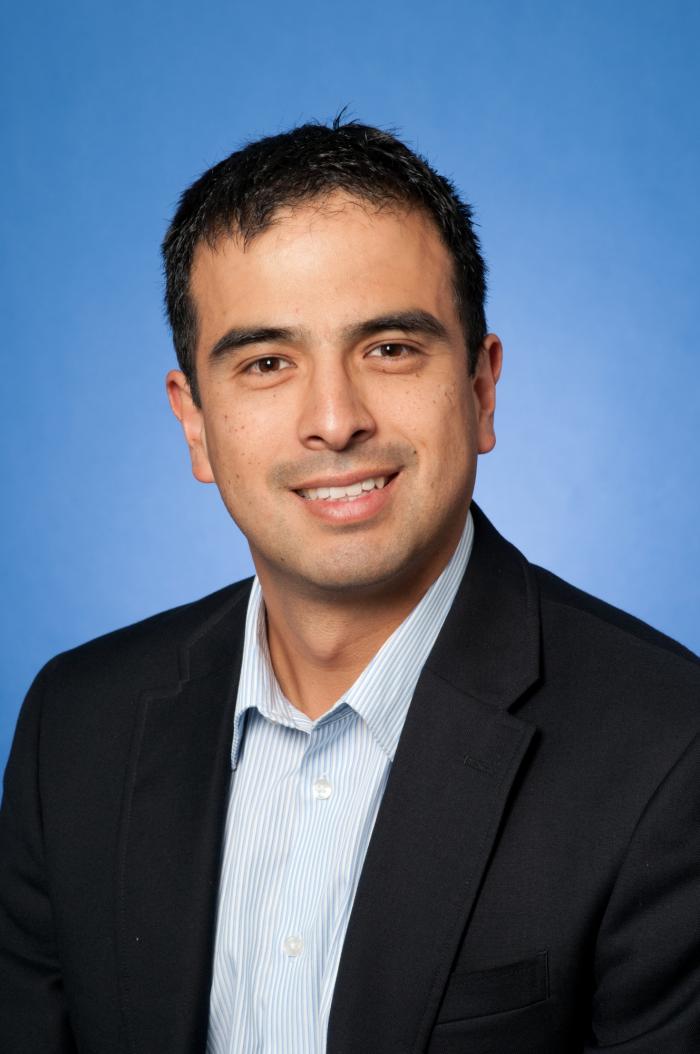
Paul E. Carrillo is a Professor of Economics and International Affairs at George Washington University, serving as full-time faculty. He holds editorial roles as Co-Editor of the Journal of Housing Economics and Associate Editor of Journal of Regional Science and Regional Science and Urban Economics . His research focuses on urban economics, public economics, and econometrics, particularly addressing issues like urban migration, tax compliance, and housing markets in Latin America and the U.S. Education: Ph.D. in Economics from the University of Virginia. Teaching includes courses like ECON 2101 (Intermediate Microeconomic Theory) and ECON 2157 (Urban and Regional Economics). His work examines policy interventions for cities, resource management (e.g., water metering), and systemic issues like tax fraud and misallocation in production. No scientific awards explicitly mentioned in texts. Research spans over two decades, with recent emphases on climate impacts, fiscal policy, and spatial equity.
Dina El-Zanfaly serves as an Assistant Professor in the School of Design at Carnegie Mellon University (CMU), where she directs the hyperSENSE: Embodied Computations Lab. Her work bridges computational design and human-centered interaction, focusing on how physicality shapes sensory experiences and cognitive processes through intelligent systems. Education: PhD in Design and Computation, Massachusetts Institute of Technology (MIT) Master of Science in Design and Computation, MIT (Fulbright scholar) Her research critically examines computational methods for augmenting sensory perception, with emphasis on embodied sense-making in hybrid environments. She investigates co-creative interactions between humans and intelligent systems, exploring how computational tools empower designers and non-designers to shape products, social spaces, and interconnected technologies. Key questions address mutual learning between humans and machines through improvisation and creative production. Analysis of her 2022-2025 publications reveals dominant themes in mixed reality interfaces, AI-augmented skill acquisition (particularly in crafts and welding), and tangible co-creation with generative AI. Her work consistently integrates physical computing with mindfulness applications and privacy-aware smart environments, demonstrating interdisciplinary reach across education, manufacturing, and therapeutic contexts. Scientific Awards: Fulbright Scholarship As lab director, El-Zanfaly mentors students in computational making and embodied interaction projects. Her research is supported through initiatives like Fab Lab Egypt and collaborations with MIT, where she co-founded the Computational Making Group. She chairs major conferences including Fab15 in Egypt and serves on the DESFORUM program committee, indicating significant leadership in maker education and design research communities. She founded and leads the hyperSENSE Lab at CMU, which investigates computational embodiment through projects like Origami Sensei and Sand-in-the-loop. Previously, she co-established the Computational Making Group at MIT and co-founded Fab Lab Egypt (the first community maker space in North Africa/Arab world), demonstrating sustained commitment to global maker ecosystems and interdisciplinary team building.
Ueli Grossniklaus is an Ordinary Professor at the University of Zurich within the Faculty of Mathematical and Natural Sciences , affiliated with the Department of Plant and Microbiology . His work focuses on plant developmental biology, particularly epigenetic and genetic mechanisms governing reproduction and adaptation. Key Courses: Epigenetics, Plant Biology Workshop, Group Seminars on Current Research Laboratory Techniques: Advanced methods in plant cell mechanics, transcriptomics, and genome editing Research Interests span plant epigenetics, reproductive biology, and the interplay between environmental stress and genetic regulation. He investigates: Mechanistic control of gametogenesis and fertilization Epigenetic contributions to plant adaptation Evolutionary implications of asexual reproduction Biophysical forces in plant cell growth Publication Trends (2025–2018) reveal expertise in: Arabidopsis and fern model systems Epigenetic regulation (DNA methylation, histone dynamics) Apomixis and hybrid seed failure mechanisms Biomechanics of pollen tubes and carnivorous plants Genome editing tools (CRISPR) and long-read sequencing Scientific Collaborations include interdisciplinary projects on: Microfluidic devices for plant cell analysis Gene drive ecology and ethics 3D imaging of plant reproductive structures Advising and Grants focus on mentoring through research internships in developmental biology, genetics, and systems biology. His lab engages in: Epigenetic response to environmental stress Cell wall mechanics in reproduction Computational modeling of plant growth Laboratory Teams integrate plant biologists, bioengineers, and computational scientists to study: Mechanistic gene regulation Evolutionary developmental biology Microrobotics for cellular force measurement
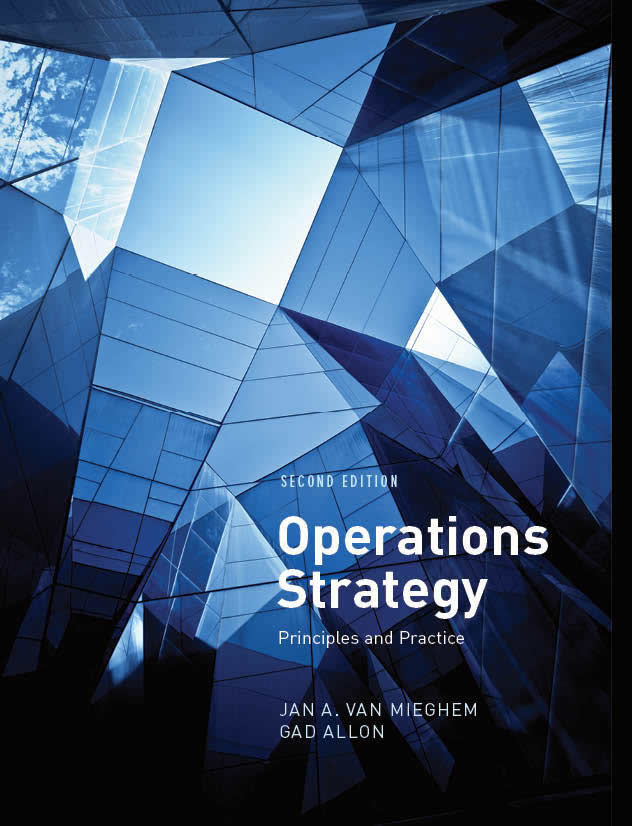
Jan A. Van Mieghem is the A. C. Buehler Professor and Professor of Operations at the Kellogg School of Management, Northwestern University. He also serves as a Professor by Courtesy at the McCormick School of Engineering and Applied Science. His research spans product, service, and supply chain operations, combining strategic and tactical perspectives with mathematical modeling, stochastic analysis, and empirical verification. Ph.D. in Business, Graduate School of Business, Stanford University (1995) MS in Electrical Engineering, Stanford University (1990) MS in Applied Sciences, KU Leuven, Belgium (1989) His research interests focus on operations strategy, supply chain optimization, and digital operations. He explores topics such as operational hedging, capacity investment, network flexibility, and the application of AI in inventory management. His work addresses healthcare operations, dual sourcing, and the interplay between collaboration and productivity in service networks. Recent research trends center on AI-driven inventory systems, dual sourcing under uncertainty, and healthcare resource allocation. He has authored over 60 academic articles and two textbooks: Operations Strategy: Principles and Practice and Managing Business Process Flows: Principles of Operations Management . 2023: First place in POMS College of Supply Chain Management Student Paper Competition 2020: Flexibility Excellence Award 2014: Wickham Skinner Award 2007: First MSOM Best Paper Award Van Mieghem has held leadership roles at Kellogg, including Deputy Dean (2023–present), Faculty Director of the Executive MBA program (2012–2017), and Chairman of the Department of Managerial Economics and Decision Sciences (2006–2009). He advises firms on operations strategy and management and has served on editorial boards of Management Science , Manufacturing & Service Operations Management , and Operations Research . He has mentored numerous Ph.D. students, including Audrey Bazerghi, Simrita Singh, Yangzi Jiang, and Dennis J. Zhang, who have secured academic and industry positions. His teaching spans operations management and strategy across MBA, Ph.D., and executive programs. Van Mieghem's work examines the intersection of operations strategy and execution, emphasizing financial value as a guiding metric. His empirical studies leverage real-world data from healthcare, manufacturing, and e-commerce to validate theoretical models and develop practical frameworks.
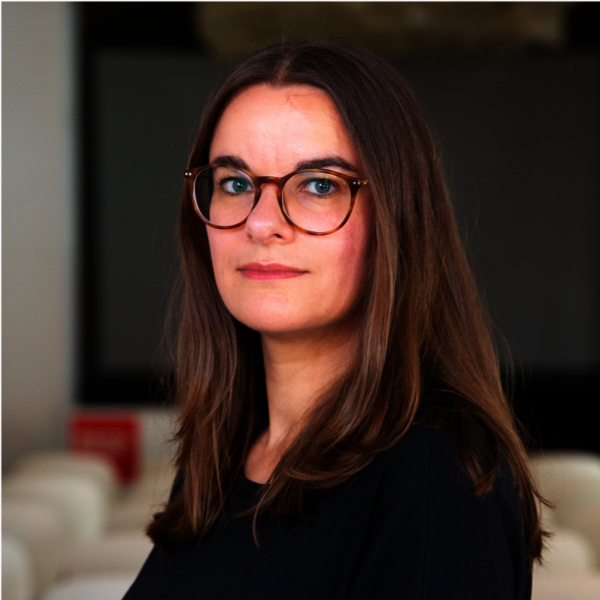
Berit Greinke is an Assistant Professor of Wearable Computing at the Berlin University of the Arts (UdK) and the Einstein Center Digital Future (ECDF) since 2018, previously serving as a researcher at UdK's Design Research Lab and DFKI (2016-2018). Her academic foundation includes a PhD from Queen Mary University of London (2017), an MA from Central St Martins (2009), and a Diploma from Weissensee Academy of Art Berlin (2007). Her educational trajectory: PhD in Media and Arts Technology, Queen Mary University of London (2017) MA in Design for Textile Futures, Central St Martins College of Art and Design (2009) Diploma in Textile and Surface Design, Berlin Weissensee School of Art (2007) Greinke's research pioneers the convergence of craft, textile design, and digital technology, with core expertise in electronic textiles and smart materials. She investigates metamaterial-based 'metatextiles' for electromagnetic applications and explores transdisciplinary collaboration between designers and scientists, particularly regarding 'negative data' in creative and scientific workflows. Her current UdK work focuses on four interconnected domains: performing materials for expressive textile/fashion design; multi-modal sensing converting visual processes into haptic/audible experiences; micro-to-macro material design spanning nanostructures to final products; and transdisciplinary processes for technology-art-science collaboration. Analysis of her 2020-2025 publications reveals dominant trends in sustainable textile electronics, with emphasis on knitted/folded sensor structures, origami-inspired capacitive shape estimation, and social sustainability in e-textile communities. Her work uniquely bridges fundamental material science (e.g., textile metamaterials) with artistic applications (e.g., interactive orchestra garments) and industrial production challenges. Berit Greinke supervises PhD students including Giorgia Petri. Her junior professorship is co-financed by SAP under a public-private partnership model, supporting projects like WEAR (Wearable technologists engage with artists for responsible innovation) and STELEC (Sustainable Textile Electronics), which emphasize ethical co-design and industry-academia collaboration. She leads research within UdK's Institute for Product and Process Design and collaborates with the Design Research Lab (formerly part of Connected Textiles group), focusing on sustainable industrial production of electronic clothing and transdisciplinary innovation frameworks.
Ronald Gleich has been Professor of Management Practice & Control at Frankfurt School of Finance and Management since August 2020. In December 2020 he founded the Centre for Performance Management & Controlling together with Prof. Dr. Matthias Mahlendorf. His research centres on management control, innovation management, performance measurement and digital transformation, and he co-authors the leading German-language controlling textbook (14th edition). Education & Career Path Apprenticeship as banker Studies in technically-oriented business administration, University of Stuttgart Doctorate and habilitation, University of Stuttgart Deputy professorship, University of Hohenheim Professor of Industrial Management, EBS University (2003–July 2020) Research Interests Ronald Gleich investigates practical and current issues in controlling, innovation management, performance measurement and cost management. He focuses on how organisations can design effective control systems to steer innovation, improve cost efficiency and master digital transformation (Industrie 4.0) and crisis situations such as COVID-19. His work bridges rigorous research with direct applicability for manufacturing firms and executive practice. Publication Profile Across more than 250 publications—spanning journal articles, monographs, edited volumes and practitioner guides—Gleich explores themes such as advanced budgeting, performance measurement systems, innovation controlling, supply-chain controlling and integrated reporting. His recent output (2020–2024) emphasises agility, crisis management, digital technologies and the evolution of controller roles. Industry Engagement & Leadership Founder and Co-Director, Centre for Performance Management & Controlling, Frankfurt School Co-Director, ICV-Ideenwerkstatt (think-tank of the International Controller Association) Partner, Horváth & Partners (2001–2005) Managing Partner & Shareholder, Horváth Academy (2012–2018) Advisor to leading German manufacturing companies Teaching & Executive Education Professor Gleich teaches internal accounting, controlling and a variety of executive-education seminars and certificate programmes aimed at finance leaders and controllers.
Professor Tariq Butt of Swansea University's Faculty of Science and Engineering leads the Biocontrol and Natural Products (BANP) group , focusing on entomopathogenic fungi and natural product-based biopesticides for managing pests impacting food security , human health , and agriculture . He co-directs the Natural Products BioHub and Health Technology Solutions Research Institute . His cross-disciplinary research includes collaborations with Dr Joel Loveridge (Chemistry) for chemical ecology, Professor Chedly Tizoui (Engineering) for plant-based molluscicides, and Professor Dan Eastwood (Biosciences) for fungal biocontrol. Externally, he works with experts in Greece, Brazil, Turkey, Saudi Arabia , and companies like Certis Belchim and Lallemand . Recent publications highlight his work on fungal volatile organic compounds for pest control, mosquito repellents , and microbial consortia to reduce chemical dependencies. He has supervised over 35 PhD/MSc students and contributed to 174+ peer-reviewed articles and 14 book chapters .
Maha Haji serves as Assistant Professor in Cornell University's Sibley School of Mechanical and Aerospace Engineering and Systems Engineering field member since 2021. She directs the Symbiotic Engineering and Analysis (SEA) Lab, pioneering sustainable offshore technologies for Blue Economy advancement and climate change mitigation through interdisciplinary symbiotic system design. Her academic credentials include: B.S. in Mechanical Engineering and B.A. in Applied Mathematics from University of California, Berkeley (2012) M.S. in Oceanographic Engineering from MIT/Woods Hole Oceanographic Institution (2015) Ph.D. in Mechanical and Oceanographic Engineering from MIT/Woods Hole Oceanographic Institution (2017) Professor Haji's research integrates Systems Engineering and Ocean Engineering to develop sustainable offshore solutions, emphasizing Design Optimization for renewable energy systems (offshore wind/wave), mineral extraction from seawater, desalination, and aquaculture. Her work creates synergistic multi-functional platforms that harmonize resource harvesting with ocean ecosystem preservation. Publication analysis reveals consistent focus on symbiotic offshore systems, with 2018-2019 studies demonstrating interdisciplinary approaches to ocean resource utilization—spanning environmental science, engineering design, and economic optimization for critical mineral extraction and renewable energy integration. She secured $2.6M in NOAA Sea Grant funding for the MOLLUSCA microplastic collecting robot project with Professor Sunny Jung, advancing ocean conservation technology. Her mentorship cultivates next-generation engineers in sustainable offshore development through the SEA Lab's research framework. The SEA Lab operates as a multidisciplinary hub developing symbiotic engineering solutions for offshore wind, mineral extraction, and aquaculture systems, emphasizing lifecycle sustainability and climate resilience in ocean technology deployment.
R. Anthony Rolle is a Professor at the University of South Florida’s College of Education, specializing in the Department of Leadership, Policy, and Lifelong Learning. He previously served as Dean of the USF College of Education from 2021 to 2024, and earlier as Dean at the Alan Shawn Feinstein College of Education & Professional Studies at the University of Rhode Island, as well as in leadership roles at the University of Houston and Texas A&M University. Dr. Rolle is a nationally recognized scholar in K-12 education finance and economic policy , known for developing models measuring school system effectiveness and efficiency . His work spans special needs education funding , educational productivity , and policy reform , with a focus on international collaboration and community partnerships. Scientific Awards & Affiliations: President, National Education Finance Academy Distinguished Research Fellow, Shanghai Academy of Education Sciences Research Fellow, National Education Policy Center (Education and Public Interest Center & Education Policy Research Unit) Editorial/Advisory Board Member, multiple national education associations
Pedro Carlos De Barros Fernandes is an Associate Professor at Universidade Lusófona , Deputy Director of the 1st cycle in Biotechnology, and an integrated researcher at the Institute of Bioengineering and Biosciences (iBB-IST). He holds a PhD in Biotechnology (1999) and a Master in Biotechnology/Biochemical Engineering (1994) from Universidade Técnica de Lisboa (IST), along with a Chemical Engineering degree from IST (1989). A member of the Order of Engineers (ID 24667), he co-founded Biotrend, a Portuguese bioprocess development company. Education PhD in Biotechnology (1999), Universidade Técnica de Lisboa MSc in Biotechnology (1994), Instituto Superior Técnico BSc in Chemical Engineering (1989), Instituto Superior Técnico Research Interests span biocatalysis, enzyme immobilization for food and pharmaceutical applications, marine biotechnology, microfluidic device development for biosensing, and steroid bioconversions using mycobacterial systems. His work integrates process engineering principles with sustainable bioprocessing techniques. Publication Trends show a focus on microreactor technology, enzyme stabilization in non-conventional media, marine-derived biocatalysts, and food waste valorization. Key themes include biocatalytic process intensification, aqueous two-phase systems for biomolecule purification, and sustainable carbon sources for biopolymer production. Scientific Awards UTL/Santander Totta Scientific Award in Biological Engineering (2011) Advising has included supervision of 5 doctoral theses and over 32 master’s theses. His expertise extends to peer-reviewing scientific articles and evaluating R&D projects. Labs & Teams are associated with iBB-IST (Institute of Bioengineering and Biosciences) and BioRG (Universidade Lusófona), with contributions to the Ciência Viva program for science dissemination.
Hundanol Kebede is an Assistant Professor of Economics at Southern Illinois University, Carbondale . His research focuses on International Trade , Development Economics , and Applied Microeconomics , with a particular emphasis on low-income countries. Ph.D. in Economics from the University of Virginia (2020) Key research themes: Trade and infrastructure impacts on economic activities, structural transformation, household responses to shocks, and gender disparities in technology adoption Research trends from his five published articles (2013–2024) include analyses of rural road construction’s welfare gains, market integration effects on agricultural households, commodity price shock transmission, and gender-based risk aversion in technology adoption. His work often leverages Ethiopian case studies with high-resolution micro data. Contact : hundanol.kebede@siu.edu | Faner Hall, Room 4138 | (618) 453-5072
Alexis H. Kunz serves as Professor of Financial Accounting and Director of the Institute for Corporate Accounting and Controlling at the University of Bern since 2011, with prior academic appointments at HEC Lausanne, University of Lausanne, and University of Friborg spanning over two decades in accounting research and leadership. Education: Habilitation, University of Friborg (2002-2004) Visiting Researcher, UCLA (2003) PhD (Dr. oec. publ.), University of Zurich (1995-2000) Master in Business Administration, University of Zurich (1989-1994) Military Service (1988) College Education, Gymnasium Zürcher Unterland (1981-1987) His research centers on Earnings Management, Financial Reporting Systems, Incentive Structures, and Corporate Governance, examining how accounting information systems influence organizational decision-making and executive behavior. Work integrates economic theory with empirical analysis of real-world corporate practices. Publication analysis reveals consistent focus on incentive design, financial disclosure quality, and governance mechanisms across 12 major works from 1999-2020. Key themes include structured product risk assessment, performance metric validity (EVA/ERIC), and behavioral impacts of compensation systems, primarily published in The Accounting Review and European Accounting Review. Scientific Awards No specific awards or fellowships were documented in the source material. Research leadership includes SNF-funded UCLA Visiting Scholarship and grants for IFRS 15 implementation, Swiss GAAP/FER reporting systems, and Say on Pay analysis. Third-party projects cover CEO evaluation frameworks, cost accounting concepts, and performance measurement system development. He directs the Financial Accounting Section within the Institute for Corporate Accounting and Controlling, overseeing research initiatives in financial reporting standards and incentive system design while serving as primary institutional contact for accounting research.
Eduardo Mercado III is a Professor in the Department of Psychology at the University at Buffalo, College of Arts and Sciences. His research focuses on bioacoustics, cognitive psychology, and marine ecology, particularly the vocal behavior of humpback whales and its implications for understanding human impact on marine ecosystems. He is also known for his work in perceptual learning, autism spectrum disorder, and comparative cognition. Scientific Awards Guggenheim Fellowship Harvard Radcliffe Institute Fellowship Research Trends His recent publications emphasize bioacoustic analysis of humpback whale songs, including their spectral entropy, cyclical variations, and adaptive adjustments to anthropogenic noise. Additional work explores perceptual learning mechanisms in autism, neural network modeling for acoustic classification, and cognitive processes in canines and rodents. Projects Mercado’s “Singers as Sentinels” project combines acoustic analysis of humpback whale songs with public awareness initiatives about ocean noise pollution. The project will produce a book, Why Whales Sing and Dolphins Don’t , and a web-based interface for public engagement.
Shutao Ma is a Professor and Doctoral Supervisor at Shandong University's School of Pharmaceutical Sciences, serving as Director of the Department of Medicinal Chemistry since 2009. He has received the Special Government Allowance from China's State Council since 2002 and the seventh youth award of Shandong province for his contributions to medicinal chemistry. His academic credentials include: Ph.D. in Pharmaceutical Sciences, Shandong University (2004-2007) M.Sc. in Pharmaceutical Sciences, Shandong Medical University (1988-1991) B.Sc. in Pharmaceutical Sciences, Shandong Medical University (1981-1986) Professor Ma's research pioneers innovative strategies against antibiotic-resistant bacteria through three interconnected pillars: 1) Designing FtsZ/AcrB-targeted small molecules to disrupt bacterial cell division and efflux mechanisms; 2) Structural optimization of macrolides, glycopeptides, and lipopeptides to overcome resistance; 3) Total synthesis and mechanistic studies of marine-derived antibacterial natural products. His work bridges synthetic chemistry with microbiological validation to develop next-generation antimicrobials. Analysis of his 15 most recent publications (2014-2016) reveals a dominant focus on antibacterial drug discovery (87% of works), particularly FtsZ inhibitors (33%) and macrolide derivatives (27%). Emerging themes include quorum sensing modulation (7%) and antiviral/anticancer applications (13%), demonstrating strategic expansion while maintaining core expertise in resistance mechanisms. His scientific recognition includes: First prize of Shandong science and technology progress award (2000) Special government allowance from the State Council (2002) The seventh youth awards of Shandong province (2002) As a Doctoral Supervisor, Professor Ma mentors the next generation of medicinal chemists while directing a robust research program funded by 12 major grants. His National Natural Science Foundation portfolio (2004-2020) spans antibacterial discovery, while Shandong Provincial grants (2006-2017) and China-Australia collaborations (2014-2017) support translational development of resistance-breaking agents. Leading the Department of Medicinal Chemistry, he oversees a multidisciplinary team integrating synthetic chemistry, microbiology, and computational modeling to advance antibacterial drug candidates from concept to preclinical validation, with particular emphasis on FtsZ-targeted therapeutics and macrolide engineering.
Satoshi Miyazaki is a Professor at Waseda University's Graduate School of Japanese Applied Linguistics and affiliated with the Faculty of International Research and Education . With a Ph.D. from Monash University, his work bridges Japanese language education, second language acquisition, and cross-cultural communication. Education Background: Doctor of Philosophy (Japanese Applied Linguistics) - Monash University (1997) Graduate School of Japanese Applied Linguistics - Waseda University (1982) Research Interests focus on Japanese language pedagogy, natural acquisition mechanisms, and interactional strategies for non-native learners. His innovative use of Eye Mark Recorders (EMR) and Event-Related Potentials (ERP) has advanced understanding of cognitive processes in language learning. Recent Articles (2011-2001) reveal trends in Japanese language education reform, cross-cultural learning challenges, and technology-enhanced teaching methods. Key themes include correctional language programs for foreign inmates, immersion environments, and brain processing studies using advanced neuro-linguistic techniques. Research Projects have received continuous funding from Japan Society for the Promotion of Science, including prison language education programs, foreign care worker competence frameworks, and EMR-based lecture comprehension analysis. His work extends to international collaborations with institutions in Australia, the U.S., and Europe.