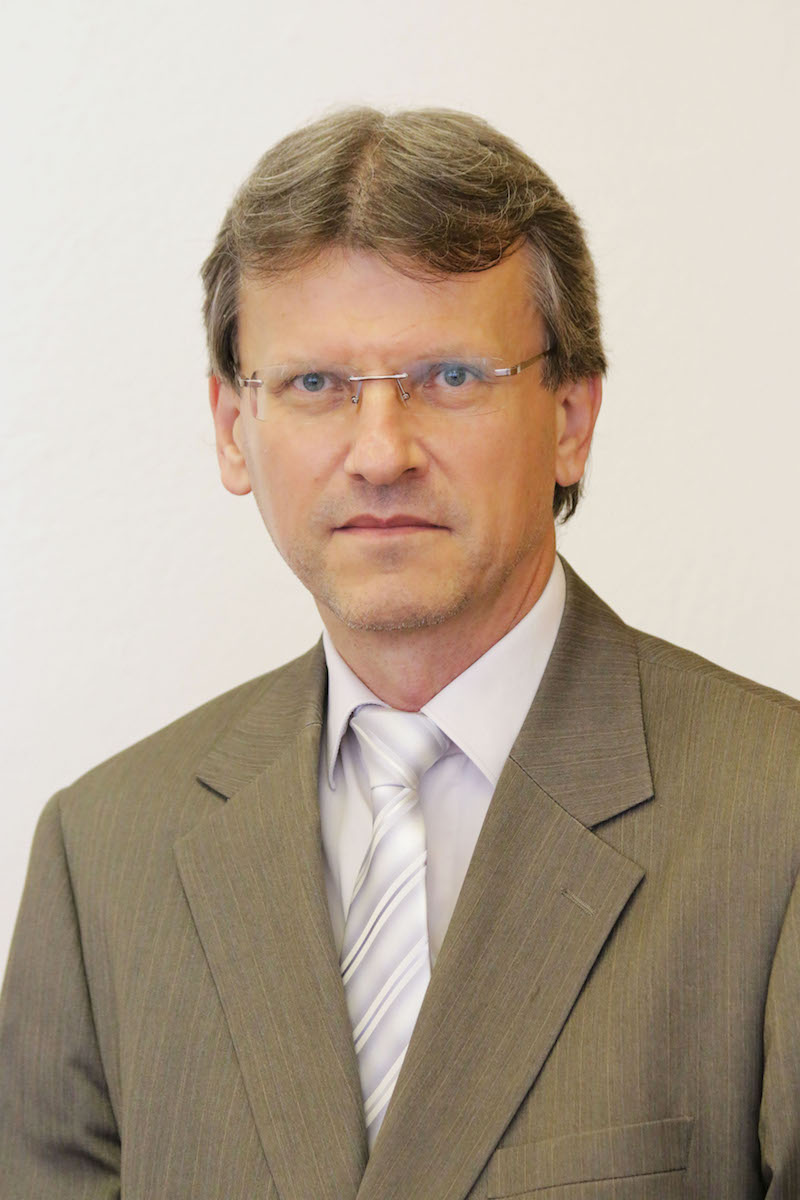
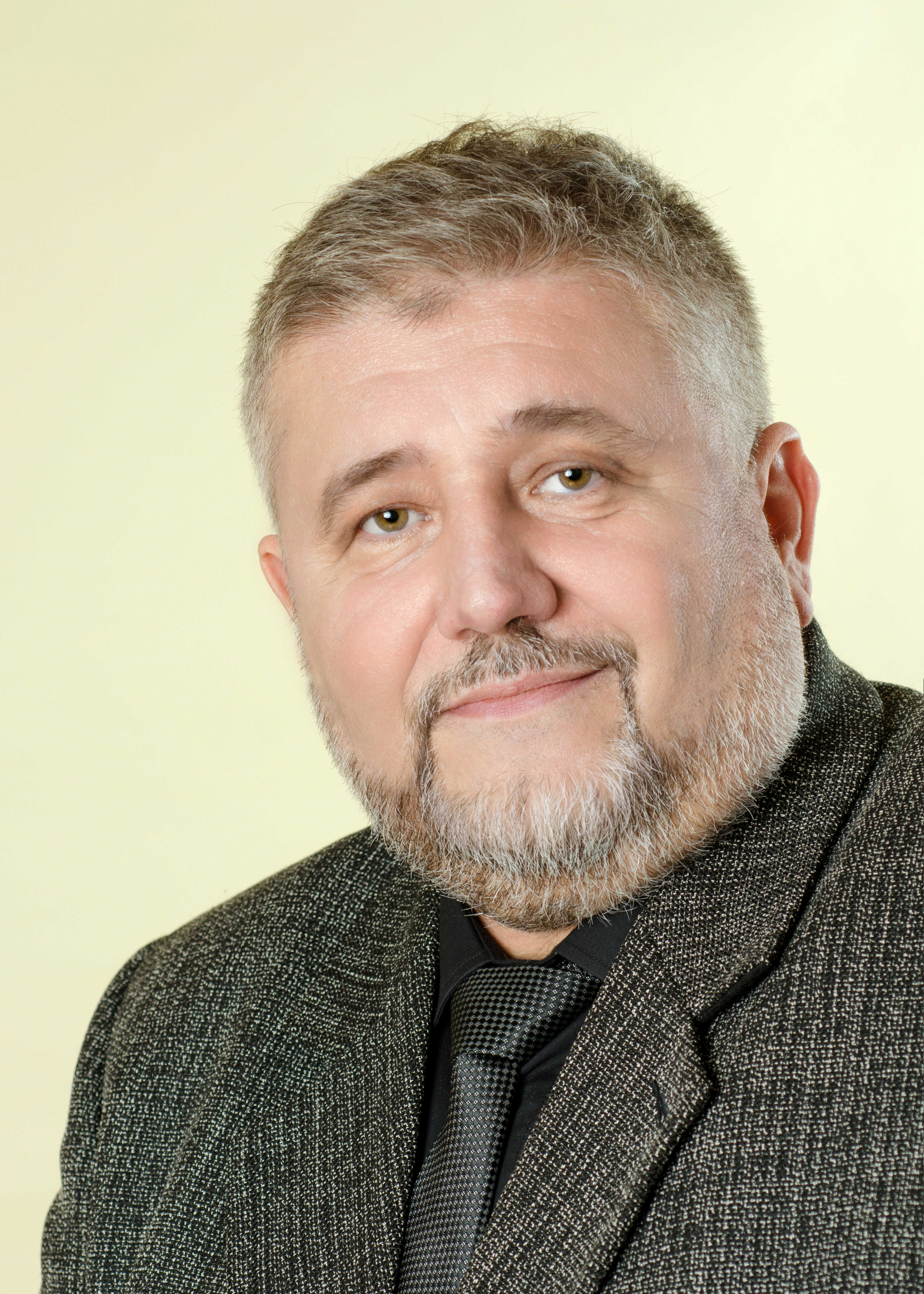
Jana Fortes is a Lecturer at the Faculty of Electrical Engineering and Informatics, Technical University of Košice, Slovakia. She teaches Applied Statistics, Cryptography, and Mathematics courses, including Numerical Mathematics and Probability and Statistics. Her research focuses on signal processing for localization and tracking systems using Ultra-Wideband (UWB) radar and sensor networks. Teaching: Applied Statistics, Cryptography, Mathematics I/II, Numerical Mathematics, Probability and Statistics, Mathematics Tutoring Research: UWB radar signal processing for person localization and tracking, software development (MATLAB, LabVIEW), cluster analysis for movement detection. Publications: Recent work includes studies on 2D/3D localization algorithms, UWB sensor system implementations, and mathematical analyses of graph crossing numbers. Contact: Email: jana.fortes@tuke.sk , Room N32 615, Phone: +421 55 602 3252.
Martina Škodová is a lecturer at the Department of Geography and Geology at Matej Bel University , where she serves as Deputy Head of Department. Her academic work spans geography education, geology, and ecosystem analysis, with a focus on innovative teaching methods and environmental studies. Research Interests : Geography education, educational technology, forest ecology, and ecosystem assessment. Teaching Focus : Inquiry-based learning, virtual reality integration, and skill development in geography and biology education. Recent publications highlight her contributions to inquiry-based pedagogy , virtual reality in education , and landscape-ecosystem dynamics . She has also led projects like IT Akadémia , emphasizing digital tools and curriculum innovation for primary and secondary schools.
Tünde Berta is a Lecturer at the Department of Pre-school and Elementary Education within the Faculty of Education at J. Selye University in Komárno, Slovakia. She has been employed at the university since 2004 and is currently pursuing her PhD in Pedagogy at J. Selye University (2024-). Her academic background includes a degree in Mathematics-Informatics from Comenius University's Faculty of Mathematics and Physics (1994-2000). Dr. Berta's educational journey began with her university studies in Mathematics-Informatics at Comenius University, followed by her current doctoral studies in Pedagogy at J. Selye University. Her professional development reflects a strong commitment to advancing educational practices, particularly in mathematics instruction and teacher development. Her research interests focus primarily on mathematics teaching methodology, with special emphasis on cooperative techniques and project methods in mathematics education. She has extensively explored continuing teacher education, adult education possibilities, teacher mentoring and its impact on classroom quality, and inclusive education approaches. Her work demonstrates a consistent dedication to improving teaching practices through evidence-based methodologies and innovative approaches that address the diverse needs of students in primary education settings. Analysis of Dr. Berta's publication record reveals a strong focus on practical applications of educational theory in mathematics instruction. Her recent work (2021-2024) shows increasing attention to teacher development, assessment methods, and the integration of technology in education. She frequently collaborates with colleagues like Zuzana Árki and Ladislav Jaruska, indicating active participation in research teams focused on improving mathematics education. Her publications span multiple languages (English, Hungarian, Slovak), reflecting her work within the Hungarian minority educational context in Slovakia. Her publications have received 5 citations according to institutional records 2 citations registered in citation indexes (Web of Science, Scopus) 3 citations in other databases Dr. Berta has been actively involved in developing educational materials and textbooks, including two versions of 'Project Teaching in School' (2022) in both Slovak and Hungarian. Her research often addresses the specific needs of Hungarian-speaking communities in Slovakia, particularly in the context of mathematics education and teacher development. She has participated in numerous international conferences, demonstrating her commitment to sharing knowledge across borders and engaging with the broader educational research community. Her work on cyberbullying during the pandemic period shows responsiveness to contemporary educational challenges.
Igor Košťál is an Assistant Professor at the Department of Applied Informatics within the Faculty of Economic Informatics at the University of Economics in Bratislava . His research focuses on Distributed Technologies , Parallelization of Applications , and Data Structure Optimization , particularly in the context of .NET frameworks and industrial robotics. University: University of Economics in Bratislava School: Faculty of Economic Informatics Department: Department of Applied Informatics Academic Rank: Assistant Professor Košťál's work emphasizes software performance testing , with publications analyzing execution efficiency in .NET applications using parallel programming , Dijkstra's algorithm , and symbol table implementations . His recent research explores modern UI development in mobile applications and algorithm optimization for industrial robotics. Key trends in his 15 most recent articles (2014-2022) include: Performance analysis of parallel and sequential algorithms in .NET environments Optimization of data structures (arrays, linked lists, skip lists) for search efficiency Integration of asynchronous methods in WCF services and clients Testing precision in KUKA welding robots through structured data extraction
Šlapak Eugen is an Assistant Professor at the Technical University of Košice. His research focuses on autonomous driving systems, edge computing, and network optimization, with a particular emphasis on applying neural networks and blockchain technologies in vehicular and 5G networks. Eugen Šlapak holds a PhD in [specific field not explicitly stated, likely Engineering/Computer Science] and an Ing. (engineer) degree. His academic background combines technical expertise in telecommunications and computer science. His research interests span autonomous driving technologies, including simulation and control systems, as well as edge computing and metaverse integration. He also explores blockchain applications in vehicular networks, resource allocation in 5G and beyond, and the use of graph neural networks for network optimization. His work intersects machine learning, robotics, and telecommunications to address challenges in modern communication systems and intelligent transportation. Recent publications highlight advancements in neural radiance fields for industrial robotics, distributed edge video compression for autonomous driving, and blockchain-based resource allocation in connected vehicles. Earlier work includes optimization of UAV-assisted networks and HetNet topology design using machine learning clustering methods. While no formal awards are listed, his contributions to vehicular networks, edge computing, and AI-driven network design reflect significant scholarly impact. Advising details are not documented here, but his research collaborations likely involve cross-disciplinary teams focusing on autonomous systems and 5G infrastructure. No lab affiliations or teams are explicitly mentioned, though his teaching role in the course Stochastické modelovanie a analýza dát (SMaAD) suggests involvement in data analysis and stochastic modeling initiatives.
Peter Szabó is an Associate Professor at the Department of Aviation Technical Training , Faculty of Aeronautics , Technical University of Košice , Slovakia. He is actively involved in research at the intersection of mathematics, computer algebra, and aerospace engineering. Academic Affiliation: Technical University of Košice, Faculty of Aeronautics, Department of Aviation Technical Training Research Interests include: Mathematical modeling in aviation (Free Route Airspace, complex networks) Linear algebra and numerical methods with MATLAB/SageMath Calculus education and computational techniques Graph theory applications to air traffic systems Recent Article Trends highlight: Integration of calculus and numerical analysis for educational tools (2025) Mathematical axioms for airspace modeling (2022) Cloud computing in aviation research (2022) Linear algebra textbooks and computational exercises (2019) Advising : Mentored students on topics ranging from satellite stabilization to air traffic optimization.
Ing. Pavel Gežík, PhD., is an Assistant Professor at the Department of Operations Research and Econometrics within the Faculty of Economic Informatics at the University of Economics in Bratislava. Since 2010, he has been actively contributing to academic and research activities in operations research, environmental modeling, and game theory applications. Education: Second degree in Operational Research and Econometrics (2007), Third degree in Econometrics and Operational Research (2010) from University of Economics in Bratislava, Faculty of Economic Informatics His research focuses on optimization programming, game theory models, network analysis, logistics scheduling, and circular economy principles. He has integrated environmental sustainability into reverse logistics frameworks and developed methods for debt modeling in economic systems. Recent publications highlight his work in game theory applications for retail location optimization, circular economy recycling models, and graph theory for economic networks. These studies emphasize mathematical rigor and practical implementation in economic decision-making. He has participated in significant grants such as: VEGA 1/0120/23 - Environmental Models for Eco-Economic Decisions APVV SK-SRB-18-0009 - Logistics Optimization with Electromobility VEGA 1/0320/18 - Green Policy Analysis Over 15 years, he has supervised 25 bachelor's and 22 master's theses, contributing to education in optimization and logistics. His research outputs include 8 Web of Science/Scopus-indexed works with 4 citations.
Zsolt Simonka is an Associate Professor at the Department of Mathematics and Actuarial Science, Faculty of Economic Informatics, University of Economics in Bratislava. His work spans theoretical and applied mathematics in economic contexts, with a focus on pension systems, health insurance, and financial mathematics. Education: Mgr. (1997), PaedDr. (2000), PhD (2006) from Comenius University in Bratislava Academic roles: Assistant (1997–1999), Research Assistant (2000–2021), Associate Professor (2022–) His research integrates mathematical modeling with insurance frameworks, particularly in non-life insurance optimization and differential equations for health insurance applications. He has contributed to STEAM education through computer-aided teaching tools and innovative pedagogical methods. Recent publications in high-impact journals like Sustainability and Mathematics highlight his work on computer tools for education and reinsurance chain optimization. He has participated in VEGA and KEGA projects, focusing on financial risk and educational sustainability. While no specific scientific awards are listed, Simonka actively reviews for MDPI journals (Mathematics, Sustainability) and contributes to academic discourse through monographs and textbooks.
Milan Pokorný is an Associate Professor at the Department of Mathematics and Informatics, Faculty of Education, University of Trnava in Trnava. His academic career spans over two decades, with significant contributions to graph theory and mathematical education. He actively engages in research, teaching, and educational technology development. His research interests include Graph Theory Integral Graphs Discrete Mathematics Mathematical Education Algorithm Complexity Statistical Data Processing The majority of his publications focus on spectral properties of graphs and educational methodologies. His work explores integral complete multipartite graphs, distance energy of graphs, and blended learning approaches in mathematics education. Milan Pokorný teaches courses in descriptive statistics, algorithm complexity theory, mathematics for natural sciences, financial mathematics, and technology integration for mathematics educators. He provides supporting materials for various subjects and maintains regular consultation hours for students.
Mária Timková, RNDr., PhD., serves as a Lecturer at the Faculty of Electrical Engineering and Informatics at Technical University of Košice (TUKE). She maintains an office in room N32 614 and is actively engaged in teaching across multiple mathematical disciplines. Her research interests focus on theoretical and applied mathematics, particularly in discrete structures and computational methods. Her work spans Discrete Mathematics , Graph Theory , and Algorithms , with significant contributions to Optimization techniques and Numerical Analysis . She also maintains strong expertise in Probability Theory and Statistics , integrating these fields into her teaching and research. Dr. Timková holds consultation hours every Tuesday from 11:30-13:30 by appointment, and is accessible through her WebEx meeting link for virtual consultations.
Michal Tkáč is a Professor at the University of Economics in Bratislava , serving as the Dean of the Faculty of Business Economics with seat in Košice . He is affiliated with the Department of Quantitative Methods , where his work emphasizes the application of quantitative techniques and algebraic structures in business economics and quality management. Research Focus: Quantitative methods, quality management, graph theory, machine learning, and financial analytics. Projects: Led initiatives like "Technical and Economic Analysis of Coal Replacement" (2020), coordinated H2020 projects, and VEGA grants for AI in bond markets. His recent publications span topics such as population health in EU regions , neural networks in business , and environmental engineering . Key trends include integration of AI into economic modeling, graph-theoretic approaches to structural problems, and sustainability research. Michal Tkáč is a prominent member of international networks like the European Network for Business and Industrial Statistics (2007–present) and has held leadership roles in Slovak quality and statistical societies.
Peter Schmidt is an Associate Professor at the Department of Applied Informatics, Faculty of Economic Informatics, University of Economics in Bratislava. His work focuses on computer networks , distributed data processing , and education technology , particularly in e-learning and digital transformation . He has co-edited proceedings for the TIEES conference series and contributed to research on business process modeling gamification in education cloud computing security . His research trends emphasize digital tools in education , with recent work analyzing Microsoft Teams , Skype for Business , and Office 365 . He explores data security challenges, including tokenization and privacy risks in virtual environments. Publications also address public administration digitization, such as local government data systems and process improvements . Key collaborations include Jaroslav Kultan, Pavol Jurík, and Igor Košťál. While no awards are explicitly listed, his grant projects (e.g., KEGA 019EU-4/2020) highlight funding for education technology . He teaches Distributed Data Processing and Computer Networks , advising on integrating informatics into economics and management.
Pavol Jurík serves as an Assistant Professor at the Department of Applied Informatics within the Faculty of Economic Informatics at the University of Economics in Bratislava. He holds the additional role of Secretary of the department. His academic work focuses on advancing information systems and educational technologies. Research Interests: Jurík's research spans distributed systems, e-learning methodologies, business process optimization, and emerging technologies. Key areas include: Innovations in educational technology and networked learning systems Distributed database architectures and sensor network optimization Business process modeling using composition diagrams Impact of big data analytics on decision-making processes Development of ERP systems and supply chain management tools Publication Trends: Recent works (2019-2022) demonstrate a strong focus on e-learning effectiveness, distributed computing solutions, and business process modeling. Jurík frequently collaborates on international publications examining technological innovations in education and industry applications. Grants and Projects: Actively participates in research grants including VEGA 1/0373/18 (Big Data processing) and KEGA 019EU-4/2020 (Networked Education). Contributes to international conferences such as TIEES and AIESA.
Ing. Marcel Vološin PhD is an Assistant Professor at the Technical University of Košice (TUKE), actively engaged in teaching and research related to database systems, blockchain technology, and wireless network optimization. His academic activities include laboratory exercises in Database Systems and their Security (DBSZ) at TUKE's Faculty of Electrical Engineering and Informatics, as indicated by room assignments and course schedules. Research Focus: Blockchain integration in 5G/6G mobile networks, autonomous vehicle systems, and AI-driven network coverage optimization Email: marcel.volosin@tuke.sk Marcel's publications highlight his expertise in blockchain technology for network security, generative adversarial networks for mobility data correction, and agent-based modeling for socioeconomic systems analysis. His work addresses challenges in real-time spectrum markets, dynamic network topology design, and decentralized resource allocation. Scientific Awards: No specific honors or fellowships mentioned in available sources.
Doc. Ing. Jarmila Horváthová, CSc. is an Associate Professor at the Department of Management, Faculty of Management and Business, Pavol Jozef Šafárik University in Košice (PU). Her primary affiliations include teaching and research in business performance analysis, financial risk modeling, and digitalization strategies. She has contributed extensively to studies on bankruptcy prediction, sustainable development, and agroecological practices. Research Interests: Her work focuses on quantitative methods such as Data Envelopment Analysis (DEA), machine learning applications in financial diagnostics, and the impact of digitalization on business efficiency. She also explores macroeconomic factors like unemployment and pandemic effects on enterprise sustainability. Her interdisciplinary research extends to soil management and viticulture in agricultural contexts. Recent Trends in Articles: Recent publications emphasize the integration of digital transformation metrics with business performance, the application of graph theory for bankruptcy prediction, and cross-country analyses of EU business sustainability. She also investigates threshold models for indebtedness and profitability optimization. Grants & Awards: No specific awards or grants are explicitly mentioned in the provided materials. Advising & Collaborations: While no students are listed, her research collaborations span academia and industry, particularly in Slovak construction, energy, and agricultural sectors. She contributes to policy-oriented studies on enterprise risk management and sustainable practices.