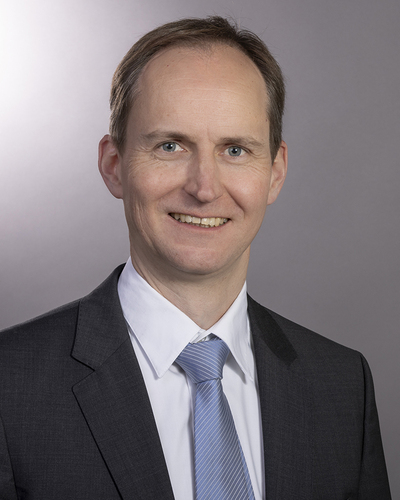
Francisco Santos is a researcher with a focus on Discrete Geometry, Combinatorics, and Computational Geometry. His work bridges theoretical foundations with applications in machine learning and data science. Affiliated with Oak Ridge National Lab, he collaborates internationally on interdisciplinary projects. Research interests include polytopes, geometric algorithms, optimization, and fair machine learning. Publications span high-impact venues like Discrete & Computational Geometry and SIAM Journal on Applied Algebra and Geometry . Notable contributions include studies on multiassociahedra, associahedra minimization, and algorithmic geometry problems. Recent work explores fair cross-network node classification and LoRa sensor networks for environmental monitoring.
Ruth Misener is a Professor in the Department of Computing at Imperial College London, where she leads the Computational Optimization Group and holds the BASF/RAEng Research Chair in Data-Driven Optimization (2022–2027). She is affiliated with the Faculty of Engineering and contributes to interdisciplinary research institutes including the Data Science Institute, the Institute for Molecular Science and Engineering, and the Sargent Centre for Process Systems Engineering. Her research lies at the intersection of numerical optimization, operations research, and machine learning, with applications in chemical engineering, bioprocess optimization, energy systems, and industrial scheduling. She develops global optimization algorithms for mixed-integer nonlinear programs (MINLP), focusing on real-world challenges such as heat recovery network design, petrochemical process optimization, and robust bioreactor operation. A key innovation is her work on optimizing over machine learning surrogates, including tree ensembles and neural networks, enabling data-driven decision-making under uncertainty. Her recent publications demonstrate a strong trend toward integrating Bayesian optimization with active learning, explainable AI, and industrial applications, particularly in collaboration with BASF, Royal Mail, and Eli Lilly. She develops and maintains open-source optimization tools such as ROmodel, OMLT, and ENTMOOT, which are publicly available on GitHub. STEM for Britain acceptance Runner-Up Presentation Award at PSE@ResearchDayUK Best Quality Poster to Simon Olofsson 1st Poster Prize at UK/Ireland Annual Meeting of the Society for Industrial & Applied Mathematics (2018) 2nd Poster Prize at Centre for Process Systems Engineering Industrial Consortium Meeting (2017) 1st Poster Prize at 2nd PSE@ResearchDayUK (2017) 2nd Presentation Prize at Department of Computing Research Associate Symposium (2017) Runner-Up for May Hicks Award (via student Natasha Page) Ruth supervises a dynamic research team and has examined and mentored numerous PhD students, including Jean Kossaifi, Robert Walecki, Alexander Thebelt, and Toby Boyne. She leads major research grants, including the BASF/RAEng Research Chair and the IConIC Prosperity Partnership, and collaborates with industry partners to advance continuous manufacturing and data-driven process optimization. Her team actively disseminates work through open-access publications, video presentations, and social media.
Prof. Dr. Kevin Tierney is a Full Professor for Decision and Operation Technologies at Bielefeld University's Faculty of Business Administration and Economics. He also serves at the Department of Management Science & Business Analytics and is affiliated with the Bielefeld Center for Data Science (BiCDaS) and Center for Uncertainty Studies (CeUS). Chair of Business Administration, Decision and Operation Technologies Member of BIGSEM Graduate School PhD (2013) - IT University of Copenhagen Sc.M. (2010) & BS (2008) - Brown & RIT Research Interests His work focuses on: Learning to Optimize: Using deep reinforcement learning to automate solution heuristics for complex problems like routing and scheduling. Optimization under Uncertainty: Developing models that incorporate probabilistic elements for decision-making in unpredictable environments. Efficient Maritime Logistics: Specializing in container shipping, terminal operations, and fleet routing with real-world constraints. Recent publications demonstrate expertise in algorithm configuration, constraint programming, and machine learning applications to logistics challenges. Scientific Recognition Distinguished Paper Award - European Conference on Artificial Intelligence (2020) Projects & Grants Principal Investigator in projects: Self-learning methods with Deep Reinforcement Learning (DFG 2026) itsowl-MOVE (Land NRW 2024) AIPlan4EU Meta-planning engine (EU H2020 2023) Academic Leadership Module responsible for: Quantitative Business Administration Data Science Production and Operations Management
Daniele Taufer is a postdoctoral researcher affiliated with the NUMA research unit at KU Leuven (Belgium) since 2022, supported by the FWO (Flemish Fund for Scientific Research) under project 12ZZC23N. Previously, he worked at CISPA (Germany) from 2020 to 2022 as a postdoc on elliptic curve cryptography within the ERC-669891 project, supervised by Antoine Joux. Education: Ph.D. in Mathematics (2016–2020), University of Trento (IT), cum laude, thesis: "Elliptic Loops" (supervised by Massimiliano Sala) Master in Mathematics (2014–2016), University of Duisburg-Essen (DE) and University of Leiden (NL) via the ALGANT double-degree program, thesis: "Algebraic aspects of the Number Field Sieve" (supervised by Hendrik W. Lenstra) Bachelor in Mathematics (2011–2014), University of Padova (IT), thesis: "Gröbner bases and applications" (supervised by Alberto Tonolo) Research interests span computational and commutative algebra, applied algebraic geometry, and cryptographic applications. Key areas include symmetric tensor decomposition (Waring, tangential, Chow, cactus ranks), effective decomposition algorithms (apolarity, Hankel operators), and algebro-geometrical properties of apolar schemes. His work bridges theoretical algebra and practical cryptography, particularly focusing on elliptic curves and their applications in blockchain and isogeny-based systems. Recent scientific contributions examine decompositions of symmetric tensors, elliptic curve discrete logarithm problems (ECDLP), and group structures over discrete rings. His algorithmic developments leverage apolarity and Hankel operators for computational efficiency. Scientific accolades: Maître de conférences qualification (2025) in Mathematics and Applied Mathematics sections Member of the SIAM Activity Group on Algebraic Geometry Labs and teams include the NUMA group at KU Leuven and the ERC-669891 project at CISPA.
Paul Chang is a Control/MR Engineer and PhD student at the Max Planck Institute of Biological Cybernetics, working in the High-field Magnetic-Resonance Group since 2013. His doctoral research focuses on real-time feedback B0 shim systems for ultra-high field MRI to improve magnetic field homogeneity and image quality. His educational background includes: MSc in Control Systems from Imperial College London (2011-2012) with thesis on chemical sensing software development BSc (Eng) in Mechatronics from the University of Cape Town (2007-2010) with additional majors in Mathematics and Economics Chang's research integrates control theory, digital electronics, and biomedical engineering to solve MRI challenges. He specializes in fractional/integer PID controllers, real-time field monitoring systems, and embedded controller implementation using FPGA technology. His work addresses critical limitations in ultra-high field MRI related to B0 field inhomogeneity caused by physiological artifacts and hardware limitations. His publication record demonstrates consistent interdisciplinary innovation across biomedical sensing and control systems. Key themes include the development of Parylene C-based pH sensors for neural applications, MRI-guided neurosurgical planning tools, and advanced control algorithms for hydraulic and MRI systems. This reflects a strong pattern of translating theoretical control concepts into practical biomedical solutions with emphasis on real-time system implementation. Chang contributes to the High-field Magnetic-Resonance Group's core mission through hardware development (field cameras, shim amplifiers), software implementation (asymmetric multiprocessor systems on Zynq 7020 boards), and algorithm design for dynamic shimming. His technical expertise spans FPGA programming, Siemens gradient system interfacing, and spherical harmonic function computation for magnetic field correction.
Georg Loho is a Professor at Freie Universität Berlin (FU Berlin), acting head of the Discrete Geometry and Topological Combinatorics Group. Previously, he held an assistant professorship at the University of Twente (on leave since 2023). He specializes in discrete geometry, optimization, and algebraic combinatorics, with notable contributions to tropical geometry and machine learning. His research integrates geometric and combinatorial methods with applications in optimization and data science. Education: PhD in Mathematics (2017) from TU Berlin Diploma in Mathematics (2012) from Universität Würzburg Research Interests: Focuses on tropical geometry, discrete optimization, and their applications in machine learning. Explores geometric structures like oriented matroids, polytopes, and their connections to neural networks and algorithm design. Advocates for sustainability in research and education. Teaching: Leads courses on discrete geometry, mathematics & sustainability, and optimization. Active in educational innovation, including free open-source course materials and the MatchTheNet educational game on polytopes. Grants & Collaborations: Participated in the HIM Trimester Program (Bonn, 2021), substitute professorships (Kassel, 2020–2021), and multiple ERC-funded projects. Collaborates with institutions like the London School of Economics (LSE) and EPFL. Labs/Teams: Coordinates the Discrete Geometry and Topological Combinatorics research group at FU Berlin, fostering interdisciplinary projects in geometry, combinatorics, and optimization.
Prof. Dr. Ralf Borndörfer is a faculty member at the Zuse-Institute Berlin (ZIB) in the department of Scientific Computing - Optimization. He holds the rank of Professor and has been active in academic and research roles since at least 2011. His work focuses on optimization, integer programming, and network interdiction, with applications in transportation and operations research. Affiliations: Zuse-Institut Berlin (ZIB) DFG Research Center 'Mathematics for Key Technologies' Teaching & Research: Conducted multiple courses/seminars on optimization (e.g., 'Computational Integer Programming', 'Network Interdiction') Supervised students in topics like network interdiction, shortest path algorithms, and combinatorial optimization Key Contributions: Development of optimization methodologies for traffic systems and discrete mathematics Active in academic collaborations and curriculum design
Ali Shojaie is a Professor of Biostatistics & Statistics at the University of Washington , currently serving as Interim Chair of Biostatistics. His research bridges statistical learning, network analysis, and high-dimensional data modeling with applications in biological and health sciences. Research Focus: Shojaie develops advanced methodologies for causal inference, spatial statistics, and semi-supervised learning. His recent work includes network-based gene set analysis, Granger causality estimation, and regularization techniques for complex data structures. Scientific Contributions: Received the 2022 Leo Breiman Award for innovative statistical learning research Elected as Fellow of the Institute for Mathematical Statistics (IMS) and American Statistical Association (ASA) Secured major NIH grants for projects on gene-phenotype associations and explainable AI in neuroscience Advising & Leadership: His students have won multiple awards at ASA and AISTAT conferences. He co-developed the netgsa and spacejam R packages for network-based analysis and spatial modeling. Current Projects: Shojaie leads NIH-funded research on prefrontal brain stimulation and gene knockout studies, combining statistical theory with interdisciplinary applications in biology and bioengineering.
Armeen Taeb is an Assistant Professor in the Department of Statistics at the University of Washington . Previously, he was a postdoctoral fellow at ETH Zürich under the ETH Foundations of Data Science, mentored by Peter Bühlmann. He earned his PhD in Electrical Engineering at Caltech under Venkat Chandrasekaran's supervision. Research Interests : His work bridges optimization and statistics , focusing on Graphical and latent-variable modeling Provably optimal causal model learning False positive error control in non-traditional settings Domain adaptation Applications in physical sciences Article Trends : His publications span causal inference (2022-2025), graphical models (2017-2025), convex optimization (2018-2025), and statistical robustness (2020). Recent work (2025) addresses extremal graphical modeling and selective inference challenges. Scientific Awards : ETH Zürich Foundations of Data Science Postdoctoral Fellowship (2019-2021) Caltech Resnick Institute Fellowship (2016-2018) W. P. Carey & Co. Prize for Applied Mathematics (2020) Caltech Graduate Fellowship (2013-2014) Grants : National Science Foundation DMS-2413074 (PI), University of Washington Royalty Research Fund (PI). Service : President of the Institute of Mathematical Statistics New Researcher Group; co-organized IMS New Researchers Conferences (2024-2025).
Sascha Kurz is an Associate Professor at the Mathematical Institute of the Faculty of Mathematics, Physics and Computer Science at the University of Bayreuth, Germany. His research focuses on discrete structures, coding theory, voting systems, and combinatorial optimization. Professor Kurz's primary research interests span several interconnected fields in discrete mathematics and its applications: Coding Theory : With a focus on divisible codes, subspace codes, and constant dimension codes, his work explores the theoretical foundations and practical applications of error-correcting codes. Discrete Geometry : His research in finite geometry, particularly on arcs in projective spaces and vector space partitions, contributes to both theoretical understanding and coding applications. Game Theory and Voting Systems : He investigates power indices, weighted voting games, and their applications to political science and decision-making processes. Combinatorial Optimization : His work includes network coding, subspace packings, and algorithmic approaches to classification problems in coding theory. Analysis of Professor Kurz's recent publications reveals a strong focus on the intersection of coding theory and discrete geometry. His work consistently addresses fundamental questions about code parameters, classifications, and constructions, with particular attention to divisible codes and their properties. There's a clear progression from theoretical foundations to computational methods, as evidenced by his increasing use of computer-assisted classification techniques. His research demonstrates significant contributions to understanding the structure of linear codes, subspace codes, and their geometric interpretations. Professor Kurz has made notable contributions to both theoretical and applied aspects of his fields, collaborating with researchers across Europe and beyond. His work bridges pure mathematics with practical applications in information theory and network communication.
Alessio Mansutti is an Assistant Professor at IMDEA Software Institute, Madrid, where he conducts research in logic and formal methods in computer science. Prior to this, he was a Research Associate in the Automated Verification Group at the University of Oxford. His research focuses on decision procedures for arithmetic theories, separation logic, modal logics, and proof theory. Key areas include Presburger arithmetic with non-linear operations (exponentiation, GCD), quantifier elimination, complexity analysis, and logical expressiveness. He has made significant contributions to the decidability and complexity of extended arithmetic and spatial logics. The recent publications show a strong trend in developing quantifier elimination techniques for linear-exponential and counting extensions of arithmetic, analyzing reachability in separation logic, and designing internal calculi for modal and spatial logics. His work bridges theoretical logic with practical verification and optimization problems. Scientific Awards : None mentioned in the text. Advising and Grants : Alessio Mansutti is currently leading independent research funded by the Madrid Regional Government under the César Nombela grant 2023-T1/COM-29001. There is no mention of formal students or advisees, suggesting he may be early in his independent career. He was previously involved in the ERC project ARiAT (2020–2024) led by Christoph Haase, focusing on advanced reasoning in arithmetic theories. Labs and Teams : He is affiliated with the IMDEA Software Institute and was part of the Automated Verification Group at the University of Oxford. His research is deeply collaborative within the formal methods and logic communities, particularly in decision procedures and logical foundations for program verification.
James Worrell is a Professor of Computer Science at the University of Oxford , with a focus on logic in computer science , linear dynamical systems , and automated verification . He is also a Fellow of Green Templeton College. His research spans theoretical computer science and formal methods , including work on metric temporal logic , probabilistic semantics , and category theory . His publications address decision problems , verification of linear dynamical systems , and automata theory . James has received the EPSRC Established-Career Fellowship for his work in linear dynamical systems verification . His recent papers include polynomial invariants , polyhedral escape problems , and skolem problem solutions . He has advised students such as Mehran Hosseini , Pascale Gourdeau , and Ventsislav Chonev , and teaches courses like Computational Learning Theory and Logic and Proof . His work appears in venues like ICALP , LICS , and SODA .
Prof. Moritz Diehl is a Professor at the University of Freiburg, leading the Systems Control and Optimization Laboratory within the Department of Microsystems Engineering (IMTEK) and affiliated with the Department of Mathematics. Born in Hamburg, Germany, he holds a Ph.D. from Heidelberg University (2001) and previously served as a professor at KU Leuven (2006–2013), where he directed the Optimization in Engineering Center (OPTEC). His research focuses on optimization and control, emphasizing numerical methods for engineering applications, particularly embedded systems and renewable energy. Key areas include model predictive control (MPC), nonlinear optimization, and real-time control systems. Education: He studied physics and mathematics at Heidelberg University and the University of Cambridge (1993–1999), culminating in a Ph.D. in Scientific Computing. His academic journey includes roles at KU Leuven and Freiburg, where he has developed influential tools like the AWEbox framework for airborne wind energy systems and the acados optimization library. Research Interests: His work spans numerical optimal control, MPC algorithms, and their applications in robotics, energy systems, and automotive engineering. Recent advancements include collision-free motion planning, real-time NMPC with convex-concave constraints, and stochastic control methods for mobile robots. He also explores optimization for hybrid systems, leveraging finite elements and switch detection for nonsmooth dynamics. Publications: His 2023–2025 work highlights contributions to MPC stability, energy-efficient control systems, and software tools like LCQPow for quadratic programming. His research bridges theory and practice, addressing challenges in industrial processes, renewable energy integration, and autonomous systems. Labs & Teams: He leads the Systems Control and Optimization Lab, fostering interdisciplinary projects in optimal control, robotics, and sustainable energy. His group collaborates on tools like acados, emphasizing real-time feasibility and scalability for complex systems.
Martin Radetzki is a full Professor at the Institute for Computer Architecture and Parallel Systems (University of Stuttgart) , specializing in Embedded Systems . His work focuses on network-on-chip (NoC) design, fault tolerance, memory optimization, and simulation frameworks. Key research areas: NoC synthesis, deadlock-free routing, performability analysis, and power-efficient memory subsystems Recent publications emphasize integer linear programming frameworks for co-designing floorplanning and routing, chiplet-based systems , and machine learning-enabled performance evaluation His methodologies address cross-layer challenges in NoC design, combining formal optimization with practical implementation for heterogeneous processing elements. Collaborative projects include fault resilience analysis, parallel simulation techniques, and memory allocation strategies for SoCs. Dr. Radetzki supervises research with students like Shuang Liu and Manuel Strobel , contributing to IEEE Transactions on Computers , ACM TECS , and conferences such as DATE and MCSoC . Current work explores optimal routing topologies for emerging chip architectures.
Achim Koberstein is a Professor of Business Administration with a focus on Business Informatics and Operations Research at the Faculty of Economics and Business Administration (Wiwi) , European University Viadrina Frankfurt (Oder). His academic career spans multiple institutions, including Goethe-University Frankfurt and the University of Hamburg. Education: Doctorate in Business Informatics (Dr. rer. pol.) at the University of Paderborn (2005) Diploma in Computer Science (Minor: Business Administration) at the University of Paderborn (2002) His research centers on decision support systems , stochastic and deterministic optimization models , and applications in supply chain and automotive production planning . Recent work explores drug shortages, drone logistics, and hybrid electric vehicle routing. His publications highlight a focus on stochastic programming , MILP modeling , and real-world logistics challenges across healthcare, automotive, and maritime domains. Current affiliations include leadership roles in the Faculty of Economics and Business Administration's Dean's team. Contact: Email: koberstein@europa-uni.de Office: Main Building (HG) 043, Große Scharrnstraße 59, 15230 Frankfurt (Oder)