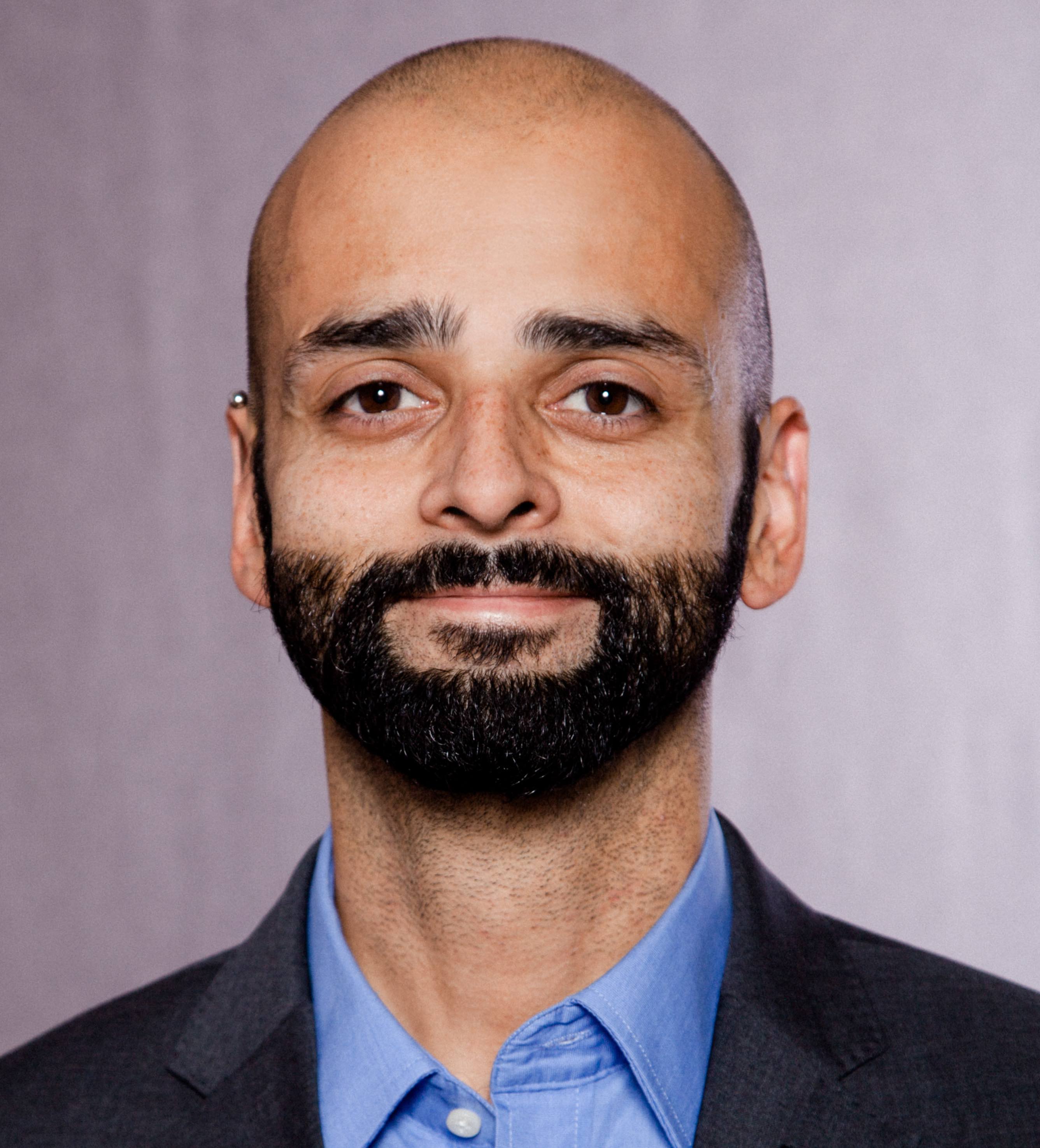
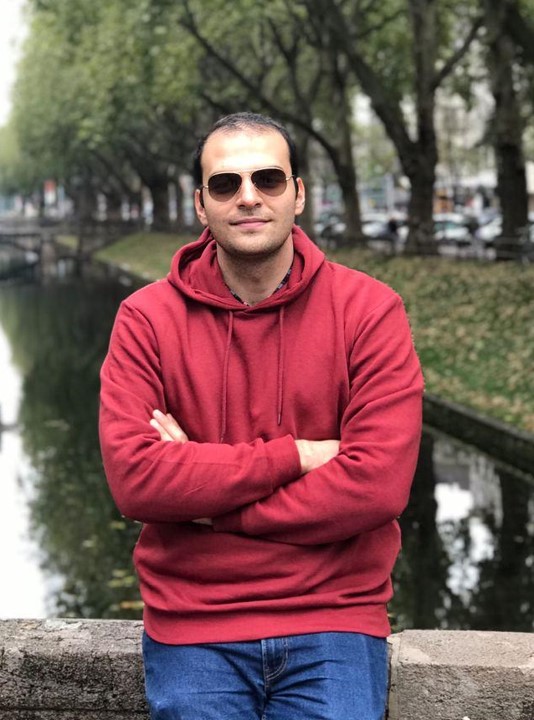
Prof. Dr. Maximilian Merkert is a Junior Professor for Optimization and Uncertainty in Mobility at the Institute for Mathematical Optimization, Technische Universität Braunschweig, since October 2021. Previously, he was a Postdoc at Otto von Guericke University Magdeburg (2017-2021) and a PhD student/research assistant at Friedrich-Alexander-Universität Erlangen-Nürnberg (2012-2017). His research focuses on mixed-integer nonlinear programming, network optimization, polyhedral combinatorics, and bilevel optimization with applications in mobility, logistics, and medicine. Research Interests: Mixed-Integer Nonlinear Programming Network Optimization Polyhedral Combinatorics Bilevel Optimization Game Theory Mobility Systems Teaching: Lectures and seminars on discrete optimization, multi-level optimization, and mathematical optimization Supervised computer labs and advanced optimization courses Publications: Contributions to mathematical programming journals and conferences (e.g., ICLR, Operations Research Proceedings) Focus on control languages, neural networks, wind farm optimization, and medical applications
Prof. Dr. Sebastian Stiller is a Professor at the Institute for Mathematical Optimization within the Carl-Friedrich-Gauß-Fakultät at Technische Universität Braunschweig. His research focuses on optimization, operations research, algorithmic game theory, quantum computing, and transportation science. He leads projects funded by DFG and BMBF, including 'SOAP' for air transport optimization and 'HyNEAT' for hydrogen supply networks in aviation. He teaches courses such as Linear Algebra, Algorithmic Game Theory, and Quantum Algorithms in both German and English. His research spans robust optimization, vehicle routing, and quantum algorithm development. Notable projects include optimizing wind farm control systems and analyzing quantum computing's potential for solving linear programming challenges. He collaborates with industry partners like 4flow AG and GAMS Software GmbH, emphasizing practical applications of his theoretical work. Teaching responsibilities include foundational mathematics courses for data science and engineering students, as well as advanced seminars on optimization. His contributions to operations research have been published in top-tier journals like Operations Research and Transportation Science.
Tobias Stamm is a researcher affiliated with the Institute for Algorithms and Complexity (E-11) at TU Hamburg. His work focuses on algorithmic optimization, combinatorial problems, and scheduling algorithms. He contributes to projects addressing challenges such as macromolecular crystallographic analysis and multivariate scheduling algorithms. His research interests include developing novel algorithmic approaches for complex optimization problems, with applications in operations research and theoretical computer science. Recent work emphasizes proximity bounds in integer programming and their implications for practical scheduling scenarios. His publications explore foundational aspects of integer programming and algorithmic efficiency, with contributions to conferences like SOFSEM and ISAAC. He collaborates on projects related to resilient systems design and quantum annealing applications.
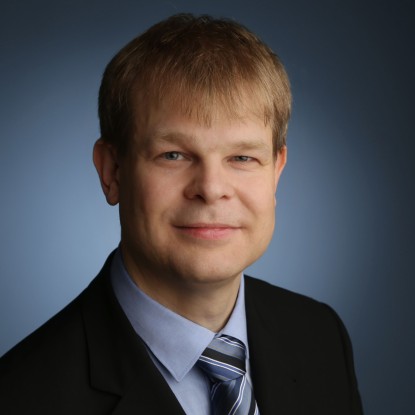
Raman Sanyal is a Professor of Discrete Geometry at Goethe-Universität Frankfurt, Germany. He previously held positions at Freie Universität Berlin and was a Miller Research Fellow at UC Berkeley. His research focuses on discrete and convex geometry, topological combinatorics, and combinatorial commutative algebra. He is a member of the steering committee for the German Research Foundation’s Priority Program 'Combinatorial Synergies'. Education: PhD in Mathematics from Technische Universität Berlin (2008) Miller Research Fellowship at UC Berkeley (2010-2012) Research Interests: Discrete and convex geometry, including polytope theory and inscribability Topological combinatorics and combinatorial commutative algebra Geometric valuations and intrinsic volumes Connections between algebraic structures (e.g., matroids) and geometry Teaching: Recent courses include Algebraic and Geometric Combinatorics , Discrete and Convex Geometry , and Linear Algebra . He has advised over 20 PhD, Master’s, and Bachelor’s students in geometric combinatorics and related fields. Publications: His work spans over 50 publications in top journals such as Advances in Mathematics , Discrete & Computational Geometry , and Journal of Combinatorial Theory . Key themes include polytope geometry, combinatorial valuations, and applications of algebraic methods in discrete mathematics. Professional Contributions: Sanyal has organized research seminars, co-edited volumes, and served on editorial boards (e.g., Mathematika ). His research frequently bridges algebraic, geometric, and combinatorial perspectives to address fundamental questions in discrete mathematics.
Prof. Dr. Rüdiger Schultz is a Professor at the University of Duisburg-Essen, Faculty of Mathematics, specializing in stochastic optimization and its applications in energy networks. His research focuses on stochastic integer optimization, gas network modeling, and risk management. He leads the working group in mathematical optimization, collaborating on projects such as the DFG Collaborative Research Center/Transregio 154 on gas network optimization and the BMWI-funded project on technical capacities in gas networks. Research projects include stochastic optimization in gas transport, robust nodal controllability, and network optimization. Teaching includes courses on linear optimization, stochastic optimization, and seminars on discrete optimization under uncertainty. His work integrates mathematical modeling, simulation, and optimization, addressing challenges in energy systems and real-time decision-making. Collaborations involve institutions like the Fraunhofer Institute and the Mercator Research Center Ruhr.
Dr. Markus Blumenstock is a Postdoctoral Teaching Associate at the Institute of Computer Science, Johannes Gutenberg University Mainz. His research focuses on approximation algorithms, graph theory, and combinatorial optimization with specific interests in arboricity, maximum flow algorithms, and Steiner trees. He has contributed to fast algorithms for pseudoarboricity and the approximation of connected subgraphs of high density. Blumenstock's academic work includes a PhD thesis on pseudoforest partitions and the development of efficient algorithms for complex graph problems. His teaching activities include courses like 'Berechenbarkeit, Unbeweisbarkeit und das Unendliche' (BUBU) and advanced algorithm complexity theory. He maintains transparency by sharing course materials under creative commons licenses. His research emphasizes theoretical computer science with practical applications in algorithm design and optimization. While no specific awards are listed, his prolific publication record demonstrates academic contributions to algorithmic research.
Prof. Clemens Thielen holds the Professorship for Optimization and Sustainable Decision Making at TUM Campus Straubing, Technical University of Munich. He previously served as Junior Professor at TU Kaiserslautern (2013–2019) and was appointed to the Professorship for Complex Networks at TUM Campus Straubing in 2019. His research focuses on discrete mathematical optimization, including network optimization, approximation algorithms for multiobjective problems, and practical applications like healthcare scheduling and infrastructure planning. He earned his PhD in Mathematical Optimization from TU Kaiserslautern in 2010, with studies at the University of Cambridge. Notable awards include the 2024 EURO Prize for OR for the Common Good and a 2018 teaching nomination. His work bridges theoretical advancements and real-world applications such as flood mitigation, traffic emission reduction, and crane logistics optimization. Education: PhD in Mathematical Optimization, Technical University of Kaiserslautern (2010) Studies in Mathematics at Technical University of Kaiserslautern and University of Cambridge Research Interests: Network optimization and approximation algorithms Multiobjective decision-making and sustainable resource allocation Applications in healthcare, transportation, and infrastructure Awards: EURO Prize for OR for the Common Good (2024) Nomination for Teaching Award of Rhineland-Palatinate (2018) Labs/Teams: Active in the Optimization and Sustainable Decision Making research group at TUM Campus Straubing, collaborating on projects such as municipal flood mitigation and healthcare scheduling.
Prof. Dr. Marc Pfetsch is a full professor of Discrete Optimization at the Technical University of Darmstadt, holding the W3 chair since 2012. He leads the Optimization Group within the Department of Mathematics and has served as Dean of the Department from October 2022 to September 2024. His research focuses on optimization methodologies, particularly in gas network modeling, discrete and mixed-integer programming, and computational algorithms. He is a core developer of the SCIP Optimization Suite, a leading solver for mixed-integer programming problems. Education : Mathematics studies at the University of Heidelberg (1992–1997) Operations Research at Cornell University (1997–1998, via Fulbright Scholarship) PhD in Mathematics from TU Berlin (2002) Habilitation in Computational Aspects of Combinatorial Optimization (2008) Research Interests : Discrete and combinatorial optimization Gas network optimization and resilience design Symmetry handling in mixed-integer programming Algorithm development for SCIP and optimization software Key Projects : Transregio/SFB 154: Mathematical Modeling, Simulation, and Optimization of Gas Networks SCIP Optimization Suite development Clean Circles: Iron as an energy carrier for climate-neutral systems Awards : EURO Excellence in Practice Award 2016 for "Evaluating Gas Network Capacities" Grants and Labs : Principal investigator in multiple DFG projects (e.g., SPP 2298, Matheon) BMWi-funded projects on flexible heating networks and resilient systems
Thomas Luu is a Professor of Theoretical Physics at Bonn University and affiliated with Forschungszentrum Jülich. His research focuses on quantum systems, including correlated electron models, lattice gauge theories, and quantum annealing applications. He has pioneered work on the Hubbard model, graphene nanoribbons, and sign problem mitigation in quantum simulations. His contributions span machine learning integration in physics, optimization of communication networks using quantum annealing, and exploration of exotic hadron states via lattice QCD. Key research areas include: Simulation of strongly correlated electron systems Development of novel Monte Carlo methods Quantum computing applications for combinatorial optimization Electronic structure of nano-materials Phase transitions in condensed matter systems Recent work emphasizes symmetry-enforced neural networks for quantum simulations and optimization frameworks leveraging quantum annealing. His publications frequently address ergodicity challenges in simulations and mitigation of fermionic sign problems through innovative contour deformation techniques. Notable contributions include the first exclusionary analysis of diquark-antidiquark structures in charmed mesons and foundational studies of the semimetal-Mott insulator transition in honeycomb lattice systems.
Anita Schöbel is a Professor in the Department of Mathematics at the Rheinland-Pfälzische Technische Universität Kaiserslautern-Landau (RPTU) and serves as the Director of the Fraunhofer Institute for Industrial and Financial Mathematics (ITWM) in Kaiserslautern. She is a leading figure in operations research and mathematical optimization, with a strong focus on public transportation systems, robust optimization, and multi-objective decision-making. Her dual roles bridge academic research and industrial application, particularly in logistics, healthcare, and energy systems. Her research interests include: Robust and integer optimization Public transport planning (timetabling, line planning, delay management) Facility and hub location problems Multi-objective optimization under uncertainty Algorithmic methods in transportation networks The analysis of her recent publications reveals a consistent focus on integrating robustness into transportation planning, using machine learning to enhance schedule reliability, and advancing theoretical frameworks for multi-objective optimization. Her work often combines mathematical rigor with real-world applicability, especially in public transit and pandemic modeling. She has contributed significantly to the development of optimization models for public health during the COVID-19 crisis. Her scientific awards include leadership roles in major professional societies: President of the European Association of Operational Research Societies (EURO), 2022–2023 President of the German Society for Operations Research (GOR), 2019–2020 Anita Schöbel has been actively involved in grant-funded research and collaborative projects, including the DFG Research Group FOR2083 on integrated transportation planning, the EU project EASIER, and the BMBF project SynphOnie. She is currently co-spokesperson of the DFG Graduate College 2982 on 'Mathematics of Interdisciplinary Multiobjective Optimization'. She also serves on advisory boards such as the steering committee of HLRS and the Fraunhofer Strategic Research Field on Next Generation Computing. She leads the research group 'Optimization' at RPTU and is associated with initiatives like LinTim (software for transport planning), QuanTUK (quantum computing applications), and GRK 2982. Her leadership extends to academic governance, including membership in the RPTU University Council and the Departmental Council of Mathematics.
Navid Ansari is a doctoral researcher at the Max Planck Institute for Informatics (MPI-INF) and Saarland University, affiliated with the Artificial Intelligence Aided Design and Manufacturing group under the Computer Graphics department. His work bridges academia and industry, with internships at Amazon AWS and the Max Planck Institute for Brain Research. PhD in Computer Science (2021–Present), Saarland University & MPI-INF MSc in Visual Computing (2018–2021), Saarland University BSc in Electrical Engineering (2013–2017), Shiraz University Navid's research focuses on deep learning, generative models, and optimization techniques. His work includes mixed-integer optimization for neural networks, Bayesian design optimization, uncertainty quantification in AI systems, and applications in computational manufacturing and molecular design. He has contributed to top-tier venues like AAAI, NeurIPS (Spotlight), and SIGGRAPH. His publications address trends in AI-aided design optimization, uncertainty-aware modeling, sparsity in large language models, and inverse molecular design aligned with molecular dynamics. This work spans applications in manufacturing, computational chemistry, and natural language processing. Navid has collaborated with institutions such as Amazon AWS (LLM sparsification) and the Max Planck Institute for Brain Research (behavioral neuroscience). He is part of the Saarland Informatics Campus, a hub for visual computing and AI research.
Prof. Dr. Stefan Weltge is a Professor of Discrete Mathematics at the Department of Mathematics, Technical University of Munich (TUM). He holds a PhD in Mathematics from Otto von Guericke University Magdeburg (2016) and was a postdoctoral researcher at ETH Zurich. His research focuses on combinatorial optimization, integer programming, and polyhedral combinatorics, with notable contributions to extension complexity and mixed-integer programming. He has received multiple teaching awards at TUM, including the TUM Supervisory Award (2022) and Best Lecturer recognitions in 2019 and 2021/22. His work has been published in leading journals such as the Journal of the ACM and Journal of Combinatorial Theory B. Prof. Weltge’s academic contributions include groundbreaking research on the complexity of mixed-integer programs, polyhedral representations, and combinatorial optimization problems. He has organized conferences like OR 2024 and the Cargese Workshops on Combinatorial Optimization, and serves on program committees for IPCO, MIP, and ISCO. His research is supported by DFG grants, including the Individual Grant (NextGen) and the AdONE PhD Program. He advises PhD students working on topics such as integer programming, algorithm design, and optimization theory. His publications span theoretical advancements in convex optimization, linear programming relaxations, and applications in logistics and operations research. Notable articles include work on bounded subdeterminants in integer programs and the complexity of stable set problems. His research bridges discrete mathematics with practical algorithmic solutions, influencing both theoretical and applied domains.
Prof. Andreas Rohleder holds the Chair of Business Start-ups and Management at Technische Hochschule Bingen (TH Bingen), Department 2. He is concurrently CEO of Rohleder.Management.Consulting GmbH and founder of Rohleder.Business.Seminare. His academic roles include professorships at TH Bingen since 2015 and Ruhr University Bochum since 2018, alongside extensive consulting experience. Education: Abitur (1991), Industrial Clerk Training (1993), Business Administration Degree (1994-2000), PhD in Economics (2006) Research focuses on digital transformation in corporate management, agile learning methodologies, and business start-up ecosystems. He leads the THBIC project (digitizing teaching) and BTG project (startup support). Key teaching areas include financial management, taxation, project management, and corporate sustainability. His publications span Excel applications in business, tax law analysis, production optimization, and telecommunications network strategies. Awards include recognition for his doctoral thesis from the University of Münster's economics faculty. Active in academic governance: Departmental Council member, Examination Board member for multiple programs, and Substitute Senate member for startup initiatives. Runs popular training programs like 'Excel for Professionals' and 'Practical Project Management'.
Prof. Dr.-Ing. Christian Clemen is a faculty member at the Faculty of Spatial Information at HTW Dresden. He specializes in BIM-GIS interoperability , 3D modeling , and digital twin technologies, with a focus on standardization and practical implementation. Active in ISO/TC 59/SC 13/JWG 14 (BIM-GIS) and chairs the DVW AK3 'BIM' (2023–2026). Leads projects like VideoBIM , ClimaLiftControl , and BIM4HEI (ERASMUS+/EU). Develops open-source tools such as IfcTerrain for BIM-GIS data conversion. His research explores topological analysis , point cloud registration , and automated construction monitoring . Recent publications address BIM standardization , terrain modeling , and collaborative workflows . He supervises PhD students like Enrico Romanschek and has mentored graduates such as Tim Kaiser. Teaching includes modules like 3D Modeling , Coordinate Reference Systems , and Building Information Modeling (BIM) across geomatics and green tech programs. He serves as an External Examiner at TU Dublin and contributes to Leitfaden Geodäsie und BIM (Version 3.0).
Prof. Dr. Manuel Ostermeier leads the Chair of Resilient Operations at the Center for Climate Resilience and the Faculty of Business and Economics at the University of Augsburg. His research focuses on sustainable and resilient logistics concepts in supply chains, with applications in food waste prevention , autonomous vehicles , and data-driven optimization . He collaborates internationally with institutions like the Polytechnic University of Porto and industry partners on projects such as the Green Hospital initiative , which addresses healthcare supply chain sustainability. The chair offers interdisciplinary opportunities for research and teaching. Contact: manuel.ostermeier@uni-a.de | rop@wiwi.uni-augsburg.de Address: Universitätsstraße 12, 86159 Augsburg Research Trends : Analysis of the 15 most recent articles reveals expertise in last-mile logistics (robotics, autonomous vehicles), food waste reduction in retail, and multi-compartment vehicle routing for efficient distribution. Quantitative methods (e.g., mixed-integer programming, heuristic algorithms) are applied to grocery retail , quick commerce , and environmental sustainability .