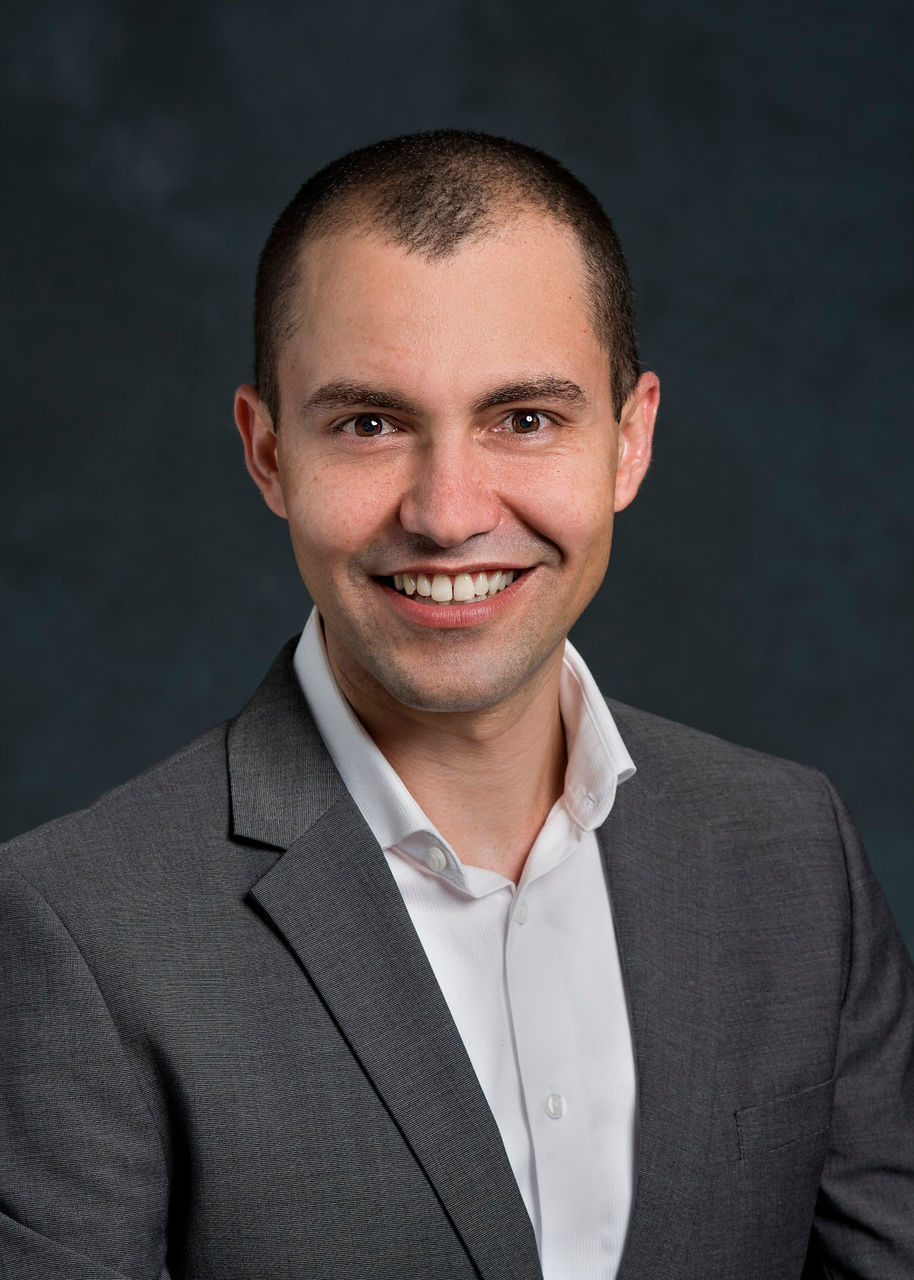
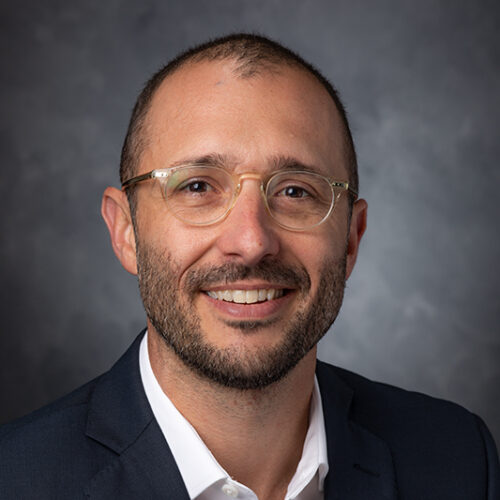
Edson Severnini is an Associate Professor of Economics at Boston College and a Core Faculty member at the Schiller Institute for Integrated Science and Society. He also holds affiliations as a Research Fellow at the Institute of Labor Economics (IZA) and a Research Associate at the National Bureau of Economic Research (NBER). Education: B.Sc. from University of São Paulo (USP), M.Sc. from Pontifical Catholic University of Rio de Janeiro (PUC-Rio), and Ph.D. from University of California -- Berkeley (UC Berkeley). His research spans Environmental & Energy Economics, Economic History, and Labor Economics, focusing on energy access, pollution, climate change, and social inequality. Recent publications examine lead pollution's health impacts, decarbonization trends, and climate adaptation mechanisms. His work often combines historical data with contemporary policy analysis. Scientific affiliations include: Research Fellow, Institute of Labor Economics (IZA) Research Associate, National Bureau of Economic Research (NBER) Core Faculty, Schiller Institute for Integrated Science and Society He has contributed to journals such as Review of Environmental Economics and Policy , Regional Science and Urban Economics , and Journal of Public Economics .
Stephen Collier is a Professor in the Department of City & Regional Planning at the University of California, Berkeley. His research integrates science and technology studies , governmentality studies , and pragmatist approaches to explore urban governance, expertise, and infrastructure. Ph.D., M.A., and B.A. in Anthropology from UC Berkeley and UC Santa Cruz Specializes in climate adaptation , emergency governance , and neoliberalism in post-Soviet contexts His recent work focuses on urban resilience and finance in climate adaptation , analyzing how planning paradigms shift toward anticipating disasters. Articles in journals like Geoforum and Political Geography highlight intersections of insurance , infrastructure , and design in resilience planning . Collier’s scholarship includes co-edited journals and special issues on bioscurity , infrastructure , and systemic risk . He teaches courses on climate planning , infrastructure policy , and planning theory at UC Berkeley.
Dr Bilyaminu Auwal is a Senior Lecturer in Computer Science and Digital Technologies at the Department of Engineering & Computing, School of Architecture, Computing and Engineering, University of East London. He serves as Course Leader for BSc Computer Science and Undergraduate Academic Lead. His academic journey includes a PhD in Software Engineering (2016) from Brunel University, PG Cert in Higher Education (2018) from Coventry University, and a BSc (Hons) in Software Engineering (2012) from UEL. PhD in Computer Science (Software Engineering), Brunel University London (2016) PG Cert in Higher Education, Coventry University (2018) TERP10 SAP ERP Certification, SAP UK (2014) BSc (Hons) Software Engineering, University of East London (2012) Nigeria Certificate in Education (NCE), Shehu Shagari College of Education Sokoto (2008) His research focuses on Software Maintenance and Evolution, Blockchain-Oriented Software Engineering, Smart Contracts Reengineering, Circular Economy theory, and Digital Economy & FinTech. He has contributed to blockchain-based solutions for food redistribution and decentralized insurance systems, while earlier work addressed quality improvements in open-source software repositories. Recent publications highlight his interdisciplinary approach combining blockchain technology with sustainability, insurtech, and automated efficiency frameworks. Awards include Professional Membership of the British Computer Society, Fellowship of the Higher Education Academy (UK), and Fellowship of the Royal Society for the Encouragement of Arts, Manufacture and Commerce. Co-investigator of £23K UCL Centre for Blockchain Technologies project on 'Circularity and Blockchain Technology for Food Redistribution and Community Well-being' (2021) Co-investigator of £30K GCRF Royal Academy of Engineering seed funding project at Coventry University Software Development Consultant for €13M EU Horizon 2020 ECOBulk project He is a Research Associate at UCL Centre for Blockchain Technologies (2020-present) and founding member of the UEL FinTech Centre, contributing to its podcast series. His teaching portfolio spans Software Development, Doctoral Supervision, and Mobile & Distributed Systems.
Shih-Kuei Lin is a Professor in the Department of Money and Banking at National Chengchi University's College of Commerce, where he has served since 2010, advancing from Associate Professor to full Professor. He has held significant leadership roles including Department Chair from 2016-2020 and currently serves as a full-time faculty member with ongoing research projects through 2027. His educational background includes a Ph.D. in Statistics from National Chengchi University (2000-2004), a Master's in Statistics from the same institution (1995-1997), and a Bachelor's in Mathematics from National Cheng Kung University (1990-1994). His research expertise spans Financial Engineering, Derivatives, Financial Econometrics, Actuarial Finance, and has recently expanded to include Financial Big Data, Green Finance, Climate Finance, and Banking Management Strategy. Professor Lin's work demonstrates a sophisticated approach to financial modeling, particularly in derivatives pricing under complex market conditions including jump diffusion models, regime-switching frameworks, and stochastic volatility environments. His recent publications show an increasing focus on ESG integration, climate finance applications, and machine learning approaches to portfolio management. His research has been consistently published in top-tier finance journals including the Journal of Banking and Finance, Review of Quantitative Finance and Accounting, and International Review of Financial Analysis. His research portfolio includes over 40 publications since 2003, with a particularly productive period from 2019-2024. His work shows evolution from traditional financial engineering topics toward contemporary issues including climate risk, ESG integration, and machine learning applications in finance. National Science Council Research Award (multiple years: 108, 109, 110, 111, 112, 113) Senior Excellent Teacher (20 years) from National Chengchi University Senior Excellent Teacher (10 years) from National Chengchi University Professor Lin has served as Principal Investigator for numerous research projects funded by Taiwan's National Science and Technology Council, with current projects extending through 2027 focusing on derivatives pricing and risk management. He has also collaborated with various financial institutions including Taiwan Business Bank, Cathay Financial Holdings, and Standard Chartered Bank on applied research projects. His departmental leadership as Chair of the Department of Money and Banking from 2016-2020 demonstrates his commitment to academic administration alongside his research activities.
Benoît Le Maux is a Senior Lecturer at the University of Rennes 1, where he serves as a researcher at CREM (UMR CNRS 6211) and co-facilitator of the PPVD (Public Policy, Voting and Democracy) division. He co-directs the Master's degree in 'Engineering, Management, and Evaluation of Public Policies' and was previously co-director of the Master's in 'Public Economics and Public Finance' (2008-2016). He actively participates in academic governance as an elected member of the Scientific Council of the Faculty of Economics and the executive board of the European Public Choice Society (2012-2015). PhD in Economics, University of Rennes 1 (2006) HDR (Authorization to Direct Research), University of Rennes 1 (2013) His research focuses on public policy evaluation, microeconomic analysis of collective choices, behavioral economics, and the interplay between decentralization and democratic governance. He has published extensively on topics including legislative size optimization, ethical behavior in experimental settings, cost-benefit evaluation methods, and the political economy of local public finance. His peer-reviewed articles address questions such as the impact of monetary incentives on dishonesty, the efficacy of honesty nudges, and the determinants of public spending under fragmented political systems. Recent publications include Monetary incentives and the contagion of unethical behavior (2024) and On the optimal size of legislatures (2023), which analyze behavioral economics and institutional design. His work Local Public Economy (2020, with Sonia Paty) won the AFSE 2021 Prize in the 'Manual' category. AFSE 2021 Prize for 'Local Public Economy' Le Maux supervises PhD students including Pauline Mille (decentralization and citizen representation) and Kristýna Dostálová (quasi-experimental analysis of local public goods). He contributes to the scientific community through editorial roles in the Journal of Economic Policy and co-organizing conferences like the ANR Citizens project meetings in 2024. His research is supported by collaborations with institutions such as the Condorcet Center for Political Economy and the European Public Choice Society.
Professor Wei-Yu Kuo is a distinguished faculty member in the Department of International Business at National Chengchi University's College of Commerce in Taiwan. With over 25 years of academic experience, he has progressed from Assistant Professor to his current position as Professor, demonstrating significant contributions to finance research and education. National Chengchi University, Department of International Business (1998-present) PhD in Financial Economics, University of Cambridge (1994-1998) Research focuses on financial markets, behavioral finance, and risk management Professor Kuo's research expertise spans International Financial Management, Financial Economics, and Financial Management, with particular emphasis on market microstructure, investor behavior, and volatility modeling. His work bridges theoretical finance with empirical analysis of Taiwan's financial markets, contributing significantly to both academic literature and practical understanding of market dynamics. He has published in top-tier finance journals including Management Science, Review of Financial Studies, and Journal of Banking and Finance. His recent research examines ETF investor behavior, individual trading patterns, and volatility dynamics, reflecting a consistent focus on understanding market participants' decision-making processes. Professor Kuo's publications demonstrate a sophisticated blend of theoretical frameworks and empirical analysis, often leveraging unique Taiwan market data to address broader financial questions. Distinguished Professor at National Chengchi University (multiple years) National Science and Technology Council Outstanding Research Award Academic Research Excellence Awards Multiple teaching excellence awards for EMBA programs 20-Year Outstanding Service Award As Principal Investigator on numerous research projects funded by Taiwan's National Science and Technology Council, Professor Kuo has secured continuous research support for over two decades. His current research focuses on ETF price efficiency, risk concentration, and performance attribution, indicating his ongoing relevance in contemporary finance research. He has also contributed to industry consulting projects with financial institutions including insurance companies and securities firms.
Tim Samples is a Professor of Legal Studies in the Department of Insurance, Legal Studies and Real Estate at the Terry College of Business, University of Georgia. He actively engages in teaching, research, and university service including Assistant Director of the Lilly Teaching Fellows Program (2024–present) and Chair of the International Business Committee (2016–present). His educational background includes a JD and MA in Latin American Studies from the University of Texas (2010) and a BA in International Affairs from the University of Georgia (2004). Professor Samples' research centers on sovereign debt and international investment law with Latin American case studies, and law-technology intersections including digital platform regulation. His sovereign debt work examines transparency mechanisms, natural disaster clauses, and restructuring frameworks, while his technology law research analyzes consumer contracts, readability of terms-of-use, and patent disclosure strategies through linguistic and behavioral lenses. Recent publications (2023-2025) reveal increasing focus on technology-law intersections alongside sovereign debt scholarship, demonstrating interdisciplinary methodology blending legal analysis with economics, linguistics, and behavioral science. Key thematic trends include systemic risks in digital platforms, climate-debt linkages, and energy reform challenges in emerging markets. Scientific Awards and Honors: Distinguished Early Career Faculty Award, Academy of Legal Studies in Business, 2021 Russell Award for Excellence in Undergraduate Teaching, University of Georgia, 2020 Outstanding Teacher Recognition, Student Government Association, 2018 Holmes Cardozo Distinguished Paper Award, Academy of Legal Studies in Business, 2018 Core Fulbright U.S. Scholar (Teaching/Research Grant at Universidad de Buenos Aires, Argentina), 2017 Holmes-Cardozo Award for Best Conference Paper, Academy of Legal Studies in Business, 2016 Lilly Teaching Fellow, UGA Center for Teaching and Learning, 2015-17 Teaching Academy Fellow, UGA Center for Teaching and Learning, 2014-15 While the text provides no specific grant details or student advising records, Professor Samples serves as Staff Editor for the American Business Law Journal and holds significant service roles including University Parliamentarian (2018–2024). His pre-academic legal career included corporate and energy law practice at Hogan Lovells LLP and Bracewell LLP. No laboratory or dedicated research team affiliations are mentioned in the source material.
Bárbara da Rosa Lazarotto is a doctoral researcher at the Faculty of Law and Criminology, Vrije Universiteit Brussel, specializing in the intersection of Data Protection Law , Privacy Regulation , and Smart City Technologies . Her work engages with GDPR frameworks, European data governance , and Latin American legal systems . Education : Master of Judiciary Law (2021) from the University of Minho. Her research explores disinformation regulation , redistribution of digital resources , and legal challenges in data-driven public administration . She actively contributes to academic discourse through blogs , working papers , and peer-reviewed chapters . Notable achievements include winning the BILETA European Journal of Law and Technology Prize (2023) . She participates in international conferences, including the AI & Law Crossroads: Winter Academy and Brussels Privacy Hub 10th Anniversary , and has been featured in media discussions on Big Tech ethics and African digital labor .
Dr. Nelson Ma is an Associate Professor in Accounting at the University of Technology Sydney (UTS) Business School. He holds dual roles as co-lead of the Business and Strategy Theme in the UTS Ageing Research Collaborative (UARC) and serves on the Editorial Board of Pacific Accounting Review. His academic affiliations include the Accounting Discipline Group within the UTS Business School and the UTS Ageing Research Collaborative. Dr. Ma’s research focuses on audit, corporate governance, and aged care, with a particular emphasis on improving organizational decision-making and stakeholder outcomes. He has contributed to over $500,000 in externally funded research and co-authored UARC’s bi-annual Australia Aged Care Sector Report. His work has influenced government policy and been featured in major media outlets like the Australian Financial Review and Forbes. In teaching, he is a top-rated educator in financial accounting, auditing, and business valuation, recognized with the 2023 and 2024 UTS Business School top teacher awards. He pioneered the UTS Case Team, a globally acclaimed program for case competition excellence, which has secured six international first-place finishes since 2019. He also led the UTS Chapter of Beta Alpha Psi, which became the most awarded chapter internationally among 320+ universities. His research portfolio spans aged care quality dynamics, audit regulation, and executive compensation. Recent studies include analyzing the impact of residential aged care acquisitions on quality metrics and investigating shareholder reactions to CEO pay cuts during crises. He has secured grants such as “The illusion of choice? Examining geographic disparities in aged care access” and “Is bigger better? Economies of scale in residential aged care.” Dr. Ma’s accolades include the 2023 UTS Business School Achievement Award for External Engagement and the 2024 UTS Vice-Chancellor’s Award for Teaching Innovation. His work bridges academia and industry through partnerships with firms like Macquarie Group and QBE Insurance, fostering student engagement and professional development.
Will Hubbard is an Adjunct Lecturer at the Segal Design Institute, part of Northwestern University's McCormick School of Engineering. He specializes in corporate innovation and emerging technologies, with expertise in generative AI, web3, and longevity. His career includes founding three exited tech companies and co-founding the Adventure Fund, which invests in startups like SpaceX and Plaid. Education: B.A. in Entrepreneurship, Capital Investment, and Economic Development from UC Berkeley Research interests focus on transforming nascent technologies into scalable products through strategic innovation initiatives. His ventures span chemical sensing, social marketplaces, and decentralized insurance models. Notably, his companies ChemiSense, Niche, and Fur Insure were acquired by industry leaders. Recognized in Inc Magazine and MIT Technology Review, Hubbard advises Fortune 500 corporations on disruptive technologies while maintaining active roles in venture capital and startup ecosystems.
Clark Kelso is Professor of Law and Gordon D. Schaber Chair in Health Law and Policy at University of the Pacific's McGeorge School of Law. A leading authority on judicial administration, he has held multiple California government roles including Insurance Commissioner, State CIO, and federal receiver for prison healthcare reform. Research focuses on judicial reform, sentencing policy, and the intersection of technology with governance. His scholarship examines systemic improvements for courts, constitutional privacy rights, and arbitration processes. Publications demonstrate consistent themes: judicial independence, modernization of court systems, sentencing equity, and constitutional law applications. Recent work addresses dehumanization in correctional systems and access to justice frameworks. Major Awards: Bernard E. Witkin Award for court system contributions (1998) Premier 100 IT Leaders (Computerworld 2007) California IT Hall of Fame (2014) Elizabeth G. Hill Public Official of the Year (2014) Transformational Leader Award (2017) No advising relationships or research teams are detailed in the source materials.
Leonard J. Feldman, currently serving as a Distinguished Jurist in Residence at the University of Washington School of Law , is a prominent figure in appellate law and torts. Appointed to the Washington Court of Appeals in March 2023, he continues to teach courses such as torts and federal courts while maintaining an active role in legal education and pro bono initiatives. Education: BS in Psychology, University of Washington (1987, summa cum laude) JD, Harvard Law School (1991, magna cum laude) Feldman’s research and practice focus on appellate law , tort law , and legal writing . His work often intersects with civil rights , insurance law , and judicial decision-making . He has co-authored influential articles on discretionary review, oral argument strategies, and the application of the Americans with Disabilities Act in arrest scenarios. The trends in his 15 most recent publications reflect a deep engagement with appellate procedure , negligence claims , pro bono legal work , and effective legal communication . These works often address practical challenges in litigation, insurance coverage, and civil rights, with a recurring emphasis on judicial clarity and ethical advocacy. Scientific and professional accolades: Recognized as one of Washington's Top 10 Appellate Law Lawyers (2020) Certificate of Appreciation from the Ninth Circuit for Pro Bono Coordination Certificate of Appreciation from the Ninth Circuit for teaching appellate practice Washington State Bar Association Pro Bono Award (2006) Fellow of the American Academy of Appellate Lawyers Nominated for the Outstanding Faculty Award (2021, 2023, 2024) Feldman’s career spans nearly three decades of appellate litigation, including arguments before the U.S. Supreme Court in City and County of San Francisco v. Sheehan (2015) and County of Los Angeles v. Mendez (2017). He has served as a mentor and district coordinator for the Ninth Circuit Pro Bono Program and is a frequent speaker on appellate practice. His collaborative work with Judge Stephen Dwyer on legal writing and oral argument strategies underscores his commitment to legal education and procedural reform.
Patrick J. DeMouy is a Senior Lecturer in the Department of Management at the Darla Moore School of Business, University of South Carolina. With over 30 years of professional experience, he has served as Owner of DeMouy Consulting since 1991, specializing in strategic planning, market development, and management consulting for over 250 municipalities and national corporations. He holds an MBA from the University of South Carolina (1982) and a B.S. in Commerce from the University of Virginia. DeMouy’s research and teaching focus on strategic management, business ethics, sustainable technology, and case method education. Notable projects include proposing methyl hydrate viability research (2014), developing LEED series lectures (2014), and co-creating a global virtual case competition (2011–present). His case studies span diverse topics like healthcare ethics, disaster response, and corporate governance. He has advised IMBA and undergraduate case teams to numerous national and international accolades, including first place in the National Hispanic MBA Case Competition (2015) and multiple top finishes at John Molson Competitions. As faculty advisor, he also supported the Women’s Lacrosse team (2012–2016) and organized business fraternity case competitions. DeMouy’s professional background includes roles as Audit Manager at Farm Bureau Insurance (1987–1991), Investment Portfolio Manager at Standard Federal Savings and Loan (1985–1987), and broker at Smith Barney (1983–1985). He is a Certified Public Accountant and holds Series 7 securities licensing.
Etienne Pracht is an Associate Professor of Health Policy & Management in the Department of Health Policy and Management at the University of South Florida’s College of Public Health. He also holds a courtesy appointment as Associate Professor of Economics in the College of Business. He earned his Ph.D. and M.S. in Economics (with a minor in Computer Science) from Louisiana State University and a B.A. in Economics from New College of the University of South Florida. His research focuses on health care economics and applied econometrics, with a particular emphasis on trauma systems, Medicaid policy, and health system performance. Teaching responsibilities include courses such as Health Economics, Public Health Data Analysis, and Perspectives on Health Insurance. He has served as Faculty Director of Educational Technology and Assessment for the College of Public Health since 2007. His work has been recognized with awards including the 2006 Dean’s Certificate of Appreciation and the 2001-2002 Outstanding Teacher Award from the Public Health Student Association. Pracht has led numerous grants and contracts, including evaluations of Florida’s trauma system and studies on avoidable hospitalizations. He has authored over 30 peer-reviewed publications, with key contributions in trauma outcomes, Medicaid reforms, and health policy. His research often bridges quantitative methods with real-world policy implications, addressing issues like trauma center efficacy, insurance disparities, and public health interventions. Award highlights include a 2009 certificate from Suriname’s Ministry of Health for training in empirical health care research and a 2002 Special Performance Bonus. He actively participates in academic governance, serving on committees such as the College of Public Health’s Appointment, Promotion, and Tenure Committee.
David Cooper is Senior Lecturer in English and Co-Director of the Centre for Place Writing at Manchester Metropolitan University. With a PhD from Lancaster University, his research explores literary geographies through digital mapping, creative-critical practice, and environmental humanities frameworks. His scholarship focuses on: Literary representations of place in contemporary British writing Digital methods for analyzing spatial narratives Creative collaborations between writers, artists, and scientists Place-based curricula development His publications demonstrate consistent engagement with how literature represents and reimagines place. Recent work examines contemporary place writing as a distinct genre while earlier contributions pioneered digital cartographic methods for analyzing Romantic texts. His collaborative projects like 'Hayling Island: Stories at Sea Level' blend academic research with multimedia public engagement. As founding co-director of the Centre for Place Writing, he curates events including the Place Writing Festival and PLACE collections. He leads the 'Writing & Place' undergraduate module and supervises PhD research spanning poetry, deep mapping, and regional identities. His current projects include co-editing the Routledge Handbook of Literary Geographies and contributing to the 'Voices of the Future' treescapes initiative.