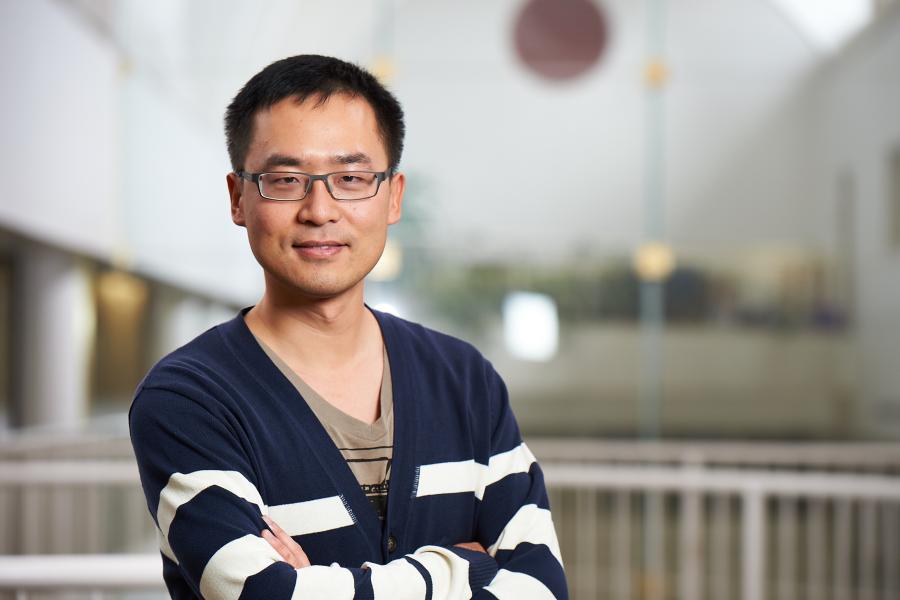
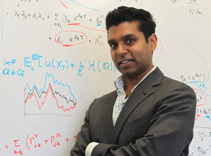
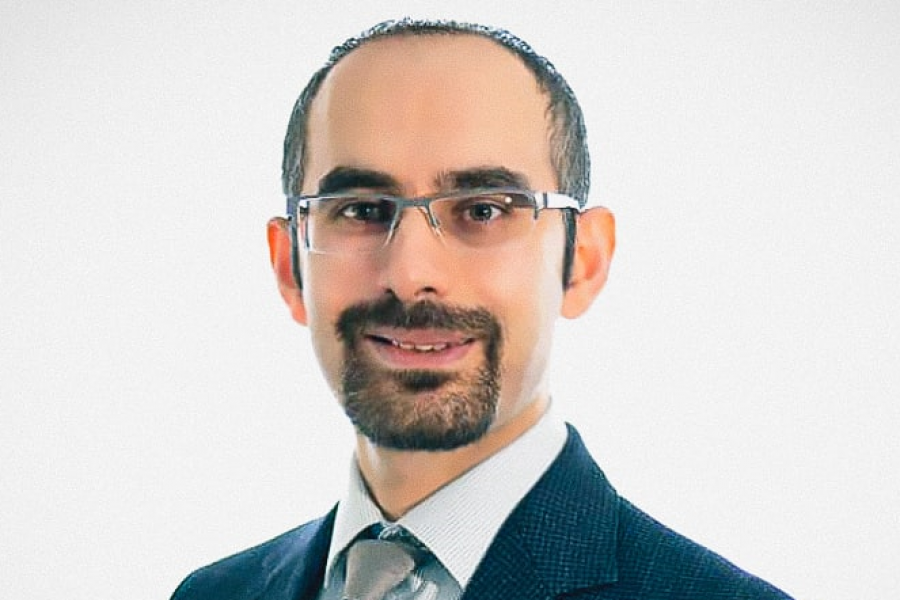
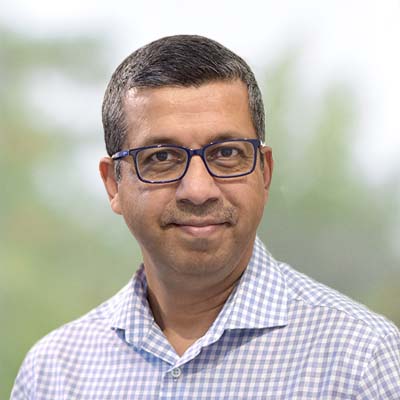
Xuemiao (Samuel) Hao is an Associate Professor at the Warren Centre for Actuarial Studies and Research within the Asper School of Business at the University of Manitoba. He holds dual bachelor's degrees in mathematics and economics from Peking University, and PhD in statistics from University of Iowa. Research focuses on: Mathematical modeling of insurance/financial risks Applications of stochastic processes Credit derivative pricing Ruin theory with heavy-tailed distributions His methodological work employs advanced techniques including Lévy processes, Fourier transforms, and asymptotic analysis for risk quantification.
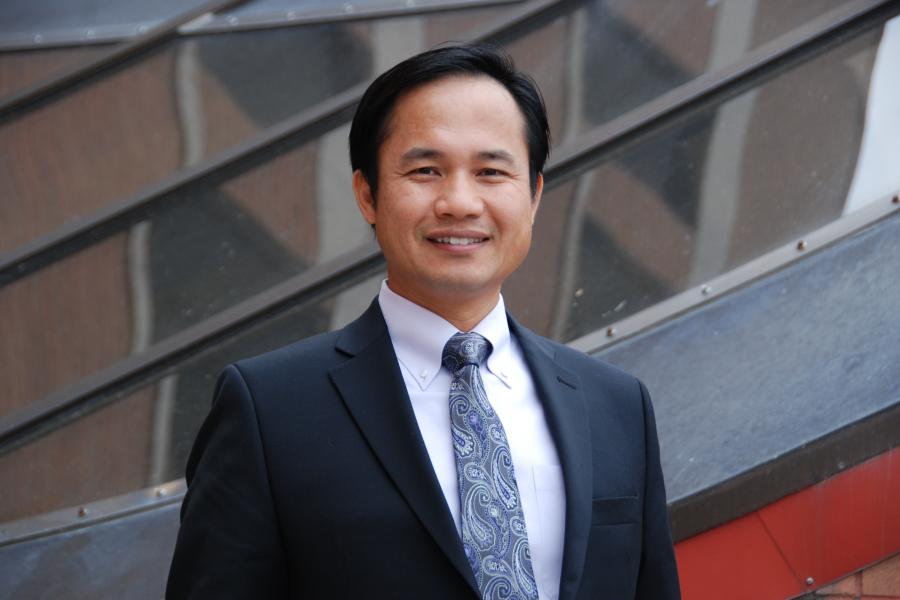
Jeffrey Pai is a Professor at the Warren Centre for Actuarial Studies and Research within the Asper School of Business at the University of Manitoba. With over 30 years of academic experience spanning multiple countries, he specializes in actuarial science, risk modeling, and financial derivatives. His research examines livestock/crop insurance, weather derivatives, and Bayesian statistical methods for risk assessment. Research encompasses quantitative risk management frameworks, stochastic modeling of insurance products, and econometric analysis of financial instruments. Recent work focuses on parametric insurance for natural disasters, mortality catastrophe modeling, and agricultural risk transfer mechanisms using advanced statistical approaches. Publications demonstrate consistent focus on practical applications of actuarial science, particularly in agricultural insurance and weather-related financial instruments. Recent trends show increased emphasis on Bayesian methods, catastrophe modeling, and developing market applications. Awards: Students' Teacher Recognition Awards (2021, 2002) CAS Best Paper Award (2016) Literati Network Outstanding Paper Award (2011) Featured in MACLEAN's Guide to Canadian Universities (2004) Extensive teaching includes courses in life contingencies, risk theory, and actuarial modeling. Secured research funding from international agencies including SSHRC (Canada), Society of Actuaries (USA), and UK Development Partnerships.
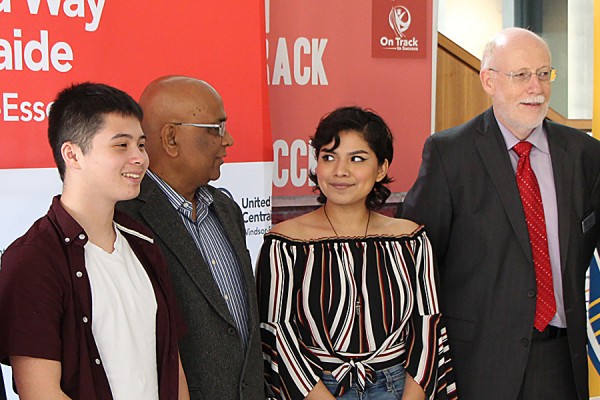
Rajeeva Sinha is a Professor of Finance at the University of Windsor's Odette School of Business, specializing in corporate governance, financial regulation, and mutual fund performance. He has conducted extensive research on pension governance, regulatory frameworks in financial services, and investor behavior in Canadian markets. His work bridges academic insights with practical applications, such as developing financial literacy programs for at-risk students through initiatives like the On Track to Success program. His research spans over three decades, focusing on critical areas including shareholder value analysis, banking regulation, and international investment impacts. Notable contributions include studies on mutual fund performance evaluation, corporate governance structures in manufacturing firms, and the role of hostile takeovers in governance reforms. He collaborates with organizations like the United Way to translate academic findings into community-driven solutions. Rajeeva Sinha has maintained an active role in academic discourse through peer-reviewed publications in top-tier journals and serves as a reviewer for several scholarly works. His interdisciplinary approach connects financial theory with real-world policy design, emphasizing both institutional accountability and equitable access to financial education.
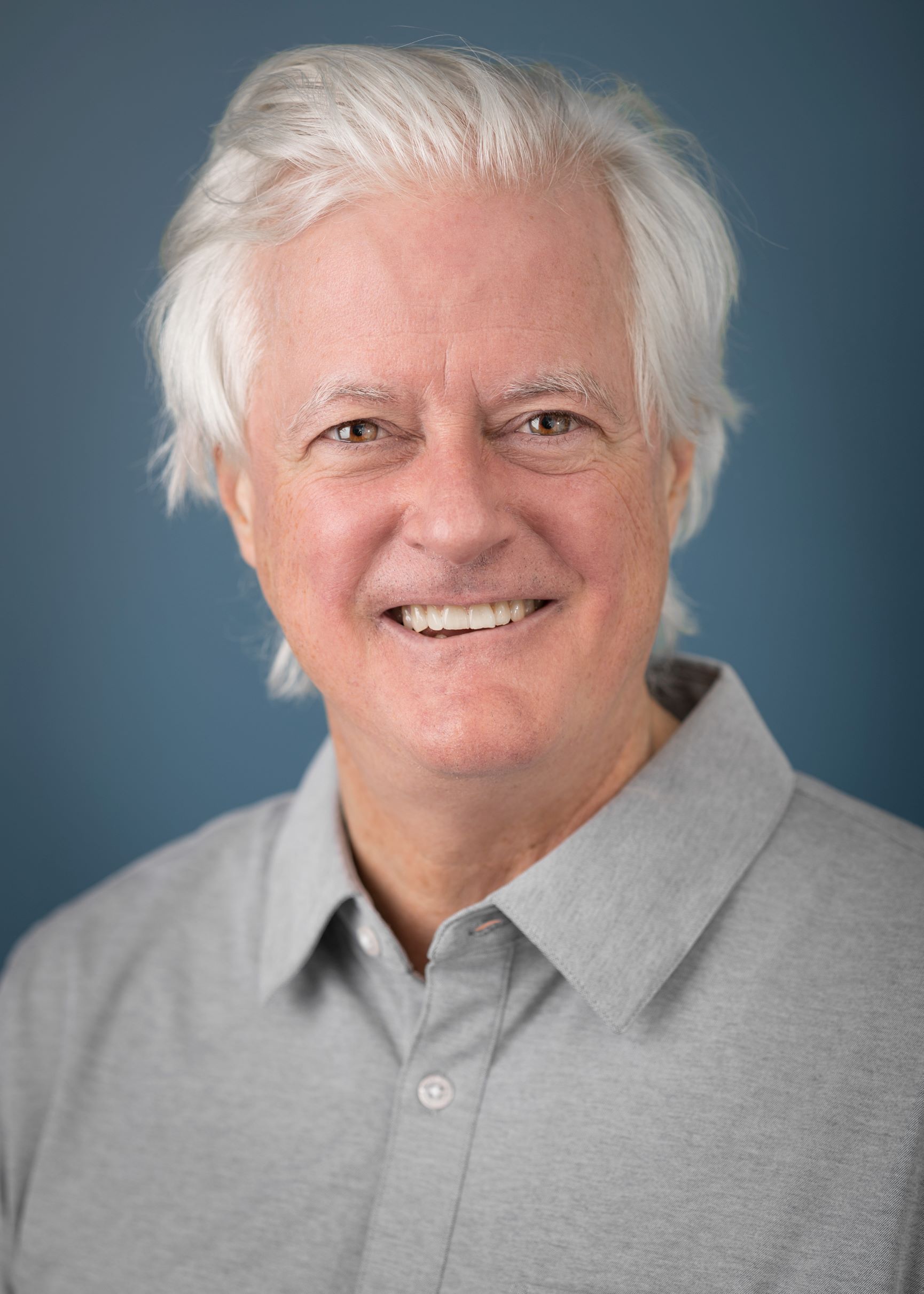
Alfons Weersink is a Professor at the University of Guelph's Ontario Agricultural College, specializing in Agricultural Economics and Policy. He holds a B.Sc. (1982), M.Sc. (1984), and Ph.D. (1989) in Agricultural Economics from the University of Guelph, Montana State University, and Cornell University, respectively. His research focuses on agri-food policy, environmental impacts of farming, and technological innovation in agriculture. Affiliations: Department of Food Agricultural and Resource Economics, University of Guelph Education: B.Sc. (Honours) in Agriculture (1982), M.Sc. in Applied Economics (1984), Ph.D. in Agricultural Economics (1989) His work emphasizes applied economic analysis, including the feasibility of technologies like biomass crops and methane digesters, and the cost-effectiveness of farm practices. He frequently advises policymakers on agricultural policy and environmental sustainability. Alfons is also an assistant coach for the Gryphons women’s varsity soccer team. Research Interests: Agri-food policy, climate change impacts, farm structure evolution, and interdisciplinary approaches to agricultural challenges. His work bridges economics, environmental science, and policy to address sustainability and innovation. Notable Contributions: Pioneered studies on nitrogen management practices and their environmental-economic trade-offs, analyzed the role of cross-compliance in agricultural policy, and evaluated the economic viability of emerging agricultural technologies. Awards: Fellow of the Canadian Agricultural Economics Society (2014), OAC Alumni Distinguished Researcher Award (2006) His research on greenhouse gas mitigation strategies and soil health practices has informed both academic and policy circles. Alfons collaborates with organizations such as the Agricultural Management Institute and serves as a panel member for interdisciplinary initiatives.
Dr. Katsu Goda is an Associate Professor and Canada Research Chair in Multi-Hazard Risk Assessment at the Department of Earth Sciences, Western University. His research focuses on earthquake and tsunami risk management, combining engineering, financial analysis, and decision-making frameworks. He holds an office in BGS 1076 and can be reached at kgoda2@uwo.ca. Dr. Goda's work spans multidisciplinary areas including probabilistic seismic hazard modeling, tsunami engineering, and financial risk analysis. His research addresses lifecycle cost analysis of structures, seismic risk mitigation techniques, and decision-making under uncertainty. Notable contributions include stochastic finite-fault modeling, seismic loss estimation, and multi-hazard risk assessment for subduction zone earthquakes. His recent articles emphasize advanced methodologies in rupture recurrence analysis, Coulomb stress changes on faults, and tsunami hazard modeling in Makran and Cascadia subduction zones. He has also contributed to studies on earthquake insurance demand in Canada and social vulnerability assessments in coastal regions like Gwadar, Pakistan. Awards: Canada Research Chair (CRC) Tier 2 in Multi-Hazard Risk Assessment Research Themes: Earthquake-Tsunami Interactions Risk-Based Early Warning Systems Financial Instruments for Catastrophe Mitigation Teaching: Courses include Data Analysis in Earth Sciences (ES 2222), Environmental Geophysics (ES 3320), and Natural Catastrophes (GP 9573). Dr. Goda collaborates internationally, with active projects in Japan, Malawi, and Canada. His research integrates cutting-edge computational models with real-world applications to enhance community resilience against natural disasters.
James Stafford is a Professor at the University of Toronto , affiliated with the Department of Statistical Sciences . His office is located at Sidney Smith Hall, Room 6019, Toronto, Ontario, Canada (M5S 3G3). Research Interests : Data Science, Asymptotics, Biostatistics, Computer Algebra, Smoothing, Survey Methodology, Symbolic Computation, Longitudinal Data Analysis. His work focuses on computational statistics, symbolic algorithms for likelihood adjustments, and applications in survey data visualization and biostatistical modeling. Recent Publications : His research spans symbolic computation in statistics (2000), local-EM algorithms (2010), and recursive moment calculations in risk theory (2003). Articles address topics like bootstrap methods, interval-censored data analysis, and priority queue theory, reflecting interdisciplinary applications in statistics, computer science, and actuarial science. Awards : Distinguished Service Award, Statistical Society of Canada (SSC) Contact : Email: jamie.stafford@utoronto.ca , stafford@utstat.toronto.edu Phone: +1 416-978-5709 Fax: +1 416-978-5133
Prof. Sebastian Jaimungal is a Professor in the Department of Statistical Sciences at the University of Toronto . He serves as Director of the Masters of Financial Insurance Program, a Fields Institute Fellow, and a former chair of the SIAM activity group in Financial Mathematics and Engineering (SIAG/FM&E). He contributes to editorial boards including Quantitative Finance and the SIAM Journal on Financial Mathematics . Research Interests : Mathematical Finance, Reinforcement Learning, Mean Field Games, Algorithmic Trading, Stochastic Control, Energy & Commodity Markets Membership : Fellow of the Fields Institute for Mathematical Sciences (2020–present), Member of the Oxford-Man Institute (2021–present) Key Awards : SIGEST Award (SIAM, 2013–2017) NSERC Discovery Accelerator Supplement (DAS) His book Algorithmic and High-Frequency Trading (Cambridge University Press) synthesizes cutting-edge research in stochastic control, machine learning, and market microstructure. He has taught courses such as STA 2503 (Mathematical Finance), STA 2536 (Data Science for Risk Modeling), and STA 4505 (Algorithmic Trading).
Vicki Zhang is an Associate Professor (Teaching Stream) at the Department of Statistical Science, University of Toronto. She holds a Harvard Higher Education Teaching Certificate and has been recognized with the Faculty of Arts and Science Outstanding Teaching Award (2024) and a nomination for the UofT Early Career Teaching Award (2019). Fellow, Society of Actuaries (FSA) Associate, Canadian Institute of Actuaries (ACIA) PhD-ABD, Master's in Statistics and Applied Probabilities (University of California, Santa Barbara) Her research focuses on actuarial science pedagogy , integrating narrative and arts-based methods into technical education. She explores embedded ethics in finance , AI practices , and predictive modeling through a cross-disciplinary lens. Her work includes analyzing Chinese international students' self-segregation and developing pluralistic finance education frameworks. Recent publications examine STEAM pedagogy for financial literacy, critical finance education , and theatrical teaching methods in statistical sciences. These works span education theory , ethical AI , financial regulation , and cross-cultural dynamics . Nominated for UofT Early Career Teaching Award (2019) Winner of Faculty of Arts and Science Outstanding Teaching Award (2024) Book Uncalculated Risks (2014), shortlisted for Myrdal Prize (2015) She created the capstone course Insurance Products, Markets and Regulation with AXIS and redesigned actuarial curricula to incorporate data science and ethics. As Accreditation Actuary for the Canadian Institute of Actuaries’ University Accreditation Program, she bridges academia and industry standards.
Mohammad Nadimi is an Assistant Professor in the Department of Biosystems Engineering at the Price Faculty of Engineering, University of Manitoba. He holds a PhD in Electrical Engineering from the same institution and has a multidisciplinary research profile spanning photonics, food quality, and data analytics. His work focuses on integrating advanced optical techniques with machine learning to improve agri-food production and storage systems. Education: PhD in Electrical Engineering, University of Manitoba, 2018 M.Sc. in Electrical Engineering, Iran University of Science and Technology, 2011 Dr. Nadimi's research centers on real-time quality monitoring of agri-food products using electromagnetic imaging, spectroscopy, and smart sensing technologies. He applies machine learning and AI to optimize data analysis in large-scale agricultural datasets. His work also includes microstructural analysis of food materials and laser-based biostimulation to enhance crop viability. These efforts aim to reduce post-harvest losses and improve food safety and sustainability. The selected publications reflect a strong trend in applying photonics and artificial intelligence to food quality assurance. Key areas include hyperspectral imaging, NIR spectroscopy, terahertz sensing, and deep learning models for contamination detection, spoilage prediction, and structural analysis of grains and legumes. His work bridges engineering innovation with practical agricultural challenges. Scientific Service: Senior Editor, Measurement: Food (Elsevier) Dr. Nadimi has published over 40 peer-reviewed journal articles and 20 conference papers. He is actively involved in graduate education and is currently seeking new students for research projects. His industry experience as a Senior Data Analyst at Wawanesa Insurance further strengthens his expertise in big data analytics and risk modeling. He leads a research program that combines experimental photonics with computational intelligence to develop next-generation food monitoring systems. Laboratory and Research Team: Dr. Nadimi's research group focuses on developing integrated photonics and data analytics solutions for agri-food systems. The team works on sensor development, machine learning model training, and real-time monitoring platforms for grain and oilseed storage environments.
Jean-François Bégin is an Associate Professor in the Department of Statistics and Actuarial Science at the Faculty of Science, Simon Fraser University. He is a Fellow of both the Society of Actuaries and the Canadian Institute of Actuaries, underscoring his expertise and leadership in actuarial science and financial risk modeling. He obtained his academic training from leading Canadian institutions: a PhD in Administration (Financial Engineering) from HEC Montréal under the supervision of Geneviève Gauthier; an MSc in Mathematics (Applied Mathematics) from Université de Montréal supervised by Mylène Bédard and Patrice Gaillardetz; and a BSc in Mathematics (Financial Mathematics) from the same university. His thesis work centered on simulation schemes for stochastic models in finance. His research lies at the intersection of actuarial science, financial econometrics, and quantitative finance, with major themes including stochastic volatility modeling, filtering methods, option pricing, pension economics, mortality forecasting, credit risk, and climate risk. He develops advanced statistical and computational methods to model financial and insurance risks under uncertainty. His recent publications—appearing in journals such as Management Science , Journal of Econometrics , Insurance: Mathematics and Economics , and North American Actuarial Journal —reflect a strong trend toward integrating econometric modeling with practical applications in pensions, insurance, and derivatives. His work increasingly explores collective risk-sharing mechanisms in pension pools, model uncertainty in economic scenario generation, and the use of high-frequency and aggregated data in risk modeling. His scientific contributions have been recognized through fellowships in two of the most prestigious actuarial bodies: Fellow of the Society of Actuaries Fellow of the Canadian Institute of Actuaries He is an active supervisor of graduate and undergraduate students, mentoring research in areas such as financial econometrics, Bayesian estimation, pension pooling, climate risk, and option pricing. He has advised numerous Master’s and doctoral students and welcomes new applicants with strong quantitative skills. He has also contributed to funded research and industry-oriented reports, particularly through collaborations with the Society of Actuaries and the Canadian Institute of Actuaries. He teaches advanced courses in financial economics, stochastic processes, Monte Carlo simulation, and actuarial communication at SFU, and previously taught at HEC Montréal and Université de Montréal. His research group engages with interdisciplinary challenges in risk modeling and continues to develop innovative frameworks for actuarial and financial decision-making.
Patrice Gaillardetz is a Professor in the Department of Mathematics and Statistics at Concordia University, Faculty of Arts and Science. His work bridges actuarial science, mathematical finance, and risk modeling, with a focus on insurance-linked financial products and hedging strategies. Education: Ph.D. in Statistics, University of Toronto, Canada (2006) Dr. Gaillardetz's research centers on actuarial science, particularly the pricing and hedging of embedded financial guarantees in insurance products. His interests include risk theory, equity-linked insurance, variable annuities, and dynamic hedging in incomplete markets. He applies quantitative methods to assess policyholder behavior, surrender options, and worst-case valuation scenarios. His recent publications (2020–2024) demonstrate a strong trend in modeling actuarial derivatives using arbitrage-free frameworks like the discrete-time Nelson-Siegel model, Shapley-based risk allocation, and higher-moment option evaluation. These works appear in top-tier journals such as Insurance: Mathematics and Economics , ASTIN Bulletin , and North American Actuarial Journal , reflecting expertise in both theoretical and applied actuarial finance. Scientific Grants: Natural Sciences and Engineering Research Council (NSERC) Fonds de recherche du Québec – Nature et technologies (FQRNT) International Financial Services Research Centre (IFSID) Canadian Institute of Actuaries (CIA) Society of Actuaries (SoA) Dr. Gaillardetz actively supervises graduate students in Mathematics and Statistics at both the Master’s and PhD levels. He has served as Director of the Actuarial Mathematics program and Co-op Director for over twelve years. He is a member of Quantact and the Centre de recherches mathématiques, contributing to collaborative research in quantitative actuarial science. He teaches core actuarial courses including ACTU 257 (Actuarial Mathematics I) and ACTU 357 (Actuarial Mathematics II), shaping the next generation of actuaries through rigorous quantitative training.
Abdullah Mamun is a Professor of Finance and George S. Dembroski Scholar at the Edwards School of Business, University of Saskatchewan. He also serves as Fellow in Credit Union Finance at the Canadian Centre for the Study of Co-operatives. Previously, he held positions at the University of New Orleans and Massey University in New Zealand. His academic roles include serving as Graduate Chair in Finance (2015–2019) and holding research fellowships such as the Center for Strategic Financial Management Scholar (2011–2013). Dr. Mamun earned a Ph.D. in Financial Economics from the University of New Orleans (2003), an MA in Economics from Western University (1999), and earlier degrees from the University of Dhaka. His research focuses on banking, credit unions, financial economics, mergers & acquisitions, and risk management. He has published over 20 articles in journals like Journal of Corporate Finance and Financial Review , and serves on editorial boards and professional committees. His research interests span regulatory impacts on banking, credit union dynamics, and M&A strategies. Mamun has received awards including the McGraw-Hill Irwin Distinguished Paper award and the Best Research Award from Massey University. He teaches courses in investments, financial institutions, and corporate finance, and actively supervises graduate students in finance and economics.
Paul Marriott is a Professor in the Department of Statistics and Actuarial Science at the University of Waterloo. His research focuses on integrating geometric principles, particularly differential and convex geometry, into statistical methodologies, with a recent emphasis on mixture models and information geometry. He has published extensively across diverse journals such as Biometrika, Annals of Statistics, and Psychological Medicine, bridging theoretical and applied statistics. Education: PhD, University of Warwick (1989) MA, University of Oxford (1984) Research Trends: His work explores geometric frameworks for statistical inference, mixture model parameterization, and robustness analysis. Recent publications highlight causal modeling, neural spike train analysis, and high-dimensional data applications. Contact: Office: Mathematics & Computer Building (M3) 4204, Phone: 519-888-4911 x35545, Email: pmarriot@math.uwaterloo.ca
Behrouz Bakhtiari is an Assistant Professor at the DeGroote School of Business, McMaster University. He serves as Director of the MBA Programs and Director of the Blended Learning Part-Time MBA Program. His academic journey includes a PhD in Management Science from the Operations Management Department at DeGroote, with prior degrees in Industrial Engineering and Operations Management. Research Focus: Supply Chain Management, Supply Chain Analytics, and Game Theory applications in Operations Management. Teaching: Statistics, Operations Management, and Simulation for Business Analytics. Publications highlight his expertise in stochastic processes for risk management (2015) and game theory in time-sensitive markets (2014). His work bridges theoretical models with practical applications in parking, insurance, and cross-border supply chains.
Professor Narat Charupat is a faculty member at the DeGroote School of Business , part of McMaster University , specializing in Finance and Business Economics . His research focuses on financial innovation, security designs, annuity and insurance products, arbitrage relationships, commodity investment, and behavioral finance. His recent publications include studies on Canadian life annuity prices, leveraged ETFs, and annuity duration puzzles. Professor Charupat has also co-authored a textbook on strategic financial planning and previously worked in the finance industry, including roles at an investment bank and a risk-management software company. His work has been featured in leading journals such as the Journal of Risk & Insurance and the Journal of Pension Economics and Finance . He contributes to academic discourse on financial markets, investment strategies, and economic modeling. Scientific Awards: No specific awards mentioned in the provided text.