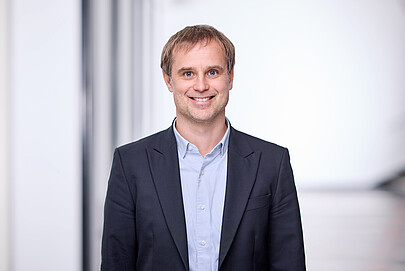
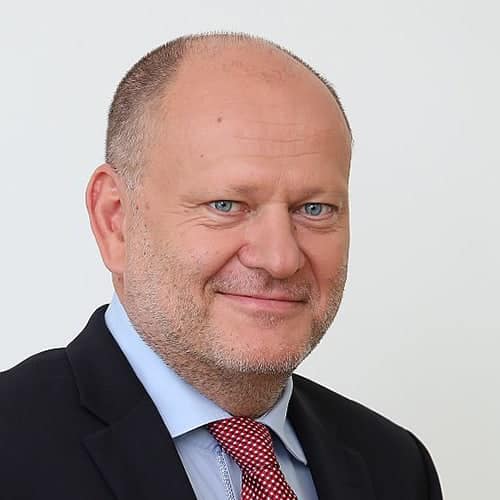
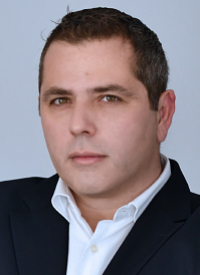
Yumin Wang is Assistant Professor at the University of Manitoba's Asper School of Business and F. Ross Johnson Fellow at the Warren Centre for Actuarial Studies and Research. Her research focuses on: Variable and index-linked annuity products Pension economics and intergenerational risk-sharing Stochastic control applications in finance and insurance Optimal contract design for retirement vehicles Her recent publications examine target benefit pension plans, VIX-linked retirement structures, and variable annuity fee mechanisms. Research consistently demonstrates sophisticated mathematical modeling of retirement product design with emphasis on risk management and optimal policyholder-insurer alignment. Honors include the F. Ross Johnson Fellowship recognizing her contributions to actuarial science.
Prof. H. Şaduman OKUMUŞ is a Full Professor at Dogus University's Faculty of Economics and Administrative Sciences, teaching Management (English). He holds a PhD in Finance from Anglia Ruskin University (1999) and has served as a visiting scholar at Durham University (2012). Active since 2022 at Dogus University, his academic career includes roles as Associate Professor (2011) and Department Head. He has supervised over 15 theses in finance and banking. Education: PhD in Finance, Anglia Ruskin University (1999) MSc in Banking and Insurance, Marmara University (1992) BSc in Economics and Administrative Sciences, Marmara University (1986) Research Interests: Prof. OKUMUŞ focuses on Islamic finance, banking sector efficiency, gender policy analysis, and international trade. His work bridges theoretical finance with practical applications in emerging markets, particularly Turkey's financial landscape. Recent studies examine the role of Maqasid al-Shariah in banking regulation and regional gender disparities. Key Contributions: Authored 10+ books/chapters including Islamic Finance: Risk, Stability and Growth and Dünya da ve Türkiye de Mikro Finansman ve Yoksulluk Teori ve Uygulama . His articles frequently appear in journals like Borsa Istanbul Review and International Journal of Commerce and Finance . Academic Service: Member of Dogus University Senate and Quality Commission Chair of the Academic Calendar Committee Editorial Board Member of Maliye ve Finans Yazıları
Prof. Arndt Reichert is a University Professor of Health Economics and Development Research at Leibniz University Hannover's Faculty of Economics and Management, leading the Institute of Health Economics (IHE). His research focuses on Health Economics, Development Economics, Technological Innovation, Behavioral Economics, and Information Economics. He has held academic positions since 2020 and previously worked at the World Bank and RWI. Professional Background: Professor at Leibniz University Hannover (since 2020) Economist/Consultant at World Bank (2014–2020) Scientific Officer at RWI (2008–2014) Research Interests: His work addresses global challenges such as renewable energy adoption, health insurance impacts, climate migration, and behavioral health interventions. He employs experimental methods and field studies across Africa and Europe. Publications Trends: Recent work emphasizes development economics applications, including climate migration analysis in West Africa, social cash transfers in Kenya, and renewable energy policy experiments in Senegal. He also explores labor market effects of health behaviors and long-term care challenges in aging societies. Grants & Advising: No specific grants listed, but extensive collaboration with international institutions like the World Bank. Advises on health policy, development economics, and behavioral interventions. Labs/Teams: Leading research at IHE and affiliated with global networks addressing health systems, development, and technological innovation.
Stefan Pichler is a Professor of Finance and Banking and serves as Vice-Rector for Research at the Vienna University of Economics and Business (WU). He is also the Head of the Institute for Finance, Banking and Insurance and affiliated with the Vienna Graduate School of Finance. His academic leadership includes directing master’s programs in Quantitative Finance and Finance and Accounting. Research Interests: His research focuses on core areas in finance, including Bank and Financial Management, Credit Derivatives, Risk Management, Credit Rating Systems, and Sovereign Debt. He has made significant contributions to understanding EMU government bond markets, Value-at-Risk models, and the term structure of interest rates. His work often involves econometric modeling and financial market analysis. Publication Trends: His recent and ongoing research (2020–2025) emphasizes credit risk modeling, non-performing loans, regulatory impacts, and benchmark transitions like CHF-LIBOR. Earlier work (2003–2014) centered on credit ratings, yield spreads, and risk measurement in European markets. His publications appear in journals such as the Journal of Banking and Finance , Journal of Credit Risk , and Review of Finance . Scientific Awards: 4 awards (specific names not listed in text) Advising and Grants: While specific advisees are not listed, he has led multiple research projects, particularly in public financial management and capital market research. He has collaborated extensively with researchers like Jankowitsch, Hornik, and Geyer. He has held advisory roles such as Head of the Expert Panel on Public Financial Management in Austria and Head of the Financial Advisory Board for Salzburg. Labs and Teams: He leads the Institute for Finance, Banking and Insurance at WU and is involved in strategic capital market research and cryptoeconomics initiatives. He has been a voting member of the ATX Index Committee since 1991 and is a regular speaker at the Alpach Financial Market Symposium.
Robert F. Tichy is a Professor at the Institute of Analysis and Number Theory , Graz University of Technology, Austria. His career spans over four decades with significant contributions to Diophantine equations , uniform distribution , and quasi-Monte Carlo methods . He has held multiple editorial board positions and administrative roles , including Dean of the Faculty of Mathematics, Physics and Geodesy (2018-2019). Research Interests : Uniform distribution, Diophantine equations, algorithmic number theory, fractal structures, quasi-Monte Carlo methods, and mathematics in finance/insurance. Awards : Austrian Mathematical Society award (1985), Honorary Doctorate (University of Debrecen, 2017), Jean-Morlet Chair (2020), and memberships in prestigious societies. Publications : Over 200 papers with recent works (2024) focusing on Diophantine problems , pseudorandom sequences , and Carlitz coefficients . Teaching : Regular courses for engineering and mathematics students, including annual lectures on insurance mathematics .
Kok-Leong Ong is a Professor of Business Analytics at RMIT University's College of Business & Law, where he serves as Director of the CoBL Technology Initiative, Director of the Enterprise AI and Data Analytics Hub, and Head of the Department of Information Systems and Business Analytics. With over $1.4 million in research grants, he specializes in translating analytics and machine learning into practical business applications across multiple verticals including e-Commerce, public health, sports, urban studies, marketing, and learning. His research has consistently ranked in the top 25% and 5% of works in their domains according to Altmetric. Professor Ong's research spans Business Analytics, Artificial Intelligence, Machine Learning, and Information Systems, with a focus on making data actionable through analytics-2-business translation, automation, and applications. His work addresses critical challenges in cybersecurity for wearable health devices, ECG-based authentication systems, federated learning privacy, carbon accounting for maritime transport, and AI-driven solutions for vehicle damage detection. He has developed frameworks for operationalizing analytics in business contexts and has made significant contributions to mHealth applications for infant care and breastfeeding support. Among his notable scientific achievements, Professor Ong has received two VC's Teaching Awards and was named one of Australia's Leading Data Academics by CDO Magazine in 2021. He has secured over $1.4 million in research funding and serves on prestigious conferences including KDD and PAKDD. His research has been recognized for its high impact, with many works ranking in the top percentiles of their respective fields. Professor Ong actively supervises numerous research students across diverse topics including human-aligned AI, securing LLMs for financial applications, cyber risks in enterprise AI systems, ECG authentication security, and AI transformation for SMEs. He previously played a key role in establishing Australia's first Business Analytics degree and led La Trobe Business School's analytics program from 2015 to 2019 before joining RMIT in September 2021. Through the Enterprise AI and Data Analytics Hub and his role with RMIT University's Digital3 board, Professor Ong leads initiatives focused on bridging the gap between advanced analytics capabilities and business value creation. His work emphasizes practical implementation of AI and analytics solutions that address real-world challenges across multiple industry sectors.
Peter Nilsson is a Professor of Economics at the Institute for International Economic Studies (IIES), Stockholm University, where he has held academic positions since 2011, rising from Assistant to Full Professor. He is also a guest professor at Linnaeus University and a research fellow at IFAU, Uppsala Center for Labor Studies, CESifo, and CEPR. His academic journey includes a postdoctoral fellowship at Stanford University’s SIEPR and a visiting research role at Princeton University. His research centers on labor, health, and environmental economics, with a strong emphasis on identifying causal effects using natural experiments and administrative data. Key areas include the long-term impacts of early-life exposures (alcohol, lead, pollution) on health and economic outcomes, peer effects in the workplace, unemployment insurance design, and environmental policy. He has made significant contributions to understanding how prenatal conditions affect adult mental health and how congestion pricing improves child respiratory health. His recent publications appear in top-tier journals such as the American Economic Review , Journal of Political Economy , and Journal of Health Economics . The research shows a consistent focus on policy-relevant questions, often informing public debate and government commissions, including the Swedish Corona Commission and U.S. legislative hearings on lead exposure. Scientific Awards and Affiliations: Research Fellow, IFAU Research Fellow, Uppsala Center for Labor Studies Research Fellow, CESifo Research Fellow, CEPR Guest Professor, Linnaeus University Associate Editor, The Economic Journal (since 2021) Nilsson advises and collaborates extensively with PhD students and researchers across institutions, though formal advisees are not explicitly listed. His work is supported by major research grants from Swedish and international funding bodies, though specific grants are not detailed. He is actively involved in peer review for leading economics journals. He leads and contributes to research teams at IIES, IFAU, and international collaborations, particularly in studies using Swedish administrative data. His lab-like environment involves large-scale data analysis and policy evaluation, often in interdisciplinary settings combining economics, epidemiology, and public health.
Carsten Sørensen is the Head of Department at the Department of Finance, Copenhagen Business School (CBS), and holds a Cand.Scient.Oecon and Ph.D. His research focuses on dynamic asset allocation, portfolio theory, term structure of interest rates, derivatives, and commodity derivatives. He has contributed extensively to understanding strategic investment decisions under uncertainty, particularly in volatile financial markets. He has authored or co-authored over 29 publications, including seminal works on stochastic income modeling, interest rate dynamics, and commodity futures analysis. His work frequently explores the intersection of theoretical finance and practical investment strategies, emphasizing real-world applications of academic insights. Current Roles: Head of Department (Department of Finance), Director of Danish Finance Institute (2019–present) Outside Activities: Academic Committee Member for Danish FSA (2011–present), Teacher at Danish Society of Actuaries (2019) Key Contributions: Pioneered research on mean-reverting returns and inflation uncertainty in asset allocation models His research trends emphasize quantitative methods to address market complexities, with a focus on stochastic processes and dynamic optimization. He has consistently challenged conventional investment recommendations through rigorous empirical analysis. Awards: None explicitly listed Grants: No specific grants mentioned He is actively involved in academic leadership, directing interdisciplinary research initiatives at CBS and advising regulatory bodies on financial education standards.
Professor Nikolaos Pelekis is a faculty member at the University of Piraeus, Greece, holding the position of Professor in the Department of Statistics and Insurance Science within the School of Finance and Statistics. His academic career focuses on Data Science, with a specialized emphasis on Mobility Data Management and Mining, a field he has contributed to for over two decades. He has authored two monographs and over 100 peer-reviewed articles, earning five Best Paper Awards and over 5,000 citations. Research Interests: Mobility Data Management and Mining Big Data Analytics Machine Learning Geographical Information Systems His work spans trajectory analysis, maritime and vessel traffic forecasting, and spatiotemporal data management. Notable projects include leading roles in EU-funded initiatives like GREEN.DAT.AI and EMERALDS, focusing on energy-efficient AI and urban mobility analytics. Awards and Recognition : Five Best Paper Awards, including the Ralf H. Güting Best Research Paper Award (2021) and Best Demo Paper Awards at SIGSPATIAL (2021). He also ranked 1st in the SemEval-2017 Task 4 for sentiment analysis. Professional Contributions : Serves on editorial boards (e.g., ECML PKDD, DMKD) and organizes workshops like BMDA. His teaching spans undergraduate and graduate courses in Data Science, Big Data Management, and Statistical Data Mining. Labs and Teams : Co-founder of the Data Science Lab at the University of Piraeus, collaborating across 4 departments and multiple researchers. Current efforts include maritime digitalization (VesselAI) and real-time trajectory prediction frameworks like ARGO.
Sotirios Bersimis is an Associate Professor at the University of Piraeus, Department of Business Administration. He holds additional roles as an elected member of the board of directors of the National Statistical Institute (Greece) and representative for FenSTATs and ECAS. Previously, he served as President of the Hellenic Organization for Health Care Services (EOPYY) and as President of the European Healthcare Fraud & Corruption Network (EHFCN). His education includes a PhD in Statistics from the University of Piraeus, an MSc in Statistics from Athens University of Economics and Business, and a BSc in Statistics and Insurance Science from the University of Piraeus. His research focuses on stochastic models for process monitoring, statistical process control, and health analytics. He has published over 60 peer-reviewed articles in journals like Journal of Quality Technology , Statistics in Medicine , and Annals of the Institute of Statistical Mathematics . His work emphasizes applications in healthcare surveillance, quality management, and fraud detection. Notable contributions include the development of the Process Monitoring Group and the 'Multivariate Statistical Process Control Charts: An Overview' paper, which remains highly cited in the field. Bersimis has received awards such as the 2018 ENBIS Best Manager Award and a public honor from the Greek Prime Minister. He actively collaborates with healthcare institutions, pharmaceutical companies, and international organizations, contributing to projects on health expenditure modeling and anti-fraud initiatives. His teaching spans undergraduate and postgraduate programs in statistics, biostatistics, and data science.
Christopher A. Riddle is a Distinguished Professor of Philosophy and Chair at Utica University's School of Arts & Sciences. A leading scholar in Applied Ethics and Social & Political Philosophy , his work centers on the intersection of disability studies , bioethics , and the capabilities approach to justice. He holds a Ph.D. from Queen's University at Kingston, an M.A. in Critical Disability Studies from York University, and a B.A.H. in Philosophy with a Political Studies minor from Queen's University. Ph.D. – Philosophy, Queen's University at Kingston M.A. – Critical Disability Studies, York University B.A.H. – Philosophy (minor in Political Studies), Queen's University at Kingston Riddle’s research spans disability rights , medical aid in dying ethics , end-of-life care , and social inclusion policy . His scholarship, appearing in journals like The American Journal of Bioethics and Disability & Society , critiques traditional models of disability while advocating for capability-based frameworks in healthcare and education. Recent works examine AI-substituted judgments in clinical settings and disability-associated health expenditures . Riddle has received the Harold T. Clark Award for Outstanding Faculty Scholarship (2021) and the Dr. Virgil Crisafulli Distinguished Teaching Award (2018) . His books include Disability & Justice (2014), Human Rights, Disability, & Capabilities (2016), and forthcoming titles on assisted dying and disability ethics (2025). He also edits volumes like Disability & Death (2025). As a public intellectual, Riddle engages in Canadian politics and advocates for disability rights in policy debates, including medical aid in dying legislation . He maintains an active presence on Bluesky, commenting on academia, ethics, and social justice.
Hans-Helmut König is a Professor at the Faculty of Medicine , University Medical Center Hamburg-Eppendorf, specializing in Health Economics and Health Services Research . His work focuses on geriatric care, mental health services, and cardiovascular disease management, with significant contributions to interdisciplinary healthcare models. AgeWell.de Study (2016) on recruitment in primary care Urban Mental Health Project (2025) for youth well-being GermanIMPACT Program (2011) for elderly depression treatment Research spans telehealth , social isolation , and health policy , with notable work on transgender healthcare economics (2022) and orthogeriatric co-management (2017). Projects include PRECOVERY (prehabilitation before cardiac surgery) and StroCare (stroke care optimization). Recent publications analyze air pollution-health interactions (2019), loneliness determinants (2018), and telemental health utilization (2024). His work often employs longitudinal cohort studies and systematic reviews .
Mogens Bladt is a Professor of Applied Probability and Insurance Mathematics at the Department of Mathematical Sciences, University of Copenhagen. He has held positions since 2018 after 24 years as Principal Researcher at the National University of Mexico (1994-2018), with visiting professorships at Technical University of Denmark and University of Copenhagen since 2001. Research: Focuses on time-inhomogeneous phase-type distributions, matrix-oriented life insurance models, heavy-tailed distributions, and diffusion bridge simulation Teaching: Offers graduate/undergraduate courses in Applied Probability, Stochastic Processes, Risk Theory, and Numerical Analysis Scientific Contributions: Developed R packages for Markov jump processes, phase-type distributions, and diffusion bridges. Holds grants from Mexico and Denmark, including Danish Research Council funding (2007–2008). Supervised 5 PhD, 8 Master’s, and 13 Bachelor’s theses Organized academic workshops and served as Associate Editor for Stochastic Models since 1997
Omri Ben-Shahar is the Leo and Eileen Herzel Professor of Law at the University of Chicago Law School, where he specializes in contract law, consumer protection, and the intersection of law and economics. His research examines market regulation through private law mechanisms, with emphasis on disclosure requirements, behavioral economics applications, and the design of efficient legal remedies in commercial contexts. Ben-Shahar's scholarly work focuses on developing frameworks for modern regulatory challenges, including: Personalization of legal rules using behavioral data Reform of mandatory disclosure regimes Efficiency of boilerplate contracts in self-regulation Algorithmic governance and liability frameworks Privacy tradeoffs in data-driven markets His recent publications demonstrate a strong emphasis on empirical methodologies and technological adaptation in law, particularly regarding AI governance, dynamic contract interpretation, and quantitative analysis of legal doctrines. This evolving research trajectory addresses emerging challenges in digital markets and algorithmic decision-making.
Vernon L. Smith is the George L. Argyros Endowed Chair in Finance and Economics at Chapman University, with joint appointments in the Argyros College of Business and Economics and Fowler School of Law. He founded and directs Chapman's Economic Science Institute. Smith completed his BS in electrical engineering at Caltech (1949), MA in economics at University of Kansas (1952), and PhD in economics at Harvard (1955). His pioneering research in experimental economics examines market mechanisms, human exchange behavior, and institutional design. Key domains include: Design of efficient markets for electricity, water, and emissions trading Behavioral foundations of property rights and exchange Neuroeconomic basis of decision-making Housing market bubbles and financial crises Adam Smith's moral philosophy applied to modern economics His 375+ publications demonstrate consistent focus on experimental validation of economic theories, with recent work analyzing policy impacts and market stability. Honors include: Nobel Prize in Economics (2002) National Academy of Sciences membership (1995) Doti-Spogli Free Enterprise Award (2023) Experimental economics laboratories named in his honor at Purdue University and University of Alaska Anchorage Smith has advised governments worldwide on market liberalization, served on editorial boards of 8 major economics journals, and held leadership roles in multiple economic associations including presidency of the Economic Science Association.