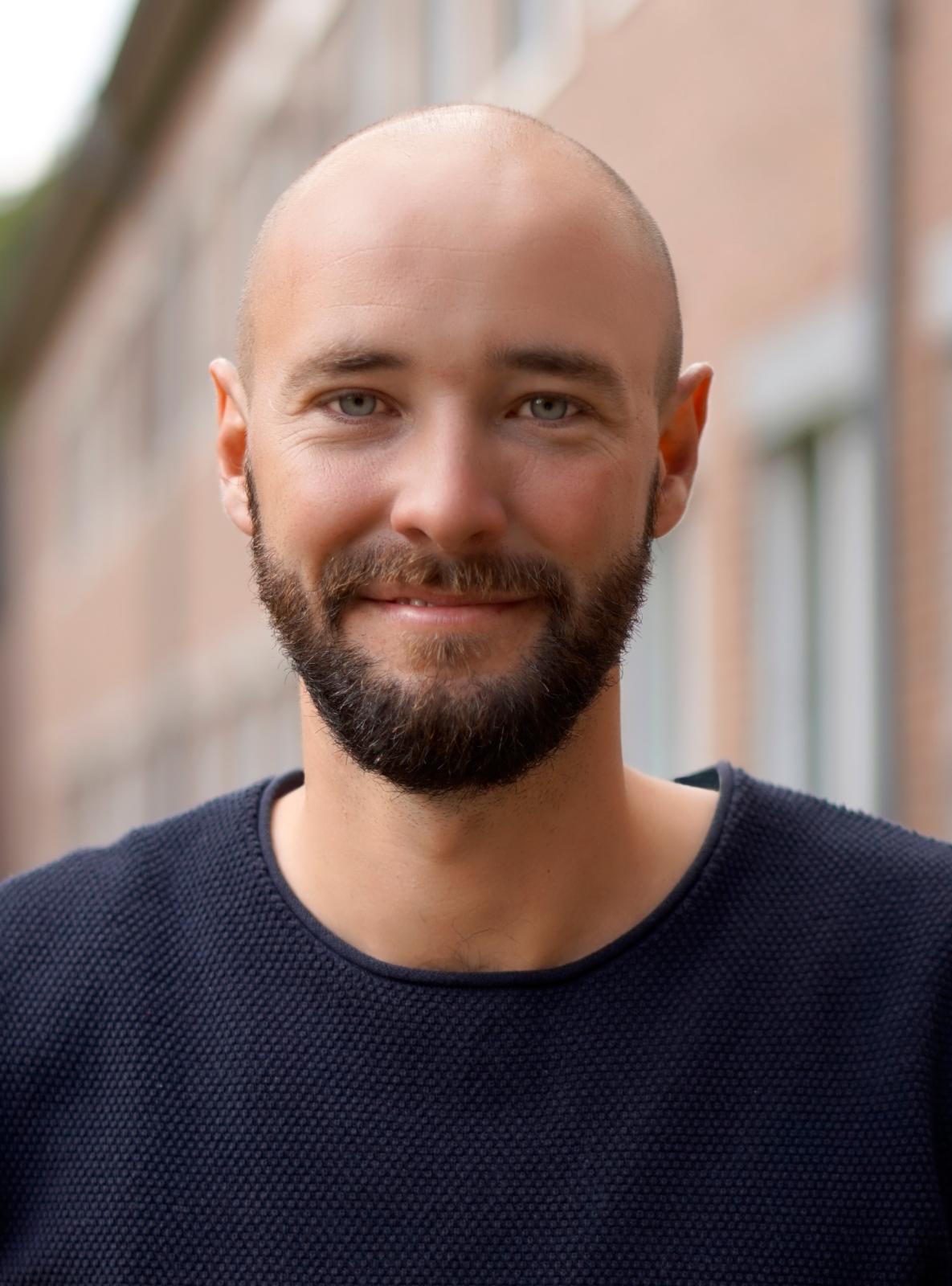
Dr. Jonas Schmitt is a Lecturer at ETH Zurich's Department of Environmental Systems Science, specializing in Agricultural Economics and Policy. His office is located at SOL C 10.1, Sonneggstrasse 33, Zürich. Education PhD in Agricultural Economics, ETH Zurich (2021-2024) M.Sc. in Agricultural Economics, Georg August University of Göttingen (2016-2018) B.Sc. in Agricultural Economics, Georg August University of Göttingen (2012-2015) Research Focus Dr. Schmitt's research investigates climate risk management strategies in agriculture, focusing on: On-farm interventions like crop diversification Development of weather-indexed insurance products Economic impacts of extreme weather events Policy analysis of agricultural subsidy systems Statistical modeling of climate vulnerabilities Professional Experience Researcher, Thuenen Institut of Farm Economics (2020-2024) Policy Analyst, Federal Ministry of Agriculture, Berlin (2023) Data Analyst at Lavazza (2019-2020)
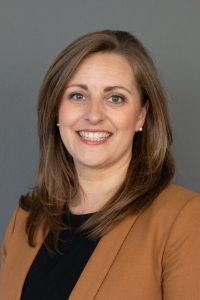
Antonia Sebastian serves as Assistant Professor in the Department of Earth, Marine and Environmental Sciences at the University of North Carolina at Chapel Hill, where she directs the UNC Sustainable Triangle Field Site and leads the Flood Hydrology and Hazards Lab. Her research focuses on dynamic watershed hydrology and flood hazard assessment under rapidly changing anthropogenic and climatic conditions, with particular emphasis on urban and coastal communities. She earned her B.S. (2011) and Ph.D. (2016) from Rice University. Her research integrates computational hydrology, geographic information systems, and statistical modeling to address critical questions about flood risk evolution, prediction across scales, and resilience strategies. Current projects investigate how development patterns and climate change impact flood risks, leverage physical and statistical models for hazard prediction, and evaluate structural/non-structural risk management solutions. Recent publications reveal a strong interdisciplinary trend combining hydrology with economics, social science, and artificial intelligence. Key themes include machine learning for flood exposure mapping, financial risk assessment of residential flooding, compound flood dynamics in coastal zones, and vulnerability metrics for equitable resilience planning. Her work increasingly addresses systemic risks and policy-relevant frameworks for community adaptation. Dr. Sebastian actively collaborates with major research initiatives including NOAA's Carolinas Collaborative on Climate, Health, and Equity (C3HE); DHS's Coastal Resilience Center; NSF's DEEPP Hub; and state-level partners like the North Carolina Policy Collaboratory and Sea Grant. She mentors graduate students through UNC's Earth, Marine and Environmental Sciences program and secures substantial federal funding for flood resilience research. The Flood Hydrology and Hazards Lab employs advanced computational tools to enhance hazard simulation and risk assessment, with research areas spanning repetitive flood loss, climate adaptation, compound flooding, and multihazard forecasting. The lab's work directly informs land-use planning, risk communication strategies, and policy development for vulnerable communities.
Professor Konstantinos Politis is a distinguished academic in the Department of Statistics and Actuarial Science at the University of Piraeus, where he has served since 2004, progressing from Assistant Professor to his current position as Professor (2025-present). His academic career spans prestigious institutions including the University of Manchester, University of Southampton, and the University of Cambridge where he earned his PhD. Education: B.A. in Mathematics, University of Athens (1989) MSc in Statistics, University of Sheffield, UK (1991) PhD in Statistics, University of Cambridge, UK (1997) Professor Politis specializes in stochastic processes with particular focus on ruin theory, risk analysis, and actuarial mathematics. His research examines complex probability models related to insurance risk, surplus processes, renewal theory, and failure rate analysis. He has made significant contributions to understanding the mathematical properties of insurance risk models, particularly in the Sparre Andersen framework and compound Poisson processes. His work bridges theoretical probability with practical applications in actuarial science and financial risk management. His extensive publication record demonstrates consistent contributions to leading journals in probability and actuarial science. The research trajectory shows evolution from foundational work on ruin theory and risk models toward more sophisticated analyses of renewal processes, failure rate functions, and stochastic bounds. His recent work focuses on precise mathematical characterizations of recurrence times, convolution properties, and monotonicity in stochastic systems. Professor Politis has co-authored significant textbooks including Introduction to Probability: Models and Applications (2019) and Introduction to Probability: Multivariate Models and Applications (2021) with Balakrishnan and Koutras, as well as his Greek-language work Introduction to the Theory of Collective Risk (2012, 2nd ed. 2016). In teaching, Professor Politis has contributed to both undergraduate and graduate education, offering courses including Probability I, Special Topics in Probability, Variance Analysis, Loss Distributions, Generalized Linear Models, and Risk Theory II. His academic journey reflects a deep commitment to advancing statistical theory while maintaining practical relevance to actuarial science and risk management.
Dr. Edward Furman is a Professor in the Department of Mathematics and Statistics at York University, leading the Actuarial Science Program and serving as Founding Director of the Risk and Insurance Studies Centre (RISC). He holds a Master's (Distinction) and PhD (Summa Cum Laude) in Actuarial Science and Probability Theory from the University of Haifa, Israel. His research focuses on distribution theory, risk measurement, insurance pricing, and systemic risk modeling. Notable achievements include winning the Fortis Chair Best Paper Prize (K. U. Leuven) for collaborative work and serving as an external consultant for institutions like the Central Bureau of Statistics (Israel) and the Society of Actuaries (U.S.). Dr. Furman's work bridges theoretical and applied domains, with funded research by NSERC, the Society of Actuaries, and the Casualty Actuarial Society. He is a Fellow of the Science Leadership Program at the University of Toronto and an Associate Editor of the Journal of Statistical Distributions and Applications (Springer). His interdisciplinary RISC unit explores holistic approaches to insurance risk, integrating actuarial science with statistical and economic frameworks. Research Themes: Dependence modeling, risk capital allocation, systemic risk measurement, and inclusive insurance design. Consulting Expertise: Collaboration with public and private sector entities on actuarial and statistical challenges. Grants: Supported by NSERC, SOA, and CAS for projects on risk aggregation and insurance pricing models.
Dr. Maria Forlicz is affiliated with the Department of Process Management at Wrocław University of Economics. Her research focuses on behavioral economics, decision-making under risk/uncertainty, insurance economics, and socioeconomic factors influencing consumer behavior. She explores topics such as risk attitudes in financial and tourism contexts, experimental methods, and cross-country comparisons in insurance and debt management. Her work includes analyzing the psychological and economic drivers behind consumer choices, including organic food preferences among Gen Y and Z, and the impact of co-insurance on moral hazard. She has conducted studies on CSR reporting, tourism risks, and the illusion of predictability in random outcomes. Her experimental research often employs incentivized methods to study real-world behavior. Maria’s publications span over a decade, with recent works addressing emerging trends like usage-based insurance and the digitalization of financial advice. She has collaborated internationally, studying Poland, Spain, Ukraine, the UK, and others. Her research contributes to policy design, marketing strategies, and risk management frameworks.
Gord Willmot is a Professor in the Department of Statistics and Actuarial Science at the University of Waterloo and an Adjunct Professor at the University of Toronto. He holds the endowed position of Munich Re Professor of Insurance. His research focuses on insurance mathematics, particularly aggregate claims models, ruin theory, and surplus analysis using tools from applied probability and mathematical reliability theory. He is a co-author of the textbook Loss Models , widely used in professional actuarial exams. Willmot earned his BMath (1980), MMath (1981), and PhD (1986) from the University of Waterloo. He is a Fellow of the Society of Actuaries (F.S.A.) and the Canadian Institute of Actuaries (F.C.I.A.). His work includes contributions to discounted penalty functions, Laplace transform techniques, and phase-type distributions in risk analysis. He has taught at international conferences, including the Ninth International Congress on Insurance: Mathematics and Economics. Key research areas include ruin probability analysis, time-dependent risk models, and reinsurance treaties. His publications span journals like Insurance: Mathematics and Economics and Scandinavian Actuarial Journal , addressing topics such as Coxian interclaim times, mixed Erlang distributions, and deficit analysis at ruin. Willmot’s expertise bridges theoretical advancements and practical applications in insurance risk management.
Fan Yang is an Associate Professor in the Department of Statistics and Actuarial Science at the University of Waterloo. His research focuses on quantitative risk management and actuarial science, with emphasis on extreme value theory, asymptotic analysis of rare events, and heavy-tailed distributions. He holds a PhD in Applied Mathematical and Computational Sciences from the University of Iowa (2013), and BS degrees in Computational Mathematics and International Economics & Trade from Xi’an Jiaotong University (2008). Education: PhD, Applied Mathematical and Computational Sciences, University of Iowa, 2008–2013 MS, Mathematics, University of Iowa, 2008–2010 BS, Computational Mathematics, Xi’an Jiaotong University, 2004–2008 BS (minor), International Economics and Trade, Xi’an Jiaotong University, 2004–2008 Research Interests: Yang’s work addresses theoretical and applied aspects of risk modeling in insurance and finance. Key areas include extreme value theory for financial and insurance risks, asymptotic analysis of rare events, risk aggregation under dependence structures, and heavy-tailed distribution modeling. His research bridges mathematical rigor with practical applications in risk management, including catastrophe insurance and portfolio diversification. Publications: His recent work examines topics like asymptotic portfolio diversification, CAT bond premium prediction, and extreme risk estimation using copula models. These studies highlight trends in quantifying and managing extreme risks through advanced statistical methods. Awards: No specific prizes or fellowships are noted in the provided texts. Teaching & Service: Yang teaches courses on advanced actuarial topics including extreme value theory, quantitative risk management, and financial mathematics. He actively contributes to the academic community through peer-reviewed publications and graduate supervision.
Anas Abdallah is an Associate Professor in the Department of Mathematics and Statistics at McMaster University. His research focuses on actuarial science, particularly in loss reserving, stochastic modeling, and the application of machine learning techniques such as recurrent neural networks (RNNs) to insurance risk analysis. He specializes in dependence modeling using copulas and Sarmanov distributions to address multivariate insurance claims and risk capital analysis. Education: PhD in Actuarial Science, Université Laval (2016) MSc in Mathematical Engineering and Modeling, Institut National des Sciences Appliquées (2009) Research Interests: Develops methods for multivariate loss reserving and risk capital estimation Applies hierarchical Archimedean copulas and RNNs to model dependencies between loss triangles Explores stochastic reserving techniques and alternative actuarial provisioning strategies Teaching: Instructor for courses such as Actuarial Models in Non-Life Insurance, Financial Markets and Derivatives, and Statistics of Financial Data Has taught across multiple levels including undergraduate (MATH 2FM3), graduate (STATS 4G03), and professional programs (MFM 704) Grants and Labs: No specific grants or lab affiliations explicitly listed, though his research indicates involvement in collaborative projects in actuarial science and financial mathematics.
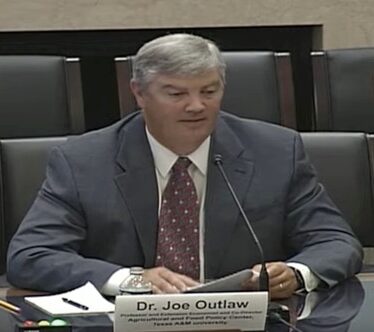
Joe Outlaw is a Regents Fellow and Professor of Agricultural Economics at Texas A&M University, serving as co-director of the Agricultural and Food Policy Center (AFPC). He holds a B.S., M.S., and Ph.D. in Agricultural Economics from Texas A&M. His expertise spans crop production economics, agricultural policy analysis, decision support systems, global dynamics, and sustainability. Outlaw advises U.S. policymakers on farm programs, risk management, and climate legislation, focusing on policy impacts on agricultural operations. He has received the 2015 National Excellence in Extension Award for leadership in policy education. Research interests include farm policy evaluation, climate change mitigation, and renewable energy. Recent work examines the Inflation Reduction Act’s implications for agricultural producers and the economic effects of higher input prices. Outlaw collaborates with congressional staff and stakeholders to design evidence-based policies. His AFPC leadership drives data-driven analyses for federal and state agricultural policies. Notable contributions include analyses of the Farm Bill, crop insurance reforms, and drought relief. He emphasizes translating complex policy issues into actionable insights for farmers and policymakers. His work bridges academic research with practical applications, enhancing agricultural resilience and sustainability.
Ingrid Hobæk Haff is an Associate Professor in insurance mathematics and statistics at the Department of Mathematics, University of Oslo since 2015. She holds a master's degree in Industrial Mathematics from NTNU (2002) and a PhD from the Statistics for Innovation center (2008–2012), with a 20% position as a research scientist at the Norwegian Computing Centre. Previously, she worked there as a research scientist and senior scientist. Her research interests focus on multivariate statistics, copulae, skew and heavy-tailed distributions, and applications in insurance and finance. She has contributed to advancements in statistical modeling, particularly in copula constructions and their applications to risk assessment and extreme value analysis. Key awards include the Sverdrup award for young scientists and the mathematical award of Hanna og John Olav Stubban . She is affiliated with the Statistics and Data Science research group and the completed Stochastics of Renewable Energy Markets (STORE) project. Her work spans interdisciplinary collaborations, including applications in immunology and bioinformatics, leveraging machine learning for antibody-antigen interaction studies and synthetic data generation.
Margarida Lima Rego is a Full Professor and Director at the NOVA School of Law , Universidade Nova de Lisboa, where she has taught since 2005. She is the scientific coordinator of the Doctorate in Law and previously co-founded and coordinated the Master’s in Law and Financial Markets (2015–2022). Her roles include teaching Law of Obligations , Hard Cases , and a Jean Monnet Module on EU Insurance Law, alongside leading Private Law seminars. PhD in Private Law, Universidade Nova de Lisboa (2009) MPhil in Contract Law, University of Oxford (2001) MJur in European and Comparative Law, University of Oxford (2000) Degree in Law, University of Lisbon (1999) Her research focuses on Private Law , with emphasis on Contract Law , Insurance Law , and intersections with Human Rights , Gender Equality , and Data-Driven Law . She explores legal theory, judicial decision-making under uncertainty, and technological innovation in financial markets. Her publications span topics like third-party contracts, statistical discrimination in insurance, and compensatory principles. At CEDIS, NOVA School of Law’s R&D unit, she founded the NOVA Knowledge Centre for Data-Driven Law , integrating empirical analysis into legal scholarship. She contributes to EU insurance law challenges in the SDG era and addresses modernization in financial markets through a legal lens. Her work bridges doctrinal rigor with interdisciplinary methodologies.
Prof. Wouter Botzen holds a dual role as a full Professor of Economics of Global Environmental Change at the Utrecht University School of Economics and Professor of Economics of Climate Change and Natural Disasters at VU University Amsterdam's Department of Environmental Economics, where he also serves as Head of the department. He is a senior research fellow at the Wharton School's Risk Management and Decision Processes Center at the University of Pennsylvania. His work bridges environmental economics, risk analysis, and policy design. Botzen earned his MSc in Economics from Maastricht University (2005–2006) and completed his PhD at VU University Amsterdam (2006–2009). His academic career includes prior roles as Associate and Assistant Professor at VU University (2010–2016) and visiting scholar positions at institutions in the U.S. and Spain. His research focuses on climate change economics, behavioral responses to disaster risks, valuation of natural environments, and flood risk management. He emphasizes integrating behavioral insights into policy tools, such as insurance mechanisms to incentivize risk reduction and adaptation. Key projects include Future Deltas , NATURVATION , and Pathways to Sustainability , which explore urban resilience, nature-based solutions, and socio-economic tipping points from climate impacts. Botzen has received prestigious awards such as the Vidi and Veni scholarships from NWO, the Lloyd's Science of Risk Prize, and multiple best-paper awards in Risk Analysis . His grants include EU-funded initiatives like NATURVATION and Dutch-funded projects on sustainable energy governance. He collaborates extensively with academic teams and policymakers, contributing to global studies on flood risk, carbon pricing, and climate adaptation policies. His work aims to address systemic challenges in risk mitigation and resource allocation through interdisciplinary frameworks.
Prof. Arndt Reichert is a University Professor of Health Economics and Development Research at Leibniz University Hannover's Faculty of Economics and Management, leading the Institute of Health Economics (IHE). His research focuses on Health Economics, Development Economics, Technological Innovation, Behavioral Economics, and Information Economics. He has held academic positions since 2020 and previously worked at the World Bank and RWI. Professional Background: Professor at Leibniz University Hannover (since 2020) Economist/Consultant at World Bank (2014–2020) Scientific Officer at RWI (2008–2014) Research Interests: His work addresses global challenges such as renewable energy adoption, health insurance impacts, climate migration, and behavioral health interventions. He employs experimental methods and field studies across Africa and Europe. Publications Trends: Recent work emphasizes development economics applications, including climate migration analysis in West Africa, social cash transfers in Kenya, and renewable energy policy experiments in Senegal. He also explores labor market effects of health behaviors and long-term care challenges in aging societies. Grants & Advising: No specific grants listed, but extensive collaboration with international institutions like the World Bank. Advises on health policy, development economics, and behavioral interventions. Labs/Teams: Leading research at IHE and affiliated with global networks addressing health systems, development, and technological innovation.
Dr. Mary Playdon is an Assistant Professor in the Nutrition & Integrative Physiology department at the University of Utah , with an adjunct appointment in Population Health Science. Her research focuses on understanding the role of diet and obesity in cancer development and prognosis, leveraging metabolomics to identify dietary biomarkers and metabolic pathways underlying cancer risk. Education & Professional Background: She holds a PhD in Chronic Disease Epidemiology from Yale University (2016), an MPH from Queensland University of Technology (2010), and a BS in Nutrition and Dietetics (2003). Her postdoctoral training at the National Cancer Institute (2018) further specialized her in metabolic epidemiology. Research Interests: Dr. Playdon’s work integrates metabolomics, epidemiology, and clinical studies to address gaps in dietary measurement accuracy. Key areas include: Developing dietary biomarkers for objective assessment of food intake Examining metabolic dysregulation (e.g., ceramides) in obesity-related cancers Studying gut microbiome interactions with eating behaviors Evaluating lifestyle interventions (diet, fasting, exercise) for cancer survivors Grants & Leadership: She leads multiple NIH-funded grants, including studies on ceramides in colorectal cancer risk and metabolic syndrome. She chairs the Diet Working Group in the NCI’s Metabolic Dysregulation and Cancer Risk (MeDoc) Consortium and participates in the NIH Consortium of Metabolomics Studies (COMETS). Recent Contributions: Over 80 peer-reviewed articles, with recent emphases on malnutrition in cancer patients, overnight fasting effects on weight, and the role of microbiome diversity in gastrointestinal cancers.
Johannes Jaspersen is a Professor of Behavioral Risk Management and Insurance at the Munich School of Management , part of Ludwig Maximilian University of Munich (LMU Munich) . As an applied economist, his research bridges theoretical and experimental economics with applications to insurance, prevention, decision analysis, risk theory, and national security. His work often combines behavioral economics with rigorous empirical and theoretical methodologies. Research Interests: Behavioral Economics, Insurance Demand, Risk Perception, Experimental Methods, Decision Theory, National Security His recent publications focus on probability weighting, moral hazard, flood risk hedging, and behavioral aspects of insurance demand. These studies demonstrate his commitment to understanding how individuals and organizations make decisions under uncertainty. Key trends in his research include: Behavioral biases in insurance choices Impact of liquidity constraints on risk decisions Heuristic thinking in risk management Operational research applications to security Natural experiments in insurance markets Methodological innovations in risk elicitation