Dr. Luisa Calè is a Professor of Romantic and Nineteenth-Century Literature & Visual Culture and Research Lead at Birkbeck, University of London. She holds degrees from the University of Rome 'La Sapienza' (1993), University of Genoa (1997), and the University of Oxford (M.St. 1998, D.Phil 2002). Her research explores the interplay between literature and visual/material culture, focusing on book history, intermediality, and practices of reading/collecting. Her Leverhulme Trust-funded project 'The Book Unbound' examines how works by Blake, Walpole, and Dickens subverted traditional book formats. Education: PhD in Literary Studies, University of Genoa (1997) D.Phil., University of Oxford (2002) M.St. in English, University of Oxford (1998) Letters Degree, University of Rome (1993) Her research interests include Romantic aesthetics, material texts, and critical disciplinarity. Notable publications include Fuseli’s Milton Gallery (2006) and co-edited volumes like Dante on View (2007). She edits Blake/An Illustrated Quarterly and serves on editorial boards for Word & Image and Romantic Circles Gallery . Recent awards include a Leverhulme Trust Research Fellowship (2019) and a Mercator Fellowship (2018-19). She supervises graduate students in Romantic literature, material culture, and book history.
Andrew Lynch serves as Professor and Associate Dean for Program Development in the Department of Modern Languages & Literatures within the College of Arts and Sciences at the University of Miami. His academic leadership extends beyond teaching responsibilities to include significant administrative contributions to program development across the institution. Lynch's research interests center on sociolinguistics with particular focus on Spanish language dynamics in Miami, heritage language socialization, bilingualism, and language ideology. His work examines how language functions within specific social contexts, especially in workplace environments where Spanish heritage speakers navigate linguistic demands. He investigates the complex interplay between language, identity, and social structures in postmodern urban settings, with special attention to the Cuban diaspora experience in South Florida. His publication record reveals consistent scholarly engagement with heritage language education, Spanish language variation, and the sociolinguistic landscape of global cities. Lynch's research demonstrates how language practices in Miami reflect broader patterns of linguistic adaptation and resistance within diasporic communities. His work often addresses the tension between linguistic heritage and social integration, examining how language ideologies shape educational practices and community identity. Lynch's scholarly contributions span multiple formats, including single-authored books, co-authored publications, handbook chapters, and journal articles in both English and Spanish. His work frequently appears in high-impact sociolinguistics and language education journals, reflecting his interdisciplinary approach that bridges theoretical linguistics with practical educational implications.
Prof. Sergio Ginebri is an Associate Professor at the Department of Jurisprudence, University of Rome Tre. He holds a PhD in Economics from Sapienza University of Rome and has extensive experience in fiscal policy, pension systems, and public finance research. His work focuses on topics like pension sustainability, social inequality, and the political economy of public debt. Education: PhD in Economics, Sapienza University of Rome (1988–1992) MA in Economics, University of Warwick (1987–1988) Laurea in Statistics and Demography, Sapienza University of Rome (1977–1984) Research Interests: Prof. Ginebri specializes in public policy, fiscal sustainability, and the social impacts of pension reforms. His research explores how demographic trends, wealth distribution, and political dynamics shape economic policies. Recent work includes analyses of longevity risks, pension equity, and fiscal policy integration in the EU. Key Projects: Coordinated studies on pension system sustainability (2002–2018) Developed models for forecasting public pension expenditure Contributed to EU tax policy observatories Awards: Recipient of the national PhD award (1994) and recognition for academic excellence in tax policy research (2001). Teaching: Teaches courses in political economy, public finance, and macroeconomics at undergraduate and graduate levels.
Yarin Gal is an Associate Professor of Machine Learning at the University of Oxford's Department of Computer Science and a Tutorial Fellow at Christ Church College. He is also a Turing AI Fellow at the Alan Turing Institute and Director of Research at the UK Government’s AI Safety Institute. He leads the Oxford Applied and Theoretical Machine Learning (OATML) Research Group, focusing on Bayesian deep learning, AI safety, and uncertainty quantification. Education PhD in Uncertainty in Deep Learning (2016) Research Interests His research integrates Bayesian methods with deep learning to address challenges in AI safety , uncertainty quantification , and robustness . Key areas include: Bayesian neural networks and approximate inference Uncertainty estimation in deep learning AI safety and interpretability Applications in autonomous driving, medical imaging, and NLP Publications & Trends His recent work spans Bayesian optimization , adversarial robustness , and continual learning . Notable contributions include Targeted Dropout for model pruning, Uncertainty in Autonomous Driving , and theoretical studies on adversarial examples in Bayesian networks. Awards & Honors Turing AI Fellow Teaching & Supervision He has taught Advanced Machine Learning , Uncertainty in Deep Learning , and contributed to NASA's Frontier Development Lab. His current students include Kelsey Doerksen, Gunshi Gupta, and Shreshth Malik. Labs & Teams He leads the OATML Group , a multidisciplinary team advancing theoretical and applied machine learning, with a focus on safety and interpretability in AI systems.
Jonathan Rosa is Associate Professor in the Graduate School of Education, Center for Comparative Studies in Race and Ethnicity, and, by courtesy, Departments of Anthropology, Linguistics, and Comparative Literature at Stanford University. He serves as Director of Stanford's Program in Chicanx-Latinx Studies and has held leadership positions including President of the Association of Latina/o and Latinx Anthropologists of the American Anthropological Association. Dr. Rosa's educational background includes: Ph.D. in Sociocultural and Linguistic Anthropology from the University of Chicago (2010) M.A. in Sociocultural and Linguistic Anthropology from the University of Chicago (2006) B.A. in Linguistics and Educational Studies from Swarthmore College (2003) Dr. Rosa's research examines the co-naturalization of language and race as a key feature of modern governance, tracking colonially structured interrelations among racial marginalization, linguistic stigmatization, and institutional inequity. His scholarship centers on raciolinguistic ideologies, Latinx studies, and educational justice, with a community-based approach that develops tools for challenging systemic vulnerability. He investigates how race and language are jointly defined across historical, geopolitical, and institutional contexts, with particular focus on Latinx communities and educational settings. His recent publications demonstrate a consistent thematic focus on decolonizing linguistic and educational frameworks, challenging standard language ideologies, and examining the intersections of race, language, and power. The work spans multiple disciplines including sociolinguistics, anthropology, education, and critical race studies, increasingly emphasizing undoing raciolinguistics and addressing coloniality in language education and assessment practices. Dr. Rosa has received numerous prestigious awards for his scholarship: Distinguished Summer Scholar, Banks Center for Educational Justice, University of Washington College of Education (2024) Outstanding Book of the Year Award for "Looking like a Language, Sounding like a Race," American Association of Teaching and Curriculum (2022) First Book Award for "Looking like a Language, Sounding like a Race," American Association for Applied Linguistics (2021) Prose Award for Excellence in Language & Linguistics for "Looking like a Language, Sounding like a Race," Association of American Publishers (2020) Charles A. Ferguson Award for Outstanding Scholarship, Center for Applied Linguistics (2018) Dr. Rosa actively mentors doctoral students across multiple programs, serving as primary advisor for students researching race, ethnicity, language, and education. His research has been supported by major grants from the National Science Foundation, Andrew W. Mellon Foundation, Woodrow Wilson National Fellowship Foundation, and Ford Foundation. He collaborates extensively with community organizations, particularly in Chicago, to develop educational approaches grounded in decolonial praxis, focusing on how scholarship can serve as a platform for social transformation. Dr. Rosa co-directed Stanford's Center for Global Ethnography (2021-2023) and directed Stanford's Program in Chicana/o-Latina/o Studies (2020-2023). He serves on multiple editorial boards including Current Anthropology and Equity & Excellence in Education, and has held leadership positions in professional organizations including President of the Association of Latina/o and Latinx Anthropologists (2020-2022).
Adam Hollowell is an Adjunct Assistant Professor in the Program in Education at Duke University, where he also serves as Senior Research Associate at the Samuel DuBois Cook Center on Social Equity and Director of the Inequality Studies Minor. His teaching spans ethics, inequality studies, and history across Duke’s Kenan Institute for Ethics, Sanford School of Public Policy, and Department of History. Hollowell holds a Ph.D. from the University of Edinburgh (2009). His research focuses on inequality, higher education, public policy, and ethics, with notable work on pandemic impacts, telemedicine in education, and reproductive health access during crises. In Inequality Studies , Hollowell emphasizes understanding policies to drive social change, as highlighted in recent media coverage. His publications explore topics like student behavior shifts during the pandemic, telemedicine adoption in universities, and James Baldwin’s ethical challenges. He is a finalist for the Judith Deckers Prize (2024). Professionally, Hollowell leads projects such as Bass Connections on college contraception access and Story+ initiatives. His work bridges academia and public engagement, addressing systemic inequities through interdisciplinary approaches.
Massachusetts Institute of TechnologyUnited States
Kaiming He is an Associate Professor with tenure in the Department of Electrical Engineering and Computer Science (EECS) at the Massachusetts Institute of Technology (MIT), holding the Douglas Ross (1954) Career Development Professor of Software Technology chair. He also works part-time as a Distinguished Scientist at Google DeepMind. Prior to joining MIT in 2024, he was a research scientist at Facebook AI Research (FAIR) from 2016 to 2024, and a researcher at Microsoft Research Asia (MSRA) from 2011 to 2016. Dr. He received his PhD from the Chinese University of Hong Kong in 2011 and his Bachelor of Science from Tsinghua University in 2007. His academic journey reflects a strong foundation in computer science and engineering that has led to transformative contributions in artificial intelligence. His research primarily focuses on computer vision and deep learning, with pioneering work on deep residual networks (ResNets), visual object detection and segmentation, and self-supervised learning. He is best known for his work on Deep Residual Networks (ResNets), recognized as the most-cited paper of the twenty-first century. The residual connections he pioneered are now fundamental components in modern deep learning architectures including Transformers, AlphaGo Zero, AlphaFold, and various generative AI models. His recent publications demonstrate continued innovation across generative models, transformer architectures, and cross-disciplinary AI applications. His work bridges theoretical advances in neural network design with practical implementations that address real-world challenges in physics, biology, and other scientific domains. PAMI Young Researcher Award (2018) Best Paper Award, CVPR (2009, 2016) Best Paper Award, ICCV (2017) Best Student Paper Award, ICCV (2017) Everingham Prize, ICCV (2021) Most-cited paper of the twenty-first century Dr. He advises graduate students including Jake Austin, Xingjian Bai, and Mingyang Deng, and teaches advanced courses such as "6.S978: Deep Generative Models" (Fall 2024) and "6.8300/6.8301: Advances in Computer Vision" (Spring 2024). His research group actively explores how AI can serve as a unifying framework across scientific disciplines, breaking down traditional barriers between fields through shared methodologies and tools.
Janine O'Flynn is the Director of the Crawford School of Public Policy at the Australian National University (ANU) since 2023. Previously, she held the position of Professor of Public Management at the University of Melbourne and served as a visiting professor at institutions like City University Hong Kong and Fudan University. Her research focuses on public management reform, governance relationships, and ethical policy-making. Notable contributions include work on public value creation, performance management systems, and positive public administration. She has authored over 75 publications, including Pathways to Positive Public Administration (2024) and co-edited the Research Handbook on Public Management and COVID-19 (2024). O'Flynn has received prestigious awards such as the National Academy of Public Administration Fellowship (2022) and the Best Book Award at the Academy of Management (2013). She actively advises governments globally and chairs research committees for organizations like the Centre for Public Impact. Education: PhD (Melbourne), Bachelor of Commerce (Hons., Melbourne). Key Roles: Editorial Board Member: Public Administration , Public Management Review , and others Board of Directors, Public Management Research Association Advisory Board, Victorian Public Sector Commission Research Focus: Public sector reform, governance ethics, policy complexity, and agile government frameworks.
Dr. Chang Xu is an Associate Professor in Machine Learning and Computer Vision at the University of Sydney's School of Computer Science. He holds a Bachelor of Engineering from Tianjin University and a PhD from Peking University. His research focuses on machine learning, data mining, and their applications in AI and computer vision, including multi-view learning, visual search, and face recognition. He is an ARC Future Fellow and a member of the Sydney Southeast Asia Centre and The Net Zero Institute. Education: B.E. in Engineering (Tianjin University), Ph.D. in Computer Science (Peking University). His research interests emphasize handling heterogeneous data, exploring data variety, and developing algorithms for robust AI systems. His work includes adversarial robustness, neural architecture search, and efficient deep learning models. Research trends in his articles include adversarial robustness in neural architectures, efficient vision transformers, multimodal 3D style transfer, and underwater image restoration. Key contributions span image restoration, video super-resolution, and lightweight network design. He has advised multiple PhD and master's students on topics like diffusion models, radar image synthesis, and graph similarity. Awards: ARC Future Fellow. Collaborations focus on cross-domain data integration and AI applications. His labs and teams explore generative models, robust learning, and scalable robotics policies. Recent work includes diffusion models for action segmentation and robust vision-language systems.
Jean Oh is a Researcher at the Robotics Institute of Carnegie Mellon University (CMU) , leading the interdisciplinary Bot Intelligence Group (BIG) . Her work focuses on developing persistent robots that co-exist and collaborate with humans in shared environments, emphasizing continuous improvement through training, exploration, and human interaction. Education: Ph.D. in Language and Information Technologies, CMU M.S. in Computer Science, Columbia University B.S. in Biotechnology, Yonsei University Oh's research integrates vision, language, and planning systems in robotics, with applications in human-robot teaming , self-driving cars , disaster response , eldercare , and creative robotics . She has pioneered projects like socially-compliant robot navigation in human crowds and AI-driven robotic painting systems. Recent publication trends highlight her work in vision-language planning , social navigation , computational creativity , and human-robot collaboration . Notable contributions include the StyleCLIPDraw algorithm for text-to-art generation and Social-PatteRNN for human-like trajectory prediction. Scientific Awards: Best Paper Award in Cognitive Robotics (ICRA'18, ICRA'15) Best Systems Paper Finalist (HRI'25) Best Oral Paper Finalist (Humanoids'24) Best Paper in Entertainment (IROS'24) Argoverse Challenge Winner (CVPR'24) Best Student Paper (AIAA'24) Best Demo Finalist (RoboSoft'24) Oh mentors a diverse team of PhD, MS, and undergraduate students from CMU departments including Robotics, Computer Science, and Mechanical Engineering. Her research is funded by US Army Research Lab , DiDi Chuxing , and DARPA , with collaborations across industry and academia .
Professor Michael Ben-Gad is a Professor of Economics at City, University of London, where he has served since 2009. He previously held roles as Head of the Department of Economics (2010–2013) and Deputy Head (2008–2010). His research focuses on dynamic macroeconomics, taxation, public debt, immigration economics, and national security, with notable contributions to endogenous growth models and compositional data econometrics. He holds a PhD from the University of Chicago (1996) and has taught at institutions including the University of Houston and University of Haifa. Ben-Gad served on the U.S. National Academy of Sciences panel on immigration's economic and fiscal impacts (2014–2016) and received a 2017 Fellowship from the Royal Society of Arts (FRSA). His work spans academic journals (Economic Modelling, Journal of Economic Dynamics and Control) and media outlets (BBC, CNBC, Al Jazeera), addressing topics like Brexit economics, fiscal policy, and geopolitical challenges. He co-convenes the City Branch of Academics for Academic Freedom and is a founding member of London Universities' Council for Academic Freedom. His research grants include funding from HM Treasury/ESRC on fiscal policy and immigration (2011), the Israel Science Foundation (2007–2008), and the Samuel Ne'eman Foundation (2004). Professional roles include editorial board membership for Economic Affairs and membership of the ESRC Grant Assessment Panel (2021). He is proficient in Hebrew and contributes to policy debates on taxation, macroprudential frameworks, and defense economics.
Alexis Peri is an Associate Professor of History at Boston University, specializing in modern Russian and Soviet history, with a focus on war, gender, and private life. Her work bridges cultural history, environmental history, and transnational studies. She holds a B.A., M.A., and Ph.D. from the University of California, Berkeley. Her research explores Soviet beauty pageants, US-Soviet women’s correspondence, and environmental dimensions of the Crimean War (co-authored with Catherine Ashcraft). Major publications include The War Within: Diaries from the Siege of Leningrad (2017) and Dear Unknown Friend: the Remarkable Correspondence between American and Soviet Women (2024). Dr. Peri has received the 2018 Pushkin House Book Prize, 2019 Gitner Teaching Prize, and 2024 Metcalf Award. Her research has been supported by the Fulbright Program, Kennan Institute, and others. She teaches undergraduate courses on Russian/Soviet history and directs multiple collaborative research projects.
Stefano Ermon is an Associate Professor in the Department of Computer Science at Stanford University, affiliated with the Artificial Intelligence Laboratory and a Senior Fellow at the Woods Institute for the Environment. His research focuses on advancing machine learning and generative AI techniques to address societal and environmental challenges, including computational sustainability, geospatial analysis, and climate science. He holds a Ph.D. from Cornell University (2015). Education: Ph.D. in Computer Science, Cornell University (2015). Research Interests: Ermon’s work bridges foundational machine learning (e.g., diffusion models, generative AI, and optimization) with applications in sustainability, geospatial analysis (via satellite imagery), and earth observation systems. Notable contributions include predicting poverty using satellite data and developing scalable methods for molecule generation. Articles Trends: His recent work emphasizes diffusion models for generative tasks (e.g., text-to-image, molecule design), geospatial AI (e.g., environmental monitoring), and ethical AI (e.g., bias mitigation in LLMs). He also explores applications in robotics and scientific computing. Awards: He has received prestigious awards, including the ICML 2024 Best Paper Award, Sloan Research Fellowship, Microsoft Research Faculty Fellowship, and the IJCAI Computers and Thought Award. Advising and Grants: Ermon teaches courses like Probabilistic Graphical Models (CS228) and has secured grants from NSF, ONR, AFOSR, and private foundations. His lab develops tools for climate science and sustainable development. Labs/Teams: Leads the Stanford AI Lab group focused on computational sustainability and generative AI, collaborating with institutions like the Woods Institute for environmental applications.
Mark Schmidt is a Professor in the Department of Computer Science at the University of British Columbia, Faculty of Science. He holds the Canada Research Chair in Large-Scale Machine Learning and is a Canada CIFAR AI Chair at the Alberta Machine Intelligence Institute. His research spans multiple centers including CAIDA (Centre for Artificial Intelligence Decision-making and Action), the Data Science Institute, and the Machine Intelligence Learning Discovery (MILD) group. Dr. Schmidt's educational background includes a Ph.D. from UBC (2005-2010), an M.Sc. from the University of Alberta (2003-2005), and a B.Sc. from the University of Alberta (2000-2003). His academic career progressed from Postdoc positions at Simon Fraser University, Ecole Normale Superieure, and UBC to Assistant Professor (2014-2019), Associate Professor (2019-2024), and current Professor (2024-present) at UBC. His research focuses on machine learning optimization, with particular emphasis on improving numerical algorithms for large-scale machine learning applications. His work bridges theoretical optimization and practical applications across computer vision, natural language processing, and reinforcement learning. He has developed numerous optimization techniques including variants of stochastic gradient methods, coordinate descent algorithms, and natural gradient approaches. Analysis of his recent publications reveals a strong focus on optimization for over-parameterized models, particularly transformers and large language models. His work addresses critical challenges in step-size selection, convergence guarantees, and efficient implementation of optimization algorithms. His research has significant implications for training deep neural networks more effectively and understanding why certain optimization methods outperform others in practice. Among his notable awards are the Dorothy Killam Fellowship (2025), Arthur B. McDonald Fellowship (2024), Sloan Research Fellowship (2017), and multiple UBC teaching awards. He has also received the Lagrange Prize in Continuous Optimization and Best Paper Award at AISTATS 2021. Dr. Schmidt actively supervises numerous graduate students, with over 40 PhD and Master's students listed as current or alumni members of his research group. His laboratory maintains strong connections with industry partners, with many alumni securing positions at leading AI companies including Google, Amazon, Meta, and Microsoft.
Massachusetts Institute of TechnologyUnited States
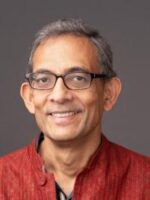
Abhijit Banerjee is a Professor in the Department of Economics at the Massachusetts Institute of Technology (MIT). His research focuses on development economics, public health policy, and social protection programs, particularly addressing poverty and inequality in low- and middle-income countries. He has conducted large-scale experiments evaluating interventions such as conditional cash transfers, universal basic income, and healthcare policies. Key areas of interest include the design and implementation of anti-poverty programs, behavioral economics, and the long-term health impacts of infectious diseases like COVID-19. His work often integrates experimental methods to assess policy effectiveness, with contributions to global health studies and economic development strategies. Notably, his research on the RECOVERY trial evaluates treatments for hospitalized COVID-19 patients, while other studies explore financial spillover effects of electronic government transfers in Indonesia and savings behavior interventions in Chile. Banerjee has collaborated on projects analyzing post-COVID-19 health outcomes, labor market dynamics in India, and the role of trusted messengers in public health communication during crises. Despite the breadth of his contributions, specific details about his educational background, grants, or lab affiliations are not explicitly provided in the source text.