Dr. Paolo Capobianchi is a Lecturer in the Department of Mechanical and Aerospace Engineering at the University of Strathclyde, with a master’s in Mechanical Engineering and a PhD in Mechanical and Aerospace Engineering. His research focuses on multiphase flow dynamics, including droplet behavior in Newtonian/non-Newtonian fluids, hydrothermal instability, microfluidics, and ferrofluid modeling. He has published extensively in top journals like Journal of Rheology and presented at international conferences. Awards include scholarships from the University of Strathclyde and BSR, and a grant for JAXA collaboration. He serves on the British Society of Rheology (BSR) and Società Italiana di Reologia (SIR). Research interests span numerical modeling of ferrofluid emulsions, cavitation erosion prediction, and particle dynamics in liquid bridges. Projects include EPSRC-funded work on particle self-assembly in space environments and turbine erosion mitigation. Notable contributions include the JEREMI Experiment preparation and development of novel numerical methodologies for fluid systems analysis. Awarded grants and scholarships have supported collaborations with JAXA and advanced fluid dynamics studies. Professional activities include invited speaking roles and participation in major conferences like the 37th Scottish Fluid Mechanics Meeting and COSPAR 2024.
Ethan K. Murphy is an Assistant Professor of Engineering at Dartmouth College's Thayer School of Engineering. His research focuses on electrical impedance tomography (EIT), finite element method (FEM) modeling, and data fusion for biomedical applications such as stroke monitoring, hemorrhage detection, and cancer imaging. He holds a PhD in Mathematics from Colorado State University (2007) and has been recognized with awards including the Society of Critical Care Medicine’s Gold Snapshot Award (2021) and the Clinical Poster Award at the Northeast ALS Conference (2019). His work integrates computational methods with medical technologies, such as developing smartphone-based 3D scanning for EEG electrode localization and EIT systems for real-time tissue characterization. He collaborates on devices like EIT-coupled surgical staplers and non-invasive biomarker systems for hypovolemic cardiovascular instability. His labs and projects emphasize interdisciplinary approaches to biomedical engineering challenges. Key contributions include advancements in fused-data EIT for breast and prostate cancer imaging, phantom studies for validation, and algorithms for rapid FEM mesh generation from 3D scans. Current initiatives aim to improve early detection of internal bleeding and enhance medical imaging accuracy through machine learning and multi-modal data integration.
Judith Hellerstein, Ph.D., is a Professor and Chair of the Economics Department at the University of Maryland, College Park. She joined the faculty in 1996 and is affiliated with the Maryland Population Research Center and the National Bureau of Economic Research. Her research focuses on labor market outcomes across gender, race, and ethnicity, with notable work on spatial labor markets, divorce economics, and occupational segregation. Hellerstein holds a Ph.D. in Economics from Harvard University (1994) and a Sc.B. in Applied Math-Economics from Brown University (1987). Her research explores topics such as the role of labor market networks, racial and spatial mismatch in employment, and the impact of economic cycles on family structures. Key contributions include analyses of workplace segregation, the influence of fathers on daughters' career choices, and the interplay between public policy and pharmaceutical markets. Hellerstein teaches courses like Intermediate Microeconomic Analysis and Advanced Labor Economics, emphasizing theoretical and empirical approaches to labor market dynamics. Her work has been published in top journals such as the Journal of Labor Economics, Review of Economics and Statistics, and Journal of Urban Economics. She advises graduate students including Sebastian Montano Correa and John Soriano. Hellerstein’s research bridges macroeconomic trends with micro-level evidence, offering insights into persistent socioeconomic disparities and policy solutions.
Dr Giang Nguyen is an Associate Professor at the School of Architecture and Civil Engineering, University of Adelaide. Their research focuses on constitutive modeling of engineering materials, computational solid mechanics, and micromechanics of failure. Nguyen's work bridges theoretical, experimental, and numerical approaches to understand material behavior across scales, particularly in soils, rocks, and cement-based materials. Their contributions include advancements in smoothed particle hydrodynamics (SPH) for modeling geomechanical processes and fracture mechanics. Research interests emphasize: Constitutive modeling under multi-axial loading conditions Failure mechanisms in quasi-brittle materials Hydro-mechanical coupling in partially saturated soils 3D printing applications in construction materials Large deformation analysis using SPH Publications span topics like earthquake-induced liquefaction, backward erosion pipelines, and energy-based fracture criteria. Nguyen has developed novel testing methods (e.g., AUSBIT) to capture snapback behavior in indirect tensile testing. Their work integrates experimental validation with advanced computational frameworks.
Dr Artur Przemysław Sadecki is an Adjunct Professor at the Department of Slavic Philology, Faculty of Languages, Literatures and Cultures, Maria Curie-Skłodowska University. His academic career focuses on Russian literature, cognitive linguistics, and narrative theory, with a particular emphasis on Anton Chekhov's prose. Literary studies Cognitive linguistics Narrative theory Slavic studies Aesthetic analysis Gender dynamics His research explores conceptual integration in Chekhov's works, miscommunication through mind theory, and the symbolic representation of identity and domesticity. Recent publications analyze existential themes in Chekhov's "Koszmar" and the paradoxical portrayal of love in "Bransoleta z granatów". As a linguist and literary critic, he contributes to journals like Acta Humana , Slavia Orientalis , and Przegląd Rusycystyczny , while also serving as a language editor for academic publications.
Raul Gonzalez Gonzalez is an Associate Professor in the Department of History at the University of León, Spain, where he is affiliated with the Faculty of Philosophy and Letters. His research focuses on medieval urban societies, particularly in the Astur-Leonese region of northwestern Spain. As a member of the HIST-ARQ History and Archaeology research group, he has established himself as a leading scholar in the study of medieval elites, urban power structures, and social mobility during the early and high Middle Ages. PhD from the University of Oviedo (2017) Thesis: "Urban Elites and Power Relations in Oviedo, León and Astorga during the Middle Ages (9th-13th Centuries)" Supervised by Dr. Soledad Beltrán Suárez and Dr. Gregoria Cavero Domínguez Raul Gonzalez Gonzalez's research primarily centers on Medieval Urban Societies , with particular emphasis on Urban Elites and Power Structures in the Astur-Leonese region during the early and high Middle Ages. His work explores how social hierarchies were established and maintained in medieval cities, examining the roles of judges, scribes, warriors, and bishops in shaping urban power dynamics. A significant portion of his research investigates social mobility among different classes, particularly how groups like infanzones (lower nobility) transformed their status through military service and political connections. His studies also delve into the cultural aspects of medieval society, including written culture, humor, and the development of urban markets. His recent publications demonstrate a consistent focus on the intersection of urban development, social structures, and power dynamics in medieval Spain. The research shows a progression from examining specific urban institutions and elite groups to broader analyses of social change across the medieval period. A notable trend is his increasing attention to the experiences of marginalized groups, including slaves and lower social classes, and how they navigated the complex social hierarchies of medieval cities. His work bridges traditional political and institutional history with newer approaches in social and cultural history, creating a more nuanced understanding of medieval urban life. Raul Gonzalez Gonzalez has supervised multiple PhD students and has been involved in numerous research projects examining medieval urban societies in northwestern Spain. His work has been supported by various academic grants focused on medieval history and archaeology. He has collaborated extensively with researchers from institutions across Spain and internationally, contributing to edited volumes and participating in academic conferences on medieval studies. As a member of the HIST-ARQ History and Archaeology research group at the University of León, Gonzalez Gonzalez contributes to interdisciplinary projects that combine historical analysis with archaeological evidence to reconstruct medieval urban landscapes. His work often involves collaboration with specialists in archaeology, philology, and art history to create comprehensive studies of medieval cities and their hinterlands.
Harald Oberhofer is a full professor at the Department of Economics at WU Vienna University of Economics and Business. His research focuses on applied econometrics, industrial organization, international economic relations, and political economy. He has been actively involved in numerous research projects and publications, including co-authoring policy reports and peer-reviewed articles. Oberhofer has received several awards, including the Klaus Liebscher Award (2012), Young Economist Award (2011), and Award of Excellence (2009). He teaches advanced econometric methods and contributes to research seminars, fostering academic discourse among doctoral students and faculty. Leading projects such as 'International Trade and the Environment' (2023–2026) and 'Propagation of Economic Shocks: Macro- and Microeconomic Evidence for the EU' (2016–2018). Published extensively on EU trade effects, business sentiment propagation, and global trade policy, with recent work focusing on inflation and external economic relations. His academic activities include peer-reviewing, conference participation, and editorial roles, reflecting his influence in the economics community. He advises on policy matters and maintains an active role in shaping economic research agendas in Austria and Europe.
Luca DE'MEDICI is a Professor at the Laboratoire de Physique et Etudes des Matériaux (LPEM) at ESPCI-PSL in Paris. His research focuses on condensed matter theory, particularly strongly correlated materials, unconventional superconductors, and theoretical methods for quantum materials. He leads a research group funded by an ERC Consolidator Grant (2016-2022) exploring correlated materials and their applications in superconductors and thermoelectrics. His work includes groundbreaking studies on Hund’s metals, Mott transitions, and electronic compressibility in FeSe. He has organized international conferences like 'Cutting-Edge Topics in Quantum Materials' and contributed to the development of the EDIpack computational package for quantum impurity problems. DE'MEDICI has been recognized for his contributions to understanding electronic correlations in superconductors and correlated systems.
Thomas Berglund is a Professor of Sociology at the Department of Sociology and Work Science, University of Gothenburg. He also serves as Director of Wexsus, the West Sweden Nexus for Sustainable Development. His research focuses on labor market dynamics, including occupational change, job security, institutional transformation, and the societal impacts of the green transition. He explores political sociology themes like class structures and political attitudes, with a particular emphasis on how these intersect with labor market outcomes. Current research projects include analyzing polarization in the Swedish labor market and studying green transition challenges in West Sweden's automotive sector. His work often involves collaboration with regional actors to establish sustainable growth frameworks. Key publications examine immigrant labor market integration, low-wage employment trends, and occupational prestige hierarchies. Berglund's interdisciplinary approach bridges sociology with economic policy analysis, contributing to debates on Nordic welfare models and institutional adaptations. His research has been published in journals like Nordic Journal of Working Life Studies and Scandinavian Journal of Work, Environment & Health , reflecting his commitment to both academic rigor and real-world policy relevance.
Oleg Kitov serves as an Assistant Teaching Professor and Robert Martin Fellow in Economics at Selwyn College, University of Cambridge, where he also acts as Convener of Undergraduate Admissions for the Faculty of Economics. His academic profile centers on rigorous econometric methodology applied to macroeconomic phenomena and distributional economics, with significant contributions to time-series analysis and income inequality research. Kitov's primary research domains include Time-series Econometrics, Empirical Macroeconomics, and Income Distribution and Inequality. His methodological innovations focus on structural break detection in linear models using multiplicative indicator saturation, generative modeling of age-income dynamics, and cross-national Phillips curve analysis. His work bridges theoretical econometrics with empirical applications, particularly examining inflation-unemployment relationships across diverse economies and modeling long-term trends in income distribution using historical datasets. His publication trajectory reveals consistent methodological advancement from 2012-2022, with core themes spanning structural break detection in economic time series, generative income distribution modeling, and comparative Phillips curve analysis across 15+ countries. The research demonstrates increasing sophistication in handling non-stationary economic data while maintaining strong policy relevance for central banking and inequality measurement. Scientific Awards: Cambridge Centre for Teaching and Learning Technology-enabled Learning Prize (2021) As Convener of Undergraduate Admissions, Kitov shapes the academic cohort for Cambridge's Economics program while teaching advanced econometrics. His office hours (Tuesdays 11:15am-12:15pm in Room 79) support student engagement with complex quantitative methods, reflecting his dual commitment to research excellence and pedagogical innovation recognized by the 2021 teaching prize.
Achim Lichtenberger is Professor of Classical Archaeology at the University of Münster, where he serves as Director of the Archaeological Museum and Managing Director of the Institute for Classical Archaeology and Christian Archaeology. He has held this position since October 2016, following his professorship at Ruhr-Universität Bochum (2010-2016). Lichtenberger is an active researcher with leadership roles in multiple international projects focusing on Hellenistic and Roman archaeology across the Mediterranean and Near East. 2008: Habilitation in Münster with "Severus Pius Augustus. Studien zur sakralen Repräsentation und Rezeption der Herrschaft des Septimius Severus und seiner Familie (193-211 n. Chr.)" 2001: PhD at Eberhard Karls-Universität Tübingen 1998: MA at Humboldt Universität zu Berlin 1993-1998: Studies in Classical Archaeology, Ancient History and Evangelical Theology Lichtenberger's research centers on Hellenistic and Roman ruler representation, Greco-Roman Near East iconography, ancient religion, and numismatics. His work bridges archaeology, history, and religious studies with emphasis on cross-cultural interactions. He conducts extensive fieldwork in Armenia, Jordan, and Israel, examining Hellenistic settlements, urban development, and religious practices. His methodological approach combines traditional archaeological techniques with geophysical prospection, material analysis, and interdisciplinary theoretical frameworks. His recent publications reveal expanding research interests in Hellenistic urbanism in Armenia (particularly Artaxata), the archaeology of Decapolis cities following the AD 749 earthquake, and Greco-Phoenician mythology as reflected in imperial coinage. His work consistently addresses cultural entanglement and power representation in the ancient world, increasingly incorporating environmental evidence and interdisciplinary approaches. 2022: Corresponding Member of the German Archaeological Institute Lichtenberger leads major research projects funded by the German Research Foundation (DFG), Fritz Thyssen Foundation, and other institutions. His international collaborations span Armenia, Israel, Jordan, and beyond. As Pro-Dean of the Department of History/Philosophy at the University of Münster since 2020, he plays a significant institutional role while mentoring doctoral students and advancing the University of Münster as a center for Hellenistic and Roman Near Eastern studies. Lichtenberger directs the Armenian-German Artaxata Project investigating the Hellenistic capital in the Ararat Plain and co-leads the German-Israeli Tell Iẓṭabba Excavation Project. His institutional leadership includes service on the General Assembly, Scientific Advisory Board, and Commission for Equality and Diversity, reflecting his commitment to academic governance and diversity initiatives.
Jörg Menche holds a full Professor position (Univ.-Prof.) at the University of Vienna, with dual appointments in the Faculty of Mathematics, Department of Mathematics, and Max Perutz Labs, Department of Structural and Computational Biology. His work bridges mathematical modeling and biomedical research through network-based approaches to complex disease mechanisms. Primary research interests include Network Biology, Computational Systems Medicine, and Immunometabolism, with specific focus on proteomic signatures in neuropathic pain, metabolic reprogramming in obesity, and autoimmunity networks. He develops innovative computational tools like VRNetzer for virtual reality network analysis and BioProfiling.jl for high-content imaging data integration, targeting intersections between metabolism, immunity, and environmental exposures. Recent publications (2019-2024) reveal a dominant trend in multi-omics network medicine, particularly in autoimmunity (AutoCore framework), cardiometabolic diseases, and rare genetic disorders. His work demonstrates exceptional translational impact, with multiple papers highlighted by news outlets and patents (e.g., 3 patents referencing 2021 research). While the text indicates involvement in one project (2016) and 13 activities, grant specifics and student mentoring details remain undisclosed. His collaborative network spans immunology, neuroscience, and toxicology, evidenced by co-authorships with clinical and computational teams. Menche operates within Max Perutz Labs, a premier molecular biology research center in Vienna. His team integrates computational biologists, cell biologists, and clinicians to develop network cartography methods for disease module identification, with strong emphasis on virtual reality interfaces and multi-omics validation.
Professor David Eager is a leading academic at the University of Technology Sydney in the School of Mechanical and Mechatronic Engineering . With a dual appointment as Professor of Risk Management and Injury Prevention, his work bridges mechanical engineering, biomechanics, and public health policy. PhD in Engineering (UNSW) 1st Class Honours Degree (NSWIT) Graduate Certificate in Dispute Resolution (UTS) His research focuses on risk engineering for injury prevention in recreational environments, with specific expertise in trampoline safety , playground surfacing , and greyhound racing biomechanics . Current projects examine impact attenuating materials and characterize trampoline dynamics through acceleration analysis. Recent publications include studies on: Dynamic behavior of sports sands (2025) Greyhound galloping mechanics (2024) ISO 4980:2023 benefit-risk assessment standard (2024) Scientific recognition includes: Life Member of Play Australia (2021) Standards Australia Centenary Hero (2022) AGM Michell Medal (2024) Kidsafe Research of the Year Award (2024) He maintains active roles in international standards development as: Australian representative on ISO/TC 83 Sports Equipment Australian representative on ISO/TC 254 Amusement Rides Chair of multiple Australian Standards committees
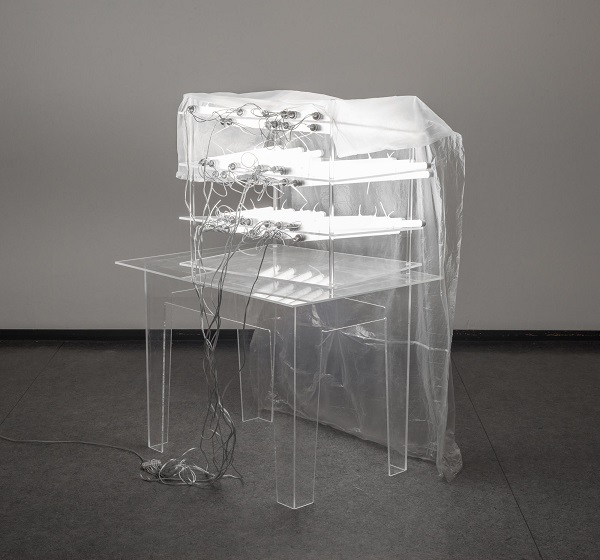
Christian Ertel is a contemporary artist and visiting professor specializing in light, object, and installation art. He is currently serving as Vertretungsprofessor for Painting and Graphics at the Academy of Fine Arts Munich during the summer semester 2025. He has previously taught at the State Academy of Fine Arts Karlsruhe, HfG Karlsruhe, and Hochschule Pforzheim, establishing a strong presence in German and international art education. His research and artistic practice centers on context-sensitive, site-specific installations that explore meaning shifts, spatial boundaries, and perception through the use of artificial light. Ertel's work blends formal minimalism with conceptual depth, engaging with historical, scientific, and sociopolitical themes. His fields of interest include installation art, light-based media, spatial perception, and interdisciplinary art practices. The body of his artistic output—treated as publications in the context of artistic research—demonstrates a consistent engagement with perception, material transformation, and conceptual minimalism. Recent works such as The Druse, Inverted (2009), Halocline (2018), and Immersion / Inversion (2015) reflect his interest in optical phenomena, immersive environments, and historical references, often blurring the boundaries between sculpture, architecture, and sensory experience. His scientific and artistic awards include: Work Grant from Kunstfonds Foundation (2022) Prize of the Toni Merz Foundation Sasbach (2011) Scholarship from the State of Baden-Württemberg, Cité Internationale des Arts, Paris (2009–2010) Project Grant from Akademie Schloss Solitude (2006) Multiple prizes from the State Academy of Fine Arts Karlsruhe (2002, 2003) Ertel has been awarded significant grants and residencies, including a postgraduate scholarship in Mexico City and a residency at Cité internationale des arts in Paris. He has exhibited widely in solo and group exhibitions across Europe and Japan, often in collaboration with other artists and institutions. His work is represented in catalogs and artist directories, including the New Museum's Younger Than Jesus directory (2009). He is affiliated with key artistic networks and has contributed to interdisciplinary dialogues, such as the Dialog–Trialog series. Christian Ertel's work is realized through a network of collaborations, institutional support, and artistic residencies. He has been associated with production galleries such as Alpineum Produzentengalerie and Ferenbalm-Gurbrü Station, and his projects often involve technical and conceptual teams, particularly for large-scale installations. His ongoing project The 3K Amps (since 2012) suggests sustained exploration in energy and light systems.
Michael Yampolsky is a Professor in the Department of Mathematics at the University of Toronto, with appointments at both the St. George and Mississauga (UTM) campuses. He is also the Director of the Centre for Nonlinear Analysis and Modeling (CNAM) at UTM. His research lies at the intersection of pure mathematics and applied modeling, with a strong focus on dynamical systems and their theoretical and computational aspects. Yampolsky earned his PhD from SUNY Stony Brook in 1997 and has held prestigious positions including J.W. Gibbs Instructor at Yale University and Visiting Member at the Institut des Hautes Études Scientifiques in France before joining the University of Toronto faculty in July 2000. He has also held visiting positions at IPAM (UCLA), ETH Zurich, Université de Paris, and IMPA. His research interests span a broad range of topics in dynamical systems , including renormalization theory , Julia sets , Siegel disks , critical circle maps , and computability in dynamics . A significant portion of his work investigates the boundaries of algorithmic computability in complex dynamical systems. He has also contributed to interdisciplinary research in mathematical medicine and biology , particularly in modeling placental morphology and metabolic scaling laws in fetal development. The recent publications reflect a deep engagement with both theoretical and computational themes. The work trends include renormalization hyperbolicity , rigidity of circle maps , computability of dynamical invariants , and structural instability in 2D complex maps . His interdisciplinary projects apply mathematical modeling to placental shape and function, especially in the context of HIV and antiretroviral therapy. He is the author and co-author of several books, including Computability of Julia Sets (Springer, 2008) and Fixed Point of the Parabolic Renormalization Operator (Springer, 2014), and has edited volumes in honor of John Milnor. His publications appear in top-tier journals such as Communications in Mathematical Physics , Annals of Mathematics , Inventiones Mathematicae , and Placenta . Yampolsky advises students and collaborates extensively, particularly in the areas of computable analysis and nonlinear modeling. His research has been supported by major grants, though specific funding sources are not detailed in the text. He leads the Centre for Nonlinear Analysis and Modeling (CNAM), which serves as a hub for interdisciplinary research in dynamical systems and mathematical modeling. Notable labs and teams include: Centre for Nonlinear Analysis and Modeling (CNAM) – Research group focused on dynamical systems, renormalization, and applications in biology and medicine. Collaborative projects with researchers in mathematical biology, particularly in placental modeling and fetal development.