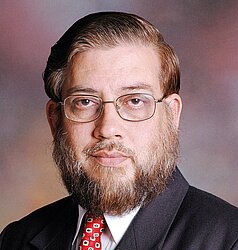
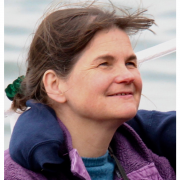
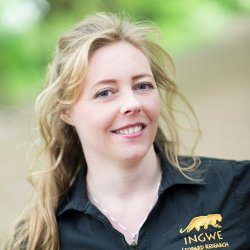
Prof. Dr. Eckehard Liske is an Adjunct Professor at the Zoological Institute of Technische Universität Braunschweig, Germany. He holds a PhD and Habilitation (Venia legendi) in Zoology, and has extensive experience in both academia and the pharmaceutical industry. His research focuses on phytotherapy for gynaecological and psychological disorders, as well as the behavioural physiology of insects. He has authored over 50 papers in these fields. Prof. Liske completed his studies in Biology-Zoology at TU Darmstadt, followed by postdoctoral research at institutions in the USA and Germany, including the Max-Planck-Institut. He spent over 20 years in the pharmaceutical industry, leading international medical departments and specialising in herbal treatments. He is an invited speaker at global drug symposia and has participated in media discussions on menopause treatment. At TU Braunschweig, he teaches animal and human physiology in the biology bachelor's programme. His career includes roles such as Head of International Medical Department and lecturer on rational phytotherapy. No specific grants or awards are highlighted, though his academic qualifications include Privatdozent status.
Armando F J Perez Cueto Eulert serves as Professor in Food, Nutrition and Culinary Science at Umeå University, Sweden, and holds the Arctic Six Chair appointment (2024-2026) at the university's Arctic Centre. His interdisciplinary career bridges Food Science, Nutrition, and Consumer Behaviour across multiple European institutions. His educational trajectory includes foundational training as a food technologist, advanced specialization in Public Health Nutrition, and postdoctoral research in Consumer Behaviour at Ghent University and University of Copenhagen. This unique combination informs his current research on population dietary transitions. Professor Perez-Cueto's research centers on behavioral interventions for plant-based consumption, applying nudging principles from behavioral economics to real-world food environments. His work examines how citizen and population transitions toward plant-based diets can be facilitated through contextual modifications in professional meal settings. Recent projects investigate virtual reality applications for dietary change, fermented food acceptance, and cross-cultural consumer responses to alternative proteins. His publication record reveals strong trends in sustainable food systems research, with increasing focus on digital influences (social media, e-commerce), household-level dietary dynamics, and innovative methodologies like VR experiments. The work consistently bridges academic theory with practical applications for public health nutrition. Arctic Six Chair (2024-2026) at Umeå University's Arctic Centre ORCID: 0000-0003-1270-2678 Featured in Elsevier's Updated science-wide author databases (2021) He leads major EU-funded consumer studies including HealthFerm (GA 101060247), Locality (GA 101112884), and FlavourFerm (GA 101181661), building on previous coordination of Eligebien (2013) and uCare (2014) networks. His teaching portfolio spans sustainable food futures, public health nutrition, and food culture courses where he integrates behavioral economics principles. As Work Package Leader in multiple Horizon Europe projects, he directs consumer behavior research teams developing evidence-based strategies for plant-based dietary transitions in professional settings, with particular focus on Arctic food systems and fermented food innovations.
Alexander Wilson is Lecturer in Behavioural Ecology and Programme Leader for BSc Zoology at the University of Plymouth's School of Biological and Marine Sciences. His research examines animal behavior in ecological contexts, with focus on social networks, predator-prey interactions, and conservation applications. Key research areas include: Collective behavior in marine and terrestrial species Individual behavioral variation (animal personality) Fisheries conservation and management Sensory ecology and decision-making Impact of anthropogenic stressors on behavior Teaching includes modules on Ecology and Diversity of Life, Zoology Field Course (Kenya), and Comparative Zoology. Research methodologies encompass field experiments, sensor tagging, video analysis, and stable isotope techniques applied across diverse taxa from crustaceans to sharks.
Dr. Dmitry Kishkinev is a Lecturer in Animal Behaviour and Behavioural Neuroscience at Keele University's School of Life Sciences. His research focuses on avian navigation, magnetoreception in animals, and biotelemetry. He has held prestigious fellowships, including the Leverhulme Early Career Fellowship (2017-2020) and the Banting Postdoctoral Fellowship (2012-2014). Kishkinev’s work spans experimental studies on bird migration mechanisms, the role of magnetic fields in navigation, and interdisciplinary projects combining neuroscience, ecology, and technology. Education : PhD in Biology (2011), University of Oldenburg, Germany MSc in Biology (2005), St. Petersburg State University, Russia BSc in Biology and Chemistry (2003), Ulyanovsk Pedagogical University, Russia Research Interests : Magnetic navigation mechanisms in birds and insects Avian orientation using geomagnetic cues Biotelemetry and automated tracking technologies Conservation applications of migration research Neuroscience of sensory systems in navigation Grants & Funding : UKRI MSCA Postdoctoral Fellowship (2024-2026) BIOGAIN: Managing Solar Sites for Biodiversity Gain (£11k, Keele University) Muscular Dystrophy UK (MDUK) Grant (2022-2024) Leverhulme Trust Fellowship (£115k) Lab & Collaborations : Animal Navigation Group (Bangor-Keele collaboration) Development of open-source biotelemetry tools Research partnerships with international institutions including the Max Planck Institute and University of Guelph
Ana Isabel de Almeida Costa is a Senior Researcher and head of the Food Behaviour Lab at Católica Lisbon School of Business and Economics, Universidade Católica Portuguesa. She holds a PhD from Wageningen University (2012) and is an alumna of Erasmus Rotterdam University, Groningen University, Ghent University, and Instituto Superior de Agronomia. She teaches Marketing and Consumer Behaviour while supervising PhD and MSc students in food science and consumer psychology. Her research investigates domestic food practices (planning, purchasing, preparation, consumption) and their impact on dietary choices. Key focus areas include: Drivers of meal consumption patterns in Portugal Psychometric modeling of cooking norms Sensory perception of novel foods (e.g., insect-based products) Behavioral interventions for sustainable diets She leads projects like InsectERA (2023-2025) and SUSINCHAIN (2019-2023) to advance edible insect applications. Recent publications (2025) demonstrate consistent themes: sensory analysis of alternative proteins, dietary pattern assessments, and strategies for reducing meat consumption. These studies employ rigorous consumer testing methodologies and align with UN Sustainable Development Goals. She supervises graduate research on topics including: Mobile apps for healthy eating Social media's role in food activism Psychological drivers of home cooking
David Punzalan is Assistant Teaching Professor in the Department of Biology at the University of Victoria's Faculty of Science. His research applies evolutionary ecology frameworks to study sexual selection, hybridization, and phenotypic evolution in insect systems, particularly ambush bugs (Phymata spp.). His work integrates field studies, behavioral experiments, and quantitative genetics to examine evolutionary processes. Key research themes include reproductive barriers in hybridizing species, climate change impacts on species distributions, sex-specific selection in natural populations, and macroevolutionary patterns. Recent projects investigate life history divergence between hybridizing ambush bugs, extinction dynamics in evolutionary radiations, and climate-driven range shifts. His research employs diverse methodologies including experimental evolution, phylogenetic comparative methods, and fitness landscape analysis. Dr. Punzalan teaches courses in evolutionary ecology and mentors undergraduate researchers. His educational background includes a PhD from the University of Toronto and postdoctoral research at the University of Ottawa, University of Exeter, and Royal Ontario Museum.
Wolfgang Rössler serves as Professor and Head of the Chair of Behavioral Physiology & Sociobiology (Zoology II) at the University of Würzburg's Biocenter. His laboratory investigates the neurobiological foundations of social insect behavior with emphasis on olfactory systems, navigation mechanisms, and behavioral plasticity. His research integrates neurobiology , behavioral ecology , and evolutionary biology through advanced techniques including confocal 3D imaging, calcium imaging, and quantitative behavioral assays. Key projects examine olfactory system evolution, developmental brain plasticity, neuronal microcircuits in memory centers, and geomagnetic navigation in desert ants. Professor Rössler teaches Integrative Verhaltensbiologie series for Bachelor students and advanced courses including Communication Biology and Behavioural Physiology for Master's programs. His publication record demonstrates consistent contributions to understanding sensory processing in social insects, particularly regarding magnetic navigation cues and temperature-dependent neural development. His laboratory maintains active collaborations with researchers globally, as evidenced by co-authorship with international teams on high-impact publications in Current Biology and PNAS . The research program receives ongoing institutional support through laboratory facilities in Building B1 (Room D117) at the Hubland Campus.
Professor Raghavendra Gadagkar is an evolutionary biologist specializing in social behavior, using the Indian wasp Ropalidia marginata to investigate evolutionary mechanisms behind social organization. His research spans four decades of empirical and theoretical work examining conflict resolution, reproductive strategies, and self-organization in insect societies. Key contributions include developing the theory of Assured Fitness Returns, demonstrating how group living provides evolutionary advantages independent of genetic relatedness. His work reveals complex social dynamics including multiple queen mating, non-discriminatory brood care by workers, and conflict-free succession mechanisms. Gadagkar advocates for reforming academic evaluation systems to prioritize research quality over funding magnitude or journal prestige. During the COVID-19 pandemic, he authored 'Experiments in Animal Behaviour: Cutting Edge Research at Trifling Cost' and writes the science column 'More Fun Than Fun' for The Wire Science.
Ana Regina Campos is Professor of Interdisciplinary Science in the Department of Biology at McMaster University, Canada. Over four decades she has integrated developmental genetics, neurobiology and environmental toxicology, exploiting Drosophila melanogaster and Hydra models to uncover how genes regulate neural connectivity, behaviour, stress responses and regeneration. Education: Ph.D. Developmental Genetics, Brandeis University M.Sc. Molecular Biology, Federal University of Rio de Janeiro Research thrusts span (i) neural-specific gene expression and visual-system wiring in Drosophila , (ii) mitochondrial DNA polymerase function and organismal behaviour, (iii) menin-mediated stress signalling and genome stability, and (iv) eco-toxicological impacts of pharmaceuticals on cnidarian regeneration. Methodologically she combines classical mutagenesis, transgenic tools (UAS/GAL4, RNAi), kinematic behavioural assays and pharmacological screens. Her publication trajectory (41 works, 1975-2024) clusters in developmental biology, molecular biology methods, genetics and cellular neuroscience, with recent papers addressing environmental stressors and renal physiology. Teaching commitments are extensive: since 2018 she has instructed 20 different courses ranging from first-year inquiry to senior theses, laboratory methods, science communication, applied placements and a specialized fourth-year seminar on regeneration. No grants, doctoral students or major scientific awards are listed in the current repository extract; co-author networks at McMaster include Rodriguez-Moncalvo, O’Donnell, Bedard and Wilson.
Reuven Dukas is a Professor in the Department of Psychology, Neuroscience & Behaviour at McMaster University, where he conducts research at the intersection of cognitive science, behavioral ecology, and evolutionary biology. His work primarily focuses on understanding the mechanisms, ecology, and evolution of animal cognition, with particular emphasis on fruit flies as model organisms. Dukas maintains an active research program investigating how cognitive traits influence animal behavior, ecology, and evolutionary processes. Postdoctoral Fellow, University of British Columbia (1993-1997) Ph.D., North Carolina State University (1987-1991) B.Sc., Hebrew University of Jerusalem (1982-1985) Dukas' research program centers on cognitive ecology, examining how perception, learning, and decision-making evolve and function in natural contexts. His work spans multiple interconnected domains including sociability and social cognition, aggression dynamics, expertise development, and perseverance. A significant portion of his research investigates how limited attention constrains animal behavior and shapes evolutionary trajectories. His laboratory employs both theoretical and empirical approaches to understand how cognitive processes influence ecological interactions and evolutionary change. Analysis of Dukas' recent publications (2022-2025) reveals a strong focus on social dynamics in animal behavior, particularly examining winner-loser effects across species including humans. His research increasingly integrates neurogenetic approaches with behavioral ecology, as seen in studies on dopamine's role in social recovery and autism-related genes. The work demonstrates sophisticated methodological approaches including meta-analyses, experimental evolution, and social network analysis applied to questions of sexual conflict, aggression, and social learning. Dukas actively mentors numerous graduate students, as evidenced by the frequent appearance of asterisked names in his publication list. His teaching portfolio includes advanced courses in animal behavior, evolution, and psychology, reflecting his commitment to training the next generation of behavioral ecologists. He has taught courses such as Advanced Topics in Psychology, Neuroscience and Behaviour, Special Topics in Animal Behaviour, Animal Behaviour & Evolution, and Animal Behaviour Lab consistently from 2017-2025. Dukas leads the Cognitive Ecology Lab at McMaster University, which focuses on understanding the evolutionary and ecological dimensions of cognition. The lab investigates questions related to social behavior, learning, and decision-making across various species, with particular expertise in insect models. Current research directions include examining how experience shapes collective decision-making, the genetic basis of social behavior, and the evolutionary consequences of cognitive constraints.
Dr Fiona Hunter is a Senior University Teacher in the Department of Ecology, Evolution and Behaviour at the University of Sheffield's School of Biosciences. She has held roles including Director of Education (2021-present) and Director of Learning and Teaching (2015-2021). She completed her PhD in Zoology at the University of Sheffield (1988-1990). Her research focuses on avian behavior, particularly penguins and auklets, with emphasis on sperm competition, sexual selection, and climate impacts. She has secured over £1.4 million in research funding and collaborates internationally. Teaching responsibilities span over 30 years, covering zoology and field studies. She leads initiatives like the Biologies Teaching Partnership and designed outreach programs reaching 55,000+ children. Awards include being a National Geographic Explorer and NERC Independent Research Fellow (1992-1999). Education: PhD (Zoology) from University of Sheffield (1988-1990). Research interests include mate choice, sperm competition mechanisms in Adélie penguins, auklet plumage evolution, and climate-driven demographic changes. She has published extensively on seabird ecology, sexual selection, and genetic basis of traits. Teaching spans lectures, field courses, and curriculum design. She coordinates public engagement programs like 'Be a Scientist for the Day' and Christmastime Lectures, emphasizing science communication and biodiversity conservation.
Dr. Tara Pirie is a Lecturer in Ecology and Conservation at the University of Surrey's School of Biosciences. She holds a PhD in leopard and carnivore ecology and conservation from South Africa, alongside a BSc (Hons) in Zoology. Prior to academia, she worked as a zookeeper managing species like White Rhino, tigers, lemurs, and kangaroos, and trained as a safari guide to observe wildlife in natural habitats. Her research focuses on Ecology Animal Behaviour Conservation strategies for big cats and African predators with recent work emphasizing human-wildlife interactions and urban ecological systems. Recent publications explore sloth bear conservation in India, pest ecology in agricultural systems, and urban cat behavior impacts. No scientific awards explicitly listed. Her teaching and research bridge field observations with applied conservation challenges, leveraging her multidisciplinary background in zoo practice and academic research.
Prof. Dr. Martijn Egas is an Associate Professor at the University of Groningen, affiliated with the Groningen Institute for Evolutionary Life Sciences (GELIFES) within the Faculty of Science and Engineering. His research focuses on eco-evolutionary dynamics, particularly in the context of alternative reproductive tactics, social behavior, and the evolution of altruism. He leads the 'Evolution of social organizations' research group and is involved in interdisciplinary projects like the Metahealth consortium studying microbiome evolution. Egas holds editorial roles, including Editor-in-Chief of Animal Biology , and directs the Erasmus Mundus Master Programme in Evolutionary Biology (MEME). He has contributed to funded projects such as NWA grants exploring evolutionary predictions and microbiome dynamics. His work integrates theoretical models with empirical studies, often using spider mites as model organisms. He collaborates internationally on topics like tRNA gene repertoire variation and the genetic code's evolution. Education While specific educational details are not explicitly listed, his academic roles and publications indicate a strong background in evolutionary biology and theoretical ecology. Research Interests Egas' research revolves around eco-evolutionary feedbacks, behavioral ecology, and the evolutionary mechanisms behind social behaviors. He explores polymorphic traits, such as alternative reproductive tactics in spider mites, and their ecological implications. His recent work includes studies on predation risk in guarded females, altruism as a sexual signal in humans, and tRNA gene classification in prokaryotes. Grants & Collaborations He co-leads projects funded by the Dutch Research Agenda (NWA), including a €6.7M grant for predicting evolutionary responses. Collaborations span institutions like the Max Planck Institute and Oklahoma State University, focusing on topics like microbial evolution and the genetic code. Labs/Teams He heads the Egas group - Evolution and Behaviour at GELIFES, fostering interdisciplinary research in evolutionary biology. His team addresses questions at the intersection of ecology and evolution, leveraging experimental and theoretical approaches.
Dr Paul Hurd is an Associate Professor in Genome Regulation and Epigenetics at Queen Mary University of London, affiliated with the School of Biological and Behavioural Sciences. He is a core member of the Centre for Molecular Cell Biology and the Centre for Evolutionary and Functional Genomics. His research focuses on understanding epigenetic mechanisms, particularly in honey bees, exploring how chromatin states and functional genomics underpin phenotypic plasticity and developmental processes. Dr Hurd's academic career includes roles in teaching courses such as Genes and Bioinformatics (BIO223) and Functional Genomics and Epigenetics (BIO327). He has secured significant research grants, including a £672,317 BBSRC grant for studying nutrition's role in epigenetic modulation of honeybee development (2022–2026). He collaborates internationally, including with the University of Munster on genomic experiments. His research themes span honeybee epigenetics, chromatin structure, and the evolution of epigenetic systems in diverse organisms. Notable projects investigate how environmental and genetic factors shape gene regulation, with implications for developmental biology and ecology. He leads a research group including students such as Nancy Ellis and Keroshini Guynes, advancing studies in insect genomics and epigenetic plasticity. Hurd’s publications (over 30 since 1999) emphasize epigenetic mechanisms, chromatin dynamics, and comparative genomics. His work bridges molecular biology and ecology, with recent focus on annelid and hymenopteran epigenetic systems. He is also engaged in systems biology approaches to understand multi-scale biological processes.
Boyd Mori is an Assistant Professor at the University of Alberta's Department of Agricultural, Food & Nutritional Sciences, within the Faculty of Agricultural, Life and Environmental Sciences. His research focuses on integrated pest management (IPM), chemical ecology, and genomics, aiming to develop sustainable pest control strategies while conserving beneficial species. He holds a PhD in Ecology from the University of Alberta and a Postdoctoral Fellowship in Insect Behaviour and Chemical Ecology from the Swedish University of Agricultural Sciences. Education PhD in Ecology, University of Alberta (Edmonton, Alberta) Postdoctoral Fellowship in Insect Behaviour and Chemical Ecology, Swedish University of Agricultural Sciences (Alnarp, Sweden) Research Interests Mori’s work combines behavioral, chemical, and molecular ecology to address pest management challenges. Key areas include chemical ecology for pest monitoring, population genetics of invasive species, and understanding insect-plant interactions. His research emphasizes reducing reliance on insecticides and promoting biodiversity in agroecosystems. Teaching Mori teaches courses such as AFNS 575: Advanced Functional Genomics Technologies , PL SC 310: Insects in Cropping Systems , and AFNS 595/PL SC 495: Integrated Crop Protection , reflecting his expertise in agricultural entomology and genomics. Awards Fellow of the Royal Entomological Society (FRES) Prior Experience Previously served as a Research Scientist in Insect Ecology at Agriculture and Agri-Food Canada (Saskatoon, Saskatchewan).