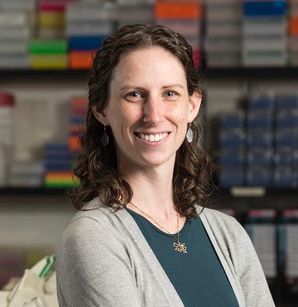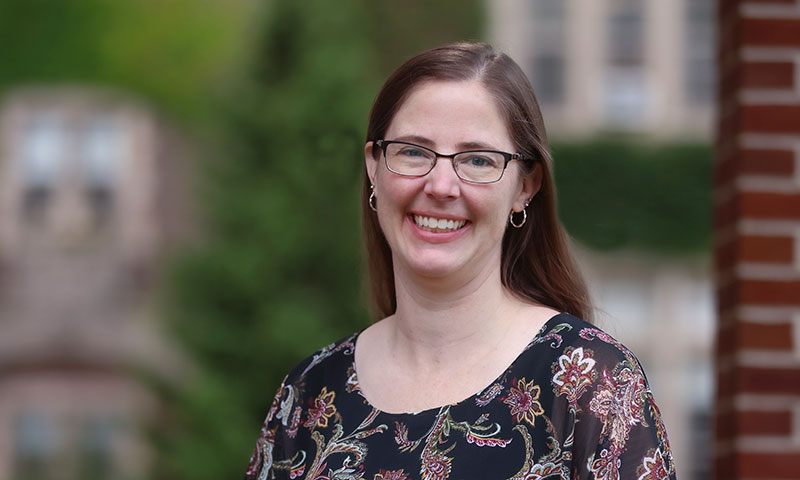
Shannon Straubمشاهده پروفایل
دانشیار
- Plant Systematics
- Phylogenomics
- Genome Evolution
- +۷ مورد دیگر
Shannon Straub is an Associate Professor of Biology at Hobart and William Smith Colleges, where she also serves as Co-Chair of the Biochemistry program and Chair of the Biology Department. She joined the faculty in 2014 and is based in Eaton Hall. She earned her Ph.D. from Cornell University and her B.A. from the University of Colorado. Institution: Hobart and William Smith Colleges School: School of Sciences Department: Department of Biology Position: Associate Professor, Co-Chair (Biochemistry), Chair (Biology) Her research lies at the intersection of plant systematics, phylogenomics, and genome evolution, with a primary focus on the milkweed and dogbane family (Apocynaceae). She investigates evolutionary relationships across multiple scales—from species diversification in Asclepias to deep phylogenetic patterns across the family—using hundreds of nuclear genes and whole chloroplast genomes. A key interest is the evolution of pyrrolizidine alkaloid biosynthesis, a chemical defense pathway, and how genomic data can inform ecological and evolutionary hypotheses such as defense de-escalation. Her recent publications highlight methodological innovations (e.g., Hyb-Seq, indel coding pipelines) and large-scale genomic resources (e.g., a draft genome for Asclepias syriaca ). These works span leading journals like American Journal of Botany , PeerJ , and New Phytologist , reflecting interdisciplinary contributions to molecular evolution, bioinformatics, and plant systematics. American Society of Plant Taxonomists Botanical Society of America Society of Systematic Biologists She teaches foundational and advanced courses including BIOL 167 (Plants & People), BIOL 220 (General Genetics), BIOL 228 (The Biology of Plants), BIOL 380 (Genomics), and BIOL 460 (Senior Seminar - Genome Collisions). Her teaching integrates molecular techniques with evolutionary theory and emphasizes student engagement in genomic research. There are no listed students or awards in the provided text, but her leadership roles suggest active mentorship and departmental service. Her research lab generates genomic and transcriptomic datasets that support both her own studies and collaborative efforts in plant evolutionary biology. She is actively involved in advancing phylogenomic methods and applying them to resolve complex evolutionary histories in plants.