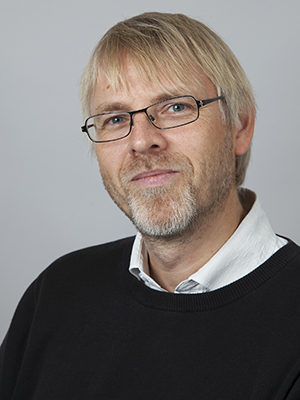
Jostein Kjærandsen is a Professor at UiT The Arctic University of Norway, affiliated with Tromsø University Museum. His research focuses on insect diversity patterns, taxonomic frameworks, and the functional evolution of organs like genitalia and wings within Diptera, particularly Sciaroidea (fungus gnats). Research Interests : Taxonomy, biosystematics, DNA barcoding, molecular phylogeny, and biodiversity assessment of Diptera, especially Mycetophilidae and Keroplatidae. Students : Supervised PhD candidate Jon Peder Lindemann. Email : jostein.kjarandsen@uit.no Recent Articles highlight integrative taxonomy using DNA barcoding, molecular phylogenies of fungus gnats, and the role of museum collections in species discovery. His work addresses taxonomic impediments for 'dark taxa' while advancing reference libraries for global biodiversity studies.
Margareth Øverland is a Professor at the Norwegian University of Life Sciences (NMBU), affiliated with the Faculty of Biosciences and the Department of Animal and Aquacultural Sciences. She serves as the Center Director of the Center for Research-based Innovation (CRI) Foods of Norway , a leading initiative in sustainable aquafeed development. Her work integrates advanced biotechnology and biorefinery approaches to create novel, renewable feed ingredients for aquaculture and livestock. Her research focuses on utilizing alternative resources such as tree biomass, marine macroalgae, insect meals, and microbial proteins (e.g., Paecilomyces variotii , yeast) to replace traditional feed components. She investigates their effects on animal growth, gut health, immune function, and product quality, with a strong emphasis on sustainability and circular economy principles. Her recent publications (2022–2025) reveal a clear trend toward high-impact, interdisciplinary studies involving meta-analyses, controlled field trials, and multi-omics approaches (proteomics, microbiome analysis). These works span aquaculture (Atlantic salmon, rainbow trout) and terrestrial livestock (pigs, poultry, dairy cows), demonstrating the broad applicability of her research. Keywords across her articles include sustainable feed, alternative proteins, immunonutrition, gut microbiota, and biorefinery technology. While no specific scientific awards are listed in the provided text, her leadership of a major CRI indicates national and likely international recognition. She is actively involved in advising through her research center and supervising projects, though individual student names are not provided. Her laboratory and team operate under the Foods of Norway CRI, which brings together interdisciplinary researchers to develop innovative feed solutions. The center likely includes expertise in bioprocessing, nutrition trials, microbiology, and environmental assessment, supporting large-scale, real-world applications of sustainable feed technologies.
Tone Birkemoe is a Professor in the Section for Ecology and Natural Resource Management at the Faculty of Environmental Sciences and Natural Resource Management, Norwegian University of Life Sciences (NMBU). He serves as the Dean of Education, overseeing the coordination, development, and quality assurance of teaching programs at the faculty. His academic work spans research, teaching, and public science communication. His research focuses on entomology and ecology, particularly the biodiversity and ecological roles of insects in forest ecosystems. Key interests include: Ecology of wood-living organisms Trophic interactions Forest ecology Insect-fungi interactions and their role in wood decomposition Dead wood dependent insects Soil fauna and alpine ecosystems His publications reflect a strong emphasis on boreal forest biodiversity, decomposition processes, and the impacts of forestry on ecological systems. Research trends show consistent focus on saproxylic insects, fungal symbioses, carbon cycling, and conservation of dead wood habitats. He is actively involved in the EcoForest project, which studies forestry effects on biodiversity and ecological processes in mature boreal forests. Scientific contributions are available through Cristin, Google Scholar, and ResearchGate. He is also a contributor to the science blog Insektøkologene , enhancing public understanding of insect ecology. Responsible for courses: ZOOL220 - Insects and Arachnids, ZOOL300 - Ecological Entomology Leads educational development as Dean of Education He is engaged in research grants and projects related to forest biodiversity and sustainability, though specific funding sources are not listed. His work bridges academic research with practical conservation and educational outreach. He is part of a research team focused on forest and ecosystem dynamics, contributing to both national and international ecological understanding. His lab or research group emphasizes field-based ecological studies, particularly in boreal and alpine environments.
John Skartveit serves as Associate Professor of Teacher Education (Science) at NLA University College in Bergen, Norway. His dual expertise bridges academic research in entomology and practical science education, with formal affiliations including the Department of Science Education within the School of Teacher Education. His educational background includes: Cand. Mag. degree (Biology and Chemistry) from University of Bergen (1992) Cand. Scient. MSc in Systematic Zoology (1993) Dr. Scient. PhD in Systematics and Life Histories of Bibioninae (1997) Practical Pedagogy Certificate for Secondary Education (2000) University Pedagogy Certification (2023) Skartveit's research integrates two major strands: insect systematics (particularly Bibionidae/march flies) and science education methodology. His entomological work spans modern taxonomy, paleoentomology of fossil insects from amber deposits, and biogeographical studies across Europe, Nepal, and the Caucasus. In science education, he focuses on practical teaching methods, outdoor learning, and curriculum development for teacher training. His publications reveal evolving trends from pure taxonomic descriptions (1990s) toward interdisciplinary studies combining fossil records with modern biodiversity patterns (2010s-present), alongside growing contributions to science pedagogy literature. His academic leadership includes editorial roles for Zootaxa and Fauna Europaea, plus coordination of research projects like 'Revision of European Tertiary Bibionidae' (2009-2022) and current 'Uteskoleprosjektet' (outdoor school initiative). International collaborations with researchers from France, Germany, Nepal, and Croatia demonstrate his global scientific network. Science communication remains integral to his work, evidenced by popular articles in Naturen journal and field guides for urban wildlife in Kathmandu.
Gunnar Mikalsen serves as an Associate Professor in Science at the Faculty of Teacher Education and Arts and Cultural Studies, Nord University, campus Bodø. His academic journey includes a postdoctoral position at Purdue University (2017-2019) focused on frog midge taxonomy and community ecology, and prior work as a department engineer at the University Museum of Bergen (2009-2017) specializing in Psychodidae and Pipunculidae collections. Dr. Mikalsen earned his Dr. Rer. Nat. from the University of Kassel in 2017 and his M.Sc. from the University of Bergen in 2011. His research program centers on Diptera taxonomy and morphology, particularly Psychodidae and Corethrellidae, Norwegian insect mapping methodologies, and the ecology of loose interaction networks. His work spans systematic entomology across Europe, Africa, and the Neotropics. His extensive publication record demonstrates expertise in taxonomic revisions, new species descriptions, and faunistic studies, with recent work (2022-2025) showing strong emphasis on Psychodidae systematics across multiple continents. Notable research themes include biodiversity assessment in diverse ecosystems, invasive species monitoring through citizen science, and climate change impacts on insect communities. Dr. Mikalsen contributes to academic instruction through NAT330 Nature Management course responsibility and supervision of bachelor, master, and doctoral assignments, complemented by guest lectures on specialized entomological topics. His 2021 involvement in the Norwegian Red List of Species and opinion piece in Trønder newspaper on conservation policy demonstrates engagement with science policy and biodiversity protection.
Norwegian University of Science And TechnologyNorway
Frode Ødegaard is an Associate Professor at the Department of Natural History, Norwegian University of Science and Technology (NTNU). His work focuses on biodiversity, taxonomy, and conservation of insects, particularly beetles, wasps, and true bugs. He leads national insect monitoring programs and collaborates internationally on species discovery and conservation strategies. Key research interests include: taxonomy of Coleoptera/Hymenoptera, invasive species management, pollinator conservation, and ecological impact assessments. He co-authored books like *Humler i Norge* (Bumblebees of Norway) and *Maur i Norge* (Ants of Norway), and contributed to over 100 peer-reviewed publications and reports. Notable projects include national monitoring of bees, hoverflies, and ants, as well as red-list assessments and discovery of new species in China and Norway. His work bridges taxonomy, ecology, and applied conservation, addressing biodiversity threats in Nordic and global ecosystems. Publications span 20+ years, with recent focus on DNA barcoding, climate change impacts, and species distribution modeling. He collaborates with institutions like Norwegian Institute for Nature Research (NINA), universities, and international networks.
Inland Norway University of Applied SciencesNorway
Karen Marie Mathisen is an Associate Professor at the University of Inland Norway, working within the Faculty of Applied Ecology, Agricultural Sciences and Biotechnology. She is affiliated with the Department of Forestry and Outback Studies and is based at the Evenstad campus. Her academic position places her at the intersection of forest management, wildlife ecology, and sustainable land use practices in boreal ecosystems. Dr. Mathisen's research focuses on the complex interactions between large herbivores, particularly moose, and forest ecosystems. Her work examines how wildlife management practices, including hunting and predator-prey dynamics, influence habitat selection and forest regeneration. She investigates the impacts of cattle grazing in forested landscapes and develops sustainable forestry practices that accommodate multiple land uses. Her research interests also include human-wildlife conflicts, cross-border wildlife management between Norway and Sweden, and the ecological effects of large carnivores in anthropogenic landscapes. Analysis of her recent publications reveals a strong emphasis on moose ecology and management, with particular attention to how human activities and carnivore presence shape moose behavior and population dynamics. She has pioneered research on drone-based wildlife monitoring techniques as alternatives to traditional ground surveys. Her work spans from field studies on browsing impacts to landscape-scale analyses of wildlife movement patterns and habitat selection. Dr. Mathisen frequently employs spatial analysis and comparative methodologies to address questions at the interface of ecology, forestry, and wildlife management. Dr. Mathisen's research contributes significantly to the understanding of sustainable forest management in regions where multiple stakeholders—including forestry, agriculture, and hunting interests—interact with wildlife populations. She has been actively involved in projects like CarniForeGraze, which investigates grazing practices in forests with large carnivores present. Her work provides practical applications for developing integrated management strategies that balance ecological conservation with human land uses in boreal forest landscapes.
Norwegian University of Science and TechnologyNorway
Frode Ødegaard is an Associate Professor at NTNU's Department of Natural History, specializing in biodiversity and conservation biology of insects. His work spans Norway and international contexts, with a focus on hymenopterans (wasps, ants, bees) and their ecological roles. He authored books like Humler i Norge (Ants in Norway) and Maur i Norge (Ants in Norway), and contributes to national insect monitoring programs through NINA (Norwegian Institute for Nature Research). Key research interests include ant symbionts, parasitic Hymenoptera, and species distribution in Norway. He collaborates extensively on projects like Insektovervåking , tracking pollinators and threatened species. His publications emphasize taxonomic revisions, new species descriptions, and conservation assessments. Notable contributions include documenting new species in Norway (e.g., Xorides indicatorius ), studying bumblebee ecology, and evaluating invasive species impacts. He also leads field surveys and produces popular science materials to enhance public understanding of entomology.
Norwegian University of Science And TechnologyNorway
Torbjørn Ekrem is Professor at NTNU's Department of Natural History and curator of Diptera collections. His research integrates taxonomy, phylogenetics, and DNA barcoding to study chironomid midges, water mites, and tardigrades. He chairs the Norwegian Barcode of Life network and coordinates EU biodiversity genomics initiatives. Research spans evolutionary biology, biogeography, and molecular systematics with focus on developing DNA-based biodiversity monitoring tools. Recent work examines arthropod diversity patterns across latitudes and ecosystem-specific invertebrate communities. Teaching includes biosystematics, biogeography, and molecular techniques. Current projects investigate tardigrade diversity in Norwegian forests and marine metabarcoding applications. Authored over 100 publications advancing invertebrate systematics and biodiversity assessment methodologies.
Hallvard Elven is an Associate Professor at the Natural History Museum, University of Oslo, specializing in entomology and insect systematics. His research focuses on the taxonomy, systematics, and biodiversity of various insect groups, particularly gall midges, rove beetles, and other Diptera and Coleoptera. Dr. Elven holds a Dr. scient. and Cand. scient. in zoology (systematics, entomology) from the University of Oslo. His educational background has provided a strong foundation for his career in insect taxonomy and biodiversity research. His research interests center on insect systematics, with particular expertise in gall midges (Cecidomyiidae), rove beetles (Staphylinidae), and other insect groups. Dr. Elven conducts extensive fieldwork in Norway to document insect biodiversity, with special attention to phytophagous insects and their ecological relationships. His work bridges traditional morphological taxonomy with modern molecular phylogenetic approaches. Analysis of Dr. Elven's recent publications reveals a strong focus on Norwegian insect fauna documentation, including new species records and taxonomic revisions. His work spans multiple insect orders (Diptera, Coleoptera, Trichoptera, Hemiptera, Lepidoptera) with particular emphasis on systematics and biodiversity assessment. Recent publications also show increasing involvement in broader ecological studies, particularly regarding invasive species and risk assessment in Norwegian ecosystems. Dr. Elven actively supervises research and collaborates with numerous colleagues both nationally and internationally. His work on large collaborative projects demonstrates engagement with broader conservation issues and biodiversity monitoring. Dr. Elven leads research within the Entomology Research Group at the Natural History Museum, focusing on insect systematics and biodiversity. His laboratory work combines morphological examination with molecular techniques for phylogenetic analysis, contributing to both fundamental taxonomic knowledge and applied biodiversity conservation efforts.