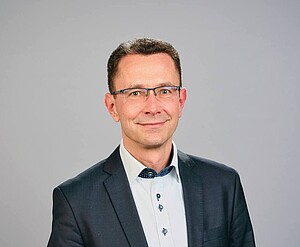
Prof. Dr. habil. Katrin Giller leads the Department of Molecular Nutrition Science (140a) at the University of Hohenheim, Garbenstraße 30, Bio Building I, Room 151, Stuttgart. Her research focuses on livestock nutrition, with specific interests in methane mitigation, antioxidant mechanisms, and metabolic syndrome in agricultural animals. Department: Molecular Nutrition Science (140a) Contact: katrin.giller@uni-hohenheim.de Office Hours: By appointment Her work spans nutritional biochemistry , ruminal fermentation , and sustainable livestock systems , often examining interactions between dietary compounds (e.g., spirulina, polyphenols, n-3 fatty acids) and animal physiology. Recent studies investigate antioxidant gene expression , transgenerational metabolic impacts , and feed efficiency . Current advisees include B.Sc. Viola Gauly, Fernando Giugno, Jana Kornherr, Mira Kühn, Daniel Obermüller, and Helen Pötzsch. The department's website details research projects, teaching events, and publications.
Prof. Dr. Florian Jeltsch leads the Plant Ecology and Nature Conservation research group at the Institute of Biology and Biochemistry, University of Potsdam. His work spans multiple ecological domains with a focus on understanding biodiversity patterns and processes in changing environments. His research group investigates community ecology across various landscapes including grasslands, agricultural systems, and drylands. Dr. Jeltsch's research interests encompass Community Ecology of Grasslands and Agricultural Landscapes, Community Ecology of Drylands, Biodiversity in Heterogeneous Environments, Movement Ecology and Biodiversity Dynamics, and Applied Regional Conservation. His work integrates theoretical and empirical approaches to address pressing ecological questions related to global change. He has been instrumental in developing and applying individual-based models to understand complex ecological systems. Analysis of Dr. Jeltsch's recent publications reveals a strong focus on individual-based ecological modeling, movement ecology, and the impacts of landscape heterogeneity on biodiversity. His work spans from theoretical foundations to practical conservation applications, with particular emphasis on savanna ecosystems, habitat fragmentation effects, and climate change impacts. The research demonstrates integration of multiple scales from individual energetics to community dynamics. Dr. Jeltsch has mentored numerous doctoral students and postdoctoral researchers who have gone on to establish their own research careers. His group has been involved in multiple collaborative projects including BioHet, GrassYear, BioMove, and ORYCS, addressing biodiversity conservation in heterogeneous environments. The Plant Ecology and Nature Conservation group maintains active research stations including the Gülpe Research Station, providing field-based research opportunities. The group's work bridges theoretical ecology with practical conservation applications, particularly in the context of global environmental change.
Niels Dingemanse is a tenured Professor of Behavioural Ecology at Ludwig Maximilians University (LMU) in Munich, Germany, and leads the Evolutionary Ecology of Variation research group at the Max Planck Institute for Ornithology. His academic journey includes roles as a Postdoctoral Research Fellow at the University of Groningen and the University of Wales, Bangor. He holds a PhD in natural sciences from Utrecht University (2003) and an M.Sc. in Ecology from the University of Groningen (1997). His research focuses on evolutionary and behavioural ecology, particularly the ecological and evolutionary significance of individual variation in behaviour, physiology, and life-history traits. Key themes include personality evolution, indirect genetic effects, and the integration of genomic approaches with ecological field studies. Dingemanse has contributed to projects like the Great Tit HapMap initiative, exploring genomic variation across continental scales. Publications emphasize interdisciplinary methods, combining field experiments with genomic and statistical tools. His work addresses topics such as mate choice evolution, the role of environmental fluctuations in shaping social plasticity, and the genetic basis of vocal rhythms in birds. Grants and fellowships include the Veni Innovational Research Incentives Scheme (Netherlands Organisation for Scientific Research) and ALW open competition grants. He has advised numerous postdoctoral researchers and leads collaborative projects across Europe.
Prof. Dr. agr. Kaspar Bienefeld is an Honorary Professor at the Humboldt University of Berlin within the Albrecht Daniel Thaer-Institute of Agricultural and Horticultural Sciences. His research focuses on honeybee genetics, breeding optimization, and disease resistance mechanisms. Research Interests: Honeybee population genetics, Varroa mite resistance, genomic selection, and behavioral ethology. Key Contributions: Development of SNP assays for resistance traits, simulation studies for breeding schemes, and conservation strategies like Europe’s first honeybee gene bank. Publications: Over 40 peer-reviewed articles spanning honeybee breeding, genetic parameter estimation, and stress biomarker analysis.
Dina Dechmann is Group Leader at the Max Planck Institute of Animal Behavior, Department of Migration in Radolfzell, Germany. She leads the Ephemeral Resource Adaptations Research Group, focusing on how animals adapt to fluctuating resource availability through behavioral, morphological, and physiological strategies. Her educational background includes: Ph.D. in Animal Behavior from University of Zürich (2005) MS in Systematics & Ecology from ETH Zürich (1999) Habilitation at University of Konstanz (2018) Dr. Dechmann identifies as a classical behavioral ecologist with a passion for evolution, increasingly focusing on how resource distribution in time and space influences animal adaptations. Her research examines movement patterns (particularly in flying foxes and bats), energetics, information transfer during foraging, and morphological adaptations like wing shape. A significant focus involves seasonal phenological changes, especially in brain structure, as seen in her work on Dehnel's Phenomenon in shrews. She is actively involved in the ICARUS satellite tracking initiative to monitor bat migration. Her recent publications reveal consistent themes across animal behavior, neuroecology, and conservation biology. The work demonstrates sophisticated integration of field studies with molecular and physiological approaches, particularly in studying how animals navigate resource ephemerality. Key trends include bat migration patterns, brain plasticity in response to seasonal changes, and methodological innovations in wildlife tracking. Her research bridges fundamental behavioral ecology with practical conservation applications, especially regarding common bat species. Dr. Dechmann mentors a diverse international team including postdocs, doctoral students, and technical staff. Her group maintains strong collaborations across European institutions and with international partners, particularly in Panama where some field studies occur. While specific grant details aren't provided, her work on the ICARUS initiative and extensive publications suggest substantial research funding. The Ephemeral Resource Adaptations Group operates as a small, international team focused on resource distribution challenges for animals. Current projects examine migration as an adaptation to seasonal change, hibernation energetics in climate change contexts, social information sharing for ephemeral resources, alternative wintering strategies in small mammals, and impacts of research methodologies on animal behavior.
Judith Korb is a Professor at the University of Freiburg, working within the Institute of Biology I in the department of Evolutionary Biology and Animal Ecology. She leads the Korb Lab, which focuses on social insects, particularly termites, examining their evolution, ecology, and sociobiology. Her research spans multiple areas of evolutionary biology and social insect behavior, with a particular emphasis on termite societies. Dr. Korb has made significant contributions to understanding social evolution, caste differentiation, reproductive division of labor, and the molecular mechanisms underlying social behavior in termites. Her work explores the exceptional longevity of social insect queens, termite mound architecture, chemical communication in social insects, and the genomic basis of eusociality. Dr. Korb's research combines field studies in Africa with molecular and genomic approaches to unravel the complexities of social insect biology. Dr. Korb's publication record demonstrates consistent scientific productivity, with numerous high-impact papers in leading journals across evolutionary biology, ecology, and genomics. Recent work has focused on the genomic basis of social evolution, aging in social insects, and termite ecology, revealing important insights into how sociality reshapes fundamental biological processes like aging and development. Over 200 publications including high-impact papers in Nature Ecology and Evolution, PNAS, and Philosophical Transactions of the Royal Society B Contributor to authoritative references including the Encyclopedia of Social Insects Extensive international collaborations across Europe, Africa, and North America Dr. Korb has supervised numerous students and collaborated extensively with researchers worldwide, contributing significantly to our understanding of social evolution in termites and other insects. Her laboratory employs a range of methodological approaches, including behavioral observations, molecular techniques, genomic analyses, and field ecology to investigate the evolution and maintenance of sociality in insects.
Dr. Marcus Fritze is a researcher in Applied Zoology and Nature Conservation at the University of Greifswald, with a dual affiliation since 2023 at the Competence Center for Bat Conservation Saxony-Anhalt within the South Harz Karst Landscape Biosphere Reserve. His work bridges scientific research with practical conservation applications, focusing specifically on bat ecology and conservation. Dr. Fritze's research spans multiple critical areas in bat conservation. He investigates population trends and demographic parameters through BfN-funded projects 'Threatened Data for Threatened Species' and BATTREND. A major output from these initiatives is BATLAS, an online platform for analyzing bat population data across Germany. His work addresses the 'green-green dilemma' between renewable energy expansion and wildlife conservation, particularly examining wind energy impacts on bats and the ecological consequences of light pollution. His physiological research examines hibernation (winter torpor) mechanisms in bats and how their immune systems function during this energy-conserving state, with special focus on white-nose disease. Through the F.U.N. initiative ('Forschung, Umweltbildung und praktischen Naturschutz'), he integrates research, environmental education, and practical conservation to support biodiversity. Current projects include 'Bats and Biosphere' (human-wildlife interactions) and 'Bats and Ponds' (role of water bodies in ecosystems). Analysis of Dr. Fritze's publication record reveals an interdisciplinary approach addressing conservation challenges at the intersection of ecology, immunology, policy, and technology. His work demonstrates particular expertise in developing evidence-based conservation strategies that effectively bridge scientific research with practical implementation. Dr. Fritze actively supervises numerous Master's and Bachelor's students on bat conservation topics, often in collaboration with other institutions including FH Bernburg, HTW Dresden, and TU Berlin. His current supervisees are investigating ecosystem services provided by bats in fruit orchards, urban pond habitats for bats, wind turbine mitigation measures, and spring activities of bats on orchard meadows. His collaborative approach extends internationally, such as with Universidad Autónoma Metropolitana in Colombia on jaguar conservation perceptions. Through his leadership in the Competence Center for Bat Conservation Saxony-Anhalt and various research projects, Dr. Fritze has developed effective frameworks for collaboration between scientists, amateur researchers, and volunteer conservationists. His work exemplifies how rigorous scientific research can directly inform and improve practical conservation outcomes in complex human-wildlife landscapes.
Dr. Joseph Colgan is an Assistant Professor and Group Leader at the Institute of Organismic and Molecular Evolution at Johannes Gutenberg-Universität Mainz, Germany. His research group focuses on ecological and evolutionary genomics of social insects, particularly bumblebees and mason bees, using integrative approaches combining behavioral, molecular, genomic, immunological, and computational techniques. Dr. Colgan's educational background includes: PhD in Zoology from University of Dublin, Trinity College (2008-2014) MSc in Immunology and Global Health from Maynooth University (2007-2008) BSc in Zoology from University College Dublin (2003-2007) Postgraduate Certificate in Teaching & Learning in Higher Education from University College Cork (2018-2019) His research program centers on three interconnected themes. His work on phenotypic plasticity examines how single genotypes produce multiple phenotypes in social insects, particularly focusing on the genomic architecture underlying caste differentiation. In ecological and evolutionary genomics, he investigates how pollinators respond to environmental challenges including habitat loss, pesticide exposure, and climate change, with recent work applying population genomics to assess genetic diversity in wild bee populations. His immunogenomics research explores host-parasite interactions, examining molecular mechanisms of immune responses to pathogens and environmental stressors, with particular focus on how mating, diapause, and nematode infections alter immune gene expression in bumblebees. Analysis of Dr. Colgan's publication record reveals a consistent focus on insect genomics with increasing specialization in social insect systems. His early work included salmonid genomics, but his research has increasingly concentrated on bumblebees and other pollinators, with a growing emphasis on pesticide impacts, immune system evolution, and evolutionary adaptations. His recent publications demonstrate sophisticated integration of genomic, transcriptomic, and proteomic approaches to address fundamental questions in evolutionary biology and pressing concerns in pollinator conservation. Dr. Colgan supervises a diverse research team including six PhD students (Jannik Möllmann, Max Bolder, Hongfei Xu, Safira Moog, Dean Hodapp, and Eva Baumgarten), four Master's students, and multiple Bachelor's students. His group actively pursues projects in population and comparative genomics of wild bees, evolution of dormant phenotypes, signatures of sexual antagonism, queen specialization in social insects, insect immune system evolution, and genomic approaches to bee conservation. The research group maintains strong international collaborations, particularly with institutions in Ireland and the UK where Dr. Colgan previously conducted postdoctoral research.
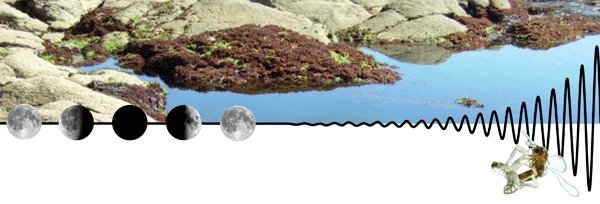
Dr. Tobias Kaiser is the Max Planck Research Group Leader of the Biological Clocks group at the Max Planck Institute for Evolutionary Biology in Plön, Germany. His research integrates chronobiology, evolutionary genomics, and ecological adaptation to understand how organisms like the marine midge Clunio marinus synchronize their life cycles with environmental rhythms such as tides, lunar phases, and daily cycles. Research Interests: His work centers on chronobiology and evolutionary genomics , particularly the molecular basis of circalunar and circadian clocks. He investigates how genetic variation underlies local adaptations in timing mechanisms across different populations. A key focus is temporal niche differentiation , where strains of Clunio marinus coexist by occupying distinct timing windows for reproduction, reducing competition. Publication Trends: Recent articles highlight how temporal niches influence species coexistence and habitat use. His studies combine field observations with genetic analysis to explore how time-based adaptations affect ecological dynamics and evolutionary trajectories in marine environments. Scientific Awards: No awards mentioned in the text. Advising and Grants: While specific students and grants are not listed, Dr. Kaiser leads an independent Max Planck Research Group, indicating significant research funding and likely mentorship of PhD and postdoctoral researchers. His group conducts genetic mapping and molecular analyses to uncover clock genes involved in lunar and tidal timing. Labs and Teams: He leads the Max Planck Research Group Biological Clocks, based at the Max Planck Institute for Evolutionary Biology. The team studies Clunio marinus as a model organism to decode the molecular architecture of non-circadian biological clocks, leveraging natural variation across coastal populations.
PD Dr. Frieder Mayer is a senior researcher at the Museum für Naturkunde – Leibniz Institute for Evolution and Biodiversity Science in Berlin, where he serves as Curator of the Mammal Collection and Deputy Head of the Science Programme 'Evolution and Geoprocesses' since 2007. His academic credentials include a Dr. rer nat. (1997) and Venia legendi in Zoology (2003) from the University of Erlangen-Nürnberg, where he worked as a PostDoc (1997-2003) and Senior Assistant (2003-2007). Mayer's research integrates evolutionary ecology, behavioral ecology, and population genetics to understand speciation mechanisms. His empirical work focuses on: Selective forces affecting dispersal Gene flow restrictions in populations Comparative studies of bats (Palaearctic/Neotropic regions) and grasshoppers Combined behavioral, ecological, morphological and genetic methodologies He coordinates major research initiatives including the DFG Research Unit BATS (bat sensor systems) and BMBF Network Sus100 (swine genetics), and leads the GENART network on functional speciation genomics. His publications (2001-2016) demonstrate consistent focus on: Molecular ecology of speciation Acoustic communication in grasshoppers and bats Population genomics Conservation genetics of cryptic species Behavioral adaptations in mating systems
Prof. Martin Hasselmann is a Professor of Livestock Population Genomics at the University of Hohenheim's Faculty of Agricultural Sciences, leading the Department of Population Genomics in Farm Animals. His research focuses on evolutionary genetics of social insects, including honeybees and bumblebees, with emphasis on sex determination mechanisms, pathogen interactions, and population genomics of invasive species. Education: Earned a Biology degree from the University of Jena and Universidad Autonoma de Madrid (1992-1999), followed by a PhD in Zoology at the University of Halle-Wittenberg (1999-2004). Conducted postdoctoral research at the Universities of Halle-Wittenberg, Düsseldorf, and Cologne before becoming a DFG-Heisenberg Scholar (2012-2014). Key research areas include: Local adaptation mechanisms in social insects Genome evolution and sexual development in bees Microbiota-pathogen interactions in apiculture Population genomics of invasive beetles Professional Affiliations: Chair of Baden-Württemberg VBiO section (since 2015) and member of the Central Commission for Biological Safety (ZKBS). Research Collaborations: Active in the Hohenheim Center for Livestock Microbiome Research (HoLMiR) and KomBioTa biodiversity initiative. Publications: Over 50 peer-reviewed articles focusing on honeybee genomics, parasite resistance mechanisms, and population genetics of invasive species. Recent work emphasizes Varroa mite resistance traits and mitochondrial haplotype functions.
Prof. Stan Harpole is a Professor and Department Head of Physiological Diversity at the German Centre for Integrative Biodiversity Research (iDiv) in Leipzig, with joint appointments at Helmholtz-Center for Environmental Research (UFZ) and Martin-Luther-Universität-Halle-Wittenberg (MLU). His research focuses on biodiversity theory, ecosystem ecology, and global change impacts, particularly in grassland and soil systems. He leads the Physiological Diversity Team and co-speaks the iDiv research platform. Key interests include ecological stoichiometry, niche theory, and mechanisms shaping species coexistence under environmental pressures. His work spans experimental and theoretical approaches, integrating field data with advanced techniques like imaging cytometry and smartphone-based biomass measurement. Prof. Harpole is a Highly Cited Researcher , reflecting his impactful contributions to global ecology. His research has been published in top journals such as Nature , Ecology Letters , and Proceedings of the National Academy of Sciences . Affiliations : iDiv, UFZ, MLU Grants : DFG Plant Sciences Panel funding Teams : Physiological Diversity Team, Nutrient Network (NutNet)
Dr. Kristin Scharnweber is a researcher at the Institute of Biochemistry and Biology , University of Potsdam , Germany, where she currently serves as the Scientific Coordinator of the DFG-funded Research Training Group BioMove , focusing on biodiversity and movement ecology in agricultural landscapes. She has held postdoctoral and research positions at Uppsala University and the Leibniz-Institute of Freshwater Ecology and Inland Fisheries (IGB), and earned her PhD within the TERRALAC project. Her research spans aquatic ecosystem ecology , with a focus on food web dynamics , fatty acid ecology , evolutionary divergence , and carbon cycling . She investigates how structural complexity, productivity, and environmental change affect trophic interactions and ecosystem function in lakes and streams. Her work integrates stable isotope analysis, lipid profiling, and experimental ecology. Dr. Scharnweber's recent publications highlight trends in trophic transfer efficiency , intra-specific variation in metabolism , resource partitioning , and the role of fatty acids in ecological and evolutionary processes . Her research contributes to understanding how aquatic systems respond to environmental stressors such as browning and eutrophication. Scientific Awards: None explicitly mentioned in the provided text. She has been involved in advising and grant-funded research, notably coordinating the DFG RTG BioMove, which supports interdisciplinary training in biodiversity and movement ecology. Her work often involves collaboration with large research networks and cross-institutional teams. Dr. Scharnweber is affiliated with the Plant Ecology and Nature Conservation group at the University of Potsdam, which conducts research on community ecology, movement ecology, and conservation in grasslands, drylands, and aquatic systems.
Ernst Wimmer is a Professor of Developmental Biology at the Department of Developmental Biology, Johann Friedrich Blumenbach Institute of Zoology and Anthropology, Georg August University, Göttingen. He leads a research group focused on evolutionary developmental biology and applied insect biotechnology. He is also affiliated with the GGNB graduate programs: Genes in Development, Disease and Evolution; Molecular Biology (IMPRS); Cellular and Molecular Physiology of the Brain (CMPB); and Sensory and Motor Neuroscience. His research centers on the phylogenetic variance and plasticity of developmental processes in arthropods, particularly using Tribolium castaneum and other insect models. His group investigates gene regulation in pattern formation, sex determination, and the evolution of developmental mechanisms. They employ transgenesis, functional genomics, and CRISPR/Cas9 genome editing to study gene function and regulatory networks. A major applied focus is improving the Sterile Insect Technique (SIT) through biotechnological innovations such as transgenic female-specific lethality, reproductive sterility systems, and transgenic markers for monitoring. His work also explores beetle olfaction and the development and biochemistry of defensive stink glands. His recent publications reflect strong expertise in genome editing, functional screening (e.g., iBeetle RNAi), pest genome analysis, and genetic pest management. The work spans from basic developmental mechanisms to applied biotechnology. Key trends include the use of CRISPR for gene drives and strain development, transcriptomic analysis of chemosensory and defensive systems, and the molecular basis of sex determination in insects. Scientific Awards: No awards are explicitly mentioned in the provided text. Ernst Wimmer has supervised numerous collaborative research projects and large-scale initiatives such as the iBeetle RNAi screen and the Ceratitis capitata genome project. His lab receives funding for biotechnological pest control research, particularly in developing genetic systems for SIT enhancement. While specific grants are not listed, the scope and impact of his publications suggest sustained support from national and international funding bodies. He has mentored many early-career researchers and collaborators, though formal advisees are not named. His research group operates within the Department of Developmental Biology at Göttingen and is integrated into multiple interdisciplinary research networks and graduate programs. The lab combines molecular genetics, genomics, and developmental biology to address both fundamental and applied questions in insect biology.
Dr. Franziska Beran is a researcher at the Max Planck Institute for Chemical Ecology , specializing in chemical ecology and plant-insect interactions. Her work focuses on the biochemical adaptations of flea beetles to plant defense compounds, particularly glucosinolates. Insect detoxification mechanisms Chemical sequestration strategies Evolution of plant-herbivore coevolution Biochemical adaptation to secondary metabolites Role of microbial symbionts in detoxification Her research explores how herbivorous insects overcome and utilize plant chemical defenses, with recent publications examining detoxification enzymes, microbial contributions to toxin breakdown, and the evolutionary implications of these interactions. She employs biochemical, physiological, and molecular approaches to investigate defense compound metabolism and sequestration. Key publication trends include: glucosinolate-myrosinase system manipulation, microbial symbiosis in detoxification, and comparative studies across flea beetle species. Her work spans fundamental biochemical discovery and applied agricultural implications. At the Max Planck Institute, she conducts research within the Department of Insect Symbioses , exploring the molecular basis of insect-plant interactions and chemical defense adaptations.