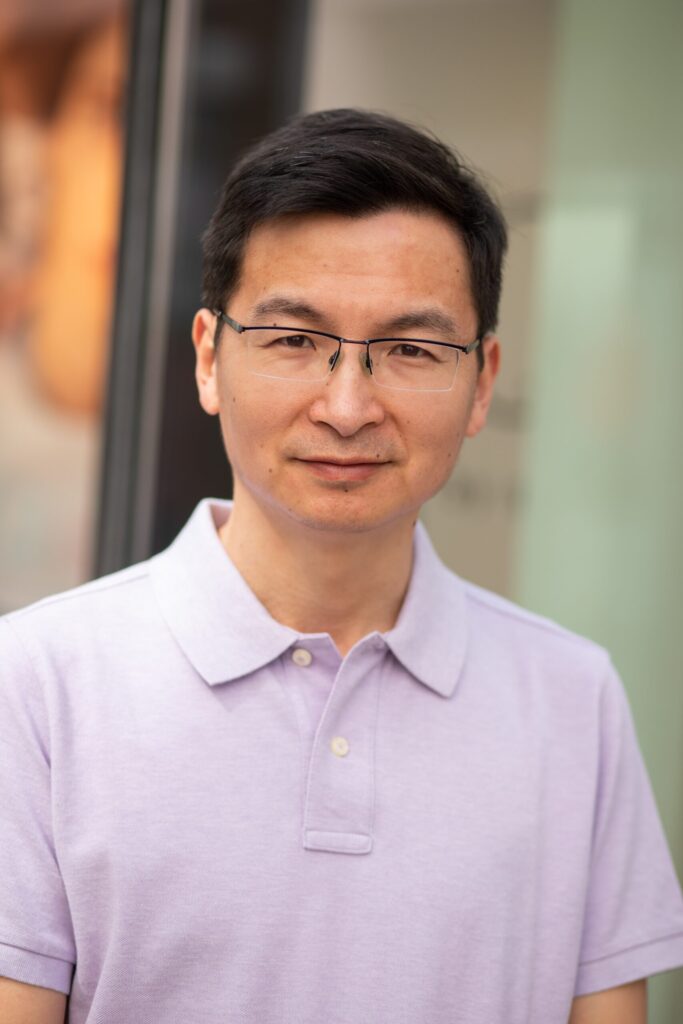
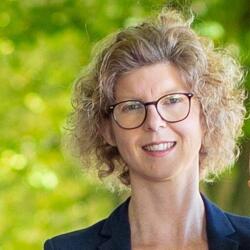
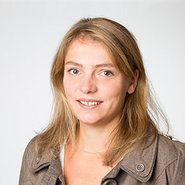
Professor Shuqing Xu is a full Professor of Evolutionary Plant Sciences at the Institute of Organismic and Molecular Evolution (IOME) of Johannes Gutenberg University Mainz (JGU) . He leads the 'Real-time (co)evolution in a multitrophic community under current and future climates' project, funded by a EUR 2 million ERC Consolidator Grant to investigate ecological community responses to climate change. Current affiliation: JGU, Mainz Previous positions: W2 Professor at University of Münster, Max Planck Institute for Chemical Ecology Education: PhD (2011) at ETH Zurich, studies in Cell Biology & Genetics in China Xu's research focuses on multitrophic interactions , transgenerational adaptation , and genetic responses to climate change . His team uses duckweed-aphid-water flea systems to study coevolution in heated and control mesocosm ecosystems , combining genomic sequencing with microscopy analysis . Recent publications analyze plant-insect dynamics (2025), epigenetic interactions (2025), metabolic adaptation (2024), and genomic mechanisms in Spirodela polyrhiza (2024). His work explores transgenerational plasticity , niche choice evolution , and chemical defense systems . Scientific recognition includes: ERC Consolidator Grant Marie Skłodowska-Curie Fellowship International Society of Chemical Ecology - Early Career Award The Evolutionary Plant Sciences lab at JGU studies ecosystem evolution , plant-animal interactions , and genetic adaptation using experimental ponds, transcriptomics, and CRISPR-based genome editing.
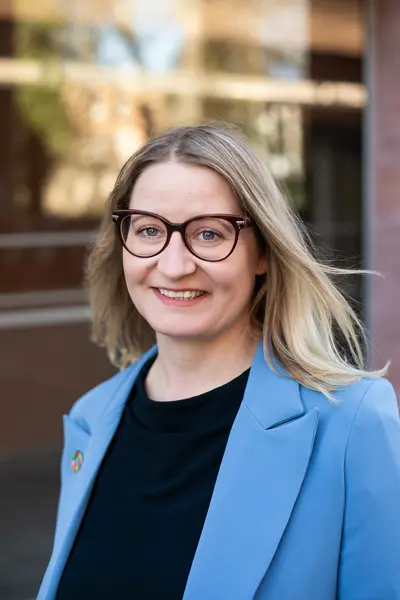
Professor W. Stanley Harpole serves as Department Head of Physiological Diversity at the German Centre for Integrative Biodiversity Research (iDiv) in Leipzig, Germany. He holds joint appointments at the Helmholtz-Center for Environmental Research (UFZ) and Martin-Luther-Universität-Halle-Wittenberg (MLU). As Co-Speaker of iDiv and a member of the DFG Plant Sciences Panel, Professor Harpole plays a significant leadership role in biodiversity research across Germany and internationally. Professor Harpole's research program focuses on developing, testing, and applying biodiversity theory to understand the interactive effects of multiple global change drivers. His expertise bridges ecosystem, theoretical and community ecology, with specific research interests in ecological stoichiometry, niche theory, and mechanisms of coexistence. His work examines how nutrient dynamics, climate change, and other environmental factors interact to shape plant community composition, diversity, and ecosystem functioning, particularly in grassland ecosystems worldwide. Analysis of Professor Harpole's recent publications reveals a strong focus on global grassland ecosystems, nutrient dynamics, and biodiversity responses to environmental change. His research often involves large-scale collaborative networks like the Nutrient Network (NutNet), examining how multiple nutrients interact to influence plant communities across different climatic regions. His work increasingly incorporates technological innovations for ecosystem monitoring while maintaining a strong theoretical foundation in community ecology principles. Professor Harpole has been recognized as a Highly Cited Researcher, reflecting the significant impact of his work in the field of ecology. His publications frequently appear in high-impact journals including Nature, Science, Proceedings of the National Academy of Sciences, and Ecology Letters. Professor Harpole leads major research initiatives including the Nutrient Network, a globally distributed experiment examining the effects of nutrient addition on grassland ecosystems. His work spans multiple scales from local field experiments to global syntheses, addressing fundamental questions about biodiversity maintenance and ecosystem functioning under global change. His research group at iDiv collaborates extensively with scientists worldwide to address pressing questions in biodiversity science.
Dr. Susanne Dunker is a Working Group Leader and Deputy Department Head at the Department for Physiological Diversity at the Helmholtz Centre for Environmental Research (UFZ) and the German Center for Integrative Biodiversity Research (iDiv) in Leipzig, Germany. Her research bridges aquatic and terrestrial ecosystems with a focus on biodiversity assessment using advanced imaging techniques. Dr. Dunker's research interests span water quality, phytoplankton diversity, cyanobacterial blooms, air quality, pollination, and pollen diversity. She has pioneered the use of multispectral imaging flow cytometry for environmental monitoring, enabling high-throughput analysis of phytoplankton communities and pollen diversity. Her work integrates machine learning with biological analysis to develop innovative monitoring strategies for both aquatic and aerial ecosystems, with applications in understanding biodiversity dynamics, ecosystem services, and human health impacts. Her publication record demonstrates a strong focus on developing and applying imaging flow cytometry techniques across multiple domains. The research shows a clear trajectory from aquatic systems (phytoplankton analysis) to terrestrial systems (pollen analysis), with increasing integration of machine learning and deep learning approaches. Her work has significant implications for environmental monitoring, biodiversity assessment, and understanding the impacts of environmental change on ecosystem functioning. UFZ Technology Transfer Award (2019) UFZ Sustainability Challenge Award (2022) Dr. Dunker leads multiple research projects including PollenNet, OrthoDiv, ProtistQuant, PlanktAI, and SedimentAI, demonstrating her leadership in interdisciplinary research. Her work on reducing plastic in laboratories shows her commitment to sustainable research practices. She serves as a reviewer for numerous high-impact journals and participates in important scientific commissions including the German VDI/DIN mirror committee on automated pollen monitoring. Her laboratory utilizes advanced imaging flow cytometry and deep learning approaches to analyze biodiversity across different ecosystems. The iCyt platform she co-leads provides integrative cytomics support for biodiversity research. Her team's work connects microscopic biological processes with ecosystem-level functions, creating a bridge between cellular traits and environmental monitoring applications.
Prof. Dr. Katharina Stein is Professor of Botany, Dendrology and Plant Ecology at Eberswalde University of Sustainable Development (HNEE) since 2024. Her academic career spans multiple institutions including the University of Potsdam (2023-2024), TU Dresden (2020-2023), and previous postdoctoral positions at Universities of Würzburg and Rostock (2013-2018). Her research has taken her to diverse ecosystems across West Africa (particularly Burkina Faso), Brazil, and southern Africa. Dr. Stein's research focuses on plant ecology with special emphasis on pollination systems, plant-animal interactions, and ecosystem services. Her work examines how land use changes affect pollinator communities and how these changes impact agricultural productivity and biodiversity conservation. She has conducted extensive field studies in tropical and subtropical regions, particularly investigating the relationships between plant diversity, pollinator behavior, and crop production systems. Her research has important implications for sustainable agriculture and biodiversity conservation in the face of climate change. Analysis of her recent publications reveals a consistent focus on pollination ecology across different ecosystems, with particular attention to West African savannas. Her work demonstrates how pollinator communities respond to land use changes, how these changes affect crop yields, and how ecosystem services can be measured and valued. She has increasingly incorporated interdisciplinary approaches, combining ecological field studies with economic analyses of ecosystem services. Member of Association for Tropical Biology and Conservation (ATBC) Member of European Society for Tropical Ecology (GTÖ) Member of NABU (Nature And Biodiversity Conservation Union) Member of International Commission for Plant Pollinator Relationships (ICPPR) Member of Biodiversity and Ecosystem Services Network (BES-Net) IUCN Wild Bee Specialist Groups participant Commission member of Studienstiftung des deutschen Volkes since 2007 Dr. Stein has been actively involved in science communication, delivering numerous talks at international conferences and participating in public outreach through media appearances, webinars, and lectures. Her research has direct applications for sustainable agricultural practices and biodiversity conservation policies, particularly in tropical regions facing significant land use changes.
Dr. Alexander Scheuerlein is a Research Fellow affiliated with the University of Greifswald and its Applied Zoology and Nature Conservation department. His work focuses on bat demography, climate change impacts on species, and evolutionary mechanisms of senescence, with significant contributions to global databases like COMADRE and COMPADRE . He collaborates with institutions such as the Max Planck Institute and British Ecological Society . Research Interests : Dr. Scheuerlein investigates how bats in northern temperate zones—a species at the 'slow' end of life history strategies—respond to environmental changes. He compiles nationwide demographic data to assess population vulnerabilities, emphasizing climate change and habitat monitoring. His studies extend to senescence in organisms like Hydra and adaptive traits in social insects. Scientific Awards : - 2016 PNAS Cozzarelli Prize Class V (for longevity research) - Elton Award 2016 (British Ecological Society, for animal demography) Article Trends : His publications span bat ecology, senescence, and global demographic databases. Recent studies explore RFID monitoring, climate-driven body size shifts, and mortality costs in hibernating bats. Earlier works analyze aging patterns across mammals, photoperiodic responses in birds, and chemical defenses in arthropods.
Hannes Schuler is an Assistant Professor in the Faculty of Science and Technology at the Free University of Bozen-Bolzano since October 2018. His academic background includes doctoral studies at Universität für Bodenkultur Wien, followed by postdoctoral positions at multiple institutions including University of Notre Dame, Universität für Bodenkultur, and Laimburg Research Centre. His research spans entomology, evolutionary biology, and microbial ecology with a focus on insect-microbe interactions. Schuler investigates Wolbachia symbiosis and its role in speciation processes, insect microbiome dynamics across different environments and life stages, population genetics of invasive species, and vector-pathogen relationships in agricultural pests. His work frequently examines fruit flies (particularly Rhagoletis species), psyllids, and other economically important insects. Analysis of his recent publications (2021-2025) reveals a progression from fundamental research on Wolbachia dynamics and speciation mechanisms toward applied studies of invasive species management, microbiome engineering, and molecular diagnostics for pest control. His work increasingly integrates multi-omics approaches with ecological field studies to understand host-symbiont-pathogen interactions at multiple scales. Schuler has secured significant funding from the Austrian Science Fund for projects on Wolbachia transmission and speciation. He maintains active collaborations with researchers across Europe and North America, particularly in the fields of entomology and microbial ecology. He is a member of several professional societies including the Italian Society of Entomology, German Society of General and Applied Entomology, Entomological Society of America, Gregor Mendel Society Vienna, and Network of Biological Systematics Austria, demonstrating his active engagement with the international entomological community.
Frank W. Avila is a Researcher at the University of Antioquia (Medellín, Colombia) since July 15, 2016, focusing on mosquito reproductive biology and vector control. His research integrates molecular genetics, microbiology, and entomology to study Aedes and Anopheles mosquitoes. His work examines: seminal fluid proteins and their physiological impacts Wolbachia symbiont effects on vector behavior microbiota dynamics in reproductive tracts age-related fertility changes acoustic communication in mating transcriptomic responses to mating and blood-feeding Recent publications (2025-2020) reveal trends in: mosquito reproductive physiology microbiome-vector interactions Wolbachia-based control strategies post-mating behavior genetics non-invasive age-grading technologies sperm storage/degradation mechanisms Peer review activities include journals like Communications Biology , Journal of Insect Physiology , and PLOS Genetics .
Dr. Rupinder Kaur is a Research Assistant Professor in the Department of Biology at Pennsylvania State University, where she investigates host-microbe symbioses with a focus on Wolbachia -induced cytoplasmic incompatibility. Her research integrates molecular biology, genetics, and entomology to decipher mechanisms of reproductive manipulation in insects. Prior to Penn State, she held positions at Vanderbilt University (Research Assistant Professor and Postdoctoral Researcher) and Instituto Gulbenkian de Ciência (Postdoc). Her educational background includes a PhD in Neurobiology from the University of Vienna (2013-2017), an MSc in Biotechnology from Lovely Professional University (2008-2010), and a BSc in Biotechnology from Punjabi University (2005-2008). Research specializations span: Molecular mechanisms of cytoplasmic incompatibility Wolbachia -virus-host tripartite interactions Prophage protein functions in sperm development Evolutionary dynamics of insect-microbe symbioses Her publication record demonstrates consistent focus on symbiont-mediated reproductive manipulation, with recent breakthroughs in characterizing Wolbachia cif proteins' roles in sperm DNA modification. Award highlights include: Travel Grant from International Symbiosis Society (2015) Wellcome Trust Genome Campus Bursary (2014) Visiting Studentship from Fondazione Edmund Mach (2014) At Penn State's Bordenstein Lab, she contributes to collaborative projects on phage WO dynamics and microbiome-driven speciation while mentoring students in molecular symbiosis research.
Dr. Hilke Hollens-Kuhr is a researcher at the Institute of Landscape Ecology, University of Münster, specializing in pollination ecology and evolutionary biology. She earned her Dr. rer. nat. in Landscape Ecology (2010-2017) and has been a research associate since 2014. Her work focuses on specialized plant-pollinator interactions, particularly oil-producing flowers and oil-collecting Rediviva bees in South Africa, with secondary interests in Mediterranean climate effects on bee evolution and citizen science applications. PhD: University of Münster (2017) Diploma: University of Münster (2004-2010) Research interests span pollination ecology, mutualism evolution, and climate-driven trait adaptation. Her 2017 dissertation on Rediviva-Diascia systems remains foundational, while recent 2025 work examines citizen science documentation of spider dispersal. Publications in journals like American Naturalist and Ecology and Evolution demonstrate expertise in bee physiology and ecological specialization. Teaching includes co-leading seminars on animal ecology methods, multitrophic interactions, and South African physical geography, alongside practical courses in zoological identification and landscape ecology. Collaborations with Prof. Sascha Buchholz and Dr. Nadja Pernat appear central to her research and teaching activities.
Prof. Dr. Maximilian Weigend is a Professor of Plant Biodiversity and Director of the Botanical Gardens at the University of Bonn, where he leads the Plant Biodiversity Working Group within the Bonn Institute for Organismic Biology. His academic career spans over two decades, with significant contributions to plant systematics, taxonomy, phylogeny, biogeography, and functional morphology. He maintains close collaboration with the Botanical Gardens of the University of Bonn and has established international research partnerships, particularly in South America. Weigend completed his biology studies at the University of Regensburg (1989-1991) followed by botanical studies at the University of Natal/Pietermaritzburg in South Africa (1992-1993). He earned his doctorate at Ludwig-Maximilians University Munich (1993-1997), conducted postdoctoral research at the New York Botanical Gardens (1999-2000) and Ludwig-Maximilians University Munich (1998-1999), and completed his habilitation in botany at the Free University of Berlin in 2004. Prof. Weigend's research focuses on plant diversity and evolution, with particular emphasis on the Boraginales, Asparagales, Loasaceae, and Urticaceae plant groups. His work integrates systematics, taxonomy, morphology, biogeography, and ecology to understand plant evolution and biodiversity patterns. He investigates both fundamental aspects of plant evolution and applied aspects related to regional nature conservation and the impacts of anthropogenic environmental and climate change on crops. His fieldwork spans diverse ecosystems, particularly in the Andes of South America, where he has made significant contributions to understanding regional flora and discovering new species. Analysis of Prof. Weigend's recent publications reveals a strong focus on plant systematics and taxonomy, particularly of South American flora. His work frequently addresses the classification and evolutionary relationships of plant groups like Boraginales, Loasaceae, and Asparagaceae. Recent research has increasingly incorporated molecular techniques alongside traditional morphological approaches, reflecting the evolving nature of botanical science. His publications demonstrate consistent interest in plant biodiversity patterns, species discovery, and the impacts of environmental change on plant distributions. Goldmedal of the Universidad Nacional de Trujillo, Peru (2004) - for contributions to the investigation of the Peruvian Flora and the Organization of the Symposium on relic forests in northern Peru Goldmedal of the Colegio de Biólogos del Peru (2004) - for contributions to the investigation of the Peruvian Flora Honorary citizenship of the city of Cajamarca, Peru (1998) - for contributions to the investigation of the Peruvian Flora Anton-de-Bary Prize of the Regensburg Botanical Society (1998) As Director of the Botanical Gardens of the University of Bonn since 2011 and President of the Association of Botanical Gardens from 2014-2022, Prof. Weigend has overseen significant research infrastructure and educational programs. His leadership extends to the BION-Network (Biodiversity in Bonn) which he coordinated from 2014-2019. He has secured funding for numerous research projects examining plant diversity patterns, particularly in the Andes, and has supervised numerous students who have contributed to taxonomic revisions and biodiversity assessments. His work with the Advisory and Coordination Committee for Genetic Resources of Agricultural and Horticultural Crops since 2016 demonstrates his commitment to applied plant science. Prof. Weigend leads a comprehensive research team within the Plant Biodiversity Department that includes senior researchers, postdocs, and PhD students working on various aspects of plant systematics, taxonomy, and evolution. The team maintains close collaboration with the Botanical Gardens of the University of Bonn, which serves as both a research facility and educational resource. Current research projects focus on resolving phylogenetic relationships within key plant groups, documenting biodiversity in threatened ecosystems, and understanding the impacts of climate change on plant distributions. The group's work integrates field studies, molecular techniques, morphological analyses, and biogeographical modeling to address fundamental questions in plant evolution and biodiversity.
Prof. Dr. Ilona Grunwald Kadow is Vice Rector for Research and Young Scientists at the University of Bonn and Professor of Physiology at the Faculty of Medicine since 2022. She serves as Head of the Institute of Physiology II and leads the Grunwald Kadow Laboratory, which focuses on understanding how nervous systems enable humans and animals to adapt to environmental changes. She was elected as a member of the European Molecular Biology Organization (EMBO) in 2024, recognizing her outstanding achievements in life sciences research. Position: Vice Rector for Research and Young Scientists Institution: University of Bonn, Faculty of Medicine Department: Institute of Physiology II Research Focus: Neurogenetics of behavior, neural circuits, sensory processing Model Organisms: Drosophila melanogaster, mouse Professor Grunwald Kadow's research primarily investigates how sensations and needs influence individual behavior and decision-making. Her work spans multiple levels of analysis, examining behavior, neural circuits, and genes that control sensations and behavior. She combines neuroscience and physiology to understand brain-body communication at cellular and molecular levels. Her laboratory has made significant contributions to understanding how physiological states like hunger, reproductive status, and internal needs modulate sensory perception and decision-making processes. The research employs advanced techniques including computer-based behavioral analysis, (opto)genetics, and in vivo microscopy. Analysis of her recent publications reveals a strong focus on neural circuit mechanisms underlying state-dependent behavior. Her work frequently examines how physiological conditions alter sensory processing, with particular attention to dopaminergic signaling, glial function, and neural circuit plasticity. Her research spans multiple model systems including Drosophila, zebrafish, and mouse, demonstrating a commitment to cross-species validation of fundamental principles in neuroscience. A recurring theme across her work is how internal states gate sensory processing and behavioral output. EMBO Member (2024) ERC Starting Grant recipient EMBO Young Investigator Multiple prestigious fellowships including EMBO and Human Frontiers Science Program awards Recipient of the Otto Hahn Medal from the Max Planck Society Professor Grunwald Kadow leads the iBehave neuroscience network, which brings together scientists across disciplines to investigate survival-critical behaviors and underlying neural networks. Her laboratory maintains active collaborations and has secured significant third-party funding. She has successfully mentored numerous doctoral students and postdoctoral researchers, with several former team members establishing independent research careers. Her TEDx talk 'Sind wir die Opfer unserer Sinne?' (Are we victims of our senses?) demonstrates her commitment to public science communication.
Dr. Daniela Perez is a Research Fellow at the Max Planck Institute of Animal Behavior, Germany, affiliated with the Genes and Behavior lab. Her research focuses on the evolution of animal behaviors, particularly collective movements in nematodes and avian nest architecture. She combines theoretical and empirical approaches, leveraging global collaborations and macroevolutionary data. Education & Appointments: PhD in Evolution, Ecology & Genetics (2013–2017), Australian National University Postdoc at Max Planck Institute (2021–present) Research Interests: Evolution of sexual signals, extended phenotypes, and collective behavior. Current projects explore 3D collective phenomena in C. elegans and nest diversity in birds. Collaborations include studies on ant melanism and lekking dynamics. Awards: Alexander von Humboldt Fellowship (2023–2025) CAPES Young Talent Fellowship (2020) Best Poster at ASSAB Conference (2014) Grants & Teaching: Secured multiple grants including Holsworth Wildlife Endowment. Taught courses in behavioral ecology and macroevolution at ANU and Universidade Federal do Paraná. Labs/Teams: Active in the Serena Ding Research Group at MPI-AB, specializing in collective behavior and evolutionary mechanisms.
Dr. rer. nat. Henry Reyer is a Postdoctoral Fellow at the Leibniz Institute for Farm Animal Biology (FBN) since 2014, focusing on Physiological Genomics of farm animals. His research bridges genetic variation with performance, immunity, and nutrient utilization in pigs, poultry, and cattle. PhD in Biology from University of Rostock (2014) Diploma in Biology from University of Rostock (2009) 2003-2009: Undergraduate studies in Biology at University of Rostock Research spans: Epigenetic regulation of calcium/phosphorus metabolism in pigs Transcriptomic responses to nutrient deficiencies in poultry Genetic basis of feed efficiency across species Host-microbiota interactions in gut health and metabolism Stress parameters in modern vs traditional pig breeds Multi-tissue gene expression in dairy cattle nitrogen utilization Over 50 publications since 2016, with 2024-2025 studies covering black soldier fly microbiomes , jejunal epigenetics , and vitamin D metabolism . Collaborative work with Klaus Wimmers and Michael Oster includes projects on agricultural sustainability and nutrient recycling . Current affiliations include: Researcher at FBN's Physiological Genomics working group Contributor to Leibniz ScienceCampus 'Animal Replacement' Participant in Open Science initiatives at FBN
Anja Buttstedt is a Research Fellow at the University of Tübingen’s Institute of Evolution and Ecology, Comparative Zoology. She holds a DFG grant (2023–present) for research on honey bee food jellies, focusing on sterol and protein roles in worker/drones. Previously, she served as a Feodor Lynen Fellow at the University of Pretoria (2021–2023) and held postdoctoral positions at TU Dresden and MLU Halle-Wittenberg. Her work bridges protein biochemistry and insect physiology, emphasizing honeybee larval nutrition and social insect ecology. Education: Dr. rer. nat. in protein biochemistry (2011, MLU Halle-Wittenberg); Diploma in Biology (2007, University of Tübingen). Research interests include: (1) molecular mechanisms of food jelly production in honeybees, (2) functional roles of MRJPs and sterols (e.g., 24MC), (3) larval developmental pathways, and (4) comparative zoology of social insects. Current projects address worker/drone jelly functions beyond royal jelly. Key contributions include discovering mandibular gland secretion of 24MC and elucidating fibril formation in royal jelly. Her work has been published in *Current Biology*, *Nature*, and *Insect Biochemistry and Molecular Biology*. Grants: DFG (2023–2026), Humboldt Foundation (2021–2023). Awards: Feodor Lynen Fellowship. Labs/Teams: Part of the Comparative Zoology group at Tübingen and the Social Insects Research Group at Pretoria.
Christina Fischer is a Professor of Faunistics and Wildlife Conservation at Anhalt University of Applied Sciences in Bernburg, Germany. She holds a PhD from Georg-August-University, Göttingen, and specializes in movement ecology, agroecology, and biodiversity conservation. Her research focuses on animal behavior, habitat fragmentation, and the impact of land-use changes on vertebrates and invertebrates in agricultural landscapes. She advises the Master of Science program in Nature Conservation and Landscape Planning. Education: PhD (2007–2010) in Ecology and Zoology from Georg-August-University, Göttingen. Studies in Biology (2000–2007) at Friedrich Schiller University, Jena. Her research interests include movement ecology, agri-environmental schemes, and ecosystem services. Recent work emphasizes the effects of habitat disturbance on animal behavior, urban roadside biodiversity, and pollinator ecology. She has published extensively in journals like Biological Conservation and Basic and Applied Ecology . Key trends in her work: Integration of GPS tracking and accelerometer data to study animal behavior, evaluation of land-use policies for biodiversity conservation, and interdisciplinary approaches to urban ecology.