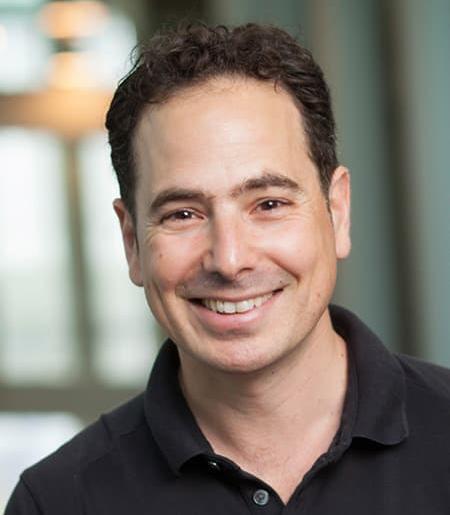
Martin H. Villet is a Professor at Rhodes University since 1993, specializing in entomology and forensic science . His research focuses on forensic entomology , blowfly taxonomy , and insect biodiversity , with recent studies on African blowflies, South African nose flies, and dung beetle ecology. Collaborations : Acadia University, China Agricultural University, The Natural History Museum (London), University of the Witwatersrand Research Themes : Forensic entomology, Molecular phylogenetics, Allopatric speciation, Dung beetle monitoring His publications in journals like Molecular Phylogenetics and Evolution and Biodiversity Data Journal highlight his expertise in insect systematics and ecological applications. Despite no explicit awards listed, his work has garnered sponsorships from globally recognized organizations.
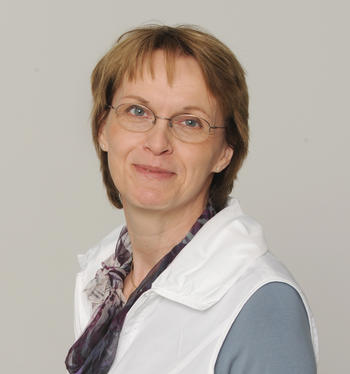
Béatrice Albert serves as a Lecturer at Université Paris-Saclay within the Laboratoire Écologie, Société et Évolution (IDEEV), specifically in the “Plant diversity and evolution” research team. She has maintained continuous academic employment since 1998 as an Assistant Professor at Paris XI University (now part of Université Paris-Saclay), teaching genetics, molecular biology, and statistics across multiple institutions including Paris VII, Paris XIII, and the University of Sussex. Her educational foundation includes a PhD in Genetics and Evolution (1993-1996) and a Master in Biodiversity, Genetics and Evolution (1992-1993), both completed at Paris XI University. These qualifications established her trajectory in evolutionary biology and molecular genetics. Albert’s research centers on evolutionary developmental biology (Evo-Devo), with particular emphasis on pollen morphology and aperture pattern formation in angiosperms. She investigates how developmental mechanisms determine aperture patterns while examining the interplay between selective pressures and developmental constraints. Her methodology integrates experimental approaches with theoretical modeling to understand morphological evolution at cellular and organismal levels, bridging molecular genetics with macroevolutionary patterns. Publication analysis reveals a distinct research evolution: early work (1996-2002) focused on mitochondrial genome dynamics in plants and fungi, transitioning to pollen development studies (2003-2013) where she established expertise in microsporogenesis and aperture pattern ontogeny. Her recent publications demonstrate sophisticated integration of comparative phylogenetics with cellular developmental biology, particularly in monocots and eudicots. PhD student: Mohamed DIALLO (2018-2021) on “Interdisciplinary assessment of plant species translocations for conservation purpose” (co-supervised with Bruno Colas) Master’s student: Juliette BARON (2019) on “Cost assessment of exotic invasive species” (co-supervised with Christophe Diagne) She actively collaborates with researchers across France (A. Ressayre, P.-H. Gouyon), the UK (C. Furness), and USA (M. Yang), contributing to international projects while maintaining her core research program within the IDEEV laboratory’s plant evolution team.
Anders Møller is a Senior Research Scientist at the Centre National de la Recherche Scientifique (CNRS), affiliated with the University of Paris-Saclay. He operates from the Laboratory of Ecology, Society and Evolution (IDEEV) in Gif Sur Yvette, France, as a core member of the Evolutionary Genetics and Ecology research team. His research program integrates five major thematic pillars: (1) Long-term ecological and evolutionary impacts of climate change, evidenced by continuous bird-parasite studies since 1971 and co-editing an Oxford University Press volume on avian responses; (2) Radiation ecology stemming from Chernobyl, investigating mutation rates and adaptive mechanisms in birds, insects, and plants through collaboration with Prof. T.A. Mousseau; (3) Parasite-host coevolutionary dynamics, spanning cuckoo-host systems, avian microbiome communities, and immune response evolution; (4) Sexual selection theory, with extensive barn swallow field studies examining secondary sexual characteristics; and (5) Urban evolutionary ecology, coordinating a pan-European network analyzing avian adaptation to urbanized environments characterized by extended growing seasons and pollution gradients. Dr. Møller maintains active supervision of graduate students and postdoctoral researchers, prioritizing dedication and intellectual curiosity. His ethics contributions include co-authoring departmental ethics codes with Prof. J. Koella, delivering specialized lectures across academic levels, and public reflections on research integrity dilemmas. The Evolutionary Genetics and Ecology laboratory conducts field-intensive research across heterogeneous landscapes—from Chernobyl's radioactive exclusion zones to rapidly urbanizing European centers—providing empirical frameworks for studying real-time evolutionary processes under anthropogenic pressures.
Laurence Murillo is a Lecturer at the University of La Rochelle, attached to the AMARE research team and affiliated with the INEE institute. His academic rank corresponds to Lecturer in the CNU 65 research section. His primary research interests include energy metabolism, cellular adaptation mechanisms, environmental factors, pesticides, and marine organisms. His publications focus on environmental impacts on marine species, pesticide neurotoxicity, metabolomics, and ion channel regulation. Recent studies explore AI applications in port ecosystem monitoring, metal contamination effects on bivalves, and pesticide synergy mechanisms. As coordinator of supervised projects since 2015, he mentors students including DUT intern T. Maunier. His research spans coastal ecology, neurotoxicology, and molecular biology, with no scientific awards mentioned in the provided texts.
Carla Saleh is a Professor and head of the Virus and RNA Interference Unit at the Pasteur Institute in Paris, France. Originally from Argentina, she arrived at the Pasteur Institute in 2001 after completing her Master's degree at the National University of Córdoba. She has established herself as a leading researcher in insect antiviral immunity, particularly focusing on RNA interference mechanisms in mosquitoes and fruit flies. Her educational journey includes a Master's in Biology from the National University of Córdoba (1994), teaching experience in biological sciences at the same institution (1993), doctoral studies at Pierre and Marie Curie University (Paris 6) from 1997-2000, and postdoctoral research at the University of California, San Francisco from 2001-2007. Since 2008, she has held progressively senior positions at the Pasteur Institute, becoming a full Professor in 2020. Dr. Saleh's research focuses on understanding how insects, particularly mosquitoes, maintain immunity against viruses that are deadly to humans. Her laboratory investigates RNA interference as the primary antiviral defense mechanism in insects, with particular emphasis on the siRNA and piRNA pathways. The research has significant implications for developing novel vector control strategies against arboviruses like dengue, chikungunya, and Zika. Her team uses Drosophila melanogaster as a model system to study viral immunity, taking advantage of its genetic tractability compared to mosquitoes. Analysis of her recent publications reveals a consistent focus on RNA interference mechanisms in vector insects, with increasing attention to practical applications for vector management. Her work spans fundamental molecular mechanisms of viral immunity to translational research exploring how mosquito viromes can be leveraged for disease control. Recent publications particularly emphasize the challenges and limitations of implementing RNA interference-based strategies for vector control. 2022: Elected member of the American Society of Tropical Medicine and Hygiene (ASTMH) 2020: Lucien Tartois Prize from the Foundation for Medical Research (FRM) 2020: Elected member of the European Molecular Biology Organization (EMBO) 2014: Langevin Prize from the French Academy of Sciences Dr. Saleh actively mentors PhD students and postdoctoral researchers, with numerous former lab members now pursuing independent research careers. She has secured significant funding including ERC Starting and Consolidator Grants, and currently serves as co-director of the LabEx Integrative Biology of Emerging Infectious Diseases. Her laboratory maintains active collaborations with researchers worldwide and participates in multiple cross-functional projects focused on vector-borne diseases. Beyond her research, Dr. Saleh is deeply committed to promoting gender equality in science and serves on committees addressing diversity, equity, and inclusion at the Pasteur Institute.
Professor Richard Holland of Bangor University's School of Environmental and Natural Sciences is a leading researcher in animal navigation and sensory biology. His work spans cognitive processes in migratory birds, bats, and bees, with particular focus on magnetic field detection and spatial memory mechanisms. 2020–Present: Professor in Animal Behaviour, Bangor University 2017–2020: Senior Lecturer, Bangor University 2011–2016: Lecturer, Queen's University Belfast His research integrates neurobiology, molecular biology, and physics to understand environmental cue detection. Recent projects include magnetic navigation in bees (with National Grid and Queen Mary University of London) and sensory pollution impacts on wildlife. Key funding includes BBSRC, NERC, and Leverhulme Trust grants. Migratory bird magnetic declination studies (Chernetsov et al. 2017) Bat magnetite-based compass discovery Goldfish social learning experiments Homing pigeon aging research Scientific awards include DAAD Scholarship (2024), KESS II PhD funding (2020), and SNSF fellowship (2024). Current lab members: Sara Bariselli (PhD), Noah Church (MScRES). Former students include Dr. Charlotte Griffiths (PhD) and Dr. Oliver Lindecke (Marie Skłodowska-Curie Fellow).
Dr. Reinhard Jetter is a Professor in the Departments of Botany and Chemistry at the University of British Columbia (UBC), holding the Canadian Research Chair in Plant's Natural Products Chemistry. With a PhD from the University of Kaiserslautern (Germany) and postdoctoral training at Washington State University and University of Würzburg, he leads an interdisciplinary lab investigating plant surface waxes. PhD: Botany, University of Kaiserslautern (1993) Postdoc: Washington State University (1994-96) Research Associate: University of Würzburg (1996-2002) His research focuses on cuticular waxes' biosynthesis, chemical diversity, and ecological/physiological functions. Key projects include novel wax components , chemical patterning on plant surfaces , and wax biosynthesis in Arabidopsis . His work bridges molecular genetics, analytical chemistry, and eco-physiology to address climate change-related drought tolerance and biomimetic material design. Recent publications highlight discoveries in wax composition, biosynthetic pathways (e.g., KCS enzymes, β-diketones), and applications in textile coatings. Collaborations span plant ecophysiology, insect behavior, and material science. His lab trains students in both chemical and biological methodologies. Scientific Awards Canadian Research Chair in Plant's Natural Products Chemistry Current and former lab members include Sydney Bell (MSc Chemistry), Jedrzej Gozdzik (MChem), and Dr. Lucas Busta. He teaches courses like BIOL 201 (Cell Biology II) and SCIE 300 (Communicating Science). The lab maintains active research on plant-insect interactions, surface waxes, and drought resistance mechanisms.
Jennifer Kraft Leavey serves as Principal Academic Professional in the School of Biological Sciences and Assistant Dean for Faculty Mentoring within the College of Sciences at Georgia Institute of Technology. She directs the interdisciplinary Georgia Tech Urban Honey Bee Project and serves as faculty director for the Explore Living Learning Community, while pioneering innovative Vertically Integrated Projects (VIPs) including Living Building Science and STEMComm. Ph.D. in Immunology and Molecular Pathogenesis, Emory University B.S. in Chemistry, Georgia Institute of Technology Her research focuses on experiential learning methodologies in science education and sustainable development frameworks. Through projects like the Urban Honey Bee initiative, she examines urban habitat impacts on pollinator ecosystems while creating immersive undergraduate research opportunities. Her work bridges classroom theory with real-world applications in sustainability science, emphasizing community engagement and interdisciplinary collaboration across environmental, biological, and social sciences. Analysis of her publication history reveals a distinct career evolution from foundational immunology research (2000-2007) examining T-cell mechanisms in bone loss to contemporary scholarship in sustainable development education (2016-2025). Current work emphasizes entomology, science communication pedagogy, and United Nations Sustainable Development Goals implementation, demonstrating her pivot toward educational leadership while maintaining scientific rigor. No scientific awards were documented in the source materials. Dr. Leavey mentors undergraduate researchers through the Urban Honey Bee Project and VIP programs, developing curricula that integrate sustainability principles across STEM disciplines. Her faculty mentoring role involves strategic development of teaching excellence initiatives across the College of Sciences, though specific grant details remain unreported in available materials. She leads the Urban Honey Bee Project research collective studying urban apiculture dynamics, the Living Building Science team analyzing The Kendeda Building's ecological systems, and the STEMComm group producing science communication media. These initiatives form an interconnected ecosystem promoting experiential learning through campus-based environmental research and creative science dissemination.
Robert Tuckey is an Associate Professor and Senior Honorary Research Fellow at the School of Molecular Sciences , The University of Western Australia. His research focuses on vitamin D metabolism, cytochrome P450 enzymology, and steroid biochemistry, with emphasis on therapeutic applications for cancer and immune disorders. Roles: Protein Chemistry, Enzymology, Recombinant DNA Technology, Steroid & Vitamin D Biochemistry Key Techniques: Organelle isolation, bacterial expression systems, peptide analysis, photoisomer characterization Research Interests span vitamin D synthesis in skin, alternative activation pathways via cytochrome P450 enzymes, and photoprotective mechanisms against UV damage. His work has identified 24-hydroxylumisterol as an anti-cancer agent that induces DNA repair without calcemic side effects. Recent Articles (15 most recent) demonstrate trends in vitamin D derivatives, skin cancer prevention, fibrosis treatment, and evolutionary biochemistry. Collaborations with Professor Andrzej Slominski at University of Alabama, Birmingham, have led to novel non-toxic analogs with therapeutic potential. Grants include NIH-funded projects on lumisterol activation (2017-2022), NHMRC grants for photoprotective systems (2014-2016), and University of Western Australia support for bacterial enzyme expression (2005, 2008).
Joseph Parker serves as Professor of Biology and Biological Engineering at the California Institute of Technology (Caltech), where he also directs the Center for Evolutionary Science (CES). Appointed Assistant Professor in 2017, he advanced to full Professor in 2025 following significant contributions to evolutionary symbiosis research. His work centers on the genetic, genomic, and neurobiological mechanisms underlying interspecies interactions, primarily using rove beetles as model organisms to dissect their symbiotic relationships with ants. His educational foundation includes: B.S. from Imperial College London (2001) Ph.D. from University of Cambridge (2005) Parker's research investigates how organisms evolve cross-species interactions through dramatic adaptations in behavior, chemical communication, and neural circuitry. The Parker Lab pioneers rove beetle studies to understand transitions from free-living to symbiotic lifestyles, examining specialized biosynthetic pathways and sensorimotor systems that enable integration into ant colonies. This work bridges evolutionary theory with molecular mechanisms, revealing principles of ecological relationship formation. Recent publications demonstrate interdisciplinary convergence across genomics, neurobiology, and paleontology, with recurring themes in biosynthetic innovation, neural control of interspecies behavior, and evolutionary replay of symbiotic adaptations. Key journals include Cell , Current Biology , and Nature Communications , reflecting integration of molecular, organismal, and macroevolutionary perspectives. His scientific recognition includes: Chen Scholar (2022-2024) Administrative support is provided by Lilian Porter (lilianp@caltech.edu). While specific grant details and student mentorship records aren't documented in the source material, his lab's experimental framework combines genomic sequencing, neuroanatomical analysis, and behavioral assays to address fundamental questions in evolutionary biology. The Parker Lab operates within Caltech's Division of Biology and Biological Engineering, utilizing specialized facilities in Beckman Behavioral Biology (Mail Code: MC 216-76). Current research emphasizes chemical communication systems in beetle-ant symbiosis, with ongoing work on biosynthetic gene clusters and neural substrates of social integration.
Craig Anderson is a Visiting Professor at the School of Social and Political Science, University of Edinburgh. His research bridges genetics, molecular biology, and computational biology, focusing on DNA repair mechanisms, pest resistance, and cancer evolution. Key Research Areas : Genetic variation, DNA damage repair, computational genomics, and pest species adaptation. Collaborations : Interdisciplinary work in bioinformatics, entomology, and environmental toxicology. His recent publications explore mutagenesis dynamics, machine learning applications in carcinogenesis, and evolutionary trajectories of pests and cancers. No scientific awards or student advisement details are currently available in the provided data.
Professor Itai Cohen is a faculty member in the Department of Physics at Cornell University's College of Arts and Sciences. His research spans complex fluids, microrobotics, and biological tissue mechanics, with a focus on shear thickening, origami metamaterials, and flight dynamics. B.S. in Physics from UCLA (1995) Ph.D. in Physics from University of Chicago (2001) Research Interests: Complex Fluids: Shear thickening, anisotropic viscosity, and stress imaging in colloidal systems. Microrobotics: Development of autonomous microscopic robots with electronic integration. Origami Metamaterials: Scale-free folding principles for programmable mechanical structures. Biolocomotion: Flight control mechanisms in insects and collective motion studies. Scientific Awards: Klarman Fellowship Vaughn Award for cartilage research PRL Editor's Suggestion for shear thickening paper Inaugural Mong Fellows in Neurotech Advising and Collaborations: Mentored graduate students include Kemper Ludlow, Han Kheng Teoh, Abby Leung, and Anna Barth. Collaborative work with Paul McEuen, David Muller, and James Sethna. Labs: Leads the Cohen Lab at Cornell, specializing in microrobotics and complex fluids research.
Professor Monika Hilker is a distinguished faculty member at Freie Universität Berlin, where she serves as Head of the Department of Applied Zoology/Animal Ecology within the Department of Biology, Chemistry and Pharmacy. She is also the speaker and director of the Collaborative Research Centre (CRC) 973 "Priming and Memory of Organismic Responses to Stress". Her research group is affiliated with the Dahlem Centre of Plant Sciences, one of the research focus areas of Freie Universität Berlin. Prof. Hilker's research centers on the Chemical and Molecular Ecology of Plant-Insect Interactions. Her team investigates the infochemical web in tri- and multitrophic systems by studying the mechanisms and functions of chemical communication between plants, herbivorous insects, predatory and parasitic insects. They employ chemical and molecular techniques alongside modern behavioral assays to identify infochemicals involved in multitrophic interactions, study their biological activities, and investigate their biogenesis. Current research projects focus on plant responses to insect egg deposition, the molecular ecology of insect eggs, defense mechanisms of insect eggs against pathogens and parasitoids, and plant defense against herbivores primed by egg deposition. Prof. Hilker's publication record demonstrates consistent research productivity with numerous high-impact publications spanning several decades. Her recent work (2021-2025) shows a strong focus on plant defense mechanisms triggered by insect egg deposition, molecular signaling pathways, and multitrophic interactions. The research spans diverse plant systems including pine trees, Arabidopsis, elm trees, and grassland species, examining how plants respond to various stressors including insect herbivory, drought, and egg deposition. Her scientific contributions have been recognized with several prestigious awards including the Silverstein-Simeone Award for work at the frontiers of chemical ecology. She previously served as President (2010-2011) and Vice-president (2009-2010) of the International Society of Chemical Ecology and is currently a member of the Board of Trustees of World Wildlife Fund, Germany. Prof. Hilker actively mentors students and researchers, with several PhD students and postdoctoral researchers in her group. She teaches courses in Biology of Insects, Molecular and Chemical Ecology of Plant-Animal Interactions, and Scientific Writing. Her research has significant implications for understanding the evolution of complex organismic interactions and may contribute to biological control strategies for forest and agricultural pest insects.
Sara Oliveira Santos is a Distinguished Postdoctoral Fellow at the University of Texas Institute for Geophysics, specializing in ecological and environmental fluid mechanics with a multidisciplinary background spanning engineering, biology, and robotics. Her work develops bio-inspired solutions for ocean exploration on Earth and extraterrestrial ocean worlds like Europa and Enceladus. Her educational credentials include: Ph.D. in Engineering, Fluids and Thermal Sciences, Brown University M.S. in Aerospace Engineering, Iowa State University B.S. in Mechanical Engineering, The University of Akron Dr. Santos' research reveals fundamental biological principles in fluid dynamics to advance engineering design. Her doctoral work demonstrated that shrimp generate lift via leading-edge vortices—a mechanism previously observed only in insect flight—showcasing convergent evolution across disparate environments. Currently, she develops phytoplankton-inspired 3D-printed tracers with onboard accelerometers to capture marine turbulence dynamics, enabling breakthroughs in understanding ocean mixing and biogeochemical processes. Her systems-level approach extends to diverse applications including human swimming optimization, breastfeeding fluid dynamics, and underwater vehicle design, consistently bridging physical principles with environmental relevance.
Dr. Julian Beaman is a Research Associate at Flinders University's College of Science and Engineering, specializing in integrative ecology and evolutionary physiology. His work focuses on predicting population persistence under environmental degradation through interdisciplinary approaches combining genomics, computational modeling, and citizen science initiatives. PhD in Evolutionary Physiology (University of Queensland, 2019) Bachelor of Arts and Sciences (University of Sydney, 2011) Research Themes: Julian's work bridges ecological process modeling with conservation genetics, particularly for koalas and Arctic seabirds. His research portfolio includes: Genetic rescue of inbred populations Thermal adaptation mechanisms Metabolic rate evolution Citizen science program development Recent Publications demonstrate expertise in: 2025 - Computational models for genetic conservation 2024 - Thermal tolerance in Arctic ecosystems 2024 - Koala immunogenetics Awards & Recognition: Vice Chancellor's Award for Innovation in Teaching (2023) Multiple best presentation awards across Australia Media expert for ecology and conservation Julian contributes to: NSW National Parks and Wildlife Service partnerships CSIRO's National Koala Monitoring Program Co-lead of SA Node in National Koala Monitoring Program