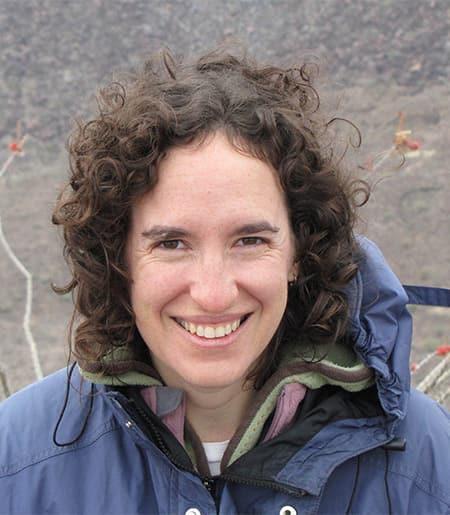
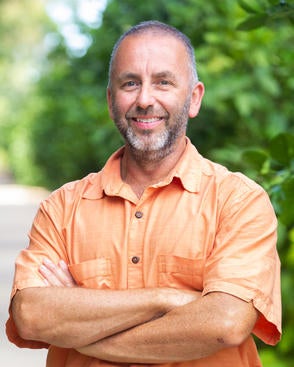
Jennifer S. Thaler is a Professor in the Department of Ecology and Evolutionary Biology at Cornell University, affiliated with the College of Arts and Sciences. She holds a Ph.D. from the University of California, Davis (1999) and a B.A. from Wellesley College (1993). Her research focuses on tri-trophic interactions between plants, herbivores, and predators, with an emphasis on chemical ecology, plant defense mechanisms, and pest control strategies. She teaches courses such as Chemical Ecology and Insect Ecology, and her work bridges fundamental ecological theory with applied agricultural challenges. Dr. Thaler’s research investigates how plant traits, predator presence, and nutritional states influence herbivore behavior and population dynamics. Notable projects include studying non-consumptive predator effects, plant genotypic diversity’s impact on herbivores, and the evolutionary potential of antipredator plasticity. Her publications span journals like Ecology , Oecologia , and Proceedings of the Royal Society B . Her scientific contributions include winning the 2nd place Elton Prize (2015) for research on predator effects on aphids. She actively engages in departmental initiatives, including the Graduate Program and the Plant-Insect Interactions Seminar. Affiliated with the Cornell Stable Isotope Laboratory, she contributes to interdisciplinary efforts in ecological research and education.
Mark Lewis is the Kennedy Chair in Mathematical Biology at the University of Victoria, holding joint appointments in the Departments of Mathematics and Statistics and Biology. His research focuses on spatial ecology and mathematical modeling, addressing ecological challenges such as animal movement, invasive species, and disease dynamics. Lewis earned his D.Phil. in Mathematical Biology from the University of Oxford and has been elected a Fellow of the Royal Society UK. His work integrates mathematical analysis, field studies, and interdisciplinary approaches to solve ecological problems. Current projects include modeling polar bear populations, cyanobacteria dynamics, and the impact of climate change on wildlife. Lewis supervises students across both UVic and his former University of Alberta lab. Education: D.Phil. in Mathematics (Mathematical Biology), University of Oxford Awards: Royal Society Fellowship, CRM-Fields-PIMS Prize, and Okubo Prize Key Research Areas: Animal movement modeling, aquatic ecology, wildlife disease, and invasive species management Publications highlight his contributions to understanding disease spread, parasite dynamics, and ecological responses to environmental changes. Lewis collaborates widely, applying mathematical tools to real-world conservation and health challenges.
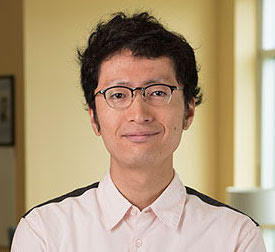
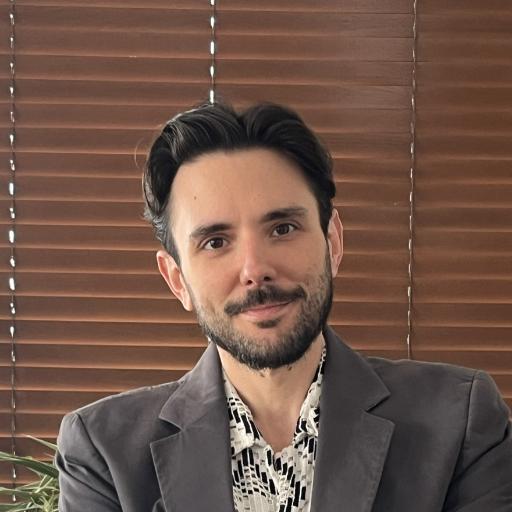
Takuya Tsunoda serves as Assistant Professor of Japanese Film and Media in the Department of East Asian Languages & Cultures at Columbia University, with prior teaching appointments at Colgate University and the University of Chicago. Currently on leave for spring 2022, he maintains his office in 416 Kent Hall (contact: (212) 854-5040, tt2101@columbia.edu). His academic credentials include: BA: Waseda University (2002), Columbia University (2005) MA: Columbia University (2008) PhD: Yale University (2015) Dr. Tsunoda's research centers on institutional-media interplay through historical and theoretical lenses, examining how technologies shape socio-cultural practices and knowledge formations. His seminal work investigates Iwanami Productions' evolution from educational/science film provider to New Cinema pioneer, arguing that Japan's 1960s cinematic revolution originated in institutionalized audio-visual pedagogy rather than political radicalism. Current explorations extend to media reflexivity, alpine photography, insect ecology, children's media engagement, and diegesis in contemporary visual culture. Teaching : Courses include East Asian Cinema, Japanese Contemporary Media Culture, Japanese New Wave Modernism, Documentary Film Studies, and Critical Approaches to East Asian Theory. His publication trajectory (2018-2022) reveals consistent focus on postwar Japanese media archaeology, connecting educational film, industrial cinema, and New Wave movements through archival analysis. Key themes include cross-medial academicism, mediascape transformations, and the socio-political dimensions of visual pedagogy in reconstructing cinematic modernism. Active research trajectories include transnational New Wave parameters, television documentary studies, and ecological media representations, with ongoing book project examining Iwanami Productions' institutional legacy.
Dr. Albert Ruhi is Associate Professor in Environmental Science, Policy and Management at UC Berkeley. His research examines freshwater ecosystem responses to global change, with focus on hydrologic alteration and drought impacts across river networks. The Ruhi Lab integrates field experiments, time-series analysis, and hydrologic modeling to understand metacommunity dynamics and ecosystem resilience. Educational background: PhD in Ecology, University of Girona BS in Biology, University of Girona Research explores: Drought impacts on aquatic communities Climate change effects on stream metabolism Wetland restoration outcomes Metacommunity recovery pathways Ecohydrological feedbacks Recent publications address: Phenological shifts in estuarine food webs Flow alteration cascades in river networks Beaver-mediated drought resilience Groundwater-riparian interactions Awards and honors: NSF CAREER Award (2021) California Sea Grant Award (2021) Hellman Fellowship (2020) Winkler Scholar (2023) Research group includes 7 graduate students and postdocs studying: Urban river restoration Tidal marsh food webs Alpine stream thermal regimes Vernal pool seedbanks Field sites span Sierra Nevada streams, San Francisco Bay wetlands, and Mediterranean rivers.
Andrew Gersick is a Lecturer in the Department of Ecology and Evolutionary Biology at Princeton University. His research focuses on animal behavior, particularly in large social species such as spotted hyenas, zebras, and cowbirds. He explores topics including collective behavior, social dynamics, communication systems, and ecological adaptations. His work integrates field studies with technological tools like accelerometers to analyze activity patterns and signaling mechanisms. Notably, he investigates how zebra stripes repel biting flies and how hyenas use vocalizations for individual recognition. Gersick also contributes to conservation efforts, such as the Great Grevy’s Rally in Kenya, and studies social learning in avian species like cowbirds. His recent articles highlight interdisciplinary approaches, combining ecology, physiology, and technology to understand animal behavior in natural and social contexts. While no awards are explicitly listed, his contributions to understanding collective behavior and conservation biology are significant. Advising and grants: No formal advisees or grant details are provided in the text. His work appears to focus on collaborative research and field-based methodologies. Labs/Teams: No specific laboratory or team affiliations are mentioned beyond his departmental role at Princeton.
Ana Maria Velez is an Associate Professor at the Department of Entomology, University of Nebraska-Lincoln. Her research focuses on insect responses to chemical stressors, particularly RNA interference (RNAi) and Bt toxins for pest management. With a 80% research and 20% teaching appointment, she leads the Insect Toxicology Lab and teaches courses like 'Toxins in the Environment' and 'Insecticide Toxicology.' Education: Ph.D. in Entomology, University of Nebraska-Lincoln, 2013 M.S. in Entomology, Universidad Nacional de Colombia, 2009 B.S. in Biology, Pontificia Universidad Javeriana, Colombia, 2006 Her research spans molecular, organismal, and population levels to evaluate transgenic crops and RNAi technologies. Key areas include resistance mechanisms, non-target effects, and risk assessment frameworks. She has extensive publications on western corn rootworm and fall armyworm, emphasizing sustainable pest control. Her work also addresses sublethal impacts on non-target species like monarch butterflies and honeybees. Recent articles highlight RNAi delivery optimization, Bt resistance dynamics, and ecological impacts of insecticides. Her lab collaborates on patents for RNAi-based pest suppression methods targeting chromatin remodeling and developmental genes. Scientific Awards Distinguished Multicultural Alumni (2019) DuPont Young Professor Award (2016) International Congress of Entomology Travel Awards (2016) Widaman Trust Distinguished Graduate Assistant (2011) Milton E. Mohr Teaching Fellowship (2012) The Vélez Arango Lab investigates durability and safety of insect control technologies, with emphasis on RNAi and Bt crops. Their work informs integrated pest management (IPM) systems and regulatory frameworks.
Prof. Dr. Florian Jeltsch leads the Plant Ecology and Nature Conservation research group at the Institute of Biology and Biochemistry, University of Potsdam. His work spans multiple ecological domains with a focus on understanding biodiversity patterns and processes in changing environments. His research group investigates community ecology across various landscapes including grasslands, agricultural systems, and drylands. Dr. Jeltsch's research interests encompass Community Ecology of Grasslands and Agricultural Landscapes, Community Ecology of Drylands, Biodiversity in Heterogeneous Environments, Movement Ecology and Biodiversity Dynamics, and Applied Regional Conservation. His work integrates theoretical and empirical approaches to address pressing ecological questions related to global change. He has been instrumental in developing and applying individual-based models to understand complex ecological systems. Analysis of Dr. Jeltsch's recent publications reveals a strong focus on individual-based ecological modeling, movement ecology, and the impacts of landscape heterogeneity on biodiversity. His work spans from theoretical foundations to practical conservation applications, with particular emphasis on savanna ecosystems, habitat fragmentation effects, and climate change impacts. The research demonstrates integration of multiple scales from individual energetics to community dynamics. Dr. Jeltsch has mentored numerous doctoral students and postdoctoral researchers who have gone on to establish their own research careers. His group has been involved in multiple collaborative projects including BioHet, GrassYear, BioMove, and ORYCS, addressing biodiversity conservation in heterogeneous environments. The Plant Ecology and Nature Conservation group maintains active research stations including the Gülpe Research Station, providing field-based research opportunities. The group's work bridges theoretical ecology with practical conservation applications, particularly in the context of global environmental change.
Mark S. Hoddle is a Professor of Entomology and Biological Control Specialist at the University of California, Riverside (UCR), where he has headed research in his laboratory since 1997. He serves as the Director of the Center for Invasive Species Research and is a Principal Investigator focusing on biological control of invasive pests. His work bridges academic research with practical applications for California agriculture. Education: D.Sc. Zoology (2018), University of Auckland, New Zealand Ph.D. Entomology (1996), University of Massachusetts, Amherst M.S. Zoology (1991), University of Auckland, New Zealand B.S. Zoology (1988), University of Auckland, New Zealand Dr. Hoddle specializes in biological control, the intentional use of host-specific natural enemies to suppress pest populations. His research focuses on identifying pest problems amenable to biological control, locating and releasing natural enemies, and evaluating their impact on pest population growth. He works extensively with invasive species affecting California agriculture, particularly pests of citrus, avocado, palm trees, and other crops. His approach combines field evaluations with laboratory studies of pest and natural enemy biology and behavior. Analysis of Dr. Hoddle's recent publications reveals a strong focus on invasive species threatening California agriculture, particularly the Asian citrus psyllid, red palm weevil, and brown marmorated stink bug. His research integrates field and laboratory approaches, with emphasis on phenology modeling, natural enemy evaluation, and innovative control methods. Much of his work addresses the economic and ecological impacts of invasive pests on specialty crops. Scientific Awards: Entomological Society of America, Pacific Branch Entomology Team Leader Award (2023) UC-ANR Distinguished Service Award for Outstanding Research (2022) Fellow, Entomological Society of America (2018) California Department of Pesticide Regulations IPM Achievement Award for Asian Citrus Psyllid Biocontrol (2018) IOBC Distinguished Scientist of the Year (2015) Multiple awards from the Entomological Society of America (2007, 2012, 2013, 2014) Dr. Hoddle has mentored numerous students and researchers throughout his career, including postdoctoral scholars and specialists who contribute to his laboratory's work on invasive species. His research has been supported by various granting agencies, private institutions, and commodity boards, enabling extensive international projects focused on identifying and implementing biological control solutions for invasive pests. He has facilitated the Harry Scott Smith Scholarship Fund to support graduate students in biological control. Dr. Hoddle directs the Center for Invasive Species Research at UCR and leads a productive laboratory team that includes postdoctoral scholars, specialists, and students. The lab conducts research on multiple invasive species threatening California agriculture and natural ecosystems, with particular emphasis on citrus, avocado, and palm tree pests. Current projects include proactive biological control of the spotted lanternfly and research on invasive palm weevils, avocado pests, and other emerging threats.
Rune Svarverud is a Professor at the Department of Culture, Religion, Asian and Middle Eastern Studies, Faculty of Arts, University of Oslo. His research spans two major periods in Chinese history: early Chinese philosophy (pre-Qin to Han dynasties) and modern China (post-Opium War cultural encounters). Key research areas include conceptual history, environmental history, political philosophy, and cross-cultural translation studies. Permanent employee since 2004 Head of Department since 2021 Former PhD committee member and research leader (2007-2014) Active in international collaborations with Fudan, Nanjing, Kansai, and Zhejiang Universities His academic work focuses on: History of concepts and textual analysis in Chinese thought Environmental history and terminology evolution in modern China Qing dynasty legal and political philosophy Translation of Western knowledge into Chinese Interactions between Chinese and Western modernity Individualism in 20th-century Chinese society Recent publications examine environmental terminology, cross-cultural scientific translation, and conceptual frameworks in Qing reform. His interdisciplinary approach connects philosophy, law, and environmental studies through historical analysis. Co-edited works on standard languages and cultural communication Contributor to ACTA ORIENTALIA and PNAS Recipient of multiple research grants for Transsustain project
Alexis Lussier Desbiens is an Associate Professor at the Université de Sherbrooke in the Department of Mechanical Engineering , Faculty of Engineering. He co-founded several research labs and initiatives including NSERC CREATE CoRoM (Collaborative Robotics in Manufacturing) and NSERC CREATE UTILI (Uninhabited Aircraft Systems Training). His work bridges robotics, mechanical design, and sports equipment innovation. PhD in Mechanical Engineering (Stanford University, 2012) BEng in Mechanical Engineering (Université de Sherbrooke, 2005) Postdoctoral Research (Harvard University, 2013) His research focuses on robotics and automation , particularly unmanned aerial vehicles (UAVs) with bioinspired design principles for mechanical intelligence. Key areas include: Autonomous UAV perching and climbing Hybrid locomotion systems Sports equipment dynamics (skis, hockey sticks) Magnetorheological actuator applications Conservation biology tools via aerial sampling Recent publications highlight interdisciplinary work in robotics , sports engineering , and ecological monitoring . His projects often integrate mechanical design with environmental or human-centric applications. Scientific recognition includes: Best Student Paper (IEEE SMC, 2021) Best Poster (ISEA, 2020) National Geographic Explorer (2020) CSME Gold Medal (2005) Current grants (2020-2023) include: $339,000 - High-performance UAV for power line interactions $1.65M - NSERC CREATE UTILI training program $120,000 - Intelligent hockey stick development He also leads the CREATEK Research Lab and maintains global collaborations with institutions like Harvard University, Stanford University, MIT, and EPFL.
J. Christopher Brown is a Professor of Geography and Environmental Studies at the University of Kansas. He specializes in human-environment interactions, focusing on sustainable development in the Amazon Basin. His research integrates ecological, political, and socio-economic dimensions to address deforestation, agricultural expansion, and NGO-mediated rural development. Affiliations: Department of Geography, University of Kansas; Collaborator with Brazil's Embrapa Agricultural Research Agency Key Projects: Amazonian NGO dynamics and political impacts Soybean and sugarcane expansion impacts Spatial analysis of deforestation and land use Research interests include political ecology, biogeography, and the interplay between global and local scales. He employs remote sensing and interdisciplinary methods to study environmental governance and policy outcomes. His work on NGOs reveals how funding shapes political behavior in Brazil, with findings published in Comparative Political Studies and Political Geography . Recent studies highlight the edge effects of land-use changes and biodiversity impacts on pollinators like orchid bees. Awards: 2016 George and Eleanor Woodyard International Educator Award (University of Kansas) Brown's research bridges academic inquiry and policy, examining how development policies interact with ecological systems in Latin America. Current projects address soy moratorium efficacy, sugarcane expansion in the Cerrado, and the MST landless movement's political influence.
Prof Anindita Ghosh is a Professor of Modern Indian History at the University of Manchester's Department of History. She holds a doctoral degree from the University of Cambridge and has been affiliated with Manchester since 1999, serving as a Simon Fellow and lecturer before her current role. Her research focuses on power dynamics, culture, and resistance in colonial South Asia, particularly Bengal. She has authored influential monographs such as Power in Print (2006) and Claiming the City (2016), exploring print culture, urban history, and gender studies. Ghosh has supervised nine PhD students and secured major grants, including a British Academy award. She chairs the British Association for South Asian Studies (BASAS) and contributes to public discourse through media appearances and academic events. Educated in India and Cambridge, her work bridges colonial and postcolonial studies, examining topics like women’s resistance, Calcutta’s material cultures, and revolutionary movements. She actively engages with interdisciplinary projects, such as the Global Urban History Project, and organizes public lectures on Bengali cultural heritage. Her research outputs span monographs, edited volumes, and peer-reviewed articles on colonial urbanism, print culture, and gender. While her articles encompass diverse themes—from bioremediation to nuclear chemistry—they reflect her broader engagement with interdisciplinary methodologies. Ghosh’s academic leadership includes mentoring early-career scholars and fostering collaborations across disciplines. Her advocacy for marginalized urban communities and historical preservation underscores her commitment to bridging academic research with public impact.
Jesse Arseneault is an Assistant Professor at Concordia University, specializing in African Cultural Studies. His research interrogates the intersections of animality, postcolonialism, queer theory, and posthumanism, with a focus on representations of human-animal relations in African cultural texts. He supervises graduate students in English, Humanities, and Individualized Programs, and teaches courses on postcolonial literature, decolonization, and multispecies ethics. PhD in English and Cultural Studies, McMaster University (2016) MA in English Literature, McMaster University (2010) BA in English Language and Literature, Brock University (2008) His current manuscript, Africa's Animalities , critiques anthropocentric frameworks in postcolonial discourse, while recent publications examine pestilence, reproductive control in animal trials, and South African student protests. He co-founded the Society, Politics Animals, and Materialities (SPAM) center and edits special issues on African cultural studies. Key research themes include: Postcolonial critiques of human-animal binaries Queer and posthumanist approaches to African literature Multispecies resilience and environmental justice Decolonial pedagogy and political movements Scientific contributions: FRQSC grant (2020-2024) for "The Radical Collectivity of Pests" Co-authored works on animal trials and resilience frameworks Editorial leadership in Critical Arts and Studies in Social Justice
Walter Jetz is a Professor of Ecology and Evolutionary Biology and the School of the Environment at Yale University, where he directs the Center for Biodiversity and Global Change. He chairs the E.O. Wilson Biodiversity Foundation and co-chairs the GEO BON Species Population Working Group. His work focuses on biodiversity science, conservation, and global change ecology. Education: D.Phil. in Zoology (University of Oxford, 2002), M.Sc. in Integrative Bioscience (Oxford, 1997) Research interests include macroecology, species distribution modeling, and conservation science across spatial scales. His group develops tools like Map of Life , Wildlife Insights , and Half-Earth Project to address biodiversity monitoring and area-based conservation. Current projects explore climate change impacts on tropical ecosystems, movement ecology, and machine learning applications in biodiversity science. Recent publications focus on niche scaling, climate change vulnerability, deep learning for species distribution, and mountain biodiversity monitoring. Awards include being an ISI Highly Cited Researcher since 2014. Over 30 former students hold faculty positions globally. The lab promotes diversity, equity, and inclusion in science and collaborates with NASA, Microsoft, and the Gordon and Betty Moore Foundation.
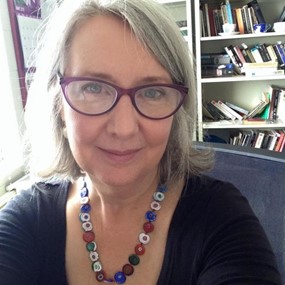
Alicia Carroll is a Professor and Department Chair of English at Auburn University . She holds a PhD from the Graduate Center of the City University of New York and specializes in Victorian Studies and Ecocriticism . Carroll actively mentors both graduate and undergraduate students in these fields. Department Chair, English Member of UKI Association for the Study of Literature and the Environment Member of American Association for Studies in Literature and the Environment (serving in Diversity Caucus) Research Interests focus on 19th-century British literature and culture, green cultural studies, environmental humanities, women's and gender studies, and Victorian ecocriticism. Her work explores intersections of gender, ecology, and cultural production during the Victorian era. Key Publications include her monograph New Woman Ecologies: From Arts and Crafts to the Great War and Beyond (2019) and co-edited works examining Victorian environmental narratives. She also contributed to the Quilts of Gee’s Bend in Context website as a lead faculty member.