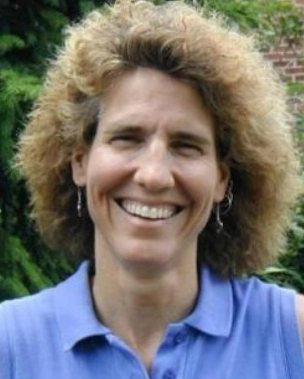
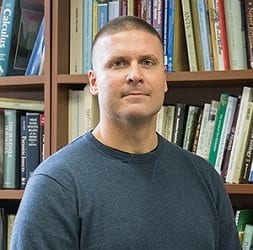
Lynne Rieske-Kinney is a Professor of Forest Entomology in the Department of Entomology at the Martin-Gatton College of Agriculture, Food and Environment , University of Kentucky. She holds the endowed Bobby C Pass Research Professorship, focusing on forest health and insect pest management. Research Focus : Invasion dynamics of forest pests (emerald ash borer, southern pine beetle), RNA interference for gene silencing, trophic interactions, and climate change impacts on forest ecosystems. Awards : Recipient of the prestigious AD Hopkins Award for southern forest entomology excellence. Outreach : Co-founder of the Urban Forest Initiative , promoting urban forestry education and tree conservation, and lead of the Healthy Trees – Healthy People program for citizen science engagement. Publications demonstrate leadership in RNA interference applications for forest pest control, with cross-disciplinary collaborations in biotechnology, ecology, and forest management. Her lab alumni hold prominent roles in academia, government, and industry.
Jocelyn Behm is an Associate Professor in the Department of Biology at Temple University's College of Science and Technology, where she investigates community assembly in human-dominated landscapes to inform sustainable landscape design. Her research examines how habitat development and invasive species affect species dispersal, habitat selection, and ecological interactions, with fieldwork focused on southeastern Pennsylvania and Caribbean ecosystems using integrated methodologies including field surveys, genetic techniques, and modeling. Her research program spans multiple critical ecological domains: Urban and Landscape Ecology : Quantifying impacts of urbanization on biodiversity and ecosystem services through studies of forest patch quality, urban birds, and green infrastructure. Invasive Species Dynamics : Leading research on spotted lanternfly dispersal, monitoring, and management, alongside investigations of exotic reptiles in Caribbean islands. Anthropocene Biogeography : Revising island biogeography theory through analysis of human-driven species introductions and extinctions, particularly in insular reptile communities. Functional Ecology : Linking species traits to ecosystem processes in decomposition, pest control, and service provision across urban and natural landscapes. Analysis of her 15 most recent publications (2023-2025) reveals a cohesive research trajectory centered on anthropogenic impacts, with three dominant threads: (1) Invasive species management (particularly spotted lanternfly studies spanning dispersal modeling, oviposition ecology, and computer-aided monitoring); (2) Urban ecosystem services (examining context-dependent benefits from wildlife across spatial scales); and (3) Anthropocene island biogeography (documenting human-accelerated species turnover and its conservation implications). Her work consistently integrates field data with computational approaches across taxonomic groups. No scientific awards were documented in the provided materials. Dr. Behm directs the iEcoLab (https://www.iecolab.org), where she mentors students in ecological research while securing external funding for projects spanning urban ecology, invasion biology, and island conservation. Her lab's translational focus bridges fundamental ecological questions with practical applications for sustainable landscape planning, particularly through trait-based approaches to green infrastructure design and invasive species management. The iEcoLab operates as an interdisciplinary hub conducting field research across southeastern Pennsylvania forests and Caribbean islands (notably Aruba), with current projects examining spotted lanternfly population dynamics, urban bird communities, and non-native herpetofauna. The lab combines traditional ecological methods with innovative technologies including computer vision for individual identification, landscape genetic analyses, and functional trait assessments to address pressing conservation challenges in human-altered environments.
Jessica Metcalf is a Professor of Ecology and Evolutionary Biology & Public Affairs at Princeton University, affiliated with the Global Health initiative. Her work bridges ecological, epidemiological, and policy-driven research to address global health challenges. She co-leads the Metcalf Lab, focusing on infectious disease dynamics, climate impacts on health, and vaccine strategies. Her research spans theoretical modeling, field studies, and policy analysis. Education details are not explicitly provided, but her academic roles suggest advanced training in ecological and public health disciplines. Research interests include pathogen evolution, climate-driven disease patterns, and microbial diversity conservation. She collaborates internationally, with significant work in Madagascar and sub-Saharan Africa. Her recent publications emphasize climate change's role in disease seasonality, vaccine design for animal populations, and the intersection of immunity patterns with environmental factors. She actively engages in global health policy through WHO advisory roles and contributes to open-source tools like the RSero R package for seroprevalence analysis. Advising and grants focus on interdisciplinary projects, though specific student names or grant amounts are not listed. The Metcalf Lab collaborates with institutions globally to address emerging infectious diseases and biodiversity loss, emphasizing practical solutions for public health systems in resource-limited settings.
Professor Graham Taylor is a Professor of Mathematical Biology at the University of Oxford and a Senior Research Fellow at Jesus College. He leads the Oxford Flight Group, focusing on biomechanics, neurophysiology, and bio-inspired engineering. His research combines experimental methods (e.g., virtual reality flight simulators) with computational models to understand animal flight dynamics and translate findings into robotics and AI. He holds a Royal Society University Research Fellowship and has received €1.95M from the ERC. His work spans Harris’ hawks, peregrine falcons, planthoppers, and insects, with applications in drone design and emergency response technology. Education: BA (Zoology, Pembroke College, Oxford), DPhil (Jesus College, Oxford) Key Roles: Deputy Head of MPLS Division, Director of John Krebs Field Station, Wytham Woods Research interests include evolutionary tuning of flight systems, flight control algorithms, and the intersection of physics and physiology. His lab collaborates with industry on spinouts like Animal Dynamics and engages the public through documentaries (e.g., Sky Nature’s Airborne ) and outreach programs. Notable achievements include the Thomas Henry Huxley Medal and ERC grants. Advising & Grants: Supervises doctoral students in biomechanics and robotics. Leads projects funded by the ERC, BBSRC, and industry partnerships. His lab hosts UNIQ program visits and public engagement activities, including a 2022 Oxford Science Festival exhibit.
Dr. Eric Caragata is an Assistant Professor at the University of Florida, affiliated with the Florida Medical Entomology Laboratory. His research focuses on understanding mosquito-microbe interactions, particularly how microbiota and symbionts like Wolbachia influence arbovirus transmission. Key areas include mosquito microbiome dynamics, metabolic pathways affecting pathogen infection, and the role of environmental factors in shaping microbial communities. His work addresses critical questions such as the microbiota's variation across Florida mosquito species, dietary impacts on microbiome composition, and Wolbachia's plasticity under metabolic stress. He develops tools to control mosquito-borne diseases, including biopesticides like Chromobacterium and leveraging Wolbachia as a natural control agent. Publications highlight studies on mosquito population dynamics, Wolbachia efficacy in disease control, and microbial genomic resources (e.g., MosAIC). His research bridges basic science and applied strategies, aiming to optimize disease prevention methods.
Isaac Esquivel is an Assistant Professor of Entomology at the University of Florida's North Florida Research and Education Center, focusing on agronomic and forage crop entomology. His research examines spatial dynamics of plant-pest-natural enemy-pollinator interactions influenced by landscape structure, using GIS and remote sensing for improved pest management systems. Dr. Esquivel studies piercing-sucking pests of cotton and peanut while balancing ecological and economic values in agroecosystems, including biological control services and pollinator health. His work addresses priority pest management issues in the Florida panhandle. Recent publications demonstrate his focus on sustainable agriculture, including studies on native bees in agroecosystems, nutritional landscapes affecting pollinators, and innovative pest monitoring techniques.
Tae Young Lee is an Instructional Assistant Professor in the Department of Entomology and Nematology at the University of Florida. His role focuses on teaching urban entomology courses, emphasizing pest biology, identification, and management strategies. He advises students pursuing careers in urban entomology and supports certification preparation. His research background includes subterranean termite behavior and mosquito repellent studies, particularly involving AeTRPA1 channel electrophysiology. Prior roles involved teaching medical and veterinary entomology, insect taxonomy, and general entomology. His work bridges academic instruction with practical pest management applications, aiming to foster student appreciation for urban entomology's challenges and solutions. Research interests span urban pest ecology, chemical communication in termites, and innovative approaches to pest control. No explicit grants or awards are mentioned, though his contributions to pedagogy and applied research are central to his profile. His contact information includes Gainesville, FL, and university email.
Dr. Dakshina R. Seal is a Research Scientist at the UF/IFAS Tropical Research and Education Center (TREC) in Homestead, Florida. His primary focus is on entomology and integrated pest management (IPM) strategies for vegetable crops, particularly in tropical/subtropical agro-ecosystems. He investigates key insect pests such as silverleaf whitefly, melon thrips, chilli thrips, and cornsilk fly, developing IPM programs to mitigate crop damage. His work spans research, extension, and outreach, collaborating with county agents and agricultural committees to disseminate pest management practices. Affiliations: UF/IFAS TREC, Entomology and Nematology Department Key Activities: Pest biology studies, extension programs, and collaborative projects with state faculty and agricultural stakeholders Research interests include invasive species management, pest behavior, and sustainable pest control methods. He has authored numerous extension publications on pest identification, life cycles, and management strategies, emphasizing both chemical and biological control approaches. His work addresses emerging threats like the skink glue snail and invasive thrips species in Florida. Publications highlight trends in pest biology, IPM implementation, and the ecological impact of invasive species. Collaborations with institutions like FDACS-DPI and the Florida Agricultural Extension network strengthen his outreach efforts. Though no formal awards or grants are listed, his contributions to agricultural pest management are significant through practical field applications and educational resources.
Adam C.N. Wong is an Assistant Professor in the Department of Entomology and Nematology at the University of Florida. His research focuses on host-microbe interactions, particularly how microbiomes influence insect behavior, physiology, and pathology. He employs multi-omics and molecular genetic approaches to study Drosophila species and non-model insects like chironomids and Drosophila suzukii. Key research themes include: 1) microbiome effects on host foraging and nutrient preference, 2) sex-specific microbiome-behavior interactions, and 3) microbiome roles in pest insect adaptation to new environments. Recent work explores microbiome-based strategies for sustainable pest control, collaborating with USDA-ARS on semiochemical development. His lab investigates mechanisms like microbiome-mediated metabolic shifts, virulence pathways of gut pathogens, and long-term developmental impacts of early microbiome perturbations. Research outputs span behavioral modulation, symbiosis dynamics, and agricultural applications of microbiome science. Contact: Steinmetz Hall, Gainesville, FL | adamcnwong@ufl.edu | Lab Website
Gordon Berman is Associate Professor in Biology at Emory University, using computational approaches to model animal behavior across species. His lab develops theoretical frameworks to understand behavioral repertoires through connections to neurobiology, genetics, and evolution. He holds a PhD from Cornell University and leads the Theoretical Biophysics research cluster. Research integrates mathematical modeling with experimental data to uncover principles of behavioral organization. Current projects analyze temporal patterning in rodent vocalizations, biomechanics of insect control, and evolutionary trajectories of fruit fly behaviors. Techniques include machine learning for behavioral classification and dynamical systems modeling. Publications appear in Nature, Current Biology, and Journal of Experimental Biology. Teaching includes computational neuroscience courses and supervision of graduate students in biology and biomedical engineering programs.
Kent M. Daane is Professor of Cooperative Extension Specialist at UC Berkeley, developing ecologically-based pest management systems for agricultural crops through biological control and sustainable practices. Research focuses on mealybug management in vineyards, invasive species control (olive fly, spotted wing drosophila), and vector-pathogen interactions in tree crops. Current projects investigate Grapevine Red Blotch Virus epidemiology and biological control agent evaluation. Education: Ph.D. Entomology, UC Berkeley B.A. Zoology, UC Santa Barbara Awards: IOBC Distinguished Scientist Award (2020) California EPA IPM Achievement Award (2017)
Dr. Lena Riabinina is an Associate Professor in the Department of Biosciences at Durham University and a Fellow of the Wolfson Research Institute for Health and Wellbeing. Her research focuses on genetic tool development, insect sensory neuroscience, and sensory ecology in species such as Drosophila, mosquitoes, bumblebees, and black soldier flies. PhD: University of Sussex (2009), studying insect visual navigation Postdoctoral positions: UCL, Johns Hopkins University, Imperial College, and Manchester University Joined Durham as Assistant Professor in 2019, promoted to Associate Professor in 2023 Research interests include: Genetic tools for non-model insects (e.g., mosquitoes) Insect olfaction and neuroethology Co-evolution of courtship songs and hearing in Drosophila Recent articles explore mosquito blood-feeding patterns, bee neuroecology, and genetic expression systems. Her lab (InsectNeuroLab) actively develops interdisciplinary approaches to study insect sensory systems. Supervises four PhD students and holds grants from the Daiwa and Sasakawa Foundations. Currently advertising self-funded PhD projects and MRes opportunities in areas like mosquito genetic tool development and AI-driven insect behavior analysis.
Xinyi (Abby) E serves as Professor of Practice in the Carl and Melinda Helwig Department of Biological and Agricultural Engineering at Kansas State University's Carl R. Ice College of Engineering, where she designs and teaches the biomanufacturing program curriculum. Her academic credentials include: MBA in Business Administration, Kansas State University (2022) Ph.D. in Biosystems and Agricultural Engineering, University of Kentucky (2013) M.S. in Grain Science, Kansas State University (2010) B.S. in Food Technology, China Agricultural University (2007) Dr. E's research bridges industrial application and academic theory, specializing in biomanufacturing systems, food safety protocols, and stored product protection. Her expertise encompasses fumigation technology development, integrated pest management for agricultural commodities, and micro-algae bioreactors for carbon dioxide mitigation. This knowledge was directly applied during her industry tenure at PureLine where she engineered solutions for food safety challenges. She has authored nine peer-reviewed publications across entomology and engineering journals including the Journal of Stored Products Research and Journal of Economic Entomology. Her pioneering work on chlorine dioxide fumigation established efficacy for controlling stored-product insects at commercial scales, representing significant innovation in post-harvest technology. Dr. E's professional trajectory demonstrates seamless integration of academic research and industry leadership. Her three-year postdoctoral focus on stored product IPM systems preceded doctoral research on nutrient recycling in micro-algae bioreactors, while her current role leverages an MBA to develop biomanufacturing curricula that address real-world agricultural technology gaps.
Dr. Randall Brooks serves as Extension Professor of Forestry and Extension Forestry Specialist at the University of Idaho's College of Natural Resources. His academic credentials include a PhD in Forest Science (Michigan Technological University, 1996), MS in Forest Soils (1989), BS in Forest Management (Oklahoma State University, 1986), and AS in Agriculture (Connors State College, 1984). His research examines sustainable forest management practices with emphasis on biomass utilization, biofuels production, water resource management, and pest/disease control strategies. He maintains field research partnerships addressing operational forestry challenges in the Pacific Northwest region.
Joshua King is a Professor in the Department of Biological Sciences at the University of Central Florida (UCF), leading the Joshua R. King Laboratory. His research focuses on community ecology, invasion biology, and social insects—particularly ants—in natural and human-altered landscapes, aiming to understand how land-use changes drive species invasions and disrupt ecosystem services through experimental and comparative field studies. Dr. King's work emphasizes ecosystem service provisioning by insects, mechanisms of species invasions , and conservation solutions for human-impacted ecosystems. His lab investigates how social insects like fire ants alter community assembly, using innovative methods such as hot-water colony removal to protect endangered species. Recurring themes include the ecological dominance of invasive ants, their impacts on soil carbon dynamics, and the development of pesticide-free management strategies for wildlife conservation. Analysis of his 2020-2025 publications reveals a strong trend toward climate change impacts on decomposition processes, economic valuation of insect-mediated ecosystem services (e.g., dung removal), and practical applications for invasive species control. His research consistently bridges fundamental ecology with real-world conservation challenges, particularly in Florida ecosystems. Dr. King's key recognition includes: 2023 Theodore Roosevelt Genius Prize for creating an environmentally safe insect control system to protect ground-nesting wildlife from invasive ants. His collaborative research projects—such as the RUI grant on ants and soil carbon dynamics—demonstrate active grant acquisition, while his laboratory serves as a hub for interdisciplinary work involving field experiments, community ecology, and conservation technology development. Though specific student advising details are limited in available texts, his publications indicate mentorship in entomology and ecosystem science. The Joshua R. King Laboratory specializes in hot-water ant eradication techniques and ecosystem service quantification, with direct applications for preserving endangered species like the Florida Grasshopper Sparrow. Current projects focus on climate-driven decomposition dynamics, dung beetle ecology in agriculture, and non-chemical fire ant management in subtropical pastures.