معرفی
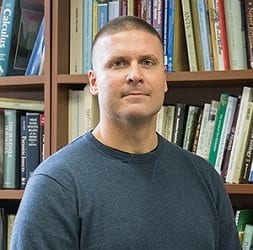
Joshua King is a Professor in the Department of Biological Sciences at the University of Central Florida (UCF), leading the Joshua R. King Laboratory. His research focuses on community ecology, invasion biology, and social insects—particularly ants—in natural and human-altered landscapes, aiming to understand how land-use changes drive species invasions and disrupt ecosystem services through experimental and comparative field studies.
Dr. King's work emphasizes ecosystem service provisioning by insects, mechanisms of species invasions, and conservation solutions for human-impacted ecosystems. His lab investigates how social insects like fire ants alter community assembly, using innovative methods such as hot-water colony removal to protect endangered species. Recurring themes include the ecological dominance of invasive ants, their impacts on soil carbon dynamics, and the development of pesticide-free management strategies for wildlife conservation.
Analysis of his 2020-2025 publications reveals a strong trend toward climate change impacts on decomposition processes, economic valuation of insect-mediated ecosystem services (e.g., dung removal), and practical applications for invasive species control. His research consistently bridges fundamental ecology with real-world conservation challenges, particularly in Florida ecosystems.
Dr. King's key recognition includes:
- 2023 Theodore Roosevelt Genius Prize for creating an environmentally safe insect control system to protect ground-nesting wildlife from invasive ants.
His collaborative research projects—such as the RUI grant on ants and soil carbon dynamics—demonstrate active grant acquisition, while his laboratory serves as a hub for interdisciplinary work involving field experiments, community ecology, and conservation technology development. Though specific student advising details are limited in available texts, his publications indicate mentorship in entomology and ecosystem science.
The Joshua R. King Laboratory specializes in hot-water ant eradication techniques and ecosystem service quantification, with direct applications for preserving endangered species like the Florida Grasshopper Sparrow. Current projects focus on climate-driven decomposition dynamics, dung beetle ecology in agriculture, and non-chemical fire ant management in subtropical pastures.