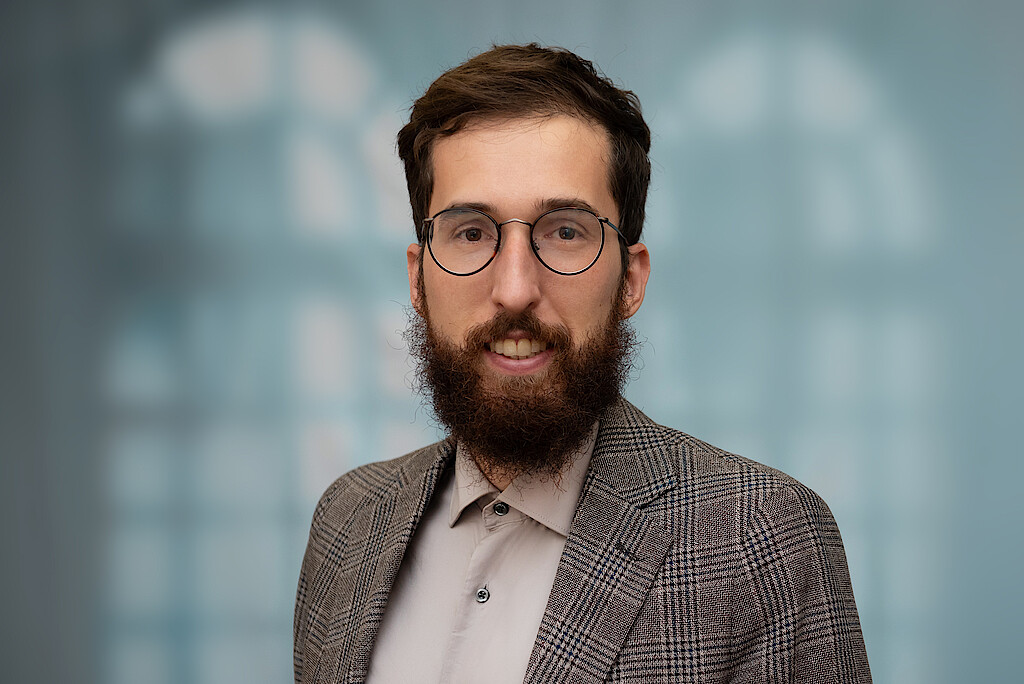
Prof. Dr. Simon Walther is a faculty member at the University of Applied Sciences Weihenstephan-Triesdorf (HSWT) , affiliated with the Department Sustainable Agriculture and Energy Systems . He serves as Chairman of the Examination Board (Agricultural Management) and General Project Lead for key research initiatives. Research Focus: Sustainable agriculture, digital agribusiness, and climate-resilient farming systems Key Projects: Development of the FAIR-Device for insect biodiversity monitoring, comparative analysis of agriholdings vs. independent farms in Ukraine His work emphasizes interdisciplinary collaboration , as seen in student-led projects combining horticulture and bioinformatics to automate nitrogen deficiency detection in sunflowers using Scrum methodology . Publications address challenges in agricultural sustainability , energy efficiency , and resource management . Collaborations include partnerships with researchers like Juan Andres Chiavassa, Martin Kraft, and Patrick Noack across agroecosystem optimization and digital tool development . The HSWT research profile prioritizes applied research and practice-oriented solutions for global sustainability challenges.
Charles Perrings is a tenured Professor in the School of Life Sciences at Arizona State University, where he co-directs the ecoSERVICES Group. His research focuses on the intersection of ecological and economic systems, particularly the impacts of biodiversity change on human wellbeing, globalization's role in disease dispersal, and science-policy integration in environmental decision-making. Education: Ph.D. in Economic History, University of London (1982) B.A. in Economics, University of London (1976) His research spans ecological economics, biodiversity conservation, and infectious disease risk modeling. Recent work examines water resource economics in arid zones, pandemic preparedness strategies, and ecosystem service valuation for policy-making. He has mentored 37 doctoral students, 35 master's students, and 7 postdocs. Publications Trends: His articles address cross-border disease risks, water security in cities, and biodiversity's economic value. Key themes include mathematical modeling of epidemics, sustainable development trade-offs, and policy-relevant environmental valuation. Scientific Awards: 2008 Kenneth Boulding Memorial Award (International Society for Ecological Economics) Research Grants: He led NSF-NIH-USDA funded projects like RAPID Trade (2014-2018) and NIH's MASpread (2011-2016). Current work includes EU EcoFINDERS and French AnaEE-Services programs.
Antonio Vetro is an Associate Professor at the Department of Control and Computer Engineering (DAUIN) of Polytechnic University of Turin. He specializes in experimental methodologies for software engineering with focus on software and data quality improvement, algorithmic fairness, and socially sustainable technology design. His research interests span Responsible AI: From principles to industrial practices Data quality measurement and improvement Fairness in automated decision systems Public interest technology Technical debt management Generative AI applications His recent publications focus on bias detection in datasets, GDPR compliance tools, and technical debt analysis in industrial projects. Key trends include Algorithmic fairness in healthcare applications Automated compliance assessment Data quality for ethical AI Quantum computing research Scientific recognitions include BEST PAPER AWARD - IEEE AICT 2024 Best Paper Award EGOV-2020 Siebel Energy Institute - Smart Energy 2016 Best paper award at IDOESE 2010 He advises PhD students in responsible AI and data ethics, while also serving on editorial boards like ACM Journal of Data and Information Quality and International Journal of Technoethics. Current roles include membership in ISO/IEC JTC1 SC7/WG6 and UNINFO committees for software engineering standards.
Matthias Mertens serves as a Research Scientist at MIT FutureTech (affiliated with MIT Sloan School of Management and CSAIL) and Research Affiliate at Halle Institute for Economic Research (IWH) since May 2024. His academic foundation includes master's degrees in Economics and Economic Law from Martin Luther University Halle-Wittenberg and a PhD from Otto von Guericke University Magdeburg, with prior visiting research at Harvard University (January-May 2023). His research spans Firm Dynamics, Labor Economics, and Macroeconomics , with specific expertise in market power, productivity analysis, and the economics of AI. Current investigations examine labor market power effects on wage inequality, firm concentration dynamics in Europe, and minimum wage impacts on productivity. His work leverages extensive German manufacturing data and cross-country micro-aggregated datasets covering 20 European nations. Mertens' publication record demonstrates consistent focus on structural economic transformations, with recent articles in the International Journal of Industrial Organization , Journal of the European Economic Association , and World Economy . His research methodology combines rigorous firm-level empirical analysis with theoretical modeling of market imperfections and technological change. Professional engagements include active collaboration with IWH's Department of Structural Change and Productivity and MIT FutureTech's interdisciplinary research initiatives at the intersection of computer science and economic policy. His work on labor-input substitution patterns represents a significant recent contribution to understanding evolving production technologies across 12 countries.
Robert Cavanaugh is an Assistant Professor at the Massachusetts General Hospital Institute for Health Professions with dual appointments in Communication Sciences and Disorders and Genetic Counseling. As one of two core statistical faculty members in IHP's PhD program, he provides statistical support to students and faculty across the institute while teaching courses in statistics, measurement, and reproducible research. His methodological expertise spans hierarchical/mixed-effects models, Bayesian methods, psychometrics including item response theory, and causal inference methodology. PhD in Communication Sciences and Disorders, University of Pittsburgh M.S. in Speech and Hearing Sciences, University of North Carolina at Chapel Hill B.A. in Communication Sciences and Disorders, University of Pittsburgh Dr. Cavanaugh's research integrates rehabilitation health services, population health, and data science to analyze insurance claims and electronic health record data, examining healthcare outcomes and improving service delivery in speech-language pathology. His work focuses on treatment dosage effects in post-stroke aphasia rehabilitation, addressing disparities observed during his clinical practice as a speech-language pathologist. He advocates for experiential learning approaches that build strong statistical foundations for future rehabilitation researchers and practitioners, with a commitment to open science principles. His scholarly output demonstrates a clear trajectory toward methodological innovation in rehabilitation research, with publications spanning statistical methodology development, aphasia assessment tools, and healthcare services analysis. Cavanaugh has contributed to both technical statistical literature and clinical rehabilitation research, effectively bridging the gap between advanced quantitative methods and practical clinical applications in speech-language pathology. His work increasingly focuses on causal inference approaches and the development of open-source tools for research implementation. As a statistical co-investigator and consultant, Dr. Cavanaugh mentors students and faculty across the institute while developing practical research tools like the allofus R package for the All of Us Research Program. His collaborative research agenda spans efficacy, effectiveness, and implementation approaches to improve complex interventions in neurorehabilitation. He is actively engaged in the rehabilitation research community through social media and professional networks, frequently sharing resources and insights on statistical methods for rehabilitation research.
Alastair F. Donaldson is a Professor in the Department of Computing at Imperial College London, where he leads the Multicore Programming Group. His academic career spans positions as a Visiting Researcher at Microsoft Research Redmond, a Postdoctoral Research Fellow at the University of Oxford, a Research Engineer at Codeplay Software Ltd., and PhD studies at the University of Glasgow. Notably, he served as Director of GraphicsFuzz, an Imperial College spinout acquired by Google in 2018, demonstrating significant industry impact from his academic research. Donaldson's research focuses on Programming Languages, Compilers, Verification, Testing, and Multicore Programming, with particular expertise in randomized testing methodologies for compilers and program analyzers. His work bridges theoretical computer science with practical software engineering applications, developing innovative techniques like metamorphic testing for graphics shader compilers and systematic approaches for testing memory persistency models. His research output shows consistent progression toward increasingly sophisticated testing frameworks for verification-aware languages and GPU programming interfaces. Analysis of his 15 most recent publications reveals a strong trend toward applying fuzzing and randomized testing techniques to increasingly complex systems, including zero-knowledge proof circuits, large language models for code generation, and WebGPU APIs. His work consistently addresses the challenge of verifying correctness in systems where traditional testing approaches fall short, with growing emphasis on industrial deployment of compiler testing techniques. Throughout his career, Donaldson has maintained exceptional service to the academic community, serving on program committees and as chair for numerous prestigious conferences including SPLASH, PLDI, POPL, ECOOP, and ISSTA. His leadership roles have included Program Chair for ECOOP and General Chair for PLDI, reflecting his standing within the programming languages research community. As an advisor and mentor, Donaldson has contributed to the PLMW (Programming Languages Mentoring Workshop) with talks on 'The Lean Researcher' and 'Hacks to Compensate for Lack of Novelty in Programming Languages Research,' demonstrating his commitment to nurturing the next generation of researchers. His work on integrating compiler fuzzing into continuous integration pipelines represents significant practical impact on software development practices.
Marina Martinez is an Associate Professor at the NeuralDrive lab in the Department of Neuroscience, Faculty of Medicine, University of Montreal. Her research focuses on neuroplasticity mechanisms after spinal cord injuries and development of neuroprosthetic rehabilitation strategies . Primary Lab Location: Pavillon Paul G. Desmarais, Université de Montréal Secondary Affiliation: Centre de Recherche de l’Hôpital du Sacré-Cœur de Montréal Her work bridges neurophysiological analysis with clinical translation , particularly in: Motor cortex reorganization after injury Cortico-spinal interaction dynamics Adaptive neuroprosthetic systems Behavioral-electrophysiological correlations Article trends show strong emphasis on bi-cortical stimulation (2023), cross-species validation (rats/monkeys), and AI-driven parameter optimization for neuroprosthetics. Scientific Awards: FRQS Junior Research Scholar (Junior 1) FRQS Junior Research Scholar (Junior 2) Etoiles Effervescence 2022 Award Research Funding includes major grants from: Canadian Institutes of Health Research (CIHR) Natural Sciences and Engineering Research Council (NSERC) Fonds de recherche du Québec – Santé (FRQS) Craig H. Neilsen Foundation Lab Members span PhD candidates, postdoctoral fellows, and undergraduate researchers working on: Cortical neuroprosthesis development Spinal cord injury models Multivariate kinematic analysis
Heike Link serves as a Researcher and heads the Transport Economics research department at the German Institute for Economic Research (DIW Berlin), operating within the Department of Energy, Transport and Environment. With continuous affiliation since 1992, she holds a doctorate in Mathematical Methods in Economics focused on dynamic input-output models. Her academic expertise centers on Transport Economics, Infrastructure Economics, and advanced Econometrics, with specialized investigations into transport infrastructure cost structures, pricing mechanisms, economic impacts of investments, and regulatory frameworks in rail transport. She employs rigorous empirical analysis to evaluate policy interventions, particularly examining public reactions to pricing measures and competition dynamics in transportation markets. Recent publications demonstrate a concentrated research trajectory on German public transport policy innovations, including detailed analyses of the Deutschlandticket and 9-Euro-Ticket programs. Her work combines tracking data with survey methodologies to quantify behavioral shifts, mode choice inertia, and price elasticity effects, while parallel research examines spatial competition in fuel markets and the macroeconomic significance of rail infrastructure investments through input-output modeling. Dr. Link has directed extensive research initiatives for German federal ministries, European governmental bodies, the European Commission, the OECD, and industry associations. These projects translate empirical findings into policy recommendations, with outputs including discussion papers, journal articles, and authoritative monographs such as the annual Verkehr in Zahlen (Transport in Numbers) series. The Transport Economics department she leads functions as DIW Berlin's specialized unit for evidence-based transportation policy analysis, emphasizing data-driven approaches to infrastructure planning and regulatory design.
Erica Pastore is a Fixed-term Researcher in the Department of Management and Production Engineering (DIGEP) at Politecnico di Torino , affiliated with the College of Management and Production Engineering . Her work spans mathematical modeling, production planning, and simulation optimization within industrial engineering contexts. Teaching roles: Course Lecturer (2024/25, Management and Production Engineering), Course Collaborator (2025/26, Management Engineering) Sciences: Production Systems , Manufacturing Technologies , Sustainable Operations Her research focuses on mathematical modeling for production planning and optimization , examining variability propagation in manufacturing systems, additive manufacturing time estimation , and circular economy strategies at scheduling levels. Publications address flow line optimization , parallel batching , and healthcare logistics through simulation and analytical modeling . Recent work trends include flow time minimization (2025), additive manufacturing scheduling (2024), idle time reduction (2023), and urban logistics (2022). She has collaborated on 15+ publications since 2012, working with colleagues like Arianna Alfieri , Claudio Castiglione , and Barbara Previtali across production optimization, healthcare systems, and logistics.
Benjamin Wong is an Associate Professor at the Department of Econometrics and Business Statistics within the Monash Business School at Monash University . As a macroeconomist, his work focuses on macroeconometrics and time series analysis , particularly addressing estimation , inference , and interpretation of business cycle fluctuations. His research develops tools to inform monetary policy through key inputs like the output gap and trend inflation . PhD in Economics — Australian National University Bachelor of Economics (Honours) — University of Queensland Benjamin's research spans applied econometrics , time series modeling , and financial factors in macroeconomic policy . Recent publications examine global economic forces , pandemic impacts , and high-dimensional data in trend-cycle decomposition. His 2024 work introduced random subspace local projections for improved financial time series analysis. Benjamin has secured significant funding, including an ARC Discovery Grant (2023) for projects like Implications of Global Economic Forces for Domestic Monetary Policy . He collaborates with institutions such as the Reserve Bank of Australia , European Central Bank , and Bank for International Settlements , where he served as a Central Bank Research Fellow . His methodological contributions include BNfiltering.com and EViews add-ins for trend-cycle decomposition , widely adopted for real-time nowcasting of economic indicators. Benjamin also co-organizes the Continuing Education in Macroeconometrics (CEM) workshop, fostering early-career researcher development.
Nicholas Holyoak is a Research Fellow and Lecturer in Infrastructure Engineering at Flinders University's College of Science and Engineering. He specializes in transport planning, lecturing across multiple engineering courses while conducting research in transportation systems and sustainable development. His research interests focus on Transport Systems , Surveys and Analytical Techniques , and Transport Forecast Model Development . Holyoak has developed expertise in multimodal demand forecasting tools, environmental impact models, tourism-related travel research, and assessment of transport system policies and infrastructure. He possesses detailed knowledge of travel behavior surveys, including design, deployment, and data analysis across various applications. Holyoak's publications demonstrate a consistent research trajectory focused on sustainable transport planning, with recent work examining population projections for remote Indigenous communities (2021), waste generation analysis (2020), and land use-transport integration models (2019). His research contributes to UN Sustainable Development Goals, particularly those related to sustainable cities and communities. Holyoak has received 153 citations with an h-index of 6 across his 17 research outputs. His work has been recognized in Scopus and Pure databases, with significant readership on Mendeley. As an educator, Holyoak serves as topic coordinator and lecturer for multiple engineering courses including Civil Engineering Design, Professional Skills, Transport Systems Engineering, and Transport Planning and Modelling at both undergraduate and graduate levels. His technical expertise spans transportation modeling software, civil engineering design tools, GIS applications, choice modeling, and statistical data management packages, making him a versatile contributor to transportation research and education.
Assoc. Prof. Dr. Na Li is an Associate Professor at the Vienna University of Economics and Business, affiliated under the institution's honorary faculty cohort. Her research bridges international trade, labor economics, and digital transformation, with a thematic focus on how global commerce reshapes labor markets, gender dynamics, and regulatory frameworks. Research Focus: Prof. Li's work investigates the intersection of trade policies and socioeconomic outcomes. Key areas include: Gender disparities in employment influenced by global trade and FDI, Digital skill requirements in evolving labor markets, Income volatility linked to trade dependencies, Regulatory methodologies for services trade, and Cross-border vs. commercial presence in service globalization. Publication Trends: Her scholarly output (2008–2025) demonstrates consistent emphasis on trade elasticity, labor adaptability, and policy robustness. Recent works prioritize gender-inclusive economics and digitalization metrics, while earlier studies established foundations in trade-complementarity and shock resilience.
Professor José Manuel Madeira Belbute is an academic at the Universidade de Évora, affiliated with the Department of Economics. His research spans Macroeconomics , Economic Growth , and Sustainability , with a focus on environmental-economic interlinkages, energy demand, and inflation dynamics. PhD in Economics (Universidade de Évora, 1996) MSc in Economics (ISEG/UTL, 1991) BSc in Economics (Universidade de Évora, 1985) Belbute employs advanced econometric methods like fractional integration and ARFIMA modeling to analyze long-term trends in CO2 emissions, energy demand, and inflation across Portugal and Angola. His work informs climate policy and sustainable development strategies . Scientific contributions include reference scenario modeling for global CO2 emissions, persistence analysis in energy consumption, and cross-country inflation studies . Notable projects address Portugal's energy policy, Angola's macroeconomic stability, and local quality-of-life indicators. Supervised MSc theses on urban waste management and land-use economics Contributed to input-output matrices for the Alentejo region Developed strategic development plans for Évora He actively collaborates on environmental economics and policy evaluation , with a research output emphasizing empirical rigor and policy relevance.
Prof. Burkhard Ulrich is a Professor at Reutlingen University within the Faculty of Technology, specializing in Power Electronics. His office is located in Building 4, Room 209, with office hours held Wednesdays from 10:00-11:00 AM (online by appointment if needed). Contact is maintained via burkhard.ulrich@reutlingen-university.de and +49 7121 271 7146. His research focuses on advanced power conversion systems including DC-DC converters, inverters, and solid-state transformers, with emphasis on Zero Voltage Switching (ZVS) techniques, wide input-range operation, and wide-bandgap semiconductors (SiC/GaN). As a core member of the Electronics & Drives (E&D) research group, he contributes to the Reutlinger Energiezentrum (REZ) in decentralized energy projects like H2-Grid. Analysis of his 2022-2025 publications reveals consistent innovation in converter topologies addressing practical industry challenges: loss measurement instrumentation, switching loss reduction, and cost-effective renewable energy integration. His work bridges theoretical circuit design with real-world applications in electric drives and grid systems. Prof. Ulrich teaches Power Electronics within the Faculty of Technology and utilizes specialized E&D laboratories for experimental validation. His research maintains strong industry collaboration through REZ partnerships, focusing on energy-efficient solutions for modern power systems.
Associate Professor Hayri Abar is affiliated with Gaziantep University , Faculty of Economics and Administrative Sciences, Department of Economics and Department of Economic History. His career spans institutions including Atatürk University and University of Gent (post-doctoral 2024). Active in Quantitative Decision Methods , Data Analytics , and Heuristic Techniques , he integrates econometric rigor with real-world policy applications. Doctorate in Econometrics (Atatürk University, 2014) Master’s in Economic Theory (Atatürk University, 2011) Bachelor’s in Statistics & Computer Sciences (Karadeniz Technical University, 2007) Post-Doctoral Research (University of Gent, 2024) Abar’s research bridges financial econometrics and public health economics , with recent work applying Multivariate Probit models to mental health policy and machine learning to stock price forecasting. His 20 articles emphasize Turkey case studies in tobacco consumption, migration patterns, and energy economics. Key trends: Integration of LSTM/ML with traditional econometric models Focus on regional disparities in health and economic outcomes Policy-oriented spatial econometrics applications Analysis of ICT adoption and housing demand determinants Advising spans PhD and Master’s theses on topics like health expenditures, stock market volatility, and gender-based violence. Projects include technology-enhanced econometrics education and regional migration studies under national funding.