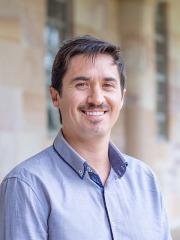
Aarti Singh is Associate Professor of Economics at the University of Sydney, specializing in macroeconomics and monetary policy. She serves as Associate Editor for the Journal of Money, Credit and Banking and the Journal of Economic Dynamics and Control. Her research examines optimal monetary policies in economies with heterogeneous agents, sectoral interdependencies, and incomplete markets. Singh collaborates with central banks globally and has held visiting positions at Cornell, Oxford, and the Federal Reserve Bank of St. Louis. Recent work analyzes how tax progressivity affects consumption insurance and the labor market impacts of monetary shocks. Grants include an ARC DECRA on human capital risk.
Aggelos Kiayias FRSE is Chair in Cyber Security and Privacy and Director of the Blockchain Technology Laboratory at the University of Edinburgh. He is also Chief Scientist at blockchain technology company Input Output. His academic work spans over two decades with more than 200 publications in cryptography, blockchain, and security. Dr. Kiayias received his Ph.D. from the City University of New York and was an undergraduate at the University of Athens Mathematics department. His research focuses on computer security, privacy, applied cryptography, and foundations of cryptography with particular emphasis on blockchain technologies, distributed systems, e-voting, secure multiparty protocols, and identity management. His recent work demonstrates continued innovation across multiple dimensions of blockchain technology, with publications spanning theoretical foundations, practical implementations, economic modeling, and privacy-preserving techniques. The research output shows strong emphasis on security analysis, consensus protocols, transaction processing, and economic incentives within decentralized systems. His work bridges theoretical cryptography with real-world blockchain applications. Among his notable recognitions are an ERC Starting Grant, Marie Curie fellowship, NSF Career Award, Fulbright Fellowship, election as Fellow of the Royal Society of Edinburgh in 2021, and the BCS Lovelace Medal in 2024. He has served as program chair for major conferences including the Cryptographers' Track of RSA (2011), Financial Cryptography (2017), Real World Crypto Symposium (2020), and Public-Key Cryptography Conference (2020), and as general chair of Eurocrypt 2013. Professor Kiayias has supervised over 20 PhD students, many of whom have gone on to academic positions at institutions including Imperial College, Stanford University, Royal Holloway University London, University of Glasgow, University of Sydney, and Virginia Commonwealth University. His current advisees include Yu Shen, Amirreza Sarencheh, and Christina Ovezik with expected graduations between 2025-2026. He leads the Blockchain Technology Laboratory at the University of Edinburgh and is involved in several major blockchain research projects including Panoramix and Fentec. His research has received significant funding from the European Union (Horizon 2020, ERC), UK research councils (EPSRC), US agencies (NSF, DHS, NIST), and Greek research bodies.
Arianto Patunru is a Research Fellow at the Arndt-Corden Department of Economics within the Crawford School of Public Policy at the Australian National University (ANU). He joined ANU in 2012 and holds a PhD from the University of Illinois at Urbana-Champaign. His roles include coordinating the ANU Indonesia Project, overseeing policy engagements such as the Australia-Indonesia High Level Policy Dialogue, and managing the Indonesia Project on COVID-19 initiatives. Patunru previously headed the Institute for Economic and Social Research (LPEM-FEUI) in Jakarta and taught economics at Universitas Indonesia. His research focuses on international trade, economic development, globalization, and policy analysis. He has published in journals like the American Journal of Agricultural Economics , Journal of Development Studies , and Bulletin of Indonesian Economic Studies , where he serves as an editor. Patunru frequently contributes to policy debates through op-eds in platforms like East Asia Forum and The Conversation , addressing issues such as Indonesia’s economic strategy, trade policies, and climate change. Key research themes include the impact of economic reforms (e.g., Indonesia’s Omnibus Law), trade policy dynamics, and the role of foreign investment. He has explored topics like labor share declines in manufacturing, environmental policy challenges, and vaccination strategies during the pandemic. Patunru’s work bridges academic analysis with practical policy advice, emphasizing Indonesia’s integration into global value chains and the need for balanced economic strategies.
Dr. Andy Nguyen is a Senior Lecturer in the School of Engineering at the University of Southern Queensland. He holds a PhD from Queensland University of Technology (QUT), an MEng from the National University of Civil Engineering (NUCE), and a BEng from NUCE. His research focuses on structural health monitoring, integrating machine learning and deep learning techniques to assess infrastructure integrity. Key areas include damage detection in bridges, pavements, and buildings, as well as sustainable construction materials like bamboo. Nguyen leads projects such as the 'Next Generation Living Laboratory for Engineering Education and Engagement,' emphasizing real-world applications of technology in civil infrastructure. His work spans crack detection algorithms, finite element model updating, and vibration-based structural analysis. He collaborates on AI-driven solutions for autonomous vehicle object detection and smart maintenance planning. Nguyen’s contributions include over 50 peer-reviewed publications and active supervision of postgraduate research in composite materials and transport infrastructure. His research outputs highlight advancements in computational mechanics, sensor technologies, and data-driven methods for infrastructure resilience. Nguyen’s expertise bridges civil engineering challenges with cutting-edge machine learning, advancing both theoretical and applied solutions for sustainable and safe structures.
Professor Kevin J. Fox is a distinguished academic at the UNSW Business School , serving as Director of the Centre for Applied Economic Research (CAER) . He holds leadership roles in global statistical initiatives, including the UK Economic Statistics Centre of Excellence and the International Association for Research in Income & Wealth (President 2020-2022). His career spans advisory positions with the Australian Treasury , Australian Bureau of Statistics , and United Nations Statistical Commission . B.Econ (Hons), University of Canterbury M.A., University of British Columbia Ph.D., Department of Economics, University of British Columbia As a leading expert in economic measurement , Fox focuses on productivity analysis , econometrics , and environmental economics . His research addresses digital economy challenges , CPI construction , and infrastructure productivity . He pioneered scanner data applications in inflation measurement, implemented by the Australian Bureau of Statistics from 2017. Recent publications analyze productivity paradoxes , digital goods valuation , and lockdown economic impacts . His 15 most recent articles demonstrate expertise in high-frequency data , TFP measurement , and price index theory , with sub-fields spanning quasi-experimental design and global economic statistics harmonization . Fellow, Academy of the Social Sciences in Australia Elected Fellow, Society for Economic Measurement Elected Fellow, U.S. Conference on Research in Income and Wealth Collaborative Indigo Prize 2017 win for GDP measurement innovation Awarded Australian Research Council grants totaling over $3 million , including: 2015-2019: $551,400 Discovery Grant for productivity frameworks 2014-2017: $1,075,000 Linkage Grant for property market measurement 2008-2013: $947,322 Linkage Grant for R&D productivity He contributes to public policy through: Advisory roles at Australian Treasury and ABS Leadership in International Working Group on Price Indices UN/IMF/OECD working groups on digital national accounts
Dr. Jorge Miranda-Pinto is a Senior Lecturer at the School of Economics within the Faculty of Business, Economics and Law at the University of Queensland. He is also a Research Associate at the ANU Centre for Applied Macroeconomic Analysis (CAMA) and an Affiliate of the Centre for Efficiency and Productivity Analysis. His research focuses on applied macroeconomics, international economics, and macroeconomic theory, with an emphasis on business cycle fluctuations, production networks, fiscal policy transmission, and sectoral shifts. He holds a PhD in Economics from the University of Virginia (2017). Educations: PhD in Economics (University of Virginia, 2017) His research explores the role of firm and household heterogeneity in shaping macroeconomic volatility and the effects of fiscal stimulus. Recent work includes analyzing commodity price shocks, service trade impacts, and monetary policy transmission mechanisms. He has contributed to projects such as the ARC-funded study on unobserved networks in macroeconomic fluctuations (2022–2025). Publications highlight interdisciplinary approaches to understanding economic dynamics, including articles on production networks, business cycle asymmetry, and trade credit effects. His work bridges theoretical models with empirical applications, addressing global economic challenges. Grants: ARC Discovery Project (2022–2025) Miranda-Pinto collaborates with institutions like the IMF and Federal Reserve Bank of Cleveland, reflecting his engagement with policy-relevant research. He is available for academic supervision and media commentary on macroeconomic topics.
Dr. Cheng-Chew Lim is a Professor in the School of Electrical and Mechanical Engineering at the University of Adelaide. He specializes in control theory, autonomous systems, and multi-agent reinforcement learning. His research focuses on trusted autonomous systems, secure cyber-physical networks, and decentralized decision-making models. He has published over 300 articles and supervised 50+ PhD and master’s students. Dr. Lim teaches courses in control systems, autonomous systems, and engineering project management. He has held editorial roles, including Associate Editor for IEEE Transactions on Systems, Man, and Cybernetics, and is actively involved in professional associations like the IEEE Control and Aerospace Electronic Systems Joint Chapter. His current projects include physics-informed neural networks for medical imaging, secure distributed autonomous systems, and resilient formation control under cyberattacks. Dr. Lim has secured research grants from ARC and industry partnerships, emphasizing practical applications in robotics, cybersecurity, and smart systems.
Dr. Jully Tan serves as an Associate Professor (Education Focused) at Monash University Malaysia's School of Engineering, leveraging over fifteen years of expertise in chemical engineering education and curriculum development. She plays pivotal roles in program accreditation through Malaysia's Engineering Accreditation Council and actively contributes to UN Sustainable Development Goals via educational and environmental research. Her academic credentials include: PhD in Chemical Engineering, Universiti Malaya (research: life cycle assessment for microalgae production) Master of Environmental Engineering, Universiti Teknologi Malaysia B.Eng. in Chemical Engineering, Universiti Teknologi Malaysia Dr. Tan's research centers on engineering education innovation —developing VR tools for process safety and gamified learning—and sustainable manufacturing , specializing in life cycle assessment of carbon/water footprints across palm oil, plastic waste, and biogas systems. Her work bridges theoretical knowledge with practical workplace readiness for multidisciplinary engineering students. Analysis of her 15 most recent publications (2022-2024) reveals dual thematic trajectories: educational technology (VR, gamification, digital equity) and circular economy solutions (plastic recycling, biowaste valorization, cellulose nanocrystals). These integrate environmental economics with industrial ecology, emphasizing scalable sustainability metrics for developing economies. Her accolades demonstrate excellence in both domains: IChemE Malaysia Highly Commended Award (2024) for educational innovation Engage & Educate Digital Learning Design Competition winner (2024) Faculty of Engineering Australia-Malaysia Travel Grant (2023) School of Engineering Certificate of Commendation for Early Career Education (2021) Institution of Engineers Malaysia Presidential Award (2022) As Primary Chief Investigator, Dr. Tan secures competitive grants including the 2025 Monash-Warwick project on ethical preparedness in engineering education and the ongoing VR-based process safety initiative (2022-2024). She mentors PhD candidates in teaching tool development and sustainable manufacturing while serving on national accreditation panels. Her leadership extends to organizing the Asia PSE Symposium and Malaysian Chemical Engineers Symposium, fostering industry-academia collaboration through the Institution of Engineers Malaysia.
Professor Mark Crosby is a prominent applied macroeconomist and Director of the Bachelor of International Business program at Monash University's Melbourne campus. He specializes in Southeast Asian economies, macroeconomic policy, and international business dynamics. Before joining Monash in 2016, he spent 19 years at the University of Melbourne. His research focuses on ASEAN market challenges, economic integration, and policy frameworks, with notable contributions to studies on China-ASEAN business interactions and global economic cycles. His career includes consulting for the Hong Kong Monetary Authority and Monetary Authority of Singapore. Crosby has authored and edited influential works, including the 2016 book *Doing Business in ASEAN Markets*, which addresses leadership and governance in Asian business contexts. His research bridges theoretical macroeconomics with practical policy applications, emphasizing regional economic interdependence and cross-border strategies. Key research interests span business cycle analysis, exchange rate regimes, and inflation dynamics, supported by over 20 years of scholarship. He actively advises PhD students and contributes to academic leadership through his directorship role.
Qinglong Han is the Pro-Vice Chancellor (Research Quality) and a Distinguished Professor at Swinburne University of Technology in Melbourne, Australia. He previously held academic and leadership roles at Griffith University and Central Queensland University. His research focuses on networked control systems, multi-agent systems, time-delay systems, smart grids, and unmanned vehicles. He is a Fellow of IEEE, IFAC, and multiple other institutions, and has received prestigious awards including the IEEE Dr.-Ing. Eugene Mittelmann Achievement Award (2024) and Norbert Wiener Award (2021). His research interests span control engineering, applied mathematics, and artificial intelligence. Notable contributions include secure platooning control for autonomous vehicles, resilient control under cyber-physical threats, and optimization of industrial systems. He leads editorial roles in journals like IEEE Transactions on Industrial Informatics and IEEE/CAA Journal of Automatica Sinica. His work emphasizes interdisciplinary applications in smart grids, robotics, and industrial automation. Dr. Han has supervised numerous PhD students in areas like networked control and vehicle dynamics. He has secured grants from ARC and NSFC for projects on networked control systems and renewable energy integration. His achievements include multiple best paper awards and recognition as a Clarivate Highly Cited Researcher in Engineering and Computer Science.
Davut Ertekin is an Associate Professor at the Department of Electrical and Electronics Engineering, Bursa Technical University (Türkiye), and a Visiting Research Fellow at the University of Western Australia's School of Engineering. He holds a Ph.D. from Atatürk University (2017) and has conducted research at Politecnico di Bari, Italy (2019). His expertise lies in power electronics, with a focus on DC-DC converters, inverters, electric vehicles, and renewable energy systems. His work contributes to UN Sustainable Development Goals related to affordable and clean energy. Education: Ph.D. in Electrical Engineering from Atatürk University (2017), followed by roles as Lecturer and Assistant Professor at Bursa Technical University before becoming an Associate Professor there. Research Interests: Power electronics, electric vehicle systems, control theory applications, photovoltaic integration, high-voltage gain converters, and material reliability testing for power modules. His research emphasizes grid stability, renewable energy efficiency, and smart grid technologies. Collaborations: Active in international research networks, focusing on sustainable energy solutions and advanced converter topologies. His work addresses challenges in energy storage, grid connectivity, and high-efficiency power conversion. Advising & Grants: No specific student advisees or grant details listed, though his publications suggest involvement in collaborative research projects. Labs/Teams: Engaged with research groups at Bursa Technical University and the University of Western Australia, focusing on experimental validation of power electronics designs.
Professor Zhiyong Chen is a faculty member at the University of Newcastle, affiliated with the School of Engineering and the Electrical and Computer Engineering Department. He holds the rank of Professor and specializes in control systems, robotics, and nonlinear dynamics. His research focuses on biological control systems, swarm intelligence, and adaptive control strategies for complex systems. Chen has authored influential textbooks such as Stabilization and Regulation of Nonlinear Systems: A Robust and Adaptive Approach (2015), which provides foundational knowledge in nonlinear control theory. Education: PhD from the Chinese University of Hong Kong. Research interests include multi-agent systems, fault-tolerant control, and reinforcement learning applications. His work emphasizes practical implementations in robotics, transportation systems, and aerospace engineering. He has contributed to over 212 journal articles and 119 conference papers, addressing challenges in distributed control, cybersecurity in cyber-physical systems, and autonomous synchronization. Chen's recent projects involve cooperative control of high-speed trains, resilient multi-agent systems under cyber attacks, and physics-informed reinforcement learning. His methodologies often integrate theoretical rigor with real-world applications, such as nanopositioning systems and fault diagnosis in mechanical systems. Grants and collaborations highlight his role in interdisciplinary research, combining control theory with machine learning and cryptography for secure networked systems. His lab focuses on advancing adaptive control techniques and their deployment in safety-critical environments.
Dr. Amir Moradi is a Senior Lecturer in Accounting at the School of Business, Law and Entrepreneurship, Swinburne University of Technology. He holds a PhD in Engineering from the same institution and specializes in efficiency and productivity analysis, sustainability, and environmental/social performance. His research spans sectors like universities, banking, and mining, with publications in high-impact Q1/Q2 journals such as Annals of Operations Research and Economic Modelling . Education: PhD in Engineering (Swinburne University of Technology), focused on mathematical and modeling techniques for efficiency analysis. Research interests include: Efficiency analysis of public and private sectors Sustainability and environmental performance metrics Banking and financial sector efficiency Integrated reporting and corporate governance Key research trends in his articles focus on: Quantifying impacts of carbon pricing and climate policies Methodological advancements in data envelopment analysis (DEA) Post-GFC banking efficiency and risk management Superannuation withdrawal effects on retirement savings Grants include funding from AFAANZ and Swinburne for projects on ESG integration in portfolios, integrated reporting impacts, and Malaysian corporate efficiency. He has supervised numerous PhD/Master’s candidates on topics like banking performance in Vietnam, airline inefficiency drivers, and renewable energy policy.
Professor Kevin Fox is a distinguished academic at the University of New South Wales (UNSW), serving as Professor in the School of Economics within the UNSW Business School. He holds the position of Director of the UNSW Centre for Applied Economic Research and serves on the Leadership Executive of the UK Economic Statistics Centre of Excellence. His career demonstrates a strong commitment to research-led public policy engagement, with significant contributions to economic measurement methodologies used by statistical agencies worldwide. His educational background includes a Ph.D. in Economics from the University of British Columbia (1995), an M.A. from the University of British Columbia (1992), an M.Com. from the University of Canterbury (1990), a B.Com. from the University of Canterbury (1989), and a Diploma in Japanese Language from the Japan Missionary Language Institute, Tokyo (1985). Professor Fox's research primarily focuses on economic measurement, with particular emphasis on productivity and prices. His work bridges theoretical economic concepts with practical policy applications, especially in the areas of inflation measurement, digital economy valuation, and productivity analysis. He has made significant contributions to understanding how digital technologies impact economic measurement, particularly in addressing the 'productivity paradox' where technological advancements don't immediately translate to measurable productivity gains. His research portfolio demonstrates a clear trajectory from traditional economic measurement toward addressing contemporary challenges posed by the digital economy, with recent work focusing on measuring inflation during pandemic conditions, accounting for free digital goods, and developing new methodologies for capturing digital innovation value in national accounts. His research has direct policy impact, evidenced by the Australian Bureau of Statistics implementing methodological changes based on his team's work to maximize the use of transactions data in compiling the Consumer Price Index from the December 2017 quarter. Similar methodologies have been adopted by Statistics New Zealand since the September 2014 quarter. Indigo Prize 2017 for addressing 21st-century economic measurement challenges Fellow of the Academy of the Social Sciences in Australia Elected member of Society for Economic Measurement (2014) Elected member of U.S. Conference on Research in Income and Wealth (2011) Professor Fox has secured substantial research funding through multiple Australian Research Council grants, including a Discovery Grant (2015-2019) and several Linkage Grants addressing productivity measurement, property markets, and scanner data applications. He has held influential positions including Advisor to the Australian Treasury (2016), chair of the 16th Series CPI Review Advisory Group (2009-2010), and President of the International Association for Research in Income & Wealth (2020-2022). He leads the UNSW Centre for Applied Economic Research and actively participates in international statistical initiatives, including the UN/IMF/OECD/World Bank/Eurostat Intersecretariat Working Group on National Accounts.
Associate Professor Alison McCarthy is a mechatronic research engineer at the University of Southern Queensland, affiliated with the Centre for Agricultural Engineering. She specializes in irrigation and cropping systems, focusing on automation, machine vision, and sensor-based control technologies to improve agricultural efficiency and sustainability. Research Interests: Irrigation control systems Machine vision for soil and plant sensing Automation in agriculture Variable-rate irrigation Agricultural spatial analysis and modelling Her recent research output demonstrates a strong trend in developing and evaluating automated, real-time systems for irrigation, nitrogen management, and crop monitoring across cotton, dairy, and grain crops. She leverages machine vision, AI, and sensor networks to enable precision agriculture solutions that reduce labor, optimize inputs, and improve yields. Scientific Awards: 2024 Australian Future Cotton Leader 2021 WatSave Young Professionals Award (International Commission on Irrigation & Drainage) 2018 Cotton Seed Distributors Researcher of the Year Award 2015 Queensland Young Tall Poppy Science Award 2014 Science and Innovation Award for Young People in Agriculture, Fisheries and Forestry 2011 Travel Fellowship (Irrigation Australia Limited) NPSI/IAL Travel Fellowship 2010 Dr. McCarthy actively supervises research students and leads industry-collaborative projects funded by organizations such as Cotton Research and Development Corporation, Grains Research and Development Corporation, and Hort Innovation. She has secured multiple research grants focused on smarter irrigation, nitrogen management, and pest monitoring technologies. Her work bridges academic research and practical on-farm applications, emphasizing technology transfer and industry engagement. Laboratories and Research Teams: She is a key member of the Centre for Agricultural Engineering at USQ, contributing to interdisciplinary teams working on smart irrigation, precision agriculture, and agricultural automation. Her research integrates with projects like 'Smarter Irrigation for Profit' and 'Future Farm', involving collaboration with engineers, agronomists, and industry partners.