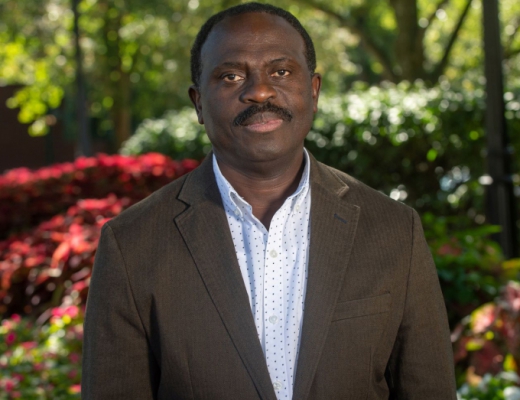
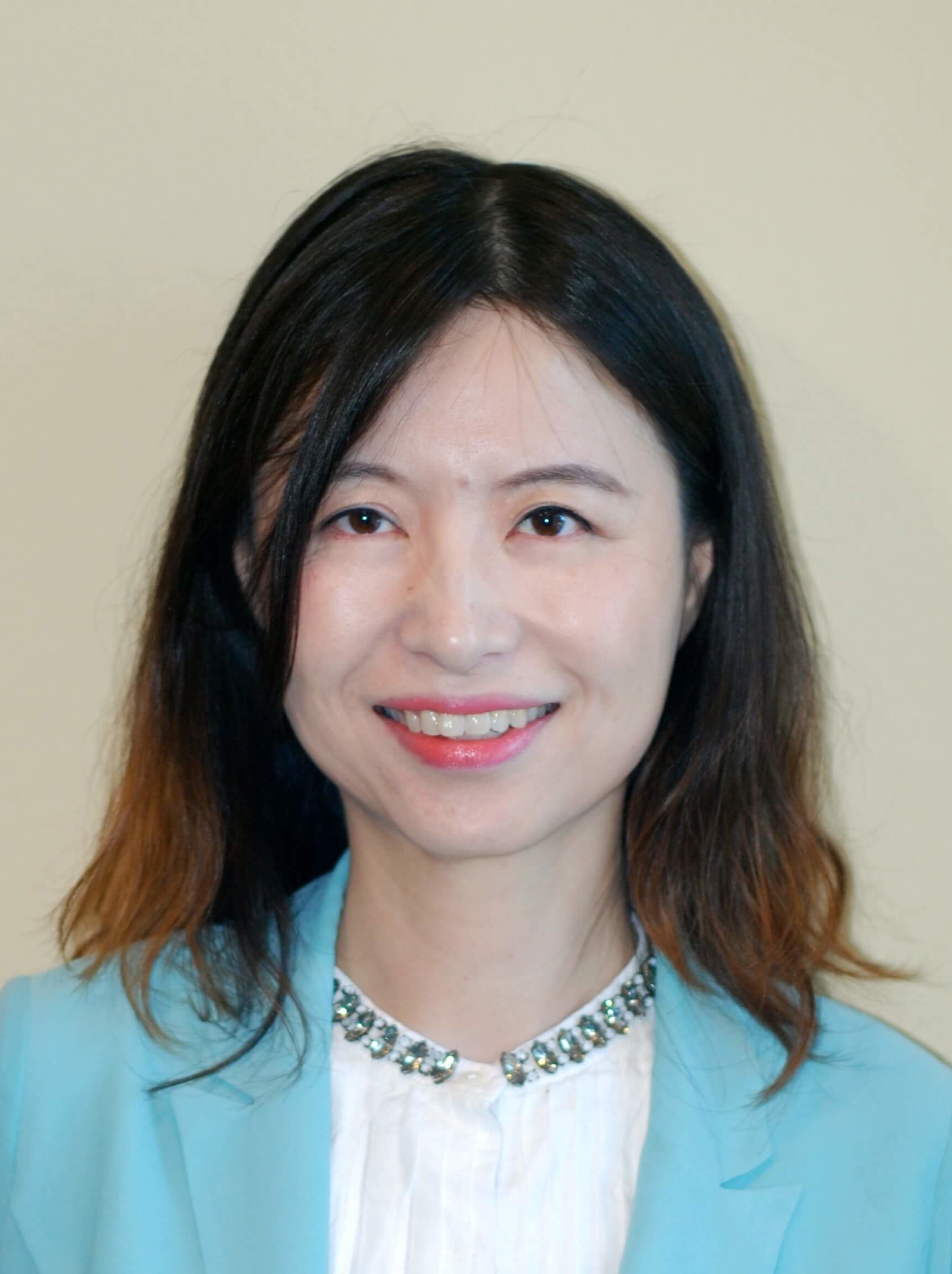
Eric Beeko is a Teaching Assistant Professor in the Department of Africana Studies at the University of Pittsburgh, affiliated with the Kenneth P. Dietrich School of Arts and Sciences. His teaching focuses on African studies, including courses like African Civilization, Liberation Movements, and Music in Africa. He holds a Ph.D. in Ethnomusicology from the University of Pittsburgh (2005), alongside advanced degrees from institutions in Ghana. His research explores African musical traditions, cultural practices, and performance aesthetics. Current projects include studies on Neo-Pentecostal/Charismatic church music in Ghana and the interplay between tradition and modernity. Future research plans involve multi-volume studies on African linguistic-cultural distribution and Black performance practices globally. Publications include analyses of Akan music rights, Ghanaian choral innovations, and African cultural heritage. He is developing works on Neo-Pentecostal worship aesthetics and the role of music in identity expression across the African diaspora. Advising and grants are not explicitly listed, but his scholarly activities emphasize collaborative research in ethnomusicology and cultural studies. He is based in Posvar Hall, Office #4152.
Huiyan Sang is a Professor and Director of the Undergraduate Program in the Department of Statistics at Texas A&M University (College of Arts & Sciences). She earned her Ph.D. in Statistics from Duke University and a B.Sc. in Mathematics and Applied Mathematics from Peking University. Her research focuses on spatial statistics, Bayesian nonparametric methods, machine learning, computational statistics, and applications in environmental sciences, geosciences, urban planning, and biomedical research. Her interdisciplinary work integrates statistical methodologies with real-world challenges, such as analyzing extreme environmental events, optimizing urban infrastructure, and modeling complex systems like human mobility during pandemics. She has contributed to advancing spatio-temporal modeling, Gaussian processes, and Bayesian hierarchical frameworks for large datasets. Recent publications highlight innovations in nonparametric regression, spatial functional data analysis, and stochastic frontier analysis, often leveraging computational efficiency and scalability. Her work addresses critical societal issues, including the impact of community design on public health and environmental monitoring through remote-sensing data. No scientific awards are explicitly listed in the provided texts. She advises no students or grants in the current dataset but collaborates widely on interdisciplinary projects. Her research lab focuses on developing cutting-edge statistical tools with applications in engineering, public health, and environmental science.
Prof. Hens Runhaar is a Full Professor of Sustainable Food System Governance at Utrecht University's Copernicus Institute of Sustainable Development. His research focuses on reconciling food production with biodiversity recovery, environmental sustainability, and health through innovative governance frameworks. He emphasizes connectivity issues in food systems, such as disconnects between production and environmental conditions, and advocates for transformative practices like agroecology and nature-inclusive agriculture. Key roles include chairing the Board of Examiners for Sustainable Development and membership in Future Food Utrecht. His projects include NWO-funded initiatives like COMBINED (grassland biodiversity) and REWIRE (circular agricultural missions). He actively engages in policy dialogues, such as advising BirdLife Netherlands and contributing to the Dutch Biodiversity Council. Research highlights systemic barriers to sustainability transitions in agriculture, with recent work analyzing dairy farming and farmer collectives. His outreach includes media appearances on nitrogen policy, nature restoration, and sustainable food systems. Professional memberships span international networks like Earth System Governance and the Wageningen School of Social Sciences.
Dr Cosette Crisan is an Associate Professor (Teaching) in Mathematics Education at University College London’s IOE, ranked World Number 1 in Education. She specializes in curriculum design, subject-specific mentoring, and integrating digital technologies into mathematics education. Prior to joining UCL IOE in 2010, she taught mathematics at secondary and university levels for 16 years. Her research focuses on enhancing mathematics teaching practices through collaborative mentorship frameworks and technology integration. She co-leads the Curriculum and Subject Specialism Research Group and the ROPE group, driving pedagogical innovation. Notable achievements include the 2021 UCL Faculty Education Team Award for pandemic-era teaching support and leadership roles such as Academic Head of Learning and Teaching (2020–2023). She holds a PhD in Mathematics Education from London South Bank University and is a Principal Fellow of the Higher Education Academy. Current initiatives include developing a Mathematics and Secondary Mathematics Education BSc (QTS) Teacher Degree Apprenticeship program. Her research emphasizes revitalizing geometry education and preparing mentors to effectively guide novice teachers. Publications span topics like computer-aided assessment (STACK), pandemic-era teaching adaptations, and cross-cultural mentorship studies. Dr Crisan’s work bridges theory and practice, advocating for mathematics education as a design science. She actively contributes to the London Mathematical Society’s Education Committee, promoting public engagement with mathematics. Awards include the UCL Faculty Education Team Award (2021) and recognition for her role in transitioning teaching to online platforms during the pandemic. Her teaching portfolio includes leadership of the MA Mathematics Education program and supervision of doctoral candidates. Recent interests include exploring intersections between mathematics and cognitive neuroscience, inspired by her daughter’s career path.
Stefano Fusi is an Associate Professor of Neuroscience at Columbia University's Vagelos College of Physicians and Surgeons, with joint affiliations at the Mortimer B. Zuckerman Mind Brain Behavior Institute and Kavli Institute. His laboratory focuses on computational modeling of neural circuits and neuromorphic engineering. Education PhD in Physics, Hebrew University of Jerusalem (1999) BS in Physics, Sapienza University of Rome (1992) Research Focus Fusi investigates how biological complexity supports neural computation through three primary domains: theoretical analysis of neural circuit dynamics, representational geometry in learning systems, and hardware implementations of brain-inspired algorithms. His work bridges machine learning, neurophysiology, and theoretical physics, emphasizing high-dimensional representations and memory optimization. Recent publications demonstrate consistent focus on neural coding principles across hippocampus, prefrontal cortex, and sensory systems, with innovations in modeling working memory, stress responses, and cross-species computational paradigms. Collaborations & Labs Leads an interdisciplinary laboratory collaborating with Columbia experimental neuroscientists, MIT engineers, and Stanford computational researchers to validate theoretical models. Current projects include neuromorphic hardware development and neural decoding of emotional states.
Lana Wells is an Associate Professor at the University of Calgary's Faculty of Social Work and holds the Brenda Strafford Chair in the Prevention of Domestic Violence. As Founder/Director of Shift: Primary Prevention Research Hub and Research Fellow at the School of Public Policy, she specializes in preventing gender-based violence through systems change, policy innovation, and community engagement. Key research areas: Gender equity, Indigenous sovereignty, AI ethics for social work, and male allyship in violence prevention Led over $11M in research funding and 22.5M+ in prevention initiatives 2023 Killam Professor Award recipient Recent publications focus on AI applications for violence prevention, gamification in male engagement, and rural/small-town violence reduction strategies. Her work spans interdisciplinary collaborations with public health agencies, Indigenous communities, and international organizations. Major projects: Alberta's Primary Prevention Playbook, Strong Women's Circle with Indigenous communities, ConnectED Parents virtual intervention Active in policy advisory roles for governments and NGOs Scientific awards include: 2023 Killam Annual Professor Award 2022 Queen Elizabeth II Platinum Jubilee Medal 2019 Alberta Inspiration Award 2015 & 2013 Carthy Foundation Leadership Awards 2012 School of Public Policy Fellowship As a graduate supervisor in Social Work and Public Policy, she develops prevention workforce capacity through Shifttolearn.com. Current initiatives include data-driven dashboards for real-time violence prevention and cultural transformation in male-dominated institutions.
Annouchka Bayley is an Associate Professor at the Faculty of Education, University of Cambridge, specializing in posthuman pedagogy, new materialist philosophies, and artistic research methodologies. She chairs the Arts and Creativities Research Group and previously directed the Arts, Creativities and Education MPhil programme (2021-24) and led the Doctoral Research Training Programme. PhD from University of Warwick BA Hons from SOAS MRes from University of Warwick Her research explores: Posthuman and new materialist approaches to education Decolonial epistemologies for educational development Postqualitative research practices in higher education Digital pedagogy and augmented reality applications Embodied and affective learning methodologies Recent publications examine diffractive knowledge production, digital materiality, and postpandemic educational futures. Key collaborative works include: Diffracting New Materialisms (2023, Palgrave Macmillan) Posthuman Pedagogy (2018, Parallax journal) Current teaching focuses on: Postgraduate courses in Arts, Creativities and Education Doctoral research training Advanced research methods Labs/Teams: Arts and Creativities Research Group CRiCLE Network (Creativities in Education) Diffractive Methodologies Collective
Elaine Treharne serves as the Roberta Bowman Denning Professor of Humanities at Stanford University, holding primary appointment in the Department of English with courtesy appointments in German Studies and Comparative Literature. She concurrently acts as Senior Associate Vice Provost for Undergraduate Education and Director of Curriculum, while directing Stanford Text Technologies—a major initiative exploring textual transmission across historical periods. Her leadership extends to co-directing SILICON and spearheading NEH-funded projects that redefine digital approaches to manuscript studies. Her academic foundation includes a B.A. in English Language and Literature (First Class Honors) from the University of Manchester (1986), a Master of Archive Administration from the University of Liverpool (1987), and a Ph.D. in English from the University of Manchester (1992). This archival training underpins her dual expertise in traditional manuscript scholarship and digital innovation. Treharne's research pioneers intersections between medieval materiality and contemporary technology, investigating the haptic experience of medieval books, AI applications for manuscript analysis, and the long history of text technologies. She challenges conventional periodization through projects like 'Disrupting Categories, 1050-1250' while developing computational frameworks for fragmentology and textual distortion. Her work consistently bridges paleography with digital methodology to examine how writing systems shape cultural memory. Recent publications reveal a decisive shift from foundational medieval scholarship toward integrative digital-humanities frameworks, with increasing emphasis on phenomenological approaches to both physical and digital texts. This trajectory culminates in current projects applying machine learning to manuscript transmission patterns and developing ethical guidelines for digital archival tools. Her scientific recognition includes: Fellow of the Society of Antiquaries Fellow of the Royal Historical Society Honorary Lifetime Fellow of the English Association (former Chair and President) Fellow of the Learned Society of Wales American Philosophical Society Franklin Fellow Princeton Procter Fellow Fellow of the Stanford Clayman Institute for Gender Studies Treharne actively supervises graduate students in early literature, Book History, and Digital Humanities while securing major grants including NEH funding for Stanford Global Currents, AHRC support for the Production and Use of English Manuscripts project, and Stanford Impact Labs fellowship for archival tool development. She maintains commitment to ethical scholarly environments through her leadership in VPUE initiatives and digital pedagogy. She directs the Stanford Text Technologies initiative hosting the annual Collegium series, co-directs SILICON for internet longevity research, and leads specialized projects including 'Digital Ker' for Anglo-Saxon manuscript cataloging and 'Medieval Networks of Memory' analyzing mortuary rolls. These interconnected efforts form a comprehensive ecosystem for advancing textual scholarship across temporal and technological boundaries.
Dr. Richard Fair is the Lord-Chandran Distinguished Professor of Engineering at Duke University, with a career spanning semiconductor physics, digital microfluidics, and lab-on-a-chip systems. His research group collaborates with faculty across Duke, Harvard, and Stanford in bioengineering, genomics, and environmental science to develop applications-driven microfluidic platforms. Ph.D. in Electrical and Computer Engineering, Duke University (1969) B.S.E.E., Duke University (1964) M.S.E.E., Pennsylvania State University (1966) Research interests focus on electrowetting-based microfluidics for biosensing, diagnostics, and synthetic biology applications. Key innovations include adaptive droplet routing , magnetic bead manipulation , and integrated optical sensors for real-time analyte detection in environmental and medical contexts. Recent publications emphasize deep reinforcement learning for biochip automation, fluorescent nucleosome detection , and inorganic ion analysis in aerosols. Collaborations with institutions like Advanced Liquid Logic and NSF-funded projects highlight his interdisciplinary approach. IEEE Third Millennium Medal (2000) Solid State Science and Technology Award (Electrochemical Society, 2003) Gordon E. Moore Medal (2009) Fellow, IEEE and Electrochemical Society Grants include NSF awards with Nan Jokerst and Krish Chakrabarty for adaptive lab-on-a-chip optical control, DARPA funding for genomic engineering platforms, and collaborations with the Desert Research Institute on airborne particle sensing. His lab develops scalable solutions for environmental monitoring, clinical diagnostics, and synthetic biology applications.
Xavier Brusset is a Professor in Supply Chain at SKEMA Business School since 2016, where he also serves as Director of the PRISM Research Center since 2017. Previously, he held professorial positions at Toulouse Business School (2015-2016) and ESSCA School of Management (2009-2015), where he was responsible for the Master 2 in Purchasing and Supply Chain Management program. His academic journey includes a PhD in Management Sciences from Université Catholique de Louvain (2010) and a Habilitation à Diriger des Recherches from Université Paris Ouest Nanterre La Défense (2016). His research spans multiple critical areas in supply chain management, with particular focus on supply chain resilience, blockchain applications, weather risk management, and pandemic impacts on supply chains. Brusset has developed innovative approaches to understanding how supply chain partners interact, how information affects their behavior, and how external disruptions like weather anomalies and pandemics impact operational efficiency. His work bridges theoretical models with practical applications, often developing decision-support tools for managers facing complex supply chain challenges. Brusset's publication record shows a clear evolution of research interests, beginning with foundational work on supply chain contracts and information sharing, then expanding to weather risk management, and most recently focusing on pandemic disruptions and blockchain applications. His 15 most recent publications (2018-2025) demonstrate increasing sophistication in modeling complex supply chain phenomena, with particular emphasis on network effects, ripple effects, and multi-echelon optimization under disruption scenarios. Editorial board member of Logistics Research Editor of International Journal of Retail and Distribution Management (2022-2023) Recognized EU expert for CINEA research projects evaluation Organizer of the Colloquium on European Research in Retailing (CERR) Reviewer for multiple top journals including International Journal of Production Economics As an advisor, Brusset has supervised doctoral students including R. Alkhudary (co-director, Université Paris 2 Panthéon-Assas) and V. Capocasale (rapporteur). His professional experience extends beyond academia to include industry roles in financial markets and logistics technology, having co-founded WebLogistix, a platform for sharing logistics information in Argentina. His research has practical applications across multiple sectors, particularly in retail, food supply chains, and manufacturing, where he develops tools to help managers mitigate risks and optimize operations under uncertainty.
Christopher Fromm serves as an Adjunct Professor of Law at Brooklyn Law School and National Director of Curriculum and Assessment at Themis Bar Review. With exclusive involvement in bar preparation since 2005, he has passed the bar exam in seven states: Pennsylvania, New York, New Jersey, Colorado, Arizona, Oregon, and Hawaii. Fromm pioneered the first early bar diagnostic program in 2010 and designed/implemented early bar preparation classes at Brooklyn Law School and Thurgood Marshall School of Law following ABA approval. His educational background includes: J.D., Widener University School of Law B.A., Widener University Fromm specializes in bar exam preparation methodology and legal education innovation. Recognized nationally as the 'MBE Expert,' he develops curricula for law schools nationwide, focusing on diagnostic tools, academic support frameworks, and NextGen Bar Exam adaptation. His work targets 2Ls, 3Ls, and LLMs through remote and in-person instruction, emphasizing data-driven strategies to maximize bar passage rates across diverse student populations. Currently leading Themis Bar Review's NextGen Bar Exam Taskforce, Fromm consults with law school administrations nationwide on bar preparation course design and academic resource optimization. His expertise bridges legal practice (as former Philadelphia ADA 1999-2005) with contemporary bar exam challenges.
Tan Chuan Hoo is an Associate Professor (tenured) and Deputy Head of the Department of Information Systems and Analytics at the National University of Singapore's School of Computing. With a distinguished academic career spanning multiple continents, he brings expertise in digital transformation, healthcare informatics, and enterprise systems to his teaching and research. His educational background includes: B.Sc. (1st Class Honours, National University of Singapore) M.Sc. (Accelerated, National University of Singapore) Ph.D. (National University of Singapore) Professor Tan's research focuses on digital transformation, particularly designing, deploying, and evaluating technological innovations. His work centers on two critical areas: digital commerce (provision of digital services such as online shopping aids) and digital organization (ensuring operational efficiency and performance). His research has significant implications for healthcare institutions, corporations, and crisis preparedness and response organizations. He conducts comprehensive analyses using various scientific methodologies including field experiments and mixed methods to understand how digital technologies reshape business operations and enhance societal well-being. His publication record shows a consistent focus on information systems, with recent articles (2020-2025) emphasizing healthcare informatics, digital transformation, and open innovation. His work demonstrates a clear trajectory toward understanding how technology intersects with organizational effectiveness and societal implications, with increasing attention to healthcare applications and digital crisis management. Professor Tan has received numerous prestigious awards for his contributions to the field: Faculty Teaching Excellence Award, NUS (2024, 2017) Information Management Research Award, China Information Economics Society (2023) Reviewer Hall of Fame, Journal of AIS (2020) Outstanding Associate Editor Award, MIS Quarterly (2016) Best Reviewer Award, Journal of AIS (2016) INFORMS ISS Design Science Award (2013) Honorable Mention, Journal of AIS (2015) He has successfully advised PhD students and collaborated with public and private entities on research projects. His editorial service as Associate Editor for Information Systems Research and MIS Quarterly, along with board memberships at other leading journals, demonstrates his significant influence in the field. Professor Tan has secured research grants supporting projects on digital crisis preparedness, disaster response technology, and healthcare digitalization. His research group focuses on understanding how technology can be designed and implemented to support organizations in crisis situations, enhance healthcare services, and improve digital commerce. Current projects include examining digital crisis management, technology for disaster response, and the digital transformation of healthcare services.
Rex Ying is an Assistant Professor in the Department of Computer Science at Yale University's School of Engineering & Applied Science. He leads research in graph neural networks, geometric representation learning, and explainable AI, with applications spanning physical simulations, biology, knowledge graphs, and recommender systems. His lab actively recruits PhD students interested in geometric deep learning, graph neural networks, and trustworthy AI. Dr. Ying received his PhD in Computer Science from Stanford University under Jure Leskovec, with a thesis titled "Towards Expressive and Scalable Deep Representation Learning for Graphs." Prior to that, he graduated from Duke University in 2016 with highest distinction, majoring in Computer Science and Mathematics. His research focuses on three interconnected areas: advancing graph neural network architectures for improved expressiveness, scalability, and interpretability; innovating in geometric representation learning for data with diverse characteristics; and developing real-world applications across scientific domains. He has pioneered influential algorithms including GraphSAGE, PinSAGE, and GNNExplainer, and developed the first billion-scale graph embedding services at Pinterest as well as graph-based anomaly detection algorithms at Amazon. His recent publication trends show a strong focus on hyperbolic geometry for foundation models, non-Euclidean representation learning, and multimodal applications in computational biology. The research demonstrates increasing integration of geometric deep learning with large language models and foundation model architectures. KDD 2022 Dissertation Award 2019 Baidu Scholarship in Artificial Intelligence Dr. Ying actively serves the research community as a committee member for major conferences including AAAI, ICML, NeurIPS, ICLR, KDD, and WebConf for over seven years, and as area chair for LoG 2022. He co-leads the open-source PyTorch Geometric project and has organized numerous workshops on graph learning. His industry collaborations include Pinterest, Amazon, Facebook AI Research, DeepMind, Siemens, SLAC National Accelerator Laboratory, and Saudi Aramco. He teaches "Deep Learning for Graph-Structured Data" at Yale and mentors students in developing cutting-edge graph learning algorithms. His research lab collaborates with both academic institutions and industry partners to advance the state-of-the-art in graph representation learning, with particular emphasis on geometric deep learning and its applications to scientific discovery and real-world systems.
Dr. Ulrike Kuhl is a Researcher at the University of Bielefeld, serving as Project Coordinator for the AI Academy OWL at the Research Institute for Cognition and Robotics and as Scientific Project Coordinator within the Faculty of Engineering's Machine Learning Group. Her office is located at CITEC 2-412, and she can be reached at +49 521 106-12125. Dr. Kuhl's research spans several interconnected domains at the forefront of human-centered AI development: Explainable Artificial Intelligence (XAI) frameworks and their psychological impact Cognitive learning enhanced through AI technologies Counterfactual explanation methodologies and user behavior Human-AI interaction design principles Applications of machine learning in environmental monitoring and sports analytics Analysis of Dr. Kuhl's publication trajectory reveals a consistent focus on bridging the gap between sophisticated AI systems and human understanding. Her work particularly examines how different explanation types affect user trust and decision-making, with recent publications exploring counterfactual explanations in contexts ranging from water distribution networks to educational technology. She has developed experimental frameworks like the 'Alien Zoo' methodology for systematically studying explanation usability. Dr. Kuhl actively contributes to the Center for Cognitive Interaction Technology (CITEC) at the University of Bielefeld, an interdisciplinary hub where computer scientists, engineers, and cognitive scientists collaborate on next-generation interactive technologies. Through her coordination of the AI Academy OWL initiative, she facilitates regional collaboration between academic researchers and industry partners to advance artificial intelligence applications in the Ostwestfalen-Lippe region.
Vladimir Spokoiny is a Professor at the Departments of Mathematics and Economics of the Humboldt University of Berlin and Head of the Research Group "Stochastic Algorithms and Nonparametric Statistics" at the Weierstrass Institute for Applied Analysis and Stochastics (WIAS) in Berlin, Germany. His research spans multiple areas of statistics, machine learning, and financial mathematics, with significant contributions to nonparametric statistics, high-dimensional data analysis, and statistical methods in finance. Spokoiny received his M.Sc. in applied mathematics from the Moscow Institute of Railway Engineering in 1981 and his Ph.D. in mathematics from Lomonosov Moscow State University in 1988. He completed his Habilitation at Humboldt University in 1996. His academic career includes positions at the All-Union Institute of Railway Transport in Moscow, the Institute for Information Transmission Problems in Moscow, and the Institute for Applied Analysis and Statistics in Berlin before joining the Weierstrass Institute and Humboldt University where he has been a professor since 2002. Spokoiny's research focuses on adaptive nonparametric smoothing and hypothesis testing, high dimensional data analysis, statistical methods in finance, image analysis with applications to medicine, classification, and nonlinear time series. His work often addresses the challenges of nonstationarity in time series data and develops innovative methods for volatility estimation and risk management. He has made significant contributions to the development of adaptive weights smoothing procedures, which have applications in image processing, community detection, and manifold learning. His recent work has expanded into high-dimensional statistics, Bayesian inference, and optimization methods for machine learning, with publications demonstrating novel approaches to Gaussian approximation, Laplace methods, and statistical inference in non-Euclidean spaces. Spokoiny has supervised numerous PhD students including Oliver Reiss, Danilo Mercurio, Ying Chen, Elmar Diederichs, and Mstislav Elagin, whose research has focused on mathematical finance, time series analysis, and statistical methods. He serves as an Associate Editor for The Annals of Statistics (since 2004) and Statistics and Decisions (since 2002), and has previously served on the editorial board of the Journal of Statistical Planning and Inference. His professional activities include reviewing for major statistical journals including Annals of Statistics, Bernoulli, Econometrica, and Journal of American Statistical Association, as well as reviewing grant proposals for the National Science Foundation (USA), German Research Foundation, and Netherlands Organisation for Scientific Research. Spokoiny is a member of several professional societies including the International Statistical Institute, American Statistical Association, Institute of Mathematical Statistics, and Bernoulli Society. He is fluent in Russian (mother tongue), English, and German, and has good knowledge of French. His research group at WIAS focuses on developing novel statistical methodologies with applications across various scientific domains, particularly emphasizing adaptivity and robustness in complex data environments. The group's work has significant implications for financial risk management, medical imaging, and machine learning applications, with recent publications addressing fundamental questions in high-dimensional statistics and nonparametric inference.