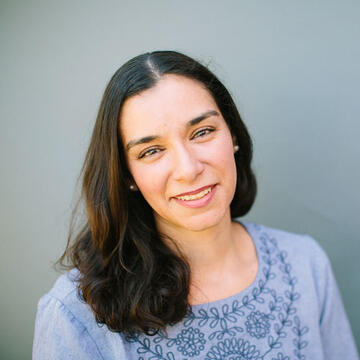
Jeroen Tromp serves as the Blair Professor of Geology and Professor of Geosciences and Applied and Computational Mathematics at Princeton University, where he also directs the Princeton Institute for Computational Science and Engineering (PICSciE). His work centers on theoretical and computational seismology with applications across Earth and planetary sciences. His research interests focus on imaging Earth's interior through advanced computational techniques. Key areas include surface waves, free oscillations, body waves, seismic tomography, numerical simulations of 3-D wave propagation, and seismic hazard assessment. His group develops open-source software for acoustic, elastic and poroelastic wave propagation, addressing problems in exploration geophysics, regional and global seismology, and helioseismology. Current research trends show strong emphasis on Mars seismology (InSight mission), iron spin crossover in the lower mantle, tilted transverse isotropy in Earth's inner core, and crosstalk-free waveform inversion techniques across multiple scales. Tromp actively mentors graduate students and leads collaborative projects involving seismic wavefield imaging across planetary bodies. His group maintains strong connections with NASA's InSight mission and develops computational frameworks for global centroid moment tensor inversions. The research team operates within the Department of Geosciences, leveraging high-performance computing resources through PICSciE to tackle large-scale inverse problems in seismology.
Dr. Benjamin Scott Flavel is a Research Group Leader at the Institute of Nanotechnology, Karlsruhe Institute of Technology (KIT), Germany. His research focuses on carbon nanotubes and their applications in photovoltaics and sensing technologies. He leads a dynamic research team conducting cutting-edge work on the separation, purification, and application of single- and double-walled carbon nanotubes. Education: Doctor of Philosophy (Chemistry), Flinders University, Australia, 2010 Bachelor of Science in Nanotechnology (Honors), Flinders University, Australia, 2005 Habilitation in Materials Science, Technische Universität Darmstadt, 2018 His research interests lie at the intersection of nanotechnology and energy materials, particularly in carbon nanotube-based solar cells , chirality-specific separation techniques , and nano-sensing devices . His group has pioneered methods such as ATPE for enantiomer sorting and developed innovative solar cell architectures with industrial relevance. The research spans fundamental charge transport mechanisms to applied device engineering. The publication record shows a strong trend in advancing carbon nanotube photovoltaics, with key contributions in interface engineering, scalable fabrication, and high-efficiency CNT:Si solar cells. Work also extends to spectroscopic characterization, alignment techniques, and software tools for data analysis. Scientific Awards: Heisenberg Program, DFG (2018) Emmy Noether Program, DFG (2013) Alexander von Humboldt Research Fellowship (2011) Australian Government Endeavor Research Fellowship (2009) Bloom-Gutmann Prize, Royal Australian Chemical Institute (2008) Hope Meeting, Japanese Society for the Promotion of Science (2008) Research Fellowship, Flinders University (2007) Dr. Flavel has successfully advised multiple PhD students, including Dr. Moritz Pfohl, Dr. Katherine Moore, and Dr. Daniel Tune. His research has been supported by significant grants from the German Research Foundation (DFG), including funding for a double-walled carbon nanotube project and an organic evaporation system (~320,000 EUR). Collaborations span institutions such as NIST, Freie Universität Berlin, University of Antwerp, McMaster University, and University of Sydney. The research group operates within the Institute of Nanotechnology at KIT, utilizing advanced infrastructure for nanomaterials synthesis, characterization, and device fabrication. The team is recognized internationally, with work featured in Open Access Government , Research Features , and Europhotonics , and covered by Nanotechweb.
Prof. Dr. Arwen Deuss is a full Professor at the Faculty of Geosciences, Utrecht University , specializing in Seismology . Her research focuses on mapping Earth's deep interior using global seismology, with particular emphasis on mantle discontinuities, core structure, and whole Earth oscillations. She integrates seismological data with mineral physics, geodynamic modeling, and geochemistry to understand planetary evolution. Key research areas: Earth's Deep Interior, Global Seismology, Mantle Discontinuities, Inner Core Anisotropy Teaches courses in Theoretical Seismology, Earth Systems, and Planetary Interior Structure Developed open-source tools like FrosPy for normal mode analysis Her recent work explores 3D mantle attenuation, tilted transverse isotropy in the inner core, and seismic wave coupling. She leads projects connecting seismic tomography with geodynamic processes and maintains active collaborations in international seismological research.
Miaki Ishii is a Professor of Earth and Planetary Sciences at Harvard University, affiliated with the Department of Earth and Planetary Sciences. She leads the Harvard Seismology Group and has held academic roles at Harvard since 2006, progressing from Assistant to Associate Professor and then Full Professor. Education: Ph.D. in Geophysics (2003), Harvard University Hon.B.Sc. in Physics (1998), University of Toronto Research Interests: Ishii specializes in seismic imaging of Earth's internal structure, including the mantle and core. Her work focuses on earthquake mechanisms, signal processing, and theoretical seismology. She uses seismic data to study rupture dynamics, subduction zone processes, and free oscillations of the Earth. Key Contributions: Notable projects include analyzing the 2011 Tohoku-Oki earthquake rupture, developing the DigitSeis software for analog seismogram digitization, and studying inner core anisotropy using normal mode splitting. Her research integrates high-performance computing and waveform inversion techniques. Awards: James B. Macelwane Medal (2009) Kavli Fellow (2012) Charles F. Richter Award (2008) Alice Wilson Award (2004) Labs/Teams: Directs the Harvard Seismology Group, collaborating internationally on seismic networks like Hi-net and USArray. Her work bridges computational seismology with observational geophysics.
Paul D. Halliday is the Julian Bishko Professor of History and Professor of Law at the University of Virginia, jointly appointed in the Department of History within the College of Arts and Sciences and the Law School . He is a leading scholar in legal history, with a focus on British, imperial, and global legal developments from 1500 to 1850. BA, Wesleyan University, 1983 MA, University of Chicago, 1988 PhD, University of Chicago, 1993 His research centers on the history of legal institutions, particularly habeas corpus, judicial authority, and the role of law in empire. Halliday challenges traditional narratives by emphasizing how judicial power evolved from royal prerogative rather than as a check on monarchy. His work bridges legal doctrine, archival practice, and material culture, with current projects exploring the sensory and spatial dimensions of law, including courthouse architecture and archival procedures. His publications reveal a consistent engagement with themes of liberty, authority, and legal continuity across time and space. Notably, his book Habeas Corpus: From England to Empire (2010) has had a profound impact, influencing the U.S. Supreme Court in Boumediene v. Bush (2008), and reshaping scholarly understanding of habeas corpus as a tool of imperial governance. His recent work extends into South Asian and Caribbean legal histories, emphasizing global legal interconnectedness. Inner Temple Book Prize (2011) for Habeas Corpus: From England to Empire Sutherland Prize, American Society for Legal History (2009) for co-authored Virginia Law Review article At UVA, Halliday teaches courses such as History of English Law , Law’s Empire , and Global Legal History . He advises graduate students in legal history and is a core member of GLH@UVA (Global Legal History at the University of Virginia), an interdisciplinary community that includes faculty and students from history and law. This group fosters collaborative research, professional development, and regular discussions on works in progress, contributing to a vibrant intellectual environment.
Irina Rish is a Full Professor at the Université de Montréal and a core academic member of Mila – Quebec Artificial Intelligence Institute, where she leads the Autonomous AI Lab. She holds a Canada Excellence Research Chair (CERC) and a CIFAR AI Chair, reflecting her leadership in foundational AI research. Her work is supported by major initiatives, including the U.S. Department of Energy’s INCITE project on Summit and Frontier supercomputers. PhD in AI, University of California, Irvine MSc in AI, University of California, Irvine MSc in Applied Mathematics, Moscow Gubkin Institute Her research focuses on machine learning, neural scaling laws, emergent behaviors in foundation models, continual learning, robustness, and neuroscience-inspired AI . She explores how AI systems can become more general, flexible, and aligned with human cognition. Her recent work investigates training dynamics in large language models, efficient pruning techniques, and the development of time-series foundation models. The analysis of her recent publications reveals a strong focus on scaling behaviors, continual adaptation, and robustness in AI systems . Her work spans theoretical understanding of training dynamics (e.g., zero-sum learning), practical optimization methods, and applications in climate modeling and mental health. She emphasizes open science, leading open-source projects and co-founding Nolano.ai to build efficient, compressed foundation models. Canada Excellence Research Chair (CERC) CIFAR AI Chair IBM Eminence & Excellence Award (2018) IBM Outstanding Innovation Award (2018) IBM Outstanding Technical Achievement Award (2017) IBM Research Accomplishment Award (2009) Irina Rish advises a large group of PhD and Master’s students across Université de Montréal, McGill, and Concordia. She leads major research grants and collaborates internationally on HPC-based AI research. She is also the co-founder and CSO of Nolano.ai, driving innovation in efficient AI systems. She leads the Autonomous AI Lab, which focuses on building large-scale foundation models, understanding neural scaling laws, and developing bio-inspired learning systems. She actively organizes reading groups on scaling, continual learning, and out-of-distribution generalization, fostering a collaborative research environment.
Keith D. Koper is a Professor in the Department of Geology & Geophysics at the University of Utah and serves as Director of the University of Utah Seismograph Stations (UUSS). He is also the editor-in-chief of The Seismic Record . His work integrates academic research with operational seismic monitoring and public safety initiatives across Utah and the Intermountain West. Education: PhD in Geophysics, Washington University, 1998 BA in Math, Geology, and ISP, Northwestern University, 1993 Dr. Koper's research focuses on array seismology, forensic seismology, deep Earth structure (especially the inner core), earthquake rupture imaging, ambient seismic noise, and seismic hazards in the Intermountain West, including mining-induced and urban earthquakes. His work combines observational seismology with advanced signal processing and machine learning techniques to improve detection, discrimination, and imaging capabilities. He has led or contributed to major projects involving the Wasatch Front, Yellowstone, and regional seismic networks. His recent research emphasizes machine learning for earthquake detection, high-resolution relocation of aftershock sequences (e.g., Magna 2020, Bluffdale 2019), microseism generation in lakes, and fine-scale imaging of the Earth's inner core using seismic reflections. His studies often involve interdisciplinary collaboration, particularly with mining engineering and geodesy. Dr. Koper's research has been consistently funded by federal and state agencies, including the National Science Foundation (NSF), U.S. Geological Survey (USGS), Department of Energy (DOE), Air Force Research Laboratory (AFRL), and the Utah Department of Public Safety. His publications reflect a strong trend toward integrating computational methods with traditional seismological analysis to tackle complex problems in both natural and induced seismicity. Scientific Service and Leadership: Editor-in-Chief, The Seismic Record Director, University of Utah Seismograph Stations Secretary, U.S. Air Force Seismic Review Panel Former Chair and Vice-Chair, Utah Seismic Safety Commission Dr. Koper mentors graduate students in seismology and geophysics, including recent advisees Sean Hutchings and Alysha Armstrong. His research group actively engages in both fundamental and applied seismological research, with strong ties to national labs such as Sandia. The group is involved in deploying portable seismic arrays, analyzing large datasets, and developing new algorithms for event detection and classification. The University of Utah Seismograph Stations, under his leadership, plays a critical role in monitoring seismicity in Utah and Yellowstone, producing real-time earthquake information, ShakeMaps, and public outreach materials. The station also contributes to national and international efforts in nuclear test monitoring and volcanic hazard assessment.
Uwe Bergmann is the Martin L. Perl Endowed Professor in Ultrafast X-Ray Science at the University of Wisconsin-Madison's Department of Physics. His research leverages advanced X-ray techniques to study nonlinear phenomena, real-time chemical reactions, and structural changes in both biological and material systems, with a focus on photosynthesis and ancient cultural heritage. PhD in Physics from Stony Brook University Former affiliations: National Synchrotron Light Source, European Synchrotron Radiation Facility, Lawrence Berkeley National Laboratory, Stanford Synchrotron Radiation Lightsource, Linac Coherent Light Source, Stanford PULSE Institute His work spans ultrafast X-ray spectroscopy, synchrotron methods, and the development of novel instruments like the X-FAST tabletop spectrometer. Research themes include: Photosynthetic water oxidation mechanisms using femtosecond X-ray crystallography Electronic and structural dynamics in 2D materials and metalloenzymes Imaging ancient fossils and manuscripts with X-ray techniques Advancing X-ray laser and synchrotron instrumentation Recent publications highlight attosecond X-ray pulses, catalysis under extreme conditions, and structural intermediates in photosystem II. His work intersects physics, chemistry, and paleobiology. Scientific recognition includes the Martin L. Perl Endowed Professorship. He leads the Bergmann Research Group, mentoring graduate students and postdocs in ultrafast X-ray science.
Ida Zilio-Grandi is an Associate Professor in the Department of Asian and North African Studies at Ca' Foscari University of Venice, where she specializes in Arabic Language and Literature (SSD L/OR-12). She also holds teaching responsibilities in Islamic Thought and Theology (SSD L/OR-10) and has been actively involved in multiple interdisciplinary programs, including Master’s degrees in Interfaith Dialogue, Islamic Philosophy, and Mediterranean Studies. From 2019 to 2023, she served as Director of the Italian Cultural Institute in Abu Dhabi under the Ministry of Foreign Affairs, reflecting her deep engagement with cultural diplomacy. Education Graduated in Oriental Languages and Literatures (Arabic) from Ca' Foscari University of Venice. PhD in “Studies on the Middle East and the Maghreb from the founding of Islam to the Present day” at the University of Naples “L’Orientale”. Research Interests Her scholarly work centers on Quranic studies, Islamic ethics, and Arabic literature. She investigates religious figures in the Quran (e.g., Mary, Cain, Pharaoh, Jonah), Islamic moral concepts such as gratitude (šukr), patience (ṣabr), tolerance, and mercy, and the ethical dimensions of employment, speech, and hospitality. Her research draws on classical exegesis, adab literature, and contemporary Islamic thought, bridging historical analysis with modern applications. She also explores interfaith dialogue, particularly between Islam, Christianity, and Judaism, and cultural relations between the Islamic world and the West. Publication Trends Her recent publications (2020–2025) reflect a sustained focus on Islamic virtues, ethics, and Quranic interpretation. These include monographs on the moral life of Muslims, studies on Sufism in the UAE, Abraham’s legacy, and environmental ethics in Islam. Her work combines rigorous philological analysis with philosophical insight, often published in high-impact journals and academic volumes. Scientific Service and Recognition Member of the “Committee for Islam in Italy” at the Ministry of Interior (since 2015). Member of the Scientific Committee of the “Dialogue méditerranéen sur la modernité et le religieux” at Collège des Bernardins, Paris. Sits on the editorial boards of Annali di Ca’ Foscari , Islamo-Christiana , and L’opera Comune . Invited Researcher at the Pontificio Istituto di Studi Arabi e d’Islamistica (PISAI), Rome (since 2017). Advising, Grants, and Leadership She has coordinated several Master’s programs at Ca' Foscari, including the LM “Languages, Economies and Societies of Asia and Mediterranean Africa (LEISAAM)” and the international LM “MIM – Crossing the Mediterranean.” She is the Erasmus+ Coordinator for partnerships with the University of Jordan and Mohammed V University in Rabat. She led the research project The Languages of the Absolute (2011–2015), funded by Ca' Foscari University. Though no formal students are listed, her mentorship is evident through her academic leadership and editorial roles. Labs and Research Groups She is affiliated with several research centers, including the Ca' Foscari Center for Studies on Human Rights (CESTUDIR), the Center for Contemporary Middle East Studies (CEM), and the Religion, Law and Economy in the Mediterranean Area Center (REDESM). She is also a member of the Arab-Christian Research Group (GRAC) and the Lay Association for Biblical Culture “Biblia.”
Susan T. Lepri is a Professor in the Department of Climate and Space Sciences and Engineering at the University of Michigan's College of Engineering, where she serves as Director of the Space Physics Research Laboratory. Her work focuses on heliospheric physics, utilizing spacecraft data from missions like ACE, WIND, and Solar Orbiter to investigate solar wind origins and coronal mass ejections. Her educational background includes: Ph.D. in Atmospheric and Space Sciences, University of Michigan M.S. in Atmospheric and Space Sciences, University of Michigan B.S. in Physics, Astronomy and Astrophysics, University of Michigan Lepri's research centers on tracing charged particles in the heliosphere using heavy ion measurements to study solar wind sources, coronal mass ejection physics, and particle acceleration mechanisms. She develops space-based ion mass spectrometers for missions including the European Space Agency's Solar Orbiter (Heavy Ion Sensor) and the Interstellar Mapping and Acceleration Probe. Her work integrates statistical analysis of solar wind composition with magnetohydrodynamic model validation to unravel plasma behavior in space environments. Analysis of her 15 most recent publications (2015-2017) reveals consistent focus on solar wind composition dynamics, particularly charge state evolution and elemental fractionation. Key themes include magnetic reconnection signatures in slow solar wind formation, anomalous composition in depleted interplanetary coronal mass ejections, and solar wind charge exchange contributions to X-ray backgrounds. Her instrumentation work bridges observational gaps in inner heliospheric measurements. Major recognitions include: 2018 Claudia Joan Alexander Trailblazer Award (University of Michigan) 2012-2013 Kenneth M. Reese Outstanding Research Scientist Award 2008 JGR-Space Physics Excellence in Refereeing Citation NASA Graduate Fellowship (2001-2003) Lepri actively mentors through outreach programs including K-12 initiatives with the Michigan Space Grant Consortium and Detroit Area Pre-College Engineering Program. She has coordinated Rochester Adams High School STEAM fairs and elementary science outreach while developing educational content like MConnex videos. Her research is supported by NASA grants enabling instrument development for Solar Orbiter and IMAP missions, with collaborations spanning international space agencies and academic institutions. As Director of the Space Physics Research Laboratory, she leads teams developing next-generation space instrumentation, particularly ion mass spectrometers for heliospheric exploration. Current projects include the Heavy Ion Sensor for Solar Orbiter (measuring inner heliospheric composition) and innovative sensors for IMAP, advancing capabilities to trace solar wind sources and particle acceleration mechanisms.
Lynn Kistler is a Professor in the Department of Physics & Astronomy at the University of New Hampshire (UNH), part of the College of Engineering and Physical Sciences. Her research focuses on plasma physics, space weather, and magnetospheric dynamics, particularly investigating the interactions between the solar wind and Earth's magnetosphere-ionosphere system. She holds a Ph.D. in Physics from the University of Maryland, along with a B.S. from Harvey Mudd College. Dr. Kistler's work emphasizes understanding plasma processes such as ion outflow from the ionosphere, magnetic reconnection, and storm-time magnetospheric evolution. She has led studies using data from missions like the Van Allen Probes, Solar Orbiter, and Cluster, contributing to advancements in instrumentation (e.g., the SWA suite) and computational modeling. Her research bridges observational analysis, theoretical frameworks, and machine learning to address challenges in space weather prediction and plasma dynamics. Key areas of her research include the role of ionospheric ions (O⁺, H⁺) in plasma sheet dynamics, the effects of geomagnetic storms on ring current formation, and the behavior of heavy ions in near-Earth space. She has authored or co-authored over 260 publications, spanning journals like Nature Communications , Geophysical Research Letters , and Journal of Geophysical Research . Dr. Kistler has secured grants and collaborations through initiatives like the NASA Interstellar Mapping and Acceleration Probe (IMAP) and has served as a co-investigator on multiple missions. Her work emphasizes interdisciplinary approaches, combining spacecraft observations with ground-based data and numerical simulations to unravel the complexities of Earth's space environment.
Dr. Leyla Pérez-Gualdrón serves as an Associate Professor in the Department of Counseling Psychology at the University of San Francisco, where she maintains full-time faculty status. Her clinical background spans diverse settings including K-12 inner-city schools in Venezuela and community mental health centers in the United States, with specialized focus on immigrant and minority youth populations. Her educational foundation includes: PhD in Counseling Psychology from Boston College MA in Counseling Psychology from Boston College Licensure in Psychology from Universidad Católica Andrés Bello, Caracas, Venezuela Research centers on social justice frameworks , transformational resistance , and civic/educational engagement among urban youth , with significant contributions to multicultural counseling. She has developed evidence-based group interventions including CASA groups for acculturation stress in immigrant children, Tools For Tomorrow career programs for 9th graders, and Jernigan Sankofa racial identity development groups for African American and Latina girls. Her work consistently addresses sociocultural determinants of mental health and educational outcomes through community-engaged approaches. Analysis of her publication record (2006-2010) reveals sustained investigation into urban adolescents' experiences with race, ethnicity, and educational systems. Key patterns include examination of structural barriers to opportunity, development of culturally responsive interventions, and exploration of identity formation processes. The research portfolio demonstrates methodological diversity across qualitative and quantitative approaches while maintaining focus on Latino and other marginalized youth populations in educational contexts. No specific scientific awards were documented in the provided materials. Professional activities include clinical service at Cambridge Health Alliance/Harvard Medical School and development of school-based interventions, though details about current student advising or grant funding were not specified in available sources. No information was provided regarding dedicated research laboratories or specialized teams.
Malcolm Sambridge is a Professor of Seismology and Mathematical Geophysics at the Research School of Earth Sciences (RSES), Australian National University (ANU). He holds roles including former Head of Seismology and Mathematical Geophysics (2006–2016) and has been a Fellow and Research Fellow at ANU since 1992. His research focuses on inverse problems, computational geophysics, seismic wave propagation, and statistical inference applied to Earth Sciences. He has led projects such as the Australian Passive Seismic Server and the Australian Seismometers in Schools Network (AuSIS). Education includes a B.Sc. in Physics (1983, Loughborough University), a Certificate in Advanced Mathematics (1984, University of Cambridge), and a Ph.D. in Geophysics (1988, ANU). His career includes visiting roles at Caltech and the Carnegie Institution of Washington. Research interests emphasize developing algorithms for geophysical inference, including the Neighbourhood Algorithm for nonlinear inversion. Key contributions include studies on Earth's inner core structure, seismic tomography, and Bayesian methods. He advises students across physics, mathematics, and Earth Sciences, focusing on computational and theoretical geophysics. Publications span over 150 articles, with recent work on optimal transport for inversion, trans-dimensional Bayesian tomography, and seismic imaging techniques. His software tools, like pyprop8 and TerraWulf, support geophysical modeling and high-performance computing.
Sylvain Brisse is a Researcher at the Institut Pasteur , leading the Biodiversity and Epidemiology of Bacterial Pathogens lab. His work focuses on three major public health threats: multidrug-resistant Klebsiella pneumoniae , Bordetella pertussis (whooping cough), and Corynebacterium diphtheriae (diphtheria). Key Research Areas: Genomic epidemiology and population biology of bacterial pathogens Integrative approaches combining microbiology, proteomics, and bioinformatics Development of genomic nomenclature systems via BIGSdb-Pasteur Projects: Principal Investigator for the European Reference Laboratory for Public Health on Diphtheria and Whooping Cough Coordinator of the KlebNet One Health network for Klebsiella surveillance Lead for Genomic taxonomy initiatives establishing universal strain nomenclature Recent Publication Trends (2025-2022) demonstrate: 75% focus on Klebsiella pneumoniae genomics and resistance mechanisms 15% on Bordetella vaccine escape and disease severity 10% on Corynebacterium species evolution and toxin production
Professor Marcelo Rivolta is a Professor of Sensory Stem Cell Biology in the School of Biosciences at the University of Sheffield. His research focuses on developing stem cell-based therapies for hearing loss, with particular emphasis on regenerating damaged inner ear structures. His educational background includes an M.D. from the University of Córdoba, Argentina (1989) and a Ph.D. from the NIH in Bethesda, Maryland, USA and the University of Córdoba, Argentina (1992-1995). Professor Rivolta's research interests center on sensory stem cell biology and regenerative therapies for hearing loss. His laboratory has made key advances in stem cell technologies for potential hearing restoration therapies. They isolated stem cells from the human fetal cochlea and developed protocols to drive otic differentiation from human pluripotent stem cells. The group has demonstrated that hESC-derived otic progenitors can repair damaged cochlea in animal models, showing functional recovery as measured by auditory brainstem thresholds. Currently, they are exploring the combination of stem cells with cochlear implants to develop a "bionic ear" and using stem cells to create in vitro platforms for drug discovery. Professor Rivolta is part of Otostem, an international consortium with partners in Stanford, Harvard, Geneva, Uppsala, Tübigen and Marseille. His work has significant implications for the millions of people worldwide affected by hearing loss. His scientific awards and honors include: Trustee of the charity 'The Ear Foundation' Reviewer for leading scientific journals Reviewer for research proposals submitted to Action on Hearing Loss, Deafness Research UK, The Wellcome Trust, MRC, BBSRC and other funding bodies Invited speaker at numerous national and international meetings Professor Rivolta teaches Stem Cell Biology at both undergraduate (BMS382) and Masters (BMS6051, BMS6056) levels. He leads the Hearing Research Group at the University of Sheffield, which focuses on regenerative therapies for hearing loss using human stem cells. His laboratory works on developing protocols for otic differentiation from human pluripotent stem cells and testing these in animal models of hearing loss.


_rdax_230x341s.jpg)