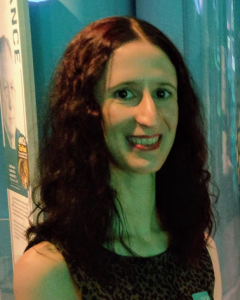
Ralf Bierig joined Maynooth University's Computer Science Department in 2017, teaching topics including information retrieval, software testing, interaction design, and virtual reality. He is the programme director of the Higher Diploma in Human-Computer Interaction (HCI) and User Experience (UX). He earned his BSc (2002) from University of Furtwangen and PhD (2008) from Robert Gordon University. Research Interests His work spans information retrieval, interactive information retrieval, personalisation, information search behavior, usability (UX), and virtual reality (VR). Recent publications focus on multimodal concept indexing, hybrid IR approaches, and contextual adaptation in search systems. Publication Trends His research combines statistical semantics, graph modeling, and multimodal data analysis across academic collaborations in Austria, Germany, and international venues like ECIR and SIGIR.
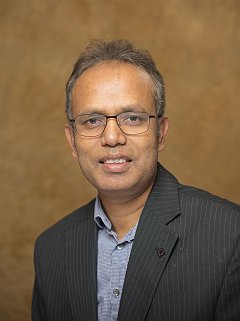
Prof. Torsten Wolfgang Kuhlen serves as a Universitätsprofessor at RWTH Aachen University, leading the Teaching and Research Area for Virtual Reality and Immersive Visualization within the Department of Computer Science. He is affiliated with Chair of Computer Science 12 (High Performance Computing), the Visual Computing Institute, and remains an integral part of the RWTH IT Center where his research group operates one of the world's largest Virtual Reality laboratories including the 30 sqm aixCAVE visualization chamber. The group maintains strong connections with Computational Science & Engineering Division, National High Performance Computing Center for Computational Engineering Science (NHR4CES), and VR in Science and Industry Network NRW e.V. Prof. Kuhlen's research spans virtual reality, immersive visualization, and multimodal 3D user interfaces with applications across simulation science, production technology, neuroscience, and medicine. His work combines basic research on advanced methods and algorithms with interdisciplinary collaborations involving RWTH Aachen institutes, Forschungszentrum Jülich, and industry partners. Recent publications demonstrate strong focus on audiovisual perception, immersive analytics, collaborative virtual environments, and practical VR applications in education and manufacturing. His research group has produced significant work on listening effort in virtual environments, immersive authoring techniques, and VR applications for scientific visualization. Notable projects include VRScenarioBuilder for automated vehicle testing and applications in monitoring additive manufacturing processes. The group actively participates in major conferences including IEEE VIS and EuroVis, with several award-winning contributions. Prof. Kuhlen has advised PhD students including Martin Bellgardt who recently completed his doctoral degree on "Increasing Immersion in Machine Learning Pipelines for Mechanical Engineering". The research group maintains state-of-the-art VR infrastructure including the aixCAVE facility which is open to all RWTH research groups.
Henry F. (Hank) Korth is a Professor of Computer Science and Engineering at Lehigh University, with a courtesy appointment in the Department of Decision and Technology Analytics in the College of Business. He serves as Director of the Blockchain Lab in the Center for Financial Services and Co-Director of the Computer Science and Business Program. Korth is a Fellow of the ACM and IEEE, and a recipient of the VLDB 10-Year Award and Bell Labs President's Silver Award for contributions to database technologies. PhD in Computer Science from Princeton University MA, MSE in Computer Science from Princeton University BA in Mathematics from Williams College Korth's research spans database systems, blockchain systems, distributed systems, and real-time systems. He has pioneered transaction management in parallel and distributed systems, query processing, and the impact of modern computing architectures on database performance. His recent work focuses on blockchain applications in enterprise databases, including acceleration of zero-knowledge proofs, benchmarking frameworks, central-bank digital currencies, and private-yet-provable accounting systems. His contributions are rooted in both theoretical advancements and practical implementations, such as the QTM™ aggregation engine and the DataBlitz™ main-memory storage manager. Scientific awards include: ACM Fellow IEEE Fellow 10-Year Award at the VLDB Conference Bell Labs President's Silver Award Korth actively supervises research within the Blockchain Lab and is affiliated with the Scalable Software Systems Research Group at Lehigh. His scholarly output reflects a deep engagement with blockchain benchmarking, concurrency control, verifiable databases, and the evolution of database systems in response to technological shifts.
Tobias Hermann serves as an Associate Professor at the University of Oxford's Department of Engineering Science, where he leads research within the Oxford Thermofluids Institute and holds a prestigious UKRI Future Leaders Fellowship. Affiliated with St. Hilda's College as an Associate Research Fellow, his work centers on experimental hypersonics and advanced diagnostic development for extreme aerospace environments. Hermann earned his Dipl.-Ing. in Aerospace Engineering from the University of Stuttgart (2012) followed by a Dr.-Ing. degree (2017), with doctoral research focused on spacecraft re-entry phenomena and aerothermochemistry during atmospheric entry. His thesis involved developing optical diagnostics including Vacuum Ultraviolet spectroscopy and tomographic emission systems. His research program emphasizes experimental hypersonics and plasma flows , with core expertise in spacecraft re-entry physics , high-temperature material-flow interactions , and optical diagnostic innovation . Hermann pioneered analytical methods for transpiration cooling in porous media and developed system engineering tools for thermal protection systems. His current work bridges fundamental fluid dynamics with practical aerospace applications, particularly in hypersonic vehicle design and re-entry simulation through facilities like the T6 expansion tube. Analysis of Hermann's publication record reveals consistent focus on high-enthalpy flow diagnostics and thermal protection systems , with recent work advancing expansion tube capabilities for boost-glide re-entry simulation, integrated arc-jet facilities for ablating models, and vacuum ultraviolet spectroscopy for plasma flow characterization. His research demonstrates strong integration of experimental validation with analytical modeling across hypersonic testing regimes. Hermann's scientific recognition includes: UKRI Future Leaders Fellowship (2021-present) As an educator, Hermann supervises 4th-year undergraduate projects and DPhil (PhD) students in hypersonics while teaching Thermodynamics and Fluid Mechanics. His current research portfolio—primarily funded through his UKRI Fellowship—comprises three major thrusts: development of high-enthalpy wind tunnels (including the multi-mode T6 facility), pre-heating of hypersonic models using plasma flows, and advancement of measurement techniques like spatially resolved UV-nIR spectroscopy. These projects address critical gaps in hypersonic testing infrastructure and instrumentation. Hermann directs experimental efforts at Oxford's Southwell Laboratory within the Oxford Hypersonics group, operating facilities including the T6 Stalker tunnel, OPG1 plasma wind tunnel, and specialized arc-jet systems. His team develops cutting-edge instrumentation such as vacuum ultraviolet spectroscopy systems, high-speed focused Schlieren, and pressure-sensitive paint diagnostics to investigate complex phenomena in hypersonic boundary layers and re-entry flows.
Dr. Daniel Carrión is an Assistant Professor of Epidemiology at the Yale School of Public Health, Department of Environmental Health Sciences. His work bridges climate science , energy transitions , and health equity , focusing on structural inequality’s role in exposure and health disparities. Education: PhD in Environmental Health Sciences (Columbia University, 2019); MPH in Environmental Health Sciences (New York Medical College, 2011); BA in Environmental Studies (Ithaca College, 2008). His research examines how home and neighborhood environments serve as intervention points for climate and health equity . Recent studies include modeling heat vulnerability in U.S. housing, geospatial analysis of lead water lines, and clean cooking interventions in Ghana. Articles span climate change , air pollution , and social determinants , with methodological focus on exposure science and case-crossover designs . Scientific honors include: Senior Fellow, Agents of Change in Environmental Justice (2022) Fellow, New York Academy of Medicine (2022) Senior Fellow, Environmental Leadership Program (2019) He contributes to community service as a member of the New York State Minority Health Council (2016–present) and the International Society for Environmental Epidemiology (2018–present). His work integrates satellite data , machine learning , and policy evaluation to address energy insecurity , racial segregation , and climate justice .
Kaori Komatsu is a Professor at the Faculty of Education and Integrated Arts and Sciences , Waseda University , specializing in Department of Oriental History . With a Doctor of Letters from the University of Tokyo and a Master of Arts from Ochanomizu University, her work bridges military history, social welfare analysis, and maritime studies. 1992 : Doctorate in Humanities from University of Tokyo 1989 : MA from Ochanomizu University Her research focuses on: Ottoman Empire History : Analyzing military ethos, economic nationalism, and welfare systems Modern Turkish Military : Comparative studies with Japanese bushido Maritime Personnel Records : Revealing ethnic and regional dynamics in late Ottoman society Selected publications highlight trends in 19th-20th century Ottoman military-maritime economics and modern Turkish ideological formations . Awards include the 25th Rasha Nishikai Award (1992) for her groundbreaking research. Her JSPS-funded projects examine: 2023-2027 : Ottoman pension systems' social impacts 2018-2023 : Global dignity concept standardization 2013-2018 : Civil society through pension records She actively collaborates with Turkish institutions like Boğaziçi University , Ankara University , and Turkish Archives , conducting fieldwork and comparative analyses.
Myrto Kalouptsidi is a Professor of Economics at Harvard University. She specializes in Industrial Organization, International Trade, and Transportation Markets. Her research explores industrial policy impacts, global trade dynamics, firm investment patterns in volatile industries, and structural modeling of transportation markets. Education: BA from University of Athens, PhD from Yale University Former faculty at Princeton University Foreign Editor at Review of Economic Studies Research Fellow at NBER and CEPR Notable awards include the Frisch Medal (2022) for her work in Econometrica and the Bodossaki Young Scientist Prize (2021) . She has secured multiple NSF grants, including a CAREER grant in 2019. Her research has been widely recognized in outlets like The Economist, LSE Business Review, and Microeconomic Insights. She advises graduate students and contributes to structural modeling advancements through publications in top journals including American Economic Review, Econometrica, and Review of Economic Studies.
Alberto Brugnoli is a Full Professor in Applied Economics at the University of Bergamo, Italy, where he has served since 2020. He holds the UNESCO Chair on Human Rights, International Cooperation and Sustainable Development and serves as Delegate for International Cooperation in Developing Countries at the University of Bergamo. His academic career spans over 30 years with progressive appointments from Researcher to Full Professor. Brugnoli's research focuses on International Development Cooperation, Sustainable Development, Local Development, Regional Governance and Policy, Migration, Municipal Financing, and Trade. His work demonstrates a strong international dimension through collaborations with institutions like Fundação Getulio Vargas (Brazil), McGill University (Canada), OECD, and the European Commission. His recent publications show a clear trajectory toward sustainability, decarbonization, and economic transition topics. His research output reveals a progression from traditional economic policy topics toward contemporary challenges of sustainability, climate change, and social development. The most recent publications (2022-2025) predominantly address decarbonization, sustainable economic transitions, and regional development strategies, reflecting current global economic policy priorities. Award by the Scientific Committee of the First Report on Finance of the Rosselli Foundation (2012) Award by the NATO Assistant Secretary General for Public Diplomacy (2009) Recognition from Università Bocconi for editorial contributions (1999) Brugnoli has advised numerous international research projects and has extensive teaching experience in Development Economics, Regional Economics, and International Cooperation. His leadership extends to serving as President of the Master's Degree Program in Human Rights, Migration and International Cooperation (2018-2022) and various delegate roles at the University of Bergamo.
Marios Polycarpou is a Professor of Electrical and Computer Engineering and Director of the KIOS Research and Innovation Center of Excellence at the University of Cyprus. He holds honorary positions at Imperial College London and is a member of Academia Europaea. His expertise spans intelligent systems, adaptive control, machine learning, and critical infrastructure. Education: B.A. Computer Science (Rice University, 1987) B.Sc. Electrical Engineering (Rice University, 1987) M.S. Electrical Engineering (University of Southern California, 1989) Ph.D. Electrical Engineering (University of Southern California, 1992) Research Focus: Polycarpou’s work emphasizes fault diagnosis in cyber-physical systems, water distribution networks, and adaptive control. He pioneers digital twin technologies for infrastructure resilience and develops algorithms for real-time anomaly detection and system optimization. Article Trends: His recent publications address adaptive control strategies, cybersecurity in networked systems, and AI-driven solutions for water management. Key themes include distributed control, event-triggered mechanisms, and transformer-based anomaly localization. Awards: 2023 IEEE Frank Rosenblatt Technical Field Award 2016 IEEE Neural Networks Pioneer Award Fellow of IEEE and IFAC Grants & Leadership: He secured prestigious grants including ERC Advanced and Synergy Grants. He led KIOS CoE’s Horizon 2020 projects and served as IEEE Computational Intelligence Society President (2012–2013). Labs & Teams: Directs the KIOS CoE, a hub for AI in critical infrastructure. Collaborates on projects like ERC Water-Futures, focusing on long-term water system transitions and contamination mitigation.
Dr. Rachel Scholes is an Assistant Professor in the Department of Civil Engineering at the University of British Columbia. Her research focuses on protecting human and environmental health through the study of contaminants in urban water systems, with an emphasis on optimizing contaminant removal in engineered and nature-based treatment systems. She holds a B.S. in Chemical Engineering from Northwestern University and M.S. and Ph.D. in Environmental Engineering from the University of California, Berkeley. Her research interests include environmental chemistry, trace contaminants, water reuse, nature-based treatment systems, and stormwater treatment. She teaches courses such as ENVE 301 (Environmental Engineering Intermediate Design Project) and CIVL 562 (Environmental Data Collection and Analysis). Her lab, Scholes Lab, actively investigates contaminant dynamics in constructed wetlands, bioretention systems, and subsurface treatment environments. Key research contributions include enhancing contaminant removal via Fe (III)-EDTA-amended wetlands, studying 6PPD-quinone dynamics in salmon streams, and optimizing pharmaceutical attenuation in benthic wetland biomats. Her work bridges fundamental environmental chemistry with applied engineering solutions for sustainable water management. Dr. Scholes' lab collaborates on projects funded by grants focused on urban water systems, green infrastructure, and contaminant fate. She advises students through the Scholes Lab (www.scholeslab.org), which emphasizes interdisciplinary approaches to environmental challenges.
Dr. Sophie Adams serves as an ARC DECRA Fellow in the Department of Sociology at La Trobe University, where she conducts interdisciplinary research at the intersection of human geography and Science and Technology Studies. Her work critically examines the social dimensions of climate change mitigation and adaptation, with particular emphasis on renewable energy transitions and the societal implications of technological solutions to environmental crises. Adams' research program centers on the politics of environmental knowledge , investigating how climate science informs policy formation and the negotiation of social objectives in decarbonisation processes. She employs qualitative and participatory methodologies to analyze climate change adaptation in energy systems , social license for technological interventions , and the redistribution of expertise in public health and environmental governance. Her scholarship consistently addresses power dynamics in knowledge production and the democratic challenges of sustainability transitions. Analysis of her publication trajectory (2019-2025) reveals increasing focus on energy-social interfaces, with significant contributions to understanding virtual power plants, demand-side management, and the role of modeling in climate policy. Her work demonstrates methodological innovation through participatory approaches while maintaining critical engagement with resilience thinking and adaptation frameworks. Scientific recognition includes: Australian Research Council Discovery Early Career Researcher Award (ARC DECRA) Supported by her DECRA fellowship, Adams leads independent research projects examining the societal dimensions of energy transitions. Her collaborative work spans geography, public health, and energy engineering, as evidenced by interdisciplinary co-authorship patterns. Current projects investigate Australian householders' conditions for participating in virtual power plants and the social implications of climate modeling in adaptation planning, reflecting her commitment to socially relevant environmental research.
Olivia Di Matteo serves as an Assistant Professor in the Department of Electrical and Computer Engineering within UBC's Faculty of Applied Science, leading the Quantum Software and Algorithms Research (QSAR) group since her January 2022 appointment. Her academic foundation includes a BSc from Lakehead University and MSc/PhD in Physics (Quantum Information) from the University of Waterloo, completed in 2019. Dr. Di Matteo's research centers on quantum software engineering , with pioneering work in quantum compilation , circuit optimization , and debugging tools . She champions open-source quantum frameworks and develops accessible educational resources to democratize quantum computing. Analysis of her 15 most recent publications (2021-2025) reveals dominant trends in quantum programming infrastructure, particularly circuit analysis (33%), bug classification (20%), and qubit network optimization (15%), with strong emphasis on practical software tooling over theoretical physics. No scientific awards were documented in the source materials. She advises graduate students in the QSAR group while contributing to open-source quantum ecosystems through projects like PennyLane and The Ionizer transpiler, and teaches courses including CPEN 400Q (Gate-model quantum computing) and ELEC 221 (Signals and Systems). The QSAR group operates at the intersection of quantum software development and education, focusing on making quantum programming accessible through visual tools, real-time debugging environments, and hardware-agnostic compilation techniques.
Chanchal K. Roy is Professor of Software Engineering/Computer Science at the University of Saskatchewan and Co-Director of the Software Research Lab. He leads an NSERC CREATE graduate program on Software Analytics Research and co-leads the Data Management group for an NSERC CFREF project on Food Security, with over 170 publications cited 6,000+ times. His research centers on software clone detection using the widely adopted NICAD system, software evolution, empirical studies, and AI-driven software analytics. Recent work integrates large language models for code generation, clone detection in the AI era, and developer interactions with tools like ChatGPT, emphasizing practical applications in maintenance and analytics. Analysis of his 15 most recent publications reveals a strong trend toward AI/ML integration in software engineering: 12 of 15 articles (2025) explore LLMs, quantum computing, or deep learning for tasks like bug localization, code snippet generation, and feature-toggle analysis. Key themes include empirical validation of AI tools, Stack Overflow data mining, and cross-domain frameworks for Society 5.0. His scientific awards include: Most Influential Paper Awards (SANER 2018, ICPC 2018) Outstanding Young Computer Science Researcher Award (CS-Can/Info-Can, 2018) New Researcher Award (University of Saskatchewan, 2019) New Scientist Research Award (College of Arts and Science, 2019) As lead of the NSERC CREATE program and CFREF data group, he mentors graduate students in software analytics while securing major grants. He actively serves on program committees for ASE, ICSE, and FSE, reviewing journals and organizing workshops on clone detection and empirical methods. His lab focuses on real-world applications in food security data management and software evolution. The Software Research Lab, co-directed by Roy, drives projects like NICAD and the NSERC CREATE initiative, emphasizing open-source contributions and industry collaboration. Current efforts include quantum-SE integration and AI-augmented maintenance tools under the CFREF food security mandate.
Sri Kolla, Ph.D. is a tenured Professor in the Department of Electronics and Computer Engineering Technology at Bowling Green State University (BGSU) , where he has served since August 2002. He also served as a Visiting Professor at the Indian Institute of Science (2017) and as a Fulbright Research Scholar (2008-2009). His academic career spans faculty roles at Penn State University, University of Toledo, and consortium graduate faculty at Indiana State University. Education: Ph.D. in Electrical Engineering and Computer Science (University of Toledo, 1989) M.S. in Electrical and Computer Engineering (University of Saskatchewan, 1986) M.E. in Electrical Engineering (Indian Institute of Science, 1983) B.E. in Electrical Engineering (Andhra University, 1981) Research Interests: Dr. Kolla specializes in Electrical Power and Energy Systems with Smart Grid applications, Control Systems for networked environments, and Machine Learning techniques for power system diagnostics. His work focuses on fault detection in microgrids using LSTM networks, stability robustness of discrete-time systems, and multi-agent protection schemes for power infrastructure. Scientific Contributions: Developed robust control frameworks for microgrid systems under parameter variations (2023-2025) Pioneered AI-based fault identification in induction motors and transformers (1995-2000) Advanced networked control system designs addressing time delays (2002-2012) Published 82+ technical articles in IEEE, ISA Transactions, and conference proceedings Honors and Recognition: Recipient of the Fulbright-Nehru Academic and Professional Excellence Award and Whiteford Scholarship . Senior member of IEEE and ISA , with listings in Marquis Who’s Who and fellowships in The Institute of Engineers (India) .
Richard G. Luthy is the Silas H. Palmer Professor of Civil and Environmental Engineering at Stanford University, with a courtesy appointment in Oceans. He directs the NSF Engineering Research Center ReNUWIt, focusing on sustainable urban water infrastructure. His research emphasizes water reuse, stormwater management, and contaminant mitigation in engineered systems. He holds a Ph.D. from UC Berkeley, and has authored over 300 publications. Awards include the Rudolf Hering Medal and membership in the National Academy of Engineering. He teaches courses on water quality, treatment processes, and California water policy. Education: B.S. Chemical Engineering (UC Berkeley, 1967), M.S. Ocean Engineering (UH, 1969), M.S. and Ph.D. Civil Engineering (UC Berkeley, 1974/1976), Hon. Sci. D. (Clarkson U., 2005). Research Interests: Urban water challenges, persistent contaminants, stormwater treatment, and sustainable infrastructure. His work integrates systems-level analysis for water reuse and climate-resilient solutions. Awards: Rudolf Hering Medal (ASCE, 2022), Perry L. McCarty AEESP Award (2023), and leadership roles in the National Research Council and AEESP. Labs/Teams: Luthy Group (Stanford), ReNUWIt Consortium. Current advisees include Nora AlMaqsseed and Jessica MacDonald. He collaborates on projects like activated carbon sediment remediation and stormwater control measure design.