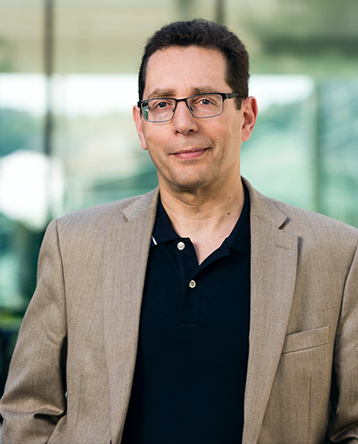
Alison Galvani is the Burnett and Stender Families Professor of Epidemiology at Yale School of Public Health and Yale School of Medicine, where she serves as founding director of the Center for Infectious Disease Modeling and Analysis (CIDMA). Her interdisciplinary work bridges epidemiology, evolutionary ecology, and health economics to inform public health policies for diseases including HIV, Ebola, influenza, and COVID-19. Her research focuses on optimizing vaccination strategies and healthcare interventions through mathematical modeling. Recent studies examine SARS-CoV-2 transmission dynamics, RSV vaccine impact, and integration of social determinants into infectious disease models. She has pioneered frameworks for conflict-induced migration analysis and pharmaceutical policy evaluations. Notable scientific awards include the Bellman Prize, Blavatnik Award for Young Scientists, and Guggenheim Fellowship. Her publications span top journals like The Lancet , Nature Communications , and PNAS , with media coverage in major outlets and policy references.
Harald Rohracher is a Professor at the Department of Theme (TEMA) , Linköping University , affiliated with the Theme Technology and Social Change (THEME) . His research focuses on sociotechnical transitions for climate-neutral cities , examining energy systems, digitalization, and governance strategies. Grants: Formas, Horizon Europe, Vinnova Labs: STRIPE (Sociotechnical Research on Infrastructures, Politics, and Environment), Biogas Solutions Research Center Students: Adam Svensson, Stella Huang, Gavin Nilsson Lewis, Giorgi Kankia Rohracher investigates how households , social movements , and policy frameworks interact in transformative processes. His recent work explores smart grid politics , decentralized energy systems , and urban food digitalization , emphasizing power dynamics and governance experiments. He leads projects on transdisciplinary education for climate governance, positive energy districts , and collective experimentation across Sweden and Spain. His scientific grants highlight institutional support for sustainability research, while his research teams bridge academic, governmental, and civil society actors.
Atakan Aral serves as an Associate Professor at the Faculty of Computer Science, University of Vienna, where he leads research in edge computing, distributed systems, and environmental monitoring applications. His work focuses on developing efficient and resilient computing systems for environmental applications, with particular emphasis on neuromorphic edge AI and the cloud-edge continuum. He maintains an active teaching schedule offering courses in Distributed Systems Engineering, Cloud Computing, and Practical Software Courses with Bachelor's Thesis work across multiple semesters through 2025. Dr. Aral's research interests span several critical areas in modern computing including edge computing architectures, federated learning approaches, neuromorphic computing for environmental monitoring, and resilient systems design. His work addresses fundamental challenges in resource-constrained environments, particularly focusing on latency-sensitive applications and energy-efficient computation. The interdisciplinary nature of his research bridges theoretical computer science with practical environmental applications, developing systems that can operate effectively in remote or resource-limited settings. Analysis of his recent publication trajectory reveals a clear evolution from foundational cloud computing research toward increasingly specialized edge intelligence systems. Early work focused on resource allocation and scheduling in cloud environments, while his current research emphasizes neuromorphic approaches for sustainable environmental monitoring. His publications demonstrate growing interdisciplinary collaboration, particularly with environmental scientists, and increasing focus on practical implementations of theoretical concepts in real-world monitoring systems. Dr. Aral leads significant research projects including TROCI (Towards Resilient Operation of Critical Infrastructure), an ongoing initiative, and SWAIN (Sustainable Watershed Management Through IoT-Driven AI), which ran from February 2021 to February 2024. His work spans multiple dimensions of computing systems, from hardware-aware algorithms to application-level implementations, with consistent contributions to major conferences and journals in distributed systems and edge computing. He is an active member of the Scientific Computing research group at the University of Vienna, working from Room 6.49 at Währinger Straße 29. His research environment includes collaboration with the Environment and Climate Research Hub, reflecting the interdisciplinary nature of his work that bridges computer science with environmental applications. His publications indicate strong international collaboration across European institutions and research groups.
Zian Qin serves as an Associate Professor in the Department of Electrical Sustainable Energy at Delft University of Technology, Netherlands. His academic journey includes a B.Sc. from Beihang University (2009), M.Sc. from Beijing Institute of Technology (2012), and Ph.D. from Aalborg University (2015), all in Electrical Engineering, with a Visiting Scientist stint at RWTH Aachen University (2014). B.Sc., Electrical Engineering, Beihang University (2009) M.Sc., Electrical Engineering, Beijing Institute of Technology (2012) Ph.D., Electrical Engineering, Aalborg University (2015) His research centers on power electronics-based grid stability, solid-state transformers, and battery energy storage systems. Key contributions span DC microgrid control, magnetic material optimization, and EV charging infrastructure, with fingerprints highlighting expertise in power quality ( 100% ), voltage stability ( 87% ), and grid-forming applications ( 79% ). Current projects like ECS4DRES and GROW focus on resilient renewable energy systems and African energy storage solutions. His 154+ publications reveal strong emphasis on power electronics control ( 83% ), grid integration ( 79% ), and EV technologies ( 42% ), with recent work targeting microgrid vulnerability reduction and data-driven magnetic loss modeling. Awards include IEEE Prize Paper Awards (2023), World Top 2% Scientist recognition, and IEEE Innovation Awards (2024). IEEE International Challenge Excellent Innovation Award (2024) IEEE Open Journal Prize Paper Award (2023) World's Top 2% Scientist (2022-2024) Featured IES Journal Articles (2023) IEEE TIE Distinguished Reviewer (2020) As Founding Chair of IEEE Transportation Electrification Council Benelux Chapter and Dutch National for Cigre WG B4.101, he leads critical industry collaborations. His editorial roles in IEEE TPEL/TIE/JESTPE and projects like PROGRESSUS demonstrate significant grant leadership in next-generation power infrastructure. Lab activities focus on DC systems, energy conversion, and storage validation through Delft's Electrical Sustainable Energy facilities.
Arnold M. Howitt is an Adjunct Lecturer in Public Policy at Harvard University's Harvard Kennedy School (HKS), where he also serves as Senior Adviser to the Roy and Lila Ash Center for Democratic Governance and Innovation. He co-directs the Program on Crisis Leadership, focusing on emergency preparedness, disaster recovery, and intergovernmental policy implementation. His work spans executive education programs for senior officials in crisis management, including Leadership in Crises and Homeland Security, and he has co-founded initiatives like the National Preparedness Leadership Initiative. Dr. Howitt’s research examines crisis management in the U.S. and globally, with a focus on cross-jurisdictional coordination, emergency response systems, and lessons from disasters like the 2015 Paris attacks, Nepal earthquakes, and Japan’s 2011 triple disaster. He has held visiting faculty roles at Japanese universities and teaches part-time at Tsinghua University’s Schwarzman College in Beijing. His affiliations include the Belfer Center for Science and International Affairs and the Mossavar-Rahmani Center for Business and Government. Dr. Howitt has directed major projects such as the Executive Session on Domestic Preparedness and advised international agencies on disaster recovery. He earned his AB from Columbia University and MA/PhD in political science from Harvard.
Hongtao Zhu is an Associate Professor at the University of Wollongong (UOW), Australia, affiliated with the School of Mechanical, Materials, Mechatronic and Biomedical Engineering. He holds a PhD from Northeastern University (China) and has held academic positions at UOW since 2002, progressing from Research Fellow (2002–2013) to Senior Lecturer/Lecturer (2013–2022) before becoming an Associate Professor in 2022. His research focuses on Contact Mechanics , Tribology , Advanced Manufacturing , and Computational Material Science . Notable contributions include studies on rail-wheel contact systems, high-entropy alloys, and friction reduction in manufacturing processes. He has authored/co-authored over 230 publications with an H-index of 38 (Scopus) and secured $2.2M in industry grants. Zhu leads the 'Wheel and Rail Contact System' research group, collaborating with major railway industries. He has supervised 22 PhD students (6 as principal supervisor) and currently oversees 5 PhD candidates. His professional roles include editorial board memberships for journals like Advances in Materials Science and Engineering and service as an assessor for funding bodies in Australia, Chile, Poland, and the Czech Republic. Key achievements include securing 5 ARC Discovery Projects, 3 ARC Linkage Projects, and industry collaborations with organizations like Sydney Trains and Comsteel. His work addresses critical challenges in rail infrastructure durability, material optimization, and sustainable manufacturing.
Michela Bertolotto is a Professor in the School of Computer Science at University College Dublin (UCD). Her research focuses on spatio-temporal data modeling, GIScience, and applications of geospatial technologies in fields like urban planning and health informatics. She leads a research group and has supervised 19 PhD and 8 MSc students. Her work includes innovations in LiDAR-based flood risk visualization, semantic web quality assurance, and open-source spatial data analysis. Bertolotto has held roles including College Lecturer at UCD (2000–2006) and postdoctoral research positions at the University of Maine and University of Genoa. Education: BSc and PhD in Computer Science from the University of Genoa (1993, 1998). Professional achievements include over 100 publications, 24 grants (e.g., Science Foundation Ireland-funded Urban ARK project), and editorial roles at journals like the International Journal of Geographical Information Science. Awards include the UCD President's Research Award (2001) and NATO Postdoc Fellowship (1998–1999). Research interests span map personalization, volunteered geographic information (VGI), and geospatial data quality. Her lab develops tools like the LAMSkyCam (low-cost sky imaging system) and dynamic flood risk viewers. She chairs international conferences and serves on program committees for GIScience events.
Dr. Kalyan R. Piratla is a Professor in the Department of Civil Engineering at Clemson University's College of Engineering, Computing and Applied Sciences. His research focuses on underground construction, infrastructure resilience, and sustainable water systems. He leads the Center for Research in Underground Infrastructure Systems Engineering (CRUISE), which develops decision-making models to enhance the sustainability and resilience of underground infrastructure systems. Ph.D. in Construction Management, Arizona State University (2012) Masters in Civil Engineering, Indian Institute of Technology Madras (2008) Bachelors in Civil Engineering, Indian Institute of Technology Madras (2007) Dr. Piratla's research integrates interdisciplinary approaches across water supply systems , power systems engineering , wireless sensing technologies , and graph theory . His work emphasizes: Seismic resilience metrics for pipeline systems Decentralized water reuse planning Vibration-based infrastructure monitoring Interdependencies among lifeline infrastructures Transportation project delivery optimization Research trends include: Application of machine learning to pipeline leakage detection Advanced seismic vulnerability assessment Life cycle cost analysis of water reuse systems Integration of geotechnical and structural monitoring Scientific Awards S.E. Liles, Jr. Distinguished Professor Dr. Piratla actively supervises graduate research and offers assistantships for PhD students. His work benefits water utilities, construction contractors, and emergency response agencies through innovative monitoring techniques and resilience enhancement frameworks . His CRUISE research group explores: Interdependencies among critical infrastructure systems Transportation project delivery efficiency Collaborations spanning power systems and wireless sensing
Dr. Ralph Evins is an Associate Professor and Director of the Graduate Program in the Department of Civil Engineering at the University of Victoria. He holds affiliations with the Urban Energy Systems laboratory at Empa and ETH Zurich in Switzerland. His expertise spans building energy simulation, energy system optimization, and machine intelligence applications in sustainable design. Evins holds an MEng from Imperial College London and an EngD from the University of Bristol. His research focuses on computational problem-solving in energy systems, including surrogate modeling, optimization algorithms, and machine learning. He develops tools like the Holistic Urban Energy Simulation (HUES) platform and BESOS software framework to bridge building, district, and city-scale energy analysis. His work emphasizes holistic systems thinking, integrating energy hubs, thermal modeling, and digital twin technologies. Recent articles explore surrogate model refinement, inverse modeling for building characterization, and decarbonization strategies. He collaborates with industry to translate academic innovations into practical solutions. Evins advises students in energy systems and leads projects on net-zero building design, retrofit prioritization, and smart grid integration. His research addresses challenges in climate adaptation, energy efficiency, and sustainable urban development through interdisciplinary approaches.
Professor Thomas Astell-Burt is a Professor of Cities and Planetary Health at the University of Sydney's School of Architecture, Design and Planning. His work focuses on the intersection of urban environments, green spaces, and public health. He is a member of the Sydney Environment Institute and the Charles Perkins Centre. His research examines how urban planning and green infrastructure can mitigate health inequities, combat climate change, and improve mental/cardiometabolic health. Key areas include nature prescriptions, heat-related mortality, and the role of green spaces in reducing loneliness. Recent grants include projects on aged care workforce sustainability, nature-based strategies for loneliness reduction, and the PANDA Trial for cardiometabolic disease prevention. Over 180+ publications span peer-reviewed journals like Scientific Reports , Climate , and PloS One , with a focus on global health trends and urban environmental policies. His work bridges epidemiology, urban design, and interdisciplinary collaboration to inform evidence-based health policies. Key affiliations include leadership roles in global health initiatives and collaborations with institutions like the University of Glasgow. His research has been cited in policy frameworks addressing urban sustainability and planetary health.
Simon Coleman is the Chancellor Jackman Professor in the Arts at the University of Toronto, based in the Jackman Humanities Building. He holds a PhD from the University of Cambridge and has held prior roles as Head of Anthropology at the University of Sussex and Reader at Durham University. His research focuses on the anthropology of religion, global Christianities, and urban religious expression, with fieldwork in Sweden, the UK, and Nigeria. Coleman is co-editor of the Journal of Religion and Society and co-leads the British Academy-funded project on religious infrastructures in Lagos. In 2024, he was elected a Fellow of the Royal Society of Canada for his contributions to religious anthropology. Education: PhD, University of Cambridge MA, University of Cambridge BA, University of Cambridge His research interests include ethnographic studies of Pentecostalism, pilgrimage practices, and the intersections of religion with sovereignty and urban life. Current projects explore theological influences on political formations through the Entangled Worlds initiative, which bridges natural, social, and human sciences. Coleman has authored influential works on pilgrimage and global Christian movements. Awards: Fellow of the Royal Society of Canada (2024) Grants & Collaborations: British Academy-funded project on Lagos religious infrastructures (with Nigerian/UK colleagues) Labs/Teams: Leads the interdisciplinary Entangled Worlds: Sovereignty, Sanctities and Soil project analyzing theological-political dynamics.
Philippe Hamman is a Professor of Sociology and Director of the Institute of Urban Planning and Regional Development (IUAR) at the Faculty of Social Sciences, University of Strasbourg. He leads the Master’s program in City and Environment and holds significant leadership roles, including Scientific Assessor and President of the Faculty Scientific Commission since 2016. He is the holder of the Jean Monnet Chair 'GoInUSE' and the Chaire MAKErS on agricultural methanization in Europe, reflecting his central role in sustainability research. His research focuses on urban and regional sustainability, energy transitions, cross-border cooperation in the Upper Rhine region, environmental governance, and socio-ecological issues. He leads major projects funded by Interreg, CNRS, and ADEME, often in trinational collaborations with Germany and Switzerland. His work bridges sociology, environmental studies, and policy analysis. His recent publications explore citizen energy cooperatives as commons, urban sustainability governance, agricultural methanization, and the social dimensions of environmental issues such as tick-borne diseases and pandemic-era urban planning. The articles reflect a consistent focus on sustainability transitions, territorial governance, and citizen participation, with a strong comparative and interdisciplinary approach, particularly between France and Germany. Scientific Assessor, Faculty of Social Sciences, University of Strasbourg (since 2016) President, Faculty Scientific Commission (since 2016) Member, Council of the Faculty of Social Sciences (2016–2026) President, Committee of Experts, Faculty of Social Sciences (2019–2024), then IUAR (2025–2028) Expert for ANR, ANRT, HCERES, INRAE, and multiple European research funds Member of editorial boards for Espaces et sociétés , Revue de l’Allemagne et des Pays de langue allemande , and others He supervises doctoral students Aude Dziebowski and Romane Joly and teaches courses in urban sociology, sustainable development, and the sociology of urban projects. He is deeply embedded in academic service, peer review, and the editorial direction of research journals and book series. His laboratory, SAGE (UMR 7363), is a key hub for interdisciplinary research on societies, actors, and governance in Europe, where he co-leads research axis 3 on urban and environmental issues.
Nancy Kass is a Professor in the Department of Health Policy and Management at the Johns Hopkins Bloomberg School of Public Health, where she also holds the Phoebe R. Berman Professorship in Bioethics and Public Health. She serves as Vice Provost for Graduate and Professional Education at Johns Hopkins University and is the Interim Chair of the Department of Health Policy and Management. Additionally, she is Deputy Director for Public Health at the Johns Hopkins Berman Institute of Bioethics and co-directs the Johns Hopkins Fogarty African Bioethics Training Program. ScD, Johns Hopkins University, 1989 BA, Stanford University Postdoctoral Fellowship, Kennedy Institute of Ethics, Georgetown University Dr. Kass’s research focuses on the ethical dimensions of public health policy and research, with particular expertise in bioethics, research ethics, public health ethics, informed consent, learning health systems, and global health ethics . Her work addresses ethical challenges in HIV/AIDS, obesity prevention, genetics, and international research. She has developed influential frameworks for ethical oversight in public health and clinical research. Her recent publications (2024–2025) reflect a strong focus on modernizing clinical research ethics, including optimizing informed consent, integrating clinical trials with medical practice, and enhancing data infrastructure. These works emphasize ethical governance, patient-centered decision-making, and the alignment of research with real-world healthcare delivery. Her scholarship spans high-impact journals such as JAMA and Implementation Science , demonstrating sustained scholarly leadership. GBFFR Annual Award, Global Forum on Bioethics in Research, 2016 Member, National Academy of Medicine (formerly Institute of Medicine), 2008 Fellow, Hastings Center, 2007 Delta Omega Honorary Society in Public Health, 1996 AMTRA (Advising, Mentoring, and Teaching Award), Johns Hopkins, 1996 Dr. Kass has played a pivotal role in education and mentorship, having directed the PhD program in Bioethics and Health Policy for 15 years. She currently leads the Fogarty-funded African Bioethics Training Program, advancing global bioethics capacity. She has served on numerous national and international advisory bodies, including the National Cancer Institute’s central IRB, the National Academy of Medicine, and the WHO Ethics Review Committee. Her leadership extends to chairing the national Precision Medicine Initiative central IRB. She is actively involved in research projects such as the CDC Informed Consent Project, Bioethics of Quality Improvement, and Demonstrating Respect and Acceptable Consent Strategies in patient-centered outcomes research. These initiatives underscore her commitment to ethical innovation in public health and clinical practice.
Seung-kyung Kim serves as the Korea Foundation Professor in the Department of East Asian Languages and Cultures and Director of the Institute for Korean Studies at Indiana University's School of Global and International Studies. Previously, she held leadership roles at the University of Maryland including Chair of Women’s Studies, Director of the Center for East Asian Studies, founding Director of the Asian American Studies Program, and Acting Associate Dean for the College of Arts and Humanities. Her research centers on gender dynamics in social movements, examining women's roles as workers and their interactions with state structures. She investigates transnational migration under globalization, with particular focus on family experiences and educational outcomes, while developing feminist frameworks for understanding social transformation. This interdisciplinary work bridges Korean Studies, Gender Studies, and Global Migration Studies through empirical analysis of South Korean contexts. Recent publications (2020-2021) reveal a trajectory emphasizing critical area studies methodology, transnational feminist theory, and institutional analysis of Korean Studies development. Her work consistently connects micro-level family dynamics with macro-level globalization processes, particularly through examinations of kinship systems, educational migration (Kirŏgi families), and state-society negotiations in East Asia. No scientific awards, prizes, or fellowships were documented in the provided materials. The available records indicate no explicitly listed graduate students or advisees. No research grants, funding sources, or sponsored projects were specified in the source text, though her directorship of the Institute for Korean Studies implies administrative oversight of research initiatives. As Director of the Institute for Korean Studies, Kim leads a major research hub promoting interdisciplinary scholarship on Korea within Indiana University's School of Global and International Studies. Her previous directorship of Maryland's Center for East Asian Studies demonstrates sustained leadership in building academic infrastructure for area studies, while her founding of the Asian American Studies Program highlights commitment to intersectional research frameworks.
Norman Sadeh is a Professor in the School of Computer Science at Carnegie Mellon University (CMU), where he has made significant contributions to cybersecurity, privacy, and AI research. He has co-founded and co-directed several groundbreaking graduate programs at CMU, including the Privacy Engineering Program (2012-present), the Ph.D. Program in Societal Computing (2003-2013), and the MBA track in Technology Strategy and Product Management (2005-2017). Carnegie Mellon University, School of Computer Science Software and Societal Systems Department CyLab Security and Privacy Institute Manufacturing Futures Institute Dr. Sadeh received his Ph.D. in Computer Science at CMU with a major in Artificial Intelligence and a minor in Operations Research. He holds an M.Sc. in computer science from the University of Southern California and a BS/MS degree in electrical engineering and applied physics from the Free University of Brussels (Belgium) as 'Ingénieur Civil Physicien.' Professor Sadeh's research spans cybersecurity, online privacy, Human-AI Interaction, AI governance, mobile computing, the Internet of Things, user-oriented machine learning, and language technologies. He is particularly known for his pioneering work on AI-based privacy enhancing technologies, including privacy assistants, automated privacy compliance tools, and NLP-based privacy solutions. His work has influenced the design of privacy features at major technology companies including Apple, Google, and Facebook/Meta, as well as privacy policies at regulatory agencies like the Federal Trade Commission and the California Office of the Attorney General. Analysis of his recent publications shows a strong focus on practical privacy solutions, particularly in mobile and IoT contexts, with an emphasis on making privacy more usable and understandable for end users. His work bridges technical innovation with policy implications, addressing both the technological and human aspects of privacy protection. 2018 Outstanding Entrepreneur of the Year award from the Pittsburgh Venture Capital Association Test of time award by the AAAI Conference on Web and Social Media (ICWSM) Gartner Group's Magic Quadrant leader in Security Awareness Computer-Based Training for 4 consecutive years Deloitte's Technology Fast 500 recognition for 3 consecutive years Professor Sadeh has advised numerous students, including PhD candidates like Aerin (Shikhun) Zhang, whose dissertation focused on understanding diverse privacy attitudes. His research has been funded through various grants, including NSF SaTC projects, and has resulted in technologies that protect tens of millions of users worldwide. He also founded Wombat Security Technologies, which was acquired by Proofpoint in 2018 and whose technologies are used by over 75% of Fortune 100 companies. Professor Sadeh leads several research initiatives including the Privacy Engineering Program, the Usable Privacy Policy Project, the Personalized Privacy Assistant Project, and CMU's Privacy Infrastructure for the Internet of Things. His Mobile Commerce Lab and E-Supply Chain Management Lab have produced influential research that has been commercialized by major organizations including IBM, Raytheon, Boeing, and the U.S. Army.