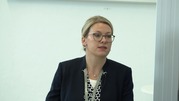
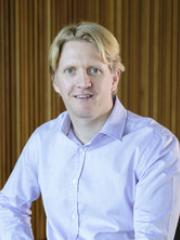
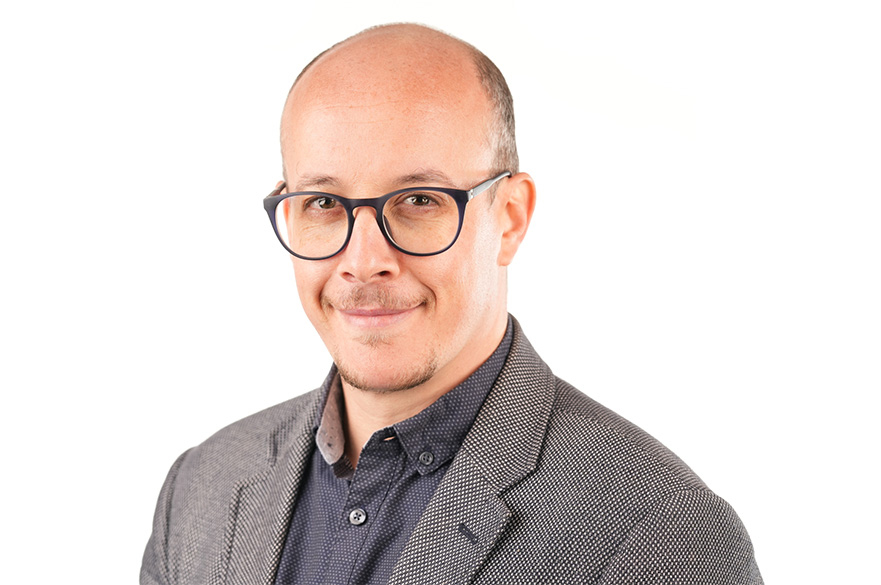
Christian Koch is a Professor and Head of Section at the University of Southern Denmark (SDU) Civil and Architectural Engineering, Department of Technology and Innovation, where he leads research on construction industry dynamics, climate change mitigation, and digital transformation. His work bridges institutional theory with practical challenges in sustainable development and organizational innovation. SDU Climate Cluster EU SAND Project Participant Creative Construction Conference Chair Research interests include circular economy implementation, blockchain in construction logistics, lean construction methodologies, and AI applications for safety analysis. His studies focus on institutional entrepreneurship, interorganizational networks, and policy impacts on construction practices, particularly in Denmark and Sweden. Recent article trends analyze machine learning for accident report analysis, blockchain-enabled resource marketization, and climate-resilient infrastructure. Notable awards include the Taylor and Francis Best Theoretical Paper (2025), SCC Fast Track Award (2024), and CME Best Paper on Societal Challenges (2022). Scientific awards include: Taylor and Francis Best Theoretical Paper (2025) SCC Fast Track November 2024 CME Best Paper Transformative Impact (2022) Best Paper Creative Construction Conference (2025) He actively participates in public discourse through media engagements on construction safety, climate adaptation, and sustainable sand extraction for green transitions.
Tiffany Roberts Briggs serves as Chair and Associate Professor in the Department of Geosciences at Florida Atlantic University. Her academic foundation includes a Ph.D. (2012), M.S. (2008), and B.S. in Environmental Science with Honors (2006), all from the University of South Florida. Her research centers on coastal geomorphology and sedimentology , with critical focus on beach-dune-nearshore system responses to natural events like hurricanes and anthropogenic interventions including coastal engineering. Key specialties include beach morphology evolution, microplastics in coastal sediments, sea turtle habitat characterization, and coastal resilience strategies. Current projects involve Hurricane Ian impact analysis, regional sediment management, and decadal-scale inlet dynamics. Teaching portfolio spans undergraduate and graduate courses including Physical Geology, Coastal and Marine Science, Shore Erosion & Protection, and specialized topics in beach morphodynamics. She actively mentors graduate students through directed research courses and supervises thesis work evident in her co-authored publications with student researchers. Briggs directs research at the Coastal Studies Lab and leads field investigations across Southeast Florida coastlines. Her work integrates advanced methodologies including LiDAR, aerial imagery, and GIS modeling for coastal change assessment. Recent publications reveal strong collaboration with agencies like USACE and NOAA, particularly in post-hurricane damage evaluation and community resilience planning.
Prof. Dr. Bianca Devos is a University Professor at the Department of Iranian Studies within the Center for Near and Middle Eastern Studies (CNMS) at Philipps University of Marburg . Specializing in 20th-century Iranian history, her work examines intersections of religion and state politics, press history, and cultural policies during the Pahlavi era. Professor of Iranian Studies (W3), Philipps University of Marburg (since 2021) Co-Director, Gerda Henkel Foundation project State Islam in Pre-Revolutionary Iran (2018-2021) Key research themes: Modernization processes, cultural heritage, secularism, and societal elites in Iran Her research projects, such as the analysis of Friedrich Werner von der Schulenburg and Ernst E. Herzfeld's correspondence (1923-1939), explore socio-cultural contexts of archaeological practices and state engagement with antiquity. She has presented extensively on topics like the Shah's Mecca pilgrimages, press coverage of Persepolis excavations, and debates on literary modernity in Persian texts. Current leadership roles: Director of CNMS, member of the Senate of Marburg University Academic networks: Association for Iranian Studies, Societas Iranologica Europaea, Deutsche Morgenländische Gesellschaft
Associate Professor Ilje Pikaar is affiliated with the School of Civil Engineering at The University of Queensland . He holds a PhD in Environmental Engineering (2012) from UQ, preceded by BSc (2004) and MSc (2006) in Environmental Science and Technology from Wageningen University, Netherlands. Research Interests: Environmental electrochemistry, global nitrogen cycle, sewer corrosion mitigation, next-generation sludge management, metal recovery, integrated urban water management, resource recovery with emphasis on nitrogen recovery and microbial protein production. Scientific Contributions: Over 40 peer-reviewed publications (avg. impact factor 8.51), including first-author papers in Science (2014), Nature Food (2020), and Lancet Planetary Health (2021). His 2017 work on nitrogen-efficient food systems was recognized with the best feature article award in Environmental Science and Technology . Leadership Roles: Co-chair (2019–present) and former secretary (2015–2019) of the International Water Association's Resource Recovery from Water cluster. Associate Editor for Waste Management (2018–present) and guest editor for Water Research (2020). Funding: Secured 7 Australian Research Council (ARC) projects as Chief Investigator. Played a pivotal role in the $50M CRC Blue Economy project (2016–2023). Editorial Work: Developed a graduate-level textbook with IWA Publishing (2021) and serves on advisory boards for Environmental Science and Technology (2020–present).
Joshua Barker serves as Professor of Anthropology, Dean of the School of Graduate Studies, and Vice-Provost of Graduate Research and Education at the University of Toronto. His academic leadership spans institutional governance while maintaining active ethnographic research focused on power dynamics in Southeast Asian urban contexts, particularly Indonesia. Education: B.A. from Trent University M.A. from SOAS, University of London Ph.D. from Cornell University Professor Barker's research examines how violence, institutional structures, discourses, and technologies combine into apparatuses that structure human action while enabling value capture. His work bridges socio-cultural and linguistic anthropology through investigations of street-level authority, state-society relations, and infrastructural transformations. Key interests include urban anthropology in Indonesian slums, political dimensions of crime and policing, and cultural perspectives on media technology. His 15 most recent publications reveal evolving engagement with platform economies, urban mobilities, and digital infrastructure. The corpus demonstrates consistent focus on Indonesia while expanding into comparative Southeast Asian frameworks, with increasing attention to material itineraries and technological embeddedness in everyday life. Advising and Research Support: Professor Barker has mentored graduate students including Bronwyn Frey and Takanari Fujita. His current SSHRC and Connaught Foundation-funded project "Engineers and Political Dreams: Indonesia's Internet in Cultural Perspective" examines internet development through cultural anthropology lenses. Collaborative initiatives include co-editing volumes like State of Authority: State in Society in Indonesia (2019) and special journal issues on urban transformations, reflecting active participation in scholarly networks across anthropology, Southeast Asian studies, and science and technology studies.
Jani Kotakoski is a Full Professor at the University of Vienna's Faculty of Physics, leading the Physics of Nanostructured Materials research group. He additionally holds an adjunct professorship at the University of Helsinki since May 2011. Education: Ph.D. in Physics, University of Helsinki (2007). Dissertation: Irradiation-mediated tailoring of carbon nanotubes Research Focus: Kotakoski pioneers atomic-scale manipulation of 2D materials using electron and ion beams. His work centers on defect engineering in graphene, carbon nanotubes, and transition metal dichalcogenides to control electronic, mechanical, and catalytic properties. Key methodologies include scanning transmission electron microscopy (STEM), slow highly charged ion irradiation, and in situ characterization within integrated vacuum systems. His fingerprint reveals dominant expertise in graphene (100%), two-dimensional materials (27%), carbon nanotubes (26%), and scanning transmission electron microscopy (20%). Publication Trends: Recent works (2024-2025) demonstrate a strategic shift toward functional applications: pore-engineered MoS 2 for hydrogen evolution catalysis, corrugation-controlled mechanical properties in graphene, and metal atom chains at graphene edges. His group increasingly combines defect creation with advanced imaging techniques like ptychography to resolve atomic structures of dopants and vacancies. Research Leadership: MECS (2023-2028): Materials for Energy Conversion and Storage Quantum Centers in Diamond (2021-2025): Creating quantum emitters DCAFM (2020-2025): Doctoral College for Advanced Functional Materials training Laboratory Infrastructure: His group operates an integrated vacuum system coupling graphene growth, manipulation, and atomic-resolution STEM imaging, enabling real-time observation of beam-induced dynamics from pristine to amorphous structures.
Holly McIlwee Golecki serves as a Teaching Assistant Professor in the Department of Bioengineering at the University of Illinois Urbana-Champaign . With advanced degrees in Materials Science and Engineering (BS, MS - Drexel University) and a PhD in Engineering Sciences from Harvard University, she specializes in Soft Robotics , Mechanics of Biomaterials , and Engineering Education . Education: BS, Materials Science and Engineering, Drexel University MS, Materials Science and Engineering, Drexel University PhD, Engineering Sciences, Harvard University Her research focuses on soft robotics education and medical device design , with particular emphasis on making human-centered design accessible through hands-on prototyping and interdisciplinary collaboration . She maintains active research groups that explore biomaterials in robotic systems , soft robotics education , and innovative engineering pedagogy . Recent publications highlight her work in soft robotics education with applications in pressure ulcer prevention , biofabrication , and soft underwater robotics . The ASEE and Soft Robotics journals feature her team's research on soft robotics curriculum development and medical device innovation . Scientific Awards: NSF funding as co-PI for Southern and Central Illinois Louis Stokes Alliance for Minority Participation Jump Arches Program funding for active wheelchair seat cushion development Clare Booth Luce Scholar Program mentorship Innovate & Iterate Prototyping Microgrant recipient As an advisor, Golecki mentors students in soft robotics , medical device design , and bioengineering education , with former students like Omolola Okesanjo and Cornell Horne pursuing graduate studies at Carnegie Mellon and UIUC. She co-organizes professional development workshops and maintains active collaborations with Conor Walsh's Harvard Biodesign Lab and Sandia National Labs .
Dr. Yuhan Jiang is an Assistant Professor in the Department of Built Environment at North Carolina A&T State University's College of Science and Technology. He serves as the Founding Director of the HUD Center of Excellence for Innovation in Affordable Housing and Sustainable Communities (CIAHSC). Dr. Jiang leads a multidisciplinary research team focused on integrating robotics, artificial intelligence, and Building Information Modeling in construction operations and infrastructure management. Ph.D. in Civil Engineering from Marquette University M.M. in Construction Management from Guangzhou University Additional Construction Management degree from Guangzhou University Dr. Jiang's research primarily focuses on artificial intelligence applications in architecture, engineering, construction, and operations (AECO). His work integrates robotics and remote sensing for data collection, computer vision and machine learning for data processing, and BIM, GIS, and AR/VR for data visualization. His research enables more efficient construction operations, building inspection, and infrastructure management. Additionally, he has extensive experience in community redevelopment planning and complex systems simulation, including investigating urban village formation mechanisms. Analysis of Dr. Jiang's recent publications reveals a strong focus on applying drone technology, computer vision, and deep learning to construction and infrastructure challenges. His work spans multiple domains including façade modeling, pavement evaluation, sidewalk inspection, earthwork calculation, and 3D reconstruction. A consistent theme across his research is the development of automated systems that improve efficiency, accuracy, and safety in construction and infrastructure management through AI and robotics. N.C. A&T and CoST Junior Faculty Teaching Excellence Award 2024-25 N.C. A&T and CoST Rookie Researcher of the Year Award 2024 ASCE Journal of Architectural Engineering Best Paper Award 2022 ASCE CI & CRC Joint Conference Best Paper Award 2024 AAAS HBCU Making and Innovation Showcase 1st Place 2024 CoST SciTech Week Innovation Challenge awards (2023-2025) N.C. A&T Provost's Faculty Fellow (2023 & 2024) Dr. Jiang has successfully secured over $4.5 million in research funding as PI or Co-PI, including a $2.5 million HUD Center of Excellence grant. He has mentored students who won 1st and 3rd place in the 2023 & 2024 Sci-Tech Week Innovation Challenge competitions and 1st place at the 2024 AAAS HBCU Making and Innovation Showcase. His funded projects span AI-driven BIM education tools, smart farming with robotics, drone-based façade modeling, and digital twin applications for infrastructure management. As Founding Director of the HUD Center of Excellence for Innovation in Affordable Housing and Sustainable Communities (CIAHSC), Dr. Jiang leads a multidisciplinary team focused on innovative approaches to affordable housing and sustainable community development. His lab work integrates drone technology, computer vision, and AI to create practical solutions for real-world construction and infrastructure challenges.
Dr. Wai Kiong Oswald Chong is an Associate Professor at Arizona State University's School of Sustainable Engineering and the Built Environment, with a dual affiliation as Senior Global Futures Scientist at the Global Futures Scientists and Scholars program. He holds a PhD in Civil Engineering from the University of Texas-Austin, MSc and BSc in Building from the National University of Singapore, and focuses on integrating artificial intelligence with sustainable engineering systems. PhD (2005): Civil Engineering, University of Texas-Austin MSc (1999) & BSc (1997): National University of Singapore His research bridges lunar construction with Earth-bound sustainable systems, covering topics like: Space habitat modularization Resource circularity systems AI-enhanced building codes Climate-resilient infrastructure Advanced energy modeling Construction supply chain optimization Publications demonstrate consistent focus on: Semiconductor facility HVAC optimization Building energy consumption anomalies Life cycle assessment frameworks Construction risk management Deconstruction and material reuse AI-driven system modeling Current research projects include: Lunar MVI (Moon Village Initiative) Semiconductor fab design optimization Human-AI knowledge interfaces Thermal insulation systems for extreme environments Smart grid energy modeling
Jouni Punkki is a Professor of Practice at Aalto University's Department of Civil Engineering. His work bridges academia and industry, focusing on concrete material technology and its practical applications in construction. His research interests span concrete durability, sustainability in construction, digitalization in concrete production, and quality control systems. These areas reflect his commitment to advancing both theoretical understanding and industry practices through innovative technologies. Punkki's publications highlight interdisciplinary approaches to concrete engineering, including non-destructive testing, porosity analysis, and automation in material characterization. His work often intersects with structural integrity and environmental resilience.
Associate Professor Christopher Marquis is a biochemical engineer at the School of Biotechnology & Biomolecular Sciences at the University of New South Wales (UNSW). He specializes in interdisciplinary research at the intersection of protein biotechnology and bio-nanotechnology, with projects focused on organohalide bioremediation, therapeutic protein production, and recombinant spider silk generation. His research encompasses bioprocess development for therapeutic bacteriophage and plasmid DNA production. He directs the Recombinant Products Facility , which provides fermentation and protein purification infrastructure for academic and industrial partners. Key keywords from his recent publications include biochemistry, biotechnology, nanotechnology, and environmental science. Marquis has over 30 years of academic experience at UNSW, progressing from Lecturer (1994) to Associate Professor (2016). His teaching includes convening the Biotechnology Program (3053) and instructing BABS3031 Biotechnology and Bioengineering. His work has been supported by grants in bioprocessing, nanotoxicology, and biomedical applications.
Dr. Zak Mansouri serves as a Senior Lecturer in Aerospace Engineering at Nottingham Trent University's School of Science & Technology, where he acts as Course Director for Aerospace Engineering and leads the Development and Diagnostic of Alternative Fuels (DDAF) Laboratory. A core member of the Imaging, Materials and Engineering Research Centre (IMEC), he oversees critical engineering modules including Solid Mechanics & Dynamics and Advanced Dynamics & Vibration as Module Leader, shaping curriculum for undergraduate and postgraduate aerospace programs. His academic foundation includes a PhD from Algeria's University of Laghouat (2016), doctoral research at France's CNRS, and postdoctoral work at the French Alternative Energies and Atomic Energy Commission. Key milestones: PhD in Combustion Engineering, University of Laghouat (2016) Doctoral Researcher, CNRS France (2013-2016) Postdoctoral Researcher, CEA France (2016-2017) Mansouri's research pioneers net-zero combustion technologies, with current focus on iron fuel systems (funded by The Royal Society), hydrogen combustion dynamics, and aerothermal optimization of gas turbines. His expertise bridges experimental diagnostics and computational fluid dynamics to address combustor-turbine interactions in next-generation aero engines, directly supporting global decarbonization efforts in aerospace and energy sectors through industry-academic partnerships. Analysis of his 2021-2025 publications reveals a cohesive research trajectory centered on turbine performance under non-ideal conditions, with growing emphasis on alternative fuels. His work consistently targets aerothermal challenges in gas turbines—particularly hot-streak and swirl effects—while expanding into micro-combustion systems for hydrogen and metal powders, demonstrating a strategic shift toward scalable net-zero propulsion solutions. His scientific recognition includes: ANR Research Fellowship (2017) for low-carbon combustion technology (€50,000) Mansouri secures competitive funding from The Royal Society and previously from French National Research Agency, with industrial consultancy contributions to €2.5M projects at GE Renewable Energy modernizing hydropower infrastructure. He actively supervises PhD candidates through NTU's Doctoral School, prioritizing projects in sustainable combustion and turbomachinery, and maintains open collaboration channels for industrial R&D partnerships. He directs the DDAF Laboratory's experimental research on alternative fuel diagnostics and leverages IMEC's multidisciplinary facilities for thermal-fluid investigations. His global network integrates industrial partners (Lanemark, ArcelorMittal, TSI) with academic institutions across France and Algeria, driving innovation in turbine cooling systems and zero-emission combustion through shared expertise in computational modeling and experimental validation.
Ryan Elias serves as Professor and Chair of the Department of Neural and Behavioral Sciences at the Penn State College of Medicine, Pennsylvania State University. His research program centers on free radical chemistry in food systems, with particular emphasis on antioxidant and pro-oxidant mechanisms that govern food stability and quality. Dr. Elias's work spans several interconnected domains: Antioxidant Chemistry : Molecular mechanisms of natural/synthetic antioxidants in complex food matrices Free Radical Pathways : Generation, propagation, and termination kinetics in lipid oxidation Beverage Science : Wine and beer chemistry focusing on stability, aroma preservation, and processing effects Emulsion Systems : Interfacial phenomena in oil-in-water emulsions and antioxidant partitioning Recent publications demonstrate consistent innovation in food chemistry, with 2024-2025 studies addressing peptide-copper interactions in beer, vacuum drying optimization for hops, fining agent impacts on wine chemistry, and starch digestion challenges in gluten-free brewing. His research bridges fundamental chemical principles with practical applications across the food and beverage industry. Dr. Elias has received significant recognition including the Outstanding Collaborative Research Team award (2018) . His research has been supported by competitive funding such as the National Institute of Food and Agriculture project 'IMPROVING THE EFFECTIVENESS OF LIPOPHILIC ANTIOXIDANTS THROUGH TARGETED PARTITIONING' (2013-2016). With an h-index of 37 and over 5,914 citations, his collaborative network spans multiple institutions and disciplines. While specific laboratory infrastructure details aren't provided in source materials, his extensive publication record and leadership as department chair indicate a robust research program addressing critical challenges in food chemistry and health-related applications.
Ali Sarkhosh serves as an Associate Professor and Extension Specialist in the Department of Horticultural Sciences at the University of Florida's Institute of Food and Agricultural Sciences (UF/IFAS). His expertise focuses on specialty crop production for Florida's unique subtropical and tropical agricultural environment, with emphasis on stone fruits, persimmons, and alternative crops for small-scale farming operations. Dr. Sarkhosh's research interests span tropical and subtropical fruit cultivation, with particular specialization in peach and nectarine production systems adapted to Florida's climate. His work addresses critical challenges in persimmon horticulture, elderberry development as an alternative crop, passion fruit industry potential, and postharvest physiology of specialty fruits. His research bridges practical extension needs with scientific investigation to support Florida growers. Analysis of Dr. Sarkhosh's publication record reveals a strong focus on translating research into practical applications for growers. His work demonstrates expertise across multiple domains including crop physiology, pest management, irrigation scheduling, postharvest technology, and economic feasibility of alternative crops. The publications consistently target practical solutions for Florida's unique agricultural challenges, particularly for crops requiring low chill hours. As an Extension Specialist, Dr. Sarkhosh has produced numerous practical guides for Florida growers covering crop production techniques, pest management strategies, and postharvest handling procedures. His work supports the development of alternative agricultural enterprises for small farms throughout Florida. Dr. Sarkhosh's collaborative research network includes colleagues across UF/IFAS departments, with frequent collaborations with researchers in horticultural sciences, entomology, and agricultural engineering. His work demonstrates strong integration between research and extension missions of the land-grant university system.
Diego Rosso is a Professor in the Civil and Environmental Engineering Department at the Samueli School of Engineering, University of California, Irvine, with joint appointments in Chemical and Biomolecular Engineering, and Materials Science and Engineering. He serves as Director of the UCI WEX Center, focusing on environmental process engineering and sustainable water systems. Ph.D., Civil Engineering, UCLA (2005) M.S., Civil Engineering, UCLA (2003) Chemical Engineering Laureate, University of Padua (2002) His research emphasizes wastewater treatment, mass transfer mechanisms, and carbon/energy-footprint analysis. He explores innovative technologies like nanobiocomposites for heavy metal removal, hydrocyclone systems for microplastics separation, and decentralized water/wastewater infrastructure for urban sustainability. Recent publications analyze ARIMA forecasting for wastewater flow, SARS-CoV-2 surveillance in decentralized systems, and oxygen transfer optimization in biological processes. His work bridges environmental engineering with data-driven modeling and sustainable technology development. His laboratory, the Environmental Process Lab, investigates advanced treatment methods and resource recovery strategies. Contact: bidui@uci.edu | (949) 824-8661 | 844F Engineering Tower, UCI.