Ulf Hedestig is a Senior Lecturer at the Department of Informatics, Umeå University. Based in MIT building, Umeå, Sweden, he focuses on technology-mediated education and digital government research. Contact: ulf.hedestig@umu.se , +46 90 786 61 32. Research Themes : IoT in public spaces, user-centered design, digitalization in education and government, mobile learning environments, knowledge transfer challenges Recent Trends : 2020 work on IoT urban applications, 2018 publications on China's digital strategies and O2O business models Key Collaborations : Mikael Söderström, Daniel Forest, Victor Kaptelinin Scientific Recognition : Excellent Teacher pedagogical qualification Distinguished University Teacher educational qualification
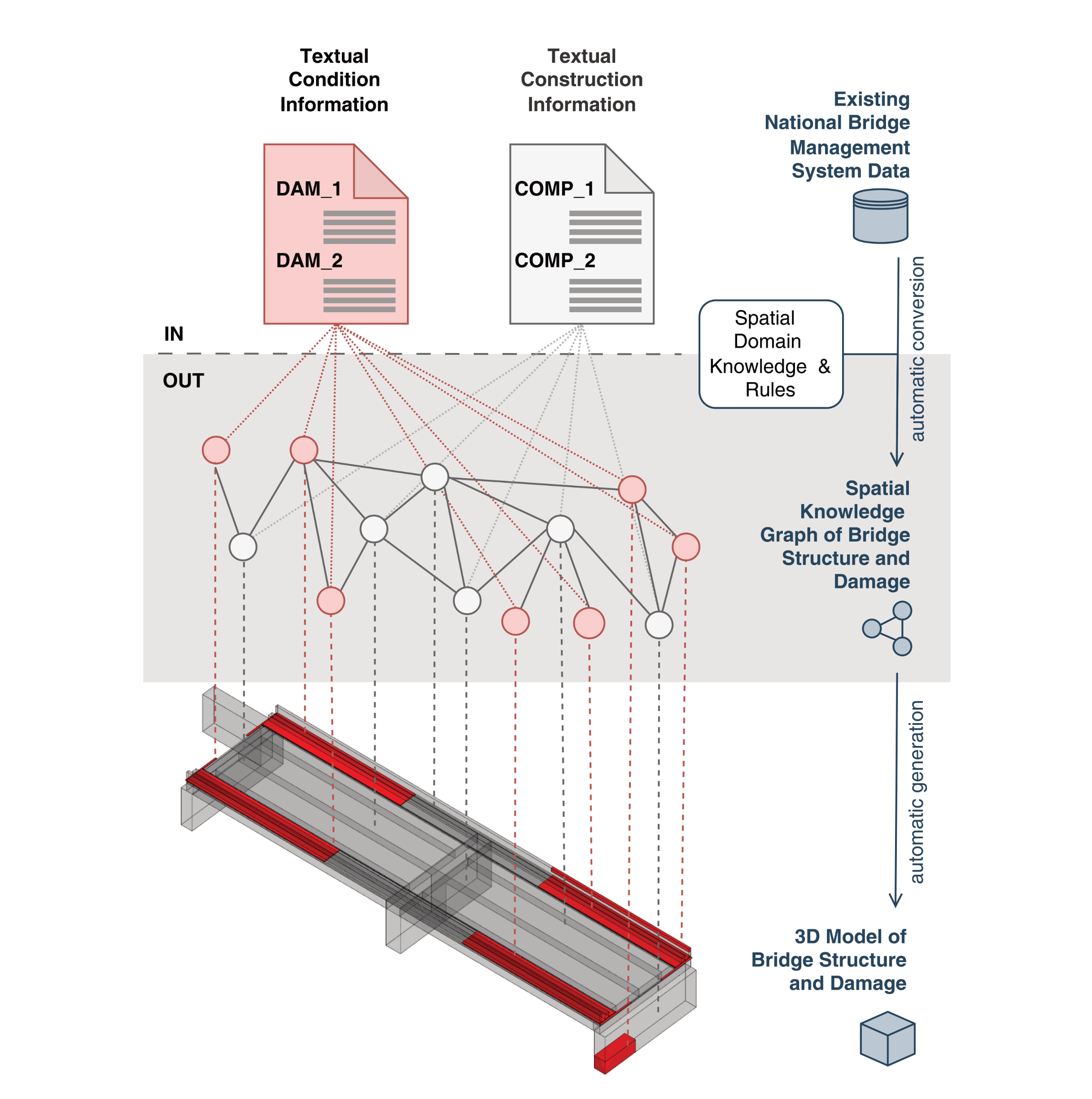
Prof. Dr. Jakob Beetz serves as a University Professor at RWTH Aachen University's Faculty of Architecture, leading the Design Computation (DC) research group. His work addresses critical challenges in sustainable built environments through digital innovation, focusing on integrating knowledge, information, and data across disciplines to reduce the sector's energy and material consumption—which accounts for over one-third of global totals—while advancing climate goals under the European Green Deal. His research spans Building Information Modeling (BIM), digital twins, and artificial intelligence, with emphasis on graph-based data federation, semantic web technologies, and large language models in construction. Key interests include evidence-based planning, parametric design optimization, building physics simulation, and networked knowledge modeling. Recent projects explore federated digital twin ecosystems for infrastructure management, intelligent damage assessment systems, and AI-driven solutions for wood structure preservation, directly contributing to sustainable development targets. Analysis of his 2024-2025 publications reveals a cohesive trajectory toward decentralized data environments and AI integration in Architecture, Engineering, and Construction (AEC). His work bridges theoretical foundations in knowledge representation with practical applications in bridge maintenance, road infrastructure, and timber construction, demonstrating consistent innovation in spatial data querying, federated issue management, and ontology-based process modeling. Prof. Beetz actively supervises PhD candidates, as evidenced by DC.Promotions 2024, and drives international collaboration through events like the Forum Construction Informatics 2025 and CIB W78 conferences. His research group engages with industry standards including Industry Foundation Classes (IFC) and Common Data Environments (CDEs), emphasizing open data principles and interoperability to transform construction workflows.
Anders Rickegård serves as a Lecturer in the Department of Human Geography at Stockholm University's Faculty of Social Sciences. Holding a BA and MSSc, he has been actively involved in urban and regional planning education since 1995 with numerous leadership roles including Assistant Director of Studies for bachelor's and master's programs, and Programme Director for the BSc in Urban and Regional Planning. His research interests focus on sustainable urban development, planning practices, and regional transformation. Rickegård participates in the PLANTS research project (2021-2025) examining planners' roles in sustainable urban transitions, funded by the Swedish Research Council. His scholarly work emphasizes practical applications of planning theory through fieldwork and international collaboration. Rickegård's publications demonstrate expertise in sustainable planning approaches and urban transformation processes. His recent work analyzes how planners can serve as agents for sustainable transition and examines practical fieldwork methods in planning education. His 2015 publication on structural changes in the Ruhr region shows his interest in post-industrial urban transformation. As a dedicated educator, Rickegård coordinates multiple courses including Urban and Regional Planning – Foundations, Bachelor's Thesis in Urban and Regional Planning, and field courses in Sweden and Berlin through the Erasmus+ blended intensive programme. He has led urban excursions since 2013 and coordinates international field projects in European regions. Administratively, Rickegård serves on the Steering Group for the Bachelor's Programme in Urban and Regional Planning as convener, the Department of Human Geography Board as an additional member, and chairs the Committee for Work Environment, Equal Opportunities and Environment (ALM). His previous administrative roles include Acting Faculty Director of Education and International Coordinator for the Department.
Wilson Miller serves as Associate Professor of Radiology and Medical Imaging within the Department of Radiology and Medical Imaging at the University of Virginia School of Medicine. His research bridges advanced medical imaging physics with clinical pulmonary and neurological applications, maintaining active collaborations across radiology, pulmonology, and neurosurgery departments. Dr. Miller's research program centers on two transformative domains: hyperpolarized gas MRI for pulmonary disease characterization and focused ultrasound for neurological interventions. In pulmonary imaging, he pioneers hyperpolarized xenon-129 and helium-3 MRI techniques to map regional lung function in COPD, asthma, and lung transplantation, identifying novel imaging biomarkers for early disease detection and treatment monitoring. His neurological work develops focused ultrasound protocols for blood-brain barrier opening to enhance therapeutic delivery for cerebral cavernous malformations and brain tumors, with recent publications demonstrating lesion regression and improved drug penetration. Analysis of his 2023-2025 publications reveals accelerating integration of molecular techniques with imaging, particularly transcriptomic analysis of rejection in lung transplants and immune response mapping in glioblastoma. His work increasingly emphasizes multimodal assessment combining hyperpolarized gas MRI with histological and molecular validation, while maintaining a secondary research thread in spin-polarized fusion physics for energy applications. Scientific Awards: No specific awards documented in source materials Dr. Miller actively mentors graduate students and postdoctoral researchers within the Medical Imaging PhD program, though individual advisee names were not provided in source texts. His research program likely operates through NIH-funded R01 grants from the National Heart, Lung, and Blood Institute (NHLBI) and National Institute of Neurological Disorders and Stroke (NINDS), supported by collaborative infrastructure from the University of Virginia's Radiology Research Division. His laboratory operates advanced 3T MRI systems with hyperpolarized gas delivery capabilities and preclinical focused ultrasound platforms, collaborating with the UVA Brain Immunology and Glia Center and Lung Repair and Regeneration Consortium. Current projects include developing AI-enhanced analysis of hyperpolarized gas MRI for COPD endotyping and optimizing microbubble parameters for focused ultrasound-mediated drug delivery to brain lesions.
Scientia Professor David Waite is a leading academic at the University of New South Wales (UNSW) , affiliated with the School of Civil and Environmental Engineering . He serves as Executive Director and CEO of the UNSW Centre for Transformational Environmental Technologies (CTET) and leads the Biogeochemical Engineering, Management and Systems (BioGEMS) research group . With over 15 PhD students and 10 research fellows in his lab, he has supervised 37 PhD graduates. His research spans water quality engineering , environmental nanotechnology , and metal redox chemistry in aquatic systems , focusing on sustainable solutions for water treatment, contaminant degradation, and biogeochemical relationships. His work includes advanced oxidation processes , membrane technologies , and reactive oxygen species dynamics . Scientific awards include the Royal Australian Chemical Institute Environment Medal , Scientia Professorship , and multiple international visiting scholar recognitions. He has secured significant grants, including $720,000 from ARC Linkage and $360,000 from ARC Discovery programs. Professional affiliations encompass Fellowships in Royal Society of Chemistry and US National Academy of Engineering membership .
Peter Backhaus is a Professor at Waseda University's School of Education, Tokyo. He is affiliated with the Graduate School of Education and Faculty of International Research and Education, contributing to both academic and societal contexts through interdisciplinary research. Doctor of Philosophy (PhD) from Germany ResearchGate profile verified via institutional email His research focuses on Sociolinguistics, Pragmatics, Stylistics, and Linguistic Landscapes , with a strong emphasis on multilingualism in Japanese public spaces and communication dynamics in eldercare facilities. Key themes include institutional interactions, language policy, and discourse analysis. Recent publications like “Magica Spellings” (2025) and “Care Communication” (2017) highlight his expertise in language contact, policy, and healthcare discourse. His work has been cited over 3,699 times (Google Scholar), with an h-index of 13. 2018 Waseda Research Award recipient for outstanding scholarly contributions He has led research projects funded by JSPS, including studies on Japanese spam language (2013-2016) and immigrant language policies (2008-2010). His teaching portfolio at Waseda University includes courses in English linguistics, sociolinguistics, and communication studies.
Tom Zick serves as Director of Responsible AI at Charles Schwab and holds an academic affiliation as a Research Fellow at Harvard University's Berkman Klein Center for Internet & Society. Her work bridges technical AI development and legal frameworks, focusing on governance mechanisms for emerging technologies. She has advised organizations from startups to Fortune 500 companies while collaborating with frontier AI labs and public institutions like the City of Boston on AI deployment and data governance initiatives. Her educational foundation includes a JD from Harvard Law School and a PhD in Astrophysics from UC Berkeley, providing interdisciplinary expertise critical to her research. This dual background enables rigorous analysis of complex technology-policy intersections. Zick's research centers on creating accountable AI systems through technical oversight frameworks and regulatory compliance strategies. She investigates generative AI's societal impacts, reinforcement learning risks, and privacy-preserving identity solutions like personhood credentials. Her work emphasizes red teaming, model alignment, and global regulatory harmonization, addressing both immediate implementation challenges and long-term existential risks through law-technology integration. Analysis of her publication trajectory reveals escalating focus on governance scalability as AI capabilities advance. Early work examined foundational risks in reinforcement learning, while recent publications address generative AI's disruption of education systems and the urgent need for cross-jurisdictional regulatory frameworks. Her taxonomy development for AI regulation demonstrates systematic approaches to navigating fragmented global policy landscapes. As an advisor, Zick has guided corporate and municipal entities through AI implementation challenges, notably helping Boston operationalize data governance frameworks. Her Berkman Klein fellowship involved direct collaboration with major AI labs on alignment research and red teaming exercises. She contributes to industry-wide initiatives including Twitter's decentralized social media project (bluesky), focusing on protocol-level solutions for content integrity. Zick's collaborative ecosystem spans frontier AI companies, academic researchers, and public sector innovators. Her current work with the City of Boston demonstrates practical governance implementation, while ongoing personhood credentials research addresses AI-generated content verification challenges. These partnerships reflect her commitment to translating theoretical frameworks into operational systems across multiple sectors.
Juan Carlos De Martin is a Full Professor of Computer Engineering at the Politecnico di Torino and a Faculty Associate at Harvard's Berkman Klein Center. He co-founded the Nexa Center for Internet & Society and led the Politecnico's Vice Rectorate for Culture and Communication (2018–2023). His research focuses on digital technologies' societal impact, democracy, and ethical technology design. He authored over 160 papers and books like Against the Smartphone (2023) and Università Futura (2017), both under Creative Commons licenses. Key roles include co-directing the Nexa Center, founding the Biennale Tecnologia, and advising Italian parliamentary committees on Internet rights. He serves on the Scientific Board of Treccani and Biennale Democrazia. His work bridges academia, policy, and public engagement, emphasizing open culture and democratic tech governance. Research spans digital democracy, technology ethics, and university reform. Recent articles critique smartphone dependency, digital power structures, and Muskian influence on democracy. He advocates for interdisciplinary innovation and equitable technology policies. Grants include EU projects on digital public domain and governance. His teaching includes 'Digital Revolution' courses and public lectures on tech's societal role.
Prof Barbara Lipietz is a Professor of Urban Development Planning at the Development Planning Unit, University College London (UCL), and serves as Vice Dean International of The Bartlett Faculty of the Built Environment. Her roles include leading the MSc Urban Development Planning program and directing academic internationalization efforts at The Bartlett. Her research focuses on urban equity, trans-local solidarity networks, and participatory urban planning practices, with a strong emphasis on the Global South. Key areas include housing rights, displacement dynamics in Nigeria, climate resilience, and co-production of knowledge for just urban futures. She critiques neoliberal urban development models and advocates for marginalized communities' inclusion in decision-making processes. Her work spans multiple continents, engaging with organizations like the Asian Coalition for Housing Rights and contributing to international frameworks such as the Sendai Guidelines for Disaster Resilient Urban Planning. She frequently publishes in peer-reviewed journals and policy platforms, emphasizing actionable research to bridge academic and activist agendas. Notable contributions include theoretical explorations of 'just cities,' critiques of 'world-class city' narratives, and analyses of urban transformations post-Arab Spring. Her pedagogical approach emphasizes experiential learning and partnerships with grassroots organizations.
Andrew Flinn is an Associate Professor in the Department of Information Studies at University College London (UCL), serving as Vice Dean for Postgraduate Research and Faculty Graduate Tutor in the Faculty of Arts and Humanities. He teaches on the Archives and Records Management MA programme and has been at UCL since 2002. His research focuses on radical public history, independent archives, community heritage projects, oral history, and the intersection of digital technologies with cultural memory. Flinn holds a PhD from the University of Manchester (1999), an MA from the University of Liverpool (1989), and a BA from the University of Manchester (1987). Key research projects include the AHRC-funded 'Dig Where You Stand' (2012–2013), examining community heritage collaboration, and 'Community Archives and Identities' (2008–2010), exploring heritage initiatives by UK minority groups. He previously held roles as an archivist at the National Museum of Labour History and research officer on the ESRC-funded Communists in British Society project. His work emphasizes participatory approaches, digital archiving, and social justice, with publications addressing oral history methodologies, digital infrastructure challenges, and the role of archives in activism. Flinn has collaborated internationally, including as an Allan Smith Visiting Scholar at Simmons College (2011). He actively engages in grant reviews, academic supervision, and outreach, advocating for open government data and ethical recordkeeping practices. Recent research highlights include co-designing the Sloane Lab (2023–2024), advancing frameworks for person-centred recordkeeping in child welfare (2022), and critiquing digital heritage processes through feminist and critical heritage lenses (2020).
Zhiyu (Frank) Quan is an Assistant Professor at the University of Illinois at Urbana-Champaign (UIUC), holding positions in the Department of Mathematics, Department of Statistics, and National Center for Supercomputing Applications (NCSA). He is also an affiliate faculty member at Discovery Partners Institute as InsurTech Lead and serves as an ORMI Faculty Fellow in Finance. His research focuses on data science applications in actuarial science, including tree-based models, natural language processing, and deep learning for insurance risk modeling, predictive analytics, and InsurTech innovation. Education: Ph.D. in Actuarial Science (University of Connecticut, 2019), MS in Applied Statistics (Michigan State University, 2014), and BS in Mathematics and Applied Mathematics (Xiamen University, 2012). Research interests include computational statistics, insurance analytics, and leveraging machine learning for actuarial challenges such as claim prediction, rate-making, and cyber risk modeling. He leads the Illinois Risk Lab, bridging academic research with industry needs, and has pioneered hybrid tree-based models to address imbalanced data in insurance. Notable achievements include the Arnold O. Beckman Research Award and Society of Actuaries Research Institute recognition. He advises two doctoral students and teaches advanced predictive analytics courses, emphasizing practical applications in actuarial science and data ethics. Key collaborations involve InsurTech companies and NCSA, focusing on NLP-driven academic paper repositories (CyLit) and federated learning for privacy-preserving insurance data sharing. His work addresses real-world challenges in cyber insurance and automated machine learning systems.
Paul Shrivastava is a Professor of Management and Organizations at the Smeal College of Business, Pennsylvania State University. He served as Penn State's Chief Sustainability Officer and Director of the Sustainability Institute until July 2022. Previously, he led Future Earth as Executive Director and co-founded the David O'Brien Centre for Sustainable Enterprise at Concordia University. His expertise spans sustainability, transdisciplinary research, crisis management, and organizational strategy. Education: PhD in Strategic Planning and Policy from the University of Pittsburgh (1981), Post Graduate Diploma in Management from IIM Calcutta, and Mechanical Engineering from NIT Bhopal. Research focuses on sustainable development, corporate sustainability strategies, and integrating arts with science for environmental stewardship. Key contributions include foundational work on crisis management (e.g., Bhopal disaster analysis) and pioneering 'embodied learning' methods. He co-founded the Organizations and Natural Environment Division of the Academy of Management and chairs the UNESCO Art and Sustainable Enterprise initiative. Awards include the Academy of Management ONE Division Distinguished Scholar Award (2023) and IIM Calcutta Distinguished Alumni Award (2016). His advisory roles span global institutions like the Club of Rome and Hiroshima University's NERPS. Notable projects include Balance unBalance 2011 and Montreal Degrowth 2012 conferences, emphasizing artistic and transdisciplinary approaches to sustainability. He advocates for systemic integration of SDGs and resilience in urban systems, as highlighted in his work on 'sustainable cities' and climate governance.
Joseph Akunna is a Professor in Water and Environmental Engineering at Abertay University's Department of Built Environment and Life Sciences. He holds advanced qualifications including a PhD in Environmental Engineering, Chartered Engineer (CEng) status, and Fellowship of the Higher Education Academy (FHEA). He directs the Postgraduate Environment Education programs and the Urban Water Technology Centre. His research focuses on microbial processes for pollutant control, wastewater treatment innovation, anaerobic digestion, and sustainable waste management. Key areas include decentralized wastewater systems, landfill decay modeling, and environmental engineering solutions for developing countries. He has supervised over 20 PhD/postdoctoral projects and led numerous funded initiatives, including projects with the Scottish Government, SEPA, and industry partners like Diageo PLC. He serves as an external examiner for multiple UK universities, reviews for scientific journals, and advises international bodies such as the European Commission and the World Bank-funded Centre of Excellence in Togo. His expertise spans UN Sustainable Development Goals related to clean water, affordable energy, and sustainable cities. Key achievements include developing the GRABBR anaerobic wastewater treatment system, advancing anaerobic digestion of organic residues, and contributing to the Dundee Riverside Landfill transformation into a nature park. He has authored/co-authored over 70 publications and delivered international training programs in water and waste management.
Janneke Adema is an Associate Professor in Digital Media at Coventry University's Research Centre in Postdigital Cultures. Her work critically examines scholarly communication practices, focusing on radical open access publishing, processual publishing, and posthumanist knowledge production. She actively contributes to scholar-led initiatives such as the Radical Open Access Collective and COPIM (Community-led Open Publication Infrastructures for Monographs). Her research integrates theoretical analysis with experimental publishing practices, including live documentation on https://www.openreflections.org/. Education : PhD in Media, Coventry University (2015) MA in Book and Digital Media Studies, Leiden University (2008) MAs in Cultural and Intellectual History, and Philosophy, University of Groningen Research Focus : Postdigital cultures, open access monograph sustainability, processual publishing, decolonizing knowledge production through multilingual practices, and reimagining authorship beyond human-centric frameworks. She explores how digital tools and community governance can transform scholarly publishing ecosystems. Key Projects : COPIM: Developing sustainable open access infrastructures for monographs Open Book Futures: Experimenting with new editorial workflows and community engagement Grants & Advising : Supervises PhD students on topics like experimental publishing and radical open access. Leads interdisciplinary teams in COPIM and Open Book Futures, securing funding for infrastructure development and policy research. Labs/Teams : Involved with Open Humanities Press, Post Office Press (POP), and the Radical Open Access Collective, promoting scholar-led publishing models.
Prof. Dr. Ger Duijzings holds the Chair of Social Anthropology (with a focus on Southeastern and Eastern Europe) at the University of Regensburg. He is also affiliated with the College of Europe in Natolin, Poland. His academic roles include Spokesperson of the Europaeum and Principal Investigator of the seeFField project. Previously, he served at UCL (2005-2014) in roles including Reader in Anthropology of Eastern Europe and Director of the Centre for South-East European Studies. Education: PhD in Social Anthropology (1999), University of Amsterdam MSc in Social and Cultural Anthropology (1989), Radboud University Nijmegen Research Interests: Focuses on urban transformation in post-socialist cities like Bucharest, war and memory studies centered on Srebrenica, and the intersection of religion/identity politics in Southeastern Europe. His work combines ethnographic methods with interdisciplinary approaches to contemporary art and environmental issues. Grants & Leadership: Editor of Comparative Southeast European Studies since 2014 Supervised over 20 PhD students on topics ranging from Balkan trauma to environmental justice Led international research projects including Social Sorting (2014-2019) Labs & Teams: Active in the Graduate School for East and Southeast European Studies and Leibniz Science Campus initiatives. Collaborates with global networks including Strelka Institute in Moscow and UNARTE in Bucharest.