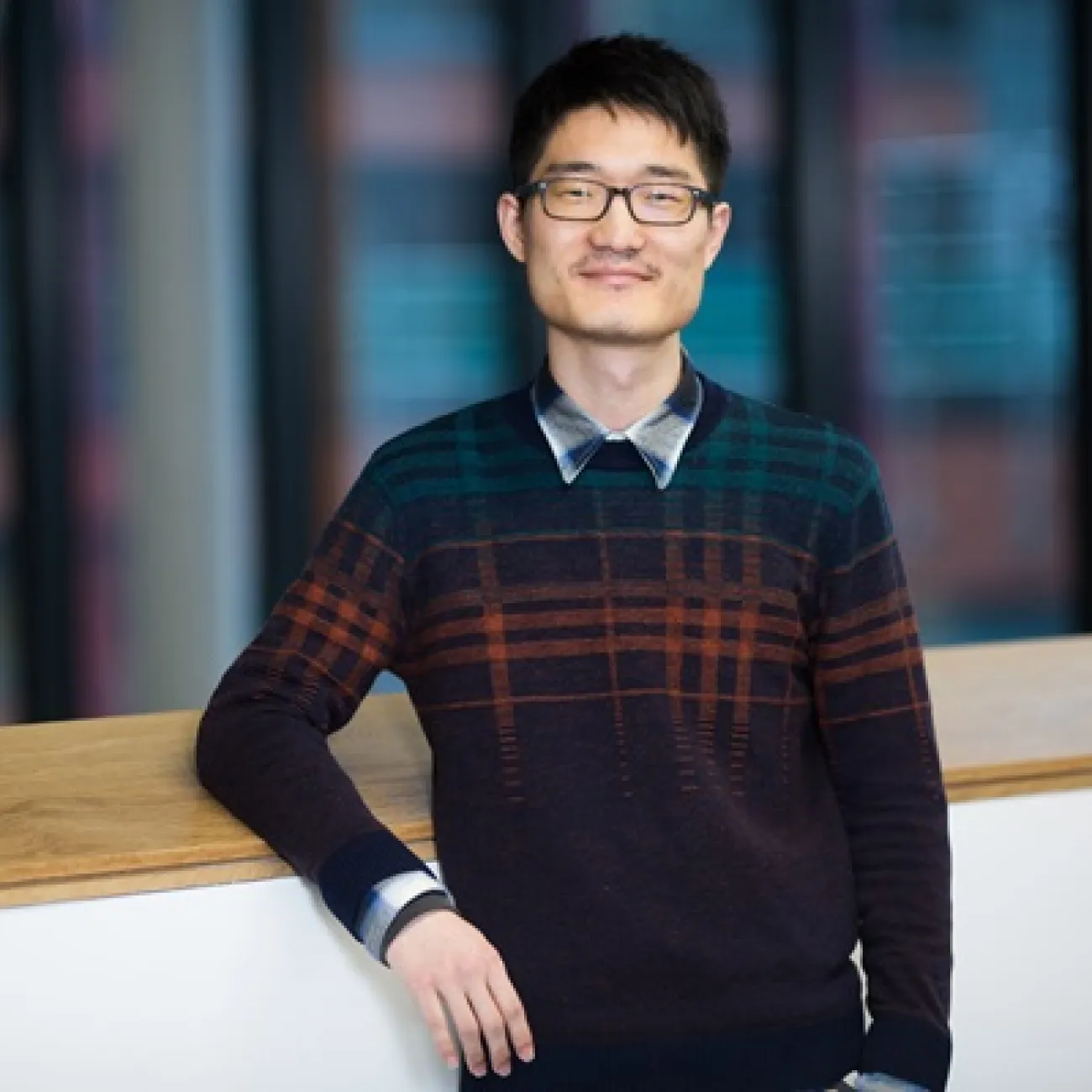
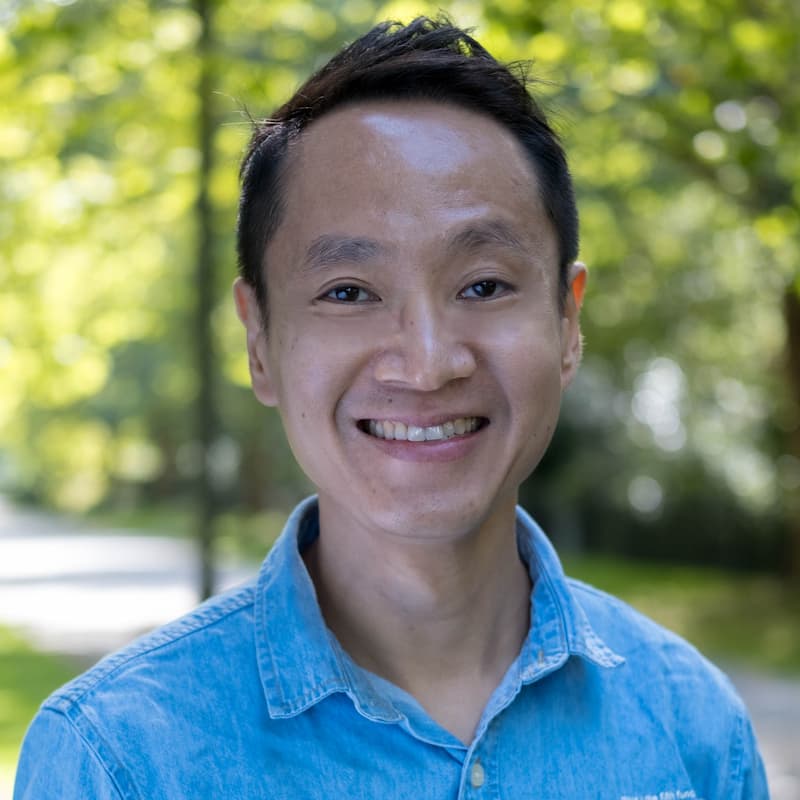
Raja Ghosh is a Professor in the Department of Chemical Engineering at McMaster University's Faculty of Engineering. His research focuses on bioengineering and polymer materials, with specialization in membrane technology for biopharmaceutical applications. He is actively involved in the Health & Bio-innovation research cluster and teaches courses such as CHEM ENG 3BM3: Bioseparations Engineering and CHEM ENG 782: Biopharmaceuticals . Research Interests include membrane chromatography device design, bioseparations process development, membrane bioreactors for enzymatic and protein applications, and therapeutic protein stabilization. His work addresses scalable purification methods for monoclonal antibodies, PEGylated proteins, and viral vectors. Recent Publications highlight innovations in cuboid chromatography design, pH-modulated ion-exchange systems, and SARS-CoV-2 spike protein purification. He employs computational fluid dynamics (CFD) simulations to optimize device performance and reduce pressure drops in bioseparation processes. Contact Information : Email: rghosh@mcmaster.ca Office: JHE A408 Phone: 905-525-9140 ext. 27415
Antoine Miech is a Researcher at DeepMind's Vision Group , with prior affiliations at Inria and Ecole Normale Supérieure where he completed his computer vision Ph.D. under Ivan Laptev and Josef Sivic . He has collaborated with researchers from Facebook AI and Google during his academic career. Research Interests span video understanding, weakly-supervised machine learning, and multimodal analysis. His work focuses on: Text-video embedding Self-supervised video representation Action localization Anticipatory video modeling Scalable multimodal learning Scientific Contributions include: HowTo100M - A massive dataset of narrated instructional videos MIL-NCE - A novel loss function for video-text alignment MEE - A model for handling heterogeneous data Context Gating - Learnable pooling architecture Awards & Recognition : Google Ph.D. Fellowship (2018) Technical Leadership : Created the LOUPE TensorFlow toolbox for feature pooling and maintained annotated video dataset catalogs. Organized the Data Science Game competition (2016-2017).
Cristina Bazgan is a University Professor at Université Paris-Dauphine, affiliated with LAMSADE (Laboratoire d'Analyse et Modélisation de Systèmes pour l'Aide à la Décision) within PSL University. Her office is located at P 409 with contact number 01 44 05 40 90. She maintains an active research profile with numerous publications spanning graph theory, combinatorial optimization, and multi-objective optimization. Professor Bazgan's research primarily focuses on graph theory and combinatorial optimization , with significant contributions to domination theory, network analysis, approximation algorithms, and multi-objective optimization. Her work bridges theoretical computer science and operations research, addressing fundamental problems in computational complexity while developing practical algorithmic solutions. She has made notable contributions to understanding graph partitions, community detection in networks, and the complexity of various optimization problems. Analysis of her recent publications reveals a strong trend in multi-objective optimization and parameterized complexity . Her work often explores the interface between theoretical computer science and operations research, with applications to network analysis and decision support systems. A significant portion of her research addresses the complexity and approximability of graph-theoretic problems, particularly those related to domination, community structure, and anonymization in networks. Professor Bazgan has co-authored the book Combinatorial Algorithms (2022) with H. Fernau and contributed chapters to authoritative works on combinatorial optimization. While specific scientific awards aren't mentioned in the available information, her extensive publication record in top-tier journals demonstrates significant recognition in her field. She maintains an active collaboration network, frequently working with researchers such as Vanderpooten D., Tuza Z., Chlebíková J., and Herzel A. Her research has practical applications in network security, social network analysis, and decision support systems. The LAMSADE laboratory, where she is based, focuses on decision support systems and operations research, providing an interdisciplinary environment for her theoretical and applied work.
Rodolfo Jalabert is a Professor at the University of Strasbourg's Institut de Physique et Chimie des Matériaux de Strasbourg (IPCMS), where he leads research in the Magnetic Objects on the NanoScale (DMONS) team. He joined the university in 1994 after postdoctoral positions at Yale University (1989–1992), CEA Saclay (1992–1993), and IPN-CNRS Orsay (1993–1994). He holds a PhD in Physics from the University of Maryland (1984–1989). His research centers on Condensed Matter Theory , Mesoscopic Quantum Physics , and Quantum Chaos , with emphasis on: Quantum transport in nanostructures (e.g., scanning gate microscopy, quantum dots) Plasmon dynamics in metallic nanoparticles Spin relaxation in semiconductors Decoherence and quantum chaos (e.g., OTOCs, Loschmidt echo) Orbital magnetism in nanoscale systems His publications (2015–2020) predominantly explore quantum coherence, electron transport, plasmonics, and chaos in low-dimensional systems. Trends include advanced scanning probe techniques, out-of-time-ordered correlators for chaos detection, and spin dynamics in disordered materials. Jalabert collaborates with the Mesoscopic Quantum Physics team at IPCMS, focusing on theoretical modeling of nanoscale phenomena. No awards, students, or grants are detailed in the provided text.
Glen McGee is an Assistant Professor in the Department of Statistics and Actuarial Science at the University of Waterloo. He holds a PhD in Biostatistics from Harvard University and a BScH in Mathematics from Queen's University. His research focuses on developing statistical tools for epidemiology, environmental health, and health policy, with a particular emphasis on environmental mixture analysis, cluster-correlated data modeling, and outcome-dependent sampling methodologies. Education : PhD in Biostatistics, Harvard University BScH in Mathematics, Queen's University Research Interests : McGee advances methodologies for analyzing complex environmental mixtures and their health impacts, including incorporation of biological knowledge into statistical frameworks. His work addresses challenges in multigenerational studies, informative cluster sizes, and measurement error correction in case-crossover designs. Key application areas include hospital profiling, exposure misclassification, and longitudinal health data analysis. Research Trends : His publications emphasize Bayesian methods for mixture modeling, innovative sampling strategies for clustered data, and causal inference techniques. Notable contributions include frameworks for integrating biological pathways into environmental health analyses and developing efficient sampling approaches for healthcare performance evaluation. Grants & Labs : McGee collaborates on projects involving CMS data applications and maintains GitHub repositories like hospODS for hospital profiling methodology implementation. His work bridges statistical theory with practical public health applications, particularly in environmental epidemiology and healthcare analytics.
Dr. Gabriela Matias de Pinho is an Assistant Professor at the Copernicus Institute of Sustainable Development , Utrecht University. Her research integrates Nutritional Sciences , Epidemiology , and Environmental Health to address the intersection of food systems, urban environments, and chronic disease prevention. Key Projects: EXPANSE (Environmental Health, Urban Foodscapes) EXPOSOME-NL (Environmental Exposome Research) Research Themes: Food environments, ultra-processed foods, sustainable diets, cardiovascular health, urban-rural disparities Publication Trends (2018-2025): 33+ peer-reviewed articles in journals like The Lancet Regional Health , International Journal of Cancer , and Public Health Nutrition , with a focus on epidemiological methods , spatial analysis , and policy evaluation . Editorial Contributions: Served as Editor for Public Health Nutrition journal (2023). Teaching Philosophy emphasizes student-led learning and educational initiatives that empower future citizens to drive sustainable food system transitions.
Dr Dominic Guitard is a Lecturer in the School of Psychology at Cardiff University , appointed in 2022. He teaches undergraduate modules on thinking, emotion and consciousness, as well as applied cognitive science, and contributes to the MSc research-project supervision programme. Education 2018–2021: PhD in Psychology, Université de Moncton 2016–2018: MA in Psychology, Université de Moncton 2013–2016: BA in Psychology, Université de Moncton Research Interests Dr Guitard’s research lies at the intersection of memory , attention and language . Using tightly-controlled experiments and computational modelling, he investigates how people learn, maintain and retrieve item versus order information in short-term and working memory. Key factors examined include attention allocation, semantic knowledge, emotion, lexical properties, irrelevant information and dual-task demands. His theoretical goal is a unified account of memory, attention, learning and language; his applied goal is to inform educational practices and cognitive technologies. Publication Trends Across more than 60 peer-reviewed articles, Dr Guitard has steadily advanced understanding of serial recall, recognition memory and working-memory limitations. Recent work (2024–2025) clusters around four themes: (1) computational frameworks predicting veridical and false recall; (2) the interplay between working-memory capacity and long-term retention across the lifespan; (3) phonological and semantic influences on order memory; and (4) methodological factors such as stimulus duration, presentation modality and set size. Collaborations & Funding He collaborates extensively with leading laboratories in the USA (e.g., University of Missouri, University of Illinois), Canada (Université de Moncton, University of Manitoba), the UK and Australia, and was supported by an NSERC Postdoctoral Fellowship (2021–2022). Supervision & Mentoring Current PhD supervision: Helena Leach Personal tutor and contributor to MSc research-project module (PST723) Available for further postgraduate supervision Editorial & Service Roles Dr Guitard serves as an ad-hoc reviewer for over a dozen international journals, including Journal of Experimental Psychology: General , Memory & Cognition , Quarterly Journal of Experimental Psychology and Cognition .
Chun-Biu Li is an Associate Professor at the Department of Mathematics , Stockholm University , specializing in computational mathematics and statistical physics of biophysical systems. His research bridges information theory, machine learning, and nonequilibrium statistical mechanics to understand complex biological processes. Education: PhD in mathematical & statistical physics from the University of Texas at Austin (supervised by Ilya Prigogine), M.S. in mathematical physics from the University of Utah. Academic Experience: Associate Professor (2016–present) at Stockholm University, Associate Professor (2008–2016) at Hokkaido University, and JST/CREST Researcher (2005–2008) at Kobe University. Research Interests focus on data-driven statistical analyses, nonequilibrium biophysical systems, AI explainability, and fluctuation theorems. His work applies these methods to plant morphogenesis, molecular motor dynamics, and machine learning applications in life sciences. Teaching includes advanced courses on deep learning, reinforcement learning, and statistical methods for life science applications. His Supervision has guided over 30 students in topics ranging from protein mutation modeling to causal inference algorithms. Scientific Awards: Professional Development Award, University of Texas at Austin (2003) Summer Research Fellowship, University of Texas at Austin (2001) National Dean's List for Outstanding College Students (1997) Publications (110+) highlight his contributions to plant morphogenesis, single-molecule analysis, and statistical methods. Recent works examine DNA barcode clustering, rotary motor protein dynamics, and shape-aware data visualization techniques.
Ole Stegmann Mikkelsen serves as an Associate Professor in the Department of Business and Sustainability at the University of Southern Denmark, Kolding campus. His expertise encompasses strategic sourcing, global supply chain management, and supply chain resilience, with a particular focus on small and medium-sized enterprises in Denmark. He also acts as an external examiner for MSc and BSc theses at Copenhagen Business School and brings extensive industry experience from leadership roles in procurement at Danfoss A/S. Education: PhD in Supply Chain Management (University of Southern Denmark) MSc in Economics & Business Administration (Operations and Organisation), 1994 BSc in Economics & Business Administration, 1992 High School, 1986 Staff Sergeants Academy, 1983 Sergeants Academy, 1979 Professor Mikkelsen's research centers on strategic sourcing and procurement in global contexts, including buyer-supplier relationships, supplier relationship management, global sourcing, and corporate social responsibility. His recent work investigates supply chain resilience, particularly how Danish manufacturing SMEs navigate disruptions such as the Covid-19 pandemic and cybersecurity threats. He explores the role of digital technologies, reshoring trends, and cross-organizational collaboration in building robust supply chains. Analysis of his 15 most recent publications (2022-2025) reveals a consistent focus on supply chain resilience in Danish manufacturing SMEs, with emerging themes including the impact of Industry 4.0, pandemic recovery, and EU sustainability regulations. His work bridges academic theory and practical application, often involving direct collaboration with industry partners to develop actionable frameworks for risk mitigation. Awards: Outstanding Reviewer (2018) Mikkelsen has supervised numerous student projects at both undergraduate and graduate levels and serves as an external examiner at Copenhagen Business School. His research is supported by projects funded by private foundations, including "Supply Chain Resilience in small and medium-sized Danish manufacturing enterprises" (2022-2023) and "Sales & Operations Planning in small and medium-sized Danish manufacturing enterprises" (2017-2019), which involved partnerships with regional manufacturing firms. He collaborates closely with colleagues such as Jesper Stentoft and Thomas B. H. Kjær within the Department of Business and Sustainability, forming a research cluster focused on supply chain innovation. Their work frequently engages with Danish manufacturing enterprises through workshops, surveys, and joint problem-solving initiatives to address real-world supply chain challenges.
Prof. Dr. Barbara A. J. Lechner is a Professor of Functional Nanomaterials at the Technical University of Munich (TUM), holding her position within the Department of Chemistry at the TUM School of Natural Sciences. Appointed as a Rudolf Mößbauer Professor in October 2020, she leads an active research group investigating dynamic processes in functional nanomaterials under realistic conditions. Her work bridges surface science, catalysis, and nanotechnology with significant funding through prestigious grants including an ERC Starting Grant. Prof. Lechner's educational background includes a Mag. rer. nat. in Chemistry from the University of Innsbruck (2008) followed by a PhD in Physics from the University of Cambridge. Her postdoctoral work was conducted at the Lawrence Berkeley National Laboratory under Prof. Miquel Salmeron before she became a group leader at TUM's Chair of Physical Chemistry in 2016. Her research program focuses on understanding dynamic restructuring processes in functional nanomaterials, particularly model catalysts in reactive gas atmospheres. Using time- and space-resolved scanning tunneling microscopy directly in gas mixtures, her group investigates how metal particle and oxide support structures change and influence material functionality. A key innovation is their use of size-selected clusters with precisely defined atom counts to isolate specific structural effects. Her group also employs synchrotron-based X-ray photoelectron spectroscopy for complementary chemical information. Analysis of Prof. Lechner's recent publications reveals a strong focus on atomic-scale dynamics in catalytic systems, with particular emphasis on iron oxide and platinum-based catalysts. Her work increasingly combines advanced microscopy techniques with computational approaches to understand restructuring mechanisms. Notable trends include investigations of strong metal-support interactions (SMSI), cluster encapsulation effects, and the role of lattice oxygen in catalytic processes. Her 2023-2025 publications demonstrate growing interest in 2D materials and their stability on metal surfaces. Dozentenpreis des Fonds der Chemischen Industrie (2023) ERC Starting Grant (2019) Stipendium im Jungen Kolleg der Bayerischen Akademie der Wissenschaften (2018) Marie Skłodowska Curie Stipendium (2017) Max Auwärter Preis (2016) Springer Thesis Prize (2013) Prof. Lechner leads two major research projects: TACCAMA (Atomic-Scale Motion Picture: Taming Cluster Catalysts at the Abyss of Meta-Stability, 2020-2026), an ERC-funded project focusing on atomic-scale motion in cluster catalysts, and CRC1441 (Tracking the Active Site in Heterogeneous Catalysis for Emission Control, 2021-2024), which investigates active sites in catalytic emission control systems. Her teaching includes experimental methods in physical chemistry and research practicums, indicating active student mentorship though specific advisees aren't listed in the available materials. Her laboratory specializes in advanced surface characterization techniques, particularly movie-rate scanning tunneling microscopy (STM) capable of operating at elevated temperatures and near-ambient pressures. This unique capability allows her team to observe dynamic processes in reactive gas atmospheres, providing unprecedented insights into catalyst restructuring during operation. The group also maintains strong collaborations with synchrotron facilities for complementary X-ray photoelectron spectroscopy measurements.
Paul Gustafson is a Professor and Head of the Department of Statistics at the University of British Columbia's Faculty of Science. He holds a faculty position at the Vancouver Campus and can be contacted via gustaf@stat.ubc.ca. His research focuses on advanced statistical methodologies with applications in epidemiology, public health, and clinical research. Key interests include Bayesian analysis, causal inference, measurement error correction, and meta-analysis. Dr. Gustafson's work emphasizes methodological innovations in handling complex data challenges such as exposure misclassification, missing data, and observational study biases. He collaborates on projects addressing opioid use disorder treatment efficacy, infectious disease epidemiology, and health policy. Current advisees include Nathaniel Wu Dyrkton, Daniel Daly Grafstein, Seren Lee, Yuan Xia, and Mallory J Flynn. His research outputs span statistical theory, applied public health studies, and computational methods. Recent work highlights include Bayesian approaches to sample size determination, probabilistic bias analysis in diagnostic studies, and frameworks for evaluating treatment benefit predictors using observational data. Dr. Gustafson is also involved in global initiatives such as the Zika Virus Individual Participant Data Consortium. Notable methodological contributions include developing techniques for partially identified models, correcting measurement errors in health surveys, and advancing causal inference methodologies. He has contributed to R packages like rtestim for epidemic modeling and CRTpowerdist for cluster randomized trial analysis.
Dr. Kingshuk Majumdar is a Professor in the Department of Physics at Grand Valley State University within the College of Liberal Arts & Sciences. His academic journey began with a Ph.D. from the University of Florida in 1999, followed by M.S. and B.S. degrees from Indian institutions. Dr. Majumdar's research interests are centered on Theoretical Condensed Matter Physics, specializing in low-dimensional quantum spin systems and frustrated magnets. He also explores Quantum Information Science and Quantum Computing, contributing to the understanding of quantum spin dynamics and phase transitions. His scholarly publications reflect expertise in spin-wave theory, magnetic phase diagrams, and quantum fluctuations. The articles span topics such as Heisenberg antiferromagnets, bilayer magnetism, and quantum critical points, indicating a strong focus on theoretical modeling of magnetic and quantum systems. NSF-MRI Award ($97,383) to acquire a HPC Cluster at GVSU XSEDE Award: 50,000 CPU supercomputing hours Regional Michigan Science Olympiad Service Award Kavli Institute of Theoretical Physics (KITP) Scholar Award Cottrell College Science Award from Research Corporation Award for paper presentation in the Graduate Student Forum, University of Florida Outstanding Academic Achievement Award by an International Student, University of Florida Dr. Majumdar mentors undergraduate researchers, guiding projects on quantum spin systems, thin film conductivity, and spin-wave analysis. He also serves as a referee for American Physical Society (APS) and Institute of Physics (IOP) journals, contributing to the academic community through peer review and grant evaluation.
Donald R. Sheehy is an Associate Professor of Computer Science in the College of Engineering at North Carolina State University. His research focuses on the intersection of geometric algorithms and topological data analysis, with significant contributions to computational geometry and persistent homology. Sheehy's research interests span geometric algorithms, topological data analysis, computational geometry, persistent homology, metric spaces, Voronoi diagrams, and Delaunay triangulations. His work bridges theoretical computer science with practical applications in data analysis, where he develops algorithms that extract meaningful topological information from complex datasets. His research has particular relevance for understanding the structure of high-dimensional data through geometric and topological lenses. Analysis of his recent publications reveals a strong focus on developing efficient algorithms for topological data analysis. His work on sparse filtrations, greedy permutations, and metric properties of persistence diagrams has advanced the field by providing computationally tractable methods for analyzing large datasets. Sheehy frequently explores how geometric structures like Voronoi diagrams and Delaunay triangulations can be adapted to topological contexts, creating bridges between classical computational geometry and modern data analysis techniques. Sheehy actively collaborates with researchers across multiple institutions, as evidenced by his extensive publication record in top venues like SOCG (Symposium on Computational Geometry) and SODA (Symposium on Discrete Algorithms). His work demonstrates a consistent trajectory of advancing both theoretical foundations and practical applications of geometric and topological methods in computer science.
Dr. Zixu Liu is a Lecturer in Decision Analytics and Risk at Southampton Business School, University of Southampton. He focuses on applying machine learning and optimization techniques to business analytics problems, particularly in decision-making, smart grids, and industrial systems. PhD in Computer Science, University of Manchester (2013-2017) MSc in Computation and Game Theory, University of Liverpool (2012-2013) BSc in Computer Science and Technology, Jilin University (2007-2011) His research integrates advanced algorithms with cloud/web-based information systems to solve real-world challenges in multicriteria decision-making, electricity market pricing, and computer vision applications. Current projects emphasize industry transferability through API-driven solutions. Recent publications highlight diverse applications including: Smart grid optimization and demand response Hesitant fuzzy linguistic decision models Industry 4.0 collaboration platforms Deep learning benchmarks for object counting Wireless mesh network architecture He actively supervises PhD students and teaches undergraduate courses on spreadsheets, databases, algorithmic thinking, and data visualization.
Dr. Tzeng Yih Lam serves as an Assistant Professor in the Department of Forest Resources Management at the University of British Columbia's Faculty of Forestry. His expertise lies in forest measurements, sampling methodologies, and quantitative silviculture, contributing to sustainable forest management practices through innovative biometric approaches. His educational background includes: PhD in Forest Science (2010) from Oregon State University MSc in Statistics (2009) from Oregon State University MSc in Tropical and International Forestry (2006) from Georg-August-Universität Göttingen BSc in Forestry (2001) from the University of New Brunswick Dr. Lam's research focuses on developing close-range photogrammetry tools for hard-to-measure tree attributes, designing cost-effective probability-based forest inventory systems using auxiliary information, and applying Bayesian filtering for forest growth projection. His work bridges field data collection with advanced statistical modeling to enhance timber production estimation and ecosystem service assessment. Analysis of his 15 most recent publications reveals dominant themes in innovative sampling design (particularly Critical Height Sampling and cluster/nested plots), integration of machine learning with rapid assessment techniques, and sophisticated height-diameter modeling across diverse species. His work consistently emphasizes spatial distribution mapping, LiDAR integration, and error reduction in field measurements. As an active contributor to the UBC Forest Measurements and Biometrics research group, Dr. Lam develops teaching materials for courses including Advanced Regression Analysis and Forest Measurements, advancing methodological training in forest biometrics through R workshops and practical field applications.