Dr. Shawn Day serves as Head of Department and Lecturer in Digital Humanities at the Department of Geography, University College Cork (UCC), Ireland. He holds a PhD in Cultural Geography from UCC and an MA in History from the University of Guelph. His interdisciplinary research spans Cultural Geography of Irish Craft Beer, 19th Century Economic History, Spatial Humanities, and the History of Health and Medicine. He has pioneered digital humanities projects like the Digital Humanities Observatory (DHO) and contributed to global initiatives such as the Dariah Project and NeDiMAH. Education: PhD Cultural Geography, UCC (2024) MA History, University of Guelph (2004) BA Management Economics, University of Guelph (1988) Research focuses on spatial humanities methodologies (GIS, statistical modeling) applied to Victorian public mental hospitals and Canadian economic history. He has co-authored key works on DH infrastructure and led projects like the 1871/1891 Canadian census databases. His work bridges academic scholarship with entrepreneurial ventures, including founding software companies in Canada. Professional roles include Director of the European Health Futures Forum and Open Knowledge Foundation Ireland, and Coordinator of the Canadian Network for Economic History. He actively collaborates with institutions like Trinity College Dublin and the Royal Irish Academy.
Sarah Goodwin is an academic affiliated with City, University of London, focusing on visualization techniques, geodemographics, and energy consumption analysis. Her work bridges computer science and geographic information systems (GIS), emphasizing user-centered design and collaborative methodologies. She holds a PhD in Visualisation for Household Energy Analysis from City University London (2015). Her research explores multivariate data visualization, particularly in energy-based geodemographic classifications and the impact of scale and geography on data interpretation. Notable contributions include frameworks for creative visualization workshops and topology-preserving map deformations for dissimilarity data. She has received the VAST 2012 Mini Challenge Award for Efficient Use of Visualization. Publications span journals like IEEE Transactions on Visualization and Computer Graphics, and she has presented at conferences such as IEEE VAST and GIS Research UK. Her work addresses energy consumption patterns, network health monitoring, and spatial data analysis. Current research emphasizes innovative visual methods for complex data exploration across scales and geographic contexts.
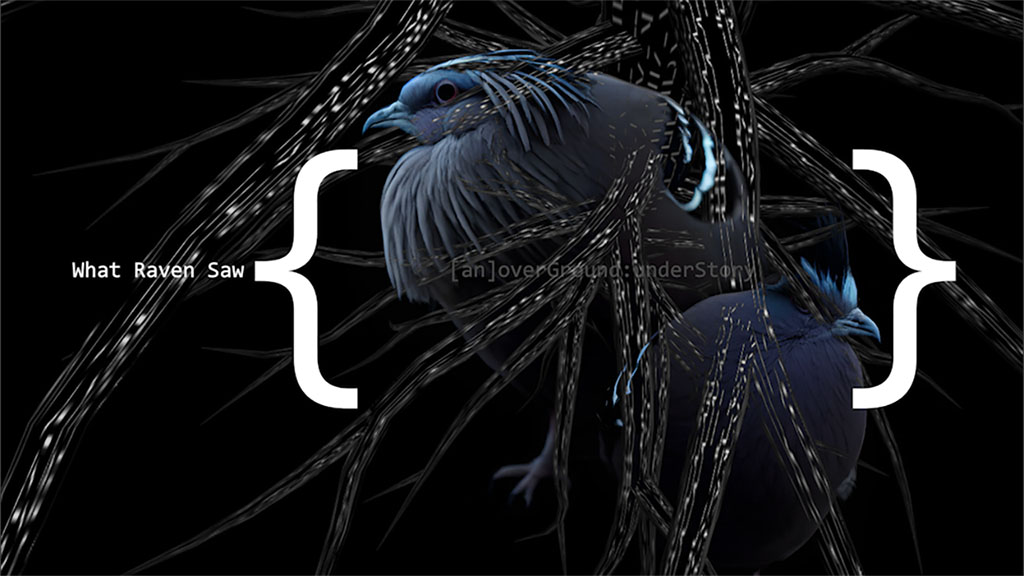
Dr. Andrew Burrell is a Senior Lecturer in Visual Communication at the University of Technology Sydney's Faculty of Design and Society. He is a practice-based researcher and educator exploring virtual and digitally mediated environments as sites for the construction, experience, and exploration of memory as narrative. His work sits at the intersection of digital media, virtual reality, and environmental humanities, with a particular focus on more-than-human ecologies and queer approaches to virtual environments. Andrew's research investigates the relationship between imagined and remembered narrative and how the multi-layered biological and technological encoding of human subjectivity may be portrayed within, and inform the design of, virtual environments. His networked projects in virtual and augmented environments have received international recognition, with recent works including "Twice, again" and "overGround:underStory," which explore the role of memory and forgetting in machine-mediated spaces and more-than-human encounters between physical and virtual ecologies. His creative practice informs his traditional research outcomes, which include publications in journals such as the Leonardo Electronic Almanac and Virtual Creativity. Andrew is particularly interested in how emerging and speculative technologies are implicated in more-than-human ecologies, and he uses creative practice to research and understand the complexities of these technologies. Andrew is a member of the UTS Visualisation Institute, a multidisciplinary research group focused on the creation of data visualizations, stories, and immersive experiences, and the School of Design's Critical Visualisation research group. He has received funding from various sources including the Australian Research Council (ARC) Discovery Projects and Create NSW. Research Interests Virtual and Augmented Reality as narrative spaces Memory construction in digital environments More-than-human ecologies and digital storytelling Queer approaches to virtual embodiment Creative applications of machine learning and AI Data visualization and environmental storytelling Accessibility and ethics in digital humanities Notable Projects Twice, again : Examines the role of memory and forgetting in machine-mediated spaces overGround:underStory : Explores entangled networks between physical and virtual ecologies Waves of Words : ARC Linkage initiative investigating language movement in pre-colonial times can't buy me love : A virtual environment collaboration with Amala Groom Layered Horizons : A geospatial humanities research platform Scientific Recognition MMUVE IT - Inter-Arts Office Australia Council Grant (2008) International presentations at conferences including ISEA (International Symposium on Electronic Art) Teaching and Supervision Andrew is an advocate for studio-based learning in which students design solutions to real-world questions through iteration and experimentation. He considers design as an anchor for interdisciplinary practice and regularly brings cross-disciplinary perspectives into his teaching. He currently supervises five PhD and master's students, with an interest in working with students at the intersection of traditional and practice-based research approaches. Research Themes in Recent Publications Andrew's recent publications demonstrate a consistent focus on the intersection of virtual environments, narrative construction, and ecological thinking. His work explores how digital technologies can be used to create new forms of storytelling that acknowledge our entanglement with non-human entities. There's a strong emphasis on ethical considerations in digital design, particularly regarding accessibility and representation. His research also investigates the application of machine learning technologies in creative practice, examining both their potential and limitations for representing human experience.
Mumin Abubakre is a Senior Lecturer (Associate Professor) in the Digital Economy Programme and Programme Lead for the Loughborough Full-Time MBA at Loughborough Business School. He holds a BEng from Bauchi, Nigeria, an MSc from the University of Aberdeen, and a PhD in Management Information Systems from Loughborough University. Previously, he was a Senior Lecturer in Information Systems at Nottingham Trent University. His research focuses on digital economy dynamics, digital innovation impacts, ICT for Development (ICT4D), and organizational IT implementation strategies. He actively contributes to peer-reviewed journals like the Information Systems Journal and the European Journal of Information Systems. Abubakre’s work bridges theoretical and practical aspects of technology adoption, particularly in contexts such as South Africa and Tanzania. His research explores how cultural values (e.g., Ubuntu philosophy), social media practices, and organizational controls shape digital entrepreneurship and innovation outcomes. He emphasizes decolonizing digital social innovations and addressing global development challenges through technology. His articles analyze topics ranging from coopetitive affordances in digital entrepreneurship to the role of standardization in process improvement initiatives. Before academia, Abubakre worked in IT roles within Nigerian and UK-based banking and oil/gas sectors. He is a member of the Association of Information Systems and the British Academy of Management. He actively supervises PhD students in digital innovation/entrepreneurship, ICT4D, and organizational IT implementation. No specific grants are highlighted, but his research consistently engages with real-world organizational and societal challenges through a digital lens.
Miriam Sturdee is an Honorary Lecturer in the Health Research Department at Lancaster University. Her research explores the integration of creative practice into technological design and education, focusing on how artistic methodologies can inform novel interfaces and user experiences. She investigates the role of creative practices in modern computer science curricula and professional workflows. Key research projects include 'Creative Practice in Computing' (2016–2022) and 'Re-Visualising CyBOK' (2022–2023). She has supervised PhD students in areas like deepfake mitigation and user experience design. Recent publications examine the intersection of art, technology, and HCI through collaborative events like design jamborees. Sturdee participates in interdisciplinary initiatives such as the Design Research Jamboree and workshops on ethical considerations in computing research. Her work bridges artistic expression with computational systems, advocating for creativity as a core component of technological innovation.
Dr. Cassandra Chapman is an Associate Professor of Marketing and ARC DECRA Fellow at the School of Business, The University of Queensland. Her research focuses on the social psychology of charitable giving, effective and ethical fundraising, and charity scandals. She holds a PhD in the psychology of charitable giving from UQ and has been recognized with awards such as the AFP Early Career Emerging Scholar Award (2023) and the Gabriel G. Rudney Memorial Award (2019). Her work bridges academic research and practical insights for nonprofits, emphasizing transparency, ethical tensions, and trust in fundraising. Education: Doctor of Philosophy (PhD) in Psychology of Charitable Giving, The University of Queensland Research Interests: Psychology of Charitable Giving: Exploring donor motivations, social norms, and trust. Charity Scandals and Trust: Analyzing sectoral influences and public perceptions. Effective and Ethical Fundraising: Balancing ethical considerations with practical strategies. Awards: AFP Early Career Emerging Scholar Award (2023) Skystone Partners Prize for Research on Fundraising and Philanthropy (2020) Gabriel G. Rudney Memorial Award (2019) Grants & Funding: ARC Linkage Project: Visualising humanitarian crises (2022–2026) ARC DECRA Award: Charitable triad theory (2022–2026) Dr. Chapman’s research informs evidence-based practices for charities, emphasizing transparency in nonprofit research and ethical fundraising strategies. She contributes to interdisciplinary networks like the Centre for Research in Social Psychology (CRiSP) and the Social Identity and Groups Network (SIGN).
Dr Jiacheng Tan is a Senior Lecturer in the School of Computing at the University of Portsmouth , where he has been a faculty member since 2002. He is actively involved in research and PhD supervision, with a strong focus on intelligent systems and robotics. Dr Tan earned his BEng in Mechanical Engineering from Jilin University of Technology (1983), an MSc in Mechatronics from Xidian University (1989), and a PhD in Computer Graphics from De Montfort University (2001). Prior to joining Portsmouth, he served as a Visiting Researcher in robotics at the University of Salford (1996–1997) and a Research Fellow in artificial intelligence at the Open University (2000–2002). His research centers on computer vision, intelligent robot control, 3D graphics, and human-robot interaction . He investigates how robots can understand and act upon natural language commands by grounding spatial relations, recognizing objects, and reasoning about tasks in unstructured environments. His work integrates fuzzy logic, knowledge engineering, and machine learning to enable robots to learn from demonstrations and interact meaningfully with humans. The trends in his publications reveal a consistent focus on robotics and intelligent systems , evolving from early work in virtual environments and telerobotics to recent contributions in cloud-based scientific visualization and machine learning applications in astrophysics. His interdisciplinary research spans computer science, control theory, and cognitive systems. Dr Tan has not received any explicitly mentioned scientific awards in the provided text. He serves as a PhD supervisor and has contributed to multiple research projects, including the development of integrated AI frameworks for robotic manipulation. While specific grant details are not listed, his collaborations and publications suggest active involvement in funded research initiatives. He has worked with researchers across institutions on topics ranging from scientific visualization to intelligent interfaces. Dr Tan is affiliated with the Computational Intelligence Research Group at the University of Portsmouth. His lab work involves developing virtual environments, symbolic representations of 3D scenes, and natural language interfaces for robot control, supporting both academic research and practical applications in automation.
Bill Buchanan is a Professor at the School of Computing Engineering and the Built Environment, Edinburgh Napier University, and a member of the Centre for Algorithms, Visualisation and Evolving Systems. His work spans Information Visualization , Software Systems , Cybersecurity , and AI , focusing on innovative solutions for complex data challenges. Research Interests: Information visualization for hierarchical data, cybersecurity frameworks, machine learning in industrial IoT, and post-quantum cryptographic systems. Projects: Supervised PhD projects on visualizing overlapping classification hierarchies and biological network inference. Currently leads research in AI-driven human-robot interaction and secure Dockerized architectures. Publications: 15+ recent works on quantum agents, GANs for anomaly detection, homomorphic encryption, and advanced cryptographic techniques. Collaborations: Engages with biologists, AI researchers, and cybersecurity experts across institutions.
Dr. Catherine Stones is an Associate Professor of Graphic Design at the School of Design, University of Leeds. Her expertise spans health communication, graphic design, visual communication, and illustration, with a focus on information design and participatory design. She collaborates with NHS staff, healthcare academics, and institutions like Glasgow School of Art and Eureka! Museum. Education: PhD in Design (University of Leeds), MA in IT (University of Lincolnshire and Humberside), BA Hons in Art History (University of Warwick) Her research examines the intersection of design and healthcare, including pain pictograms, pain diagrams, and public health infographics. She authored visualisinghealth.com and led AHRC-funded projects like the £250k initiative to improve hand hygiene in schools. She supervises PhD students in health communication and graphic design. Current projects include "Lifting the Lid on Bacteria" (designing ambient communications for school hygiene) and contributions to the AHRC's 'Seeing Data' advisory panel. She reviews for journals and conferences such as Design Studies and the International Information Visualisation Conference. Scientific Awards: AHRC Design Fellowship Award At the University of Leeds, she teaches information design, digital design, and visual communications, shaping first-year core content. She is a member of the AHRC Peer Review College and engages in global PhD supervision and research collaborations.
Jiangtian Nie is a Lecturer (Assistant Professor) in the Department of Computer Science at the University of Aberdeen, affiliated with the School of Natural and Computing Sciences. His academic work is centered on cutting-edge topics in computing and networked systems. His research interests include edge intelligence, wireless communication, and the Internet of Things. These areas focus on bringing intelligent decision-making closer to data sources in distributed systems, optimizing communication in wireless networks, and enabling scalable and efficient IoT architectures. Additional interests extend to data mining and visualisation techniques. Dr Nie teaches courses such as JC3503 Data Mining and Visualisation, contributing to the undergraduate curriculum in computing science. While no publications or awards are listed in the provided text, his research trajectory suggests strong engagement with emerging challenges in intelligent and connected systems. PhD: Nanyang Technological University Previous Position: Research Fellow, Nanyang Technological University He advises students in computing-related projects and research, though specific advisees are not named. There is no mention of external grants or funded projects in the provided information. Dr Nie is based at the Meston Building, Old Aberdeen Campus, Meston Walk, AB24 3UE.
Xiliu Yang is a Research Associate at the Institute of Computational Design and Construction (ICD) , University of Stuttgart. Bachelor of Arts in Architecture, University of Hong Kong Master of Science (Distinction), ITECH programme, University of Stuttgart Her research explores the intersection of human–robot collaboration (HRC) , augmented reality (AR) systems , and timber prefabrication . She investigates how AR interfaces can enhance multi-user workflows with industrial robots, focusing on safety protocols, task allocation, and user agency in automated environments. Recent publications highlight her work on large-scale multi-human-robot systems , error-handling in AR-assisted construction , and asymmetric AR instruction methods . Her studies often involve industry partnerships and real-world fabrication demonstrators, such as the livMatS biomimetic shell and Spatial Lacing composite systems. Scientific Awards: IntCDC Thesis Grant Research Residency at Autodesk Technology Centre She previously co-founded 3DNA , a startup developing cloud-based platforms for eyewear manufacturing, and contributed to distributed robotic platforms for fibrous material fabrication.
Oliver Duke-Williams is Professor of Population Information in the Department of Information Studies at University College London (UCL), where he also serves as Programme Director for the MA/MSc Digital Humanities programmes and Graduate Tutor. His academic appointments include Professor of Population Information (2023-present), Senior Lecturer/Associate Professor in Digital Information Studies (2015-2023), and Lecturer in Digital Information Studies (2011-2015). His educational background includes a Doctorate, Masters, and First Degree in Geography from the University of Leeds, with specialization in Geographic Information Systems. Duke-Williams' research focuses on census methodology and population data, with particular expertise in UK census systems, disclosure control issues, migration patterns, and geospatial data analysis. His work bridges demographic research with digital humanities, examining how population data can be made accessible while maintaining privacy standards. He has made significant contributions to understanding internal migration within the UK, census data accessibility, and the application of longitudinal studies for population research. Analysis of his recent publications reveals strong thematic continuity in census methodology, population geography, and data accessibility issues. His work increasingly addresses contemporary challenges including pandemic impacts on population mobility, LGBTQ+ data collection, and the development of new deprivation indices for urban health assessment. His research demonstrates a consistent focus on practical applications of demographic data for policy and academic research. Duke-Williams serves as Census Service Director at the UK Data Service and is a senior member of the Centre for Longitudinal Study Information and User Support (CeLSIUS), which facilitates access to the ONS Longitudinal Study. Since 2018, he has been a member of the National Statistician's Methodological Assurance Review Panel (MARP), providing guidance on the implementation of the 2021 Census and future population statistics. He has also served on the ESRC Peer Review College since 2010 and as an editor for the International Journal of Population Research since 2010. His teaching activities include leading the MA/MSc Digital Humanities programme and teaching modules on Data Visualisation and GIS, and Introduction to Programming within UCL's Department of Information Studies.
Professor Georgina Cosma is a Professor of AI and Data Science in the Department of Computer Science at Loughborough University, serving as Programme Director for the MSc in Data Science programme while teaching Natural Language Processing and Data Analytics & Visualisation courses. She earned her PhD in Computer Science (Intelligent Information Retrieval) from the University of Warwick in 2008, developing novel approaches for detecting similarities in natural language text and source-code files. Her research spans Artificial Intelligence, Data Science, and Natural Language Processing with specialization in Neural Information Retrieval, Ethical AI, and Continual Lifelong Learning. She develops responsible AI solutions for healthcare predictive modeling and personalized predictions, engineering defect detection systems, and digital library search engines, emphasizing explainable AI and temporal information modeling for multi-modal data including biomedical and sensor inputs. Dr Cosma leads a research team of PhD students and associates on funded healthcare AI projects, actively seeking academic and industry collaborations. She welcomes PhD candidates interested in neural information retrieval and AI applications, providing supervision for thesis development and research direction.
Axel Vogelsang is a Professor and Head of the Research Group Visual Narrative at Lucerne University of Applied Sciences and Arts' Lucerne School of Design, Film and Art. His academic career spans over two decades, combining practical experience in advertising and web design with academic leadership roles. He holds an MA and PhD in Art & Design from Central Saint Martins College/University of the Arts London. His research focuses on digital communication, museum narratives, and the intersection of technology with cultural heritage. Notable projects include the Audience+ initiative exploring social media's role in museums, and the ALE project using mobile devices to enhance cultural site experiences. He has led research groups since 2011 and currently oversees the Visual Narrative group investigating complex information visualization in digital/social media contexts. Vogelsang has authored/co-authored influential publications such as "Social Media und Museen II" (2016) and contributed to international conferences on topics like transmedia storytelling and participatory museum practices. His awards include a nomination for the Design Preis Schweiz (2017) and a Best of Swiss App Award (2016). He teaches Service Design at the MA Design program and manages modules like Data Visualisation and Narration in the MSc Applied Information and Data Science. Professional activities include founding roles in the stARTcamp Switzerland network and the Center for Storytelling, alongside board memberships in the DGTF (Design Theory & Research Society). His work bridges academic research with real-world applications, emphasizing participatory design approaches and innovative storytelling techniques across digital platforms.
Dr. Sarah Goodwin is a Senior Lecturer at Monash University's Department of Human Centred Computing, specializing in geospatial analysis and information visualization. She leads the Embodied Visualisation research group and holds roles as Director of Engagement for Human-Centred Computing and co-Director of the Monash Grid Innovation Hub. Her work focuses on creating visual solutions for complex data, including energy grid analysis, cancer prevalence visualization, and urban data exploration. Dr. Goodwin has over 20 years of experience in academic and professional roles, collaborating globally with institutions like the giCentre (City University London) and RMIT University. Education: She holds a PhD in Geographical Information Science (City University London, 2015), MSc in Geographical Information Systems (City University London, 2007), and BSc (Honours) in Geography (University of Manchester, 2003). Research Interests: Geovisualization, energy data analytics, urban data visualization, HCI, and geostatistical modeling. She has developed tools like Gazealytics and led projects such as the Australian Cancer Atlas and the Australia's Discourse Explorer. Teaching: She teaches Data Exploration and Visualisation (FIT5147) and Research Methods at Monash, impacting over 1000 students annually. She has also taught at RMIT University. Grants & Awards: Recipient of the IEEE InfoVis Best Paper Honorable Mention (2016). Active in conferences like IEEE VIS (General Chair, 2023) and organizes workshops on EnergyVis and CityVis. Labs & Teams: Involved with the Immersive Analytics Lab and collaborates with Monash Energy Institute and Data Futures Institute. Her work aligns with UN SDGs on sustainable cities and energy systems.