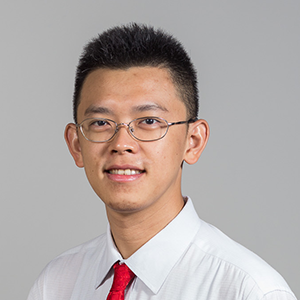
Andreas Bulling is a Professor at the Institute for Visualisation and Interactive Systems , University of Stuttgart, Germany. His research focuses on Human-Computer Interaction , Eye Tracking , and Computer Vision , with applications in Machine Learning , Virtual Reality , and Information Visualization . 2025 Publications: HOIGaze (Extended Reality), ChartQC (Data Visualization), HAIFAI (Human-AI Interaction), SummAct (Behavioral Summarization), Chartist (Chart Reading). 2024 Contributions: HumanEYEze (Multimodal AI), HOIMotion (3D Object Detection), MultiMediate'24 (Engagement Estimation), Unified Model of Saliency (Scanpath Prediction). His recent work explores gaze estimation , interactive behavior modeling , and privacy-preserving eye-tracking systems . Key subfields include Extended Reality , Neural Networks , and Behavioral Biometrics . While no explicit scientific awards are mentioned, his research has been widely cited (8,003 total citations) and downloaded (132,740 times). Andreas leads projects in Interactive Systems and collaborates with institutions such as Aalto University , KU Leuven , and National University of Singapore . His lab focuses on eye movement analysis , human motion forecasting , and task-driven input modeling .
Andreas Bulling is a Full Professor (W3) of Computer Science at the University of Stuttgart and leads the Collaborative Artificial Intelligence research group at the Institute for Visualisation and Interactive Systems. He is also an ELLIS Fellow and Founding Director of the Stuttgart ELLIS unit, a Member of the Executive Board of the International Max Planck Research School for Intelligent Systems (IMPRS-IS), and a member of the Cluster of Excellence SimTech and the IRIS Forum. His research focuses on AI, computer vision, and human-computer interaction, particularly leveraging eye tracking and wearable systems. His work spans gaze interaction, ubiquitous computing, and multimodal interfaces, with publications in top venues like NeurIPS, CVPR, ICCV, SIGCHI, and UIST. He has received numerous accolades including an ERC Starting Grant and recognition as a top 2% HCI scientist globally. He serves on editorial boards for the IEEE Transactions on Visualisation and Computer Graphics, ACM Transactions on Interactive Intelligent Systems, and the Journal of Eye Movement Research. He has chaired major conferences such as ACM ETRA and ACM UbiComp, and organized workshops on privacy in eye tracking and multimodal group behavior analysis. Education : MSc in Computer Science from Karlsruhe Institute of Technology (KIT); PhD from ETH Zurich. Awards : ERC Starting Grant (2018), Henriette Herz Scout (2024), multiple best paper awards at ACM ETRA, UIST, CHI, and others. Leadership : General Chair for ETRA 2020/2021, Technical Program Co-Chair for ACM UbiComp 2016, IEEE PerCom 2015, and others.
Dr Duncan Smith is an Associate Professor in GIS and Visualisation at the Centre for Advanced Spatial Analysis (CASA) at University College London (UCL). He serves as Programme Co-Director for the MSc Urban Spatial Science, focusing on digital visualisation and Geographical Information Systems (GIS) education. His research emphasizes urban sustainability, transport accessibility, and interactive urban visualisation, with a particular interest in global mega-cities like London, Singapore, and São Paulo. Dr Smith holds a PhD from UCL (2011), an MSc from the University of Edinburgh (2005), and a BA (2003). His recent projects include leading the ESRC-funded Driving Urban Transitions project (2024) exploring sustainable travel in small cities and outer metropolitan areas. Previously, he was Co-Investigator on the SIMETRI project (NSFC JPI Urban Europe) analyzing urban sustainability in London, the Randstad, and China's Greater Bay Area. His research interests span urban visualisation techniques, transport equity analysis, and polycentric urban development. Key areas include GIS-driven urban modelling, accessibility metrics, and the intersection of housing policy with sustainable urban form. His interactive visualisations, available on citygeographics.org , showcase innovative approaches to spatial data presentation. Dr Smith's work consistently addresses global sustainability challenges through geospatial methodologies. Recent studies highlight inequalities in transport accessibility and the spatial implications of urban policies. Upcoming projects will further investigate small-city mobility dynamics using multi-national collaborations with Amsterdam and Lisbon researchers.
Christos Gatzidis serves as Executive Dean of Bournemouth University's Faculty of Science and Technology since October 2023, overseeing six departments including Computing and Informatics, Creative Technology, and Psychology. Previously Deputy Dean (2021-2023) and Head of Creative Technology Department (2016-2021), he was appointed Professor in Creative Technology in November 2019. The Faculty leads five REF Units of Assessment and secures funding from AHRC, NIHR, and Innovate UK for research spanning digital healthcare, gaming technologies, and cultural heritage applications. His educational qualifications include: PhD in Information Science, City University London (2010) PG Cert in Research Degree Supervision, Bournemouth University (2010) MA in Computer Animation, Teesside University (2003) BSc (Hons) in Computer Studies (Visualisation), University of Derby (2002) Professor Gatzidis specializes in computer graphics with research spanning virtual reality, serious games, and digital healthcare applications. His work bridges technical innovation and practical implementation, particularly in mindfulness prototypes for healthcare and stroke rehabilitation systems. Current projects focus on the multidisciplinary application of gaming technologies in medical contexts, emphasizing user experience and therapeutic outcomes through collaborations with industry partners. His publication record (2014-2025) demonstrates evolving expertise from foundational computer graphics research in terrain generation and deformation to applied work in healthcare, cultural heritage, and music education. Key trends include virtual reality for therapeutic mindfulness, usability studies in mobile gaming, and digital cultural presentation techniques, reflecting a trajectory toward socially impactful technological solutions with strong industry translation. No scientific awards are documented in the provided information. He has supervised PhD students and secured competitive research funding, including two Innovate UK Knowledge Transfer Partnerships. His principal investigator role in a virtual reality mindfulness prototype project exemplifies his approach to translating academic research into practical industry solutions, with current focus on expanding knowledge exchange activities to support the University's civic engagement mission. As Executive Dean, he leads faculty-wide research strategy across six departments, fostering interdisciplinary collaborations particularly in digital healthcare and cultural heritage. His personal research integrates computer graphics expertise with clinical applications through partnerships with healthcare providers and technology companies, driving innovation in therapeutic VR systems and educational gaming platforms.
Jon McCormack is a Professor jointly appointed in Monash University's Faculty of Art, Design & Architecture (MADA) and Faculty of Information Technology. He founded and directs SensiLab, a research facility focusing on computational creativity, human-machine interfaces, and generative systems. His work spans electronic media art, evolutionary music, and artificial life. McCormack holds a PhD in Computer Science from Monash University, along with degrees in Computer Science, Applied Mathematics, and Film/Television. Research interests include computational creativity, tangible interfaces, and cybernetic systems. Notable projects include 'Explainable Artificial Creativity' (ARC-funded) and 'Building 4.0 CRC,' addressing architectural innovation through AI. He has been recognized with awards for collaborative projects like the Blundstone Intelligent Footwear for Healthcare. McCormack's recent articles explore AI-driven art, generative systems, and interdisciplinary design. His work bridges artistic practice with technical innovation, emphasizing ethical and creative dimensions of human-AI collaboration. SensiLab serves as a hub for practice-based research in digital media and interactive systems. Education: PhD in Computer Science, Monash University (2004) Bachelor of Science (Honours), Computer Science/Applied Mathematics, Monash University (1987) Graduate Diploma in Film/TV, Swinburne University (1986) Bachelor of Science, Computer Science/Applied Mathematics, Monash University (1985) Key Projects: Lead investigator on 'Explainable Artificial Creativity' (2022–2026) Co-investigator in 'Building 4.0 CRC' (2020–2027), exploring AI-driven architectural design Awards: 2022 Designers Australia Award for Blundstone Footwear 2020 'On the Machine Condition' Prize McCormack's lab, SensiLab, fosters collaborations across disciplines, producing exhibitions, software, and theoretical frameworks for computational creativity. He actively supervises PhD students in practice-based research, emphasizing the intersection of art and technology.
Dr. Radu Jianu is a Lecturer in the Department of Computer Science at City, University of London , where he has been a faculty member since 2016. He is affiliated with the giCentre , a leading research group in information visualization. He earned his PhD and MSc in Computer Science from Brown University, USA, and a Diploma in Engineering from the Polytechnic University of Timisoara, Romania. His academic career includes a previous role as Assistant Professor at Florida International University (2012–2016). His research focuses on Data Visualisation, Visual Analytics, and Human-Computer Interaction . He conducts interdisciplinary collaborations with domains such as biology, food policy, and energy decarbonisation, aiming to develop interactive visual tools that enhance data understanding and decision-making. His methodological approach includes user studies, eye-tracking, and the design of novel visualization techniques. Dr. Jianu teaches Programming in Java and Cognition and Technologies , and he coordinates the Programming Bootcamp. He also holds administrative responsibilities as the Progression and Support Director in the Computer Science Department and is a member of its Executive Committee (ExCo). His recent publications reflect a growing interest in LLM-assisted visual analytics, gaze-aware systems, and collaborative human-AI analytical frameworks . He has published in top venues such as IEEE TVCG, CHI, EuroVis, and Nature Immunology, with several best paper awards. His work on the RAMPVIS project highlights his contributions to visualization in public health emergencies. Scientific Awards: Best Paper Award, Symposium on Graph Drawing (2018) Best Short Paper Award, EuroVis (2020) Advising and Grants: Dr. Jianu supervises multiple PhD and MSc students, including Dany Laksono (Energy Decarbonisation) and Maeve Hutchinson (NLP-mediated Visualization). His students have co-authored high-impact, award-winning papers. He has been involved in funded research initiatives such as RAMPVIS, which received support from UKRI/EPSRC for developing visual analytics infrastructure during the COVID-19 pandemic. Labs and Teams: He is an active member of the giCentre at City, University of London, a hub for visualization research. He also collaborates with interdisciplinary teams in epidemiology, immunology, and computer science, contributing to large-scale projects like the Immunological Genome Project and RAMPVIS.
Jenny Huangfu Day, a Professor of History and the Francis Young Tang '61 Chair in China Studies at Skidmore College, specializes in the intellectual, diplomatic, and legal history of late imperial and modern China. She earned a PhD from the University of California San Diego (2012) and a BA from the University of Washington (2007). Education: PhD in History, University of California San Diego (2012) BA in History, University of Washington (2007) Research Interests: Her work bridges intellectual history , legal history , and diplomacy to examine how China negotiated sovereignty and political legitimacy from the Qing Dynasty to the Republican era. Current projects analyze the politicization of historical education and transnational legal negotiations . Her publications include monographs on Qing diplomatic missions and extradition law , alongside peer-reviewed articles in Law and History Review , Modern Asian Studies , and 中华文史论丛 . She has also contributed to digital humanities projects like Visualising China and public intellectual forums such as 澎湃新闻 . Scientific Awards: Outstanding Academic Title of 2019 by ACRL Choice for *Qing Travelers to the Far West* Academic Leadership: As Interim Chair of the History Department at Skidmore College (Fall 2025), she oversees curriculum development and faculty mentorship, with a focus on integrating interdisciplinary methodologies into China studies.
Jonathan Roberts is a researcher at Bangor University, UK, with a focus on data visualization, visual analytics, and educational technology. His work bridges computer science and creative design, particularly in data art exhibitions and authentic learning. Key research areas: Data Visualization, Visual Analytics, Educational Technology, Digital Art Recent publications explore generative AI in visualization design, multiple-view patterns for time series data, and frameworks for creative learning. His collaborations span institutions like QUT, University of Manchester, and University of Cambridge. Notable awards include VAST 2012 Honorable Mention and VAST 2010 Analytic Process Recognition. He contributes to visualization pedagogy and has co-authored works on haptic interfaces, immersive analytics, and coastal data modeling.
Gordon Fletcher serves as Associate Dean: Research and Innovation at Salford Business School, University of Salford, where he leads the development of the School's research presence and profile while guiding bidding activities, staff development, and impact initiatives. With extensive experience since 2002 teaching programming, digital transformation, and information systems, Fletcher employs a hands-on, interactive pedagogical approach. University: University of Salford School: Salford Business School Academic Rank: Professor Research Focus: Digital business, culture, and practice Fletcher's research explores digital transformation through multiple lenses including conflict within online finance communities, virtual game economies, and digital grieving practices. His scholarly work connects theoretical frameworks with practical applications in business environments, particularly examining how organizations navigate digital change while maintaining strategic coherence. His recent publications (2022-2025) demonstrate a consistent focus on practical frameworks for digital transformation, with particular attention to organizational readiness, leadership approaches, and strategic implementation. The recurring themes across his work include visualization techniques for strategic planning, responsive business model design, and the cultural dimensions of digital adoption. Awards and Professional Recognition: Emerald Literati Award (2017) for Outstanding Paper Claudio Ciborra Award for most provocative paper (2011) Vice-Chancellor's Distinguished Teaching Award (2014) Fellow of the Higher Education Academy (2012) Fellow of the Royal Society for the Arts (2011) Chartered Manager designation (2015) Fletcher actively supervises doctoral research in digital transformation topics and has contributed to multiple Knowledge Transfer Partnerships with organizations including the Greater Manchester Chamber of Commerce. His professional service includes committee roles with the International Federation of Information Processing and editorial responsibilities for major information systems conferences.
Professor Massimiliano Tani Bertuol is a distinguished academic specializing in economics at UNSW Canberra's School of Business, where he has served as Professor since 2015. His professional affiliations extend beyond UNSW as he is an Associate Investigator/Member at CEPAR; Ageing Futures; uDASH; AI Institute; and Cyber security (IFCYBER). Additionally, he maintains international connections as a Research Fellow at the Institute for the Future of Labor (IZA) in Germany since 2005, an Associate Member at Macquarie University's Centre for Workforce Futures since 2018, and a Research Fellow at the Global Labor Organization (GLO) in Maastricht since 2016. His educational background reflects a strong foundation in economics and business, having earned a PhD in Economics from the Australian National University (2003), a Master of Science in Economics from the London School of Economics (1992), and a Bachelor's degree in Business/Economics from Bocconi University in Milan, Italy (1989). His academic journey has positioned him as a leading researcher in human capital economics with international recognition. Professor Tani Bertuol's research centers on human capital development and its economic implications. His work examines how human capital can be fostered, efficiently transferred internationally through migration, and how it affects productivity, innovation, and economic growth at both firm and national levels. His research spans multiple regions including Australia, Europe, the US, Africa, and China, with particular focus on migration economics, labor market outcomes, and the economic impacts of education and skills. His current research agenda includes non-pecuniary incentives, behavioral/financial decisions in China, occupational licensing, language skills and economic assimilation, AI-human interactions in health contexts, and labor mobility and productivity. Analysis of his recent publications reveals significant interdisciplinary trends bridging economics with public health, environmental science, and technology. His work connects migration dynamics with economic outcomes, examines household financial behaviors through gender lenses, and investigates the complex relationships between environmental factors like air pollution and economic activities including education investment and entrepreneurship. More recent work explores AI applications in health and the economic implications of pandemic responses, demonstrating his ability to address contemporary challenges through rigorous economic analysis. 2023: UNSW ARC Postgraduate Council (Arc PGC) award for excellence in research supervision 2011: Vice-Chancellor Award for Teaching Excellence 2011: Faculty Award for Teaching Excellence for teaching economics Professor Tani Bertuol has successfully supervised 4 PhD students to completion, with 1 submitted dissertation and 5 currently under supervision. His active research program is supported by significant grant funding including an ARC Linkage Project (2023-27) on regional Australia's skills shortages and high-skill refugees' employment ($354,811), an ARC Discovery Project (2019-23) on migrant aging and wellbeing ($478,000), and a NUW Alliance grant (2021-23) on hearing screening and academic outcomes ($73,367). He serves as Associate Editor for Social Indicators Research and Higher Education Research & Development, contributing to scholarly discourse in his fields of expertise. His teaching portfolio includes courses in data analytics, finance, and professional executive education focused on cost-benefit analysis and data communication. He teaches ZBUS2333 Data Analytics and Visualisation, ZBUS8105 Finance and Investment Appraisal, and ZBUS8149 Introduction to Finance, demonstrating his commitment to developing the next generation of economics professionals with both theoretical knowledge and practical skills.
Steven Halim is an Associate Professor (Educator Track) in the Department of Computer Science at the School of Computing, National University of Singapore (NUS). He has been a full-time educator since 2007, teaching a wide range of courses including Data Structures and Algorithms, Competitive Programming, and Design and Analysis of Algorithms. He currently serves as the Director of the Centre for Nurturing Computing Excellence (CeNCE) and is a Fellow of the NUS Teaching Academy. Ph.D. in Computer Science, National University of Singapore B.Sc. in Computer Science, National University of Singapore His research and teaching interests focus on algorithms, competitive programming, visualization, and optimization. He is renowned for creating VisuAlgo , an interactive online platform that visualizes data structures and algorithms, used by students and educators worldwide. He is also the co-author of the widely acclaimed book "Competitive Programming" , now in its fourth edition, which is a key resource for programming contest preparation. His recent scholarly work centers on pedagogical innovations in computer science education, particularly algorithm visualization and competitive programming methodologies. Earlier publications from his PhD work focused on stochastic local search, metaheuristics, and algorithm tuning through visualization. The articles span topics from educational technology to combinatorial optimization, reflecting a transition from research in algorithm engineering to leadership in computing education. Commendation Medal (Pingat Kepujian), National Day Awards 2018 NUS Annual Teaching Excellence Award (ATEA) 2014/15, 2017/18, 2018/19 (with Honour Roll) Faculty Teaching Excellence Award (FTEA) 2011/12, 2012/13, 2014/15 (with Honour Roll) Best Teaching Assistant Award 2007/08 Steven Halim has advised numerous students through his courses and competitive programming teams. He has served as the head coach for NUS ICPC teams since 2008 and team leader for Singapore IOI teams since 2009, leading them to multiple international medals. He has also held leadership roles in major international competitions, including Deputy Director for IOI 2020 and 2021, and Regional Contest Director for ICPC Asia Singapore 2015 and 2018. He was a Resident Fellow at NUS Sheares Hall for nine years, deeply engaging with student life. He leads the Centre for Nurturing Computing Excellence (CeNCE), where he manages programming competition activities for both NUS and Singapore national teams. His work integrates education, competition, and mentorship, creating a synergistic environment that has significantly elevated Singapore's performance in international informatics olympiads.
Bernhard Jenny is an Associate Professor at Monash University's Faculty of Information Technology, specializing in immersive visualization and geospatial data. He holds a PhD in Cartography from ETH Zurich and has held previous roles at Oregon State University and RMIT University. His research focuses on virtual reality (VR), augmented reality (AR), and cartographic innovations for geospatial data representation. Education: Doctor of Sciences in Cartography, ETH Zurich (2010) Postgraduate Certificate in Computer Science, ETH Zurich (2005) Master of Science in Surveying, EPFL (2000) Research Interests: Combines cartography, computer graphics, and human-computer interaction to explore VR/AR applications for geospatial data. Current work includes immersive analytics, terrain visualization, adaptive map projections, and storytelling with geospatial data. Recent Articles: Focus on ambient occlusion for terrain shading, grammars for immersive visualization transitions, and AR/VR interfaces for spatial data. Awards: Henry Johns Award (2007, 2011, 2012) ETH Medal (2010) Best Paper Honorable Mentions (ACM CHI, DIS) Grants & Projects: Leads initiatives like the 'Immersive Analytics' extension and 'National Geographic Relief Shading' project. Collaborates on neural networks for cartographic relief shading and sustainable development goals (SDGs). Labs & Teams: Heads the Embodied Visualisation Lab at Monash, focusing on immersive analytics and geovisualization tools.
Dr Francesca Pianosi is an Associate Professor in Water & Environmental Engineering at the University of Bristol 's School of Civil, Aerospace and Design Engineering. She contributes to the Cabot Institute for the Environment and leads research on data analysis, mathematical modelling, and uncertainty quantification for hydrology and water engineering. Specialises in simulation and optimisation methods for water resource management Focuses on uncertainty propagation in natural hazard models Developed the open-source SAFE Toolbox for sensitivity analysis Research Trends Her recent publications (2023-2025) demonstrate expertise in: Groundwater flow and recharge in data-scarce regions Digital Twin applications for watershed management Climate change impact on landslides and droughts Multi-objective optimisation for reservoir operations Integration of machine learning with hydrological models Scientific Awards Arne Richter Award for Outstanding Young Scientists (2015) Best Research Oriented Paper - Journal of Water Resources Planning and Management (2024) Early Career Research Excellence (ECRE) award (2014) Francesca leads the Water Management and Adaptation based on Watershed Digital Twins project (2024-2027) and contributes to the USARIS project on uncertainty quantification for infrastructure systems (2023-2025).
Mai Elshehaly is a Lecturer in Computer Science at City, University of London, where she is affiliated with the giCentre in the Department of Computer Science, School of Science and Technology. She focuses on designing, developing, and evaluating visualisation solutions that support data-driven decision-making, particularly for non-technical users in healthcare and public sectors. Her work involves close collaboration with healthcare practitioners, local authorities, and schools to co-design tools grounded in real-world needs. Her research interests center on information visualisation and human-computer interaction , with a strong emphasis on user-centered and co-design methodologies . She investigates how lived experiences of stakeholders can shape visual analytics systems, especially in healthcare quality improvement, population health management, and digital transformation initiatives. Her approach bridges technical innovation with social impact, promoting equitable access to data insights. Her recent publications highlight trends in narrative visualization, integration of lived experience with electronic records (e.g., CLEVER framework), and adaptable dashboards for healthcare (QualDash). These works are published in top venues such as IEEE VIS, IEEE TVCG, and Computer Graphics Forum, reflecting a consistent focus on usability, evaluation, and real-world deployment of visual analytics tools. Department-level achievement award during PhD at Virginia Tech University-level achievement award during PhD at Virginia Tech Mai has secured research funding from the Bradford Institute for Health Research (BIHR), NIHR, and internal university sources including EPSRC doctoral training funds. She has led and contributed to interdisciplinary projects such as the Digital Makers Programme and Connected Bradford, which involve partnerships across academia, healthcare, and local government. While no formal PhD students are listed, she mentors through collaborative research and advisory roles. She is actively involved in applied research through leadership positions: Co-Director of the Digital Makers Programme, Deputy Director of the Workforce Observatory for West Yorkshire, member of the advisory board at the Wolfson Centre for Applied Health Research, and cross-theme visualisation expert at the Yorkshire and Humber Patient Safety Research Centre. These roles underscore her commitment to translating research into practice within health and education systems.
Sarah Goodwin is an academic affiliated with Monash University in Australia, specializing in data visualization, immersive analytics, and human-computer interaction. She holds a PhD in Visualisation for Household Energy Analysis from City University London (2015). Her research focuses on developing innovative visualization techniques for complex data, particularly in energy systems, healthcare, and geographic information. Key contributions include the Australian Cancer Atlas project (2024), which addressed geostatistical uncertainty visualization, and work on mixed-reality technologies embedding human values (2025). She collaborates extensively with researchers like Tim Dwyer and leads the Data Visualisation and Immersive Analytics Research Lab at Monash. Her publications span journals like IEEE Transactions on Visualization and Computer Graphics and conferences such as CHI and IEEE VAST. Research highlights include gaze analytics tools (VETA), tangible immersive systems (Uplift), and energy consumption visualization frameworks.