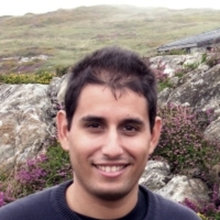
Panteleimon Ekkekakis is a Professor and Chair of the Department of Kinesiology at Michigan State University’s College of Education. His research focuses on affective responses to exercise, including their psychobiological mechanisms and implications for exercise behavior. He holds a Ph.D. from the University of Illinois, Urbana-Champaign. Ekkekakis’ work explores the pleasure and displeasure associated with exercise, emphasizing their role in predicting long-term adherence. His research spans topics like high-intensity interval training (HIIT), obesity, mental health interventions, and physical education practices. Notably, he critiques methodological flaws in HIIT studies and advocates for evidence-based exercise guidelines. His recent articles highlight critical analyses of HIIT efficacy, the role of affective valence in exercise adherence, and the need for paradigm shifts in obesity treatment. He emphasizes the importance of personalized exercise programs that prioritize subjective enjoyment to enhance public health outcomes. While no specific awards are listed, his contributions to exercise psychology and policy advocacy are significant. His research has informed debates on fitness testing in schools and the integration of exercise into clinical depression treatment.
Daniele Loiacono is an Associate Professor at Politecnico di Milano's Department of Electronics, Information, and Bioengineering (DEIB), affiliated with the Artificial Intelligence and Robotics Lab (AIRLab). His research focuses on interdisciplinary applications of Artificial Intelligence, Machine Learning, and Deep Learning in medical imaging, radiation therapy, and procedural content generation for games. He leads projects in synthetic image generation for radiotherapy quality assurance, automated treatment planning, and bias analysis in medical AI systems. Key research areas include medical image synthesis using GANs, radiation therapy optimization, and algorithmic game design. His contributions span clinical applications such as total marrow irradiation (TMI) planning and lymph-node segmentation, alongside innovations in shader generation and interactive evolutionary tools for game development. Loiacono collaborates on multi-center studies to validate AI-driven workflows in healthcare and has pioneered methods combining lean Six Sigma with machine learning for treatment process improvement. His work bridges clinical medicine and computer science, addressing challenges in radiation oncology, anatomical imaging, and procedural content automation. The AIRLab serves as a hub for his research, integrating AI advancements into real-world medical and engineering solutions.
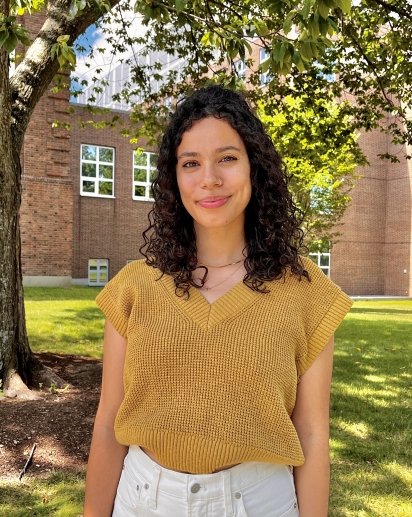
Jane Henderson is an Assistant Professor of Geography at Dartmouth College. Her research focuses on Black geographies beyond the plantation, examining intersections of race, space, and environment in settler colonial contexts. She holds a B.A. from the University of San Diego and a Ph.D. from the University of California, Berkeley. Her work engages Black Caribbean intellectual traditions and interrogates Indigenous and Black spatial claims through her hometown of Minneapolis, Minnesota. Teaching interests include courses on Race, Space and Nature; Racial Capitalism; and Human Geography fundamentals. Her publications address racial justice in academic disciplines and abolitionist frameworks in geographical practice. She actively contributes to inclusive pedagogy and critical spatial theory. No formal grants or awards are listed, though her research demonstrates engagement with critical social justice themes. She advises students through structured processes outlined in her Letter of Recommendation Request Form.
Dr. Rishita Nandagiri is a feminist researcher and academic currently serving as a Lecturer (Assistant Professor) in the Department of Global Health & Social Medicine at King's College London. She previously held research and teaching positions at the London School of Economics (LSE), including an ESRC Postdoctoral Fellowship and an LSE Fellow in Health and International Development. Her work is deeply rooted in reproductive justice, gender, and global health, with a focus on the Global South. PhD in Social Policy, London School of Economics (2019) ESRC Postdoctoral Fellow, LSE Department of Methodology (2020-2021) LSE Fellow in Health and International Development (2019-2020) Research Assistant, LSE Department of Media and Communications (2018-2019) Dr. Nandagiri’s research centers on reproductive (in)justices, interrogating how power and politics shape abortion access, self-managed abortion, care trajectories, and reproductive governance. Her work is interdisciplinary, drawing on feminist theory, qualitative and participatory methods, policy analysis, and co-production with communities and organizations. She has extended her research to examine the impact of the COVID-19 pandemic on abortion and the role of lay health providers in care delivery. Her methodological interests include multi-method designs that integrate interviews, archival research, and community engagement. The 15 most recent articles reflect a strong trajectory in reproductive justice, with increasing engagement with feminist economics, carceral systems, and global policy. Themes include structural violence, legal pluralism, care ethics, and transnational advocacy. Her publications span high-impact journals in public health, social policy, gender studies, and media, indicating a broad interdisciplinary reach. Scientific awards and recognitions include: ESRC Postdoctoral Fellowship (2020-2021) LSE Class Teacher Award (2020) LSE Research Investment and Infrastructure Funds (2020) Best PhD Poster Prize, British Society for Population Studies (2018) LSE PhD Studentship (2015-2019) Dr. Nandagiri has advised on and contributed to numerous research grants, particularly those related to reproductive health, digital privacy, and pandemic response. She has collaborated with major institutions such as UNFPA, the Women’s Global Network for Reproductive Rights, and FRIDA. She co-founded the Abortion Book Club and serves on editorial and advisory boards, including BMJ Sexual & Reproductive Health and the International Union for the Scientific Study of Population’s Abortion Research panel. She also co-convenes the Development Studies Association’s Women and Development Study Group, demonstrating strong leadership in academic and advocacy networks. She is actively involved in public engagement, contributing to LSE blogs, media outlets like Women's Health Magazine UK, and platforms such as the Oxford Human Rights Hub and Harvard’s Bill of Health. Her lab and team affiliations are not explicitly named, but her collaborative projects suggest strong ties to interdisciplinary research groups focused on global health, reproductive justice, and digital rights.
Heidi Stöckl is a Professor of Public Health Evaluation at Ludwig Maximilian University of Munich (LMU) and holds an Honorary Professorship at the London School of Hygiene and Tropical Medicine (LSHTM). She leads the Public Health Evaluation group at LMU's Institute for Medical Information Processing, Biometry and Epidemiology (IBE), and serves as a Special Graduate Faculty member at the University of Guelph, Canada. Her research focuses on gender-based violence, HIV/AIDS, and health systems strengthening in low- and middle-income countries. Stöckl has led the WHO Collaborating Center on Research on Gender-Based Violence and Health and directed the Gender Violence & Health Centre at LSHTM. She has extensive experience in global health research, including modeling violence prevalence and investigating violence's impact on HIV transmission and maternal health. Education: 2006-2009: DPhil in Evidence-based Social Intervention, University of Oxford (Nuffield College) 2005: MSc in Sociology, University of Oxford 2000-2005: Diploma in Political Science, Free University of Berlin and LMU Munich Research Interests: Prioritizes intimate partner violence (IPV), sexual violence, and their intersections with HIV/AIDS, mental health, and socioeconomic factors. Her work addresses structural determinants of violence, including economic inequality and gender norms, with a focus on sub-Saharan Africa and Southeast Asia. Methodologically, she combines epidemiological approaches with qualitative studies to inform policy and intervention design. Key Contributions: Has published over 100 peer-reviewed articles, including seminal work on global IPV prevalence, child sexual violence meta-analyses, and the health impacts of trafficking. Her team's Burden of Proof study quantified violence's health effects, influencing global health metrics. She also leads initiatives on pandemic-related violence and health system resilience.
Professor Christian F. Doeller is a leading cognitive neuroscientist serving as Director of the Department of Psychology at the Max Planck Institute for Human Cognitive and Brain Sciences (MPI CBS) in Leipzig and Vice President of the Max Planck Society (since 2023). His roles include honorary professorships at the University of Leipzig (2019) and TU Dresden (Cognitive Neuroscience of Learning and Memory). He holds a PhD in Psychology from Saarland University (2005) and has held positions at institutions such as UCL (London), Radboud University (Nijmegen), and NTNU (Trondheim). His research focuses on spatial navigation, memory systems, and cognitive mapping in the human brain, leveraging neuroimaging (fMRI, EEG) and computational modeling. Key areas include hippocampal/entorhinal cortical function, grid cells, and the neural basis of spatial and conceptual representations. Recent work explores non-Euclidean spatial cognition, value-based decision making using grid-like maps, and hormonal influences on navigation. His lab combines experimental psychology, neuroimaging, and theoretical neuroscience to understand how brains build predictive models of environments and concepts. Publications emphasize cognitive maps, neural representations of space/value, and memory formation mechanisms. Over 100 journal articles span high-impact journals like Nature Neuroscience , Neuron , and Current Biology . His work bridges basic research and translational applications in neurodegenerative disorders and spatial cognition deficits.
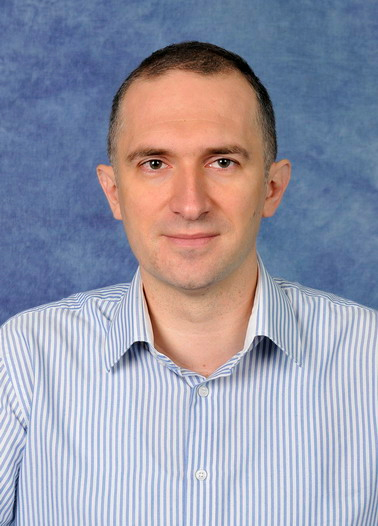
Zoran Kalinic serves as an Assistant Professor at the Faculty of Economics, University of Kragujevac, where he teaches Electronic Business since October 2012. Previously, he worked at the Faculty of Mechanical Engineering in Kragujevac from 1996 to 2005, and joined the Faculty of Economics in February 2005 as an assistant in Information Systems, later teaching Information Technology and Electronic Business from 2009 onward. Doctorate (2012): Faculty of Engineering, University of Kragujevac, specializing in information systems development and mobile communications Postgraduate studies: Faculty of Mechanical Engineering in Kragujevac (completed with average grade of 10) Bachelor's degree: Faculty of Mechanical Engineering in Kragujevac (1996, average grade 9.43) Professor Kalinic's research focuses on digital transformation and its economic implications, with particular expertise in mobile commerce, electronic business systems, digital payment technologies, and consumer behavior in online environments. His work frequently employs advanced analytical methods including artificial neural networks, structural equation modeling, and hybrid analytical approaches to investigate technology adoption patterns and digital marketplace dynamics. He has conducted extensive research on Serbian digital markets, including studies on mobile payment systems, e-commerce development barriers, and real estate price prediction using AI techniques. His publication record demonstrates a clear progression from foundational technology acceptance research toward more complex analyses of digital ecosystems, with recent work examining influencer marketing effects on TikTok, biometric payment systems, and gig economy measurement in Serbia. The integration of artificial intelligence methodologies with traditional consumer behavior theories represents a distinctive feature of his scholarly approach. Professor Kalinic maintains active international academic engagement through short study visits to institutions including the University of Udine, Vienna University of Economics, University of Maribor, Krakow University of Economics, Coventry University, Polytechnic of Turin, and Comenius University in Bratislava. He spent six weeks at the University of Maribor in 2007 through a Tempus IMG grant and served as a visiting lecturer at the Krakow University of Economics in 2012. Author/co-author of over 60 papers in international and domestic journals and conferences Participant in multiple scientific research and professional projects Recipient of academic awards during studies from University, Faculty, Ministry of Science and Technology of Serbia, Embassy of Norway, WUS-Austria, Zastava-Yugo Automobiles, and Kragujevac City Assembly His professional development includes a month-long visit to the Faculty of Informatics at the University of the Basque Country in San Sebastian (2004) and ongoing collaboration with regional and European academic institutions. Professor Kalinic's research bridges theoretical frameworks with practical applications in the Serbian and Western Balkan digital economy context.
Lynn Blewett is a Professor in the Division of Health Policy and Management at the University of Minnesota's School of Public Health. She directs the State Health Access Data Assistance Center (SHADAC), a Robert Wood Johnson Foundation-funded initiative supporting state-level health access evaluation. Her work focuses on health insurance coverage, Medicaid/CHIP, immigrant health, and international health systems. PhD, Health Services Research, Policy, and Administration, University of Minnesota MA, Public Affairs, Hubert H. Humphrey School of Public Affairs BA, Psychology, University of Wisconsin Her research examines disparities in healthcare access, state policy impacts on coverage, and data infrastructure development. She led the creation of the University of Minnesota's Census Research Data Center, the only health-focused RDC in the U.S. Key publication themes include pandemic healthcare resilience (2020), all-payer claims databases (2023), and long-term Medicaid eligibility modeling (2022). Trends show sustained focus on data-driven policy solutions and equity in healthcare access. Member, National Academy of Social Insurance Board of Scientific Counselors, National Center for Health Statistics Board member, AcademyHealth She has secured grants from the Robert Wood Johnson Foundation and directed SHADAC's federal survey access initiatives. Her advocacy for data transparency extends to global health systems analysis, informed by her Senate legislative experience in health policy. As SHADAC director, she manages teams analyzing state health programs and collaborates with the University of Minnesota Medical Center. The Census RDC under her leadership provides critical infrastructure for health services research.
Karin Väyrynen is a University Lecturer in the INTERACT research unit and Adjunct Professor at the Faculty of Information Technology and Electrical Engineering at the University of Oulu. Her career spans qualitative research in Information Systems, focusing on communication, collaboration, and digital transformation across industrial and policy contexts. Focus on digitalization of Finnish taxi industry Impact of public policy on digital transformation Extensive work in global virtual team management Contributions to connected health research She has participated in multiple EU-funded projects and published in leading IS conferences and journals. Her methodological expertise lies in in-depth qualitative research and interpretive analysis. Contact: karin.vayrynen@oulu.fi
Dr. Angelique Jenney is an Associate Professor and the Wood’s Homes Research Chair in Children’s Mental Health at the Faculty of Social Work, University of Calgary. With over 25 years of experience in gender-based violence, child protection, and children’s mental health sectors, she specializes in trauma-informed approaches and simulation-based learning methodologies. Doctor of Philosophy (PhD), Social Work – University of Toronto (2011) Master of Social Work (MSW) – Wilfrid Laurier University (1998) Bachelor of Arts (BA), Psychology Co-op Program – University of Guelph (1995) Her research focuses on child mental health , gender-based violence , trauma across the lifespan , and simulation-based learning . She develops tools to enhance clinical competencies through experiential training, addressing gaps in child protection responses to violence and trauma. Dr. Jenney’s publications highlight innovative practices such as virtual simulations for interdisciplinary education, narrative shelter models for resilience, and trauma-informed interventions with perpetrators. Her work bridges academic research and frontline practice, emphasizing practical knowledge dissemination to parents and policymakers. Faculty Publication Award (2017–2022) Faculty of Social Work Early Career Researcher Award (2021) Teaching Experiential Learning Initiatives Teaching Award (2023) She collaborates with agencies like the Hotchkiss Brain Institute and Mathison Centre for Mental Health Research and Education, contributing to policy development and training frameworks in child welfare.
Katherine McDonough is a Lecturer in Digital Humanities at the School of Global Affairs, Lancaster University . She specializes in eighteenth-century French history and spatial digital humanities, focusing on historical maps and computational methods for analyzing infrastructure and socio-political reforms. PhD, Early Modern French History, Stanford University (2013) BA, History and French Literature, Johns Hopkins University (2006) Her research bridges Enlightenment history , infrastructure development , and digital methodologies such as computer vision and text analysis. She explores how historical actors contested coercive labor systems and reimagined governance through spatial data. Her recent work includes the MapReader software library (2023 Roy Rosenzweig Prize) and collaborations with the GEODE project in Lyon. She contributes to Living with Machines and Machines Reading Maps , analyzing 57,000 digitized maps. Roy Rosenzweig Prize (2023) Fellow, Royal Historical Society Software Sustainability Institute Fellow Collegium de Lyon Fellowship She co-leads the AHRC-funded Data/Culture project and previously served as UK PI for the AHRC-NEH Machines Reading Maps initiative. Her teaching includes undergraduate courses on eighteenth-century French history and MA-level modules on text/spatial analysis.
Dr. Florian Urmetzer serves as Associate Teaching Professor and founding Director of the Ecosystems, Platforms & Strategy (EPS) Research Group at the University of Cambridge's Institute for Manufacturing (IfM). His expertise centers on strategy formulation tools for business ecosystems and platforms within manufacturing and services sectors. He teaches the Business Ecosystem Strategy course and leads IfM Engage consultancy projects for clients including IBM, ATOS, ABN-AMRO, CEMEX, Pearson Education, Leonardo rescue helicopters, and the NHS. Urmetzer holds a distinction MSc in Network Centred Computing and PhD from the University of Reading's School of Systems Engineering. His doctoral research developed real-time usability evaluation methods for distributed collaborative environments. Academically, he has been a visiting researcher at Barcelona Supercomputing Center and Politecnico di Milano. His research investigates industrial ecosystems from strategic and managerial perspectives, encompassing supply chains, digital platforms, and business ecosystem dynamics. This work has been published in leading journals including Journal of Business Research, European Journal of Information Systems, and Journal of Service Research. Analysis of his recent publications reveals dominant trends in technological sovereignty, platform ecosystem governance, and manufacturing relocation strategies. Prior to Cambridge, Urmetzer gained extensive industry experience as a consultant at Accenture in Zürich, Senior Researcher at SAP labs, and roles at Volkswagen AG, Gartner Inc., and IBM. He currently leads the EPS Research Group, which develops frameworks for organizations navigating complex industrial ecosystem dynamics.
Heather M.-L. Miller serves as an Associate Professor in the Department of Anthropology at the University of Toronto Mississauga (UTM), currently on academic leave for the 2025-2026 term. Dr. Miller's educational background includes a PhD from the University of Wisconsin-Madison (1999) alongside MA, MSc, and BA degrees, though specific institutions for the latter are not detailed in the provided materials. PhD, University of Wisconsin-Madison, 1999 MA (institution and year not specified) MSc (institution and year not specified) BA (institution and year not specified) Her research specializes in South Asian archaeology, with emphasis on prehistoric and historic complex societies. Key areas include ancient technology, material culture analysis, social organization, regional interconnections, and agricultural systems. Current projects focus on medieval Islamic trade routes in northwestern Pakistan, particularly through the Caravanserai Networks Project which examines economic and social aspects of historical travel routes. Analysis of Dr. Miller's recent publications reveals a strong focus on the Indus Civilization and South Asian archaeology, with increasing attention to medieval periods. Her work integrates archaeological evidence with historical texts to explore trade networks, technological practices, and socio-economic organization, demonstrating an interdisciplinary approach that bridges anthropology, history, and material science. Scientific Awards: No specific awards or honors are mentioned in the provided information. Dr. Miller mentors graduate students, including Rachele Andrea Bianchi. Her research is supported by competitive grants from the Social Sciences and Humanities Research Council of Canada (SSHRC) and the Connaught Foundation at the University of Toronto, enabling fieldwork in Pakistan and database development for historical trade routes. She is an active member of the Trent University Archaeology Research Centre (TUARC) and the Centre for South Asian Studies at the University of Toronto. Her field research involves collaboration with the Directorate for Archaeology and Museums of the Northwest Frontier Province (NWFP) in Pakistan and international scholars, fostering cross-border academic partnerships.
John Harry Evans is the III Katz Alumni Professor of Accounting at the Department of Accounting, Katz School of Business, University of Pittsburgh. His research focuses on economic perspectives of accounting phenomena, analytical models of incentives, experimental studies in managerial and tax reporting, and empirical investigations of healthcare incentives. He teaches courses in Financial Accounting, Financial Statement Analysis, Managerial Accounting, and Strategic Cost Management. Research spans incentive design, corporate governance, healthcare accounting, and empirical methodologies. Recent publications address CEO turnover, physician compensation, tax reporting ethics, and organizational incentive structures. Awarded multiple honors including the Outstanding Management Accounting Paper Award (2012), Provost Award for Excellence in Mentoring (2011), and multiple Best Paper Awards across journals. Active in professional service as a financial consultant to the Department of Defense and expert witness in legal cases. Designed financial analysis training programs for healthcare managers at University of Pittsburgh Physicians and Highmark Insurance Company.
Dr. Gushu Li is an Assistant Professor at the University of Pennsylvania's School of Engineering and Applied Science, affiliated with the Computer and Information Science Department (primary) and Electrical and Systems Engineering Department (secondary). He leads the Penn Quantum System Lab, focusing on quantum computing software-hardware co-design. University: University of Pennsylvania School: School of Engineering and Applied Science Department: Computer and Information Science Academic Rank: Assistant Professor His research spans quantum compilers, programming languages, algorithm optimization, computer architecture, and electronic design automation. He develops techniques for quantum error correction verification, qubit mapping, and hybrid quantum-classical systems, with work integrated into IBM's Qiskit and Quantinuum's TKET frameworks. The 15 most recent publications highlight advancements in quantum simulation , bosonic quantum computing , fermion-to-qubit mapping , and NISQ-era architectures . Key methodologies include symbolic Hamiltonian compilation, adaptive tree structures, and runtime assertions for quantum program testing. 2024: NSF CAREER Award, NVIDIA Academic Grant Program Award, Intel Rising Star Faculty Award 2021-2022: QISE-NET Triplet Fellow, ACM SIGPLAN Distinguished Paper Award, multiple travel grants 2015-2017: Fellowships from UCSB, UChicago, and DAC Dr. Li advises four PhD students and actively recruits candidates with FPGA/digital design skills for 2025. His lab emphasizes interdisciplinary backgrounds to tackle quantum system challenges.