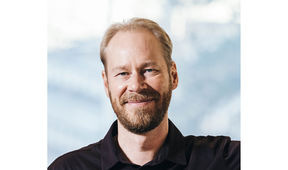
Pauli Murto is a Professor and Head of the Department at Aalto University School of Business, Department of Economics. His research spans microeconomic theory, information economics, and game theory, with a focus on strategic decision-making under uncertainty. Aalto University School of Business, Espoo, Finland Member of Helsinki Graduate School of Economics Research Interests: Dr. Murto's work examines strategic timing in economic decisions, information aggregation in games, auction theory, and investment behavior under uncertainty. His publications address topics like: Common value auctions and affiliated signals Stepwise investment under multi-dimensional uncertainty Equilibrium delay and neighborly coordination Irreversible investment in oligopolistic markets Publications (2002–2024): His research appears in top journals like Review of Economic Studies , Theoretical Economics , Journal of Economic Theory , and RAND Journal of Economics , often collaborating with scholars such as Juuso Välimäki and Chang-Koo Chi. Contact: Available at pauli.murto@aalto.fi or +358 40 353 8174. Office located in Room V308, School of Business building, Aalto University.
Erik Velldal is a Professor in the Language Technology Group (LTG) at the Section for Machine Learning , Department of Informatics, University of Oslo . With over 25 years of experience in machine learning and natural language processing (NLP), he leads the SANT project focused on sentiment analysis and contributes to major research initiatives including MediaFutures , NorwAI , and Integreat (Norwegian Center for AI Research). His work bridges linguistic theory and computational methods, emphasizing semantic modeling and uncertainty detection. Research interests include sentiment analysis , language modeling , event extraction , and machine learning applications to NLP. Recent publications address cross-domain sentiment classification , generative event analysis , and multilingual model adaptation . He co-developed the Norwegian Review Corpus (NoReC) and Norwegian Anaphora Resolution Corpus (NARC) , foundational resources for Norwegian NLP. His projects often involve collaboration with international institutions, reflected in publications at venues like ACL, COLING, and EMNLP. Current efforts focus on entity-level sentiment analysis , diagnostic datasets for Norwegian , and evaluating compositional generalization in language models. No public record of scientific awards or part-time appointments exists.
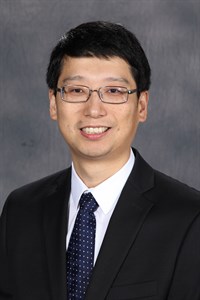
Dr. Xiaofeng Qian is an Associate Professor in the Department of Materials Science & Engineering at Texas A&M University, with joint appointments in Physics and Astronomy, and Electrical & Computer Engineering. His research focuses on materials theory , quantum materials design , and high-throughput computational discovery , particularly for 2D materials and energy applications . Educational Background: Ph.D., Nuclear Science and Engineering, Massachusetts Institute of Technology (2008) B.S., Engineering Physics, Tsinghua University (2001) Research spans first-principles electronic structure methods , nonlinear optical responses , and multiscale modeling of electronic, thermal, and ionic transport. Key areas include quantum spin Hall effect , ferroelectric switching , and machine learning for materials prediction . Notable Awards: Dean of Engineering Excellence Award (2024) Engineering Genesis Multidisciplinary Award (2024) AZZ Faculty Fellow (2021) NSF CAREER Award (2018) Manson Benedict Fellowship (2006) Actively recruiting PhD, MS, and UG researchers with backgrounds in physics, materials science, or computational methods. Collaborates extensively on hybrid AI-materials projects and topological device concepts .
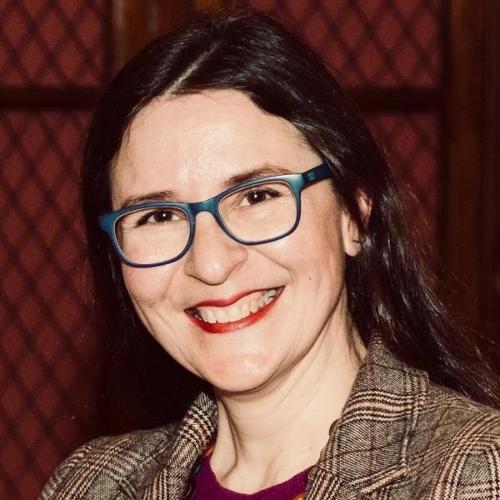
Dr. Selja Seppälä is a Lecturer in Business Analytics within the Department of Business Information Systems at Cork University Business School, University College Cork. She specializes in Natural Language Processing, applied ontology, terminology, and corpus studies with applications across multiple domains including linguistics, legal informatics, biomedical informatics, and education. Her research focuses on developing AI technologies that combine Large Language Models and other NLP techniques with curated ontologies to enhance data quality, transparency and trustworthiness in information systems. Dr. Seppälä currently leads the AI-LIEN project, which uses AI-powered technologies for learning analytics, and collaborates on projects investigating the impact of AI on organizations and legislative review. Natural Language Processing (NLP) Applied Ontology and Terminology Corpus Studies AI Technologies for Information Systems Large Language Models integration Legal Informatics applications Dr. Seppälä's scholarly contributions include 43 publications in international outlets and 27 open-source research artifacts. Her work has secured approximately €500,000 through competitive research grants, demonstrating significant impact in her field. Marie Skłodowska-Curie Career-FIT Fellow (2019-2022) Dr. Seppälä serves on the editorial board of Applied Ontology (IOS Press) and as Communication Co-officer and Substitute Auditor for the International Association for Ontology and its Applications (IAOA). She actively contributes to academic service as a reviewer for journals including the European Journal of Information Systems and Terminology, and regularly participates in program committees for international conferences focused on computational linguistics, natural language processing, applied ontology, and financial technology applications. At UCC, she contributes through the development of the CUBS Canvas Template and membership in the CUBS Digital Learning & Teaching Committee.
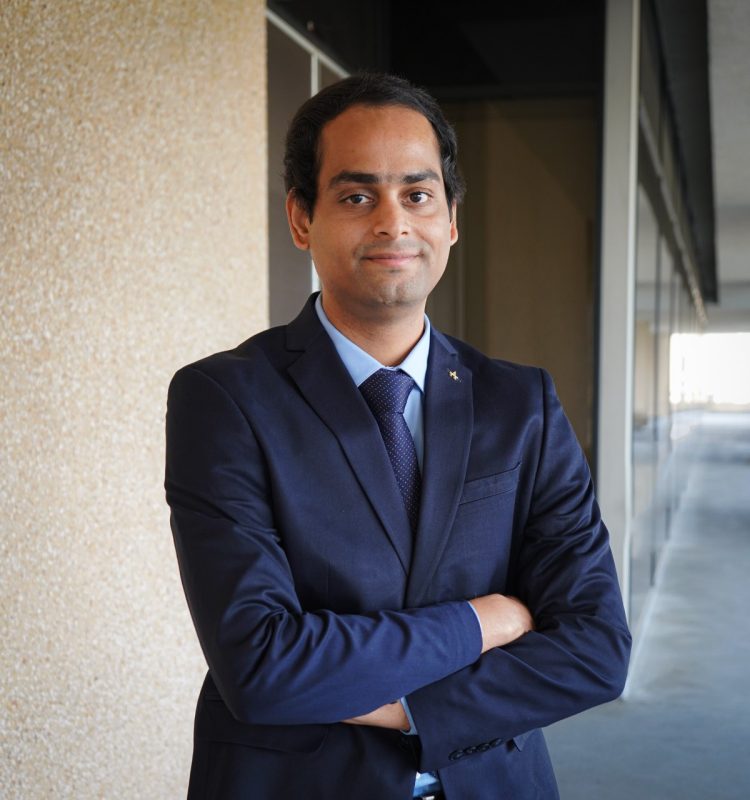
Rohit Kannan is an Assistant Professor in the Grado Department of Industrial and Systems Engineering at Virginia Tech. He holds a Ph.D. and M.S. in Chemical Engineering from MIT and a B.Tech. from IIT Madras. His research focuses on integrating machine learning with global optimization and optimization under uncertainty, emphasizing energy systems applications. Previous roles include postdoc positions at Los Alamos National Laboratory and the Wisconsin Institute for Discovery. Education: Ph.D., Chemical Engineering, Massachusetts Institute of Technology, 2018 M.S., Chemical Engineering Practice, MIT, 2014 B.Tech., Chemical Engineering, IIT Madras, 2012 Research Interests: Global optimization, optimization under uncertainty, computational optimization, energy systems, and machine learning integration. Recent Highlights: Recipient of the Excellence in Teaching Spotlight Award (2024) Lead researcher in stochastic optimization and energy systems (e.g., hybrid polygeneration systems) Developed algorithms for chance-constrained nonlinear programs and distributionally robust optimization Service & Leadership: Elected Vice-Chair of Global Optimization, INFORMS Optimization Society (2025–2026) Reviewer for top journals like Operations Research and Mathematical Programming Advisor to ISE InclusiveVT and Graduate Admissions Committee Labs & Collaborations: Directs a research group advancing optimization and machine learning for energy and engineering systems. Active in interdisciplinary projects with LANL and UW-Madison.
Ralph Jimenez is an Adjunct Professor of Chemistry and Institute Fellow at JILA, University of Colorado Boulder. He holds a Ph.D. from the University of Chicago (1996) and completed postdoctoral work at the University of California, San Diego (1997-1998), followed by research at The Scripps Research Institute (1998-2003). His research focuses on quantum spectroscopy and photophysics of fluorescent proteins, leveraging quantum optics to enhance spectroscopic sensitivity and developing genetically encoded biomarkers with improved photophysical properties. Key achievements include fluorescence-lifetime-based methods to engineer brighter fluorescent proteins and machine-learning approaches to improve photostability. His awards include the Arthur S. Flemming Award (2017) and U.S. Department of Commerce Gold Medal (2017). His group's work integrates quantum engineering with biophysical studies, targeting real-world applications in molecular imaging and materials science. The Jimenez Group operates labs at JILA (B117, B119, B121) and collaborates on projects involving entangled photons, two-photon absorption, and ultrafast spectroscopy. Research themes include quantum-enhanced spectroscopy for complex systems and overcoming limitations in fluorescent protein imaging through physical chemistry strategies. His lab develops novel instrumentation, including microfluidic sorting systems and tabletop X-ray spectroscopy platforms, to advance biomarker engineering and environmental monitoring.
Edith Hemaspaandra is a Professor in the Department of Computer Science at the Rochester Institute of Technology (RIT), located in the Golisano College of Computing and Information Sciences. She holds a BS, MS, and Ph.D. in Computer Science from the University of Amsterdam (the Netherlands). Her research focuses on computational social choice, computational complexity theory, logic complexity, and formal methods. She teaches courses such as CSCI-262/263 (Introduction to Computer Science Theory) and CSCI-664 (Computational Complexity). Her work explores the algorithmic aspects of voting systems, including election manipulation, control, and bribery, with a focus on their computational complexity. She has also contributed to formal methods for automata theory, educational tools like JFLAP extensions, and the study of complexity classes such as LWPP and WPP. Her research bridges theoretical computer science with practical applications in social choice theory and algorithm design. Her grants include an NSF-funded project on computationally protecting elections from manipulation (2011). She actively publishes in top venues like STACS and ISAAC, addressing topics ranging from graph reconstruction to hybrid election models. Though no awards are explicitly listed, her extensive publication record highlights her contributions to theoretical computer science. Her advising and grant activities include collaborative research projects and educational tool development. She is affiliated with RIT’s Department of Computer Science and maintains a personal website and ORCID profile.
Dr. Sander Los is an Associate Professor at the Faculty of Behavioural and Movement Sciences (Department of Cognitive Psychology), Vrije Universiteit Amsterdam. He earned his PhD in 1994 with a thesis on 'On the origin of mixing costs: Exploring information processing in pure and mixed blocks of trials' under Prof. Andries Sanders. His research focuses on temporal dynamics of preparatory processes, co-developing the formalized Multiple Trace Theory (fMTP) to explain temporal preparation across time scales (seconds to days). His work integrates cognitive psychology, neuroscience, and computational modeling to explore attentional mechanisms, statistical learning, and spatiotemporal dynamics. Education: PhD in Cognitive Psychology (VU Amsterdam, 1994), postdoctoral research at VU Amsterdam, progressing to Assistant Professor before his current role. Key research areas include visual attention, response inhibition, and long-term memory. He has published over 40 peer-reviewed articles and serves on editorial boards for journals like Attention, Perception, and Psychophysics and Acta Psychologica . Research Interests: His studies investigate how humans prepare for upcoming events temporally and spatially, with recent work on statistical learning guiding visual attention and computational frameworks for temporal preparation. Collaborations emphasize interdisciplinary approaches to understanding attention allocation and neural underpinnings of timing. Grants & Advising: No explicit grants listed, but active in training students (1 supervised PhD thesis). His courses include Methodology, Research Methods, and Practical Skills for Researchers at VU Amsterdam. Labs/Teams: Works closely with colleagues on the fMTP model and statistical learning projects, emphasizing team-based computational and experimental psychology.
Ye Zhisheng is the Dean’s Chair and Associate Professor in the Department of Industrial Systems Engineering & Management at the National University of Singapore (NUS). His research focuses on reliability engineering, inventory control, emergency response systems, and statistical modeling. He holds a PhD in Industrial and Systems Engineering from NUS, along with a BEng in Material Science and Engineering and a BEco in Economics from Tsinghua University. His work emphasizes practical applications in mission-critical systems, predictive maintenance, and data-driven decision-making. Current research initiatives include optimal maintenance policies for manufacturing systems, degradation analysis of bearings, and federated learning approaches for battery lifecycle prediction. He has pioneered methods for integrating physics-informed neural networks into prognostics and health management (PHM) systems. Key technical contributions span advanced statistical methodologies like sieve estimation for survival data, phase-type distributions modeling, and condition-based maintenance optimization. His interdisciplinary approach bridges operations research, mechanical engineering, and computer science to address complex reliability challenges. Recent projects include resilient consensus-based power grid management and contamination source identification frameworks. Notable collaborations involve developing intelligent cross-domain fault diagnosis systems using transformer networks and advancing the Internet of Federated Things (IoFT) for distributed data analytics. His work has been applied in aerospace, telecommunication infrastructure, and medical emergency response systems.
Andrew Gersick is a Lecturer in the Department of Ecology and Evolutionary Biology at Princeton University. His research focuses on animal behavior, particularly in large social species such as spotted hyenas, zebras, and cowbirds. He explores topics including collective behavior, social dynamics, communication systems, and ecological adaptations. His work integrates field studies with technological tools like accelerometers to analyze activity patterns and signaling mechanisms. Notably, he investigates how zebra stripes repel biting flies and how hyenas use vocalizations for individual recognition. Gersick also contributes to conservation efforts, such as the Great Grevy’s Rally in Kenya, and studies social learning in avian species like cowbirds. His recent articles highlight interdisciplinary approaches, combining ecology, physiology, and technology to understand animal behavior in natural and social contexts. While no awards are explicitly listed, his contributions to understanding collective behavior and conservation biology are significant. Advising and grants: No formal advisees or grant details are provided in the text. His work appears to focus on collaborative research and field-based methodologies. Labs/Teams: No specific laboratory or team affiliations are mentioned beyond his departmental role at Princeton.
Mihaela van der Schaar is the John Humphrey Plummer Professor of Machine Learning, Artificial Intelligence, and Medicine at the University of Cambridge, leading the van der Schaar Lab. She holds dual affiliations with the Department of Applied Mathematics and Theoretical Physics (DAMTP) and the Centre for Mathematical Imaging in Healthcare. Her research focuses on healthcare AI, machine learning, and operations research. She has authored over 250 journal articles and 275 conference papers, with notable contributions to synthetic data for privacy, causal inference, and clinical decision-making. Her work has led to 35 U.S. patents, including foundational innovations in streaming video compression (MPEG-4 standards). Awards include the Oon Prize (2018), IEEE Fellow (2009), and recognition as the UK's most-cited female AI researcher (2019). Leadership roles include Director of the Cambridge Centre for AI in Medicine and Co-Director of the European Laboratory for Learning and Intelligent Systems. She has mentored global academic leaders and pioneered initiatives like the Inspiration Exchange for early-career researchers. Key projects include predictive models for hospital resource allocation during pandemics and AI tools for personalized medicine. Publications span machine learning theory, healthcare applications, and interdisciplinary fields like network science. Her lab's impact includes tools like AutoPrognosis (automated ML for clinical prediction) and SynthCity (synthetic healthcare data generation).
Ke Xu is a Professor in the Department of Computer Science at Tsinghua University's School of Information Science and Technology. With extensive research contributions in network security, privacy-preserving technologies, and machine learning applications for networking, Professor Xu has established himself as a leading researcher in computer science. Professor Xu's research interests span network security, privacy-preserving technologies, machine learning for networking, federated learning, internet protocols, encrypted traffic analysis, blockchain applications, and AI in networking. His work bridges theoretical foundations with practical implementations, focusing on real-world security challenges and network optimization problems. He has developed novel frameworks for secure network operations, privacy-preserving data sharing, and efficient AI deployment in distributed environments. Professor Xu's publication record shows a clear trend toward integrating artificial intelligence with traditional networking challenges. His recent work explores federated learning security, encrypted traffic analysis using deep learning, and novel approaches to network security that leverage machine learning techniques. The interdisciplinary nature of his research spans computer networking, security, privacy, and artificial intelligence. Professor Xu has received recognition for his contributions to network security and privacy-preserving technologies through publications in top-tier venues including IEEE journals, ACM conferences, and security symposia. His work has appeared in IEEE Transactions on Dependable and Secure Computing, IEEE/ACM Transactions on Networking, and security conferences like CCS and NDSS. Professor Xu actively collaborates with researchers across institutions, supervising students and junior researchers in exploring cutting-edge problems in network security and AI. His research has been supported by significant grants focusing on network security, privacy, and intelligent networking infrastructure. He leads projects that address fundamental challenges in secure communication, privacy-preserving data analysis, and intelligent network management. Professor Xu is involved with research laboratories focusing on network security and intelligent systems at Tsinghua University. His team works on developing practical security solutions, privacy frameworks, and AI-enhanced networking protocols that address real-world challenges in today's increasingly connected world.
Dr. Silvia Baiocco serves as Assistant Professor at University of Rome Tor Vergata, teaching entrepreneurship, tourism management, and marketing courses across Bachelor and Master programs including 'Creation of Enterprises and Entrepreneurship' (Master), 'Fundamentals of Service Management' (Bachelor), and 'Tourism and Cultural Management for Sustainability' (Bachelor). Her institutional affiliation centers on Business Economics (sector ECON-07/A) with research rooted in co-evolutionary theory. Her research critically examines sustainable business model innovation through three interconnected lenses: (1) tourism-destination co-evolution in historic villages and Alberghi Diffusi, (2) university-industry knowledge exchange for sustainable spin-offs via PNICube Observatory frameworks, and (3) technology integration in smart tourism through AI-driven destination management. She emphasizes context-specific adaptation in both high-income (Italy) and low/middle-income settings (Ghana), with strong focus on social impact and heritage preservation. Analysis of her 2023-2025 publications reveals accelerating focus on digital tourism transformation (AI applications, smart city integration) and resilience-building in accommodation firms. Her work consistently applies co-evolutionary frameworks to decode organizational adaptation, particularly in sustainable entrepreneurship contexts. The PNICube Observatory reports highlight her policy-relevant contributions to university research valorization. As educator, Dr. Baiocco actively shapes future business leaders through courses spanning startup creation to sustainable destination management. Her research trajectory indicates deepening engagement with technology-mediated sustainability solutions and cross-sectoral innovation ecosystems, particularly through ongoing PNICube Observatory initiatives.
Brian Calder is a Research Professor at the Center for Coastal and Ocean Mapping, University of New Hampshire, with a strong affiliation in Ocean Engineering and Earth Sciences. He holds a Ph.D. and M.S. in Image Analysis and Electronics Communications Engineering from Heriot-Watt University. His academic work is centered on advanced methods in seafloor characterization and hydrographic data processing. Ph.D., Image Analysis, Heriot-Watt University M.S., Electronics Communications Eng, Heriot-Watt University His research focuses on the development and application of computational techniques for seabed mapping, bathymetric uncertainty modeling, and autonomous ocean sensing. He integrates machine learning, signal processing, and remote sensing to improve the accuracy and reliability of marine geospatial data. His work supports navigation safety, coastal zone management, and deep-ocean exploration. Recent publications highlight trends in automated nautical chart generalization, trusted community bathymetry systems, and wireless ocean-of-things networks for volunteer data collection. His article portfolio reveals a strong emphasis on data quality, uncertainty quantification, and algorithmic innovation in hydrography and marine geodesy. Brian Calder has received multiple research grants, primarily from NOAA and the U.S. Navy, supporting projects such as IT support for NOAA personnel at UNH, development of bathymetric uncertainty models, and autonomous mapping using Saildrone technology. These grants reflect sustained funding and recognition in the field of hydrographic science. He teaches graduate courses including Seafloor Characterization , Seabed Mapping , and Doctoral Research , indicating active mentorship and academic leadership. His work is conducted within the Center for Coastal and Ocean Mapping, a leading institution in hydrographic research, where he collaborates extensively with experts like Yuri Rzhanov, Larry Mayer, and Christos Kastrisios.
Carlos Guestrin is the Fortinet Founders Professor of Computer Science at Stanford University and serves as Director of the Stanford AI Lab (SAIL) and Senior Fellow at the Institute for Human-Centered AI (HAI). He holds dual roles as Chief Scientist at Visual Layer and Virtue AI. His research focuses on machine learning methods, explainability, fairness, and ethics of AI, alongside systems for scalable AI deployment. Education details are not explicitly provided, but his work spans foundational contributions to machine learning systems (e.g., XGBoost) and explainable AI frameworks like Anchors and LIME. He emphasizes ethical AI through projects like CheckList for model testing and Model Equality Testing for API transparency. His scientific contributions include advancing optimization techniques (AdaScale SGD, TVM compiler) and ethical benchmarks for generative AI. He has been recognized as a Member of the National Academy of Engineering for his transformative impact on AI systems and their societal applications. Guestrin leads interdisciplinary initiatives at SAIL and HAI, fostering collaboration between technical innovation and human-centered design. His work bridges theory and practice, addressing challenges in healthcare (diabetes management systems) and AI security.