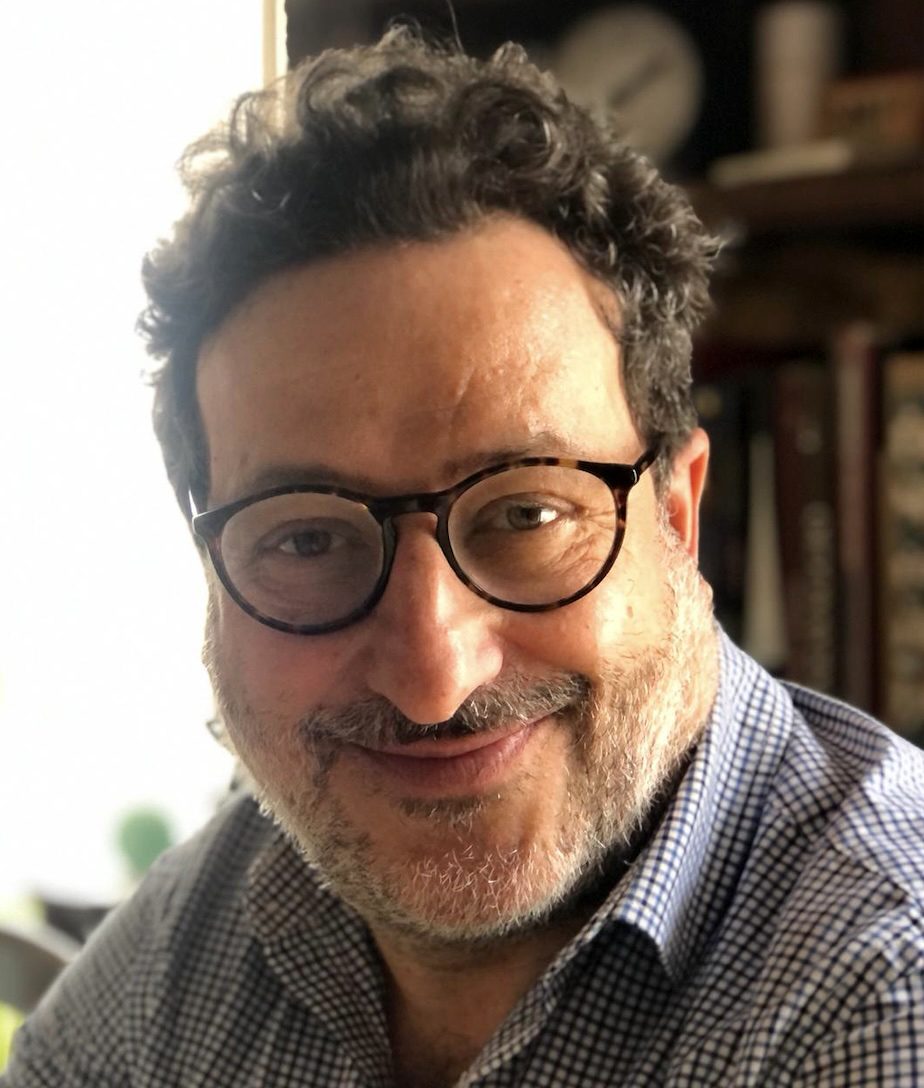
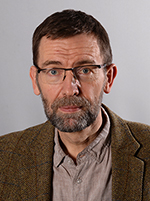
Livio Gaeta is a Full Professor of German Language and Linguistics at the University of Turin, Italy. His academic career includes roles such as Associate Professor (2012–2016) and Visiting Professor at Humboldt-University of Berlin (2009–2010). He specializes in contrastive linguistics, theoretical morphology, and the study of linguistic minorities, particularly Walser German dialects. Gaeta holds a PhD in Linguistics from the University of Rome Three (1998). Educational Background: PhD in Linguistics, University of Rome Three (1998); Guest Researcher at the Center for General Linguistics, Berlin (1998–1999). His research focuses on morphological theory, language contact in Alpine regions, and the documentation of minority languages. Notable projects include CLiMAlp (PRIN 2020–2024) and ArchiWals (PRIN 2017–2020), which digitize and preserve Walser linguistic heritage. Gaeta has authored monographs like Lineamenti di grammatica tedesca (2017) and edited volumes on German linguistics. His awards include the Alexander von Humboldt Research Grant (2009) and Fellowship (2010), and he served as President of the Societas Linguistica Europaea (2025). Key research themes include grammaticalization, derivational paradigms, and the interplay between syntax and morphology.
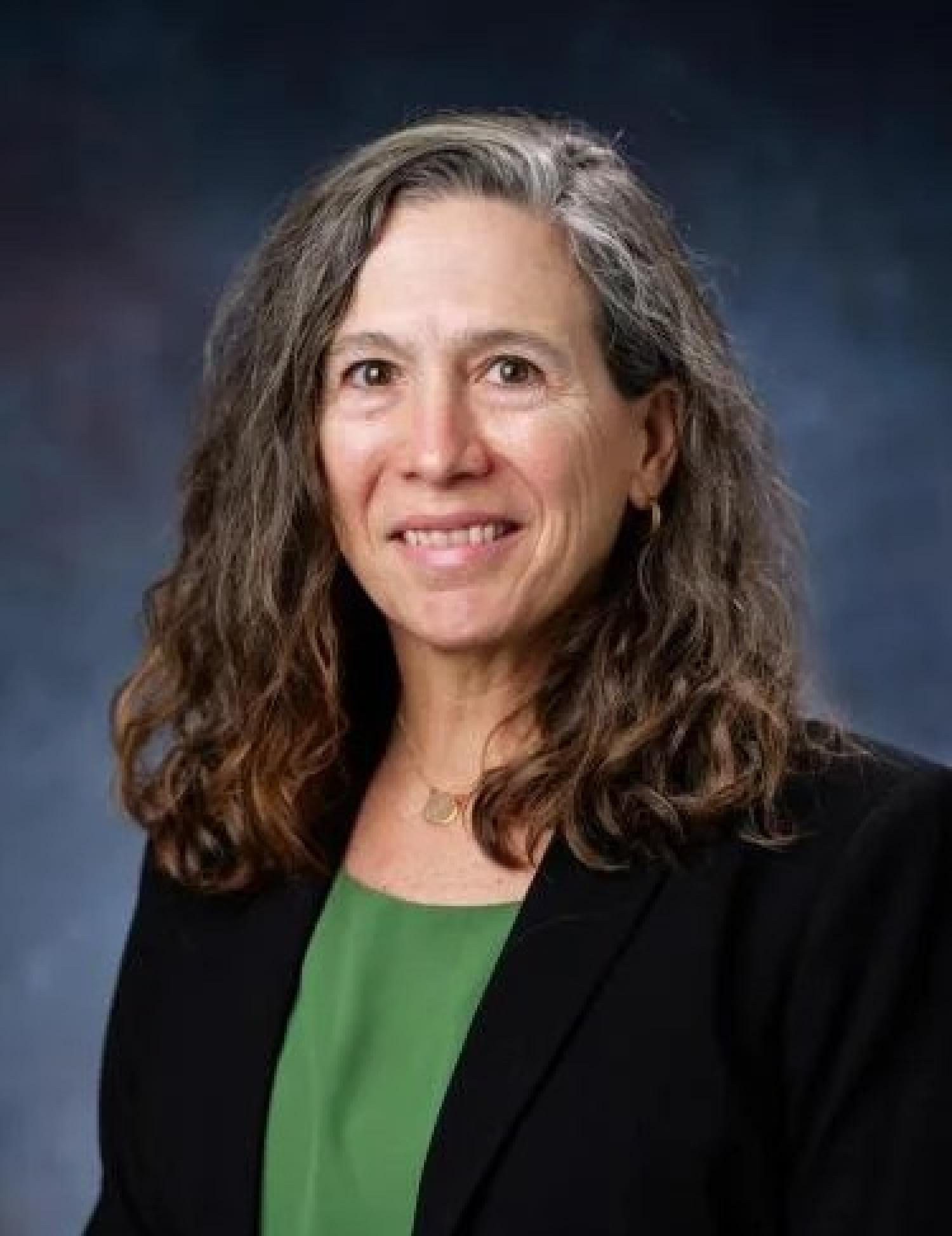
Esther Brown is a Professor and Department Chair of Spanish and Portuguese at the University of Colorado. She specializes in usage-based phonology, language variation, and the linguistic study of New Mexican Spanish. Her research focuses on the interplay between linguistic usage patterns and phonological/morphosyntactic variation across Ibero-Romance languages. Her work examines phenomena such as inflected infinitives in Galician, pronoun variation in Spanish dialects, and cross-linguistic influence in bilingual speech. She employs corpus-based and experimental methodologies, frequently collaborating with researchers like Javier Rivas and William D. Raymond. Recent studies investigate how contextual frequency shapes lexical representations, with notable contributions to understanding phonetic reduction mechanisms and morphosyntactic variation in non-finite clauses. Her research bridges theoretical linguistics with empirical sociolinguistic analysis, particularly in understudied dialects like New Mexican and Puerto Rican Spanish. Laboratory work involves analyzing speech production patterns using acoustic phonetics and computational methods. Ongoing projects explore developmental aspects of morphosyntactic variation in child Spanish speakers and the role of exemplar-based models in capturing language change processes.
Anand Patel is an Associate Professor in the Department of Mathematics at Oklahoma State University (OSU). He holds a Ph.D. in Mathematics from Harvard University (2013) and a B.A. in Mathematics from the University of California, Berkeley (2008). His research focuses on algebraic geometry and number theory, with particular emphasis on moduli spaces, enumerative geometry, and equivariant cohomology. Patel's academic journey includes roles as an Assistant Professor at OSU (2017–2023), Visiting Assistant Professor at Boston College (2013–2016), and Lecturer at Harvard University (2016–2017). He has supervised numerous students, including undergraduates Aaron Landesman (Morgan Prize runner-up), Ashvin Swaminathan (Morgan Prize winner), and Ph.D. candidates Steve Thakur and Adam Cartisano. His teaching spans courses in algebraic geometry, number theory, and calculus. Patel’s research explores topics like ramification divisors of projections, p-curvature conjectures, and moduli of hypersurface slices. His work often combines classical techniques with modern algebraic geometry, yielding results such as universal formulas for counting cubic surfaces and novel insights into the geometry of branched covers. His collaborative projects and industry engagements include work on interpolation problems, quantum cohomology, and geometric enumerative problems. Patel’s contributions have appeared in leading journals like *International Mathematics Research Notices*, *Advances in Mathematics*, and *Memoirs of the American Mathematical Society*.
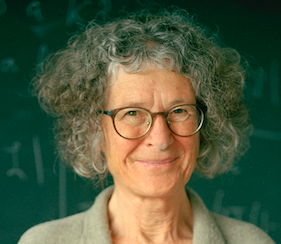
Ragni Piene is a distinguished Professor in the Department of Mathematics at the University of Oslo, where she has held a faculty position since 1987 (previously serving as Associate Professor from 1979-1986). Her academic career spans over four decades with significant contributions to algebraic geometry and related fields. She maintains an active research profile with numerous publications through 2025 and holds prestigious appointments including membership on the Heidelberg Laureate Forum Foundation Council until 2025. Her educational background includes a Ph.D. from the Massachusetts Institute of Technology (1976), Cand.real. from the University of Oslo (1972), D.E.A. from Université de Paris (Orsay) (1970), and Cand. mag. from the University of Oslo (1969). Professor Piene's research focuses on Algebraic Geometry, with particular expertise in enumerative geometry and intersection theory, singularities, moduli spaces, and toric varieties. Her work extends to algebraic methods in computer-aided geometric design and the study of real algebraic curves and surfaces. Her research bridges theoretical mathematics with practical applications in geometric modeling. Analysis of her recent publications (2012-2025) reveals a consistent focus on the geometric properties of algebraic varieties, with increasing attention to computational aspects and applications. Her work demonstrates strong continuity in exploring polar varieties, toric geometry, and singularities, while progressively incorporating more computational methods and connections to geometric design. The research shows sophisticated development from foundational theoretical work to increasingly applied contexts, particularly in computer-aided geometry. Her significant professional honors include: Member of the Heidelberg Laureate Forum Foundation Council (2015-2025) Chair of the Scientific Council of the Fondation Mathématique Jacques Hadamard (2020-2024) Professor Piene has maintained an extensive international research network through numerous research visits to prestigious institutions including Institut Mittag-Leffler, MSRI Berkeley, École Normale Supérieure, Harvard University, and several others. She actively collaborates with leading mathematicians worldwide, as evidenced by her co-authored publications. Her research group affiliation with the Algebra and Algebraic Geometry group at the University of Oslo provides institutional support for her ongoing work in these specialized mathematical domains.
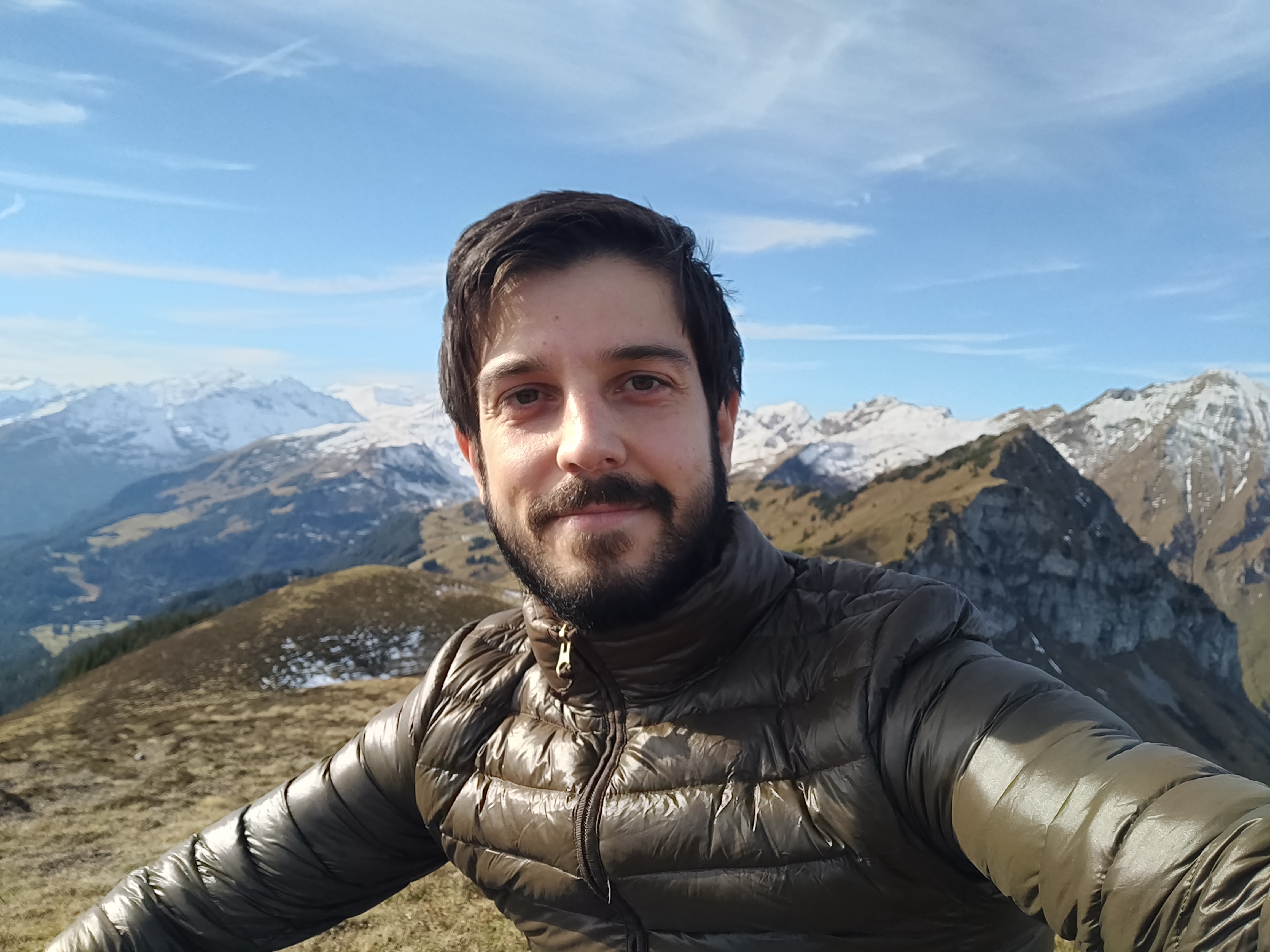
Borja Herce is a Postdoctoral Researcher at the University of Zurich's Department of Comparative Linguistics, affiliated with the Distributional Linguistics Lab. His research focuses on morphology and diachrony, particularly paradigmatic relations in inflectional systems, morphomes, and inflection classes. He employs qualitative and quantitative methods across global languages to study complex morphological structures. University: University of Zurich Department: Department of Comparative Linguistics Herce's work spans phonological, morphological, and typological analysis. Key projects include comparative studies of Romance languages (Spanish, Catalan, Romanian) and Otomanguean languages (Central Pame), examining phenomena like stem alternations, morphomic templates, and positional splits in agreement paradigms. He has developed computational resources like VeLeSpa (Peninsular Spanish verbs) and VeLeRo (Romanian verbs), enabling detailed morphological predictability analysis. His publications highlight the interplay of naturalness gradients, semantic similarity, and token frequency in shaping morphological systems. Notable Research Contributions Identified diachronic origins of Central Pame's free variation patterns via historical corpus analysis Quantified morphomic productivity in Romance innovations (15% adherence to templates) Linked vowel chain shifts in Central Pame to phonetic fronting among young female speakers Proposed predictive models for morphological complexity metrics as phylogenetic signals Challenged traditional dichotomies between morphemes and morphomes through distributional semantics
Hans-Olav Enger is a renowned Professor of Scandinavian Linguistics at the University of Oslo since 2008. He has held previous academic positions at the University of Stavanger (2003–2008) and Stockholm University (1992–1993, 1996–2000), and served as a part-time "Guest professor/Professor II" at the University of Zurich (2012–2019). His work focuses on the Department of Nordic Languages with expertise in morphology, grammatical gender, and diachronic linguistics. Current affiliation: University of Oslo, Nordic Languages Previous roles: Professor II (Zurich), Professor (Stavanger), Lecturer (Stockholm) Key projects: MultiGender (2019–2020), co-editor of Maal og Minne (2016–2024) Enger's research delves into grammatical gender systems , inflectional morphology , and grammaticalization processes in Scandinavian languages. His work explores the interplay between semantic rules and morphological structures, particularly in Norwegian dialects. Notable contributions include analyzing the Animacy Hierarchy , changes in plural inflection , and the autonomy of morphology in the context of sound laws. His publications reveal a focus on historical linguistics , morphosyntactic variation , and agreement patterns across Scandinavian languages. Enger has contributed to understanding gender assignment mechanisms , definiteness markers , and syntactic evolution in Norwegian dialects and beyond. Enger has supervised MA theses on topics like gender appropriation in Norwegian , linguistic features in multiethnic environments , and inflectional class changes . He actively participates in the Language Change research group and has co-edited the journal Maal og Minne since 2016.
Dr. Anne Merkuur is a researcher in the Department of Frisian Language and Literature at the Faculty of Arts, University of Groningen. She specializes in Frisian linguistics with a focus on verbal inflection, morphology, and language change. Dr. Merkuur's research interests span Frisian language studies, historical linguistics, morphological change, and language contact phenomena. Her work examines how Frisian verb systems evolve over time, with particular attention to inflectional classes, past tense formation, and the impact of language contact on verbal morphology. She has conducted comparative studies between Frisian and Dutch, analyzing how minority language structures change under the influence of dominant languages. Her research demonstrates the dynamic nature of Frisian verbal systems and their resistance to or accommodation of external linguistic influences. Scientific Awards: No specific awards mentioned in available information Dr. Merkuur actively participates in academic events related to Frisian language studies, including organizing the 12th Day of Frisian Linguistics in 2023. Her research contributes significantly to the understanding and preservation of Frisian linguistic heritage, with particular focus on documenting morphological competition patterns and analogical changes in the language's verbal system.
William Acree is a Professor of Spanish and affiliate faculty member in the Performing Arts and American Culture Studies departments at Washington University’s College of Arts & Sciences. His research explores the cultural history of Latin America, focusing on everyday experiences, popular culture, and the interplay between ephemeral cultural activities and public life, politics, and identities. Research Interests: Acree’s work bridges disciplines to examine how cultural practices—such as reading, performance, and storytelling—shape collective identity and societal transformation. His scholarship highlights the enduring impact of Afro-Latin American writers, the evolution of modern popular culture, and the role of performance in articulating race, migration, and class dynamics. Scientific Awards: Southern Cone Studies Section 2013 Humanities Book Award (Latin American Studies Association) 2020 LASA Nineteenth Century Section Best Book Award J. William Fulbright Scholar award Fulbright-Hays Doctoral Dissertation Research Fellowship NEH and foundation grants for transdisciplinary projects Grants and Collaborative Work: Acree has secured funding from the National Endowment for the Humanities, Mellon Foundation, and Tinker Foundation. His collaborative projects include Empire’s End , Jacinto Ventura de Molina , and Building Nineteenth-Century Latin America , as well as leadership in Washington University’s Incubator for Transdisciplinary Futures and A&S CREATES programs.
Francis Katamba is Emeritus Professor of Linguistics at Lancaster University specializing in English phonology, morphological theory, and Bantu languages. His research combines theoretical frameworks with empirical analysis of African languages and English variation. Key research areas: Phonological and morphological interfaces in word formation Structure of Luganda and other Bantu languages Historical development of English morphology Corpus-based approaches to linguistic variation He co-authored the comprehensive textbook 'English Language: Description, Variation and Context' used in linguistics programs worldwide. Other publications examine backformation processes and phonetically motivated word-creation across languages. He has developed pedagogical resources for morphology education and contributed to language documentation projects in Uganda. His work on Luganda phonology established foundational models for Bantu syllable structure analysis.
Univ.-Prof. Dr. Klaus Faiß is a Professor in the Department of English and Linguistics at the University of Trier. His research focuses on historical linguistics, word formation, and the evolution of the English language. He has published extensively on topics such as Old English morphology, compound structures, and sociolinguistic analysis of ancient texts. Faiß has collaborated on interdisciplinary projects involving ancient Iranian languages and classical geographical texts. His work bridges historical linguistic analysis with comparative studies, emphasizing the interplay between language change and cultural context. Education: No formal education details listed, but expertise indicates advanced qualifications in English Linguistics and Historical Philology. Research Interests: Faiß specializes in historical morphology, word-formation processes, and the diachronic study of English. He also explores sociolinguistic dimensions of ancient texts, contributing to Zoroastrian studies and classical geography through linguistic analysis. His work often involves cross-linguistic comparisons between Germanic, Iranian, and classical languages. Publications Trends: His 50-year career includes monographs on English historical morphology (e.g., English Historical Morphology and Word Formation: Loss versus Enrichment , 1992) and co-authored studies on ancient texts like Zarathushtra and His Antagonists (2010). Recent work (2009–2013) combines historical linguistics with interdisciplinary topics like ancient geography and religious texts. Awards/Grants: No specific awards or grants mentioned. However, his extensive publication record indicates sustained academic recognition. Advising & Labs: No student advisement records listed. His research appears to be individually driven with collaborative co-authorship rather than lab-based work. Labs/Teams: No dedicated research groups or labs mentioned. Collaboration focuses on co-authored projects rather than institutional affiliations.
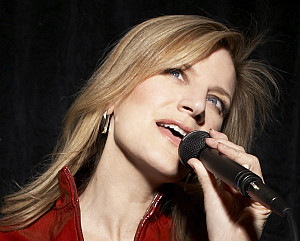
Kate Baker serves as Lecturer of Jazz Studies and Voice at the Conservatory of Music, Purchase College, State University of New York, and maintains faculty affiliation with The New School for Jazz and Contemporary Music. She has conducted international master classes with jazz legends including Sheila Jordan and Mark Murphy. Education: BA, William Patterson University Artistic Focus: Baker's work synthesizes jazz, Brazilian music, and Americana-inflected vocal traditions. Her expressive interpretations span intimate duo settings to full-band arrangements, emphasizing emotional depth in both standards and contemporary adaptations. She is recognized for fluid vocal technique and genre-blending innovation. Creative Output: Her 2022 debut album "Return to Shore" (recorded with late guitarist Vic Juris) demonstrates cross-genre mastery through reinterpretations of jazz standards and pop repertoire like the Beach Boys' "God Only Knows." The work reflects her signature fusion of vocal jazz with Americana sensibilities. Recognition: Downbeat Record of the Year (2022) Performance Activity: Currently tours in duo format with guitarist Paul Bollenback and leads an Americana ensemble featuring Sara Caswell (violin), Rachel Z (keyboards), Paul Bollenback (guitar), Jay Anderson (bass), and Tim Horner (drums). Her global performances consistently achieve sold-out status at major festivals.
Manuel Badal Bertolin is a faculty member in the Department of Catalan Philology at the Universitat de València , within the Faculty of Philology, Translation and Communication. He earned his PhD in 2021 with a thesis on the diachronic morphology of velarized Catalan verbs and is affiliated with the research group Vacàlic+ (Variation, linguistic change and use). Education: PhD in Catalan Philology, Universitat de València (2021) His research focuses on historical and comparative linguistics, particularly the evolution of Catalan verbal morphology. He investigates processes such as velarization, analogical leveling, exaptation, and morphomic coherence, analyzing extensive diachronic corpora from the 13th to 19th centuries. His work often centers on the second conjugation verbs and the emergence of new verb subclasses marked by the velar /g/. His recent publications (2020–2024) explore topics like the role of high-frequency verbs in blocking analogical change, the extension of the /g/ marker to participles and first-person forms, and the evolution of inchoative verbs and fifth-person morphology. These works appear in journals such as Zeitschrift für romanische Philologie , Acta Linguistica Academica , and ELUA . Research Trends: His articles consistently apply theoretical frameworks like exaptation (Lass 1990) and natural morphology to explain morphological change in Catalan, emphasizing cognitive and systemic factors in language evolution. Manuel Badal is actively contributing to the field of Romance historical linguistics and presents his findings at international conferences such as Going Romance. Email: manuel.badal@uv.es
Leila Behrens serves as Associate Professor in the Department of Linguistics at the University of Cologne, specializing in semantics and pragmatics with emphasis on cross-linguistic diversity. Her research examines ambiguity, evidentiality, modality, and intercultural communication phenomena across diverse languages. Education: Habilitation in Theoretical Linguistics and Computational Lexicology, Universität München (1999) PhD in General Linguistics, Universität München (1987) MA in General Linguistics, Universität München (1982) Her scholarly focus spans semantic-pragmatic interfaces and cross-cultural variation , particularly investigating irony comprehension , metadiscourse markers , and evidentiality systems . Current work analyzes stance-taking in digital discourse, while earlier research established foundational insights into lexicon-grammar interactions, genericity, and reciprocal constructions across languages. Analysis of her publication trajectory reveals sustained engagement with typological semantics , especially evidentiality-modality relationships and cross-linguistic genericity patterns. Her methodological approach consistently bridges theoretical frameworks with empirical discourse analysis, increasingly incorporating digital communication contexts since 2010. Scientific Awards: No awards documented in source materials. Professor Behrens has secured substantial research funding including DFG support for 'Lexical Typology' (1996-2000), ARC-funded cross-cultural irony research at Melbourne University (2003), and Siemens-sponsored machine translation projects (1987-1993). While student advising details aren't specified, her 35+ year research trajectory indicates extensive mentorship through principal investigator roles.
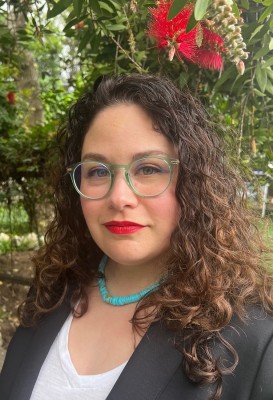
Mercedes Chavez serves as Assistant Professor of Media Studies in the Department of Television, Film, and Media Studies at California State University, Los Angeles, within the College of Arts and Letters. Her teaching portfolio spans undergraduate courses including Intro to Media Writing, Media, Culture & Identity, Media Theory, and Media Criticism, alongside graduate offerings in contemporary Media Theory, Post WWII Media History, and Television History & Criticism. She maintains an active research agenda with regular student appointments via Microsoft Bookings. Dr. Chavez's research investigates transnational production, history, and aesthetic theory in independent US and Latin American cinemas, with particular attention to women and queer filmmakers. Adopting decolonial and feminist frameworks, she explores intersections of race, gender, sexuality, class, and geopolitical location in cinematic narratives. Her work critically examines connections between culture, technology, settler colonialism, and ecological underpinnings in slow cinemas. The current book project, Origin Stories , analyzes the emergence of sensual slow cinema aesthetics through directors including Lucrecia Martel, Alfonso Cuarón, and Apichatpong Weerasethakul. Her scholarly publications demonstrate a consistent focus on transnational cinema, slow cinema aesthetics, and ecological discourse. The 2021 article in Afterimage examines the Anthropocene in Kelly Reichardt's films, while the forthcoming piece in The Journal of Cinema and Media Studies analyzes Lucrecia Martel's Zama . These works collectively highlight her methodological approach of triangulating transnational film exports, Eurocentric expectations for Global South cinemas, and regionally inflected cinematic expressions through sensorial and landscape signifiers. No scientific awards or fellowships are mentioned in the available information. Dr. Chavez advises undergraduate and graduate students in media studies, though specific advisees are not listed. She collaborates on film projects with her husband Mike Kash, including the in-production documentary With Grace directed by Jonathan R. King, which investigates healing through creative play and memory. Grant information is not provided in the source text, but her creative collaborations represent active professional engagement beyond traditional academic boundaries. Her primary creative partnership involves film projects with Mike Kash, most notably With Grace —a documentary exploring the healing power of creative play through sculptor/poet/performer Grace Zabriskie's practices. This project blends imaginative reenactment, archival media, and performance to investigate how art creates radical spaces for joy amid trauma, emphasizing the fluidity of memory and reconciliation of difficult experiences.
Pius Wuchu Akumbu is a Director of Research (DR2) in African Linguistics at the French National Centre for Scientific Research (CNRS), working at the LLACAN laboratory (UMR 8135), which focuses on Language, Languages and Cultures of Africa. He previously held academic positions at the University of Bamenda (2017-2018), University of Buea (2008-2017), and has been a Visiting Scholar at several institutions including the University of Missouri (2021), University of Hamburg (2019-2021), University of California, Berkeley (2015-2016), and Kyoto University (2013). He earned his PhD in General Linguistics from the University of Yaoundé 1, Cameroon in 2007, following a DEA (2001), Masters (1999), and BA (1997) in Linguistics from the same institution. He also holds a Diploma for Secondary School English Teaching (DIPES II) from the Higher Teacher Training College at the University of Yaoundé 1 (2000). Akumbu's research focuses on Grassfields languages of Cameroon, with particular expertise in language documentation, comparative and diachronic linguistics, rural multilingualism, and language policy and planning. His work emphasizes community-based approaches to language documentation, particularly for endangered African languages. He has conducted extensive fieldwork on Babanki (Kejom), Bum, and other Grassfields languages, examining their phonological, morphological, and syntactic structures within their sociolinguistic contexts. His recent publications reveal a strong focus on documenting and analyzing the grammatical structures of Grassfields languages, particularly Babanki, with growing attention to broader issues of language revitalization, decolonization of linguistics, and the role of indigenous languages in education and public health. His work spans theoretical linguistics, language documentation, sociolinguistics, and applied linguistics, demonstrating both depth in specific language analysis and breadth across linguistic subfields. Georg Forster Research Fellowship from Alexander von Humboldt Foundation (2019-2021) Fulbright Visiting Scholar (2015-2016) DAAD Researcher (2011) Endangered Languages Documentation Programme (ELDP) Major Documentation Project grant (2024-2027) LABEX-EFL grant for Bantoid languages conference (2024) Akumbu has successfully supervised three PhD students to completion and currently advises one doctoral candidate. He has secured numerous research grants from prestigious organizations including the German Research Foundation (DFG), Alexander von Humboldt Foundation, Fulbright Program, and multiple endangered languages funding bodies. His organizational leadership is evident in directing major conferences including the First and Second Conferences on Bantoid Languages and Linguistics, and the 47th Annual Conference on African Linguistics (ACAL47). He leads the LLACAN laboratory's efforts in African language documentation and serves on multiple national and international committees including the CNRS National Committee (2024-2025), UNESCO's Expert Committee for the World Atlas of Languages (2024-2025), and the Scientific and Strategic Council of UMIFRE (2024-2028). His work bridges academic research with community language revitalization efforts, particularly through his involvement with the Endangered Languages Project.