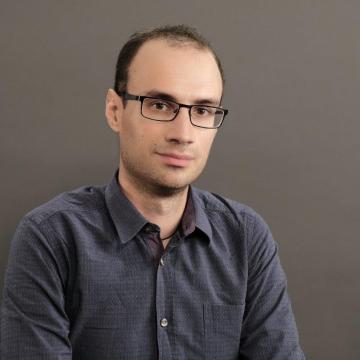
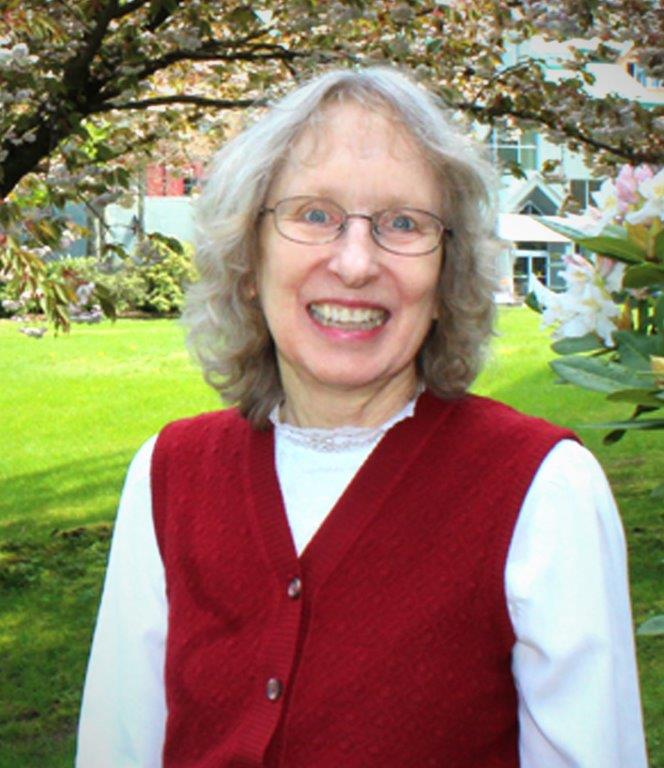
Greta Gencheva is a faculty member at the Faculty of Modern Languages, Department of Romance Languages, at St. Cyril and St. Methodius University of Veliko Turnovo . Her academic work focuses on Italian linguistics, specialized texts, and translation studies. University: St. Cyril and St. Methodius University of Veliko Turnovo School: Faculty of Modern Languages Department: Department of Romance Languages Emails: g.gencheva@ts.uni-vt.bg , greta_gencheva@abv.bg Her research spans morphological and syntactic analysis of Italian nouns, functional linguistics, and cultural mediation in translation . She investigates specialized terminology and professional jargon in Italian texts, contributing to translation pedagogy. Recent work explores the use of "che" in Italian syntax and gender inflection in nouns. Her publications include studies on literary autobiography and translations of Italian medical and literary texts. She participates in projects like ALTA (Allophone Teacher Academy) , focusing on integrating refugees through language education, with a project duration from 2022–2025.
Anton Antonov is a Lecturer in Japanese Linguistics at the National Institute of Oriental Languages and Civilizations (INALCO), affiliated with the Department of Japanese Studies. He is a research member of the Center for Linguistic Research on East Asia (CRLAO), focusing on the 'Sino-Tibetan and its East Asian Context' team. His professional address is CRLAO, INALCO, 2 rue de Lille, 75007 Paris. He obtained his PhD from INALCO in 2007 with a dissertation titled 'Le rôle des suffixes en /+rV/ dans l'expression du lieu et de la direction en japonais et l'hypothèse de leur origine altaïque' (The role of /+rV/ suffixes in expressing location and direction in Japanese and the hypothesis of their Altaic origin). Antonov's research centers on: Historical and comparative linguistics of Japanese, Korean, and Altaic languages (Turkic, Mongolic, Tungusic) Diachronic and diatopic variations of Japanese Accent reconstruction in Japanese, Korean, and Basque Direct/inverse systems and allocutive phenomena cross-linguistically His publications (2011-2022) demonstrate consistent focus on linguistic typology, historical reconstruction, and language contact in East Asia. Recent work challenges the Transeurasian hypothesis while maintaining expertise in Altaic-Japonic-Korean connections. Articles frequently address grammaticalization, verb systems, and pragmatic marking across diverse language families. Antonov participates in research projects including: Creation of a database of phonogram-notated ancient Japanese texts with glosses/translations Compilation of a dictionary of ancient Japanese He collaborates internationally through conferences like the Paris Meeting on East Asian Linguistics and Phon-UDL workshops. His lab affiliation is CRLAO (CNRS-EHESS-Inalco joint research unit) at Campus Condorcet.
Balkız ÖZTÜRK BAŞARAN is a Professor and Department Head at Boğaziçi University's Department of Linguistics. She holds office JF 303 and can be reached at balkiz.ozturk@boun.edu.tr. Her academic career spans theoretical and descriptive linguistics with a focus on understudied languages of the Caucasus region. Her educational background includes a PhD in Linguistics from Harvard University (2004), an MA in Linguistics from Boğaziçi University (1999), and a BA in Translation and Interpretation from Boğaziçi University (1996). Her research interests center on Caucasian Languages, Altaic Languages, Turkish Languages, Theoretical Syntax, and Semantics. She has made significant contributions to the documentation and analysis of Laz language varieties, particularly Pazar Laz, Ardesheni Laz, and Muş Kurmanji. Her work bridges theoretical syntax with empirical fieldwork on lesser-documented languages, examining phenomena like case systems, applicatives, verb-framing, and possessive constructions. Her recent publications reveal a strong trend toward computational linguistics applications, particularly in Turkish language processing, while maintaining her core research on Caucasian languages. This dual focus demonstrates her ability to integrate theoretical linguistic insights with practical computational applications. She has served as principal investigator or researcher on multiple significant projects including the Deep Learning Based Turkish Dependency Parser (2018-present), Language Interaction in Turkey: Documentation and Analysis (2018-present), and Argument and Adjunct Distinction in Muş Kurmanji (2017-present), all funded by TÜBİTAK and Boğaziçi University Research Fund. Her teaching portfolio includes undergraduate courses in Morphology (Ling 202), Syntax (Ling 203), Typology (Ling 206), and Syntax and Semantics of Turkish (Ling 314), as well as graduate courses in Syntactic Theory (Ling 541), Readings in Linguistics (Ling 572), and Syntax of Voice (Ling 58H). She has presented her research at numerous international conferences and has given invited talks at institutions including Harvard University, University of Toronto, and Dokuz Eylül University.
Dr. Markus Tönjes is a Researcher at the Department of German Philology, University of Göttingen, where he has served as Head of Department Administration since 2020. His career spans roles as an Analyst/Linguist in IT, Research Assistant in psycholinguistics, and contributor to DFG-funded projects on language acquisition in hearing-impaired children and language in dementia. PhD (2012) in German Linguistics, focusing on reference in dementia patients. Magister Artium (2006) in German Language and Literature, Communications Research, and Phonetics. His research integrates Linguistics with Artificial Intelligence , emphasizing formal semantics and NLP . He explores phonology , morphology , and syntax in hearing-impaired children, language and dementia , and empirical methods . His publications and lectures highlight interdisciplinary work with Star Trek linguistics and forensic authorship analysis . Recent publications and presentations focus on phonological processes , orthographic norms , language in aging , and cross-linguistic syntax . He supervises BA and MA theses on topics like Kiezdeutsch , orthographic competence , and aphasia , reflecting his broad methodology in empirical linguistics. Key supervised works: Lara Meyer (2023): "Prototypical Sprecher des Kurzdeutschen?" Laura Gleixner (2023): "Bilingualism and Cognitive Reserve" Anna Katharina Baumgartl (2024): "Aphasie: Schweigen oder Leben"
Associate Professor Luka Repanšek works at the Department of Comparative and General Linguistics, Faculty of Arts, University of Ljubljana, where he teaches and researches Indo-European historical linguistics with particular focus on Indo-Iranian, Celtic and Germanic languages as well as Venetic and Latin epigraphy. Education and career: BA in Comparative Indo-European Linguistics & English Studies, University of Ljubljana, 2011 (Prešeren Award for best thesis) MSc in Celtic Studies, University of Aberystwyth, 2012 (thesis on Celtic u-stems supervised by Patrick Sims-Williams) PhD in Historical Linguistics, University of Ljubljana, 2015 (thesis on Celtic relics in Slovenian toponymy; winner of the Indo-European Society’s international prize for best dissertation 2015) Young researcher, Fran Ramovš Institute of the Slovenian Language (ZRC SAZU), 2012-2015 Associate Professor, University of Ljubljana, since 2022 (Ceremonial Certificate for exceptional achievements) Research interests: His work integrates historical-comparative grammar of Indo-European, etymology, onomastics, epigraphy and paleography. He publishes on Vedic Sanskrit and Avestan morphology, Old Irish phonology, Venetic and Latin inscriptions from the Alpine region, and Celtic/Germanic substrate traces in Slovenian toponymy. Publications trend: Recent output (2022-2025) couples field epigraphy—newly found Venetic and Latin inscriptions from western Slovenia—with detailed philological commentary, while concurrently producing language manuals (Sanskrit textbook, 2022) and comparative-historical studies of Indo-European morphophonology. Honours & awards: University of Ljubljana Prešeren Award 2011 First Prize of the Indogermanische Gesellschaft 2015 ZRC SAZU Silver Badge 2017 University of Ljubljana Ceremonial Certificate 2022 Teaching & mentoring: He offers a full cycle of lecture/seminar courses—from introductory Old Indian and Avestan to advanced classes in Indo-European dialectology, laryngeal theory and nominal/verbal morphology—together with field-method epigraphy workshops. No explicit roster of current graduate advisees is supplied in the source. Labs & teams: He cooperates with the Fran Ramovš Institute (ZRC SAZU) Etymology and Onomastics Section and participates in interdisciplinary archaeological-linguistic projects surveying Venetic and Roman sites in the Soča basin and the Karst.
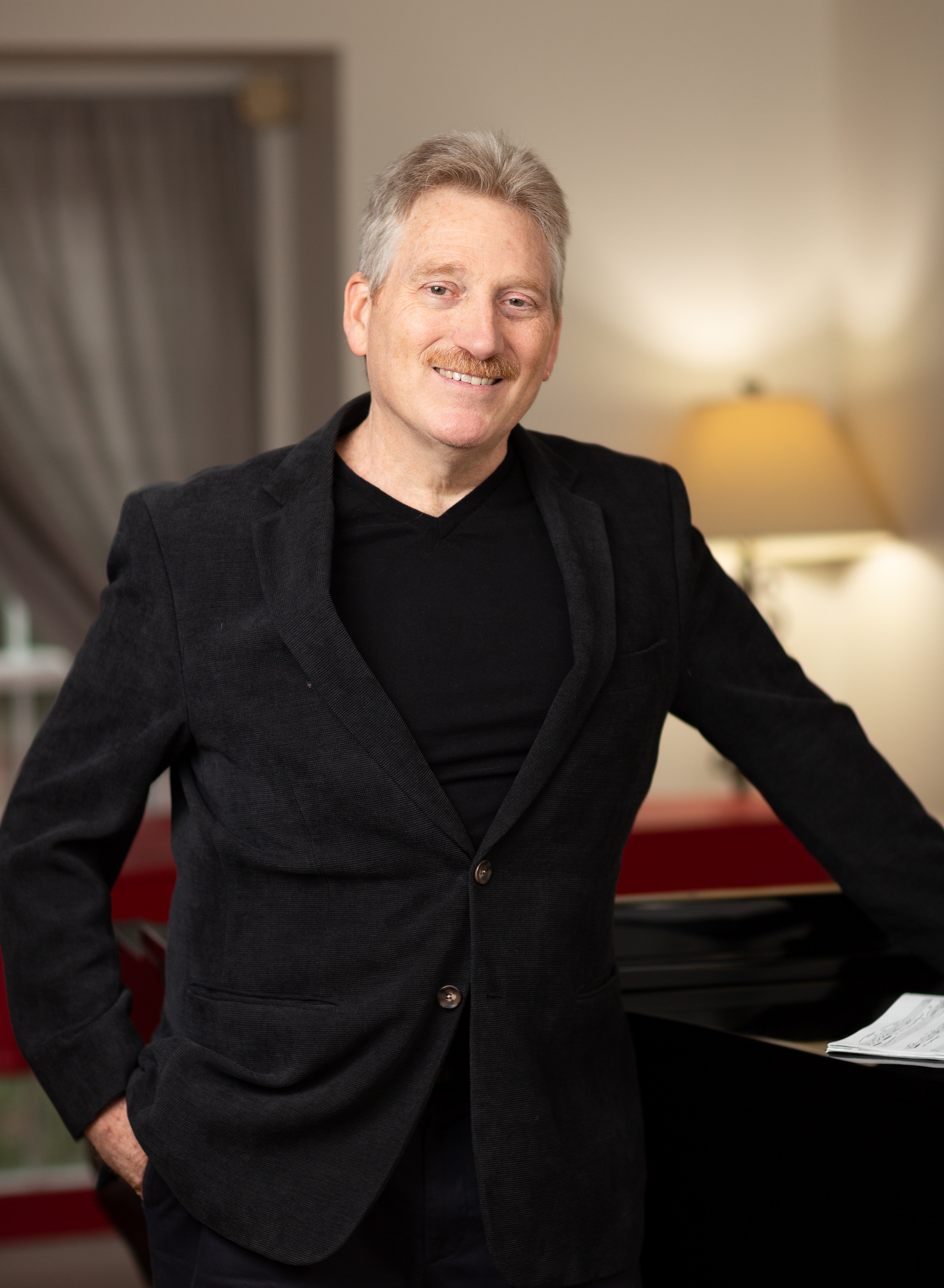
Lance R Hulme serves as Professor at North Carolina Central University's College of Arts, Social Sciences, and Humanities, where he directs the Music Theory and Composition program and teaches Music Industry and FabLab courses. His leadership extends to developing the educational software Basic Training in Music Skills and directing the acclaimed À la carte concert series. His educational background includes a DMA and MMA from Yale University, MM from Eastman School of Music, BM from University of Minnesota, and studies at Universität für Musik in Vienna. His career spans conducting premieres, jazz fusion performance with Dreamscape band, and 17 years in Europe co-founding Ensemble Surprise. Yale University: DMA (1998), MMA (1994) Eastman School of Music: MM (1989) Universität für Musik Wien: AA (1987) University of Minnesota: BM (1983) Hulme's research spans compositional eclecticism, music technology integration, and aural skills pedagogy. Critics describe him as a 'chameleon composer' weaving diverse musical traditions into rich expressive textures. His work bridges 'serious' and vernacular music while employing advanced structural techniques, with special focus on computer-assisted composition and interactive collaborations with choreographers. His publication trends reveal sustained exploration across genres: from sacred choral works (Psalm 62) to electronic compositions (Caritas Abundat), jazz arrangements (My Favorite Things), and chamber pieces (JethroZen). The corpus demonstrates consistent engagement with cross-cultural synthesis, technological innovation, and expressive narrative forms, with recent works emphasizing digital media integration. Notable awards include: Grand Prize, International Witold Lutoslawski Composition Competition First Prize, ASCAP/Rudolf Nissim Prize 2021 Malta International Composition Competition First Prize Fulbright Grant to Austria MacDowell Colony Fellowship Hulme's advising impact manifests through his educational software used across institutions and mentorship via the À la carte concert series, which has become 'one of North Carolina's most important concert series' (Classical Voice NC). His technological contributions include sound engineering for album productions and real-time dance installations at Modern Repertory Dance Theater. He leads NCCU's FabLab music technology initiatives and continues directing Ensemble Surprise's legacy through À la carte, presenting '700 years of new music' across genres and epochs. Current projects include interactive computer compositions and expanding his educational software platform.
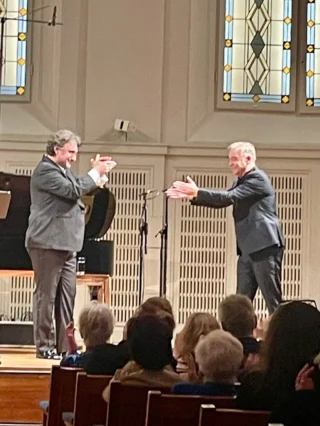
Julius Drake is a world-renowned collaborative pianist based in London who holds the position of Professor of Collaborative Piano at the Guildhall School of Music. He enjoys an international reputation as one of the finest instrumentalists in his field, collaborating with many of the world's leading vocal artists both in recital and on disc. His passionate interest in song has led to invitations to devise major song series for Wigmore Hall, London; The Concertgebouw, Amsterdam; 92nd St Y, New York; and the Pierre Boulez Saal, Berlin. He curates an annual series of song recitals – Julius Drake and Friends – in the historic Middle Temple Hall in London, where The Daily Telegraph has noted the space 'seems the perfect setting for stirring songs of martial derring-do.' Drake's research and performance interests center on collaborative piano, art song interpretation, and vocal accompaniment across multiple traditions including German Lieder, French mélodie, and English song repertoire. His work demonstrates a deep understanding of textual subtleties and musical structures, with critics noting his 'magisterial command of tonal inflections' and ability to make the piano 'feel like a whole orchestra.' His programming often explores connections between poetry and music, and he has created comprehensive series including the complete Mahler songs in five recitals for the Mahler Festival at the Concertgebouw. His numerous awards include multiple Gramophone Awards (2007, 2009, 2011, 2020) and BBC Music Magazine Awards (2020, 2025). His recordings consistently receive critical acclaim for their musical intelligence and profound understanding of song repertoire, with The New Yorker describing him as 'the nonpareil collaborative pianist.' Drake maintains an active performance schedule with engagements through 2026, including recitals at major venues worldwide. He is regularly invited to give masterclasses globally, sharing his expertise in collaborative piano with the next generation of musicians. His artistic partnerships with singers like Ian Bostridge (with whom he has performed Winterreise over 100 times) and Gerald Finley represent some of the most significant vocal-piano collaborations of our time.
Sabine Arndt-Lappe is a Professor of English Linguistics at the University of Trier , Germany. She previously held research positions at the Universities of Marburg, Siegen, and Düsseldorf. As a structural linguist, her work bridges empirical and theoretical approaches to morphology and phonology. Research Focus : Variation and productivity in English lexicon, formal and semantic aspects of word-formation, prosodic morphology, analogy-based and usage-based grammatical models, computational analogical modeling, and Optimality Theory. Projects : Leads the DFG-funded AdvAnTheMorph project (2025–2028) and co-leads the DFG-ANR ERSaF project (2022–2025). Spokesperson for the Trier Center for Language and Communication research group on Patterns/Musterhaftigkeit (2020–2023). Publications span topics like name blending, stress assignment in English verbs, clipping mechanisms, affix rivalry, and cross-linguistic morphological analysis. Her work employs computational models (e.g., Naive Discriminative Learning) and corpus-based methodologies. Editorial Contributions : Editor-in-Chief of Morphology (2022–present), former Editor of Journal of Linguistics (2017–2021), and editorial board member for multiple journals including English Language and Linguistics and Journal of Linguistics . Teaching includes courses like LING 101: Introduction to Linguistic Studies , LING 801: Words in the Mind , and LING 804: Statistics for Linguists . She also mentors doctoral candidates and supervises software development for morphological research (e.g., M2E - Morph2Excel ).
Thomas Olander is an Associate Professor of Comparative Indo-European Linguistics at the Department of Nordic Studies and Linguistics, Faculty of Humanities, University of Copenhagen. He has been in this position since 2019 and has led several major research projects focused on the Indo-European language family. His educational background includes: DPhil in Comparative Indo-European Linguistics, University of Copenhagen (2015) Ph.D. in Slavic and Baltic historical linguistics, University of Copenhagen (2006) M.A. in Indo-European Linguistics, University of Copenhagen (2002) B.A. in Indo-European Linguistics and Bulgarian, University of Copenhagen (1999) Thomas Olander specializes in comparative Indo-European linguistics with a focus on reconstructing the Proto-Indo-European language and understanding the relationships between its various branches. His research interests include the Indo-European homeland problem, historical grammar of Slavic and Baltic languages, and Danish linguistics. He has led significant research projects such as "Connecting the Dots: Reconfiguring the Indo-European family tree" (2019-2023) and "The homeland: In the footprints of the early Indo-Europeans" (2015-2018). His publications show a strong focus on phylogenetic approaches to understanding language relationships, with particular attention to Slavic languages within the broader Indo-European context. His work often bridges linguistic evidence with archaeological findings to address questions about prehistoric language spread and development. Among his notable achievements is the Einar Hansens Forskningspris award received in 2022. Professor Olander teaches various Indo-European disciplines, including historical grammar of specific Indo-European languages and Indo-European morphology. He has also taught courses on Danish phonetics, morphology, syntax, and historical grammar, as well as Bulgarian language. He is currently a core member of the LAMP (Languages and Myths of Prehistory) research project (2020-2025), which takes an interdisciplinary approach to examining the relationship between languages, material culture, and myths at prehistoric stages of Indo-European languages.
Wanda Davies serves as a Lecturer at the Canadian Institute of Linguistics (CanIL), teaching literacy courses online for 18 years after six decades of fieldwork with Wycliffe Bible Translators across Mexico, Sudan, Uganda, and Kenya. Her career spans language development, Bible translation, and refugee-focused education initiatives. Her academic credentials include: 1977: M.A. in Linguistics, University of Texas at Arlington 1968: Graduate Certificate in Bible, Multnomah School of the Bible 1967: Washington State Teaching Certificate, Seattle Pacific University 1964: B.A. in Spanish, Seattle Pacific University Davies specializes in literacy development and Bible translation , with deep expertise in orthography design for minority languages. Her research focuses on African languages (Sudanese languages, Chinantec) and practical community literacy programs, informed by bilingual education projects and mother-tongue translation work in conflict zones. Her 1989-1990 publications demonstrate interdisciplinary applications of linguistic theory to real-world challenges, particularly adapting literacy methods for diverse language contexts and documenting tonal/morphological structures in endangered languages. Though specific students aren't named, Davies has trained generations of literacy workers through CanIL and Pan Africa Christian College. She currently co-develops CanIL's Orthography Development course, extending her legacy of empowering communities through language access. Collaborative initiatives define her career, from Sudanese language coordination to Nairobi-based course development and refugee literacy projects in East Africa.
Sean Vrieland is an Associate Professor in the Department of Nordic Studies and Linguistics at the University of Copenhagen, specializing in the historical development of Nordic languages and their written sources with emphasis on Late Medieval and Early Modern manuscripts. Research Interests: Vrieland's scholarly focus spans interconnected philological disciplines: Nordic language evolution, particularly Old Gutnish and medieval Danish/Norwegian Manuscript analysis including paleography and codicology Textual criticism of historical Nordic texts Faroese manuscript culture revival and transmission Linguistic features of older Scandinavian languages Publication Trends: His recent output (2019-2025) reveals deep engagement with Nordic manuscript philology, covering Guta saga variation, Faroese cultural rebirth, and Icelandic codex production. Encyclopedia contributions on figures like Cædmon, Christiern Pedersen, and Ivar Aasen demonstrate expertise in language history intersecting with cultural identity, religious reform, and national language formation across the North Atlantic region. Scientific Awards: No awards, fellowships, or medals were documented in the source material. Advising and Grants: The available information does not specify doctoral students, research grants, or funded projects. Labs and Teams: No dedicated research laboratories or collaborative teams were referenced in the provided content.
Holger Juul is an Associate Professor at the Department of Nordic Studies and Linguistics, Faculty of Humanities, University of Copenhagen, a position he has held since 2009. He is researchwise affiliated with the Centre for Reading Research and teachingwise with the Audiologopedics programmes. His educational qualifications include: Ph.D. in Linguistics (2004) from the University of Copenhagen, dissertation: 'Spelling Problems in Danish' Cand.mag. (Master of Arts) in General Linguistics (1998) from the University of Copenhagen Professor Juul's research centers on Danish literacy, with core interests in reading and spelling acquisition, vocabulary development, phonetics, orthography, and language testing. His work addresses practical educational challenges such as decoding difficulties and spelling interventions, evidenced by major projects including 'Self-teaching of new vocabulary' (2015-2019) and 'Development of Speed in Reading' (2009-2013). Analysis of his 2024-2025 publications reveals consistent focus on Danish orthographic systems, vowel duration studies, and grapheme-phoneme mapping. This body of work demonstrates empirical approaches to enhancing reading fluency through linguistic analysis of Danish-specific challenges. No specific scientific awards are documented in the available information. Professor Juul actively supervises BA, MA, and PhD students, particularly encouraging empirical research in reading development. His teaching covers Danish phonetics, orthography, and language testing, with recorded lecture activities addressing dyslexia interventions and literacy assessment methodologies. He maintains active collaboration through the Centre for Reading Research and has engaged in international research networks as indicated by his institutional profile.
Simon Poulsen is a PhD student and Research Fellow at the Department of Nordic Studies and Linguistics, Faculty of Humanities, University of Copenhagen. He has been working on his PhD project "The relationship between Indo-Iranian and Greek" since September 2020 under the supervision of Thomas Olander. He also serves as a teaching assistant for the Department of Nordic Studies and Linguistics (2024-2025) and previously worked as a research assistant on the "Connecting the Dots" project (2023-2024). MA in Indo-European Linguistics, University of Copenhagen (2019) BA in Indo-European Linguistics, University of Copenhagen (2016) Graduation from Odense Katedralskole (2013) Simon Poulsen's research focuses on comparative Indo-European linguistics, particularly the relationship between Indo-Iranian and Greek language branches. He works on reconstruction of the Proto-Indo-European language, linguistic phylogenetics, and examining significant innovations shared by Greek and Indo-Iranian in phonology and inflectional morphology. His work also connects linguistic findings to archaeological material cultures and prehistoric migrations. He has additional interests in language history of other language families, language variation, epigraphy, and runology. His publications demonstrate expertise in linguistic phylogenetics, etymology, and the historical relationships between language families. His work spans from Proto-Norse studies to broader Indo-European linguistic questions, with particular focus on Greek and Indo-Iranian connections. He has also published on entomological etymology and runological topics. 3rd place for best MA thesis of the Society for Indo-European Studies (2019) Simon Poulsen has taught part of the BA-course "Greek and Latin language history" and supervised BA theses. He is available to supervise exam papers or projects on Indo-European linguistics, phylogenetics, Greek or Indo-Iranian language history. His PhD project is funded by The Department of Nordic Studies and Linguistics as one of the free scholarships of the Faculty of Humanities. He has been active in academic collaborations, including visiting researcher positions at Leiden University (2022) and the University of Pennsylvania (2022), and has presented at numerous conferences and workshops on Indo-European linguistics topics.