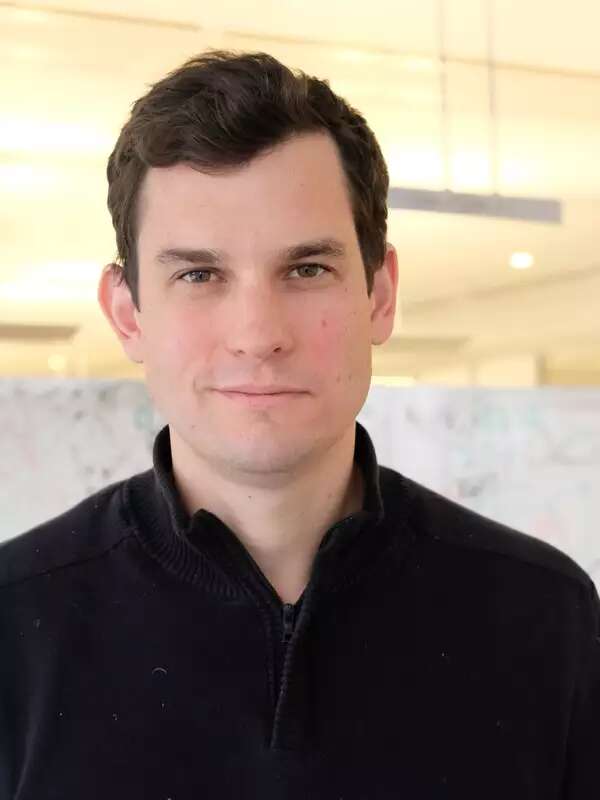
Dr. Kamil Waldemar Lemanek is a Polish-American academic affiliated with Maria Curie-Skłodowska University as an Assistant Professor in the Department of Logic and Cognitive Science under the Faculty of Philosophy and Sociology. He also holds an adjunct position at the University of Warsaw Institute of Philosophy. His scholarly focus bridges philosophy of language , philosophy of mind , and ontology , with significant contributions to inferentialism, semantic theory, and pedagogical innovation. PhD in Philosophy (2023), University of Warsaw Research on natural language architecture, delusion frameworks, and educational technology Extensive editorial collaboration and grant acquisition His publications reveal a thematic interplay between linguistic finitism , semantic atomism , and social epistemology . Notably, he explores unconventional pedagogical tools like ancient astronaut theory for teaching informal logic. Though no specific scientific awards are listed, his national/international grants (e.g., NCN grant for research on language architecture) demonstrate institutional support. Teaching innovations include AI-assisted peer review simulations in academic writing instruction.
Xingye Qiao is a Professor and Chair in the Department of Mathematics and Statistics at Binghamton University, State University of New York . He serves as Chair of the Data Science Transdisciplinary Area of Excellence steering committee and has been affiliated with Binghamton since 2010. Education : Ph.D. in Statistics (2010), University of North Carolina at Chapel Hill M.S. in Statistics (2007), University of North Carolina at Chapel Hill B.S. in Mathematics and Applied Mathematics (2005), Fudan University His research focuses on Statistics, Machine Learning, and Causal Inference , with recent work exploring conformal prediction methods, treatment effect estimation, and set-valued classification techniques. His publications span journals like Transactions on Machine Learning Research , NeurIPS , and AAAI . His 15 most recent articles (2025-2020) demonstrate expertise in areas including: bandit feedback systems, treatment effect heterogeneity analysis, spectral clustering for neuroscience, and conformal prediction under distribution shifts. These works blend statistical theory with real-world applications in healthcare, ecology, and data science. He mentors Ph.D. students in mathematical sciences and has supervised research topics such as: machine learning in precision medicine, goodness-of-fit tests for spatial processes, and high-dimensional data analysis. Courses he teaches include Math 605: Theory of Machine Learning and Data 501: Predictive & Inferential Analytics .
Eric Mandelbaum is a Professor of Philosophy at Baruch College, City University of New York (CUNY), where he holds the Ruth Printz O'Hara '52 Professorship. He also maintains an appointment at the CUNY Graduate Center Department of Philosophy. His scholarly work bridges philosophy and cognitive science, with a particular focus on the nature of belief, mental representation, and cognitive architecture. Professor Mandelbaum's primary research interests include Philosophy of Cognitive Science and Philosophy of Mind, with significant contributions to understanding belief systems. His work has developed the influential Spinozan model of belief fixation, which posits that merely contemplating a proposition entails believing it, with rejection requiring a separate, effortful process. He has also advanced a fragmented model of belief storage, challenging the traditional unified web of belief in favor of multiple, context-sensitive belief stores. His research extends to language of thought hypothesis, implicit bias, and the psychological immune system that governs belief change. Analysis of Mandelbaum's publication record reveals a consistent trajectory of integrating philosophical analysis with empirical findings from psychology and cognitive science. His recent work demonstrates an increasingly interdisciplinary approach, connecting belief science to mental health applications, language processing, and social cognition. A distinctive feature of his scholarship is the development of mechanistic explanations for seemingly incompatible aspects of belief, showing how belief can simultaneously be discerning, credulous, rational, and irrational. Ruth Printz O'Hara '52 Professorship While specific details about Professor Mandelbaum's advising activities are not explicitly documented in the available information, his extensive publication record featuring numerous collaborations suggests active mentorship and research leadership. His work appears to be supported by institutional resources at CUNY, and likely external research grants given the scope and interdisciplinary nature of his investigations into belief systems and cognitive architecture. His frequent co-authorship with researchers across multiple institutions indicates participation in collaborative research networks. Professor Mandelbaum's research is conducted through collaborative networks spanning philosophy, psychology, and cognitive science disciplines. His frequent co-authorship with scholars like Nicolas Porot, Jake Quilty-Dunn, and others suggests leadership in research teams focused on belief systems, language of thought, and implicit cognition. These collaborations demonstrate his commitment to interdisciplinary approaches that bridge philosophical analysis with empirical cognitive science.
Wouter M. Koolen-Wijkstra is a Professor of Mathematical Machine Learning at the University of Twente (Statistics group) and a Scientific Staff Member at Centrum Wiskunde & Informatica (CWI), Amsterdam, in the Machine Learning department. His research bridges theoretical machine learning, game theory, and statistics, with active projects on multi-armed bandits, online learning, and safe inference methodologies. He co-leads INRIA-CWI associate teams (6PAC and 4TUNE) and is an ELLIS Scholar. His work emphasizes provable guarantees in learning algorithms, including: Regret minimization under risk-averse scenarios Multi-scale adaptation in online decision-making Game-theoretic equilibria computation Anytime-valid statistical inference via e-processes Recent publications demonstrate a focus on robust learning frameworks , particularly in bandit problems, hypothesis testing, and Nash equilibrium characterization, often leveraging information-theoretic and optimization principles. Awards include: Veni Grant (2015) for 'Learning at the Intrinsic Task Pace' QUT Vice-Chancellor's Fellowship (2013) for multitask learning Rubicon Grant (2010) for game-theoretic online learning ELLIS Scholar recognition He teaches graduate courses on Machine Learning Theory and Graphical Models at CWI. Current grants include collaborations with INRIA (4TUNE and 6PAC teams) and industry partnerships (e.g., PPS Booking.COM).
Brett Gibson is Professor and Department Chair of Psychology at University of New Hampshire. He holds a Ph.D. from University of Nebraska and M.S. from Bucknell University, with research focusing on animal cognition and behavioral neuroscience. Research examines: Spatial memory and navigation across species Neurophysiological basis of learning and decision-making Comparative cognition in birds and rodents Visual perception and memory systems His publications demonstrate consistent focus on neural mechanisms of spatial cognition, particularly thalamocortical pathways and prefrontal function, with significant work on avian cognitive abilities in nutcrackers and pigeons.
Anders Nes is a Professor in the Department of Philosophy and Religious Studies at NTNU in Trondheim. His research focuses on philosophy of mind, perception, language, and action, with notable contributions to debates on the perception-cognition distinction and the nature of conscious inference. He has held previous affiliations including Researcher at the Center for the Study of Mind in Nature (CSMN) in Oslo, and fellowships at Oxford University's Christ Church and Balliol Colleges. Nes actively participates in academic dissemination, including panel discussions on AI ethics and digitalization. He organizes the Trondheim Philosophy of Perception Circle and teaches advanced perception seminars. His work bridges analytic philosophy with cognitive science, emphasizing phenomenological and epistemological dimensions of mental processes. Research interests include philosophical aspects of artificial intelligence, non-conceptual content in utterance comprehension, and the phenomenology of thinking. Key themes in his writing address intentional processes, modular stimulus-control in perception, and the role of consciousness in inferential reasoning. Nes' recent articles explore reasons-responsive embodied processes and the epistemic roles of perception versus cognition.
Jamie Amemiya serves as an Assistant Professor in the Department of Psychology at Occidental College, appointed in 2023. His research bridges developmental and social psychology with a focus on how children and adults conceptualize societal structures. His educational background includes a B.S. from the University of California, Irvine and M.S./Ph.D. from the University of Pittsburgh. His work examines critical aspects of social cognition development including structural reasoning about inequality, representation of social hierarchies, and causal judgment formation. Amemiya's research program investigates how people reason about social inequality causes, with projects spanning multiple cultural contexts including Indonesia and Brazil. His work integrates counterfactual reasoning theories with social cognition to develop frameworks for understanding structural thinking development. Current projects include "Thinking Structurally about Inequality," "Representing Complex Status Hierarchies," and "Humane Genetics Education" – the latter developing anti-racist curriculum modules to combat genetic essentialism. Analysis of his recent publications reveals strong emphasis on developmental trajectories in social cognition, cross-cultural comparisons of race concepts, and educational interventions targeting structural inequality recognition. His work consistently applies cognitive frameworks to socially relevant issues with practical implications for education and social justice. Amemiya actively mentors undergraduate researchers including Kiara Widjanarko, Irene Chung, and Daniela Sodré. His collaborative work spans institutions including BSCS Science Learning and involves interdisciplinary teams addressing complex societal problems through psychological science. He maintains active research laboratories focused on child development and social cognition, with ongoing projects examining polarization in causal judgments, race concepts across cultures, and inferences from disagreement. His work combines experimental methods with computational modeling approaches to investigate underlying cognitive mechanisms.
Tian Han is an Assistant Professor at the Department of Computer Science within the Charles V. Schaefer, Jr. School of Engineering and Science at Stevens Institute of Technology. His research focuses on artificial intelligence (AI) and machine learning, particularly in developing statistical learning methods for probabilistic models and building explainable, controllable AI systems. He holds a PhD in Statistics from UCLA (2019) and a degree in Computer Science from HKUST (2013). His research interests span unsupervised/semi-supervised learning, probabilistic generative modeling, explainable AI, and computer vision. Notable contributions include work on latent space energy-based models, hierarchical feature learning, and robust representation techniques. Han has served as an Area Chair/Senior Program Committee member at conferences like CVPR, NeurIPS, and AAAI. Education: PhD in Statistics, UCLA (2019) MSc/BS in Computer Science, HKUST (2013) His publications emphasize advancements in energy-based models, latent space hierarchies, and generative AI. Recent work includes enforcing sparsity in latent representations for robust AI systems (WACV 2024), molecule design via latent space modeling (UAI 2023), and context-aware health prediction (AAAI 2022). He received the NSF CAREER Award (2024) for his research. Han teaches courses on machine learning fundamentals, deep learning, and computing foundations at Stevens.
Dr. John Nesbit is a Professor in the Faculty of Education at Simon Fraser University, specializing in educational psychology and learning sciences. His research focuses on self-regulated learning with multimedia resources, cognitive tools, log analysis, and argumentation. He has contributed to understanding how cognitive tools like concept maps and argument visualization enhance learning processes. Nesbit’s work often involves empirical studies on instructional efficacy and meta-analytic reviews of educational interventions. His research highlights include examining the impact of animated concept maps, verbal redundancy in multimedia environments, and the role of achievement goals in self-regulated learning. Nesbit has published extensively in top journals like the Journal of Educational Psychology and Metacognition and Learning , with a focus on bridging theory and practical educational design. His recent studies explore inquiry-based learning with simulations and the application of learning analytics to track student strategies. Nesbit has presented at major conferences such as the American Educational Research Association and contributed chapters to handbooks on educational data mining and metacognition. He advises graduate students in educational technology and learning sciences, though specific student names are not listed here. His work emphasizes evidence-based approaches to improving educational practices through cognitive and technological innovations.
Mel Rutherford is a Professor in the Department of Psychology, Neuroscience & Behaviour within the Faculty of Science at McMaster University. Her research focuses on experimental psychology motivated by evolutionary theory, particularly examining Social Perception and Social Perceptual Development. Dr. Rutherford earned her Ph.D. in Psychology from the University of California at Santa Barbara in 2000, following a BA in Psychology and Biology from Yale University in 1992. She completed her postdoctoral fellowship at the University of Denver from 2000-2002. Her research interests span Cognitive Development, Evolutionary Psychology, Social Perception, Animacy Perception, and Face Processing, with particular emphasis on how these processes develop in children and are affected in Autism Spectrum Disorder. She has published extensively on visual aftereffects, religious bias in face perception, essentialism, and developmental trajectories in social cognition. Analysis of her recent publications (2021-2025) reveals a strong focus on religious bias in face perception, with multiple studies examining how religious labels affect visual adaptation to Christian and Muslim faces. Her work also explores essentialism in social categories, developmental trajectories in facial expression perception, and biological motion perception in autism through meta-analysis. Her research consistently bridges evolutionary theory with experimental psychology methodologies. Dr. Rutherford has taught numerous courses including Essentials of Developmental Psychology (PSYCH 3GG3), PNB Tutorials (PNB 2XT0), Advanced Topics in Psychology, Neuroscience and Behaviour (PSYCH 741), Contemporary Problems in Psychology (PSYCH 720A), and Inferential Statistics and Research Methods (PNB 3XE3) across multiple years from 2017-2024. She leads the Rutherford Lab at McMaster University, which focuses on experimental psychology motivated by evolutionary theory, specifically examining questions of Social Perception and Social Perceptual Development. Her work has been widely cited across academic platforms, social media, and news outlets, with numerous publications appearing in high-impact journals like Journal of Vision, Frontiers in Psychology, and Developmental Psychology.
John Morrison is a Professor of Philosophy at Barnard College, affiliated with Columbia University's Mind Brain Behavior Institute and its Center for Theoretical Neuroscience. He joined the philosophy department in 2009 and holds affiliations with the Neuroscience and Behavior department. His academic work bridges philosophy of mind, early modern philosophy (particularly Spinoza), and theoretical neuroscience. Education: B.A., Williams College M.A., University of Pittsburgh Ph.D., New York University His research focuses on two main projects: understanding the brain's representational and inferential mechanisms, especially involving probabilities, and unraveling Spinoza's metaphysical claims about minds, bodies, God, and their essences. His work in philosophy of mind explores topics such as perceptual confidence, color representation, and structuralism, while his historical work delves into Spinoza's causal axioms and Descartes' theories of identity and time. Scientific Awards: 2015 Sanders Prize in Philosophy of Mind Advising and grants details are not explicitly provided in the text. His affiliations with Columbia's institutes reflect collaborative engagement with interdisciplinary neuroscience and theoretical research. No lab-specific details are mentioned, though his involvement with the Center for Theoretical Neuroscience suggests active participation in such groups.
Aaron Steven White is an Associate Professor of Linguistics at the University of Rochester, with a secondary appointment in Computer Science and affiliation with the Goergen Institute for Data Science. He directs the Center for Language Sciences (CLS) and the Formal and Computational Semantics Lab (FACTS.lab). Previously, he was a postdoctoral fellow at Johns Hopkins University’s Science of Learning Institute (2015-2017) and earned his PhD in Linguistics from the University of Maryland (2015). His research focuses on computational semantics, investigating relationships between linguistic expressions and conceptual categories. Key projects include the MegaAttitude Project, analyzing predicate distributions and inferential properties, and the Decompositional Semantics Initiative (Decomp), which annotates corpora for semantic parsing and NLU systems. Recent work emphasizes integrating behavioral experiment data with corpus evidence to develop unified computational models. He teaches courses on probabilistic dynamic semantics and has presented keynote talks on ontology-driven evaluation of summarization systems. His contributions span theoretical linguistics, NLP, and cognitive science.
Lorraine Li is an Assistant Professor in the Department of Computer Science at the University of Pittsburgh, affiliated with the Interdisciplinary Science Program (ISP) and the School of Computing and Information. She holds a PhD from the University of Massachusetts Amherst (2022) and conducted postdoctoral research at AI2's Mosaic team. Her work focuses on NLP, machine learning, and socially responsible AI systems. Education: PhD in Computer Science (UMass Amherst, 2022) Research explores evaluation frameworks for commonsense knowledge, model interpretability, and ethical AI applications in domains like education and law. Key interests include probabilistic models, long-tail reasoning, and geographic robustness in LLMs. Recent publications address confirmation bias in reasoning chains (ACL 2025), geographically diverse prompting (CVPR 2024), and uncommon scenario reasoning (NAACL 2024). She co-organized the AAAI 2024 Make symposium and serves on committees for ACL, EMNLP, and NAACL. Grants: Pitt Cyber funding (2024) Lab: Pitt NLP Seminar group
Julie Myre Bisaillon est chercheuse en éducation à l'Université de Sherbrooke, spécialisée dans le développement de la littératie précoce, l'éveil à la lecture et à l'écriture, et les pratiques éducatives en milieux ruraux et défavorisés. Ses travaux explorent les interactions entre les familles, les éducateurs et les communautés pour améliorer les résultats scolaires des jeunes enfants. Doctorat en Éducation (2004), Université de Sherbrooke Ses recherches couvrent: Les approches éducatives contextualisées La didactique du français Les troubles du langage écrit et oral La littératie familiale Les transitions préscolaire-scolaire Les méthodes inclusives pour enfants vulnérables Ses projets récents incluent: Implantation d’ateliers de lecture interactive en milieux ruraux défavorisés (2022-2023, CRSH: 94,257$) Programmes de littératie familiale pour organismes communautaires (2021-2023, FRQSC: 189,716$) Études sur l’inclusion en services de garde en milieu familial Ses publications analysent: L’impact des albums jeunesse sur le développement global Les stratégies pédagogiques pour élèves en difficulté Les synergies entre école, famille et communauté Elle a organisé plusieurs colloques internationaux sur la littératie, notamment à l'ACFAS (2013-2022) et des congrès en France, Suisse, Brésil et Afrique du Sud. Ses collaborations incluent des équipes interdisciplinaires (psychologues, enseignants, bibliothécaires) et des partenariats avec des ministères québécois.
Martin Schiavenato serves as an Associate Professor in the Department of Nursing at Gonzaga University, where he leverages his background as a former newborn intensive care unit nurse to educate future nurses and advanced practice clinicians. His teaching portfolio spans foundational to graduate-level courses including Nursing Perspectives, Determinants of Health, Research & Information Management, Evidence-Based Practice for Quality & Safety, and Inferential Statistics, reflecting his commitment to developing innovative, compassionate healthcare professionals equipped for modern system challenges. His academic credentials include a Ph.D. in Nursing from the University of Central Florida, an M.S. in Sociology from Florida State University, and a B.S.N. from Florida State University. This interdisciplinary foundation informs his research at the intersection of clinical practice, technology, and social justice. Dr. Schiavenato's research centers on three interconnected domains: pain assessment methodologies (particularly in neonatal and pediatric contexts), healthcare technology innovation, and social justice in nursing. His work examines procedural distress in NICU settings, facial expression analysis for pain detection, and the development of medical devices for physiological monitoring. He approaches these areas through a lens of pragmatic innovation—what he terms the nursing tradition of 'making do'—to address systemic healthcare gaps with creative, implementable solutions. His publication history reveals a consistent trajectory from foundational pain expression studies (2006-2012) toward technology-integrated clinical applications (2013-2017), culminating in pandemic-era educational innovation (2021-2022). Key thematic threads include virtual simulation efficacy, heart rate variability analysis for pain assessment, and critical examinations of evidence-based practice frameworks like PICO. His scientific recognition includes membership in two prestigious programs: Robert Wood Johnson Nurse Faculty Scholars Program (national faculty development initiative) Pain in Child Health program (Canadian Institute of Health Research collaboration) As a medical device inventor, Dr. Schiavenato has developed systems for NICU heart rate variability assessment and contributed to pain measurement methodologies. His collaborative approach is evident in publications spanning nursing, biomedical engineering, and sociology, reflecting his commitment to interdisciplinary solutions for complex healthcare challenges. Current work focuses on virtual simulation tools and expanding inclusion frameworks within nursing education and practice.