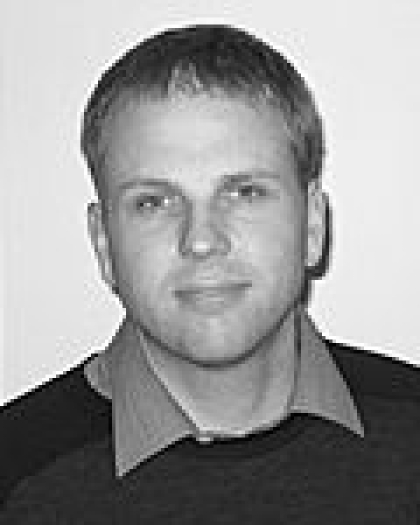
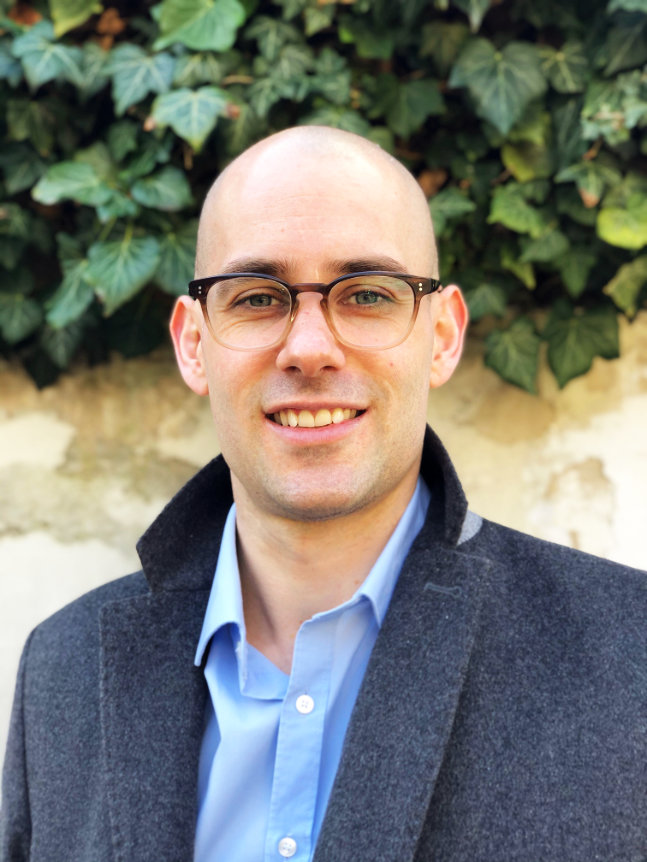
Professor Fredrik Carlsen at the Norwegian University of Science and Technology (NTNU) Department of Economics specializes in public economics, health economics, and regional economics. His research explores socioeconomic gradients in healthcare access, urban quality of life, and hospital efficiency metrics through large-scale registry studies and econometric analysis. Public Economics Health Economics Regional Economics His most recent work (2022-2025) includes causal inference studies on perinatal mortality, urban well-being paradoxes, and hospital overcrowding impacts. Collaborations with researchers like Andreas Asheim and Sara Marie Nilsen appear frequently in his publications.
Elizaveta Butenko is a Research Fellow at the Faculty of Logistics, Molde University College, Specialized University in Logistics, Norway. She is actively engaged in empirical economic research with a strong focus on development, environmental, and labor economics. Her work often employs quasi-experimental methods to evaluate the long-term impacts of environmental, social, and policy-related shocks. Her research interests lie at the intersection of human capital formation and external shocks, including climate change, educational competition, religious practices, and population policies. These areas are explored through rigorous data analysis, primarily using administrative datasets from China and Indonesia. Her work contributes significantly to understanding how early-life conditions and social environments shape long-term economic and health outcomes. The trends in her recent publications indicate a consistent focus on causal inference in applied microeconomics. She investigates how high temperatures during pregnancy affect adult outcomes, how competition alters peer learning in universities, and how religious fasting influences labor productivity. These studies reflect a broader interest in policy-relevant questions in developing and transitional economies. She has published in leading journals such as the Review of Economics and Statistics and the Journal of Environmental Economics and Management . While no scientific awards are listed, her publication record demonstrates recognition in the academic community. Collaborative in nature, her research is conducted with international co-authors across economics and related fields. Elizaveta Butenko advises no listed students in the provided text and there is no mention of grant funding or leadership roles in labs or research teams. However, her ongoing work in progress suggests active engagement in new projects related to agricultural policy, workplace safety, and land rights.
Peter Hull is a Professor of Economics at Brown University, specializing in applied microeconomics, causal inference, econometrics, and public policy. His research focuses on developing robust methods for estimating causal effects in non-experimental settings, measuring institutional quality in education and healthcare, and identifying systemic inequities in high-stakes decisions. His research interests lie at the intersection of econometric methodology and real-world policy issues. He develops new tools for causal identification, particularly in contexts involving racial discrimination, school quality measurement, and judicial or administrative decision-making. His work emphasizes robustness to model misspecification and the use of instrumental variables, including innovations such as recentered and optimal formula instruments. His recent and forthcoming publications span top journals including the Quarterly Journal of Economics , American Economic Review , Econometrica , and the New England Journal of Medicine . These works examine systemic discrimination, bail decisions, foster care placement, and demand estimation, reflecting a strong trend toward methodological rigor applied to pressing social issues. Peter Hull is actively involved in the academic community, presenting at NBER Summer Institutes and serving as an editor for AEJ: Applied . He collaborates with leading economists and contributes to the advancement of econometric practice. He advises students and researchers in applied microeconomics and econometrics, though specific advisees are not listed. He has not received external funding or grants mentioned in the text. He is affiliated with Brown University, where he conducts research and participates in academic discourse, maintaining a public profile through his website and social media.
Ivar Furre Aam is an Assistant Professor in the Department of Performing Arts at Kristiania University of Applied Sciences. He is affiliated with the School of Arts, Design and Media within the university. His contact email is ivarfurre.aam@kristiania.no. Research interests are inferred from his departmental affiliation, likely focusing on areas such as theater pedagogy, performance theory, contemporary arts practices, and interdisciplinary creative methods. Specific details about his research projects or publications are not explicitly provided in the text. No scientific awards, grants, or advised students are mentioned in the available information. His professional activities are centered at Kristiania University of Applied Sciences, with no indication of part-time roles or external affiliations.
Xiao-Mei Mai is a Professor at the Department of Community Medicine and Nursing, Faculty of Medicine and Health Sciences, NTNU. She holds a PhD in Medicine from Linköping University (2003) and a Medical degree from Capital Medical University, China (1992). Her research focuses on medical epidemiology, epigenetics, obesity, female reproductive factors, physical activity, causal inference, cancer, lung diseases, and vitamin D. Her work primarily utilizes the HUNT Study cohort to investigate chronic disease associations. Key areas include vitamin D’s role in chronic illnesses (e.g., lung disease, metabolic disorders, cancer), reproductive factors as risk factors for chronic diseases, Mendelian randomization, and epigenetic epidemiology. She has published extensively in journals like European Respiratory Journal , Scientific Reports , and BMC Cancer . Her research highlights vitamin D’s relationship with cognitive function, dental health, and hypertension, alongside obesity-mortality links via genetic analyses. She has collaborated on studies involving COPD comorbidity clusters, asthma-COPD overlap, and lung cancer risk factors. Professional experience includes roles at SINTEF Health Research, University of Ottawa, and postdoctoral fellowships at Canadian and Swedish institutions. Her work emphasizes causal inference methods and population health research.
Hans Julius Skaug is a Professor in the Department of Mathematics at the University of Bergen (UiB), Norway, with a distinguished career spanning several decades focused on statistical methodology and its applications to biological and ecological problems. Dr. Skaug's research expertise encompasses several interconnected domains: Biostatistics, particularly applications of statistics and probability to marine ecology Computational statistics, with pioneering work on Automatic Differentiation and Laplace approximation for complex model fitting Artificial Intelligence, where he has recently focused on variational autoencoders and diffusion models Development of innovative methods for line transect surveys and close-kin mark recapture (CKMR) His publication record shows a clear progression from foundational statistical methodology to increasingly sophisticated applications. The 2016 paper with Bravington and Anderson on 'Close-kin mark-recapture' in Statistical Science established him as a leader in population estimation methods. Recent publications (2023-2025) demonstrate continued innovation in refining CKMR techniques, applying TMB to diverse fields like insurance claims analysis, exploring sparse Bayesian learning, and addressing measurement errors in marine mammal surveys. His work consistently bridges theoretical statistical development with practical applications to real-world conservation and management problems. Dr. Skaug served as co-Editor in chief of the Scandinavian Journal of Statistics from 2018 to 2021, demonstrating his significant standing in the international statistical community. He teaches STAT110 Basic course in statistics at UiB during both spring and fall semesters and has conducted specialized workshops on CKMR and TMB at institutions including Dalhousie University in Halifax and the Institute of Marine Research in Bergen. He is actively involved in software development for statistical modeling through the TMB project (https://github.com/kaskr/adcomp) and ADMB (http://admb-project.org/), which implement his theoretical work on combining Automatic Differentiation with statistical modeling. His current research trajectory shows increasing integration of AI techniques with traditional statistical approaches, reflecting his observation that backpropagation in deep learning is fundamentally the same computational technique as Automatic Differentiation, which he has worked with for over 20 years.
Valeria Vitelli is an Associate Professor in Statistics at the Oslo Centre for Biostatistics and Epidemiology, University of Oslo, where she has been faculty since 2018. Her research spans high-dimensional and functional data analysis, Bayesian methods, clustering, and preference learning. As a Principal Investigator, she leads projects within the Norwegian Centre for Knowledge-driven Machine Learning (Integreat), funded by the Norwegian Research Council. Education: PhD in Statistics, Politecnico di Milano, Italy (2012) MSc in Mathematical Engineering (cum laude), Politecnico di Milano, Italy (2008) Bachelor in Mathematical Engineering (cum laude), Politecnico di Milano, Italy (2006) Dr. Vitelli's research focuses on developing statistical methods for complex high-dimensional data, with applications spanning biomedical research, cancer genomics, and precision medicine. Her work integrates Bayesian inference, machine learning, and functional data analysis to address challenges in modern biostatistics. She has made significant contributions to ranking models, clustering algorithms, and methods for analyzing curves and intrinsically smooth processes. Her publication record demonstrates strong interdisciplinary collaboration across medicine, particularly in cancer research, ophthalmology, and neurology. Recent work shows a clear trend toward developing novel statistical frameworks for integrating complex datasets in precision medicine applications, with emphasis on Bayesian approaches and high-dimensional data analysis. Scientific Recognition: Principal Investigator for the Norwegian Centre for Knowledge-driven Machine Learning (Integreat) Awarded major FRIPRO grants from the Research Council of Norway Dr. Vitelli actively mentors students and researchers in statistical methodology development. Her grant portfolio includes significant funding from the Norwegian Research Council for projects focused on Bayesian clustering methods for high-dimensional omics data. She teaches courses including "Introduction to Machine Learning in Biomedical Research" and "Statistical Principles in Genomics" for medical students and PhD candidates. She leads a research group focused on statistical models for high-dimensional and functional data within the Oslo Centre for Biostatistics and Epidemiology, collaborating closely with medical researchers across various specialties to develop and apply advanced statistical methods to biomedical challenges.
Ruben Guevara is a Doctoral Research Fellow at the University of Oslo's Department of High Energy Physics within the Faculty of Mathematics and Natural Sciences. His research focuses on using machine learning techniques like Likelihood-Free Inference and quantum machine learning to analyze data from the Large Hadron Collider (LHC) using the ATLAS detector, specifically searching for Higgs boson phenomena. He teaches courses such as FYS1400 (Introduction to Quantum Technology), FYS4480 (Quantum Mechanics for Many-Particle Systems), FYS4411 (Computational Physics II), FYS5419 (Quantum Computing), and FYS5429 (Advanced Machine Learning for Physical Sciences). Education Background: MSc in Nuclear and Particle Physics, University of Oslo (2023) BSc in Physics and Astronomy, University of Oslo (2021) Research Interests: Combining quantum technologies with advanced statistical methods to tackle challenges in particle physics. Active member of the High Energy Physics (HEP) research group at UiO.
Dr. Alexander Johan Nederbragt ("Lex Nederbragt") is a Senior Lecturer at the University of Oslo's Faculty of Mathematics and Natural Sciences, affiliated with the Centre for Ecological and Evolutionary Synthesis (CEES) and former member of the Centre for Computational Inference in Evolutionary Life Science (CELS). He leads the "Computing in Science Education" initiative within the Bioscience bachelor's program, developing courses like BIOS1100 that integrate Python programming with biological modeling. His educational philosophy emphasizes reverse instructional design and constructive alignment, with a focus on student-active learning and AI-driven pedagogical innovation. Researchwise, Nederbragt specializes in Bioinformatics and Genomics , particularly Evolutionary genomics of fish (Atlantic cod, haddock, grayling) Graph-based reference genome methodologies Genomic repeat element analysis Horizontal gene transfer in diatoms Computational microbiome studies His work spans comparative genomics, genome assembly validation, and bioinformatics software development (NucDiff, NucBreak). Scientific contributions reveal expertise in High-throughput sequencing Genomic architecture Evolutionary adaptation Computational methods Publication trends from 2012-2023 His research frequently intersects with ecological and evolutionary questions, particularly in teleost fishes. Scientific Awards Merittert Utdanner (Excellent Teaching Practitioner), University of Oslo (2023) Olav Thon Foundation National Award for Excellence in Teaching (2025)
Marco Molinari is a Postdoctoral Fellow in High-dimensional Statistics at the Department of Biostatistics , University of Oslo's Faculty of Medicine. His research focuses on advanced statistical modeling techniques with applications in biomedical data analysis. PhD in Statistics from University College London (2020) Specialized in Bayesian graphical models and metabolomics analysis Former Machine Learning Engineer in London (2020-2023) Research interests: Baysian Nonparametric Processes Dynamic Network Modeling Ethnic Metabolic Differences False Discovery Rate Control Publications highlight his contributions to: Statistical Methods in Medical Research Bayesian Dynamic Networks Ethnic Variation Analysis Insulin Resistance Modeling His methodological work spans computational efficiency, cross-population comparisons, and multi-omics data integration, primarily applied to cardiovascular and metabolic diseases.
Timo Roettger is a Professor of General Linguistics at the Department of Linguistics and Scandinavian Studies, University of Oslo, since 2022. Previously, he served as an Associate Professor (2020-2021), Postdoctoral Researcher at the University of Osnabrück (2020), Northwestern University (2018-2019), and the University of Cologne (2016-2017). His academic journey includes a PhD in Phonetics from the University of Cologne in 2016. Core research areas: Cognitive Science, Phonetics, Psycholinguistics Methodological focus: Quantitative methods, statistical modeling, open science practices Leadership role: Chair of the ManyLanguages consortium Roettger's research investigates the relationship between multi-dimensional speech signals and cognitive representations, with emphasis on predictive processing of intonation, analytic flexibility in speech research, and reproducibility. His work bridges phonetics, phonology, and cognitive science through rigorous empirical approaches. Recent publications highlight his methodological contributions to experimental linguistics and his advocacy for transparent research practices. Key projects include the ICONIC study on iconicity in spoken language. Roettger actively promotes diversification of languages, participants, and researchers in the language sciences. He employs interdisciplinary approaches combining phonetic analysis with cognitive theory to address foundational questions about speech production and perception.
Leiv Rønneberg is a Postdoctoral Fellow in Statistics and Data Science at the University of Oslo (UiO), with a primary affiliation at the Department of Mathematics. His research focuses on Bayesian statistical methods, machine learning, and data science, particularly applied to biomedical and astrophysical domains. Key research trends in his publications include: Development of flexible Bayesian models (FlexKnot, bayesynergy) for complex datasets Applications in 21 cm cosmological signal processing and drug combination analysis Creation of bioinformatics tools (screenwerk) for experimental design Interdisciplinary work spanning astrophysics, pharmacology, and sports science Scientific Awards: No awards explicitly mentioned in the provided text. Students: No advisees or students listed in the current description.
Perline Aline Delle Demange is a Postdoctoral Fellow at PROMENTA , University of Oslo, Department of Psychology. Her work focuses on the intergenerational transmission of (dis-)advantage using genetically-informed methodologies. Education : PhD in Biological Psychology (2018-2023, Vrije Universiteit Amsterdam); MSc in Cognitive Sciences (2015-2017), Diplôme de l'ENS (2015-2018, both from École Normale Supérieure Paris); BSc in Cell Biology and Psychology of Organisms (2012-2015, Université de Strasbourg). Research Interests : Mechanisms of intergenerational transmission, Mendelian randomization, genetic epidemiology, non-cognitive skills in education, and causal inference in social stratification. Her recent publications investigate genetic and environmental pathways linking family socioeconomic status to educational outcomes, mental health interactions with educational attainment, and methodological comparisons for indirect genetic effects. She maintains active GitHub repositories for open-science implementations and lectures on behavioral genetics.
Manudeep Bhuller is a Professor at the Department of Economics, University of Oslo, recognized for his interdisciplinary research bridging economics with law, education, and social policy. A recipient of the 2025 Fridtjof Nansen Prize for Young Scientists and an ERC Starting Grant (2021-2027), he focuses on causal analysis in labor market dynamics, criminal justice, and education systems. PhD in Economics (University of Oslo, 2014) Postdoctoral Scholar at University of Chicago (2014-2016) and University of Bergen (2016) His research integrates Labor Market Economics , Educational Economics , and Crime Analyses , applying empirical methods to non-traditional areas like judicial decision-making and media economics. Recent work examines market flexibility (LABFLEX project) and cross-disciplinary impacts of incarceration. Key publications appear in Review of Economic Studies , American Economic Journal series, and Journal of Political Economy . Collaborative research spans institutions including CReAM (UCL) and Frisch Centre. As a 2024-2025 member of the Low Pay Commission and Expert Group on Youth Crime, he contributes to Norwegian policy development. Supervised 25+ MA students and 4 PhD candidates Teaches Labor Economics and Empirical Public Economics His 2025 award citation highlights his role as a bridge-builder between economics and other disciplines, following in the tradition of Nobel laureates like David Card and Joshua Angrist.
Sahar Parsa is a Visiting Assistant Professor at New York University's Department of Economics, with research focusing on the intersection of political economy, finance, cultural change, and gender dynamics. She employs causal identification, quasi-experimental methods, and machine learning to explore questions involving political institutions, social attitudes, and economic outcomes. Research Interests : Political Economy, Finance, Cultural Change, Gender Gap in Academia, and Political Representation. Recent Work : Analysis of historical female political power in Africa (2025), peer influence on writing style (2025), mentorship dynamics in academia (2025), and immigration's impact on innovation (2025). Her work often intersects with policy implications and media coverage, including New York Times , Washington Post , and Vox . She teaches undergraduate and graduate courses at NYU.