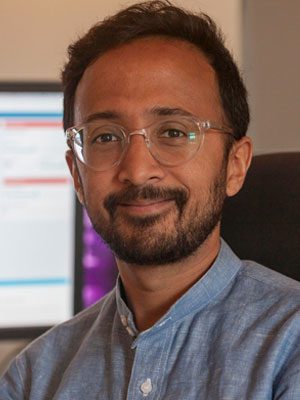
Catherine Mooney is a Professor in the School of Computer Science at University College Dublin (UCD), leading the Life Science Data Analytics Group (LiSDA). Her research focuses on applying machine learning to healthcare challenges, including biomarker development, clinical decision support systems, and addressing ethical and technical barriers in healthcare AI. Education: BSc in [field unspecified] from Trinity College Dublin PhD in Computer Science from UCD Prof Dip University Teaching & Learning from UCD Research Interests: Machine Learning applications in healthcare Biomarker discovery for neurological and metabolic conditions Explainable AI for clinical decision support Promoting diversity and inclusion in STEM education Her work bridges computational methods with medical challenges, emphasizing ethical AI and translational research. Notable Awards: Best Paper Award in Applied Biosciences (2023) UCD Long-Service Award (2022) Best Poster Award at ITiCSE ’20 (2020) Her research has led to impactful tools like LiSDA’s clinical decision support systems for epilepsy and pregnancy care. She also advocates for gender diversity in computing, serving in leadership roles like Vice Principal for EDI in UCD’s College of Science (2022–2024).
Dr. Steven P. Miller is a Professor and Head of the Department of Pediatrics at the University of British Columbia's Faculty of Medicine. He also serves as the Chief of Pediatric Medicine at BC Children's Hospital & Sunny Hill Health Centre under the Provincial Health Services Authority. Additionally, he holds the Hudson Family Hospital Chair in Pediatric Medicine and is an Investigator at BC Children's Hospital. Dr. Miller's research focuses on neonatal neurology, particularly brain development and injury in newborns. His work utilizes advanced magnetic resonance techniques and bedside brain monitoring to understand how a baby's critical care experience influences their risk of brain injury and developmental trajectory. His research areas include birth defects, concussion, preterm labor, and steroid effects on neonatal brain development. Analysis of Dr. Miller's recent publications reveals a strong emphasis on understanding the relationship between neonatal pain exposure, analgesia, and brain development in preterm infants. His work also extensively examines neurodevelopmental outcomes in infants with congenital heart disease, exploring how fetal hemodynamics, surgical interventions, and brain imaging findings correlate with long-term cognitive outcomes. A significant portion of his research investigates the impact of socioeconomic status on brain development and neurocognitive outcomes in preterm infants. Dr. Miller is actively involved in graduate education, supervising students in Neuroscience and Women+ and Children's Health Sciences programs at UBC. His research group, part of the Brain, Behaviour & Development Research Theme and the Neurodevelopmental and Neurological Disorders Visualizing the Brain Research Group, has published extensively in top-tier journals across neurology, pediatrics, and neuroscience.
Inna Fishman, Ph.D., is a Research Associate Professor at San Diego State University's Department of Psychology within the College of Sciences. Her research investigates brain network organization in autism spectrum disorder (ASD) using multimodal MRI techniques, focusing on developmental trajectories from toddlerhood to adulthood. She directs studies on sensory processing, socioeconomic influences, and neural connectivity patterns in ASD. Research Focus: Dr. Fishman's work bridges social neuroscience and clinical neuropsychology, examining: Early biomarkers of ASD via functional/diffusion MRI Impact of bilingualism and socioeconomic factors on neurodevelopment Sleep disorders and sensory sensitivities in autistic children Aging-related neural changes in adults with ASD Publication Trends: Her recent articles (2021-2025) emphasize: 1) Advanced neuroimaging of ASD across lifespan stages, 2) Machine learning applications for diagnostics, 3) Socioeconomic and environmental modulators of brain development, and 4) Sleep/auditory processing comorbidities. Student Advising & Grants: She mentors doctoral candidates (Lindsay Olson, Jiwandeep Kohli, Bosi Chen) and leads NIH-funded projects including a clinical psychology fellowship for autism evaluation across ages. Laboratory Affiliation: Dr. Fishman co-directs the Brain Development Imaging Laboratories (BDIL), which investigates ASD manifestations through behavioral and neuroimaging approaches.
Katarzyna Chawarska is the Emily Fraser Beede Professor of Child Psychiatry at Yale School of Medicine, with primary affiliation in the Child Study Center and secondary appointments in Pediatrics and Statistics. She is a leading expert in autism spectrum disorders (ASD), directing the NIH Autism Center of Excellence, the Social and Affective Neuroscience of Autism Program, and the Yale Toddler Developmental Disabilities Clinic. Education: PhD in Psychology, Yale University (2000) Post-Doctoral Fellowship, Yale University School of Medicine (2000) MS in Psychology, Yale University MPhil in Psychology, Yale University MA, Jagiellonian University (1986) Her research focuses on identifying early diagnostic markers and novel treatment targets in ASD, particularly in infants at risk due to familial, genetic, or perinatal factors. Her work integrates clinical assessment, neuroimaging, eye-tracking, and longitudinal design to understand the neurodevelopmental trajectories of autism. Her recent publications explore disrupted functional connectivity, atypical visual attention, social anhedonia, and familial recurrence in autism. She employs advanced methodologies including fMRI, eye movement dynamics, and machine learning to identify biomarkers. Her research spans developmental neuroscience, clinical psychology, genetics, and pediatric psychiatry, with strong emphasis on early detection and intervention. Scientific Awards: No specific awards mentioned in the provided text. Dr. Chawarska is the Principal Investigator on active clinical trials, including studies on emotional development in infants at risk for ASD and regulation of visual attention and emotion in autism. She mentors research through her lab and collaborates extensively with experts such as Fred Volkmar, James McPartland, and Frederick Shic. She leads the Chawarska Lab, which is part of the Center for Brain & Mind Health and the Wu Tsai Institute at Yale.
Cathryn Crowle serves as a Clinical Senior Lecturer at the School of Health Sciences within the Faculty of Medicine and Health at The University of Sydney. Her clinical specialty is Paediatrics, with active roles spanning teaching, research, and clinical practice focused on infant and child health across the lifespan. Her research centers on Paediatrics and Child Health with specific emphases in Growth & Development, Infant care, and Translational Research. Key investigations include cerebral palsy early detection using General Movements Assessment and Motor Optimality Score-Revised (MOS-R), neurodevelopmental outcomes in neonatal surgical populations, and interventions for infants in Neonatal Intensive Care Units (NICU). Her work bridges clinical practice and research through knowledge translation initiatives. Analysis of her 14 publications (2015-2025) reveals consistent focus on predictive tools for neurodevelopmental disorders, particularly cerebral palsy in high-risk Australian infant cohorts. Her methodology combines longitudinal assessment (HINE, Bayley scales), clinical translation, and multidisciplinary collaboration to address gaps in early diagnosis and intervention. Dr. Crowle currently supervises Victoria Norris on music therapy applications in NICU settings. Her research involves extensive collaboration with cerebral palsy experts including Iona Novak, Nadia Badawi, and Catherine Morgan across institutions, with projects like the Knowledge Translation of Early Cerebral Palsy (KiTE CP) study demonstrating implementation science approaches. She contributes to teams focused on neonatal neurodevelopment through the Cerebral Palsy Alliance Research Institute, participating in prospective cohort studies examining autism risk in NICU graduates and neurodevelopmental outcomes in ECMO survivors. Her clinical work integrates assessment protocols for infants with congenital anomalies requiring surgery.
Aurélie Labbe is a Full Professor in the Department of Decision Sciences at HEC Montréal, holding the prestigious FRQ-IVADO Chair in Data Science. Appointed as Co-Scientific Director – Academic Partnerships at IVADO in October 2023, she plays a key leadership role in establishing connections between IVADO and partner universities. Her academic journey includes a PhD in Statistics from the University of Waterloo, a Master's degree in Statistics from the University of Montreal, and dual Bachelor's degrees in Applied Mathematics and Social Sciences from Paris-Dauphine University and Pure Mathematics from Versailles-St Quentin University. Her research spans multiple interdisciplinary domains with a focus on developing advanced statistical and machine learning methodologies for big data analysis. Labbe's work bridges theoretical statistics with practical applications across diverse fields including genomics, neuroscience, transportation systems, and health informatics. She has made significant contributions to kernel methods, matrix factorization techniques, random forest applications, and spatiotemporal data analysis, with publications appearing in top journals across multiple disciplines. Analyzing her recent publications reveals a clear trend toward methodological innovation applied to complex real-world problems. Her work demonstrates expertise in handling high-dimensional data from diverse sources including neuroimaging, transportation networks, and genomic studies. The interdisciplinary nature of her research connects statistical theory with applications in healthcare, transportation safety, and biological sciences, reflecting her ability to develop methods that address domain-specific challenges while advancing statistical methodology. Holder of the FRQ-IVADO Chair in Data Science Member of the Center for Mathematical Research Training Professor Labbe actively mentors the next generation of data scientists, supervising numerous doctoral and master's students. Her supervision portfolio includes 1 doctoral thesis (2023), 4 master's theses (2022-2024), and 32 supervised projects spanning 2019-2025. Her students' work covers diverse applications including transportation safety, healthcare analytics, financial modeling, and environmental analysis. Through her leadership of the FRQ-IVADO Chair in Data Science, she coordinates research activities that integrate mathematical, statistical, and computer science expertise with domain knowledge from various data-generating fields. As Co-Scientific Director at IVADO, Professor Labbe leads efforts to establish connections with faculties and departments across five partner universities, integrating them into IVADO's research and knowledge transfer activities. Her leadership role positions her at the forefront of advancing data science research and applications in Quebec's academic ecosystem.
Olof Stephansson is a senior researcher and group leader at the Clinical Epidemiology Unit (KEP) , Karolinska Institutet , focusing on reproductive, perinatal, and pediatric epidemiology. His work utilizes Swedish healthcare registries and quality registers to investigate risk factors, interventions, and medical management during pregnancy and childbirth. Key research areas: maternal obesity, preeclampsia prediction, climate change impacts, neonatal neurodevelopment, IBD in pregnancy, and labor management Funded by: Swedish Research Council, NIH, FORTE, NordForsk, and Karolinska Institute Collaborates with: Stanford, Oregon Health, University of British Columbia, London School of Hygiene, University of Witwatersrand His group (2014-present) manages the Swedish Pregnancy Registry and conducts randomized trials like the Oneplus study on midwifery models. Recent publications (2024-2025) analyze maternal BMI effects on offspring sleep, labor duration risks, and vaccine safety in pregnancy.
Prof. Anna Franklin is a Professor of Visual Perception and Cognition at the University of Sussex's School of Psychology. She leads the Sussex Colour Group and Sussex Baby Lab , focusing on human color perception, development, and neural representation. Her research combines cognitive psychology, developmental science, and neuroscience to explore how color perception develops, influences aesthetics, and relates to conditions like autism. Key projects include ERC-funded initiatives studying environmental impact on color perception and developing the ColourSpot diagnostic app for childhood color vision deficiency. She also serves as Deputy Director of Research and Knowledge Exchange for the School of Psychology. Education includes a BA from the University of Nottingham and a PhD from the University of Surrey, followed by a postdoctoral fellowship. Her work spans 107+ publications, emphasizing interdisciplinary methods like hyperspectral imaging and fMRI. Collaborations include industry partnerships with ETTA LOVES and COSATTO to apply infant visual preference research in product design. Research grants include European Research Council awards (Starting Grant 2012-2017, Consolidator Grant 2018-2025) and a Proof of Concept grant for ColourSpot . Her labs investigate cross-cultural color categorization, infant aesthetics, and neural correlates of color processing. Future work focuses on calibrating visual systems to environmental statistics and improving early childhood color vision screening.
Craig B. Birgfeld, M.D. , is a professor in the Department of Surgery at the University of Washington School of Medicine and serves as Director of the UW Fellowship in Craniofacial Surgery. He practices at the Burn and Plastic Surgery Clinics at Harborview Medical Center, specializing in congenital craniofacial abnormalities, trauma reconstruction, and pediatric plastic surgery. Educational Background: Virginia Commonwealth University School of Medicine (Medical Education, 2000) University of Washington - Fellowship in Craniofacial Surgery Hospital of the University of Pennsylvania - Residency in Plastic Surgery Hospital of the University of Pennsylvania - Internship in General Surgery Dr. Birgfeld's research focuses on Craniofacial Microsomia and outcomes analysis in surgical interventions for congenital skull and facial abnormalities. His clinical work emphasizes trauma reconstruction, cleft lip/palate surgery, and craniofacial plastic surgery. He actively teaches Plastic Surgery residents and Craniofacial fellows, aiming to cultivate top-tier surgeons in the field. Recent publications highlight advancements in craniosynostosis treatment, facial symmetry measurement, and outcomes in craniofacial surgical procedures. His work spans collaborations with multidisciplinary teams in neurosurgery, pediatrics, and genetic research.
Professor Roslyn Boyd serves as Scientific Director of the Queensland Cerebral Palsy and Rehabilitation Research Centre (QCPRRC) at the University of Queensland's School of Medicine. She leads a substantial multidisciplinary team of 38 researchers and provides clinical research leadership to 60 clinicians across the Queensland Paediatric Rehabilitation Service based at the Queensland Children's Hospital. As an NHMRC Leadership Fellow, Professor Boyd has established herself as an internationally recognized expert in cerebral palsy research and rehabilitation. Professor Boyd completed her primary training as a physiotherapist in Australia and London before earning her PhD in neuroscience at La Trobe University, the Brain Research Institute, and the Murdoch Children's Research Institute in Melbourne, for which she received the Premier's Commendation from the Victorian Government. She joined the University of Queensland in 2007 as a Smart State Fellowship recipient and has since led major research initiatives including an EBrain program grant funded by the Queensland Government Department of Innovation. Her research program focuses on three critical areas: the early natural history of motor and brain development in preschool children with cerebral palsy, novel rehabilitation approaches for children with hemiplegia, and early detection and intervention for infants at high risk of cerebral palsy. These research streams, all funded by the National Health and Medical Research Council of Australia, employ advanced brain imaging techniques including functional imaging, Diffusion Imaging, and Functional Connectivity to assess neuroplasticity changes resulting from therapeutic interventions. Her work bridges neuroscience, rehabilitation science, and clinical practice to develop evidence-based approaches that improve outcomes for children with neurodevelopmental conditions. Professor Boyd's extensive publication record of over 340 peer-reviewed manuscripts demonstrates a consistent focus on improving assessment methods, intervention efficacy, and early detection strategies for cerebral palsy. Her research spans from basic neuroscience investigations to large-scale clinical trials and implementation studies, creating a comprehensive evidence base that informs clinical practice worldwide. The publications reveal a growing emphasis on early intervention, neuroimaging biomarkers, and family-centered approaches to rehabilitation. Professor Boyd has received significant recognition for her contributions to the field, most notably the prestigious Gayle Arnold Award from the American Academy of Cerebral Palsy and Developmental Medicine, which she has received three times. This repeated honor underscores her international standing and the impact of her research on clinical practice. As an NHMRC Leadership Fellow, she represents the highest tier of Australian health and medical researchers. Through her leadership of major research programs and collaborations, Professor Boyd has secured over $40 million in research funding, enabling large-scale projects that directly impact clinical practice. Her work with multidisciplinary teams has produced evidence that informs clinical guidelines and treatment approaches used by healthcare professionals globally. She actively mentors junior researchers and clinicians, fostering the next generation of experts in pediatric rehabilitation. The Queensland Cerebral Palsy Rehabilitation and Research Centre, under Professor Boyd's direction, serves as a vital hub for translational research, connecting scientific discovery with clinical application. The center's work with the Centre for Extracellular Vesicle Nanomedicine demonstrates interdisciplinary reach beyond traditional cerebral palsy research, exploring innovative approaches to understanding and treating neurodevelopmental conditions.
Ajay Pillarisetti is an Assistant Professor at the University of California, Berkeley's School of Public Health, Department of Environmental Health Sciences. His research focuses on the interplay between household energy use, air pollution exposure, health outcomes, and climate change in low- and middle-income countries. A graduate of UC Berkeley (PhD) and Emory University (MPH, BS), he has led global projects in India, Mongolia, Nepal, Guatemala, Peru, and Rwanda. PhD – Environmental Health Sciences, UC Berkeley MPH – Global Environmental Health, Emory University BS – Biology, Emory College His work employs low-cost air quality sensors, longitudinal surveys, and randomized controlled trials like the HAPIN study to assess health impacts of clean fuel interventions. Key subfields include exposure assessment, implementation science, pollution's metabolic effects, and policy-driven energy transitions. He collaborates with teams across four continents and has published extensively on household air pollution's multi-scale health burdens. Recent articles (2023–2025) highlight trends in quantifying PM2.5's health effects, optimizing sensor networks, and evaluating LPG interventions for maternal/child health. His studies span Guatemala's RESPIRE cohort, Rwanda's HAPIN trial, and India's community monitoring systems, addressing gaps in exposure-response modeling, biomarker analysis, and policy advocacy.
Jerrold S Meyer is a Professor in the College of Natural Sciences at the University of Massachusetts Amherst, where he maintains an active research program focused on stress physiology and neuroendocrinology. His laboratory is located in Tobin Hall (441 Tobin Hall, Amherst, MA 01003), and he can be reached at 413-545-2168. Dr. Meyer's research primarily investigates the physiological and behavioral effects of stress, with particular expertise in hair cortisol analysis as a biomarker for chronic stress exposure. His work spans multiple domains including Primate models of stress and early life adversity Developmental effects of stress on children Epigenetic changes related to early life experiences Refugee and immigrant stress physiology Methodological development for hair and nail cortisol measurement His recent publication record (2022-2025) demonstrates continued leadership in the field, with approximately 30 publications in the last three years. These works reveal several key trends: a growing emphasis on cross-generational effects of stress, increasing application of epigenetic analyses to primate models, expansion into human refugee populations, and methodological refinements in stress biomarker measurement. His research consistently bridges basic science with clinical and public health applications. Dr. Meyer maintains extensive collaborations with researchers across multiple institutions, particularly with Novak MA, Dettmer AM, and Tarullo AR in primate research, and with clinical researchers studying stress in vulnerable human populations. His work has been cited extensively, with several papers receiving over 100 citations, indicating significant impact in the fields of psychoneuroendocrinology and developmental stress research. His laboratory appears to focus on both non-human primate models (particularly rhesus macaques) and human populations across the lifespan, from infants to adults. The research integrates behavioral observation, physiological measurement, and increasingly, molecular analyses to understand the mechanisms through which early experiences shape later outcomes.
Dr. Lucia Ciciolla is an Associate Professor in the Department of Psychology at Oklahoma State University. She leads the Child Adaptation and Maternal Psychopathology (CAMP) Laboratory, focusing on intergenerational transmission of psychopathology, maternal mental health, and parent-child interactions. Her work integrates clinical, developmental, and neuroscientific approaches to address risk and resilience factors in early child development. Current projects include the HEALthy Brain and Child Development (HBCD) Study (NIH HEAL Initiative), EMBRACE (Epigenetics of Mother-Baby Reactivity), and studies on perinatal mental health interventions like the Perinatal Mental Illness Screening Tool (PMIST) and BLOOM (maternal-fetal bonding). Research themes emphasize maternal adverse childhood experiences (ACEs), stress reactivity, sleep regulation, and mindfulness-based interventions to improve maternal and infant outcomes. Dr. Ciciolla collaborates with institutions such as the OSU Center for Family Resilience, CIRCA (CoBRE), and national consortia. Her lab supports graduate and undergraduate training, with students involved in clinical research, thesis work, and community-based initiatives like Mighty Mouth Camp for children with Selective Mutism.
Professor Merideth Gattis is a cognitive psychologist at Cardiff University's School of Psychology, specializing in how interactions between individuals and their environments influence cognition and communication. She leads research on parenting cognitions during pregnancy and infancy, developmental cascades, and the role of natural environments in social interaction. Her work bridges developmental psychology with environmental and cross-cultural studies. Education: B.A. (Psychology, Gordon College, 1985); Ph.D. (Cognitive Psychology, UCLA, 1995). Academic roles include Professor (2014–present), Reader (2011–2014), and Senior Lecturer (2007–2011) at Cardiff University. Honors include Fellow of the Learned Society of Wales (2016) and completion of the Professorial Leadership Programme (2022). Research focuses on developmental cognition, parent-infant interactions, and environmental influences. Key projects include the Baby Care Questionnaire (BCQ) to measure parenting beliefs, studies on preterm birth effects, and collaborations with organizations like the Wildfowl and Wetlands Trust (WWT) to evaluate nature-based interventions. Her work emphasizes innovative methods like remote research tools and longitudinal studies. Teaching includes research design and methods at undergraduate and postgraduate levels, with a focus on developmental psychology and mixed methodologies. Supervises PhD students on topics like parenting knowledge, pro-environmental behavior shifts, and sensorimotor patterns in parent-child interaction. Grants and collaborations involve European Research Council (ERC) funding and partnerships with institutions globally. Active in academic service as a reviewer for major journals and committees including the Economic and Social Research Council (ESRC) Peer Review College.
Giovanni Mento is an Associate Professor at the Department of General Psychology, University of Padova. His research focuses on cognitive neuroscience, developmental psychology, and clinical neurology, with a particular emphasis on neural mechanisms underlying cognitive control, emotional processing, and neurodevelopmental disorders. He employs advanced neuroimaging techniques like high-density EEG to investigate topics such as temporal prediction, decision-making in children, and the impact of preterm birth on brain development. His work integrates interdisciplinary approaches, combining machine learning with electrophysiological data analysis to address challenges in epilepsy forecasting and predictive brain activity. Key research areas include implicit learning, motivational contexts influencing cognition, and the application of EEG to study socio-emotional and behavioral disorders in clinical populations. Recent studies explore the effects of yoga-mindfulness interventions on cognitive control in children, dynamic brain states in preschoolers, and methodological rigor in EEG-based machine learning models. His contributions span both theoretical frameworks (e.g., re-examining top-down control models) and applied clinical research (e.g., neonatal intensive care practices). Mento’s articles highlight trends in understanding developmental trajectories, predictive neural mechanisms, and translational applications of neuroscientific findings to real-world contexts like education and healthcare.