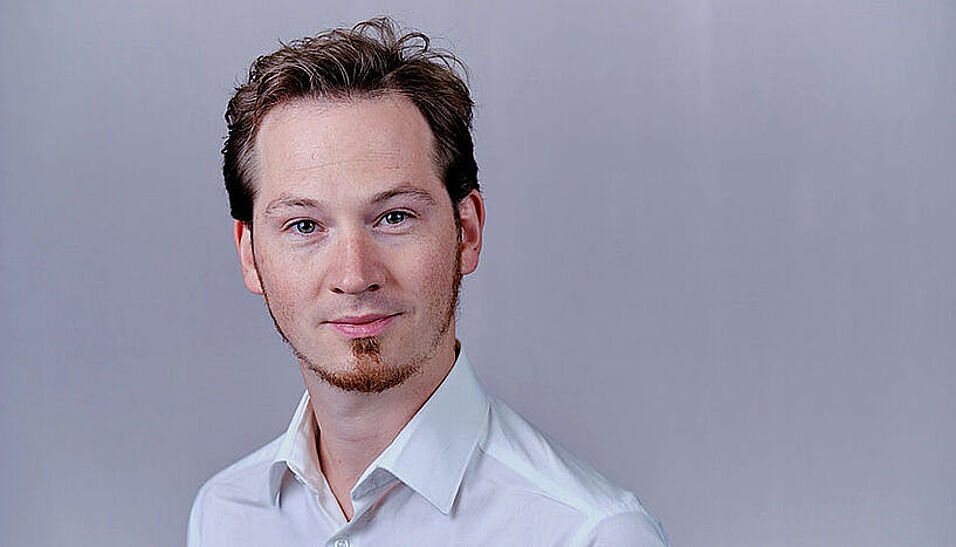
Andrew Perfors is a Professor of Psychology at the University of Melbourne, leading the Computational Cognitive Science Lab and directing the Complex Human Data Hub. His research focuses on quantitative approaches to higher-order cognition, including concepts, language, decision-making, and misinformation dynamics. He holds a PhD from MIT and degrees from Stanford University. Education: PhD in Brain & Cognitive Sciences, Massachusetts Institute of Technology (2008) MA in Linguistics, Stanford University (2000) Bachelor of Science in Symbolic Systems, Stanford University (1999) Research Interests: He investigates computational models of cognition, cultural and social evolution, and the spread of misinformation. Recent work emphasizes the cognitive mechanisms underlying inductive reasoning, sampling assumptions, and trust in information. Key Projects: Understanding Information and Trust: From the Individual to the Population (2018–2025) Bridging the Meaning Gap: Computational Approach to Semantic Variation (2023–2027) Awards: Recipient of multiple best paper awards for contributions to cognitive science and computational linguistics. Labs & Groups: Leads the Complex Human Data Hub and co-leads the Computational Cognitive Science Lab, focusing on interdisciplinary research in human behavior and data science.
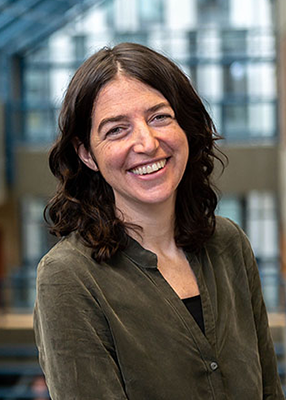
Dr. Lauren Emberson (she/her/hers) is an Associate Professor in the Department of Psychology at the University of British Columbia, Faculty of Arts. She directs the Baby Learning Lab, which is part of UBC's Early Development Research Group, a consortium focused on infant and child development. Prior to her position at UBC, Dr. Emberson was an Assistant Professor at Princeton University where she co-founded and co-directed the Princeton Baby and Princeton Kid Labs. Education: Postdoctoral Associate, University of Rochester (PI Aslin) Ph.D, Cornell University (PIs Amso, Goldstein, Spivey) B.Sc, University of British Columbia Dr. Emberson's research focuses on learning, perception (audition, vision, crossmodal or multisensory), language development, face/object perception, and attention in infants. She investigates these capacities using behavioral and neuroimaging techniques, particularly fNIRS (functional near infrared spectroscopy), working primarily with very young infants (birth through 1 year) and preterm/premature infants. Her work examines how infants' learning capacities contribute to rapid development of perception in ecological contexts, with implications for understanding how early life experiences affect later outcomes. Analysis of Dr. Emberson's recent publications reveals a consistent focus on infant perception, learning mechanisms, and neuroimaging methodology. Her work increasingly incorporates advanced fNIRS techniques while maintaining focus on fundamental questions about how infants learn from their environment. There's a growing emphasis on individual differences, cross-cultural comparisons, and applications to infants facing developmental challenges. Dr. Emberson serves on the editorial board of Infancy (journal of the International Congress of Infancy Studies) and is a consulting editor for the Journal of Cognitive Neuroscience . Her research has been published in top journals including PNAS, Current Biology, Psychological Science, Cognition, Developmental Science, and the Journal of Neuroscience. Dr. Emberson has secured significant research funding from prestigious organizations including the Bill and Melinda Gates Foundation, James S. McDonnell Foundation, Natural Sciences and Engineering Research Council (NSERC), Canadian Institutes of Health Research (CIHR), and the National Institutes of Health (NIH). She collaborates with clinicians at BC Women's and Children's Hospitals to understand how different early life experiences impact learning and brain development. Dr. Emberson is currently accepting graduate students into her research program. The Baby Learning Lab, under Dr. Emberson's direction, is part of UBC's Early Developmental Research Group and collaborates with multiple institutions. The lab strives to provide interactive research experiences for infants and families while advancing scientific understanding of early cognitive development. The lab acknowledges that it operates on the traditional, ancestral, and unceded territory of the xʷməθkʷəy̓əm (Musqueam) people.
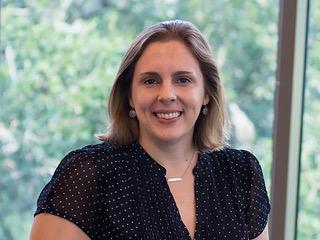
Dr. Julie Markant is an Associate Professor in the Department of Psychology at Tulane University and a Faculty Associate in the Tulane Brain Institute. Her research focuses on the interplay between selective attention and learning in infants and young children, emphasizing developmental and neurobehavioral perspectives. She uses behavioral, eye-tracking, genetic, MRI, and fNIRS methods to explore how attention control influences learning efficacy and vice versa. Education: Ph.D., 2010, University of Minnesota Her research interests include developmental attention mechanisms, perceptual learning, and how biological and contextual factors shape cognitive outcomes. Key themes involve understanding how infants and children selectively attend to information and how this attention drives learning processes. Recent work explores caregiver influence on attention, prenatal factors affecting infant attention, and the role of competing information in school-aged learning. Dr. Markant leads the Learning and Brain Development Lab , which investigates cognitive and neural mechanisms underlying attention and learning. She is actively recruiting graduate students from Tulane’s Psychology and Neuroscience Ph.D. programs. Her publications reflect a focus on attention biases, developmental learning dynamics, and methodological innovations like remote infant studies. Awards and honors are not explicitly listed in the provided text.
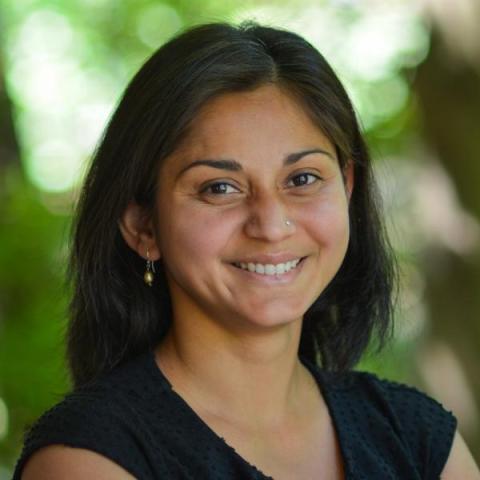
Libertad González is an Associate Professor of Economics at Universitat Pompeu Fabra and a researcher at the Barcelona School of Economics (Barcelona GSE). She is affiliated with the Department of Economics and Business, located at the Ciutadella Campus in Barcelona. She holds prestigious research grants, including an ICREA Academia Award and an ERC Consolidator Grant, underscoring her leadership in economic research. Research Interests: Her work spans Labor Economics, Public Economics, and Health Economics, with a strong focus on policy-relevant issues such as reproductive rights, parental leave, gender equality, and the socioeconomic impacts of health policies and pandemics. She uses rigorous empirical methods to evaluate long-term outcomes of social and health interventions. Her recent publications analyze the effects of abortion legalization, paternity leave reforms, and the impact of the Covid-19 pandemic on reproductive health. These studies reflect a consistent theme of evaluating how institutional and policy changes affect individual behavior and long-term socioeconomic and health outcomes, particularly for women and families. Scientific Awards: ICREA Academia Award ERC Consolidator Grant Advising and Grants: While specific students are not listed, she leads major funded research projects, including an ERC Consolidator Grant, which supports independent, high-impact research. Her ICREA Academia award recognizes excellence in both research and teaching, suggesting active mentorship and academic leadership. Labs and Research Teams: She collaborates with leading institutions and researchers across Europe, including the Centre for Economic Performance (LSE) and Nada Es Gratis. She is actively engaged in policy communication, presenting her findings through videos, interviews, and public blogs.
Steve Luck is a Distinguished Professor at the University of California, Davis, holding appointments in the Department of Psychology and the Center for Mind and Brain (CMB). He served as CMB Director from 2009–2019 and is affiliated with the UC Davis MIND Institute and the Center for Neuroscience. His research focuses on attention, working memory, and cognitive dysfunction in psychiatric disorders (e.g., schizophrenia), employing ERP recordings, eye tracking, and behavioral methods. He is a leading developer of ERP methodologies, including the ERPLAB Toolbox and global ERP Boot Camp workshops. Education: Ph.D., Neurosciences, UC San Diego, 1993 M.S., Neurosciences, UC San Diego, 1989 B.A., Psychology, Reed College, 1986 Research Interests: Dr. Luck explores mechanisms of cognitive control, with a focus on working memory's role in guiding attention. His lab investigates ERP correlates of attentional deficits in schizophrenia and develops standardized ERP protocols. Recent work emphasizes multivariate decoding of EEG signals and transdiagnostic neurocognitive biomarkers. Awards: Troland Award (2001) APA Distinguished Scientific Award (1998) McGuigan Young Investigator Prize (2004) Elected Fellow, Society of Experimental Psychologists and AAAS Teaching & Leadership: Professor Luck pioneered hybrid course formats in Cognitive Science and teaches advanced topics in perception and cognitive neuroscience. He co-founded the UC Davis Cognitive Science major and advocates for innovative undergraduate education models. Labs & Collaborations: The Luck Lab integrates clinical and basic research, collaborating globally on ERP method development and schizophrenia biomarker studies. Key projects include ERP Core resources and the CNTRACS consortium for neurocognitive reliability studies.
Katarzyna Chawarska is the Emily Fraser Beede Professor of Child Psychiatry at Yale School of Medicine, with primary affiliation in the Child Study Center and secondary appointments in Pediatrics and Statistics. She is a leading expert in autism spectrum disorders (ASD), directing the NIH Autism Center of Excellence, the Social and Affective Neuroscience of Autism Program, and the Yale Toddler Developmental Disabilities Clinic. Education: PhD in Psychology, Yale University (2000) Post-Doctoral Fellowship, Yale University School of Medicine (2000) MS in Psychology, Yale University MPhil in Psychology, Yale University MA, Jagiellonian University (1986) Her research focuses on identifying early diagnostic markers and novel treatment targets in ASD, particularly in infants at risk due to familial, genetic, or perinatal factors. Her work integrates clinical assessment, neuroimaging, eye-tracking, and longitudinal design to understand the neurodevelopmental trajectories of autism. Her recent publications explore disrupted functional connectivity, atypical visual attention, social anhedonia, and familial recurrence in autism. She employs advanced methodologies including fMRI, eye movement dynamics, and machine learning to identify biomarkers. Her research spans developmental neuroscience, clinical psychology, genetics, and pediatric psychiatry, with strong emphasis on early detection and intervention. Scientific Awards: No specific awards mentioned in the provided text. Dr. Chawarska is the Principal Investigator on active clinical trials, including studies on emotional development in infants at risk for ASD and regulation of visual attention and emotion in autism. She mentors research through her lab and collaborates extensively with experts such as Fred Volkmar, James McPartland, and Frederick Shic. She leads the Chawarska Lab, which is part of the Center for Brain & Mind Health and the Wu Tsai Institute at Yale.
William Martinez, PhD, ABPP is an Associate Professor of Psychiatry and Behavioral Sciences at the University of California, San Francisco (UCSF) School of Medicine and Vice Chair for Diversity and Health Equity. He serves as Director of the Child and Adolescent Services clinic at Zuckerberg San Francisco General Hospital and Director of Pediatric Mental Health for the UCSF Health and Human Rights Initiative. Dr. Martinez is a licensed psychologist (CA PSY28084) certified by the American Board of Professional Psychology in Clinical Child and Adolescent Psychology. UCSF Weill Institute for Neurosciences Division of Infant, Child, and Adolescent Psychiatry Director of the Fuerte program Faculty in APA-accredited internship programs Dr. Martinez's research focuses on reducing behavioral health disparities among ethnic minority youth, with special emphasis on Latinx and immigrant populations. His socio-ecological approach addresses three key areas: the impact of social determinants on behavioral health disparities; implementation of evidence-based prevention and intervention programming for traumatic stress; and policy advocacy for juveniles in immigration court proceedings. His work integrates implementation science with community-based participatory research to develop culturally responsive mental health interventions. Analysis of Dr. Martinez's 15 most recent publications reveals a strong concentration on immigrant mental health, particularly focusing on newcomer Latinx youth. His research spans trauma, adaptation, telehealth implementation during the pandemic, critical consciousness, and the impact of immigration policy on mental health. The publications demonstrate an interdisciplinary approach combining clinical psychology, public health, and policy advocacy. Scientific awards and honors include: CHCF Health Care Leadership Program Fellow (2022-2024) NIH Loan Repayment Program (2018-2020) Jeffrey S. Tanaka Memorial Dissertation Award (2015) Ford Foundation Dissertation Fellowship (2013-2014) Predoctoral Minority Fellowship Program (2010-2013) Dr. Martinez is Principal Investigator of several major research projects, including the Fuerte program (a school-based prevention program for newcomer immigrant youth), and serves as Co-Investigator on NIH-funded research examining community-based sports interventions for newcomer youth. He is actively involved in training through the Multicultural Clinical Training Program and Clinical Psychology Training Program at UCSF/ZSFG. His leadership extends to global health equity, with research interests spanning child and adolescent health, mental health, human rights, refugee health, policy standards of care, and implementation science across California and Latin America and the Caribbean.
Amrisha Vaish is the Pamela Feinour Edmonds and Franklin S. Edmonds, Jr. Discovery Associate Professor in the Department of Psychology at the University of Virginia, where she conducts research on the development of moral emotions and behaviors in children. She is affiliated with the Early Social Development Lab and the Child Development Laboratories at UVA. Research Interests: Dr. Vaish's work centers on the emergence of moral emotions such as sympathy, guilt, and forgiveness in early childhood, as well as prosocial behaviors like helping and sharing. She investigates how children evaluate moral actions and enforce norms, and more recently has explored uncooperative behaviors such as cheating and reputation management. Her research also includes infant social referencing, theory of mind development, and the negativity bias in emotional development. Recent Research Trends: Her recent publications focus on gratitude, fairness perception, upstream reciprocity, and forgiveness in young children, published in leading journals including Developmental Psychology , Child Development , and Emotion Review . These works reflect a consistent emphasis on experimental approaches to understanding moral development and social cooperation. Scientific Awards: All-University Teaching Award (2019) Janet Taylor Spence Award for Transformative Early Career Contributions, Association for Psychological Science (2018) Rising Star, Association for Psychological Science (2015) Division 7 Dissertation Award, American Psychological Association (2012) Outstanding Doctoral Dissertation Award, Society for Research in Child Development (2011) Advising and Grants: While specific advisees and grant details are not listed, Dr. Vaish leads an active research program and mentors students through her lab. Her recognition with early career and teaching awards suggests strong engagement in both research mentorship and educational excellence. Labs and Teams: Dr. Vaish directs the Early Social Development Lab and is part of the Child Development Laboratories at the University of Virginia, where she conducts experimental studies with infants and young children to understand the foundations of human morality and cooperation.
Dr. Eunice Eunhee Jang is a Professor in the Department of Applied Psychology and Human Development at the Ontario Institute for Studies in Education (OISE), University of Toronto. Her research focuses on synergistic learner modeling, dynamic assessment systems, and the intersection of language testing with educational measurement. PhD with specializations in language testing, educational measurement, and program evaluation Develops interactive digital assessment interfaces for struggling readers Author of "Focus on Assessment" (2014) and co-author of OECD Reviews on Evaluation and Assessment in Education Research Interests Dr. Jang's work explores prismatic assessment analytics to understand learner potential and predict learning pathways. She integrates natural language processing and machine learning to create diagnostic feedback systems that support cognitive, metacognitive, and affective growth in technology-rich classrooms. Scientific Awards Jacqueline Ross TOEFL Dissertation Award Caroline Clapham IELTS Master’s Award Tatsuoka Measurement Award Professional Contributions She has served on major advisory boards including EQAO provincial assessments and TOEFL Committees of Examiners. Currently, she is an elected board member for the International Language Testing Association and contributes to the Broader Measures of Success Advisory Committee for People for Education.
Prof. Dr. Sarah Dégallier Rochat is Head of the strategic thematic field 'Humane Digital Transformation' at Bern University of Applied Sciences (BFH). She holds a joint appointment as Professor at the School of Engineering and Computer Science and serves as co-leader of the Computer Perception and Virtual Reality Lab (cpvrLab) within the Institute for Human-Centered Engineering. Her educational background includes: Ph.D. in Robotics from École Polytechnique Fédérale de Lausanne (EPFL) Master's in Mathematics from EPFL Teaching Diploma in Mathematics from Haute École Pédagogique de Lausanne Psychology studies at University of Lausanne Her research focuses on human-centered technological development with emphasis on: Designing inclusive human-machine interfaces through participatory approaches Developing upskilling strategies for industrial workforce adaptation Examining how techno-narratives shape societal perceptions of technology Creating collaborative robotic systems for agile manufacturing (Cobotics) Exploring mixed reality interfaces for worker augmentation Her publications demonstrate strong interdisciplinary focus on robotics and human-centered AI, with recent works exploring human augmentation in industry, ethical AI implementation, and participatory robot programming. The trajectory shows increasing emphasis on socio-technical systems and workforce empowerment. Significant awards include: Industry 4.0 Shapers Award (2019) CHIRA Best Paper Award (2023) She leads multiple research projects funded by Innosuisse, SNF, and EU programs, including: CODIMAN (Cobotics and workplace humanization) Agile Robotics for High-Mix Low-Volume Production Upskill at Work (digital literacy initiatives) Augmented workers with mixed reality interfaces As founder of Auto-Mate Robotics, she develops flexible robotic cells for industrial applications. She co-leads the Computer Perception and VR Lab and serves on advisory boards including the Swiss Cobotics Competence Center and EUA Task Force on AI.
Benedikt Warth is a Full Professor for Food Chemistry and Exposome Research at the Department of Food Chemistry and Toxicology, Faculty of Chemistry, University of Vienna (since 2022). He coordinates the Austrian node of the ESFRI research infrastructure EIRENE and leads the 'Global Exposomics and Biomonitoring Laboratory' since 2017. His work bridges chemistry and toxicology, focusing on exposomics and metabolomics to assess chemical exposure and its health impacts. Education: PhD in Analytical Chemistry (2012), Master’s in Biotechnology (2009), Bachelor’s in Food Science and Biotechnology (2007) Research interests center on exposomics , metabolomics , and analytical chemistry , particularly for environmental and food-related toxicants. Recent articles highlight advancements in mass spectrometry for exposome-scale analysis, combining targeted and non-targeted approaches, and exploring chemical interactions (e.g., xenoestrogens, mycotoxins, flame retardants) in biological systems. Key trends in his publications include: Development of hybrid LC-MS methods (targeted/untargeted) for sensitive exposomics Integration of AI and cognitive computing for pathway analysis Global biomonitoring of mycotoxins and xenobiotics in vulnerable populations Standardization frameworks for non-targeted analysis (SRT) Notable awards include the 2025 Chemical Research in Toxicology Young Investigator Award , Brigitte Gedek-Science Award , and multiple grants (ERC Consolidator, Erwin-Schrödinger Fellowship). He has delivered over 20 invited talks on exposomics, including sessions at ACS Fall Meetings and international conferences. His laboratory's projects span: Breast cancer exposomics (linking environmental exposures to disease onset) High-throughput sample preparation for exposome-wide studies Systems toxicology of chemical mixtures (e.g., flame retardants, mycotoxins) Development of global metabolomic assays for toxicity prediction
Sarah Carton is a Teaching Professor in the Psychology Department at Rutgers University, part of the School of Arts and Sciences. She joined Rutgers in Fall 2019 after earning her Ph.D. in the Cognition & Perception Program at New York University (2008). Her research focuses on developmental psychology, visual perception, and cognitive development in infants and young children. She teaches courses such as Introductory Psychology, Drugs & Behavior, Sensation & Perception, and Cognition, with upcoming courses like Perception of Color (PSY 2xx). Dr. Carton’s research interests include object recognition, visual illusions, perceptual categorization, infant development, and eye-tracking methodologies. Her work explores how infants perceive impossible figures, haptic exploration of objects, and transitional saccades in response to visual stimuli. She investigates foundational questions about how infants distinguish possible from impossible objects and develop spatial and dimensional understanding through multisensory interactions. Her teaching portfolio includes undergraduate courses at both Livingston and New Brunswick campuses. She actively contributes to educational initiatives in psychology, emphasizing evidence-based pedagogy. Dr. Carton’s current research trends span perceptual development, cognitive differentiation in infants, and the role of visual and haptic modalities in forming conceptual categories. Dr. Carton’s work has been published in leading journals, with recent studies examining young children’s understanding of object coherence and infants’ visual responses to paradoxical stimuli. Her research integrates behavioral experiments and eye-tracking technology to unravel early perceptual and cognitive processes.
Louis Collins is a Professor in the Department of Biomedical Engineering and Department of Neurology and Neurosurgery at McGill University, with associate membership at the Center for Intelligent Machines. His work focuses on advanced medical imaging techniques for neurological applications. Key Expertise: Non-linear image registration, model-based segmentation, neuroimaging, MRI analysis Applications: Alzheimer's disease, Parkinson's disease, multiple sclerosis, epilepsy, schizophrenia Methodology: Development of computer vision algorithms for image-guided neurosurgery (IGNS), automated atlasing, and biomarker quantification Collins' research combines computational neuroanatomy with clinical translation, particularly in: Quantifying brain atrophy and anatomical variability across populations Optimizing MRI templates for improved diagnostic accuracy Developing tools like SEEGAtlas for surgical electrode classification Exploring neurophysiological fingerprints of neurodegenerative diseases His lab (NIST-Lab) actively pursues CIHR-funded projects on ultrasound-based image-guided neurosurgery and machine learning applications in clinical trials.
Dr. Ori Ossmy is an Associate Professor (Reader) and Head of the Physical Cognition Lab at Birkbeck College, University of London. His research examines physical cognition across development, injury, and rehabilitation using interdisciplinary approaches combining psychology, neuroscience, and computational methods. Research spans: Infant locomotor development and error learning Neurorehabilitation using VR-manipulated feedback EEG/EMG correlates of motor coordination ADHD interventions through embodied gaming Publication analysis shows strong emphasis on translational research with applications in pediatric healthcare, neurorehabilitation, and educational technology. Methodological innovations include motion tracking, VR environments, and machine learning. Honors include: Best Supervisor Award (2023) Innovative Methods Award from British Psychological Society (2022) Distinguished Early Career Award from ICIS Dr. Ossmy leads the Physical Cognition Lab with 11 PhD students/postdocs and has secured funding from Leverhulme Trust, UKRI, and Simons Foundation. Current projects examine motor learning in Parkinson's patients, infant movement quantification, and cognitive flexibility in ADHD children.
Kristine H. Onishi is an Associate Professor in the Department of Psychology at McGill University. Her research focuses on cognitive development and language acquisition in infants and adults, including studies on phonotactic learning and infants' understanding of social communication. She is affiliated with the McGill Infant Development Centre. Research interests include: Cognitive Neuroscience, Developmental Science, Language Acquisition, Infant Cognition, Phonotactic Learning, and Social Cognition. Her work examines how infants learn sound structures and evaluate others' linguistic capabilities. Selected publications highlight investigations into multilingualism perception in infants, the role of talker variation in phonetic learning, and the abstract understanding of speech communication in early childhood. No scientific awards or grants are explicitly listed in the provided text.