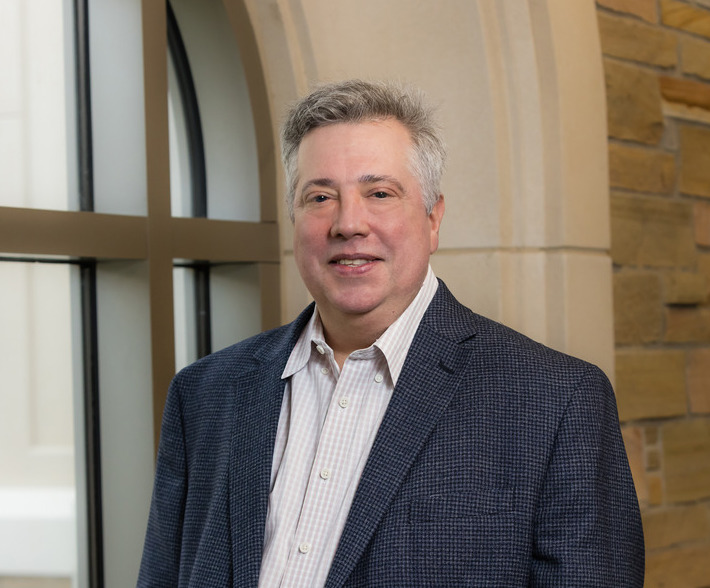
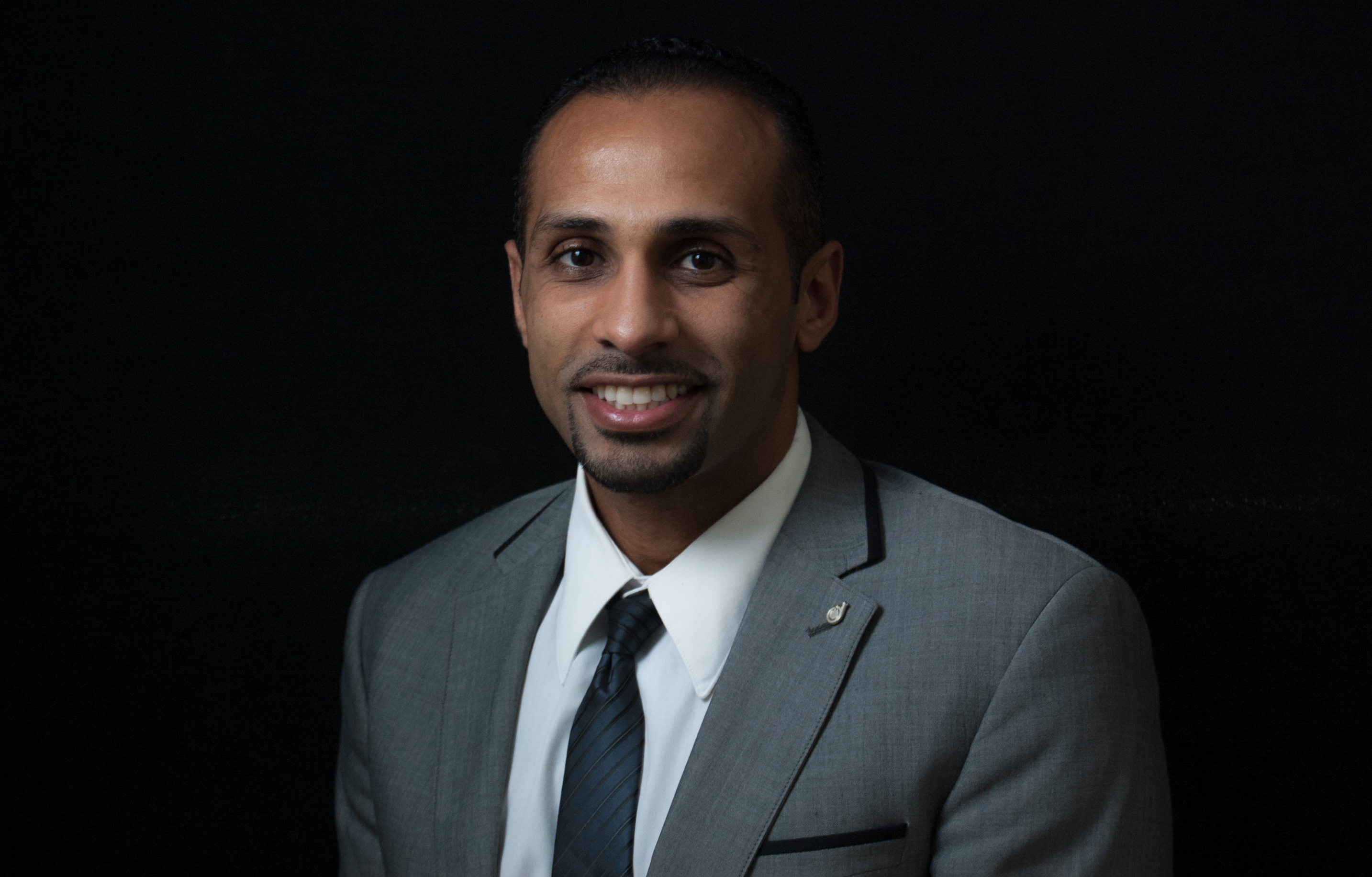
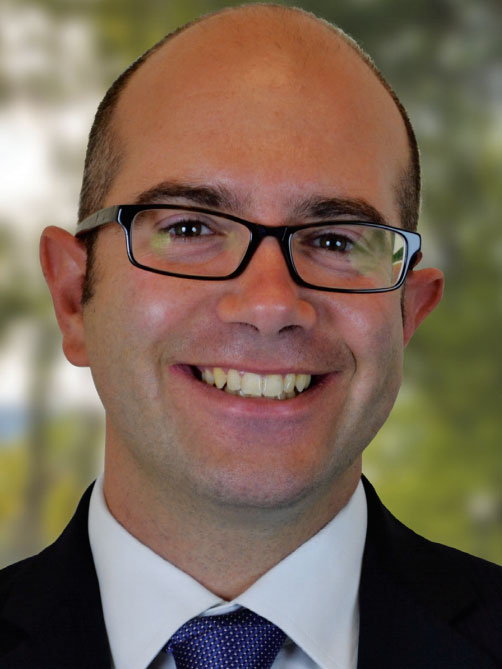
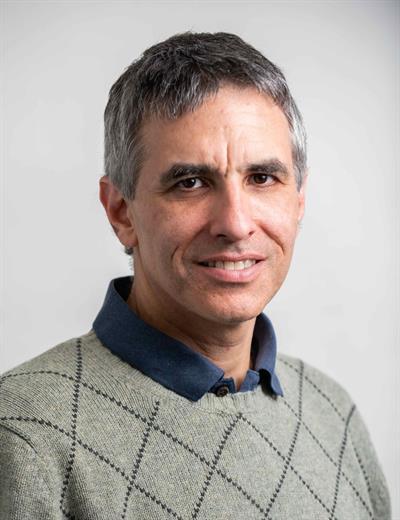
Javier Zamora is a Professor at IESE Business School , part of the University of Navarra. He holds a Ph.D. in Electrical Engineering from Columbia University and an M.Sc. in Telecommunications Engineering from the Polytechnic University of Catalonia. Education Ph.D., Electrical Engineering, Columbia University M.Sc., Telecommunications Engineering, Polytechnic University of Catalonia PDG, IESE Business School Research Interests : Zamora specializes in digital transformation, focusing on data-driven organizations and artificial intelligence. His work explores how new technologies reshape business models, organizational structures, and leadership strategies. Publications span topics from AI implementation in finance and sports management to cloud computing in crisis scenarios. His research emphasizes practical frameworks like the "Digital Density" concept and tools for assessing digital maturity. Professional Roles : He co-founded Inqbarna (AI-powered mobile solutions) and served as CEO of eNeo Labs (digital home products). Currently, he directs executive programs at IESE, including Digital Transformation: Senior Management Program and Navigating IT Architecture .
John Hale, Ph.D., is a Professor and Chair of Computer Science at The University of Tulsa's Tandy School of Computer Science, where he holds the Tandy Endowed Chair in Bioinformatics and Computational Biology. He is a founding member of the TU Institute of Bioinformatics and Computational Biology (IBCB) and a faculty research scholar in the Institute for Information Security (iSec). Education: Ph.D., Computer Science, The University of Tulsa (1997) M.S., Computer Science, The University of Tulsa (1992) B.S., Computer Science, The University of Tulsa (1990) Dr. Hale's research spans cybersecurity , bioinformatics , cyber-physical systems , and applied formal methods . His work focuses on neuroinformatics, cyber trust, attack modeling, secure software development, and information privacy. Recent publications highlight trends in large-scale graph analysis for cybersecurity, attack graph generation on high-performance computing clusters, and security frameworks for nuclear reactor control systems. His research also explores hybrid attack graph modeling, reflective deception strategies, and compliance methods for cyber-physical infrastructures. Scientific Awards: 2000 National Science Foundation CAREER Award Dr. Hale has advised numerous research projects and received funding from the U.S. Air Force, Army, NSF, NIH, DARPA, NSA, and NIJ. He has testified before Congress on cybersecurity and holds a patent for anti-piracy technology. His lab work includes developing cyber-physical testbeds and science DMZ security solutions.
Dr. Kaibo Liu is the Grainger STAR Professor in the Department of Industrial and Systems Engineering at the University of Wisconsin-Madison and serves as Associate Director of the UW-Madison IoT Systems Research Center. He earned his B.S. from the Hong Kong University of Science and Technology (2009), and M.S. and Ph.D. from Georgia Tech (2011/2013). His research focuses on system informatics, big data analytics, and data fusion for process modeling, monitoring, and decision-making. He has been funded by NSF, ONR, DOE, and industry partners. Notable awards include the 2024 Hromi Medal (ASQ), 2021 IISE Technical Innovation Award, and multiple early-career recognitions. Recent work emphasizes real-time cyber-physical security, reinforcement learning for data streams, and Bayesian methods for prognosis. He edits IEEE Transactions on Automation Science and Engineering and IISE Transactions on Data Science.
Pontus Stenetorp is a Professor of Natural Language Processing at University College London (UCL) and holds a Specially Appointed Professorship at the National Institute of Informatics (NII) in Japan. At UCL, he leads the NLP Group, serves as Deputy Director of the Centre for Artificial Intelligence, and directs the Facebook Artificial Intelligence/UCL PhD Programme. His research focuses on the intersection of human language and computational systems, emphasizing empirical approaches to advancing and evaluating language processing capabilities. He is affiliated with UCL's Department of Computer Science and NII's Large Language Model Research and Development Center. Stenetorp prioritizes in-person collaboration for internships and research visits due to institutional bureaucratic constraints at UCL. He actively supervises MSc theses in Machine Learning and Data Science programs but restricts undergraduate and industry-oriented projects to exceptional cases. Communication preferences include structured emails sent to role-specific addresses: p.stenetorp@cs.ucl.ac.uk (UCL), pontus@nii.ac.jp (NII), and pontus@stenetorp.se (general). His research group, the NLP Group at UCL, pursues cutting-edge projects in computational linguistics and AI, often involving collaborative efforts with students and industry partners. While no specific awards are listed, his dual institutional roles underscore his significant contributions to the field of NLP and AI research.
Yang Wang is a Professor of Information Science and Computer Science (courtesy) at the University of Illinois at Urbana-Champaign (UIUC), where he co-directs the SALT lab and is part of the Interactive Computing group and Security and Privacy Research at Illinois (SPR@I). He holds affiliations with the Institute of Software Research (ISR) at UC Irvine and advises Conviva. His research spans AI governance, privacy, security, and inclusive technologies, focusing on marginalized populations such as people with disabilities and non-Western communities. Education: Ph.D. from the University of California, Irvine (UCI), under advisors Dr. Alfred Kobsa, Dr. André van der Hoek, and Dr. Gene Tsudik. Previous roles include Assistant Professor at Syracuse University and Research Scientist at Carnegie Mellon University’s CyLab. He has collaborated with institutions like Alcatel-Lucent Bell Labs, Intel Research, and Tsinghua University. Research interests include AI safety for children (aisafety4kids.org), inclusive privacy mechanisms, accessible authentication for visually impaired users, and policy implications of AI. Notable projects include Inclusive.AI (funded by OpenAI), privacy in smart homes, and drone privacy studies. Awards and grants include NSF SaTC awards, NSF CAREER, and industry partnerships with Meta/Facebook, Google, and OpenAI. His work has been featured in outlets like the New York Times and Wall Street Journal. Current PhD advisees include Smirity Kaushik and Yaman Yu, with notable alumni such as Dr. Yaxing Yao (now at Johns Hopkins) and Dr. Tanusree Sharma (Penn State). Labs/Teams: Co-director of the SALT lab, part of SPR@I and the Interactive Computing group at UIUC. Collaborates with industry and policy bodies, including the FTC.
Gang Wang is an Associate Professor in the Department of Computer Science at the University of Illinois at Urbana-Champaign (UIUC), affiliated with the Siebel School of Computing and Data Science. He also holds affiliate roles in the Department of Electrical and Computer Engineering, the Informatics Program (School of Information Sciences), and the Coordinated Science Laboratory (CSL). He joined UIUC in 2019, previously serving as an Assistant Professor at Virginia Tech. Education: Ph.D. in Computer Science from UC Santa Barbara (2016), advised by Ben Y. Zhao and Heather Zheng; B.E. from Tsinghua University (2010). Awards include the NSF CAREER Award (2018), Amazon Research Award (2021), and multiple best paper awards in top conferences like USENIX Security and ACM CCS. Research focuses on Security and Privacy, Internet Measurement, and Data Mining. Key areas include email spoofing vulnerabilities, adversarial machine learning, and AI-driven security tools. Recent projects involve explainable AI for phishing detection, benchmark contamination in LLMs, and mitigating deepfake disinformation. Publications span top venues like USENIX Security, IEEE S&P, ACM CCS, and IMC. He collaborates with industry partners and researchers in HCI and AI. Current roles include Associate Director of the Capital One Illinois Center for Generative AI Safety (ASKS) and leadership in NSF-funded initiatives like the ACTION AI Institute.
Dr. Xiao Zhou is a Research Fellow affiliated with the Professorship for Consumer Behavior at ETH Zurich. His current position began in 2021. Prior to this, he conducted postdoctoral research at the University of Reading (2020-2021) and completed his PhD in Consumer Behavior at the University of Copenhagen (2015-2019). His research focuses on advancing consumer behavior studies through interdisciplinary approaches, combining insights from marketing, behavioral economics, and human motion analysis. Zhou’s work emphasizes understanding decision-making processes and their applications in real-world contexts. Education history includes a PhD in Consumer Behavior from the University of Copenhagen (2015-2019), followed by postdoctoral training at the University of Reading (2020-2021). His academic trajectory reflects a strong foundation in both theoretical and applied research. His research interests span consumer behavior, marketing research methodologies, and behavioral economics. Notably, his recent publications explore cutting-edge technologies in motion capture and computer vision, including real-time human motion tracking and generative models for 3D reconstruction. This reflects a unique intersection of consumer behavior studies with technical advancements in computational methods. Zhou’s research outputs demonstrate expertise in areas such as inertial sensor-based motion analysis, physics-aware tracking systems, and hierarchical modeling techniques. His contributions highlight innovative solutions for challenges in human pose estimation and 3D reconstruction. He is currently based at ETH Zurich’s Department of Consumer Behavior, contributing to both academic research and potential industrial applications of his work.
Kareem Ahmed is a Professor in the Department of Mechanical and Aerospace Engineering at the University of Central Florida (UCF) and a faculty member of the Center for Advanced Turbomachinery and Energy Research. He leads research in advanced propulsion and energy systems, focusing on high-speed turbulent combustion, detonations, and hypersonic technologies. His work includes groundbreaking projects in detonation-based propulsion for hypersonic flight and power generation, supported by over $17 million in grants from NASA, AFOSR, and DOE. Education: Ph.D. and M.S. in Mechanical Engineering, University at Buffalo (SUNY) B.S. in Mechanical Engineering, New York State College of Ceramics at Alfred University Research Interests: Ahmed’s expertise spans detonation dynamics, supersonic reacting flows, flow-flame control, and advanced laser diagnostics . His team explores innovations like rotating detonation engines (RDEs) and scramjet combustion systems, with applications in aerospace defense and space exploration. Awards and Recognition: AIAA Associate Fellow American Chemical Society Doctoral New Investigator Award AFOSR Summer Faculty Fellowship UCF Trustee Chair (2025–2030) Grants & Advising: PI of over $17M in research funding; mentors 145+ doctoral, master’s, and undergraduate students. Collaborates with industry leaders like GE, Aerojet Rocketdyne, and Pratt & Whitney. Labs & Teams: Director of UCF’s Center of Excellence in Hypersonic and Space Propulsion, advancing technologies for 15-minute transcontinental flight and clean rocket fuels.
Joseph Sifakis is a CNRS Research Director and founder of Verimag Laboratory in Grenoble, France. He holds the INRIA-Schneider endowed industrial chair since 2008 and has been instrumental in advancing concurrent systems specification and verification. Education: Electrical Engineering (Technical University of Athens), Computer Science (University of Grenoble) Research interests focus on component-based design , real-time systems , and correct-by-construction techniques . He pioneered the development of the BIP framework and contributed to model checking, a cornerstone of industrial system verification. Recent publications emphasize component-based modeling, formal verification, and distributed system design, reflecting his work's impact on embedded systems and critical applications like aerospace and telecommunications. Scientific awards include: Turing Award (2007) CNRS Silver Medal (2001) Test-of-Time Award (2012) Multiple honorary doctorates (2008-2011) Member of prestigious academies Industry collaborations span Airbus, ST Microelectronics, and the European Space Agency, with applications in aeronautics, telecommunications, and industrial software standards. He leads the ARTIST2 Network of Excellence and directs the CARNOT Institute 'Intelligent Software and Systems'.
Oya Celiktutan is a Reader (Associate Professor) at King’s College London in the Department of Engineering, leading the Social AI & Robotics (SAIR) Lab within the Centre for Robotics Research. She holds a BSc in Electronics Engineering from Uludag University, and an MSc and PhD in Electrical and Electronics Engineering from Bogazici University, Turkey. Her doctoral work included a visiting research period at the National Institute of Applied Sciences in Lyon, France. She has held postdoctoral positions at Queen Mary University London, the University of Cambridge, and Imperial College London before joining King’s College in 2018. Her research focuses on multimodal machine learning for autonomous agents, addressing challenges in human-robot interaction, social awareness, and navigation. Key areas include human behavior analysis, generative models, and continual learning. Her work is supported by EPSRC, The Royal Society, EU Horizon, and industry partners like Toyota and NVIDIA. Notable awards include the EPSRC New Investigator Award (2021) and a Best Paper Award at IEEE Ro-Man 2022. Dr. Celiktutan’s lab explores socially assistive robotics, extended reality systems, and ethical AI. Recent projects include the LISI initiative to enable robots to learn social interactions from human-human data and the CL-HRI project advancing continual learning in human-centric robotics. Her research has led to datasets like MHHRI and RICA, and collaborations with companies like SoftBank Robotics. She teaches modules on Sensing and Perception, and Sensors and Actuators, emphasizing practical applications in robotics and mechatronics. Current research interests span socially-aware navigation, algorithmic fairness, and multimodal data fusion for robotics in healthcare and urban environments.
Stratis Ioannidis is a Professor in the Electrical and Computer Engineering Department at Northeastern University, with a courtesy appointment in the Khoury College of Computer Sciences. His research focuses on distributed systems, networking, machine learning, big data, and privacy. He earned his B.Sc. from the National Technical University of Athens, and M.Sc. and Ph.D. from the University of Toronto. Prior to Northeastern, he worked at Technicolor and Yahoo Labs. Education: B.Sc. in Electrical and Computer Engineering (2002, National Technical University of Athens); M.Sc. and Ph.D. in Computer Science (2004, 2009, University of Toronto). Research interests span machine learning, distributed systems, optimization, and privacy. Key projects include the NSF AI Institute for Future Edge Networks and Distributed Intelligence (AI-EDGE), and work on federated learning, continual learning, and privacy-preserving algorithms. His research has been supported by NSF, Google, and Facebook grants. Recent publications emphasize federated learning, continual learning, and edge computing. Awards include the NSF CAREER Award, Søren Buus Outstanding Research Award, and multiple best paper awards. He advises numerous PhD students and collaborates across disciplines, including healthcare and wireless networks. Lab activities include SPIRAL and WIoT labs, focusing on machine learning at the edge and network optimization. Grants include the NSF AI Institute and multiple collaborative projects with industry and academia.
Marc Hodes is Professor in Mechanical Engineering and Mathematics at Tufts University. With a PhD from MIT, his research focuses on heat transfer phenomena with applications in electronics cooling, supercritical fluids, and thermoelectric systems. He directs the graduate program in Mechanical Engineering. Education: BS, University of Pittsburgh (1990) MS, University of Minnesota (1994) PhD, Massachusetts Institute of Technology (1998) Research Areas: Thermal management of electronics through microchannel cooling and liquid metal technologies; Apparent slip phenomena in microstructured surfaces; Mass transfer in supercritical CO 2 systems for aerogel processing; Thermoelectric module optimization for precision temperature control. Awards & Honors: NSF REU Fellowship (1989) E.T.S. Walton Visitorship Award Best Associate Editor, ASME Journal of Heat Transfer (2023) Research Leadership: Principal investigator on multiple NSF grants including projects on aerogel manufacturing, dropwise condensation, and analysis of convection in slip flows. Industry collaborations include Google, DARPA, and Bell Labs.
Toni Kotnik is an Associate Professor in the Department of Architecture at Aalto University, Finland. He holds dual expertise in mathematics and architecture, with a Ph.D. from the University of Zurich and a second degree in architecture. His roles include principal of d’HKL , a Zurich-based experimental architecture firm, and adjunct lecturer at institutions like Harvard University and the Bartlett School of Architecture. His research focuses on integrating science, engineering, and computation into architectural design, emphasizing structural innovation and sustainability. Education: Ph.D. in Mathematics (Dr. sc. Nat.), University of Zurich, 1999 Second degree in Architecture Research Interests: Computational design and generative systems Structural aesthetics and neuroaesthetics Sustainable urban and architectural solutions Parametric modeling and material systems Key Contributions: Advances in graphic statics and form-finding Design strategies for high-density urban environments Integration of AI and generative tools in architectural practice Recent Work Trends: Recent articles emphasize computational methods for industrial layout optimization, AI’s role in architecture, and embodied perception in structural design. His work bridges theoretical research with practical applications, such as the Singapore Hawker Centre redesign and experimental structures like hypar-combined shells. Awards: Aalto University Doctoral Thesis Awards (2022) Best Presentation Award (2019) Oscari-Vilamo Award (2023) Advising & Grants: Supervised 4 theses, including recipients of awards like the Metex Award shortlist. Active in international academic networks, serving on conference committees (e.g., International Association for Shell and Spatial Structures) and editorial roles (e.g., Automation in Construction journal). Labs & Teams: Leads the d’HKL studio, collaborating globally on projects like the AA/ETH Pavilion and the Hypercube for Gardens by the Bay. Research focuses on experimental design and material systems.
Dr. Andrew Cornwell is an Adjunct Assistant Professor in the Department of Biomedical Engineering at Case Western Reserve University’s Case School of Engineering. He serves as the Associate Director of the Case-Coulter Translational Research Partnership (CCTRP) and Director of the Case-Cleveland Incubator in the Office of Strategic Partnerships. Additionally, he holds the role of Director for Industrial and Strategic Collaborations at the Cleveland FES Center, bridging academic research with industry and clinical applications across the School of Medicine and School of Engineering. Dr. Cornwell earned his PhD in Biomedical Engineering from Case Western Reserve University. His early research focused on brain recording and neurotechnology, later transitioning to advancing technology transfer and translational research strategies. His research interests center on neurotechnology, particularly functional electrical stimulation (FES) systems for rehabilitation and clinical applications. He specializes in accelerating the translation of academic innovations into practical healthcare solutions, focusing on aligning clinical needs, market demands, and research priorities. Key areas include neuroprosthetics, assistive technologies for paralysis, and strategic partnerships to enhance technology commercialization. Dr. Cornwell’s publications highlight advancements in neurotechnology, including studies on FES systems, brain-computer interfaces, and clinical assessment tools. His work from 2010–2013 emphasizes improving arm mobility for individuals with paralysis, while earlier research (e.g., 2004) explores neural network approaches to predict movements using electrocorticography (ECoG). While no scientific awards were listed in the provided information, his roles involve managing grants and strategic collaborations through the CCTRP and Cleveland FES Center to fund translational research projects. He is affiliated with the Cleveland FES Center and the Case-Coulter Translational Research Partnership, leading initiatives to commercialize neurotechnology and biomedical innovations.
Kartik Hosanagar is the John C. Hower Professor of Technology and Digital Business and a Professor of Marketing at The Wharton School, University of Pennsylvania. He is also the Co-Director of the Wharton Human-AI Initiative. His work spans the Department of Operations, Information and Decisions, focusing on the intersection of technology, business, and society. Education: PhD in Management Science and Information Systems, Carnegie Mellon University MPhil in Management Science, Carnegie Mellon University Masters in Information Systems, Birla Institute of Technology and Sciences (BITS, Pilani), India Bachelors in Electronics Engineering, Birla Institute of Technology and Sciences (BITS, Pilani), India Research Interests: Kartik’s research focuses on the digital economy, particularly the impact of AI, algorithms, and analytics on consumers, businesses, and society. His work explores internet marketing, e-commerce, digital media, information diffusion, platform economics, and the ethical implications of AI. He investigates how technology transforms business models and consumer behavior in online environments. Publication Trends: His recent research combines machine learning, causal inference, and behavioral modeling to study digital platforms, user behavior, and AI applications in marketing and operations. The articles reflect a strong focus on empirical analysis of social media, search engines, and platform design, with applications in advertising, content sharing, and product adoption. Scientific Awards: Best Information Systems paper published in Management Science, 2013-2016 Finalist for Best Information Systems paper in Management Science (2012-2015) Recognized as one of the world’s top 40 business professors under 40 Eleven-time recipient of teaching excellence awards at Wharton MBA Excellence in Teaching Award, 2007 “Goes above and beyond the call of duty” award (multiple years) Advising and Grants: While no formal PhD students are listed, Kartik has supervised independent studies and mentored numerous students through research projects. His entrepreneurial ventures, such as Yodle and Jumpcut Media, reflect real-world applications of his research. He has also secured significant industry engagement through consulting and executive education with major firms like Google, American Express, and Citi. His work is supported by academic recognition, editorial roles, and media outreach. Labs and Teams: Kartik co-directs the Wharton Human-AI Initiative, a research hub exploring the integration of human and artificial intelligence in business. He also leads research groups focused on digital platforms and AI ethics, collaborating with scholars across disciplines to advance understanding of algorithmic decision-making and its societal impact.