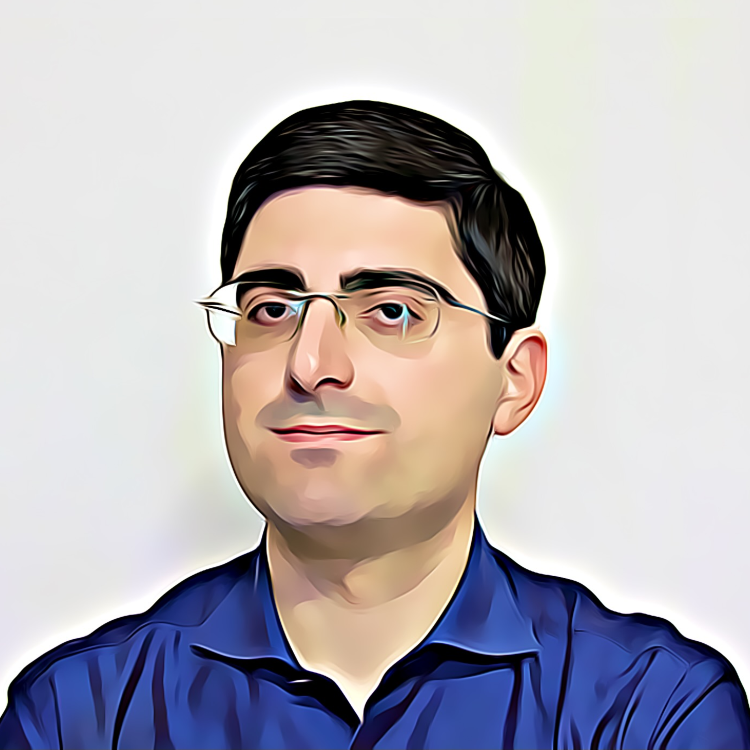
Domenico Tortorella is an Assistant Professor (RTD-A) in the Department of Computer Science at the University of Pisa, Italy. He earned a PhD in Computer Science (cum laude) in 2024, an MSc in Computer Science (cum laude) in 2020, and a BSc in Computer Engineering (cum laude) in 2017. His research focuses on graph neural networks , reservoir computing , and deep learning on graphs , particularly addressing challenges like heterophily, over-squashing, and structural encoding. He contributes to conferences such as ICANN, ESANN, and NeurIPS, and is part of the Computational Intelligence and Machine Learning (CIML) research group. Research Trends: His recent publications emphasize Graph topology encoding (e.g., Randomized Ising Models) Efficiency in graph kernels and neural networks Explainable AI for deep graph models Stability analysis in echo state networks Handling heterophilic graphs via reservoir computing Temporal resolution in recurrent architectures Grants & Service: He received funding from the Future AI Research (FAIR) project (2024–2025) and served on program committees for ICANN, NeurIPS workshops, and GbRPR. He was Vice-Chair of the IEEE Student Branch of Pisa (2023–2024) and holds memberships in IEEE, ACM, ENNS, and IAPR's CVPL.
Dr. Luigi Solimene is a Fixed-term Assistant Professor at the Department of Energy (DENERG) of Politecnico di Torino , Italy. He is affiliated with the College of Electrical and Energy Engineering and serves as a member of the College of Mechanical, Aerospace and Automotive Engineering . Scientific Sector: IIET-01/A - Electrical Engineering (Area 0009 - Industrial and Information Engineering) ERC Skills: PE7_2, PE2_9, PE11_12 Research Interests : Inductors and Transformers Magnetic Devices and Materials Wireless Power Transfer (WPT) Data-Driven Modeling Power Electronics Recent Publications focus on data-driven approaches for electromagnetic analysis, magnetic loss modeling, and wireless power transfer systems, with applications in traction motors, supercapacitors, and GaN FET-based converters. Teaching Involvement : Course Instructor for "Inductor and Transformer Design for Power Electronic Converters" (PhD, 2024/25) Course Collaborator for "Applied Electromagnetism" (Master’s, 2020/21–2025/26) Course Lecturer for "Electrical Engineering" (Bachelor’s, 2025/26) PhD Supervision : Gulaly Khan (2024–present) Junlong Liu (2024–present) Fermin Gomez De Leon (2022–2025) Song Huang (2021–2025) Research Projects : Metrology for supercapacitors (MetSuperCap, 2024–2027) Commercial contracts with University of Nottingham and Enel Grids
Fabio Freschi is a Full Professor at the Department of Energy (DENERG) at the Polytechnic University of Turin, where he serves as a member of both the College of Electrical and Energy Engineering and the College of Mechanical, Aerospace and Automotive Engineering. His academic career spans multiple disciplines within electrical engineering with a focus on computational methods and energy applications, holding the scientific disciplinary sector IIET-01/A - Electrical Engineering (Area 0009 - Industrial and Information Engineering). Professor Freschi's research interests center around computational electromagnetics, with specific expertise in induction heating, magnetic resonance imaging, and wireless power transfer. His work bridges theoretical electrical engineering with practical applications in automotive and energy systems, addressing challenges related to electromagnetic compatibility, medical device safety, and sustainable energy solutions. His research aligns with Sustainable Development Goals 4 (Quality education), 7 (Affordable and clean energy), and 12 (Responsible consumption and production), and falls within ERC sectors PE8_4 (Computational engineering) and PE8_6 (Energy processes engineering). An analysis of Professor Freschi's recent publications reveals a strong focus on electromagnetic compatibility issues in emerging technologies, particularly wireless power transfer systems for electric vehicles and their impact on medical implants. His work demonstrates a consistent pattern of addressing real-world engineering challenges through computational approaches, with increasing emphasis on multi-physics modeling, data-driven methods, and human exposure assessment in recent years. The research spans fundamental electromagnetic theory to practical applications in automotive, medical, and energy sectors. Scientific Awards: bursary award 4th International Conference on Artificial Immune Systems conferred by 4th International Conference on Artificial Immune Systems (ICARIS 2005), Canada (2005) Professor Freschi has supervised numerous PhD students including Eleonora Fonto', Junlong Liu, Fermin Gomez De Leon, Sofia Viarengo, and Paul Lagouanelle. His research is supported by multiple competitive grants including the SAFECHARGE project (2024-2026) evaluating exposure near electric vehicle charging stations for safety of implanted medical devices, and the earlier eCo-FEV project (2012-2015) on efficient cooperative infrastructure for fully electric vehicles. He also leads numerous commercial research contracts addressing practical engineering challenges in electromagnetic systems, ranging from induction heating applications to high-voltage component analysis. As leader of the CADEMA Research Group within DENERG, Professor Freschi directs a team working on cutting-edge problems at the intersection of electrical engineering, automotive technology, and medical device safety. His laboratory specializes in computational electromagnetic modeling, with particular emphasis on ensuring electromagnetic compatibility in next-generation transportation systems and developing innovative solutions for energy applications.
Saverio Bolognani is a Research Fellow at the Massachusetts Institute of Technology (MIT), focusing on advanced control systems for electric drives and power systems. His work bridges graphical models, Bayesian networks, and sensorless control techniques for synchronous and induction motors. Current affiliation: MIT, USA Past affiliation: Department of Information Engineering, University of Padua Research interests include: Model Predictive Control for electric drives Sensorless and self-sensing motor control Microgrid topology identification Machine learning applications in power systems His publications reveal a focus on optimization algorithms for electric vehicles, reliability of electrified transportation systems, and real-time control strategies using Kalman filters and digital twins. Key subfields include deadbeat control, high-frequency signal injection, and torque ripple minimization.
Prof. Di Muzio Nadia Gisella is a Full Professor at Vita-Salute San Raffaele University, holding the role of Professore Ordinario in Medicine (MEDS-22/A). She also served as Associate Professor since 2019 and has held contract professorships at the University of Milan-Bicocca and University of Milan in Radiation Oncology and Medical Physics. She is Head of the Radiation Oncology Department at San Raffaele Scientific Institute since 2008. Her academic training includes a Medical Degree from University of Milan (1988) and specialization in oncological radiotherapy (1992), with advanced training at University of Wisconsin and New York University. She completed a managerial training at Bocconi University (2009). Her research focuses on radiation treatment optimization for prostate cancer, including brachytherapy and hypofractionated techniques, with a strong emphasis on integrating imaging modalities like PET/CT and radiomics. She explores radiation-immune system interactions and their implications for immunotherapy combinations. Over 200 peer-reviewed publications and leadership roles in international societies (SIURO, ESTRO) highlight her expertise. She coordinates the Italian Brachytherapy Group and participates in European research initiatives. Prof. Di Muzio leads the Tomotherapy Unit (2007-2008) and chairs the Italian Prostatic Brachytherapy group. She advises on Hadron Therapy in Pavia and Candiolo Cancer Institute. Her clinical work involves advanced head/neck cancer protocols and phase III trials in colorectal/breast cancers. She is a pioneer in precision radiotherapy using functional imaging and has developed predictive models for treatment outcomes.
Debora DiCaprio is an Associate Professor in the Department of Economics and Management at the University of Trento, Italy, specializing in Mathematical Methods of Economics, Finance, and Actuarial Sciences. She holds a PhD in Mathematics from York University (Canada) and has held academic positions across Italy, Spain, Canada, and Mexico. Her research focuses on decision theory, artificial intelligence in healthcare, and operations research, with contributions to transplant efficiency modeling and multi-criteria decision-making frameworks. Education: B.Sc./M.Sc. in Mathematics (110/110 cum laude), Second University of Naples, Italy (1993–1997) M.A. in Mathematics, York University, Canada (1999–2000) PhD in Mathematics, York University, Canada (2000–2004) Specialization in Mathematics and Physics Education, Free University of Bozen-Bolzano, Italy (2006–2008) Research Interests: Combines mathematical rigor with applied economics and healthcare analytics. Active in developing AI-driven models for transplant efficiency, healthcare resource optimization, and decision-making under uncertainty. Key areas include stochastic multi-criteria decision-making (MCDM), data envelopment analysis (DEA), and behavioral economics. Professional Activities: Editorial roles at journals like Expert Systems with Applications and Decision Analytics Member of research groups ARES (AI for transplantology) and MEDIA (multi-expert decision aggregation) Consultant for international projects on transplant efficiency and healthcare analytics Awards: Inducted into Alpha Iota Delta Honor Society (2017).
Emilio Incerto is an Assistant Professor at the IMT School for Advanced Studies Lucca, Italy. His research focuses on performance engineering, cloud computing, and formal methods applied to systems optimization. He specializes in developing frameworks for performance prediction, autoscaling solutions for microservices, and integrating machine learning techniques into performance modeling. Key research areas include: Performance modeling and optimization of distributed systems Autoscaling algorithms for dynamic cloud workloads Formal verification of real-time software systems AI-driven performance control mechanisms He has organized international workshops such as AIPerf (Artificial Intelligence for Performance Modeling), showcasing leadership in bridging AI and performance engineering. His work frequently explores reproducibility in performance studies and quantitative evaluation of complex systems like flocking behaviors in biological simulations. Notable contributions include μOpt (an efficient autoscaler for microservices) and μP (a performance prediction framework). His research emphasizes practical implementation of theoretical models through frameworks like SystemC-based environments for HW/SW co-design.
Luca Giaccone is an Associate Professor at the Department of Energy (DENERG) of the Polytechnic University of Turin. He is a member of the Academic Senate and the Committee for Teaching Coordination. His research focuses on bioelectricity, computational electromagnetics, dosimetry, and the application of machine learning in engineering. He leads the CADEMA research group and has supervised PhD student Junlong Liu in electrical engineering. Giaccone has extensive experience in funded projects including WPT-SAFE and SAFECHARGE, addressing electromagnetic exposure safety in automotive and medical contexts. He holds the Mentoring Polito Project (M2P) award (2023). His teaching includes courses on fundamentals of electrical engineering and electrical machines within the College of Electrical and Energy Engineering. Research Interests : Giaccone’s work spans numerical dosimetry for human exposure assessment, wireless power transfer systems, and electromagnetic compatibility. He develops data-driven models for traction motors and investigates the impact of electromagnetic fields on medical devices like pacemakers. His projects emphasize safety compliance with international guidelines and the mitigation of magnetic fields in urban and industrial environments. Key Projects : WPT-SAFE (2025–2027): Electromagnetic modeling for automotive wireless charging systems SAFECHARGE (2024–2026): Evaluating exposure risks for electric vehicle charging systems Virtual Human Models (2015): Validation for electromagnetic safety analysis Awards : Recognized with the Polito M2P Mentoring award for contributions to academic mentoring. Consulting & Industry Collaboration : Advised on magnetic field mitigation for welding equipment, substations, and industrial facilities, focusing on occupational safety and environmental compliance.
Mara Brumana is a senior Assistant Professor at the Department of Management, Information and Production Engineering at the University of Bergamo, Italy. She actively contributes to multiple research centers including the Center for Young and Family Enterprise (CYFE) since 2014, WAVE Lab since 2020, and serves on the Rector's staff for the University's strategic plan 2022-2025. Additionally, she holds affiliations as a Researcher at the Institute of Change Management and Management Development (WU Vienna) since 2021 and at the Centre for Family Entrepreneurship and Ownership (CeFEO) at Jönköping University since 2022. Her research interests focus on how firms, particularly family businesses, are embedded within social and institutional contexts and how this shapes their decision-making processes and behaviors. She investigates entrepreneurial dynamism, growth, innovation, internationalization, and change management primarily through qualitative inquiries using inductive approaches such as longitudinal or multiple case studies. Her work often combines traditional primary sources like interviews and observations with secondary data sources, while also collaborating on quantitative research projects. Analysis of her recent publications reveals a strong thematic focus on family business legitimacy, particularly in transitional and post-communist contexts. Her research examines how family firms navigate institutional environments, with particular attention to cognitive legitimacy, political discourse, and the conditional nature of acceptance in different cultural settings. She also explores corporate venturing, SME transitions, and methodological approaches to studying family entrepreneurship through process tracing. Brumana serves on the Editorial Review Board of the Journal of Family Business Strategy and European Management Review, and acts as an ad hoc reviewer for several international journals in her field. She actively participates in academic discourse through conference presentations and collaborative research projects across European institutions. Her teaching responsibilities include courses on Management of Global Enterprises and Organization and Management of Human Resources at the University of Bergamo, where she focuses on globalization challenges, international business strategy, and human resource management in contemporary organizational contexts. Her courses emphasize practical application alongside theoretical understanding, incorporating case studies, business testimonials, and international competitions like X-Culture Connecting Cultures.
AnnaMaria Zanaboni is an Assistant Professor at the Department of Computer Science, University of Milan. Her research focuses on data analysis, statistical inference, and machine learning applications in diverse fields such as archaeology, veterinary medicine, and forensic science. She is affiliated with the Data Science Research Center (DSRC) and the SLIM research group. Education: High school diploma (Maturità Classica), Liceo Classico 'B. Zucchi', Monza (1981) Master's Degree in Computer Science, University of Milan (1986) Ph.D. studies in Computer Science at New York University (1988-1989) and Yale University (1989-1990) Teaching: Current: Methods and Languages for Data Processing (Cultural Heritage program) Previous: Courses in Statistics, Algorithms, Probability, and Bioinformatics across Computer Science, Medicine, Pharmacy, and Chemistry programs Her research trends span forensic applications of AI, archaeological material classification via machine learning, and veterinary cardiology studies using statistical methods. She has collaborated extensively with interdisciplinary teams in medicine, archaeology, and computer science. Advising & Grants: Advised numerous courses but no explicitly listed students. Research contributions include over 50 peer-reviewed publications and a textbook on probability and statistics for undergraduates. Labs/Teams: Member of DSRC and SLIM group, actively involved in collaborative projects bridging computer science with medical and archaeological applications.
Dr. Antonella Muscella is an Associate Professor in the Department of Biological and Environmental Sciences and Technologies (DISTEBA) at the University of Salento, Italy. Her academic career spans multiple disciplines including Physical Education, Human Physiology, and Educational Neuroscience, with a focus on motor activity adaptation and psychosomatic responses to exercise. Current affiliation: Department of Biological and Environmental Sciences and Technologies, University of Salento Academic rank: Associate Professor (M-EDF/01 - Methods and Teaching of Motor Activities) Contact: antonella.muscella@unisalento.it Her research explores the intersection of physical education , emotional intelligence , and physiological adaptation , particularly in vulnerable populations like overweight children and athletes. Recent publications examine: Psychological factors in sports performance Adapted physical education programs Oxidative stress in combat sports Motor-cognitive skill development Pandemic-related performance changes Memory and motor coordination in children She contributes to Frontiers in Psychology , Children (Basel) , and International Journal of Environmental Research and Public Health as a researcher and editor. Her work combines pedagogical innovation with physiological analysis across multiple domains.
Jurica Levatić is a researcher at the Jožef Stefan Institute and the Jožef Stefan International Postgraduate School in Ljubljana, Slovenia. He is actively involved in research in machine learning and data mining, particularly in the development of semi-supervised learning methods for complex prediction tasks. His research focuses on advancing predictive modeling through interpretable tree-based methods such as Predictive Clustering Trees (PCTs), with applications in multi-label and hierarchical multi-label classification. His work integrates unlabeled data to improve model performance while maintaining interpretability, a critical aspect in intelligent systems. He also explores ensemble methods and feature weighting to enhance predictive accuracy. His recent publication in the International Journal of Intelligent Systems demonstrates strong contributions to semi-supervised learning frameworks, with extensive experimental validation across diverse domains including text, audio, biology, and ecology. The research shows significant performance gains over supervised baselines, particularly in low-label regimes. Scientific Awards: No awards mentioned in the provided text. Advising and Grants: No information available about students or advisees. No grants mentioned in the provided text. Labs and Teams: Jurica Levatić is affiliated with the Jožef Stefan Institute, a leading research institution in Slovenia, where he collaborates with experts like Sašo Džeroski and Dragi Kocev in the field of inductive machine learning and intelligent systems.
Stefano Guglielmo Savio is an Associate Professor at the Department of Naval, Electrical, Electronic and Telecommunications Engineering (DITEN) of the University of Genoa, where he also serves as Department Quality Assurance Manager. His teaching portfolio includes Electric Machines, Reliability and Safety of Systems, and Methods for Predicting Dependability of Industrial Systems for Electrical Engineering programs. His research integrates control theory, machine learning, and industrial applications across electrical and marine engineering domains. Key focus areas include health-aware control systems for hybrid powertrains, predictive maintenance using deep learning, digital twin development for ship performance monitoring, and reliability engineering for industrial systems. His work bridges theoretical advances with practical solutions for automotive and maritime sectors. Recent publications demonstrate strong interdisciplinary trends combining power electronics with AI-driven approaches, particularly in hybrid vehicle dynamics optimization, vessel motion forecasting during extreme weather, and condition monitoring of electrical machinery. His 2024 studies on health-aware control strategies and DC-DC converter dynamics highlight significant contributions to extending powertrain lifecycles and improving transient response in hybrid systems.
Luca Mesin serves as an Associate Professor in the Department of Electronics and Telecommunications (DET) at Polytechnic University of Turin, where he is also a member of the Interdepartmental Center PolitoBIOMed Lab - Biomedical Engineering Lab. His academic appointment falls under the scientific disciplinary sector IBIO-01/A - Bioengineering within Area 0009 - Industrial and Information Engineering. Mesin's research spans multiple domains of biomedical engineering with particular expertise in biomedical signal processing. His primary research interests include brain-computer interfaces, electroencephalography (EEG), electrocardiography (ECG), magnetic resonance imaging (MRI), neuroscience applications, surface electromyography (EMG), and ultrasound imaging. His work focuses on developing innovative signal processing methods for medical diagnostics and human-machine interaction systems, with specific applications in neurological disorders, cardiovascular monitoring, and non-invasive patient assessment. His recent publications demonstrate a strong trend toward integrating machine learning with biomedical signal processing, particularly in EEG analysis for brain-computer interfaces and mental stress assessment. The research shows increasing emphasis on practical clinical applications, security aspects of neural interfaces, and development of non-invasive monitoring techniques for patient volume status and cardiovascular parameters. Best paper award of the 4th IET International Conference on Advances in Medical, Signal and Information Processing (MEDSIP 2008) SIAMOC Best Methodology Paper Award 2007 Featured article of Communications in Theoretical Physics for 2013 'Highlight Paper of the Year' by Computers in Biology and Medicine (2013) High score abstract at EuroEcho 2019 Mesin actively supervises multiple PhD students working on cutting-edge biomedical engineering projects including brain-to-brain communication, venous pulsatility analysis, and smart wearable technologies for stress monitoring. He leads significant research projects including PELVITRACK (2025-2029), funded by the European Innovation Council, and MACIVB (2020-2021), focusing on non-invasive vascular imaging techniques. His research has resulted in multiple patents related to biomedical devices and signal processing algorithms. As a key member of the Mathematical Biology and Physiology research group within DET, Mesin contributes to advancing the field through his leadership in the PolitoBIOMed Lab and through his editorial roles with journals including BIOENGINEERING, JOURNAL OF CLINICAL MEDICINE, and FRONTIERS IN PHYSIOLOGY.
Gabriella Ferrara serves as a Contract Teacher in the Department of Psychological, Pedagogical, Physical Exercise and Training Sciences at the University of Palermo's School of Human Sciences and Cultural Heritage. She teaches across multiple programs including Educational Sciences, Primary Education Sciences, and Adult Education and Continuing Education Sciences. Her current teaching responsibilities for the 2025/2026 academic year include SPECIAL EDUCATION AND LABORATORY, GENERAL TEACHING, FUNDAMENTALS OF PEDAGOGY FOR INCLUSION, and GENERAL TEACHING LABORATORY. Dr. Ferrara's research focuses on the intersection of inclusive education, physical education, and cognitive development. Her work particularly emphasizes the role of bodily movement in learning processes, with extensive research on Spaced Learning methodologies that integrate motor skills with academic content. She has developed innovative approaches to special education that incorporate artistic gymnastics and adapted physical education as tools for inclusion. Her research demonstrates how corporeality and embodied cognition can enhance educational outcomes for diverse learners, particularly those with special educational needs. Analysis of her recent publications (2024-2025) reveals a strong thematic focus on the Living Lab approach to teacher training, Spaced Learning implementation in primary education, and the integration of physical movement with cognitive development. Her work consistently bridges theory and practice, developing methodological innovations while creating practical tools for classroom implementation. The research shows increasing emphasis on community-based approaches to inclusion and the development of teacher awareness regarding inclusive practices. Dr. Ferrara maintains regular office hours on Tuesdays from 1:00 PM to 3:00 PM at Viale delle Scienze, Building 15, Room 416, with appointments available through Microsoft Teams. Her extensive publication record spanning over a decade demonstrates sustained scholarly contribution to the fields of inclusive education and physical pedagogy.