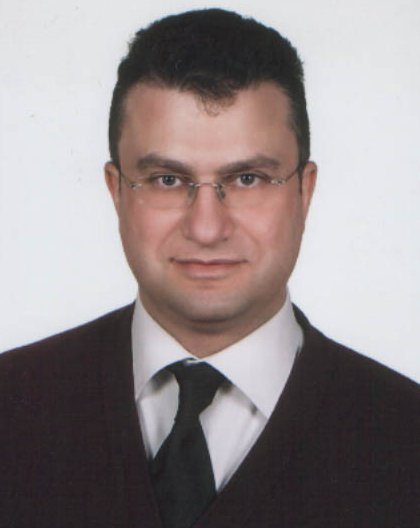
Professor Serdar Özoğuz is a full faculty member at the Department of Electronics and Communication Engineering , Istanbul Technical University . Holding a Ph.D. from ITU (2000) and a M.Sc. from ITU (1993) , he has taught courses like Active Network Synthesis , Basics of Electrical Circuits , and Scientific Research Ethics since 2014. His research focuses on Active RC filters Nonlinear electronic circuits Analog integrated circuit design Network synthesis . His recent publications emphasize machine learning applications in RF/microwave design , quantum computing for CAD tools , and emerging memory devices . The department's Devreler ve Sistemler Laboratuvarı Çok Geniş Ölçekli Tümdevre (VLSI) Tasarımı Laboratuvarı likely support his work. Despite no explicit awards listed, his 15+ recent articles in high-impact journals underscore his technical contributions.
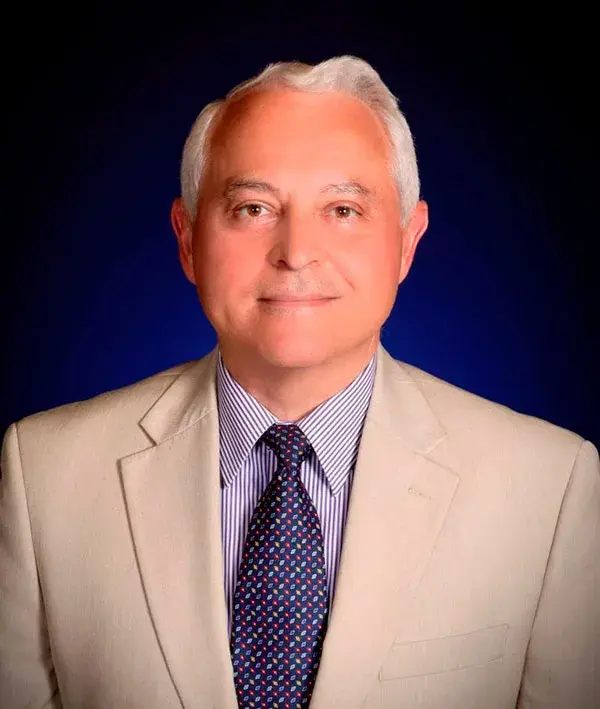
Dan M. Ionel, Professor and inaugural L. Stanley Pigman Chair in Power at the University of Kentucky (UK), directs the Power and Energy Institute Kentucky (PEIK). He is affiliated with the SPARK Laboratory in the Department of Electrical and Computer Engineering, focusing on renewable energy, electric machines, and smart grids. Alternative and Renewable Energy Technologies Electric Machines and Power Electronic Drives Electromagnetic Devices Electric Power Systems Energy Storage Smart Grids and Buildings His research integrates machine learning with electromagnetic design for applications like electric vehicles and aircraft propulsion. Recent work includes axial flux permanent magnet machines with Halbach arrays and cryogenic thermal management systems. Scientific awards include IEEE Fellowship. Research is sponsored by NSF, DOE, NASA, and industry partners like ANSYS, EPRI, and Regal Rexnord. Collaborations span national labs (NREL, ORNL), utilities (LG&E, TVA), and aerospace entities.
Fu-Kuo Chang is a Professor in the Department of Aeronautics and Astronautics at Stanford University, with a secondary affiliation in the Bio-X program. His research focuses on multifunctional materials, intelligent structures, and structural health monitoring (SHM), emphasizing applications in aerospace, robotics, and medical devices. He has pioneered work on embedded sensors, self-diagnostic systems, and energy storage composites. Academic Appointments: Professor (Stanford), Editor-in-Chief of International Journal of Structural Health Monitoring (since 2012), and Chair of the International Workshop on Structural Health Monitoring (since 1997). Honors: Multiple lifetime achievement awards in SHM, AIAA and ASME Fellowships, and the NSF Presidential Young Investigator Award (1988). Research interests include bio-inspired sensory materials, autonomous systems (e.g., 'fly-by-feel' vehicles), and multidisciplinary integration of structural mechanics, electrical engineering, and materials science. His recent work addresses challenges in smart skins for robotics, thermoplastic composites, and predictive modeling of material degradation. Publications span structural health monitoring, advanced composites, and robotics, reflecting expertise in both theoretical and applied domains. His lab, the Structures and Composites (SACL) laboratory, drives innovation in smart materials and system integration. Advising: Supervises doctoral and master’s students in aeronautics and materials science. Grants/Contributions: Active in industry and government collaborations, including roles on the US Army Research Laboratories Advisory Board and leadership in SHM industry initiatives.
Mahima Gupta is an Assistant Professor in the Department of Electrical & Computer Engineering at the University of Wisconsin-Madison. Her research focuses on power electronics, motor drives, and power converter systems with applications in renewable energy integration and grid infrastructure. Her educational background includes: PhD in Electrical Engineering, University of Wisconsin-Madison (2019) MS in Electrical Engineering, University of Wisconsin-Madison (2015) BE in Electrical Engineering, Birla Institute of Technology & Science, Pilani (2011) Dr. Gupta's research spans multiple areas of power electronics with particular emphasis on Power Electronics Conversion & Control , Modular Multi-level Power Converters , and Motor Drive Systems . Her work addresses critical challenges in the application of Wide Band-gap Semiconductor Devices and mitigating Electromagnetic Interference Issues in modern power electronic circuits. Her research has significant implications for renewable energy integration, electric transportation, and next-generation power grid infrastructure, with a strong focus on efficiency, reliability, and power density optimization. Her recent publications demonstrate a cohesive research trajectory focused on high-performance power conversion systems, with particular attention to modular architectures, fault tolerance mechanisms, and innovative topologies that minimize energy storage requirements while maintaining high performance. Her work spans from fundamental converter designs to application-specific implementations for motor drives, wireless power transfer, and grid integration, showing increasing sophistication and real-world relevance. Dr. Gupta has received several prestigious awards including: Gerald Holdridge Teaching Excellence Award from University of Wisconsin-Madison (2018) Austrian Marshall Plan Scholar for Visiting Scholar position at Technische Universit¨at Graz, Austria (2016) Edward R. Felber Power Fellow from University of Wisconsin-Madison (2016) As a dedicated educator, Dr. Gupta advises graduate students through courses including ECE 699 (Advanced Independent Study), ECE 790 (Master's Research), and ECE 890 (Pre-Dissertator's Research). Her teaching portfolio also includes specialized courses like ECE 512 (Power Electronics Laboratory), demonstrating her commitment to both theoretical and practical aspects of power electronics education. Her research program has attracted significant scholarly attention, as evidenced by her productive publication record in top-tier power electronics conferences and journals.
Yanbo Wang is an Associate Professor and Vice Head of the Wind Power Research Programme at AAU Energy, part of Aalborg University's Faculty of Engineering and Science. He leads research in Electric Power Systems and Microgrids, focusing on intelligent energy systems and flexible markets. His work emphasizes stability analysis, control strategies for hybrid AC/DC systems, and renewable energy integration. He supervises multiple PhD projects on topics like multi-port energy routers and wind power converter optimization. Research interests include power electronics, microgrid stability, and energy storage systems. Key projects include the EU-funded 'S3SF: Smart Energy Solutions for Sustainable Future' and machine learning-based control strategies for multi-energy systems. He has authored over 176 publications, with recent work on DC microgrid reliability, converter design, and offshore wind energy systems. His team collaborates internationally to advance grid-friendly technologies and smart energy solutions. Notable contributions include advanced control schemes for retired batteries in DC microgrids and stability assessment methodologies for offshore wind inverters. He advises on six PhD projects and maintains a lab focused on renewable energy systems and power electronics innovation.
Jasmin Grosinger is an Associate Professor at Graz University of Technology's Institute of Microwave and Photonic Engineering, specializing in wireless systems and RF engineering. Her research advances sustainable wireless technologies through innovations in energy harvesting and communication systems. Primary research areas include: Radio Frequency Identification (RFID), antenna design for IoT applications, wireless power transfer efficiency, and development of batteryless sensor systems. Recent work emphasizes miniaturization challenges in metal environments and radiation-hardened space applications. Publication analysis reveals strong focus on: impedance measurement methodologies, NFC/WPT interoperability solutions, ultra-low power circuit design, and robust wireless systems. Research consistently addresses energy efficiency in passive electronics. Awards recognize contributions to microwave theory and practical implementations: Administrative Committee Member of IEEE MTT-S, Distinguished Microwave Lecturer award, and multiple best paper contest awards. Current projects investigate electromagnetic compatibility in challenging environments and next-generation wireless standards.
Liuping Wang is a Professor in the School of Electrical and Computer Engineering at RMIT University, Australia, since 2007. He serves as Head of Discipline for Electrical Energy and Control Systems since 2005 and teaches Advanced Control Systems (EEET 2100) and Real Time Estimation and Control (EEET 2221). Current academic rank: Professor Location: City Campus, Australia Industry collaborators: ANCA, Australian Power Academy, Advanced Manufacturing CRC His research interests span: Control Theory with applications to UAVs and industrial processes Development of Model Predictive Control systems System Identification using neural networks Robust Control for constrained systems Control of AC motors and power electronics Applications in biomedical research and food process monitoring The 15 most recent publications (2015-2025) demonstrate expertise in: UAV control systems with segmented surfaces Battery condition monitoring for electric vehicles Mult-agent robotics with coordination algorithms Smart grid security and electricity dispatch GPS-denied localization for mobile robots Disturbance observer control with input constraints As a supervisor, he oversees Masters Research and PhD projects but no specific student names are listed. His email is liuping.wang@rmit.edu.au for collaboration or supervision inquiries.
Shad Roundy is an Associate Professor at the University of Utah , holding dual appointments in the Department of Mechanical Engineering and Department of Electrical and Computer Engineering within the College of Engineering . He directs the Integrated Self-Powered Sensing Lab , focusing on energy harvesting, wireless power transfer, and ubiquitous sensing systems. PhD in Mechanical Engineering, University of California, Berkeley (2003) Senior Lecturer, Australian National University (postdoctoral) His research bridges mechanical design , smart materials , and sensor networks , with significant contributions to: Self-powered biomedical implants Wearable health-monitoring devices Underground agricultural sensor networks MEMS sensor development His 15 most recent publications demonstrate interdisciplinary work spanning wireless power transfer for soil sensors, flexoelectric materials, and disease severity assessment via wearables. Articles emphasize energy efficiency , novel transducer designs , and environmental sensor applications . Scientific recognition includes: NSF CAREER Award for magnetoelectric implant powering Associate Editor, Smart Materials and Structures and International Journal of Precision Engineering and Manufacturing-Green Technology Research funded by National Science Foundation , NASA , and industry partners through the ASSIST Engineering Research Center . Publications highlight collaborations across biomedical, agricultural, and wearable technology domains.
Donald A. Dripps serves as the Warren Distinguished Professor of Law at the University of San Diego School of Law, where he has been a faculty member since 2004. His academic career includes previous appointments as assistant professor at the University of Illinois College of Law, visiting professor at Duke University School of Law, visiting professor at Cornell University Law School, and James Annenberg Levee Professor of Criminal Procedure at the University of Minnesota Law School. He clerked for the Honorable Amalya Kearse of the Second Circuit Court of Appeals in New York City. Dripps earned his JD from the University of Michigan in 1983, where he served as editor-in-chief of the Michigan Law Review and was inducted into the Order of the Coif. He received his BA from Northwestern University in 1980. His research focuses on the theoretical foundations of constitutional criminal procedure, with particular emphasis on plea bargaining, the void for vagueness doctrine, and the historical evolution of privacy rights. Dripps frequently examines how historical legal contexts inform contemporary constitutional interpretation, especially regarding the Fourth Amendment in the digital age. His work bridges doctrinal analysis with practical criminal justice concerns, exploring systemic feedback loops in criminal justice reform and the philosophical basis of constitutional rights. Dripps's scholarship reveals consistent engagement with emerging challenges in constitutional interpretation, including undefined consent in sexual assault statutes, federalism issues in criminal jurisdiction, and the constitutional dimensions of police surveillance. His publications demonstrate a methodological approach that combines historical analysis with contemporary doctrinal challenges to develop more coherent frameworks for constitutional criminal procedure. Editor-in-chief of the Michigan Law Review Member of the Order of the Coif As a leading scholar in criminal procedure, Dripps has shaped academic and practical understanding through his influential casebooks and law review articles. His work on institutional reform injunctions represents a significant contribution to one of the most dramatic developments in the field in recent decades. His scholarship consistently addresses the relationship between procedural rules and substantive justice outcomes in the criminal justice system.
Dr. Axel Lubk is a Group Leader at the Institute for Solid State Research (IFW Dresden) , specializing in advanced electron microscopy techniques for materials science. His research spans four key areas: (1) TEM method development (high-resolution imaging, tomography, holography, and in-situ techniques), (2) charge particle optics and scattering theory , (3) magnetic nanotextures (domain walls, skyrmions), and (4) plasmonics (mode hybridization in heterogeneous structures and semiconductor heterostructures). Dr. Lubk’s work focuses on three-dimensional magnetic texture analysis using electron holography and tomography, particularly in systems like skyrmion tubes , FeGe , and Cr2O3 thin films . He has pioneered techniques for vector-field electron tomography and phase retrieval under varying boundary conditions, advancing nanoscale magnetic imaging. His recent studies include plasmonic properties in AgAu nanosphere chains , thermoelectric multilayer systems , and topological insulators like NiRh2Sb and TaTMTe4 . Dr. Lubk has published extensively in high-impact journals such as Nature Communications and Advanced Materials , with a focus on TEM instrumentation and quantitative analysis . He frequently presents at international conferences like the International Microscopy Congress and European School of Magnetism , emphasizing applications in spintronics , quantum materials , and nanostructured systems . His contributions to holographic vector-field electron tomography and machine learning for spectrum-image data have set new standards in electron microscopy.
Thomas Ebel is Professor and Head of the Centre for Industrial Electronics at the University of Southern Denmark (SDU) , Institute of Mechanical and Electrical Engineering. A leading expert in power electronics, high-voltage engineering and capacitor technology, he directs large, multi-partner research projects and teaches/supervises at both graduate and PhD levels. Education & Career Path Prof. Ebel holds the academic title Dr. rer. nat. and has been appointed full Professor at SDU. He concurrently serves as Head of Section at the Centre for Industrial Electronics, orchestrating cross-disciplinary research teams and infrastructure. Research Interests Power Electronics & Power Conversion: advanced converter topologies, WBG devices (GaN, SiC), high-frequency magnetics, grid-forming control. Dielectric Materials & Capacitors: polymer and hybrid nanocomposite dielectrics, self-healing metallized film capacitors, aluminium electrolytic capacitors, lifetime modelling and reliability. High-Voltage Engineering & Breakdown Physics: breakdown mechanisms in nanocomposites, corona and partial discharge, insulation coordination. IoT & Data-Driven Monitoring: real-time condition monitoring, digital twins, data-driven RUL estimation for power components. Publication Trends Across 133 research outputs (2018-2025) the dominant themes are (i) construction and reliability of 700 V-class aluminium polymer electrolytic capacitors, (ii) GaN-based power converter optimisation, (iii) hybrid AC/DC microgrid control and harmonic mitigation, and (iv) nanocomposite dielectrics for next-generation capacitors. The 15 most recent articles (2025) reinforce these directions while adding socio-technical energy analytics and green-vehicle powertrains. Scientific Awards Tek Innovation Prize 2023 – awarded for outstanding contributions to power electronics research and industrial innovation. Advising & Funding Prof. Ebel currently supervises ~10 PhD candidates and post-docs including L. Tavares, M. A. Khan, R. Maheshwari, S. Mateen, A. N. Pinky and others. He is Principal Investigator or Head Coordinator of six active projects (2024-2027) valued at >€8 M, spanning ultra-high-efficiency drives, hydrogen-PtX converters, self-healing capacitors and hybrid power-plant concepts. Laboratory & Teams He heads the High-Voltage Power Electronics Laboratory at SDU, equipped with 700 V/200 A capacitor test rigs, GaN/SiC converter prototyping benches, and environmental chambers for accelerated ageing studies. The centre collaborates with 20+ industrial partners and coordinates the international IEA Wind Task 50 on hybrid power plants.
Pasquale Scarlino is a Tenure Track Assistant Professor in the Institute of Physics at École Polytechnique Fédérale de Lausanne (EPFL), where he founded and leads the Hybrid Quantum Circuits (HQC) Laboratory. He holds a dual appointment with the School of Basic Sciences (SB) and the Physics Section (SB-SPH), conducting research at the intersection of semiconductor and superconducting quantum technologies. His laboratory develops hybrid quantum hardware for advanced quantum information processing. His educational background includes a Master's degree in Physics from the University of Salento (Italy, 2011), where he was a student of Scuola Superiore ISUFI, followed by a Ph.D. from TU Delft (2016) in the Spin Qubits group of Prof. L.M.K. Vandersypen at the Kavli Institute of Nanoscience-Qutech. His doctoral work focused on Si/SiGe spin qubits in collaboration with the M. Eriksson Group at Wisconsin University. Scarlino's research centers on experimental quantum physics using hybrid superconductor/semiconductor devices with electrostatically defined quantum dots coupled to high-impedance microwave resonators. He investigates light-matter interactions in unconventional regimes, quantum transport in low-dimensional systems, and spin/charge qubit implementations. His work aims to merge semiconductor and superconducting platforms to expand quantum information capabilities, with applications in quantum computing, quantum optics, and analog quantum simulation. Early career achievements include establishing the first coherent interface between superconducting and semiconducting quantum systems using high-impedance resonators. His publication record shows strong focus on microwave photon-mediated interactions between quantum systems, with recent work exploring quantum acoustics, topological band engineering, and criticality-enhanced sensing. The articles demonstrate increasing specialization in hybrid quantum hardware, with a shift toward germanium-based systems and advanced resonator designs in the latest publications. Scarlino has advised eleven Ph.D. students at EPFL and teaches courses including General Physics (Electromagnetism), Solid State Systems for Quantum Information, and Introduction to Quantum Science and Technology. His teaching emphasizes experimental quantum hardware approaches and critical assessment of quantum computing platforms. The Hybrid Quantum Circuits Laboratory operates within EPFL's Institute of Physics, utilizing state-of-the-art nanofabrication facilities and cryogenic measurement setups. The team collaborates extensively with leading quantum research groups worldwide, maintaining strong ties with previous institutions including ETH Zurich, TU Delft, and Microsoft Station Q Copenhagen.
Jose Miguel Espi Huerta is an Associate Professor in the Department of Electronic Engineering at the School of Engineering, University of Valencia. He is an active researcher in power electronics and control systems, contributing significantly to grid-connected converters, renewable energy integration, and digital control techniques. His research interests include: Power Electronics and Inverter Control Predictive and Robust Control Strategies Renewable Energy Systems (Photovoltaic and Wind) Induction Heating Technologies Remote and Web-Based Educational Labs The analysis of his recent publications reveals a strong focus on improving the efficiency and reliability of grid-connected power converters using advanced control methods such as predictive current control and MPPT strategies. His work spans both industrial applications and academic education, particularly in developing remote laboratory platforms for control systems. Scientific awards and honors: No awards listed in the provided text. He has supervised academic theses and is affiliated with the LEII (Laboratory of Industrial Electronics and Instrumentation) research group. While no formal grants are listed, his extensive publication record indicates sustained research activity. He has contributed to the development of educational tools such as air levitation systems accessible via PLC and web interfaces, promoting innovative teaching methods in engineering education. The LEII research group focuses on industrial electronics, instrumentation, and power systems, providing a collaborative environment for applied research in energy conversion and control technologies.
Dr. Sunday Ekpo is a Senior Lecturer in Electrical & Electronic Engineering at Manchester Metropolitan University (MMU), UK. He holds multiple advanced qualifications, including a PhD in Electrical & Electronic Engineering and certifications such as Chartered Engineer (CEng) and Senior Fellow of the Higher Education Academy (SFHEA). His research focuses on Communication and Space Systems Engineering, with expertise in 5G/6G networks, satellite-cellular convergence, RF engineering, and IoT applications. He leads projects on energy-efficient wireless systems, additive manufacturing for electronics, and smart sensor development. Education: BEng (Hons) in Electrical & Electronic Engineering MSc in Communication Engineering MA in Higher Education PhD in Electrical & Electronic Engineering Research Interests: RF and microwave transceiver design Satellite communication subsystems Energy harvesting for IoT AI-driven signal processing Smart sensor systems Awards: Best Paper Award (2023) Best Overall Powerhours (British Council) Huawei’s Influential Thinkers Award (2019) Grants & Projects: £1.3m+ external grants secured Lead on Sony-funded Spresense-managed drone connectivity projects SmOp Cleantech collaborations on green wireless systems UK Space Agency and 6G policy advisory roles Labs & Teams: Leads the Advanced Electronic Design, Communication and Space Systems Engineering teams, and chairs international conferences like the Adaptive and Sustainable Science, Engineering and Technology (ASSET) series.
Baibhab Chatterjee is an Assistant Professor in Electrical and Computer Engineering at the University of Florida. His research focuses on developing energy-efficient integrated circuits and systems for biomedical IoT applications, neural implants, and secure body area networks. Research interests include ultra-low power circuits for biomedical sensors, novel wireless communication techniques through human tissues, brain-computer interfaces, and hardware security for implantable devices. His lab develops innovative solutions for next-generation healthcare monitoring and intervention systems. Recent publications demonstrate expertise in wireless power transfer for implants, in-memory computing architectures, and communication techniques optimized for the human body environment. The work consistently addresses challenges of miniaturization, power efficiency, and reliability in biomedical systems. Best 3-Minute Thesis Award, IEEE Microwave Week 2020 Best Paper Awards at IEEE CICC and HOST conferences Bilsland and Andrews Fellowships