David H. Sherman is the Hans W. Vahlteich Professor of Medicinal Chemistry at the University of Michigan, holding joint appointments in the College of Pharmacy (Department of Medicinal Chemistry), Medical School (Microbiology & Immunology), and College of Literature, Science, and the Arts (Chemistry). He leads the Sherman Lab at the Life Sciences Institute and co-founded the Natural Products Discovery Core. His research focuses on natural product discovery, biosynthetic pathways, and drug development for infectious diseases, cancer, and neurological disorders. Education: PhD in Synthetic Organic Chemistry from Columbia University (1981), BA in Chemistry from UC Santa Cruz (1978). Postdoctoral research at MIT (1984). Research interests include microbial secondary metabolites, enzymatic catalysis (e.g., C-H functionalization, polyketide assembly), and high-throughput drug screening. He pioneered a microbial natural product library with over 50,000 samples. Current projects emphasize developing macrolide antibiotics and advancing compounds toward clinical trials through the Natural Products Biosciences Initiative. Collaborations span global institutions, with a focus on biodiversity conservation and capacity-building in low-income nations. He has mentored 67 PhD students, 60 postdocs, and 85+ undergraduates, fostering interdisciplinary training in chemical biology and microbial biochemistry. Labs/Teams: Sherman Lab (Life Sciences Institute), Center Member at Samuel and Jean Frankel Cardiovascular Center, Center for Computational Medicine and Bioinformatics, Rogel Cancer Center.
Prof. Dr. Philipp Heretsch is a Professor and Executive Director at the Institute of Organic Chemistry, Faculty of Natural Sciences, Leibniz University Hannover. He leads the Natural Product Synthesis research group and holds key roles in academic governance, including Deputy Coordinator for Exchange Programmes and representation on various examination and curriculum boards. Research Interests: His research focuses on the synthesis of complex natural products, particularly terpenes and alkaloids, using biosynthesis-inspired strategies. He develops novel carbon–carbon bond manipulation techniques and rearrangement cascades. A significant emphasis is placed on the biological activity of synthesized compounds. He also pioneers the development of continuous flow reactor systems for the selective transformation of sensitive and short-lived chemical species. Publication Trends: His recent publications (2020–2025) demonstrate a strong focus on biogenesis-inspired total synthesis of highly complex natural products (e.g., canataxpropellane, swinhoeisterol), the application of radical-polar crossover and rearrangement strategies, and the innovative use of flow chemistry for scalable and efficient synthesis of both natural products and functional molecules like odorants and ferrocenyl compounds. Scientific Awards: ADUC Prize of the GDCh (2018) DECHEMA Young Scientist Prize for Natural Product Research (2020) ORCHEM Prize for Young Scientists of the Liebig Association for Organic Chemistry of the GDCh Advising and Grants: While specific students are not listed, he leads an active research group. His work is supported by significant external funding, including an ERC Consolidator Grant for the project "RadCrossSyn" and support from the DFG Heisenberg Program, which facilitated his move to Leibniz University Hannover in 2021. Labs and Teams: He heads the Natural Product Synthesis research group at the Institute of Organic Chemistry, Leibniz University Hannover. His research group, often referred to as the "Heretsch group," is dedicated to developing novel synthetic methodologies and applying them to the synthesis of biologically relevant natural products.
Amy E. Fraley is an Assistant Professor at ETH Zürich, Department of Chemistry and Applied Biosciences, and leads the Medicinal Chemistry Research Group. Her cross-disciplinary work bridges natural products biosynthesis, pharmaceutical sciences, and environmental sustainability through enzymatic chemistry and biotechnology. BSc in Chemistry, Millersville University of Pennsylvania (2014) PhD in Medicinal Chemistry, University of Michigan College of Pharmacy (2019) Postdoctoral work at ETH Zürich Institute of Microbiology under Prof. Jörn Piel Her research focuses on harnessing biosynthetic enzymes (e.g., halogenases, monooxygenases, Diels-Alderases) to create sustainable bioactive metabolites. She explores natural product biosynthesis in fungi and marine bacteria, targeting disease mechanisms and green chemistry applications. Recent work includes metagenomic studies of Lake Chilika microbial mats and polyketide synthase engineering. Notable scientific awards include the 2024 JSP Fellow at Bürgenstock Conference, 2018 Rackham Predoctoral Fellowship, and multiple University of Michigan honors. Her group secured funding from the ETH4D Doctoral Mentorship Grant and Messerli Foundation . Collaborations span structural biology, synthetic chemistry, and microbiology, with key contributions to flavoenzyme characterization and bioactive compound libraries . The lab emphasizes interdisciplinary training and innovation in biocatalytic tools for organic synthesis.
Prof. Dr. Armido Studer is a Full Professor of Organic Chemistry at the Institute of Organic Chemistry, Faculty of Mathematics and Natural Sciences, University of Münster (WWU Münster), Germany. He has been serving as a Full Professor (W3) since November 2009, following his appointment as a Full Professor (C4) in 2004. Studer also serves as the Spokesman of the International Research Training Group IRTG 2678 'Functional π-Systems: Activation, Interaction and Application (pi-Sys)' since 2021 and previously led the Collaborative Research Center SFB 858 'Synergetic Effects in Chemistry - From Additivity towards Cooperativity' from 2010 to 2021. Studer received his education at ETH Zürich, where he completed his diploma thesis and doctoral studies under Prof. Dr. D. Seebach. He conducted postdoctoral research at the University of Pittsburgh with Prof. Dr. D. P. Curran before returning to ETH Zürich for his habilitation. His academic career includes positions as Associate Professor at Philipps-Universität Marburg (2000-2004) and subsequent professorships at WWU Münster. Professor Studer's research focuses on radical chemistry, particularly in the development of new synthetic methods using radical intermediates. His work spans free radical chemistry, electron catalysis, and the application of nitroxides in organic synthesis. Recent research directions include 'Radical Chemistry with the Hydrogen Atom Through Water Activation (H-dot)' and 'The Electron as a Catalyst: e-cat', both funded by ERC Advanced Grants. His group has made significant contributions to C-H functionalization, skeletal editing of heterocycles, and cooperative catalysis involving photoredox and N-heterocyclic carbene systems. The research has applications in pharmaceutical chemistry, materials science, and sustainable chemical synthesis. Studer's publication record shows a strong focus on heterocyclic chemistry, radical reactions, and catalytic methodologies. His recent work demonstrates expertise in meta-selective functionalization of heteroarenes, skeletal editing techniques, and the development of novel radical cascade reactions. The group has published extensively in high-impact journals including Nature, Science, JACS, and Angewandte Chemie. Adolf-von-Baeyer-Denkmünze (2025) Arthur C. Cope Late Career Scholars Award of the American Chemical Society (2024) ERC Advanced Grants (2024, 2016) Multiple Highly Cited Researcher designations (2017-2022) Elected member of multiple academies (European Academy of Sciences, Academia Europaea, German National Academy of Sciences Leopoldina) Pedler Award of the Royal Society of Chemistry (2019) Professor Studer has mentored over 100 PhD students and postdoctoral researchers who have gone on to successful careers in academia and industry worldwide. His research is supported by significant grants including multiple ERC Advanced Grants and funding from the German Research Council (DFG) for collaborative research centers. The Studer Group maintains numerous international collaborations, particularly with institutions in Japan, China, and the United States, reflecting his global impact in organic chemistry. The Studer Group operates state-of-the-art laboratories at the University of Münster, equipped for advanced organic synthesis, photochemistry, and materials characterization. The group is known for its collaborative culture and has been featured in numerous group photos documenting its evolution since the early 2000s, first at Philipps-Universität Marburg and then at WWU Münster.
Thomas Lectka is the Jean and Norman Scowe Professor in the Department of Chemistry at Johns Hopkins University, where he has been a faculty member since 1994. His research focuses on synthetic and physical organic chemistry, particularly in the area of organofluorine chemistry. PhD, Cornell University Postdoctoral Fellow, Heidelberg (Alexander von Humboldt Fellow) Postdoctoral Fellow, Harvard University (NIH Fellow) Dr. Lectka's research is centered on developing novel synthetic methods, especially for fluorination, and understanding the physical organic principles underlying reactivity. His work spans radical fluorination , catalytic asymmetric synthesis , and the design of fluorinated bioactive molecules . Using a combination of experimental and computational techniques, his lab investigates C-F bond formation , reaction mechanisms , and the biological applications of fluorinated compounds. His recent work, as reflected in publications from 2010 to 2024, shows a consistent trajectory in advancing fluorination methodologies, with increasing emphasis on site-selectivity , enantiocontrol , and biomedical relevance . Themes include the development of new reagents, mechanistic studies, and the synthesis of fluorinated natural product analogs and peptidomimetics. Dr. Lectka has received numerous honors and awards, including: ACS Arthur C. Cope Scholar (2024) ACS Maryland Chemist of the Year (2017) John Simon Guggenheim Memorial Fellowship Dreyfus Teacher-Scholar Award Sloan Fellowship NSF CAREER Award NIH First Award Eli Lilly Grantee Award He actively mentors graduate and undergraduate students in his research group, contributing to education and training in organic chemistry. His lab, The Lectka Group , is supported by grants from the NIH and NSF, enabling cutting-edge research in synthetic methodology and physical organic studies. The group fosters a collaborative environment focused on innovation in fluorine chemistry. The Lectka Group is an active research laboratory at Johns Hopkins University dedicated to pushing the boundaries of synthetic organic chemistry through the exploration of fluorine's unique properties. Current projects include site-selective radical fluorination and the synthesis of unusual fluorinated species, aiming to provide new tools for drug discovery and materials science.
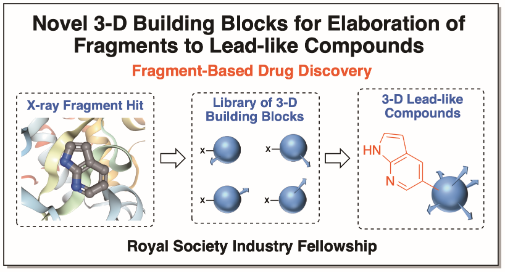
Peter O'Brien is Professor of Chemistry at the University of York, leading research in organic synthesis and medicinal chemistry. His group develops novel methods for stereospecific Negishi/Suzuki-Miyaura cross-coupling reactions and 3D fragment-based drug discovery. Collaborations with AstraZeneca, Diamond X-Chem, and Redbrick Molecular focus on COVID-19 therapeutics and building-block libraries. O'Brien employs high-throughput robotics for reaction optimization and mechanistic studies. His work bridges fundamental organolithium chemistry with applications in synthesizing bioactive heterocycles (piperidines, pyrrolidines). The York 3D Fragment Library, featuring shape-diverse compounds, identified hits against SARS-CoV-2 proteins. Awards include the RSC Stereochemistry Award (2013) and YUSU Teacher of the Year (2019). Selected honors: EPSRC/IAA grants for 3D building blocks commercialization Industrial Fellowships with AstraZeneca (2019-2022) Vice-Chancellor's Teaching Award (2015)
Professor Mohammad Movassaghi is a faculty member in the Department of Chemistry at the Massachusetts Institute of Technology (MIT). He holds the rank of Professor and leads a research group focused on synthetic organic chemistry, particularly the synthesis of complex natural products and the development of new reaction methodologies. His research emphasizes structurally intricate and biologically active molecules, such as alkaloids and polyketides. Key areas include: Synthesis of alkaloids like agelastatins, communesins, and voacangines Mechanistic studies of catalytic processes and asymmetric reactions Biosynthesis-inspired strategies for complex molecules Recent publications highlight advancements in stereocontrolled total syntheses, enzymatic dimerization studies, and applications in cancer research. Notable examples include the synthesis of (+)-Hazuntiphylline (2025), (-)-Voacinol (2022), and Himastatin (2022). His work bridges organic synthesis with biological insights, such as elucidating the role of disulfide reduction potentials in epidithiodiketopiperazines (2020). Professor Movassaghi’s lab collaborates across disciplines, integrating computational modeling (e.g., molecular dynamics simulations of diketopiperazine dimerases) and experimental organic chemistry. His group’s efforts have led to innovations in palladium-catalyzed reactions, diazene fragmentation strategies, and biomimetic dimerization approaches. Lab Website: [Link]
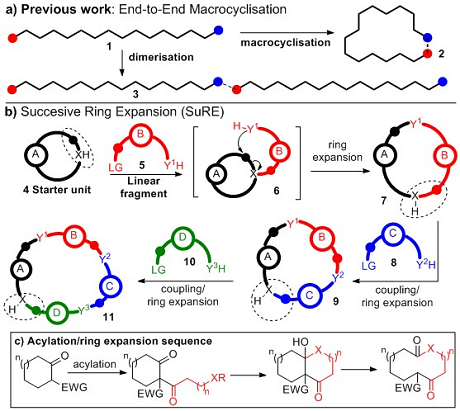
Dr. William Unsworth is a Senior Lecturer in the Department of Chemistry at the University of York. He holds a Leverhulme Trust Early Career Fellowship and the inaugural Eleanor Dodson Fellowship. His research focuses on developing new methods for synthesizing functionalized macrocycles, spirocycles, heterocycles, and natural products, with key interests in ring expansion strategies (e.g., SuRE methodology), photochemistry, catalysis, and spirocyclization reactions. Education: Bachelor's and PhD in Chemistry from the University of Oxford (PhD under Prof. Jeremy Robertson, 2010) Postdoctoral Research Associate with Prof. Richard J.K. Taylor at the University of York (2010–2013) Research Interests: Macrocycle synthesis, medium-sized rings, cascade reactions, photochemical radical processes, and catalyst-driven scaffold diversity. His group’s work emphasizes practical applications in medicinal chemistry and drug discovery. Awards: Thieme Chemistry Journals Award (2020) RSC Hickinbottom Award (2018) European Lead Factory Chemical Library Creativity Award (2017) RSC/BMOS Young Investigator Award (2015) Grants and Projects: Leads initiatives like the ‘Macrocycles for Drug Discovery (MC4DD)’ project funded by the European Commission, and collaborates on projects involving biocatalysis and natural product synthesis. Labs/Teams: The Unsworth Research Group at the University of York includes collaborators like Prof. Richard Taylor and Prof. Gideon Grogan, focusing on interdisciplinary synthetic chemistry and sustainable methods.
Andrew Sutherland is Professor of Organic Chemistry at the University of Glasgow , School of Chemistry. His research integrates synthetic organic chemistry with molecular imaging, focusing on PET/SPECT tracer development, fluorescent amino acid probes, and transition-metal catalysis for rapid scaffold assembly. Education: Not explicitly listed in the provided text. Research Interests: Molecular imaging of neurological diseases and cancer using PET/SPECT tracers Development of fluorescent amino acid probes for cell imaging Transition-metal-catalyzed transformations (Fe, Cu, Pd, Ni) One-pot multi-reaction processes for drug-like scaffolds and natural products Publication Trends: His 2024–2025 work emphasizes fluorogenic amino acids, radiohalogenation for PET imaging, and iron/copper-catalyzed C–H functionalization. Earlier work includes natural product synthesis and mechanistic studies on halodeboronation. Scientific Awards: None listed in the provided text. Grants & Collaborations: Extensive collaborations with imaging scientists (e.g., Sally Pimlott, Adriana Tavares) and synthetic chemists, evidenced by multi-author papers and joint PET ligand development. Research Group: Leads the Sutherland group , housed in the Joseph Black Building (C5-06), with active projects in chemical biology and organic synthesis.
Associate Professor LAM Yulin is affiliated with the National University of Singapore (NUS), specializing in bioorganic and medicinal chemistry with a focus on green synthesis methodologies. His research interests include developing anti-cancer, anti-inflammatory, and neurological agents, alongside creating recyclable catalysts for sustainable organic transformations. He holds a Ph.D. (1992) and B.Sc. (1987) from NUS, with prior research fellowships at the Institute of Molecular and Cell Biology (1994–1996) and The Scripps Research Institute (1992–1994). Teaching contributions include courses such as CM2122 Organic Chemistry, CM3225 Biomolecules, and CM5224 Emerging Concepts in Drug Discovery. His research highlights include synthesizing chondroitin sulfate analogs for molecular recognition via surface-enhanced Raman scattering (SERS) and developing fluorous boronic acid catalysts for amide bond formation under eco-friendly conditions. Research focuses on glycosaminoglycan structure-function relationships, novel mycobacterial inhibitors, and autophagy-inducing agents. His work bridges organic synthesis with biomedical applications, emphasizing sustainability and translational potential.
Professor Philip Wai Hong Chan holds a Chair in Chemistry at Monash University, leading research in organic and inorganic chemistry with a focus on sustainable catalytic methodologies. He earned a B.Sc.(Honours) from the University of Bristol (1995) and a D.Phil. from the University of Oxford (1998), followed by postdoctoral training at Tohoku University, University of Sydney, and University of Hong Kong. Since 2014, he has been a Professor in Monash's School of Chemistry, advancing studies in homogeneous catalysis, photoredox systems, and organocatalysis. His research integrates synthetic chemistry with applications in drug discovery and materials science, particularly targeting bioactive natural products and functional materials. Key areas include transition metal catalysis for complex molecule synthesis and development of green chemistry approaches. Chan leads major projects like the ARC Training Centre for Advanced Radiochemical Technologies and has authored over 157 publications. Recognition includes multiple Asian Core Program Lectureship Awards (2007, 2014), a SPMS Teaching Excellence Award (2012), and contributions to antimicrobial research through self-assembling nanoparticles. He collaborates globally on topics like sustainable catalysis and medical imaging, reflecting his commitment to UN Sustainable Development Goals in health and innovation.
Dr Marina Uzelac is a Royal Society University Research Fellow in the Department of Chemistry at the University of Bath, affiliated with the Institute of Sustainability and Climate Change. She is actively leading two research projects funded by The Royal Society focused on manganese catalysis and is accepting doctoral students. Education: PhD in Chemistry, University of Strathclyde (awarded 2016) MSc in Chemistry, University of Zagreb (2011) BSc in Chemistry, University of Zagreb (2009) Her research lies at the intersection of inorganic and synthetic chemistry, with a focus on cooperative reactivity of rarely employed metals, particularly manganese and alkali metals. She investigates the use of manganates in catalytic transformations, electrophilic borylation strategies, and the development of sustainable synthetic methodologies. Her work often involves N-heterocyclic carbenes and explores structural diversity in metal complexes. The recent publications highlight a strong trend in organometallic synthesis, C-H functionalization, and the design of novel borylation methods with applications in materials science, particularly BN-doped helicenes. Her work bridges fundamental inorganic chemistry with practical synthetic applications. Scientific Awards: Royal Society University Research Fellow Dr Uzelac is the Principal Investigator on two active grants from The Royal Society: 'Mn(II): A Janus Face for Catalysis' and its enhanced research expenses counterpart, both running from 2022 to 2027. These grants support her independent research program in sustainable catalysis. While no formal advisees are listed, she is accepting doctoral students, indicating an emerging supervisory role. She is actively involved in research networks and collaborations across Europe, particularly in the areas of main group and transition metal chemistry. Her work is disseminated through high-impact journals and has garnered attention in academic and social media circles.
Thomas Boddaert is an Assistant Professor at the Institut de Chimie Moléculaire et des Matériaux d'Orsay (ICMMO), Université Paris-Saclay . His research focuses on organic photochemistry , synthesis of constrained β-amino acids , and conformational studies of peptide-based foldamers . He leads the photochemistry theme and instrumental platform in the CP3A Organic Synthesis group and manages collaborations with industry partners like Diverchim. PhD in Organocatalysis (Aix-Marseille University, 2009) Postdoctoral research: Manchester University (2010), Rouen University (2010-2012) HDR (2021) for PhD supervision qualification His research includes: Photochemical domino reactions for sulfur heterocycles Peptide foldamer design with cyclobutane motifs Asymmetric synthesis using N-heterocyclic carbenes (NHCs) Visible-light photocatalysis Recent publications demonstrate expertise in: Light-initiated cascade synthesis of alkylidenecyclobutanes (2024) Thia-Paternò-Büchi reaction applications (2024, 2022) Conformational analysis of oxetin oligomers (2018) Fluorinated β-peptide folding studies (2015) Awards: Thieme Chemistry Journals Award (2019) Emergence@international scholarship (INC/CNRS, 2020) Teaching and administrative roles: Co-responsible for L3 Organic Photochemistry Head of L2 Organic Chemistry courses Manager of the Villebon – Georges Charpak Institute chemistry program Member of Paris-Saclay University advisory commission (2021–) He supervises 6 Paris-Saclay PhD students , 2 foreign PhD students , and 2 postdoctoral researchers , with notable projects on: Photochemical post-functionalization of thietanes (2024–) Domino reactions for sulfur heterocycles (2023–) Light-controlled kinase inhibitors (2021)
Ulrich Tallarek serves as Professor of Analytical Chemistry in the Faculty of Chemistry at Philipps University of Marburg, where he has held a W3 professorship since 2011. He also serves on the Board of Directors for the Materials Science Center at the university, a position he has held since 2007. His research group focuses on the fundamental understanding of transport phenomena in porous media with applications spanning chromatography, battery technology, and microfluidic systems. The group maintains strong collaborations with institutions worldwide and secures substantial research funding for advanced computational and experimental work. Professor Tallarek's research interests center on functional porous solids, with specific focus on morphology-transport-performance relationships. His work bridges multiple scales from molecular dynamics simulations of solute behavior in nanopores to macroscopic transport in chromatographic columns and battery electrodes. Key research areas include diffusion in hierarchical porous media, electrokinetic phenomena in microfluidic systems, molecular simulation of chromatographic processes, and advanced characterization of porous materials using tomography and other techniques. His group has pioneered multiscale simulation approaches that connect molecular-level surface chemistry to macroscopic transport properties. The research output demonstrates consistent focus on understanding fundamental transport mechanisms in porous systems, with recent publications emphasizing multiscale simulation techniques, molecular dynamics studies of solvent effects in chromatography, advanced characterization of mesoporous structures, and applications to separation science and energy storage. The work shows strong integration of computational modeling with experimental validation across multiple length scales. 2003: Desty Memorial Prize for Innovation in Separation Science, The Royal Institution of Great Britain, London 2006: Young Scientist Award from DECHEMA e.V. 2011: Named Discussion Leader at the 2011 Gordon Research Conference on Physics & Chemistry of Microfluidics 2011–2012: Chairman of the German Chemical Society (GDCh), Marburg 2013: Finalist, World Technology Awards, for category Environment 2013: Named as one of the 100 most influential analytical scientists in the world (The Analytical Scientist Power List) 2017: Recipient of the Silver Jubilee Medal 2017, The Chromatographic Society, UK Professor Tallarek's research has been supported by numerous grants enabling high-performance computing resources, advanced instrumentation, and international collaborations. His group maintains strong ties with industry partners in separation science and analytical instrumentation. The Tallarek Research Group includes postdoctoral researchers, PhD students, and technical staff working across experimental and computational domains. Current projects focus on molecular simulation of chromatographic processes, advanced characterization of porous battery electrodes, and development of novel separation methodologies. The Tallarek Research Group operates state-of-the-art facilities for computational modeling, including access to high-performance computing resources at Forschungszentrum Jülich. The group also maintains experimental capabilities for chromatographic analysis, materials characterization, and microfluidic device development. Their work on physically reconstructed porous media has established new standards for connecting microstructure to transport properties in complex materials systems.
Chi Ting is an Assistant Professor of Chemistry at Brandeis University , focusing on organic synthesis and biosynthesis of natural products. Their work bridges chemical synthesis and biosynthetic pathway exploration to advance therapeutic discovery. Education : Ph.D. from University of California, Berkeley; B.S. from University of Illinois at Urbana-Champaign. Research Interests include: Concise total syntheses of complex natural products Development of novel organic reactions (e.g., chemoselective peptide functionalization) Investigation of biosynthetic mechanisms via genome mining Exploration of SAM-dependent enzymes and domain-of-unknown-function (DUF692) pathways Article Trends emphasize total synthesis (e.g., podophyllotoxin, hyperforin, RiPPs) and biosynthetic studies, with keywords spanning organic methodology, enzymatic transformations, and medicinal chemistry. Scientific Awards : Brandeis Career Hero 2022 NSF CAREER (2024-2029) Thieme Chemistry Award 2024 Grants include the NSF CAREER award for synthetic and biosynthetic research. Their lab (Edison-Lecks Science Building, Room 322) investigates chemical and enzymatic strategies for accessing therapeutic natural products.