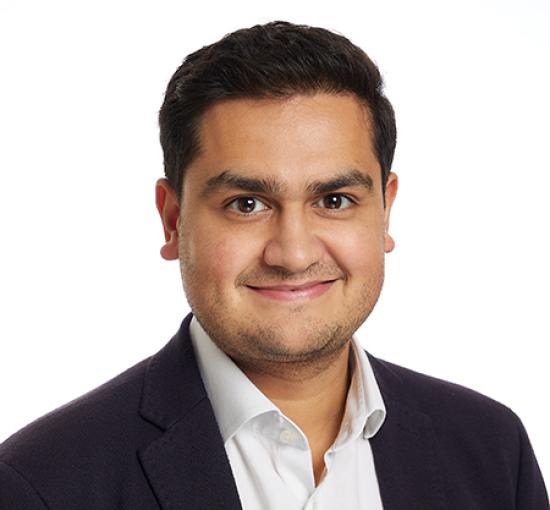
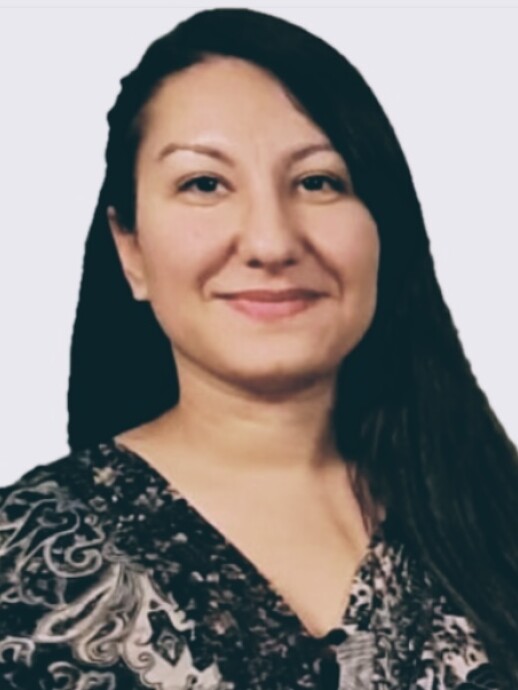
Marcin Wągiel is an Assistant Professor in the Department of Czech Language at the Faculty of Arts, Masaryk University, Brno, Czech Republic. His office is located in building D, room D.413 at Arna Nováka 1, with contact details including phone 549 49 8884 and email marcin.wagiel@phil.muni.cz. His research centers on theoretical and descriptive linguistics with emphasis on Czech language semantics and syntax. Key interests include degree/number constructions, part-whole structures, classifier systems, and temporal-modal interactions in natural language. He employs formal linguistic frameworks to analyze comparative and typological phenomena across languages, particularly within Slavic linguistics. Wągiel actively supervises doctoral research, currently guiding a thesis on temporal-modal semantics. He has secured significant research funding including Czech Science Foundation projects like Classification of classifiers (GA24-10073S, 2024-2026) and Part-whole structures across languages (GA20-16107S, 2020-2023). Additionally, he contributes to Masaryk University's student research programs supporting work in general linguistics, Indo-European studies, narratology, and Baltic studies.
Jeremy Rau is a Professor of Linguistics and Classics at Harvard University's Department of Linguistics, part of the Faculty of Arts and Sciences. He currently serves as Director of Graduate Studies for Fall 2024 and is on leave for Spring 2025. His office is located in Boylston Hall, Cambridge, MA. Rau specializes in Greek and Latin historical linguistics with a particular focus on Homeric language, Indo-European linguistic systems, and Indo-Iranian comparative studies. His research explores ancient language structures, verb morphology, and diachronic phonological changes in pre-classical texts. Research Interests: Proto-Indo-European root analysis Mycenaean Greek linguistic features Homer's language and epic conventions Indo-Iranian comparative linguistics Verb derivation mechanisms Publications reflect deep engagement with ancient language structures, including studies on Mycenaean contract verbs, Homeric noun inflections, and Proto-Germanic lexicon. He has contributed to journals like Die Sprache , Glotta , and Historische Sprachforschung , as well as edited volumes such as Verba Docenti . Administratively, Rau oversees graduate programs and participates in departmental governance. His work bridges historical linguistics with philological scholarship, emphasizing systematic analysis of ancient language data.
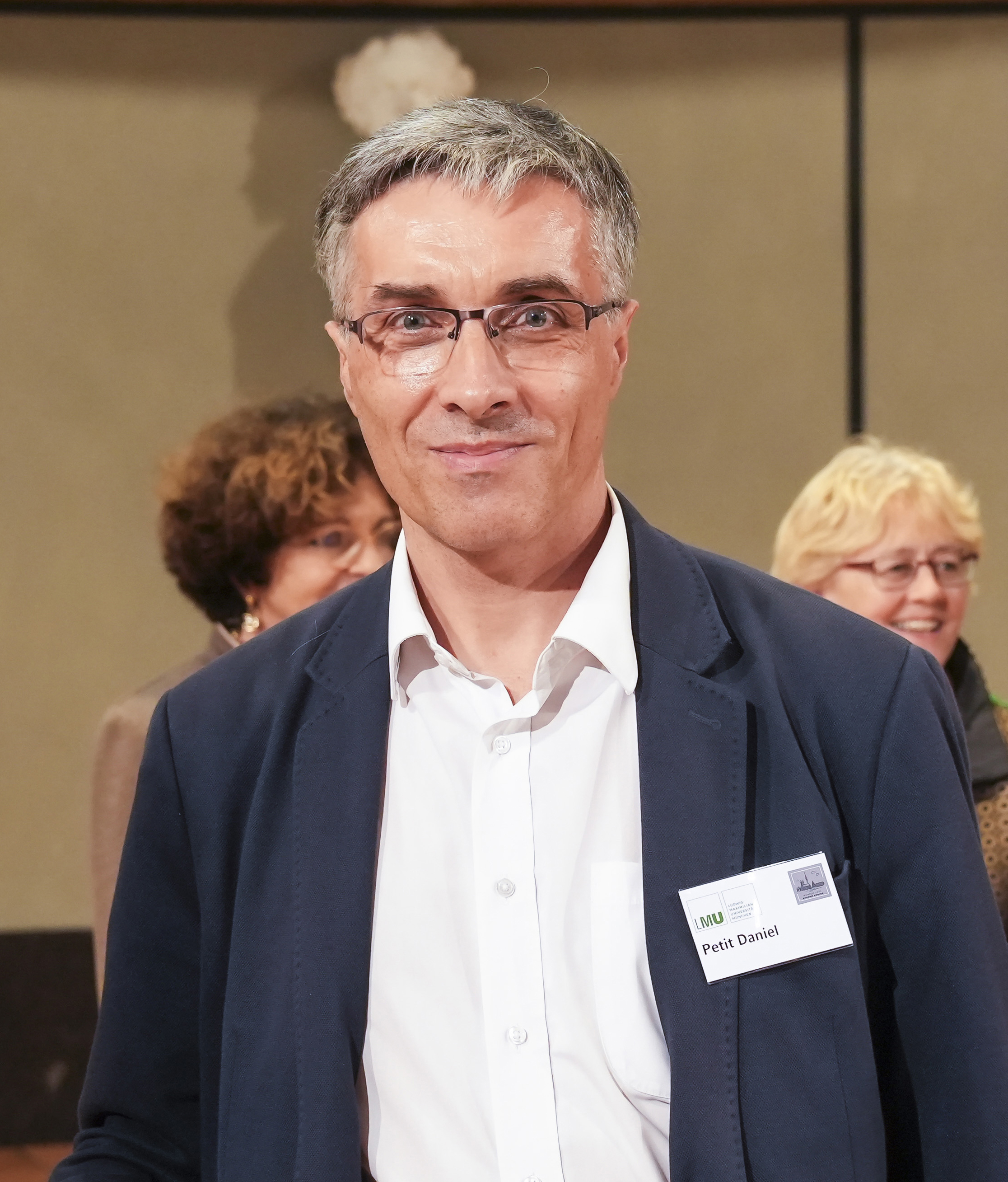
**Daniel Petit** is a **Full Professor of Indo-European Linguistics** at the **École normale supérieure (ENS)** since 2003 and **Director of Studies in Baltic and Indo-European Linguistics** at the **École pratique des hautes études (EPHE)** since 2011. He holds a PhD in Greek Linguistics (1996) and a Habilitation in Baltic Linguistics (2002), both from Paris-Sorbonne Université. His research focuses on historical syntax, comparative grammar of Indo-European languages, Baltic linguistics, and the history of comparative linguistics. **Education**: PhD in Greek Linguistics, Paris-Sorbonne Université (1996) Habilitation in Baltic Linguistics, Paris-Sorbonne Université (2002) Agrégation de Grammaire (1st rank, 1990) Multidisciplinary background including classics, Lithuanian, and Greek linguistics. **Research Interests**: Explores syntactic evolution in Indo-European languages, Baltic language structures, and the historical development of comparative linguistics. Specializes in Latvian, Old Prussian, Ancient Greek, and Lithuanian linguistics and philology. **Awards**: Correspondent member of the Académie des Inscriptions et Belles-Lettres (2021) Vice-chair of the Indogermanische Gesellschaft (2016-2021) Chevalier des Palmes Académiques (2011) **Advising & Leadership**: Supervised 9 PhD students (4 defended, 5 ongoing) and served on 28 doctoral committees. Organized 15 international conferences. Currently serves as Secretary (Chief Editor) of the *Bulletin de la Société de Linguistique de Paris* since 2017.
Prof. Dr. Frank Kammerzell is a Professor at the Department of Archaeology and Cultural History of Northeast Africa within Humboldt University of Berlin since May 2003. His academic career includes habilitation at the University of Göttingen (1999) and extensive research collaborations with Hebrew University of Jerusalem and University of Vienna. His educational background encompasses Medieval and Modern History (major 1980), Egyptology (major), Coptic Studies, General and Indo-European Linguistics, and Assyriology. He earned his Dr. phil. from Göttingen with a dissertation on 'Studies on the Language and History of the Carians in Egypt' (1990) and completed habilitation with 'Language contact and language change in ancient Egypt' (1999). Kammerzell's research spans Egyptian phonology, morphology, syntax, lexis, language history, diachronic typology, language contact, writing systems, and Carian history in Egypt. His work integrates linguistic analysis with archaeological contexts, examining language evolution through contact and typological shifts. Notable projects include studies on Egyptian-Akkadian typological developments and classifiers in ancient Egypt. His publications since 2000 demonstrate sustained focus on Egyptian linguistic structures, writing systems, and cross-linguistic influences. Key themes include verb classifiers, glossing rules for Ancient Egyptian, and lexical semantics-pragmatics interfaces, bridging Egyptology with broader linguistic theory. Graduate Scholarship from the State of Lower Saxony (Doctoral Scholarship) 1987-1989 Kammerzell has led significant research projects funded by the DFG, Fritz Thyssen Foundation, and Volkswagen Foundation. His collaborative work with institutions in Jerusalem and Göttingen highlights international partnerships. While specific advisees aren't listed, his editorial roles suggest mentorship in academic publishing. He co-founded research groups on multilingualism and script systems, contributing to journals like Lingua Aegyptia and Ägypten und Levante , underscoring team-based archaeological-linguistic research.
Jay Jasanoff is the Diebold Professor of Indo-European Linguistics and Philology at Harvard University's Department of Linguistics. His research focuses on Indo-European historical linguistics, with specialization in Anatolian Hittite, Tocharian, Greek, Celtic, and other branches. He holds an office at 312 Boylston Hall and can be reached via email at jasanoff@fas.harvard.edu. His work spans comparative grammar, morphological evolution, and phonological processes in ancient languages. Research Interests: Indo-European language family Historical phonology and morphology Preterite and aorist constructions Language contact phenomena in Balto-Slavic and Anatolian Publications reflect deep engagement with verb systems across Indo-European branches, including seminal work on Hittite and Latin. His contributions to understanding Lachmann’s Law in Latin and Tocharian verb paradigms have been widely cited. Recent work continues exploring diachronic patterns in Indo-European verb structures. Lauded for his scholarly contributions, Jasanoff was celebrated at a departmental retirement tribute in 2023, highlighting his mentorship and impact on historical linguistics.
Alessandro Del Tomba is a Tenure-Track Researcher in Linguistics and Glottology at Sapienza University of Rome, specializing in historical linguistics, Indo-European studies, and Central Asian philology. He holds a PhD in Linguistics from Sapienza and Comparative Indo-European Linguistics from Leiden University. Historical linguistics Indo-European studies Eastern Iranian philology Language contact theories His research focuses on Khotanese and Tocharian languages, with recent publications analyzing manuscript transmission, morphological variation, and phonological developments. He serves as Principal Investigator for the FIS project "Khotanese language and texts in contexts (KhoTxt): A multimodal approach to the classification and periodisation of the Khotanese language and its texts within the cultural and historical framework of medieval Central Asia". He teaches General Linguistics at undergraduate levels and Linguistics courses at the graduate level in Modern Philology. Active in international academic networks, he participates in conferences across Italy, Europe, and Asia.
Dr. Krishnan Ram-Prasad is a Junior Research Fellow in Classics and Linguistics at Merton College, University of Oxford. His research focuses on comparative Indo-European syntax, syntactic reconstruction of Proto-Indo-European, and critical decolonial approaches to Classics and Comparative Philology. He holds a PhD from 2022 on Proto-Indo-European relative clauses and is developing this work into a monograph for Cambridge University Press. His teaching includes undergraduate courses in Linguistics and Classics, as well as language classes in Latin, Ancient Greek, Sanskrit, and Old English. His research spans synchronic and diachronic syntactic analysis across ancient Indo-European languages, with specializations in Latin, Ancient Greek, Sanskrit, and Hittite. His publications explore topics such as clitic placement in Vedic Sanskrit, Wackernagel’s Law in Vedic and Old Irish, and the role of Comparative Philology in rethinking Ancient World Studies. He actively engages with critical theory to challenge traditional disciplinary boundaries in Classics.
Sverre Stausland Johnsen is Professor of General Linguistics and Scandinavian Linguistics in the Department of Linguistics and Scandinavian Studies at the University of Oslo. His academic work focuses on language change within the fields of phonology, historical linguistics, and sociolinguistics, with particular emphasis on Norwegian language history and Scandinavian languages. Johnsen's research interests span phonology, sound change, language change, historical linguistics, and sociolinguistics. His work often examines how linguistic structures evolve over time, with special attention to Norwegian orthographic reforms, phonological patterns in Scandinavian languages, and the historical development of linguistic features. He has made significant contributions to understanding vowel harmony, retroflexion in Norwegian, and the historical development of grammatical structures in Old Norse and related languages. His recent publications demonstrate a consistent focus on Norwegian language history, orthography reforms, and phonological patterns. The 2021-2025 publications show particular emphasis on Somali tonal systems, Norwegian word formation, stress patterns in loanwords, and historical aspects of Norwegian orthography, especially regarding the 1901 spelling reform. His work combines theoretical linguistic frameworks with detailed historical analysis of Scandinavian languages. Johnsen is actively involved in two research groups: Language Change and Phonology. His ongoing projects include studies on the spread of uvular /r/ in Norway, the historical development of grammatical structures, and the relationship between phonetic perception and phonological change. His research often bridges theoretical linguistics with practical applications in understanding language evolution and variation.
Nadav Asraf is a Lecturer in Classics at Harvard University, holding office hours Wednesday and Friday 10:30–11:45 a.m. in Boylston 206. His primary affiliation is with the Department of Classics within the Faculty of Arts and Sciences. He holds a BA in Classics from the Hebrew University (2012) and a PhD in Classical Philology from Harvard University (2023). His doctoral dissertation focused on The Middle Category in the Aorist Tense in the Homeric Epics—A Study of Form vs. Function . Research interests span structural and functional linguistics of Ancient Greek and Latin, Indo-European linguistics, textual transmission studies, post-classical Greek language evolution, late Latin and Romance language emergence, metrics/prosody, classical reception by Hebrew speakers, language pedagogy, and the history of classical education. His work emphasizes syntactic-morphology interfaces and diachronic linguistic analysis. Recent publications (2021–2023) focus on syntactic-morphology interactions in Ancient Greek, including aorist tense analysis, noun incorporation mechanisms, and morpheme syntactic properties. These contributions advance understanding of Ancient Greek linguistic structures and their theoretical implications. No academic awards or grants are explicitly listed in the provided materials. His professional activities include teaching and research supervision in classical philology and historical linguistics.
David Sasseville is a Post-Doc researcher in Comparative Linguistics (Hittitology) at Philipps University Marburg, specializing in Anatolian languages with particular focus on Luwian, Lycian, and Lydian. A French-Canadian from the Gaspésie peninsula of Québec, he completed his undergraduate studies in Ancient Greek, Latin, and Historical Linguistics at Concordia University in Montreal before pursuing two Master's degrees at Marburg University: one in Indo-European Linguistics focused on the Anatolian branch, and another in Ancient Greek Philology. His research centers on the linguistic structure and historical development of Anatolian languages, with special emphasis on verbal morphology, phonology, and syntax. Through meticulous philological analysis combined with comparative linguistic methods, Sasseville bridges traditional philology with modern linguistic theory to reconstruct earlier stages of these languages and their relationship to Proto-Indo-European. Sasseville's scholarly output demonstrates consistent advancement in understanding Anatolian languages through careful examination of fragmentary texts. His 2021 monograph Anatolian Verbal Stem Formation: Luwian, Lycian and Lydian provides a comprehensive classification of verbal stem classes across these languages. His more recent work includes studies on Luwian dative-locative endings, Lydian o-vocalism, Palaic texts from Hattusa, and the identification of new languages in Hittite archives. He actively collaborates with international scholars including Susanne Görke (with whom he's preparing a new edition of Palaic texts from Hattusa), Elisabeth Rieken, Ilya Yakubovich, and Annick Payne across multiple institutions. His work on the eDiAna digital dictionary project has involved supervising academic internships for doctoral student Oscar Billing from Uppsala University and MA student Jonas Döll from Philipps University Marburg. Sasseville teaches a diverse range of courses including Hieroglyphic Luwian, Cuneiform Luwian, Palaic, Historical Grammar of Sanskrit, Hittite Reading for Beginners, Latin Linguistics, Lycian Varieties, and Introduction to Historical Linguistics, reflecting his broad expertise across ancient languages and linguistic theory.
Selcen Erten Johansson is a Doctoral Researcher in Digital Language Studies at the University of Turku, focusing on corpus linguistics and media discourse analysis. Her research examines Turkish web registers in the context of political events, such as Finland's NATO membership process in Turkish media. Supported by the Eino Jutikkala Fund (2024–2026), her work bridges computational methods with sociolinguistic inquiry. She holds a Master's in Linguistics from Mersin University (2019) and has been a Fulbright scholar in the U.S. Her teaching spans corpus linguistics, language technology, and Turkish as a foreign language at institutions including Turun Suomenkielinen Työväenopisto and Toros University. Education: PhD Candidate in Digital Linguistics, University of Turku (2021–present) Master's in Linguistics, Mersin University, Türkiye (2019) Fulbright Scholarship, Michigan State University (2015–2016) Research Interests: Selcen explores language variation in digital contexts, particularly Turkish web-based discourse. She combines corpus linguistics with computational tools to analyze political media narratives and multilingual web registers. Her work emphasizes the intersection of technology and sociolinguistics, including projects like TurCORE and collaborations with the TurkuNLP research team. She also investigates pedagogical approaches for teaching Turkish and Finnish as foreign languages. Grants & Support: Eino Jutikkala Fund Grant (2024–2026), Finnish Academy of Science and Letters Teaching & Outreach: She has taught courses on corpus linguistics, automatic text processing, and Turkish language instruction across multiple institutions. Her teaching philosophy integrates digital tools with traditional language pedagogy. Labs & Teams: Active member of the TurkuNLP research team, focusing on NLP applications in digital humanities and multilingual corpora analysis.
Ian Hollenbaugh is an Assistant Professor at Washington University in St. Louis with joint appointments in Classics and Linguistics. He holds a PhD in Indo-European Linguistics from UCLA, where he also earned graduate certificates in Classics and Linguistics. His research focuses on tense/aspect systems in ancient languages, digital corpora of classical texts, and the Indo-European verb. Current projects include annotated digital editions of the Rigveda and Iliad . Research interests span: Comparative analysis of Homeric Greek and Vedic Sanskrit Diachronic development of verbal systems Morphosyntactic variation in early Indo-European Awards include multiple UCLA research fellowships and undergraduate honors. Teaching encompasses Greek literature, historical linguistics, and beginning Greek/Latin courses. Service roles include advising Classics student groups and organizing academic workshops.
Ronald Kim is an Associate Professor of Linguistics in the Department of Older Germanic Languages within the Faculty of English at Adam Mickiewicz University in Poznań, Poland. Born and raised in New Jersey, USA, he completed his undergraduate studies at Princeton University in 1996 before earning his Ph.D. in Linguistics from the University of Pennsylvania in 2002. After a postdoctoral fellowship at Cornell University, he taught at several US institutions including Penn, Temple, and Swarthmore before joining Adam Mickiewicz University in 2009 as a Visiting Professor, eventually securing his current position as Associate Professor. Kim's academic credentials include an AB in Astrophysical Sciences from Princeton University (1996), a Ph.D. in Linguistics from the University of Pennsylvania (2002), and a D. Litt. in English Linguistics from Adam Mickiewicz University in Poznań (2015). His research spans multiple areas of historical linguistics with particular focus on Indo-European languages including Tocharian, Iranian, Balto-Slavic, Greek, Celtic, and Anatolian, as well as Semitic languages like Aramaic. His work encompasses sociolinguistics, language variation, language contact phenomena, dialect geography, phonology (particularly autosegmental, nonlinear, and prosodic approaches), morphology, and pidgin and creole linguistics with emphasis on English-based contact languages of the Pacific. Analysis of Kim's recent publications reveals a clear trajectory in his scholarly work, with increasing focus on Iranian languages, particularly Ossetic, while maintaining strong connections to broader Indo-European studies. His work demonstrates sophisticated integration of comparative linguistic methods with computational approaches to language evolution, particularly evident in his contributions to phylogenetic studies of Indo-European languages. There's also a consistent thread of interest in suppletion phenomena across multiple language families. His research often bridges theoretical linguistic concerns with historical and geographical contexts, particularly the linguistic landscape of Central Asia and the Silk Road region. Erasmus+ teaching exchange, Ludwig-Maximilians-Universität München, January 2020 Heiwa Nakajima Foundation fellowship, Graduate School of Humanities and Sociology, The University of Tokyo, Spring 2017 AMU research travel grant, Department of Linguistics, University of Pennsylvania, September 2013 Junior Research Grant, Swarthmore College, Spring 2007 Mellon Postdoctoral Fellowship in the Humanities, Cornell University, 2002-03 University of Pennsylvania Graduate School of Arts and Sciences Dissertation Fellowship, 2001-02 William Penn Graduate Fellowship, University of Pennsylvania, 1996-2000 Adam Mickiewicz University rector's prize for publications, 2019 Kim serves in multiple editorial capacities, including General Editor of Indo-European Linguistics (with Joseph F. Eska) and Chatreššar: International Journal for Indo-European, Semitic, and Cuneiform Languages (with Petr Zemánek). He also sits on the Editorial Board of Brill's Studies in Indo-European Languages & Linguistics, the Editorial Advisory Board of Lingua Posnaniensis, and serves as a Board of Reviewer for Tocharian and Indo-European Studies and the Academic Journal of Modern Philology. His research has been supported by numerous grants including projects on Ossetic Historical Grammar funded by the National Science Centre Poland (2020-23), The Historical Morphology of the Old Armenian Verb funded by the Czech Science Foundation (2017-19), and participation in the Indo-European Cognate Relationships project at the Max Planck Institute for the Science of Human History (2015-). Kim maintains an active international presence through frequent conference participation and invited lectures at major institutions worldwide including University of Pennsylvania, Princeton University, Harvard University, Kyoto University, and Ludwig-Maximilians-Universität München. His scholarly network spans multiple continents, reflecting the international nature of Indo-European linguistic research.
Dr. Bridget Drinka is a Professor in the Department of English at the University of Texas at San Antonio's College of Liberal and Fine Arts (COLFA), where she has served since 1991. She holds a Ph.D. in Indo-European and historical linguistics from the University of Texas at Austin, an M.S. from Georgetown University, and a B.A. from the University of Illinois at Urbana-Champaign. Her research focuses on sociolinguistic motivations for language change , contact-driven linguistic innovation , and geographical diffusion of grammatical features across Indo-European languages. She is internationally recognized for her work on the periphrastic perfect and language contact phenomena, with interdisciplinary connections to digital humanities. Analysis of her publications reveals dominant themes in language contact mechanics , Indo-European syntax evolution , and areal linguistics , particularly examining tense systems in Dutch, Spanish, Greek, and Slavic languages. Her work frequently employs corpus-based methods and historical stratification frameworks. Awards and Honors: Leonard Bloomfield Book Award (2019) for Language Contact in Europe Chancellor’s Council Outstanding Teaching Award (1999) Richard S. Howe Outstanding Undergraduate Teaching Award (2016) Fulbright Senior Lectureship at Moscow State University (1998) She has held significant leadership roles including President of the International Society for Historical Linguistics (2015-2017), organizer of the International Conference on Historical Linguistics (2017), and current service on editorial boards for Edinburgh Studies in Historical Linguistics and Studi e Saggi Linguistici . As Co-Director of COLFA Semester in Urbino, she oversees international academic programs in Italy.
Prof. Peter Schrijver is a Professor of Celtic and Classics at Utrecht University's Faculty of Humanities, leading the Department of Languages, Literature, and Communication (TLC). His research focuses on historical linguistics, particularly the evolution of Celtic languages and Indo-European studies. Schrijver earned his PhD in Classical Philology from Leiden University (1991) and held academic positions at Ludwig-Maximilians-Universität München before joining Utrecht University in 2005. He has served as vice-dean of the Faculty of Humanities (2015–2020) and director of undergraduate studies for languages and cultures (2007–2014). His work explores language contact, prehistoric linguistic relationships, and the cultural history of Europe. He is an editorial board member of the Journal of Indo-European Studies and frequently delivers invited lectures on topics like Hattic syntax, Celtic origins, and language evolution. His contributions bridge linguistic analysis with archaeological and genetic perspectives, offering insights into prehistoric language dynamics. Research interests include the history of Brittonic and Goidelic languages, substrate influences in Old English, and the linguistic prehistory of Western Europe. He has published extensively on Indo-European phonology, Celtic comparatives, and substrate languages. His recent work examines East Caucasian languages and Neolithic linguistic connections. Schrijver's editorial roles and international collaborations highlight his role in advancing comparative linguistics.