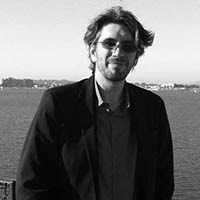
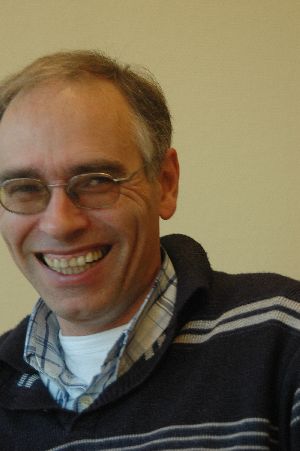
Prof. Zoltan Dienes is a Professor in Experimental Psychology at the University of Sussex, Director of the Centre for Open Science and Research Reform. His work focuses on Bayesian statistical methods, unconscious mental processes, and reforming scientific practices. He advocates for Registered Reports and computational reproducibility. Education: BA (Natural Sciences, Cambridge), MA (Experimental Psychology, Macquarie), D.Phil (Experimental Psychology, Oxford). Research interests include Bayesian inference, phenomenological control (e.g., hypnotic suggestibility), and distinguishing conscious/unconscious knowledge. He critiques conventional statistical practices and promotes open science initiatives. Key grants include studies on mindfulness, implicit cognition, and hypnotisability. Editor roles in journals like Psychology of Consciousness and Royal Society Open Science . Teaches courses on conscious/unconscious processes and research reform. Active in promoting reproducible research and registered reports.
Matthew Dye is a Professor of Liberal Studies at the National Technical Institute for the Deaf (NTID) within Rochester Institute of Technology (RIT). He directs the joint Ph.D. program in Cognitive Science at RIT and leads the NTID SPACE Center. Dye also holds an adjunct appointment in Neuroscience at the University of Rochester Medical Center (URMC). His educational background includes a B.Sc. (Hons.) from Manchester Polytechnic (UK), an M.Sc. from the University of Stirling (UK), and a Ph.D. in Psychology from the University of Southampton (UK). His postdoctoral research at the University of Rochester (2002-2009) focused on brain and cognitive sciences, particularly in British Sign Language psycholinguistics. Dye’s research explores how deafness influences visual and multi-sensory processing, with a focus on selective attention, neuroplasticity, and sign language structure. His work has been funded by the National Science Foundation (NSF) and the National Institutes of Health (NIH). He teaches courses in RIT’s Psychology undergraduate program and oversees the Rochester Postdoctoral Partnership, a mentoring initiative for deaf and hearing scholars. His research highlights include studies on crossmodal plasticity in cochlear implant users, visual attention differences in deaf individuals, and the impact of sign language on facial expression recognition. Dye actively participates in interdisciplinary collaborations, including the deaf 𝑥 lab , which investigates deaf-centric approaches to cognitive development and visual processing. Key achievements include membership in an NIH review group (2020) and leadership roles in programs like the Rochester Bridges to the Doctorate, aimed at supporting deaf students in biomedical sciences. Dye’s labs, such as the GeoLab and STAR Lab, utilize advanced neuroimaging and eye-tracking technologies to advance understanding of deaf cognition.
Kenneth J. Kurtz is a Professor in the Department of Psychology at Binghamton University. His research focuses on cognitive mechanisms underlying categorization, comparison, and analogical reasoning. He investigates how these processes bridge perceptual experience and stored knowledge, with applications in education and machine learning. His lab employs behavioral studies and neural network models, such as the DIVA model, to study human learning and conceptualization. Education: PhD in Psychology from Stanford University, BS from Brown University. Current research interests include relational category learning, neural network simulations of cognition, and transfer of learning in educational settings. He is accepting graduate students for Fall 2024. Key research areas involve the role of comparison in promoting analogical transfer, relational encoding for problem-solving, and the design of effective pedagogical strategies to enhance conceptual understanding. His work emphasizes the interplay between perceptual input and abstract knowledge structures. Recent studies explore how structured comparison and category construction can improve generalization and transfer in learning tasks, with implications for both cognitive science and educational technology. His team also investigates computational models that simulate human categorization processes and their implications for AI.
William Cunningham is a Professor at the University of Toronto, cross-appointed at the Vector Institute for Artificial Intelligence and the Department of Computer Science. His research integrates artificial intelligence with multi-level approaches from neuroscience, psychology, sociology, and cultural anthropology to study social cognition and group dynamics. The Social Cognitive Science and SocialAI lab focuses on computational models of cooperation, competition, and social judgment, leveraging deep neural networks and multi-agent systems. Cunningham’s work addresses how societies navigate collective challenges through emergent behaviors and algorithmic frameworks like Sorrel and Concordia. Research interests include generative AI ethics, stereotype persistence, and the interplay between computational models and human social structures. He explores how technology and social systems co-evolve, examining topics like polarization, punishment psychology, and cultural influences on cognition. Recent projects use reinforcement learning to simulate generational social norms and analyze mental health in the context of autistic trait camouflage. Cunningham’s interdisciplinary approach bridges machine learning, neuroscience, and social science to address pressing questions about human behavior and societal progress. His work on societal and technological progress emphasizes adaptive systems through frameworks akin to 'patchwork quilts,' highlighting incremental innovation and cultural integration. Public health studies during the pandemic demonstrated how national identity influences policy support, reflecting broader interests in crisis-driven social coordination and computational epidemiology.
Grete Arro is a Research Fellow at Tallinn University's School of Educational Sciences, specializing in educational psychology, environmental psychology, and sustainable development. She holds a Doctor's Degree from Tallinn University (2014) and has held academic roles since 2006, including advising for the Ministry of Education and Research and collaborations with institutions like the University of Tartu and Tallinn University of Technology. Her research focuses on conceptual change, climate literacy, and teacher education, with notable contributions to climate awareness strategies and circular bioeconomy frameworks. She has been recognized with awards such as 'University Lecturer of the Year 2023' and an Estonian science popularization prize. Her work spans projects like fostering scientific habits of mind in secondary education, analyzing climate change communication, and developing zero-waste training programs. She has advised numerous students on topics ranging from academic burnout to entrepreneurship education. Key publications include studies on digital outdoor learning tools, teacher climate awareness training, and methodological frameworks for sustainable development initiatives. Grete also contributes to national and EU-funded projects, including the ERA Chair in Sustainable Futures and interdisciplinary research on environmental policy. Her labs and collaborations emphasize practical applications of research in education and policy, aiming to enhance environmental consciousness and sustainable practices.
Patrick Rebuschat is a Professor of Linguistics and Cognitive Science at Lancaster University, serving as Director of Internationalization in the Faculty of Arts and Social Sciences. He holds additional roles as Distinguished International Professor at the University of Tübingen and Director of the Heritage Language 2 Consortium (HL2C). He co-directs the Lancaster Language Learning Lab (4L) and coordinates the NOVA Lancaster partnership. His research focuses on the cognitive mechanisms underlying language learning, emphasizing implicit learning, statistical learning, heritage language bilingualism, and second language acquisition. He received his PhD from the University of Cambridge and BA from the University of Lisbon, with prior teaching stints at institutions like Harvard and Georgetown University. Research interests include studying how the mind and brain process novel languages, particularly through implicit and statistical learning paradigms. Key topics include individual differences in learning, explicit knowledge’s impact on implicit learning, and the role of frequency in acquisition. His work bridges experimental psychology, computational modeling, and applied linguistics. Recent publications highlight advancements in understanding cross-situational learning, heritage language dynamics, and statistical learning across ages. His collaborative projects, such as HL2C and NOVA Lancaster, aim to advance multilingualism research and education. Supervision focuses on six core questions addressing learning mechanisms, measurement, and neural representation of language knowledge. Rebuschat’s affiliations include leadership roles in research groups like SLLAT and participation in global initiatives like the Camões Institute Chair for Multilingualism. His outreach efforts, such as Native Explorers, promote science and multilingualism among diverse communities.
Dr. Petroc Sumner is a Professor in the School of Psychology at Cardiff University, where he has been employed since 2006. His research focuses on the relationship between perception and action, particularly how visual signals trigger actions and how behavior is controlled to prevent reflexive responses when unwanted. He leads research using behavioral measures, eye tracking, fMRI, and MEG to investigate these mechanisms in both healthy volunteers and patients. BA in Natural Sciences, 1st Class, University of Cambridge (1996) PhD, Department of Experimental Psychology, University of Cambridge (2000) Diploma of Imperial College, London, in Advanced Study in Learning and Teaching (2003) Professor Sumner's research examines how automatic sensorimotor behavior is controlled in health and disease, with particular interest in how visual signals that may not be consciously perceived can trigger actions. His work investigates why people differ in basic behavioral control mechanisms, which can be disrupted by brain damage, degeneration, or mental disorders. He also explores decision-making processes related to eye movements and investigates why everyday perception appears immune to visual distortions and imperfections introduced by our eyes and visual system. His recent publication record demonstrates a strong focus on visual hypersensitivity, vestibular disorders (particularly Persistent Postural Perceptual Dizziness), and the intersection of technology with psychological research. His work spans from fundamental cognitive neuroscience to applied clinical research, with increasing emphasis on developing technological solutions for rehabilitation and assessment. The research shows a clear trajectory toward translational applications while maintaining strong theoretical grounding in cognitive and perceptual processes. David Marr Medal, Applied Vision Association Professor Sumner has supervised numerous PhD students including James Harrison and currently supervises Rebecca Oates. His research has been supported by substantial grants from ESRC, Wellcome Trust, BBSRC, and other funding bodies totaling over £1 million. His work on science communication, particularly regarding the relationship between academic press releases and health news reporting, has received significant attention. He is part of the CUBRIC (Cardiff University Brain Research Imaging Centre) team and collaborates extensively both within Cardiff University and with external institutions including UCL, John Hopkins, and others internationally. Professor Sumner leads research teams investigating sensorimotor control, visual perception, and decision-making processes. His laboratory integrates behavioral testing with advanced neuroimaging techniques through collaborations with Cardiff's imaging facilities. He is part of the insciout.com project investigating communication between scientists and journalists, particularly regarding health-related research. His research group includes collaborators such as Aline Bompas, Chris Chambers, and Georgina Powell, with whom he has published extensively on visual processing, attention, and motor control.
Jane Torr is an Associate Professor and Honorary Associate Professor at the Macquarie School of Education, Macquarie University. Her research focuses on language development in early childhood, educator-child interactions, and literacy practices in diverse settings. Key areas include infant communication, bilingual education, and the role of multimodal discourse in learning. Her projects explore topics such as educator-infant talk in childcare centers, literacy-oriented interactions during shared reading, and the impact of technology in language education. She has conducted studies on cross-cultural parent-child communication, the effectiveness of tablet-based learning tools, and the quality of early childhood pedagogy. Notable contributions include analyzing mealtime conversations as language-learning contexts, evaluating children’s television for educational value, and investigating the linguistic diversity in early childhood settings. Her work bridges theoretical frameworks like systemic functional linguistics with practical applications in educational practices. Key Projects: Investigating educator-infant talk and peer interactions in childcare (2014–2021) Literacy-oriented talk in mother-child reading interactions (2014) Quality of educator-infant interactions in childcare (2013) Research Themes: Infant language acquisition Multilingual education Technology in early language learning Pedagogical discourse analysis
Dr. C.J.M. (Cor) Suhre is a Research Associate in the Faculty of Behavioural and Social Sciences at the University of Groningen, specializing in Teaching and Teacher Education. With over 100 research outputs spanning more than a decade, Dr. Suhre maintains an active research profile in educational psychology and teacher development. Dr. Suhre's research interests focus on educational assessment, teacher education, school leadership, and cognitive development in learning contexts. Their work particularly examines formative assessment practices, logical reasoning development, distributed leadership in schools, and the relationship between school vision and teacher commitment. Recent research has explored the impact of explicit school vision on teacher commitment, formative assessment instruments in science education, and the influence of leadership on PhD students' sense of belonging in Kenyan universities. Analysis of Dr. Suhre's publication history reveals consistent contributions across multiple educational subfields, with particular emphasis on practical applications for classroom instruction and school improvement. The research demonstrates strong methodological diversity, incorporating qualitative, quantitative, and mixed-methods approaches to address complex educational challenges. Best paper award (2017) Dr. Suhre actively contributes to the academic community through editorial work and peer review for journals including Learning Environments Research, Studies in Educational Evaluation, and Learning and Individual Differences. Their scholarly network includes collaborations with researchers across multiple institutions, particularly within the Dutch educational research community.
Dr. Martin Lages is a Senior Lecturer at the School of Psychology & Neuroscience, University of Glasgow, affiliated with the Centre for Cognition, Language, and Metascience (CLM). He holds a PhD from Oxford University and Heidelberg University. His research spans quantitative methods (hierarchical models, Bayesian inference), visual perception (motion, stereo vision), and human decision-making (cognitive bias, rationality). Lages has secured grants including the Erasmus+ TquanT Project (2015–2018, PI) and Leverhulme Trust funding (2011–2013, PI). He advises PhD students Kitti Ban, Elaine Jackson, and Elena Minucci. His work often intersects forensic psychology, exploring juror decision-making and legal systems. Notable publications include studies on hierarchical signal detection models (2024) and the Scottish verdict system (2022). Research Focus: Lages’ research bridges quantitative analysis with perceptual and cognitive processes. He investigates how visual cues inform 3D motion perception and how cognitive biases influence legal outcomes. Recent work examines autism-related social interactions using registered reports (2025). His Bayesian modeling approaches address gaps in understanding binocular vision and decision-making dynamics. Grants & Collaborations: He led projects on 3D motion perception (Leverhulme Trust) and quantitative teaching (Erasmus+). Collaborations include the Scottish Vision Group and Society for Mathematical Psychology.
Jian Chen is a prolific academic researcher with affiliations across multiple institutions worldwide, primarily in China but also including international universities. The DBLP disambiguation page lists 47 distinct individuals with this name, working in various departments including Computer Science, Electrical Engineering, Telecommunications Engineering, and other technical fields at prestigious institutions such as Zhejiang University, Xidian University, Northeastern University, and Ohio State University. Research interests span a wide range of technical domains including artificial intelligence, machine learning, computer vision, network security, medical imaging, and electrical engineering. Recent publications indicate active research in deep learning applications, image processing, trajectory analysis, and biomedical informatics. The publication output is substantial, with numerous papers appearing in IEEE Access, Pattern Recognition, and other high-impact journals. The research trends show a strong focus on practical AI applications across multiple domains, with particular emphasis on medical imaging, network security, and intelligent control systems. Many publications involve collaborative work with researchers across different institutions, indicating an active research network. While specific awards are not listed in the provided DBLP information, the volume and quality of publications suggest recognition within the academic community. The research output demonstrates expertise in both theoretical development and practical implementation of computational methods. Jian Chen appears to be actively mentoring students, as evidenced by the numerous collaborative publications, though specific student names aren't detailed in the DBLP records. The research spans both fundamental algorithm development and applied problem-solving across various engineering and computer science domains.
Barbara Carretti is a Full Professor at the University of Padua, Italy. Her research focuses on cognitive processes in learning and memory, particularly reading comprehension, individual differences in cognitive abilities, and age-related changes in cognition. She explores topics such as working memory, developmental dyslexia, educational interventions, and the impact of technology on learning. Her work addresses challenges faced by students with learning disabilities, including those in higher education, and emphasizes the importance of soft skills, social-emotional competencies, and behavioral adaptations for academic success. She investigates cognitive training methods, such as computerized interventions targeting executive functions, to improve reading and problem-solving skills. Carretti has contributed to developing assessment tools like the Italian Behavioral, Emotional, and Social Skills Inventory (BESSI-I) and explores spatial cognition in populations with Down syndrome. Her research also examines the effects of multitasking on comprehension and the role of empathy in postpartum mental health. Her studies span from early childhood to aging populations, addressing topics such as cognitive reserve in older adults, injury-related behaviors, and the efficacy of mindfulness-based attention training. She advocates for evidence-based educational practices and inclusive policies to support diverse learners.
Dr. Rachel Pye is an Associate Professor of Psychology at the University of Reading, serving as School Director of Teaching and Learning. She holds a BSc (Hons) in Psychology from the University of Birmingham, followed by an MSc and PhD in Psychology from the University of Reading. Her research focuses on dyslexia, multilingual literacy assessment, neuromyth beliefs in education, and the impact of digital media on child learning. She co-leads the PRaES (Pedagogical Research and Educational Scholarship) group and serves on the Forum for Research on Literacy and Language (FRiLL) committee. Her work spans cognitive and developmental psychology, with notable contributions to multilingual reading assessment methods and the effects of touch screen technologies on children’s learning. Recent studies explore assessment reforms in higher education and memory dynamics in forensic contexts. She has been recognized as a Senior Fellow of the Higher Education Academy. Key publications include groundbreaking studies on bimodal learning strategies, formative assessment innovations, and military family dynamics. Her research often employs mixed-methods approaches, combining experimental and qualitative analyses to address educational and psychological challenges.
Mahmoud Abdi Tabari is a Teaching Assistant Professor at the University of Nevada, Reno, specializing in applied linguistics with a focus on second language acquisition and task-based language teaching. His research explores task design characteristics, cognitive aspects of academic writing, and the impact of individual differences on L2 performance. Education: PhD in Applied Linguistics from Oklahoma State University (2018) His research interests include task complexity, written corrective feedback, and mixed-methods research designs. Recent work examines interactions between task repetition, rehearsal, and emotional states in L2 writing, as well as cognitive load dynamics in task-based contexts. Key themes in his publications involve analyzing linguistic complexity metrics, self-efficacy development, and pedagogical task sequencing models like the SSARC framework. Abdi Tabari's articles consistently address methodological innovations in measuring L2 outcomes, including cohesion analysis, automated text evaluation, and meta-analytic approaches to task sequencing effectiveness. He emphasizes the importance of task readiness factors such as planning and topic familiarity in shaping writing quality and affective responses.
Alexis Hanna is an Assistant Professor of Management at the University of Nevada, Reno's College of Business, Department of Management. She holds a Ph.D. in Industrial/Organizational Psychology from the University of Illinois, Urbana-Champaign (2020), an MS from the same program (2018), and a BA in Psychology and Math from Saint Mary’s College (2015). Her research focuses on individual differences, particularly vocational interests and personality, and their impact on career choices, person-environment (P-E) fit, and recruitment practices. She employs advanced statistical methods like structural equation modeling and meta-analysis. Key research areas include gender and ethnic disparities in career fit, longitudinal changes in P-E fit, and automation’s role in future work. She advises the ARC Lab, focusing on these themes. Courses taught include Data Analysis II, Advanced Research Methods in Management, and Quantitative Management Systems. Publications span journals like Applied Psychology and Journal of Vocational Behavior , addressing topics such as interest gaps in labor markets and AI-enhanced career prediction. Her work bridges psychological theory with real-world career dynamics, emphasizing equitable outcomes and methodological innovation.