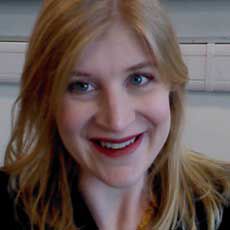
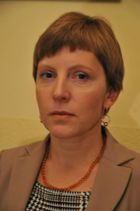
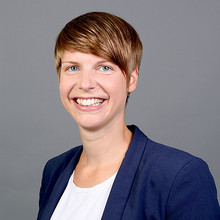
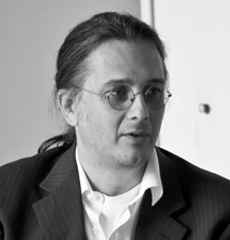
Laura Jenkins is a Lecturer in Political Science at the University of Birmingham's Department of Political Science and International Studies (POLSIS), part of the School of Government. She completed her PhD (2008) and earlier degrees at the University of Birmingham, focusing on a genealogical politicisation of the body. Her research bridges feminist political theory, critical theory, and British politics, examining themes like depoliticisation, governance, women in academia, and the politics of the body. She currently explores political commitment and emotions, analyzing sustained political engagement in adversity. Education: PhD Political Science (Birmingham), MA Research Methods in Political Science (Birmingham), and undergraduate studies at Birmingham. Research affiliations include the Gender and Feminist Theory (GAFT) group and British Politics research clusters. Research interests emphasize feminist political ideas, critical theory (Foucault, Adorno, Bloch), depoliticisation mechanisms, and institutional barriers faced by marginalized groups. Recent work investigates how emotions sustain political commitment among elites, protest movements, and marginalized individuals facing systemic challenges. Supervising three PhD projects: Melany Cruz (Politics of Lynching), Emily Burn (Measuring Political Interest), and Ioana Chis (The Politics of Disablement in Precarious Work). Awards include the PSA Prize for Best Paper in Politics (2005). Active in publishing across critical political theory, gender studies, and institutional analysis.
Max Van Kleek is an Associate Professor of Human-Computer Interaction at the University of Oxford's Department of Computer Science, with a joint appointment as Governing Body Fellow at Kellogg College. He teaches courses on Interaction Design, Secure System Design, and Data Science within the Software Engineering Programme. His research focuses on expanding individuals' capabilities to understand and control personal data, particularly in IoT environments and smart homes. Education: PhD (MIT, 2011), MEng (MIT, 2003), SB (MIT, 2001). Prior industry roles included positions at PARC, IBM Research, Nokia, Sun Microsystems, and MIT Media Lab. Research Interests: Privacy empowerment, personal autonomy, decentralized data systems, behavioral psychology, and ethical AI. Current projects include the EPSRC-funded 'Respectful Things in Private Spaces' exploring IoT privacy in domestic settings. Publications highlight work on platform hegemony, smart home accountability (Aretha, IoT Refine), and user-centric privacy tools like X-Ray Refine. Collaborates closely with experts like Sir Nigel Shadbolt and Tim Berners-Lee on social machines and Web science. Advising: Supervises PhD students across HCI, privacy, and ethics. Active in Oxford's Equality & Diversity committees and the Oxford Blockchain Society. Serves on the Departmental Ethics Committee (DREC) to ensure responsible research practices. Labs/Teams: Leads the PETRAS-funded ReTIPS project and contributes to the SOCIAM initiative. Research groups focus on privacy-by-design architectures and data sovereignty solutions.
Nirvikar Singh is a Distinguished Professor of Economics at the University of California, Santa Cruz (UCSC), where he has held numerous leadership roles including Co-Director of the Center for Analytical Finance and former Director of the Santa Cruz Center for International Economics. He also served as the Sarbjit Singh Aurora Chair of Sikh and Punjabi Studies (2010–2020) and directed the UCSC South Asian Studies Initiative. His advisory roles include membership in the Finance Minister of India’s G-20 Advisory Group and consultation for the Chief Economic Adviser, Ministry of Finance, Government of India. Currently, he serves on Punjab’s Expert Group on post-COVID-19 economic recovery. Education: PhD in Economics from UC Berkeley, BSc and MSc (awarded multiple prizes) from the London School of Economics. His research focuses on economic development, political economy, technology and innovation, the Indian economy, Sikh/Punjabi studies, and South Asian migration. He has authored over 100 papers and six books, including Economic Transformation of a Developing Economy: The Experience of Punjab, India and The Other One Percent: Indians in America . Recent publications (2021–2024) highlight his work on wealth inequality, pandemic impacts on households, Punjab’s economic policies, digital innovation systems, and religion-economics intersections. Awards include the Allyn Young Prize, Gonner Prize, and Ely Devons Prize from LSE. Professional service includes roles as Co-Director of the Center for Global, International and Regional Studies at UCSC and Special Advisor to the Chancellor. He advises startups in Silicon Valley and India, emphasizing technology-driven growth and policy reforms. His work bridges theoretical economics with applied policy analysis in development, federalism, and South Asian contexts.
Dr. Sarah Curtiss is an Assistant Professor in the School of Education at the University of Delaware, specializing in special education with a focus on autism spectrum disorder (ASD). She holds a Ph.D. in Human Development and Family Studies from the University of Illinois at Urbana-Champaign (2017), an M.S. in Human and Community Development (2013), and a B.S. in Psychology (2004). Prior academic roles include a postdoctoral fellowship at Michigan State University and Trinity College Dublin, and a Graduate Research Assistantship at UIUC. Her professional background includes managing a vocational day program for adults with developmental disabilities from 2004–2010. Research Interests: Dr. Curtiss examines programs and interventions for autistic youth, emphasizing resilience, contextual factors (families, communities, schools), and stakeholder-informed approaches. Key areas include human sexuality education, social skills development, family mealtimes, and transition to adulthood. Her work prioritizes applied research, participatory methods, and addressing systemic barriers faced by neurodivergent individuals. Grants & Awards: Firpo-Triplett, R. (PI), Curtiss, S. (Expert Advisor). SkillTalk: Communication training around sexual health topics for parents of youth with Autism Spectrum Disorder . National Institute of Child Health and Human Development SBIR (2018, $224,957). Ebata, A. (PI), Curtiss, S. (co-PI). The birds and the bees: Building capacity to deliver sex education to individuals with autism . The Autism Program of Illinois (2013, $1,000). Recipient of the MSU-DOCTRID Hegarty Postdoctoral Research Fellowship (2017–2019). Lab & Collaborations: She leads the Autism in Context Lab , focusing on contextualized interventions and community engagement. Her work intersects with cultural humility, anti-racist/anti-ableist practices, and global autism care (e.g., Uganda-focused studies).
Jane Clark is an Associate Professor and Head of School for Health in the Faculty of Medicine and Health at the University of New England (UNE), where she also serves as Associate Dean – Teaching and Learning. She is based in the Health Annexe (N18) and can be contacted at jclark@une.edu.au. Her academic leadership spans interdisciplinary training, research, and care delivery, with a strong commitment to improving individual, family, and community wellbeing through collaborative partnerships. PhD (Counselling) Masters Health Studies (Loss and Grief) Grad. Dip. Counselling (with Distinction) Dip. Counselling and Psychotherapy B. Arts (Psychology) Registered Psychologist Jane's research and teaching are centered on counselling psychology, with deep expertise in loss, grief, and mourning—particularly the disenfranchised grief experienced by therapists after client suicide. She explores the interface between personal and professional identities in therapy, emphasizing reflexive practice, the therapeutic relationship, and creative methods in supervision. Her work highlights the emotional and ethical dimensions of clinical practice. Her publications reveal a consistent scholarly focus on grief, therapeutic engagement, supervision, and integrated mental health care. Themes include rural mental health, male engagement in therapy, dual diagnosis, and the use of narrative and metaphor in healing. She employs qualitative and narrative methodologies, often giving voice to silenced therapist experiences. Jane is a past member of the Australian Psychological Society (APS) and the APS College of Counselling Psychologists, reflecting her professional standing in psychology and counselling. She has supervised research and taught across undergraduate and postgraduate programs, with teaching interests including trauma counselling, relationship counselling, group work, and clinical supervision. While no specific grants or students are listed, her leadership and publication record suggest active mentorship and research supervision. She contributes to the advancement of counselling practice through innovative, reflective, and interdisciplinary approaches.
Salvador Montesinos Oltra is an Associate Professor in the Department of Financial Law at the Faculty of Law, Universitat de València, where he has been a prominent figure in tax law scholarship since earning his doctorate in 1998. He is a member of the AEMES research group, focusing on economic agents within the legal framework of the welfare state. His research interests lie at the intersection of tax law, public finance, and socio-economic policy. Key areas include: Corporate and personal income taxation Wealth and local taxation Tax treatment of the collaborative and digital economies Fiscal policies for social and environmental objectives Taxation of non-profit and social economy entities Constitutional and procedural aspects of tax law Montesinos Oltra's recent publications reveal a strong focus on contemporary challenges in tax law, particularly the taxation of digital assets like cryptocurrencies, the constitutional limits of wealth taxation, and the adaptation of tax systems to new economic models. His work frequently analyzes rulings from Spain’s Supreme Court, contributing to doctrinal clarity and legal reform. His scientific contributions are recognized through consistent scholarly output, though specific awards are not mentioned in the provided text. He has supervised doctoral research, including his own thesis under Dr. Carmelo Lozano Serrano. While no formal grants are listed, his sustained research activity suggests involvement in funded projects. He is actively engaged in academic discourse, contributing to policy-relevant debates on tax equity, digital transformation, and fiscal innovation. Montesinos Oltra is part of the AEMES research group, which investigates the role of economic agents in the legal and fiscal architecture of the welfare state, emphasizing interdisciplinary and policy-oriented research.
Saura Masconale is an Assistant Professor in the Department of Political Economy and Moral Science at the University of Arizona and an Affiliated Faculty member at the James E. Rogers College of Law. She also serves as Associate Director of the Center for the Philosophy of Freedom, where she leads the Master of Legal Studies program with a Law & Economics concentration, cosponsored with the College of Law. Her research lies at the intersection of legal entitlements, politics, and economic forces, with a strong focus on public corporations and their evolving role in democratic society. Her work combines normative and positive analysis to examine how legal and economic institutions shape corporate behavior and political outcomes. Her recent publications explore the transformation of corporations into political actors, the implications of shareholder activism, and the philosophical foundations of corporate personhood. The articles span interdisciplinary fields including law, economics, political theory, and moral philosophy, reflecting a consistent theme of institutional analysis and freedom-centered inquiry. Scientific Awards: No specific awards mentioned in the provided text. Saura Masconale advises academic programs and contributes to research and teaching initiatives at the Center for the Philosophy of Freedom. She has previously taught at the University of Chicago Law School and the University of Notre Dame Law School, and practiced law at Clifford Chance LLC. While specific grants and individual student advisees are not listed, her leadership in interdisciplinary programming highlights her active role in academic mentorship and institutional development. Labs and Research Centers: Center for the Philosophy of Freedom, University of Arizona – Associate Director, leading research, teaching, and programming initiatives focused on individual freedom and constructive disagreement.
Heike Heidemeier is a Professor and Head of the Department of Work, Organizational and Business Psychology at the Department of Psychology and Psychodynamics, Karl Landsteiner Private University of Health Sciences, Austria, a position she has held since September 2022. Her academic journey includes prior professorships at the University of Kassel and PFH Göttingen, and academic roles at Jacobs University Bremen and RWTH Aachen. Her research focuses on intrapsychic processes such as self-regulation, motivation, and self-assessment in the workplace. She investigates how individuals set goals, respond to feedback, and how work context factors like team competition, autonomy, and gender composition influence performance and well-being. Her work bridges theoretical and applied psychology, contributing to organizational design, coaching, and leadership practices. Current research interests include demographic diversity, ethical behavior in organizations, psychological coping with uncertainty, and lifelong learning. The recent publications highlight a strong trend in work and organizational psychology, particularly in self-regulation, job satisfaction, gender dynamics in teams, and assessment in aging. A notable interdisciplinary contribution appears in medical imaging, co-authored with medical researchers, indicating collaborative work across fields, though her primary research domain remains organizational psychology. She is actively involved in research funding, currently serving as Principal Investigator (PI) on an Austrian Science Fund (FWF) project titled 'Demographic Diversity in Groups' (2025–2028), demonstrating ongoing research leadership. She also organizes academic events, such as the AOW-Plattformtreffen 2025. Prof. Heidemeier emphasizes the professional diversity of work and organizational psychology, advocating for its applications in personnel diagnostics, management consulting, stress prevention, and coaching. She integrates psychometric and diagnostic methods into both research and teaching, aiming to prepare students for diverse career paths in applied psychology.
Thorvald Sirnes is a Professor at the Centre for the Study of the Sciences and the Humanities, University of Bergen, within the Faculty of Social Sciences. He is deeply engaged in the philosophical and theoretical foundations of social science, focusing on ethics, biopolitics, and political discourse. He teaches VITSV900, a mandatory course in philosophy and ethics for PhD students in the social sciences at UiB. PhD in Social Theory, University of Bergen (1997) His research centers on the epistemological and ethical dimensions of social sciences, with strong emphasis on critical theory (Foucault, Agamben, Bourdieu, Habermas). He explores the moral and political implications of biotechnology, stem cell research, and biobanking, often through comparative frameworks between Norway and the UK. His work also extends to Indian politics and society, especially Northeast India, where he has conducted fieldwork and collaborated with institutions like Jawaharlal Nehru University. He has published extensively on discourses of exception, sovereignty, and the 'regime of goodness' in modern politics. His recent and historical publications reveal a consistent focus on power, ethics, and meaning in science and politics, particularly during states of exception such as pandemics and biotechnological debates. Themes of vulnerability, authority, and moral regulation recur across his work. He has supervised numerous Master’s and PhD students, including notable theses on caste, biocitizenship, and moral commissions. His collaborative projects often involve interdisciplinary teams and Norwegian Research Council funding. Sirnes is an active public intellectual, contributing to media, seminars, and outreach events, including a major seminar on ecological distress in Northeast India. He has presented at international conferences and seminars in Paris, Tokyo, and Oslo.
Cathryn Meredith is a Lecturer at Northumbria University, affiliated with the Department of Social Work, Education and Community Wellbeing within the Faculty of Health and Life Sciences. She divides her time between teaching across pre- and post-qualifying Social Work Programmes and conducting doctoral research on the intersection of the Mental Capacity Act 2005 and adult safeguarding practice. MA in Social Studies/Science, 2001 Diploma in Social Work, 2001 BA (Hons) in English, 1997 Post Graduate Certificate in Higher Education Practice (PGHEP), 2015 Fellow of the Higher Education Academy (FHEA), 2015 Best Interests Assessor (DoLS BIA), 2010 Post Qualifying Award in Social Work (PQ SW), 2003 Her research and teaching are deeply rooted in rights-based social work, with a focus on professional decision-making around risk, autonomy, and statutory obligations, particularly in high-risk scenarios involving individuals with mental health conditions such as borderline personality disorder. She explores ethical tensions between promoting self-determination and managing unacceptable risk, and investigates how safeguarding frameworks apply to complex family dynamics, including parental victimization. Her recent publications highlight a strong trend in simulation-based education, care ethics during the pandemic, and the evolution of legal safeguards for vulnerable adults. She has contributed significantly to curriculum development using simulation and has published on the transition from Deprivation of Liberty Safeguards to Liberty Protection Safeguards. Fellowship of the Higher Education Academy (FHEA), 2015 Shortlisted, Northumbria University Student Led Teaching Awards 2016 (Final 3) Cathryn Meredith actively supervises and collaborates on research projects, particularly in social work education and policy development. She works closely with colleague Carole Southall on training initiatives for children’s social work and Safeguarding Adults Reviews. Her work bridges academic research and frontline practice, ensuring that teaching is informed by current policy and real-world challenges. She has presented at national conferences and contributes to professional development through workshops and invited talks. She is involved in developing innovative pedagogical approaches, particularly through simulation-based learning, and advocates for the integration of lived experience in research and education. Her work reflects a commitment to ethical, person-centered practice and the continuous improvement of social work training and policy.
Nurkova Veronika Valerievna is a Professor at the Department of General Psychology, Faculty of Psychology, Lomonosov Moscow State University, where she conducts research and teaches in the domain of psychological science. She holds the academic title of Doctor of Psychology and is formally recognized as an Associate Professor. She is also a member of the editorial board of the journal "Psychology and Law," highlighting her contributions to interdisciplinary research. Her research interests center on autobiographical memory , identity formation , memory distortion , and the psychology of testimony . Her work explores how individuals reconstruct their past, especially under stress or trauma, and how memory functions in legal contexts. She applies both empirical and cultural-historical frameworks to analyze autobiographical narratives across the lifespan. Her recent publications reveal a consistent focus on memory in trauma, identity development, and cross-cultural comparisons of memory recall, particularly in response to terrorist events. Collaborations with scholars like Elizabeth F. Loftus underscore her international academic engagement. Her research bridges clinical, cognitive, and social psychology, with implications for therapy, education, and legal practice. Scientific Awards: None explicitly mentioned in the provided text. Advising and Grants: While specific students and grants are not listed, her role as a professor, author of textbooks, and supervisor of co-authored research implies active mentorship and likely grant involvement. She has contributed to national educational standards through ministry-approved textbooks, indicating leadership in academic development. Labs and Teams: Although no formal lab or team name is specified, her collaborative publications and editorial role suggest active participation in research groups focused on memory, identity, and legal psychology within the Faculty of Psychology at Moscow State University.
Dr. Theresa Hoppe is a researcher and academic at the German Sport University Cologne (DSHS), affiliated with the Institute of Sociology and Gender Research and the Department of Sports Sociology. Her work bridges sociology, sports science, and gerontology, with a strong focus on aging, physical activity, and health promotion for older adults. She has been active since 2012 as a research assistant and completed her doctorate in 2017 on the socio-structural conditions of physical (in)activity among nursing home residents. PhD in Sports Science Master’s in Sports and Exercise Gerontology, DSHS Cologne (2009–2012) Bachelor’s in Fitness Economics, German University of Prevention & Health Management Saarbrücken (2006–2009) Her research interests center on sports and exercise in old age , particularly how socio-structural and cultural factors influence physical activity among older adults, especially in institutional settings like nursing homes. She investigates collective and individual perceptions of aging within health and sports systems, using both qualitative and quantitative methodologies. Her work emphasizes participatory action research, gender perspectives, and the everyday relevance of somatic culture. The 15 most recent articles reflect a consistent trajectory in gerontology, qualitative methodology, and health sociology . Themes include participatory research design, barriers to physical activity in care homes, scoping reviews of exercise programs, and cultural narratives of aging. Keywords span sports science, public health, and gender studies, with subfields like narrative analysis, health promotion, and institutional constraints. Her publications demonstrate a strong commitment to applied, socially relevant research with practical implications for policy and care. Dr. Hoppe has received several prestigious awards recognizing her academic and teaching excellence: Auszeichnung für besonders gute Lehre (Winter semester 16/17) DOSB-Wissenschaftspreis (3rd place, 2019) DSHS-Nachwuchspreis 2018 (Dissertation category) DVS-Nachwuchspreis 2017 Studiengangsbeste im M.A. Sport- und Bewegungsgerontologie (2013) She advises students through her role in the Master’s program in Sport and Exercise Gerontology, supervising theses and leading seminars. She has secured third-party funded research projects, including studies on aging narratives and physical activity frameworks in nursing homes. Her work is supported by collaborations across disciplines and institutions, particularly in qualitative sports research networks. She is actively involved in academic service, including guest lectures, conference presentations, and membership in the Network Qualitative Research in Sports Science. Dr. Hoppe is a key contributor to the Transfer Think Tank - Active, Healthy and Cared for in Old Age and continues to develop research at the intersection of sociology, sport, and aging. Her lab affiliations include the Institute of Sociology and Gender Research, where she contributes to interdisciplinary projects on gender, health, and physical activity across the lifespan.
Mark Blaschitz is a Professor of Residential Construction, Fundamentals and Design in the Department of Architecture at the State Academy of Fine Arts Stuttgart. He has held this position since 2010, following an acting professorship in 2009. His academic career spans multiple institutions including TU Graz, Joanneum University of Applied Sciences Graz, and the Free University of Sarajevo. Blaschitz's research interests focus on the integration of built and media spaces, sustainable architecture (particularly his pioneering work on algae bioreactor facades), and the re-evaluation of ornamental surfaces in architecture. His teaching philosophy emphasizes student autonomy while providing foundational knowledge, with a focus on transdisciplinary architectural education. His most notable project is the BIQ – Das Algenhaus (The Clever Treefrog), the world's first building with a bioreactor facade, developed in cooperation with SPLITTERWERK, Arup, and Bollinger und Grohmann for the International Building Exhibition in Hamburg. This project represents his interest in the interweaving of built and media spaces, where surfaces become the primary architectural element rather than carriers of space. Ehrenurkunde der Internationalen Bauausstellung (IBA) Hamburg (2013) AIT Office Architecture Award (2012) Eternit Architekturpreis (2011) contractworld.award (2009) creative: graz award (2008) World Building of the Year Shortlist, World Architecture Festival Barcelona As co-founder of SPLITTERWERK, Blaschitz has exhibited internationally at prestigious venues including the Venice Biennale, Sao Paulo Biennale, Documenta in Kassel, and the National Art Museum of China in Beijing. His work exemplifies the expanded definition of art, spanning architecture, installation, painting, urban planning, and new media. He has published extensively, with his most recent work focusing on Las Vegas architecture and innovative residential design approaches.
Prof. Silja Samerski is a faculty member in the Department of Social Work and Health (SAG) at Emden/Leer University of Applied Sciences. Her research focuses on the intersection of digitalization, health literacy, and feminist science and technology studies, examining sociotechnical practices in healthcare systems, surveillance technologies, and participatory health research. She actively explores the ethical and social implications of digital health tools, genetic counseling, and technologies shaping patient empowerment. Research Themes: Digitalization in healthcare, feminist technology critique, sociotechnical objectification, lifeworld-oriented health practices Projects: STePOn – Sociotechnical Practices of Objectivation Using Health Apps Recent publications highlight her interdisciplinary work on digital health surveillance, genetic datafication, and the paradoxes of empowerment through technology. She contributes to debates on sustainability, degrowth, and the social consequences of technological interventions in healthcare.
Prof. Dr. Swantje Weinhold is a Professor in the Department of German Language Didactics at the School of Education, Leuphana University of Lüneburg. Her academic career has been dedicated to the didactics of German language, with a particular focus on spelling instruction, literacy acquisition, and written language development in educational contexts. Her research interests span multiple areas within language education, including spelling instruction methodologies, literacy acquisition processes, written language development, teacher education, language didactics, phonological awareness, and orthographic development. She has developed a strong research profile examining how children learn to write and spell, with particular attention to syntax-based capitalization approaches and developmental trajectories in spelling competence. Analysis of her recent publications reveals a consistent focus on the intersection of theory and practice in language education. Her work demonstrates a commitment to developing evidence-based approaches to spelling instruction that can be implemented in real classroom settings. She has particularly emphasized the importance of systematic approaches to teaching orthography from the earliest school years, challenging traditional assumptions about when certain spelling competencies can be developed. Prof. Weinhold has been actively involved in numerous research and development projects, including the 'Adaptive teacher action in primary school spelling instruction (ADLER)' project and initiatives focused on theory-practice integration in teacher training. Her work often involves collaboration between university researchers, teacher educators, and classroom teachers to develop and test innovative approaches to language instruction. She has served as editor for professional journals including 'Didactics German' (2008-2022) and 'The Primary School Magazine' (since December 2015), demonstrating her commitment to bridging research and practice. Prof. Weinhold has also organized and moderated major academic events including the 21st and 22nd Symposium on German Didactics, providing platforms for scholarly exchange in her field.