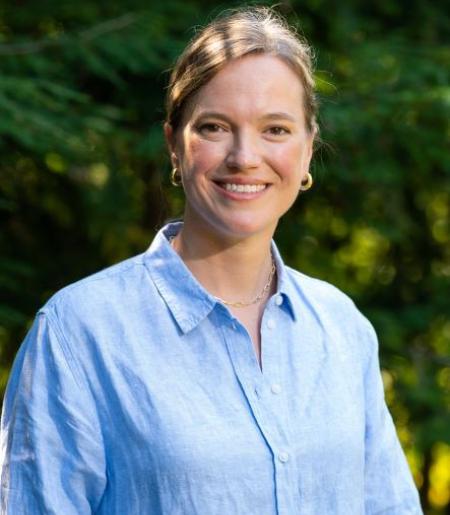
Professor Sara B. Pritchard is a leading scholar in environmental science and technology studies (STS) at Cornell University's College of Arts and Sciences. She holds a Ph.D., M.A., and B.A. in History from Stanford University and University of Puget Sound. Her research critically examines light pollution, environmental ethics, and the intersection of technology and nature. Pritchard has received grants from the National Science Foundation and Cornell's Atkinson Center for a Sustainable Future, among others. Her major works include Night as Environment: Light Pollution and the Anthropocene (2024) and Confluence: The Nature of Technology and the Remaking of the Rhône (2011). She co-edited influential volumes such as New Natures: Joining Environmental History with Science and Technology Studies (2013) and pioneered the concept of 'envirotechnical analysis.' Pritchard advises students across disciplines including Anthropology, Asian Studies, and Natural Resources. Her research explores dark histories, nuclear disasters, and sustainable energy transitions. She collaborates with global scholars through special journal issues on topics like climate justice and polar night studies. Pritchard’s work bridges environmental humanities with technological critique, emphasizing interdisciplinary approaches to urgent ecological challenges.
Alexander Dunlap is a Research Scientist at Boston University's Institute for Global Sustainability (IGS) and a visiting research fellow at the University of Helsinki's Global Development Studies department. He holds a PhD in Social Anthropology from Vrije Universiteit Amsterdam, an MSc in Modules from the University of Sussex (UK), an MA in Environment, Development and Policy from Sussex, and a BS in Political Science from Portland State University (USA). His work critically examines energy transitions, extractive industries, and the socioecological impacts of green capitalism. Research Interests: Political ecology of low-carbon technologies Green extractivism in global contexts Decolonial and anarchist approaches to sustainability State violence and counterinsurgency tactics Environmental justice in renewable energy projects Publications: Dunlap’s recent work focuses on solar energy injustices in California, industrial solar manufacturing in Ohio, and the militarization of nature. His articles interrogate how 'green' infrastructure reinforces colonial and capitalist systems, often through spatial dispossession and anti-Indigenous violence. Labs/Teams: Active in IGS research clusters studying infrastructural harm and energy justice. Co-editor of Human Geography , a journal promoting radical interdisciplinary scholarship. Future Work: Continuing research on solar project lifecycles, particularly mining-to-decommissioning impacts, and expanding analysis of Europe’s energy grid conflicts.
Anthony Bebbington is the Milton P. and Alice C. Higgins Professor of Environment and Society at Clark University’s Graduate School of Geography. He also holds roles as a Research Associate at the Centro Peruano de Estudios Sociales (Peru) and a Professorial Research Fellow at the University of Manchester (UK). His expertise spans political ecology, extractive industries, socio-environmental conflicts, and rural development in Latin America. With a PhD in Geography from Clark University (1990), he has conducted extensive research across Peru, Ecuador, Bolivia, and El Salvador. His work examines the interplay between resource extraction, governance, and community rights, with a focus on addressing inequality and environmental justice. His research has been supported by major grants from the Economic and Social Research Council (UK), Ford Foundation, and National Science Foundation. Notable collaborations include partnerships with organizations such as Rimisp-Latin American Center for Rural Development, the Salvadoran Ministry of Environment (MARN), and the University of Manchester. Bebbington is a member of the US National Academy of Sciences and has held fellowships from institutions like the Stanford Center for Advanced Studies and the Fulbright Commission. Research interests include institutional innovations in resource governance, the socio-environmental impacts of mining, and political settlements shaping extractive industry policies. His publications address topics like infrastructure’s role in environmental degradation, community-based development, and the governance of extractive industries. Recent work highlights the global drivers of environmental change linked to mining and the need for equitable resource management frameworks. Awards: US National Academy of Sciences membership, multiple fellowships from leading institutions. Key Projects: Studies on mining governance in El Salvador, Honduras, and Peru; analyses of deforestation linked to extractive industries; and frameworks for sustainable infrastructure development. Bebbington’s advisory and grant work emphasizes bridging academic research with policy impact. He collaborates with NGOs and governments to design inclusive strategies for natural resource management, emphasizing participatory approaches and environmental accountability.
Harold Perkins is an Associate Professor in the Department of Geography within the College of Arts and Sciences at Ohio University. His research focuses on urban political ecology and environmental justice, particularly under neoliberal capitalism. He investigates governance, power asymmetries, and environmental inequities in urban and Appalachian contexts. Education: Ph.D., University of Wisconsin–Milwaukee, 2006 His research interests include urban political ecology, environmental (in)justice, neoliberalism, the role of the state, environmental governance, and the agency of nonhuman organisms in urban environments. He uses a political economy framework to analyze how environmental services are governed in the context of state withdrawal and privatization. He teaches courses such as GEOG 6500: Seminar in Environmental Justice, GEOG 5000: Geographical Research and Writing, and GEOG 4560/5560: City and Environment. His recent publications demonstrate a sustained focus on critical environmental governance, particularly in urban and Appalachian regions. Themes include neoliberal hegemony, procedural injustices in mining, and the dynamics of environmental conflict. His work appears in journals such as International Journal of Urban and Regional Research , Geoforum , and Local Environment . Scientific Awards: No awards listed in the provided text. Harold Perkins has advised several graduate students in Geography and Environmental Studies, supervising theses on topics such as local food systems, climate justice, and wetland regulation. While no grants are explicitly mentioned, his research output suggests engagement with funded scholarly activity. He is actively involved in mentoring and academic leadership through thesis supervision. He is based in Clippinger Hall on the Athens Campus, with office hours on Wednesdays and Thursdays. He is affiliated with the Center for Law, Justice & Culture at Ohio University, indicating interdisciplinary collaboration across social justice domains.
McKenzie F. Johnson is an Assistant Professor at the University of Illinois Urbana-Champaign's Department of Natural Resources and Environmental Sciences (NRES), part of the College of Agricultural, Consumer and Environmental Sciences. She is also affiliated with the Institute for Sustainability, Energy, and Environment (ISEE). Her research focuses on global environmental politics, environmental justice, and human security, with a particular interest in how environmental governance initiatives impact marginalized communities. Education: Began with fisheries governance studies, earned a Master of Arts in Conservation Biology from Columbia University (2007), and a PhD in Environmental Policy from Duke University. Her Fulbright scholarship in West Africa (2010s) focused on extractive industries and social justice linkages. Research Interests: Explores intersections between environment, institutions, and justice through projects in South Asia, Africa, and South America. Current U.S.-focused work examines environmental impact assessments and pipeline development's effects on communities. The (in)Secure Landscapes Lab she leads investigates environmental governance's role in creating human security and justice. Key Themes in Publications: Energy infrastructure conflicts (e.g., Dakota Access Pipeline), environmental peacebuilding in post-conflict regions (Colombia, Afghanistan), carbon market equity, and invasive species governance. Her work critiques neoliberal environmental governance models and advocates for inclusive decision-making processes. Lab Activities: The IL Lab analyzes environmental governance's societal impacts, emphasizing participatory approaches. Current projects include studying soil carbon markets' equity implications and climate change adaptation strategies in conflict zones.
S. James Anaya serves as University Distinguished Professor and Nicholas Doman Professor of International Law at the University of Colorado Law School. Previously, he held faculty positions at the University of Arizona (1999-2016) and the University of Iowa (1988-1999), and has been a visiting professor at Harvard Law School, the University of Toronto, and the University of Tulsa. His most prominent role was as United Nations Special Rapporteur on the Rights of Indigenous Peoples from May 2008 to June 2014, during which he conducted country visits to numerous nations including Canada, Panama, Peru, and Brazil to monitor indigenous rights situations. Anaya earned his JD from Harvard Law School and his BA from the University of New Mexico. Before entering academia, he practiced law in Albuquerque, New Mexico, representing Native American peoples and other minority groups, work for which he was recognized by Barrister magazine as one of "20 young lawyers who make a difference." Professor Anaya's research focuses on the intersection of international human rights law and indigenous peoples' rights, with particular emphasis on land rights, self-determination, and cultural preservation. His scholarship examines how international legal frameworks can be leveraged to advance indigenous rights, especially regarding territorial claims and resource extraction. He has extensively analyzed the development of customary international law concerning indigenous rights and the relationship between domestic legal systems and international human rights standards as they apply to indigenous communities. Analysis of Anaya's recent publications reveals a consistent focus on practical implementation of indigenous rights through UN mechanisms, national legal systems, and international tribunals. His work shows particular attention to hydroelectric and mining projects affecting indigenous territories, the right to consultation, and the evolving standards for indigenous land rights recognition. The thematic progression demonstrates increasing emphasis on concrete implementation mechanisms rather than purely theoretical frameworks. United Nations Special Rapporteur on the Rights of Indigenous Peoples (2008-2014) Lead counsel in landmark Awas Tingni v. Nicaragua case before the Inter-American Court of Human Rights Participant in drafting the United Nations Declaration on the Rights of Indigenous Peoples As UN Special Rapporteur, Anaya actively engaged with indigenous communities worldwide, addressing situations of alleged human rights violations and promoting practical measures to secure indigenous peoples' rights. His work involved frequent travel to meet with government officials and visit indigenous communities across multiple continents. He represented indigenous groups from North and Central America in landmark cases before domestic and international tribunals, including the United States Supreme Court and the Inter-American Court of Human Rights. His advocacy extended to high-profile cases such as the Washington Redskins name controversy and the Barro Blanco hydroelectric project in Panama.
Dr. Daniel Allen is a Lecturer in Human Geography at Keele University's School of Life Sciences, specializing in human-animal relations. An IUCN/SSC otter specialist, his research on otter conservation and dog theft informs policy and advocacy. He led an Environment Agency project on otter predation perceptions and founded the 'Pet Theft Reform' campaign, influencing UK legislation (Pet Abduction Act 2024). His research examines human-animal bonds, including dog theft impacts and mental health benefits. Current projects include 'No pets! Young people’s transitions to campus living,' funded by the Society for Companion Animals Studies. Teaching includes modules on Nature Conservation, Space and Society, More-than-human Geographies, and Animals and Society. He supervises PhD student Emma Randall on eco-therapy. Awards include the Daily Mirror’s Peoples Pet Awards Special Recognition (2021) and the PM’s Points of Light Award (2022). Publications emphasize spatial justice, animal advocacy, and policy impacts, with recent work on pet theft trends and human-animal bonds in crises.
Clark Gray is a Professor of Geography & Environment at the University of North Carolina at Chapel Hill (UNC-Chapel Hill), serving as the Department's Associate Chair for Research and Director of Graduate Studies. He is a Faculty Fellow at the Carolina Population Center and Joint Faculty in the Environment, Ecology and Energy Program. His research focuses on human-environment interactions, particularly environmental influences on migration, climate change impacts, and indigenous livelihoods in developing regions. Education: Ph.D. in Geography, UNC-Chapel Hill (2008) B.S. in Biology, UNC-Chapel Hill (1999, with Highest Distinction) Research Interests: Gray examines how environmental changes affect rural livelihoods, household well-being, and migration patterns. Key areas include climate-induced migration, soil degradation in Africa, and indigenous land use in the Amazon. His methodological expertise includes demographic and statistical analyses. Grants & Awards: Notable grants include NIH-funded projects on climate resilience and food security. Awards include the 2017 Research Excellence Award (AAG) and the 2010 Nystrom Dissertation Award. Teaching & Advising: Teaches courses on climate vulnerability and population-environment dynamics. Advises Ph.D./Master’s students and postdocs on migration, climate, and development topics. Active on editorial boards, including Population & Environment . Labs/Teams: Collaborates with the Carolina Population Center and interdisciplinary teams on global environmental challenges.
Tamara Artacker is a Researcher at the Institute of Social Ecology within the Department of Economics and Social Sciences at the University of Natural Resources and Life Sciences, Vienna (BOKU). Based in Vienna at Schottenfeldgasse 29, she has been actively contributing to the field since 2019, following the completion of her MA in International Development Studies from the University of Vienna in 2017. Her work bridges academic research with practical policy implications, particularly focused on Latin America and global environmental challenges. Artacker's educational background in International Development Studies has shaped her interdisciplinary approach to examining the complex relationships between society, environment, and economic systems. Her research spans multiple interconnected domains that address critical contemporary challenges facing communities worldwide. Her research interests center on political ecology, food sovereignty, ecofeminism, and sustainable agricultural systems. Artacker critically examines the structural inequalities embedded in global food systems, the impacts of climate change on agricultural communities, and the tensions between economic development models and ecological sustainability. Her work consistently highlights how extractive agricultural practices intersect with social injustices, particularly affecting vulnerable populations. She explores alternative models that prioritize community resilience, ecological balance, and social equity, with particular attention to the Global South and Latin American contexts. Artacker's extensive publication record reveals a strong focus on the intersections between environmental policy, agricultural practices, and social justice. Her research demonstrates consistent engagement with contemporary crises including the pandemic's impact on food systems, geopolitical conflicts affecting global food security, and the complex challenges of transitioning toward sustainable agricultural models. She has developed particular expertise in analyzing Ecuadorian agricultural policies and their implications for food sovereignty, while also examining broader regional and global patterns. As an active academic, Artacker regularly presents her research at international conferences and engages with diverse audiences through invited keynote speeches. Her work demonstrates a commitment to knowledge transfer beyond academic circles, with presentations addressing policymakers, practitioners, and community organizations working on food sovereignty and environmental justice issues.
Aníbal García Arregui is a Lecturer (Professor Lector) in the Department of Social Anthropology at the University of Barcelona, affiliated with the Faculty of Geography and History. He holds the prestigious Serra Húnter Program position, emphasizing research excellence. His work bridges environmental anthropology, multispecies ethnography, and urban ecology, focusing on human-nonhuman interactions in contexts like Amazonian communities and urban wild boar populations in Barcelona. Research interests include wild species dynamics, infrastructures of coexistence, and postcolonial ecological frameworks. Notable projects explore wild boar urbanization, Amazonian Quilombola movements, and the socio-political dimensions of aluminum mining. Publications span academic journals (e.g., American Ethnologist , Journal of the Royal Anthropological Institute ) and edited volumes, with a recent book Infraespecie challenging species categorizations. He coordinates the HOLB network (Human and Other Living Beings EASA Network) and is part of CINAF (Research Group on Nature Cultures). His work integrates fieldwork in Amazonia and Barcelona, addressing biosecurity crises (e.g., African Swine Fever) and urban wildlife governance. Collaborations with institutions like ResearchGate and ORCID highlight interdisciplinary engagement.
Professor Sara Seck is a full professor at Dalhousie University's Schulich School of Law, serving as the Yogis & Keddy Chair in Human Rights Law (until 2025) and Director of the Marine & Environmental Law Institute. She previously held roles as Associate Dean, Research, and taught at Western University. Her expertise lies at the intersection of human rights, environmental law, and climate justice, focusing on transnational responsibilities of states, businesses, and communities. She holds degrees in music (BMus, MMus), law (LLB), and a PhD in law from Osgoode Hall. Her research emphasizes global south perspectives, Indigenous rights, and sustainable development in the extractive and ocean sectors. Education: BMus, Memorial University of Newfoundland MMus, University of Ottawa LLB, University of Toronto PhD, Osgoode Hall Law School Research Interests: Climate Justice and Corporate Accountability Business and Human Rights in Extractive Sectors Indigenous and Gendered Approaches to Environmental Law Marine Governance and Ocean Sustainability Awards: 2015 Emerging Scholarship Award, Academy of Environmental Law Senior Fellow, International Law Research Program (CIGI) Her recent work explores climate litigation, loss and damage frameworks, and the plastic value chain through a human rights lens. She co-edits the Ocean Yearbook and actively contributes to international legal initiatives on business and environmental accountability.
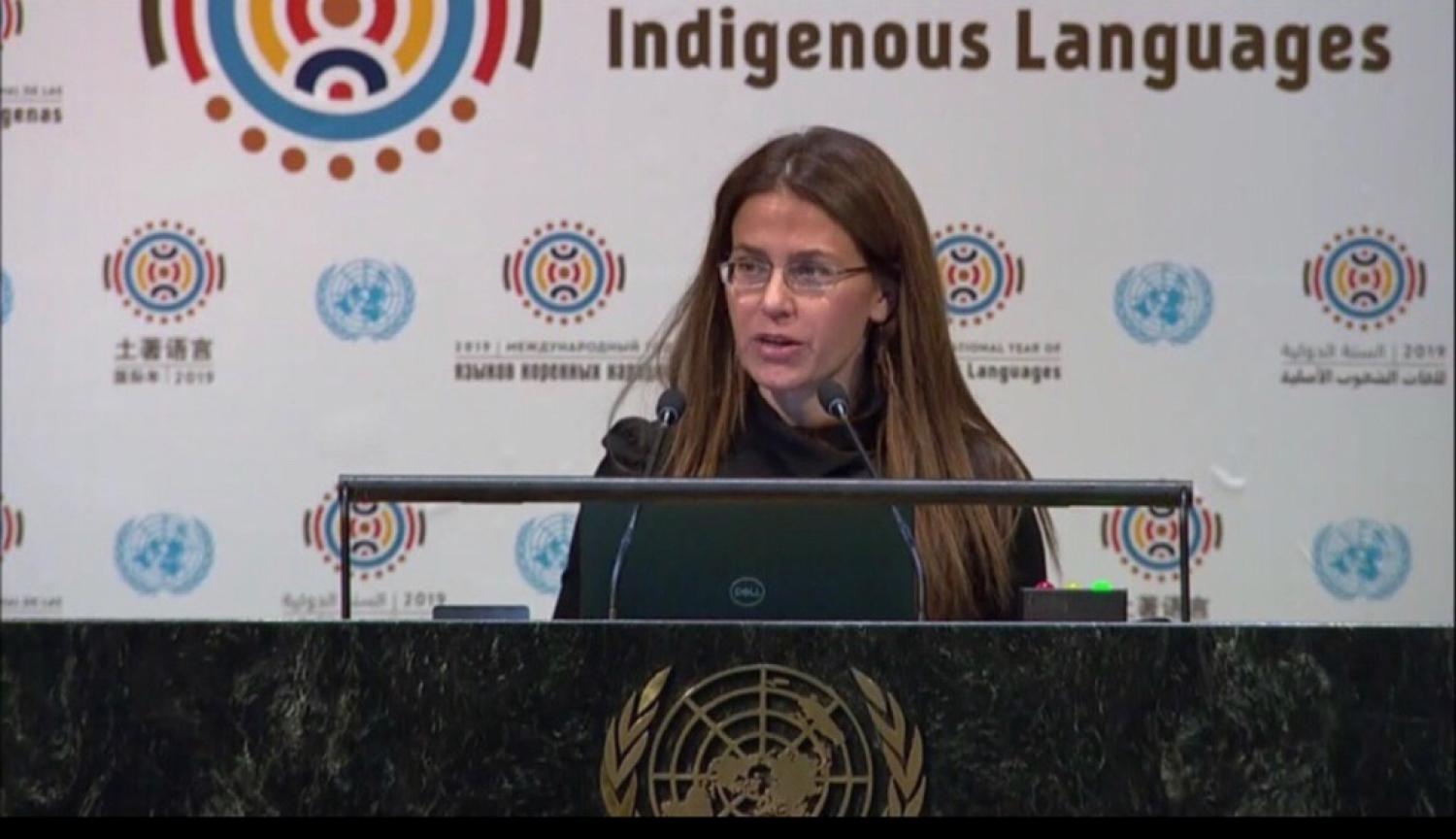
Kristen A. Carpenter serves as Council Tree Professor of Law and Director of the American Indian Law Program at the University of Colorado Law School. She is a leading scholar in American Indian Law, Indigenous rights, cultural property, and human rights with extensive international engagement. Professor Carpenter's research focuses on Indigenous peoples' rights in domestic and international contexts, with particular expertise in cultural property, religious freedom, language rights, and tribal sovereignty. Her work bridges legal theory with practical applications for Indigenous communities, examining how legal frameworks can better serve Indigenous self-determination and cultural preservation. Her scholarship reveals a consistent trajectory toward strengthening Indigenous rights through multiple legal frameworks. Early work established foundational concepts in cultural property and religious freedom, while more recent publications address emerging challenges in language preservation, international diplomacy, and migration. A significant portion of her research examines the practical implementation of the United Nations Declaration on the Rights of Indigenous Peoples. North American member of the UN Expert Mechanism on the Rights of Indigenous Peoples (EMRIP), appointed in 2017 Justice of the Shawnee Tribe's inaugural Supreme Court Regular speaker at UN forums including the International Year of Indigenous Languages kickoff Author of influential casebook Case and Materials on Federal Indian Law Professor Carpenter actively engages with Indigenous communities through teaching, scholarship, and service. She directs the American Indian Law Program at Colorado Law, teaches courses in American Indian Law, Cultural Property Law, and Indigenous Peoples in International Law, and mentors students through the Native American Law Students Association. Her scholarship informs both academic discourse and practical legal strategies for Indigenous rights advocacy worldwide.
Dr. Armando Guevara Gil is a Peruvian legal anthropologist and historian currently serving as Director of Research at the Universidad para el Desarrollo Andino (UDEA, Huancavelica, Perú), Professor of Law at the Universidad Peruana de Ciencias Aplicadas (UPC, Lima), and Associate Researcher at the Instituto del Perú (USMP, Lima). He has held visiting positions at the University of Torino (2019) and as a guest researcher at the Max Planck Institute for European Legal History (Frankfurt, 2019-2020). His academic background includes: Law degree from Pontificia Universidad Católica del Perú Master's degree in cultural anthropology from University of Wisconsin-Madison Doctorate in law from University of Amsterdam Dr. Guevara Gil specializes in legal pluralism, colonial and republican law in the Andes, water law, and indigenous rights. His research explores historical normativity regimes in Andean societies, examining how indigenous communities maintain and assert their legal systems within modern nation-states. He employs interdisciplinary approaches combining legal history, anthropology, and political science to analyze the complex interactions between official state law and indigenous legal traditions, with particular focus on water rights, land tenure, and prior consultation processes. His scholarly work demonstrates consistent thematic development around Andean legal systems, evolving from colonial legal history to contemporary issues of indigenous rights recognition. Recent publications reveal increasing attention to the concept of 'multiversos narrativos' - exploring alternative historical narratives of water and land rights in the Andes through oral history methodologies. His research consistently challenges essentialist approaches to indigenous identity and legal recognition, documenting how bureaucratic and administrative practices often undermine indigenous rights despite international legal frameworks. Dr. Guevara Gil's research has been recognized through numerous fellowships and awards: Postdoc Scholarship at Max Planck Institute for European Legal History (2019-2020) Multiple fellowships at Max Planck Institutes (2012-2014) Eight research prizes from Pontificia Universidad Católica del Perú (2008-2018) MacArthur Foundation Scholar Grant (1994-1995) Wenner-Gren Foundation Fellowship (1988-1989) As principal investigator, Dr. Guevara Gil has secured significant research funding for projects examining legal pluralism in Andean communities. He currently co-directs the 'Multiversos Narrativos' research project with Thomas Duve at the Max Planck Institute for Legal History and Legal Theory, which employs dialogical and participatory methodologies to document communal narratives about water rights, land, and natural resources in Huancavelica, Peru. His work with the Universidad para el Desarrollo Andino focuses on community-based legal research and capacity building. Dr. Guevara Gil maintains active affiliations with multiple research networks including the American Anthropological Association, Commission on Legal Pluralism, Instituto Internacional de Historia del Derecho Indiano, Latin American Studies Association, and Law and Society Association. His current research examines how Peruvian administrative practices undermine indigenous rights through essentialist interpretations of indigenous identity, particularly in mining contexts where consultation processes are frequently circumvented.
Christopher Carter is the John L. Nau III Assistant Professor of the History and Principles of Democracy in the Department of Politics at the University of Virginia. He is also a Research Associate at the Center on the Politics of Development at UC Berkeley and a Fellow at the Governance and Local Development Institute, reflecting his broad scholarly engagement across institutions. Education: PhD in Political Science, University of California, Berkeley (2020) MPhil in Latin American Studies, University of Cambridge (Gates Cambridge Scholar) BA in Political Science and History, University of North Carolina at Chapel Hill (Morehead-Cain Scholar) Christopher Carter’s research focuses on the historical evolution of indigenous-state relations in Latin America, particularly how historical experiences with land and labor extraction shape contemporary demands for autonomy. His work sits at the intersection of comparative politics, historical political economy, and democratization, employing multi-method approaches including field experiments, natural experiments, archival research, and ethnographic interviews. He investigates themes such as national identity formation, party system erosion, communal property rights, and the legacies of colonialism. His recent publications reveal a strong trend toward analyzing institutional legacies, state-society relations, and the political behavior of marginalized groups, especially indigenous populations. His work frequently uses innovative methodologies to uncover causal mechanisms in long-term political development, with a geographic focus on Peru, Bolivia, and broader Latin America. He contributes to top-tier journals such as American Journal of Political Science , American Political Science Review , and Comparative Political Studies . Scientific Awards: 2020 APSA Best Fieldwork Award 2021 Juan Linz Prize for Best Dissertation in the Comparative Study of Democracy Leon Weaver Best Paper Award (APSA Representation and Electoral Systems Section) Honorable Mention for the Sage Best Paper Prize (APSA Comparative Politics Section) Christopher Carter has been actively involved in teaching and mentoring. As a graduate student instructor at UC Berkeley, he taught courses in quantitative methods and African politics, receiving the Outstanding Graduate Student Instructor Award. At UVA, he teaches courses such as Latin American Politics, Indigenous Politics in the Americas, and graduate seminars on ethnicity and democracy. He has also led math camps and workshops on natural experiments for PhD students. His research has been supported through fellowships including the Harvard Academy Scholar program and the Gates Cambridge Scholarship. He is currently finalizing a book contract with Princeton University Press titled The Long Shadow of Extraction: The Origins of Indigenous Autonomy Demands . He is affiliated with research centers including the Center on the Politics of Development (UC Berkeley) and the Governance and Local Development Institute, where he contributes to collaborative projects on governance, state expansion, and democratic inclusion.
Carolyn Fornoff serves as Associate Professor of Latin American Studies in the Department of Romance Studies at Cornell University's College of Arts and Sciences. She is also affiliated with the Latina/o Studies Program and maintains active service roles including membership on the Humanities Council, Environment and Sustainability curriculum committee, and Latin American and Caribbean Studies steering committee. Currently on sabbatical for the 2025-2026 academic year, she continues to contribute to academic discourse through her editorial work on the Hispanic Review and ISLE (Interdisciplinary Studies in Literature and the Environment) advisory boards. Professor Fornoff's research explores cultural responses to environmental crisis in Latin America, with particular focus on Mexico and Central America. Her work investigates how art helps narrate and make sense of temporally expansive problems like climate change that are often difficult to perceive directly. She examines how contemporary filmmakers and writers have shifted from art's evidentiary function toward more subjunctive registers of hypothesis and uncertainty that grapple with alternative world imaginaries. Her scholarship intersects environmental humanities with critical race, gender, and disability studies, creating a rich interdisciplinary framework for understanding ecological challenges through cultural production. Fornoff's publication record demonstrates consistent engagement with environmental themes across Latin American cultural production. Her work spans analyses of Mexican cinema's environmental representations, Central American environmental justice movements, extractive industries' cultural dimensions, and underwater art installations. She has developed theoretical frameworks like 'reflexive extractivist aesthetics' while examining specific case studies from 1970s Mexican cinema to contemporary Central American activism. Her scholarship reveals how cultural works navigate the complex interplay between environmental crisis, visual representation, and social justice. 2025 LASA Mexico Forum Best Book in the Humanities Prize for Subjunctive Aesthetics: Mexican Cultural Production in the Era of Climate Change Honorable mention for 2025 LASA Environment Best Book Prize 2024 LASA Mexico Forum Best Article in the Humanities Prize for 'Reflexive Extractivist Aesthetics' 2024 LASA Film Studies Section Best Article Prize for 'Greening Mexican Cinema' Professor Fornoff has made significant editorial contributions as coeditor of Timescales: Thinking Across Ecological Temporalities (University of Minnesota Press, 2020) and Pushing Past the Human in Latin American Cinema (SUNY Press, 2021). She recently cochaired the Modern Language Association's Committee on Disability Issues in the Profession, reflecting her commitment to inclusive academic practices. Her scholarly trajectory demonstrates how environmental concerns intersect with broader questions of representation, justice, and cultural production in Latin America.