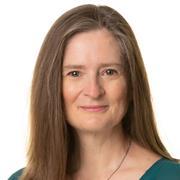
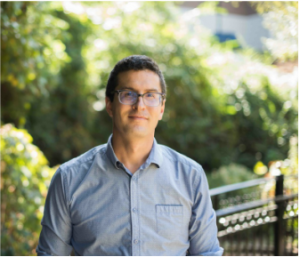
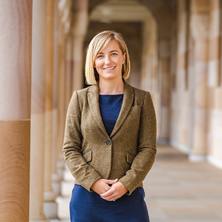
Dr. Luchuo Engelbert Bain is a Research Fellow in Global Health Foresighting at York University's Dahdaleh Institute for Global Health Research. He concurrently serves as Associate Professor of Global Health and Bioethics at EUCLID University and Head of International Programs at the African Population and Health Research Center (APHRC) in Nairobi. Previously, he was a Senior Program Officer at Canada's International Development Research Centre (IDRC) and consultant for WHO, UNFPA, Gates Foundation, and other global health organizations. Education includes: PhD in Transdisciplinary Global Health Solutions (Vrije Universiteit Amsterdam) Executive MBA in Strategic HR Management (UNIR) MSc Bioethics (KU Leuven) MPH (Hebrew University) MD (University of Yaounde I) Executive Training in Global Health Diplomacy (University of Toronto) His research examines structural inequities in global health systems, focusing on decolonization paradigms, epistemic justice, and power redistribution. Key interests include dismantling Global North dominance in funding/research agendas, community-led health solutions, climate-health intersections, and ethical frameworks for low-income countries. His transdisciplinary approach integrates political science, history, and indigenous knowledge systems. Honors include being an Inaugural Fellow on Climate Change and Health at the Geneva Learning Foundation. He holds advisory roles with WHO's Sexual Health Research Group and Africa CDC's Public Health Intelligence unit.
Liza Lorenzetti is an Associate Professor at the Faculty of Social Work , University of Calgary. Her work focuses on transforming gender-based violence prevention, racial equity, and decolonizing practices through an intersectional lens. Education: PhD in Social Work (University of Calgary, 2016), MSW (University of Calgary, 2006), BSW (McGill University, 1992) Her research centers on: Engaging men in gender justice and violence prevention Decolonizing education and research methodologies Transdisciplinary approaches to racial equity Culturally inclusive peer-based writing models Migrant rights and anti-racism Systematic reviews bridging theory and practice Recent publications highlight: Global masculinities and gender justice Online caring skills development Decolonizing frameworks in social work Community-university partnerships Anti-racist pedagogy implementation Interdisciplinary research ethics Scientific awards include: Certificate of Appreciation: Migrant Rights Support (2018) Distinguished Service Award (2018) John Graham Hutton Award (2018) Clarice Chodak Recognition (2013) She leads multiple SSHRC-funded projects including Transforming Masculinities and Helping One Another , while co-developing equity-focused educational frameworks. Her work emphasizes: Community-driven policy change White accountability in anti-racism Indigenous partnership models Graduate mentorship systems Postcolonial field education Digital storytelling ethics
Cate d'Este is a Conjoint Professor and Honorary Professor at the University of Newcastle's School of Medicine and Public Health, specializing in Biostatistics. She has accumulated approximately 18 years of experience in health research and teaching in national and international arenas, primarily within the Faculty of Health and Discipline of Statistics at the University of Newcastle. She also maintains an Honorary Research Consultant position at the Centre for Military and Veterans Health at the University of Queensland. Professor d'Este holds the following qualifications: Doctor of Philosophy, University of Newcastle Graduate Diploma in Medical Statistics, University of Newcastle Diploma in Education, University of Newcastle Bachelor of Mathematics, University of Newcastle (majoring in statistics) As a biostatistician and methodologist, Professor d'Este's research spans various health domains with common themes including cardiovascular disease, randomized controlled trials, longitudinal studies, and meta-analysis. Her work emphasizes multidisciplinary research and capacity building in biostatistical methodology. She has extensive consulting experience nationally and internationally, providing quantitative and methodological input to numerous state and national committees, government agencies, and non-government organizations. Her recent publications demonstrate a strong focus on implementation science in stroke care, dementia prevention, cancer care, and public health interventions across multiple countries. There's a clear pattern of applying biostatistical expertise to complex health problems, particularly in the areas of stroke management, dementia risk reduction, and cancer care. Her work frequently involves cluster randomized trials, process evaluations, and multi-country comparative studies, reflecting her expertise in challenging methodological areas. Professor d'Este has received the following scientific recognition: Faculty of Health, University of Newcastle, Excellence in Teaching Award (2003) Professor d'Este has been an investigator on over 35 grants totaling more than $17 million and has co-authored nearly 100 peer-reviewed journal articles, book chapters, and commissioned reports. She has successfully supervised or co-supervised to completion six research masters students and six PhD students, with additional PhD students currently under supervision. Her supervisory approach encompasses a range of content areas and study designs with varying statistical complexity, including off-campus and international students. Her administrative roles, including Deans Representative for Research Higher Degree and Research Development Manager, have provided her with substantial understanding of the research higher degree process across the Faculty of Health. Professor d'Este has played key roles in several research centers and initiatives, including the Centre for Clinical Epidemiology and Biostatistics (CCEB), where she served on multiple committees. Her national and international committee work demonstrates her integration into broader research networks focused on health services research, clinical epidemiology, and biostatistics methodology. She has been instrumental in developing and coordinating distance learning programs in biostatistics, including managing cohorts of international students from Zimbabwe and Japan.
Évelyne Jean-Bouchard is an Adjunct Professor at the Faculty of Law , Université de Sherbrooke, since 2022. Her research integrates International Human Rights Law , Legal Anthropology , and Feminist Theory within multiscalar and postcolonial frameworks. Education : PhD in Law (University of Ottawa), Postdoctoral Fellow at the Centre de recherche en droit public (Université de Montréal), LLM in International Law (UQAM), MA in Public Administration (ÉNAP), BA in International Relations and International Law (UQAM) Her interdisciplinary work examines women's legal agency in contexts of legal pluralism and crisis governance , with fieldwork in the Democratic Republic of Congo and Quebec Indigenous communities. She employs empirical methodologies to analyze normative processes in transitional justice and institutional reform. Recent publications demonstrate expertise in digital justice systems , consumer protection in fintech, and decolonizing legal pedagogies . Her work reveals systemic exclusion patterns in Congolese governance and Indigenous juridical practices in Canada. Scientific Awards : Vanier Canada Graduate Scholarship (2011-2014), CRSH Postdoctoral Fellowship, Alice Wilson Award (2018) Active researcher with multiple funded projects, including principal investigator roles for Mitacs-Élévation and Chambre des notaires du Québec grants. She co-leads the Sherbrooke branch of the Réseau québécois en études féministes and contributes to the Institut québécois de réforme du droit et de la justice .
Dr. Elle Bowd is a Postdoctoral Research Fellow at the Fenner School of Environment & Society, Australian National University. She is an ecologist specializing in plant and fungal ecology in Australian eucalypt forests and woodlands, with a particular focus on above and below-ground interactions and ecosystem responses to disturbance. Dr. Bowd's research spans several key areas: Understanding how ecosystems respond to wildfire and logging in forests and the pathways that generate ecological change Plant and fungal ecology in Australian eucalypt forests and woodlands in NSW and Victoria Cross-cultural projects partnering with First Nations Peoples to support the re-emergence of Indigenous-led cultural burning Creating interfaces between First Nations knowledge and management and Western science Her recent publications demonstrate significant contributions to fire ecology, forest regeneration, and cultural burning practices. Her work often involves long-term empirical studies and landscape-scale data analysis, with highly cited papers on fire and logging impacts on forest ecosystems. She has published 35 research outputs with over 566 citations and an h-index of 12. Dr. Bowd is actively involved in several significant research projects: 'Re-emergence of First Nations burning in contemporary grassy woodlands' (2024-2028) as Co-Investigator 'Bushfire risk-reduction through cultural burning in travelling stock routes' (2022-2024) as Principal Investigator Multiple projects on soil ecology and forest recovery after disturbance Her work has important implications for forest management policy, particularly regarding cultural burning integration and ecosystem recovery following major disturbances in the context of climate change.
Prof. Dr. Ulrich Kortenkamp is a Professor for Mathematics Education at the University of Potsdam since October 2014, holding a position in the Institute of Mathematics within the Faculty of Mathematics and Natural Sciences. He also serves as an Adjunct Professor at Griffith University in Gold Coast, Australia since May 2020. His academic career spans multiple institutions across Germany including Martin Luther University Halle-Wittenberg, University of Applied Sciences Karlsruhe, and TU Berlin. Prof. Kortenkamp's research focuses on mathematics education, particularly in the areas of digital learning environments, computational thinking development, place value understanding, and teacher education. His work bridges theoretical frameworks with practical applications in classroom settings, with a strong emphasis on the integration of technology in mathematics instruction. He has extensively studied how digital tools, particularly the Fingu app, can enhance early mathematical understanding and how language affects place value comprehension across different cultural contexts. His recent publications reveal a strong focus on sustainable development in teacher education, cross-linguistic studies of place value understanding, the impact of digital tools on early mathematics development, geometry education, and the integration of subject knowledge with didactic approaches in teacher preparation. His research consistently addresses how digital environments can transform mathematics teaching while maintaining strong conceptual foundations. Ars legendi Faculty Prize in Mathematics category (2020) for outstanding achievements in teaching, advising, and mentoring, awarded by the Stifterverband (Donors' Association) along with major German scientific societies Prof. Kortenkamp leads several significant research projects including DigiProMIN (developing digitally supported continuing education modules for mathematics teachers), Mathematics Education in the Digital Age (fostering international exchange between University of Potsdam and Griffith University), and Place Value Understanding (investigating primary school children's mathematical development across institutions in Germany and Australia). He is also involved in the SPIES-M project focused on quality initiatives for teacher education and the QuaMath project aimed at promoting teaching quality in mathematics through teacher training courses. He directs a research group focused on mathematics didactics at the University of Potsdam, collaborating with colleagues including Prof. Dr. Birte Friedrich and Prof. Dr. Sebastian Geisler, and working with a team of researchers on various aspects of mathematics education research, including digital learning environments, teacher professional development, and early mathematics concepts.
Justin Reedy is an Associate Professor in the Department of Communication at the University of Oklahoma's Dodge Family College of Arts and Sciences, with a concurrent role as Research Associate at the Institute for Public Policy Research & Analysis (formerly Center for Risk & Crisis Management). His academic credentials include: Ph.D. in Communication, University of Washington (2013) M.A. in Communication, University of Washington (2008) B.S. from Georgia Institute of Technology (2000) Dr. Reedy's research examines how individuals and groups navigate contentious issues across face-to-face and digital contexts, with emphasis on: Political deliberation in environmental and social policy contexts Risk communication frameworks for underserved populations Community-engaged approaches to health equity in Indigenous communities Media's role in social marginalization of immigrants and minorities His mixed-methods approach integrates political communication theory with applied crisis management. Recent publications (2022-2025) demonstrate strong focus on: Deliberative democracy in climate and nuclear policy contexts Emergency communication systems for Spanish-speaking communities Structural vulnerabilities in disaster response infrastructure Cross-cultural adaptation of risk messaging frameworks This work reflects consistent engagement with marginalized populations and policy-relevant communication challenges. No awards, student advising relationships, or laboratory affiliations are documented in available materials.
Tina Moffat is a Professor in the Department of Anthropology at McMaster University. Her research integrates biocultural and political-economic approaches to examine maternal-child health, food insecurity, and immigrant dietary transitions. Current SSHRC-funded Partnership Engage Grant for national school food program research in Canada CIHR-funded principal investigator for Changing Homes, Changing Food study on newcomer nutrition in Hamilton Co-applicant on the Mothers to Babies (M2B) study investigating DOHaD knowledge translation Education : Doctorate in Biological Anthropology, McMaster University Master's in Biological Anthropology, McMaster University Bachelor of Arts in Biological Anthropology, University of Toronto Research Interests focus on: Applied and community-based studies of food systems and nutrition Cultural-environmental interactions in health outcomes Global-local food insecurity dynamics Developmental Origins of Health and Disease (DOHaD) applications Recent Article Trends span maternal nutrition, immigrant food practices, and school food policy, with methodological diversity across: Scoping reviews of migrant health Community-engaged studies with Indigenous groups Comparative policy analysis (France/Japan/Canada) Epidemiological investigations of nutritional stress Scientific Contributions : SSHRC Postdoctoral Fellow Author of Small Bites: Biocultural Dimensions of Children's Food and Nutrition (UBC Press, 2022) Co-editor of foundational biocultural nutrition texts Teaching includes courses on: Children's Health and Development Biocultural Synthesis Food and Nutrition in Society Introduction to Anthropology: Sex, Food, and Death
Margo A. Bagley is the Asa Griggs Candler Professor of Law at Emory University School of Law. She rejoined Emory in 2016 after a decade as the Hardy Cross Dillard Professor of Law at the University of Virginia. Her expertise spans international intellectual property law, with a focus on patent systems, biotechnology, genetic resources, and equitable access to innovations. She co-developed the award-winning TI:GER® program, which integrates law, business, and STEM students in technology commercialization projects. Her research examines patent law's intersection with ethics, biodiversity, and social justice, particularly regarding traditional knowledge protection and benefit-sharing for genetic resources. Recent publications emphasize digital sequence information governance and multilateral frameworks for equitable innovation. Notable honors include the Robert W. Woodruff Fellowship, Order of the Coif, and election to the American Law Institute (2023). She received a $50,000 Emory Global Health Institute grant for a drug quality initiative in Mozambique/Malawi and serves on the U.S. DARPA ELSI team for bio-inspired infrastructure projects. She is a Faculty Lecturer at the Max Planck Institute's Munich Intellectual Property Law Center and advises the African Union Commission, UN Convention on Biological Diversity, and World Intellectual Property Organization on treaty negotiations.
Angela M. Coppola, Ph.D., serves as Associate Professor of Allied Health Sciences in Indiana University's School of Sciences, holding dual appointments at the Bloomington and Kokomo campuses. As Director of the Community Health and Activity Promotion Lab (CHAPL), she leads community-based participatory research while teaching Health Promotion and Exercise and Sport Science courses since joining in 2015. Her educational foundation includes: Ph.D. in Physical Education and Recreation (Behavioural Medicine and Health Psychology) with Community-Based Research specialization from University of Alberta (2016) M.S. in Sport Studies, Kinesiology and Health (Sport Psychology) from Miami University (2011) B.A. in Psychology (Cum Laude) with Marketing minor from Hofstra University (2009) Dr. Coppola's research pioneers community-engaged approaches to body image, physical activity, and eating behaviors among women and children. Her methodology emphasizes co-creation with community partners, producing tangible outcomes like self-compassion interventions for women and physical activity programs for early learning settings. This work bridges public health, psychology, and education through participatory frameworks that prioritize cultural relevance—particularly in Indigenous communities. Analysis of her 15 most recent publications reveals dominant themes in community-campus partnership dynamics, children's health programming, and body pride across diverse populations. Her scholarship increasingly integrates decolonizing methodologies while maintaining focus on practical implementation of healthy eating and physical activity initiatives in real-world settings. Her scientific recognition includes: FACET Academy Award in Community Engagement (2018) for service-learning with Howard County Health Department Dr. Coppola secures internal and external grants supporting CHAPL's community-driven projects, mentoring undergraduate researchers in partnerships with state/county health departments. Her teaching philosophy operationalizes civic engagement through service-learning, transforming Health Program Planning and related courses into applied community laboratories. The Community Health and Activity Promotion Lab (CHAPL) functions as her research engine, conducting community-based participatory projects that address healthy body image, eating practices, and physical activity for women and children through sustained collaborations with public health agencies and community coalitions.
Lisa Wilson is an Associate Professor at the University of Cape Town’s Centre for Theatre, Dance and Performance Studies, specializing in dance education and critical dance studies. Her work intersects decolonial African feminism, performance studies, and embodied pedagogies to explore empowerment, agency, and liberation for women of color and students through dance. PhD candidate, University of Exeter MA Creative Arts in Education, University of Exeter BCA Dance, Wesley Institute, Australia BSc Management and Economics, University of the West Indies, Jamaica Wilson’s research focuses on decolonizing dance education, cultural heritage preservation, and social activism through embodied pedagogies. Her creative practice addresses racism, climate change, and women’s healing in global collaborations with organizations like daCi, ICDF, and Wildflower Africa Dance Project. She co-founded the UCT Youth Dance Program (2014) with New World Dance Theatre and has presented internationally across six continents. Her publications in journals like Research in Dance Education and Journal of Dance Education emphasize culturally responsive pedagogy, intercultural dance projects, and the integration of African diaspora traditions in contemporary education. Recent work includes cross-border initiatives like Women of Consequence and the Red Apples-Green Apples collaboration with Denmark. Lisa Wilson actively engages in socially conscious dance projects, linking movement to global issues like climate change and systemic racism. She has collaborated with artists such as Lynnette Young-Overby and Maxwell Xolani Rani, with creative works presented in South Africa, India, Australia, and the United States.
David Meek is an Associate Professor and Director of Food Studies at the Schnitzer School of Global Studies and Languages, University of Oregon. He holds a PhD from the University of Georgia (2014) and specializes in the political ecology of education, critical food systems, and agrarian studies, with regional focus on Brazil and India. Education: PhD in Anthropology, University of Georgia, 2014 Meek’s research bridges political ecology, critical pedagogy, and agrarian studies, examining how education shapes environmental knowledge, food sovereignty, and health. His work spans projects on Brazil’s Landless Workers’ Movement (MST), rural school closures, and India’s organic agriculture transitions. He employs ethnography, geospatial analysis, and community surveys to analyze the interplay between pedagogy, ecological resilience, and social justice. Recent publications highlight his theoretical framework of the political ecology of education, analyzing how pedagogical opportunities—from formal curricula to grassroots learning—affect sustainable agriculture and mental health outcomes. His studies in India’s Karnataka and northeastern states explore links between food sovereignty, climate adaptation, and farmer well-being, while his Brazil-focused work investigates the spatial dynamics of agroindustrial capitalism and educational equity. Collaborations: Nucleus of Agrarian Reform Studies, State University of São Paulo
Dr. Oliver Botar is a Professor at the School of Art, University of Manitoba , where he serves as Associate Director, Graduate Programs and Research . Drawing on interdisciplinary training in Urban Geography, Art History, and Urban Planning, his work bridges Biocentrism, Modernism , and Central European Art , with a focus on the Bauhaus movement and its Canadian connections. He is a leading scholar on László Moholy-Nagy and has significantly reshaped understanding of Biomorphic Modernism . PhD in Art History (University of Toronto, 1998) Specializes in 18th-20th Century Western Art/Architecture Minor in Ancient Greek and Hellenistic Art/Architecture His transnational research examines the interplay between nature and modernity, Hungarian-Canadian artistic exchanges, and the indigenization of art history curricula. He has organized exhibitions at institutions like the Guggenheim Museum and Museum of Modern Art , with a curatorial focus on knowledge mobilization through exhibitions. Recent publications include Sensing the Future: Moholy-Nagy, Media and the Arts (2014) and Cannibalizing the Canon: Dada Techniques in Central and Eastern Europe (2023, Editor-in-Chief). He has received awards such as the Melva J. Dwyer Award (2010) and Mitacs Accelerate Fellowships . Dr. Botar mentors students in Art History and Studio Arts, with mentees pursuing advanced studies at institutions like the Courtauld Institute and Columbia University . He has served on MA, MFA, MArch, and PhD committees in Canada, the US, and Europe. His collaborations with designers like Lars Müller and Zab Hobart highlight his commitment to integrating academic rigor with visual innovation.
Dr Miriam Yates is a Research Fellow at the Institute for Social Science Research within the Faculty of Humanities, Arts and Social Sciences at The University of Queensland. Her work focuses on social justice within organizations, particularly examining how perceptions influence workplace treatment and leadership dynamics. Dr Yates received her academic training at The University of Queensland, completing a Bachelor of Psychological Science, Masters in Psychological Organization, and PhD in Leadership/Organisational Behaviour. Following her PhD, she undertook a postdoctoral fellowship at The University of Illinois before returning to UQ in 2021. Her research interests center on organizational leadership, gender equality, and social justice. She investigates structural barriers that inhibit minority leaders' progression and retention, while also exploring practical interventions to improve leadership diversity. Dr Yates conducts applied research in partnership with industry, examining initiatives ranging from marine safety programs in Northern Australia to bail support systems for youth justice. Her work emphasizes co-creation with Indigenous knowledge holders and community-based approaches to address systemic inequities. Analysis of Dr Yates' recent publications reveals a strong focus on gender equality in leadership, organizational behavior during crises, and place-based approaches to social justice. Her work bridges academic theory with practical policy applications, often employing collaborative and participatory research methods. A notable trend is her increasing focus on Indigenous knowledge systems and community-led solutions to complex social problems. Dr Yates actively supervises multiple PhD candidates working on leadership in non-profit sectors, gender gaps in corporate agriculture, and women's responses to workplace inequality. Her current research is supported by significant funding including an ARC Linkage Project (2025-2028) on amplifying Indigenous women environmental rangers' leadership, along with several recent grants focused on student equity, place-based collaboration, and equity frameworks. Her work has achieved substantial media impact, featuring in ABC News, The Australian Financial Review, Boss Magazine, Women's Agenda, and international outlets across North America, South Africa and the United Kingdom. This demonstrates the real-world relevance and public significance of her research on gender equality and organizational behavior.
Mette Mørup Schlütter is a Postdoctoral Researcher at Aarhus University's Department of Public Health, specializing in Health Services Research with a focus on Arctic communities. Her work bridges anthropology and public health to address critical issues in Greenlandic society, particularly concerning aging populations and maternal health systems. She completed her PhD at the University of Greenland in 2024 after seven years of doctoral research. PhD in Anthropology, University of Greenland (2017-2024) Schlütter's research centers on qualitative exploration of health experiences in Arctic contexts, examining how uncertainty, belonging, and cultural identity shape healthcare access. She employs ethnographic methods including participant observation and in-depth interviews to investigate maternal health trajectories, aging processes, and ethical tensions in clinical settings. Her work consistently highlights the interplay between indigenous knowledge systems and Western healthcare frameworks in Greenland. Analysis of her publication history reveals a strong trajectory toward interdisciplinary Arctic health research, with increasing focus on ethical dimensions of care coordination and cultural preservation. Recent work demonstrates methodological sophistication in capturing relational knowledge systems while addressing urgent health challenges in circumpolar regions, particularly regarding perinatal care and elderly community integration. Her scientific recognition includes: Ensomme Gamles Værn award (2022 and 2017) Carl Johan Severins Mindelegat (2015) Chas. Otzen (2017) Knud Højgaard (2015) Schlütter leads significant research initiatives including the Carlsberg Foundation-funded project on socially vulnerable pregnant women with diabetes (2023-present) and the ethnographic study 'Living with Uncertainty in Old Age' in Greenland (2023-present). She collaborates extensively with UiT The Arctic University of Norway and Copenhagen Centre for Health Research in the Humanities, serving as Principal Investigator on three major projects while mentoring early-career researchers through writing bootcamps and methodological workshops. She actively contributes to Aarhus University's Platform for Inequality Research and leads the 'Antropologisk Analyse og Etnografisk Metode i Arktis' research network, fostering transdisciplinary approaches to Arctic health challenges through regular workshops and international collaborations.